Fashion czar Karl Lagerfeld is no more
NEW YORK, Feb 19: Karl Lagerfeld enjoyed the stature of a god among mortals in the world of fashion, where he stayed on top for well over half of a century and up to his death, at an age almost nobody apart from himself knew with to-the-day precision.
The German designer was best known for his association with France’s Chanel, dating back to 1983. The brand, the legend now goes, risked becoming the preserve of monied grannies before he arrived, slashing hemlines and adding glitz to the prim tweed suits of what is now one of the world’s most valuable couture houses.
But Lagerfeld, who simultaneously churned out collections for LVMH’s Fendi and his eponymous label - an unheard of feat in fashion - was almost a brand in his own right.
Sporting dark suits, white, pony-tailed hair and tinted sunglasses in his later years that made him instantly recognisable, an irreverent wit was also part of a carefully crafted persona.
“I am like a caricature of myself, and I like that,” runs one legendary quote attributed to him, and often recycled to convey the person he liked to play. “It is like a mask. And for me the Carnival of Venice lasts all year long.” His artistic instincts, business acumen and commensurate ego combined to commercially triumphant effect in the rarefied world of high fashion, where he was revered and feared in similar proportions by competitors and top-models. A refusal to look to the past was one of his biggest assets, those who knew him said.
The designer mingled with the young and trendy until the last, pairing up with 17-year-old catwalk darling Kaia Gerber, daughter of Cindy Crawford, for a collaboration released by his Karl Lagerfeld brand in 2018.
His cat Choupette moved with the times too: the white-haired Birman, described by her social network minders as “daughter of Karl Otto Lagerfeld”, has more than 100,000 Instagram photo-network followers and a publishing deal. Yet Lagerfeld also stood out as a craftsman. An accomplished photographer, he drew his own designs by hand, an increasingly rare phenomenon in fashion. Behind the facade, he was known for his erudition and penchant for literature, and he devoured the world’s leading newspapers daily.
Though he long enjoyed befuddling interviewers by citing different years of birth, the one deemed the most reliable is Sept. 10, 1933.
Lagerfeld - dubbed “Kaiser Karl” and “Fashion Meister” among a whole host of media monikers - was born in Hamburg to a German mother and a Swedish father who imported condensed milk.
He spent early childhood tucked away from war in the 1,200-acre family estate in Bavaria and had a French tutor.
The big breakthrough came shortly after a move to Paris when, in 1954, he drew a wool coat that won a prize and landed him an apprenticeship with designer Pierre Balmain.
Yves Saint Laurent, who went on to found his namesake label, won the dress prize. The two became fierce competitors and even rivals in love at one point, chasing the affections of late Parisian society figure Jacques de Bascher. Saint Laurent, who died in 2008, became the enfant cheri of high society and Lagerfeld leader of a wild-child younger group.
He first found real success in the mid-1960s with Chloe, the fashion label now owned by Switzerland’s Richemont and to which he was connected off and on until 1997.
But it was Chanel that propelled him to rock-star status, as he sexed up the brand and lifted its profile with grandiose runway shows. In the past year these have featured a full-scale beach and an enormous replica ship.
Lagerfeld was as harsh with his fashion models as he was searingly critical of anyone he considered “not trendy”.
He fired his closest female friend, former Chanel model Ines de la Fressange, in 1999 after she agreed to pose as Marianne, France’s national symbol, without asking him first.
Occasionally his sharp tongue has stirred controversies, though he also had a flair for a good soundbite.
“I’m a kind of fashion nymphomaniac who never gets an orgasm,” he said in 1984, asked about what he felt after a fashion show.
In a rare climbdown, he half-apologised to Oscar-winner movie actress Meryl Streep after once suggesting she had refused to wear a dress designed by him at an awards ceremony in favour of another she wanted to be paid to wear. Lagerfeld, who moonlighted as a cartoonist in Germany’s Frankfurter Allgemeine Zeitung, took a dig at Chancellor Angela Merkel’s pro-refugee stance in a 2017 sketch that blamed her for helping a far-right party gain parliamentary seats. The designer was not afraid of breaking the mould within often-pompous couture circles. He teamed up with high street brand H&M in 2004 for limited edition collections, a move that raised eyebrows and was then quickly copied by others.
His appearance changed over the years along with his affectations, such as a fan he at one time carried and fluttered incessantly.
Known to adore Diet Coke, Lagerfeld said he shed weight in the early 2000s to fit into the razor-thin suits brought in by Christian Dior’s then menswear designer Hedi Slimane.
In rare moments when he was not working, Lagerfeld retired to one of his many homes in Paris, Germany, Italy or Monaco, all of them lavish carbon copies of 18th-century interiors.
Several pre-teen girls subjected to breast-ironing in UK: Report
LONDON, Jan 26: An African practice of “ironing” a girl’s chest with a hot stone to delay breast formation is spreading in the UK to “protect” young girls from unwanted male attention, sexual harassment and rape, a media report said on Saturday.
The Guardian reported that community workers in London, Yorkshire, Essex and the West Midlands informed the newspaper about cases in which pre-teen girls from the diaspora of several African countries were subjected to the painful, abusive and futile practice.
The UN has described the practice as one of five global under-reported crimes relating to gender-based violence.
The perpetrators, usually mothers, consider it a traditional measure which protects girls from unwanted male attention, sexual harassment and rape. Medical experts and victims, however, call it child abuse which could lead to physical and psychological scars, infections, inability to breastfeed, deformities and breast cancer.
One community activist told the daily that she was aware of 15-20 recent cases in South London town of Croydon alone.
“It’s usually done in the UK, not abroad like female genital mutilation (FGM),” she said, describing a practice whereby mothers, aunties or grandmothers use a hot stone to massage across the breast repeatedly in order to “break the tissue” and slow its growth.
“Sometimes they do it once a week, or once every two weeks, depending on how it comes back,” she added.
Margaret Nyuydzewira, head of the diaspora group the Came Women and Girls Development Organisation (Cawogido), said that at least 1,000 women and girls in the UK had been subjected to the intervention. But there has been no systematic study or formal data collection exercise, the daily said.
British-Somali anti-FGM campaigner and psychotherapist Leyla Hussein told the Guardian that she spoke to five women in her north London clinic who had been victims of breast-ironing.
“They were all British women, all British citizens,” Hussein said, adding that one of the women became flat-chested as a result of the practice.
Mary Claire, a church minister in Wolverhampton, said she had spoken to four victims in Leeds, originally from west Africa. “You could see the marks,” she said.
The police said they fielded no allegations about breast-ironing in the UK, but suspected that it was happening.
The British government said it was “absolutely committed” to stamping out the practice, but according to activists and social workers, little had been done so far.
9 Taiwan universities rank among top 100 in emerging economies
By Deepak Arora
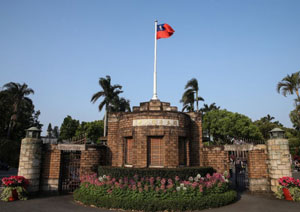 TAIPEI, Jan 16: A total of nine Taiwan universities are among the top 100 in emerging economies, according to a survey released recently by U.K.-headquartered Times Higher Education. TAIPEI, Jan 16: A total of nine Taiwan universities are among the top 100 in emerging economies, according to a survey released recently by U.K.-headquartered Times Higher Education.
Taipei City-based National Taiwan University leads the way among local tertiary institutions in the 2019 Emerging Economies University Rankings, retaining 10th place from last year’s report. It was followed by National Chiao Tung University in northern Taiwan’s Hsinchu City, down four spots to 28th; and National Taiwan University of Science and Technology in Taipei, down 12 to 34th.
The biggest improvements among local institutions were recorded by Taipei Medical University and China Medical University in central Taiwan’s Taichung City. Both advanced 14 places to 37th and 40th, respectively.
Other Taiwan universities in the top 100 are National Tsing Hua University in Hsinchu, tied with TMU at 37th; National Cheng Kung University in the southern city of Tainan, 39th; National Taiwan Normal University in Taipei, 46th; and National Yang-Ming University in Taipei, 81st.
The survey evaluated 442 institutions in 43 countries and territories around the world. Universities were assessed against 13 performance indicators to gauge their core missions of citations, industry income, internatioal outlook, research and teaching.
Topping this year’s survey is China’s Tsinghua University, followed by Peking University and Zhejiang University, respectively.
Amazon founder Jeff Bezos, wife MacKenzie set to divorce after 25 years
LONDON, Jan 9: Amazon.com Inc. founder Jeff Bezos, the world’s richest person, and his wife MacKenzie are divorcing after 25 years.
“After a long period of loving exploration and trial separation, we have decided to divorce and continue our shared lives as friends,” according to a tweet Wednesday that both of them signed.
The couple met when they worked at hedge fund D.E. Shaw, and married in 1993. He founded Amazon a year later. Bezos, 54, is worth $137 billion, according to the Bloomberg Billionaires Index, a ranking of the world’s 500 wealthiest individuals.
A divorce could reshape the wealth rankings. If the couple split their fortune equally, it could leave MacKenzie, 48, with $69 billion, making her the world’s richest woman. It could also make Microsoft Corp. co-founder Bill Gates the planet’s richest person once again.
The state of Washington -- -- where Amazon is based and the couple have a home -- is a community property state, which means all property and debt acquired during a marriage “will be divided equitably by the court if the couple cannot negotiate an agreement,” according to the website of McKinley Irvin, a family law firm in the region.
In a first, China lands space probe on dark side of moon hidden from earth
BEIJING, JAN 3: A Chinese space probe landed on the far side of the moon on Thursday, making it the first spacecraft to touch down on the part of moon, which is never visible from earth.
State media hailed the soft-landing by the Chang’e-4 probe on the dark side of the moon as an important milestone in China’s rapidly developing space programme and contribution to the world’s exploration of the moon.
Previous space expeditions had seen the “dark” side of the moon but none had landed there.
The landing “lifted the mysterious veil” from the far side of the moon and “opened a new chapter in human lunar exploration”, China’s national broadcaster said.
“The Chang’e-4 probe, carrying eight payloads including two developed through international cooperation, will conduct low-frequency radio astronomical observation, survey the terrain and landforms, detect the mineral composition and shallow lunar surface structure and measure the neutron radiation and neutral atoms to study the environment on the far side of the moon, according to China National Space Administration (CNSA).
Chinese state television said the Chang’e-4 lunar probe, launched in December, made the “soft landing” at 0226 GMT and transmitted the first-ever “close range” image of the dark side of the moon.
“The probe, comprised of a lander and a rover, touched down at the preselected landing area at 177.6 degrees east longitude and 45.5 degrees south latitude on the far side of the moon at 10:26 am (Beijing Time),” the CNSA announced.
“With the communication assistance of the relay satellite Queqiao (Magpie Bridge), the probe sent back the first-ever close-up photograph of the moon’s far side, opening a new chapter in lunar exploration,” official news agency, Xinhua said in a report.
“At 100 metres up, the probe hovered to identify obstacles and measured slopes on the surface. After avoiding the obstacles, it selected a relatively flat area and descended vertically and slowly,” the report said.
“Then the probe landed in the Von Karman Crater in the South Pole-Aitken Basin.
During the descending process, a camera on the probe took photos of the landing area.
“It’s an important milestone for China’s space exploration,” said Wu Weiren, chief designer of China’s lunar exploration program.
“It is a perfect display of human intelligence,” said Jia Yang, deputy chief designer of the Chang’e-4 probe, from the China Academy of Space Technology.
Elsewhere, stocks in China’s A-share market related to aerospace and military sectors soared Thursday morning in “…positive territory thanks to investors’ confidence in the sectors, encouraged by the successful landing on the moon of China’s Chang-e’4 lunar probe and the expected industrial growth in the new year”.
“The aerospace and military sectors were cheered by good news that China’s Chang’e-4 probe successfully landed on the dark side of the moon, driving related shares up,” Wu Hao, a Shenzhen-based industry analyst told Global Times.
Thanks to science, 100-year life firmly within our grasp
NEW DELHI, Jan 1: Rapid strides in medical science and technology over the past two decades have put the once-elusive 100-year life firmly within our grasp.
According to research published earlier this year in Nature, there are about 500,000 people aged 100 years and above in the world, and the number is going to almost double every decade. There is no limit to longevity.
“…Even if the risk of late-life mortality remains constant at 50:50, the swelling global membership in the 100-plus club should translate into a creep upwards in the oldest person alive by about one year per decade, says Joop de Beer, a longevity researcher at the Netherlands Interdisciplinary Demographic Institute in The Hague,” the article said.
The average life expectancy in developed countries currently stands at around 80 years, the age when things usually start going wrong with the human body. The metabolic system generates products our body doesn’t know how to eliminate, without long-term damaging, leading to ageing. But now, experts working on regenerative medicine say treatment at the cellular and molecular level may be able to arrest this deterioration. Scientists such as Dr Aubrey De Grey, chief science officer at the SENS Research Foundation, who researches ways to reverse the ageing process, thinks it a matter of 15 years.
“We have to intervene at the basic level of cells and molecules to reverse the process of ageing; it is akin to fixing the wear and tear of a car,” says Dr Grey.
What does this mean for India? Researchers working on therapeutic genome editing are hopeful that some of these highly advanced techniques could be available in the country in the next couple of decades.
“If you look at diseases per se, therapeutic gene editing has the potential to reverse diseases that happen due to mutation in genes. It is growing at a very fast pace and clinical trials are already in place in several countries. In next 20-30 years, it should be out in market,” says Dr Debojyoti Chakraborty, senior scientist, Institute of Genomics and Integrative Biology.
His work focuses on correcting blood-borne disorders that are an India-specific problem. “However, faulty genes is just a part of the problem, there are also several other factors such as environmental factor, unhealthy lifestyle that leads to serious health conditions, for which awareness is needed at a different level,” he added.
In 2016, India launched The Longitudinal Ageing Study (LASI) to collect scientific data on economic, physical and social well-being of the elderly population. Currently, 65% of the country’s population is under 35, which means by 2050, there will be 350 million people above 60. The 60-plus population accounts for 9% of the country’s total population, which translates into roughly 103 million people.
But there are other practical problems. “For a country like India, where childhood mortality is still a huge concern, with diarrhoea and pneumonia killing a majority of children, living past 100 years is still not practically possible. By the time people reach 70-75, risk of non-communicable diseases such as heart diseases, stroke, and certain cancers increases. Pollution is proving to be a big health concern,” said Dr AB Dey, head of geriatric department, All India Institute of Medical Sciences (AIIMS), Delhi.
Taiwan donates Rs 30 lakhs to Indian NGO
By Deepak Arora
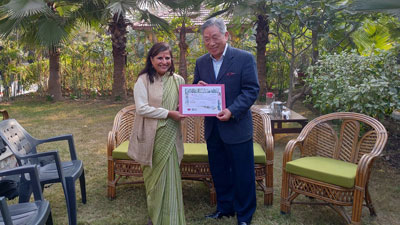 NEW DELHI, Dec 21: Ambassador Tien Chung-kwang, Representative of Taipei Economic and Cultural Center in India (TECC), handed a cheque of Rs. 29,79,650, on behalf of Taiwan government, to Bachpan Bachao Andolan (BBA), an Indian non-governmental organization committed to children’s right protection, at Mukti Ashram near Indian Capital city on Friday. NEW DELHI, Dec 21: Ambassador Tien Chung-kwang, Representative of Taipei Economic and Cultural Center in India (TECC), handed a cheque of Rs. 29,79,650, on behalf of Taiwan government, to Bachpan Bachao Andolan (BBA), an Indian non-governmental organization committed to children’s right protection, at Mukti Ashram near Indian Capital city on Friday.
The donation was received by Mrs. Sumedha Kailash. Kailash Satyarthi was also present to witness the ceremony. Ambassador Tien said the nearly 30-lakh rupees from Taiwan will be used for purchasing food and clothes, providing medical and transport support, and covering cost of informal education, sports and entertainment activities etc. for the children staying in the Ashram in the coming months. Around 150 children are expected to benefit directly from the funds.
Kailash Satyarthi thanked Taiwan for its generous assistance and touted Taiwan as a sincere and long-term friend with BBA. According to BBA, more than 1,500 Taiwanese youths visited India to serve in Mukti Ashram (Delhi) and Bal Ashram (Rajasthan) over the past five years.
Mr. Satyarthi visited Taiwan as one of the keynote speakers at the Yushan Forum on October 11 this year. He met Taiwan President Tsai Ing-wen, Foreign Minister Joseph Wu, Deputy Foreign Minister Hsu Szu-chien and executive directors from Waker Welfare Action Association and Eden Social Welfare Foundation, two prominent NGOs in Taiwan actively engaging in international social work and voluntary service.
The above donation of Rs 29,79,650, equivalent to USD 42,350 roughly, is the third from Taiwan to BBA in recent years. During Kailash Satyarthi’s first visit to Taiwan in 2015, the Ministry of Foreign Affairs announced USD 50,000 donation to BBA. The second one of USD 45,000 was provided in 2016 and had been fully executed in the first half of the year.
|


