


BUSINESS
|
India's GDP growth slips to 5.8% in March quarterMUMBAI, May 31: India’s economic growth suffered a third straight quarterly fall in the first three months of 2019 to 5.8 percent, according to government figures, throwing up an immediate challenge to Prime Minister Narendra Modi’s new administration. GDP growth for the world’s sixth biggest economy was down from 6.6 percent in the last quarter of 2018 and came well below predictions of 6.3 percent given by many analysts. The announcement meant India had lost its place as the world’s fastest-growing major economy to China, which is currently on 6.4 percent growth. The Indian government also estimated that the economy grew by 6.8 percent in the year up to March 31, down from 7.2 percent the year before. The figures were released only hours after Modi named Nirmala Sitharaman as new finance minister in his government, which took office Friday. The right-wing government won a landslide election victory this month but has been on the defensive over its handling of the economy. While the economy has regularly grown at about 7.0 percent since Modi came to power in 2014, it has failed to create enough jobs for the 1.2 million Indians who come on the labour market each month. India's unemployment rate highest in 45 yearsNEW DELHI, May 31: Confirming unemployment rate projected in a pre-election leaked report, the government Friday said joblessness in the country was 6.1 per cent of total labour force during 2017-18, the highest in 45 years. The data released by the labour ministry on a day when Modi 2.0 Cabinet took charge, showed 7.8 per cent of all employable urban youth being jobless, while the percentage for the rural was 5.3 per cent. The joblessness among male on all India basis was 6.2 per cent, while it was 5.7 per cent in case of females. Amidst high trade tensions and policy uncertainty, UN cuts economic growth forecastBy Deepak Arora UNITED NATIONS, May 21: Against a backdrop of unresolved trade tensions, high international policy uncertainty and softening business confidence, the UN on Tuesday announced a broad-based slowdown in the global economy and cut its growth predictions. The data comes from the UN Department of Economic and Social Affairs (DESA) in its mid-year World Economic Situation and Prospects (WESP) report, which finds that all major developed economies, and most developing regions, have weakened prospects for growth. At the launch of its main annual report in January, UN economists warned of “risks on the horizon.” Five months on, with trade disputes and tariff increases, those fears have been borne out, and the forecasts contained in the January report have now been revised downwards: growth for 2019 is now predicted to be a moderate 2.7 per cent, down markedly from 3.4 per cent in 2018. DESA warns, however, that if trade tensions escalate further, the effects of climate change accelerate, or there is a sudden deterioration in financial conditions, the slowdown could be sharper, or more prolonged. The predicted slowdown spells bad news for efforts to implement the UN’s 2030 Agenda for sustainable development, which contains a set of targets to end extreme poverty and promote prosperity, whilst protecting the environment. A weaker global economy puts essential investments in areas such as education, health and climate action at risk. Developing countries are likely to be hit hard, particularly those whose economies rely heavily on markets likely to be affected by any additional tariffs and subsequent retaliatory measures. The report notes that, although poverty is concentrated in rural areas, the rapidly growing rate of population movements from the countryside to cities, must be carefully managed. This is particularly relevant for Africa and South Asia, the two regions with the highest number of people in poverty, which are expected to also experience the most rapid pace of urbanization in the next two decades. Calling for more comprehensive and better-targeted policies to tackle the slump, Elliot Harris, UN Chief Economist and Assistant Secretary-General for Economic Development, said in a statement “it is increasingly clear that policies to promote sustainable development will need to look beyond GDP growth and identify new and more robust measures of economic performance that appropriately reflect the costs of inequality, insecurity and climate change.” With the climate emergency continuing to cause more frequent and intense natural disasters, disproportionately affecting the most vulnerable countries, the report calls for a multilateral approach to global climate policy, including an explicit call for carbon pricing, which would force the private sector and governments to include the environmental costs of consumption and production in their economic decision-making process. Sensex, Nifty race past record closing highs as exit polls project NDA winMUMBAI, May 20: Benchmark Sensex zoomed over 1,422 points and the NSE Nifty surged 421 points after most exit polls showed that the Narendra Modi-led NDA is returning to power with a thumping majority in the Lok Sabha elections. The 30-share index ended 1,421.90 points, or 3.75 per cent, higher at 39,352.67. During the day, the gauge hit a high of 39,412.56 and a low of 38,570.04. In a similar movement, the broader NSE Nifty soared 421.10 points, or 3.69 per cent, to 11,828.25. A majority of exit polls Sunday forecast another term for Prime Minister Narendra Modi, with some of them projecting that the BJP-led NDA will get more than 300 seats to comfortably cross the majority mark of 272 in the Lok Sabha. The results of the seven-phase polls will be announced on May 23. Analysts believe the Modi’s BJP retaining power will ensure a continuation in reform measures initiated during the NDA’s first term. Top gainers in the Sensex pack include SBI, IndusInd Bank, Tata Motors, L&T, Yes Bank, HDFC, M&M, Maruti, ONGC, RIL, ICICI Bank and Axis Bank, rising up to 8.64 per cent. On the other hand, Bajaj Auto and Infosys ended in the red. The broader BSE midcap and smallcap indices ended in line with benchmarks, rallying up to 3.57 per cent. “The domestic equity markets witnessed unprecedented and remarkable surge, across all sectors and segments, after the exit polls indicated a higher probability for the current dispensation to come back to power with a clear majority,” said Joseph Thomas, Head Research- Emkay Wealth Management. “What would help the markets sustain the momentum is factors that are fundamentally important, like decisive policy initiatives from the new government, faster land and labour reforms, and also the unfinished task of quick consolidation and re-organisation of the banking system,” he added. Meanwhile, market regulator Sebi and stock exchanges have beefed up their surveillance mechanism to check any manipulative activities in the market this week in view of the high-octane election related events lined up. The Indian rupee also appreciated by 64 paise to 69.59 against the US dollar during the day. Brent crude, the global benchmark, was trading at 72.61 per barrel, higher by 1.40 per cent. Globally, bourses in Asia ended on a mixed note, while those in Europe were trading in the red in their respective early deals. India just posted the worst car sales data in eight yearsNEW DELHI, May 13: Sales of cars and SUVs in India slumped the most since October 2011, adding to a slew of bad news that points to a slowdown in the world’s fastest-growing major economy. Passenger vehicle sales in April fell 17.1% to 247,541 units from a year earlier, data released by the Society of Indian Automobile Manufacturers showed. Car sales slumped almost 20%, while overall automobile sales dropped 16%. “The not-so-happy news continues,” Vishnu Mathur, the director general of SIAM, told reporters in New Delhi on Monday, referring to a decline in discretionary purchases from fast-moving consumer goods to travel and tourism. “The sentiment in the market is not very good.” The slowdown isn’t limited to car sales. Air traffic in India, the world’s fastest-growing aviation market last year, expanded at the slowest pace in almost six years in March, while demand for bank loans grew at 13.2% in March from a year ago, slowing from the 14.5% pace seen in February, according to central bank data. Hindustan Unilever Ltd., India’s largest maker of consumer staples, recently reported March quarter revenue growth of just 7%, the weakest in 18 months. Economic growth in India slowed to 6.6 percent in the three months to December, the slowest pace in six quarters, amid weak consumption and a crisis in the shadow-banking sector. The next pulse check for the economy comes on May 31, when gross domestic product for the quarter ended March is due. Taiwan Expo trade show to kick off 5-country tour on May 16 from IndiaBy Deepak Arora
US to raise tariffs on $200 billion worth of Chinese imports
The US Trade Representative's office will establish a process to seek exclusions for certain products from additional tariffs, the Federal Register notice said. US President Donald Trump said in a tweet that he would be "very happy with over $100 Billion a year in Tariffs filling US coffers." His comments followed a report that quoted US government and private-sector sources as saying China had backtracked on almost all aspects of a draft trade agreement with the United States. During a 10-month US-China war, US tariffs have been imposed on $250 billion worth of Chinese goods, and retaliatory Chinese tariffs slapped on $110 billion worth of American products. Trump has pushed for sweeping changes to China’s policies on intellectual property theft, technology transfers industrial subsidies and market access. Trump has criticized the US trade deficit with China, which hit a record $419 billion in 2018, as stealing American manufacturing jobs. His hard line on China has played well with his political base in Midwestern industrial and farm states, with Trump seeking re-election next year. Trump had initially set the tariff increase to 25% on $200 billion worth of Chinese goods, including internet modems and routers, printed circuit boards, vacuum cleaners and furniture, in January. He delayed the deadline until 1 March to allow negotiations, and then postponed the increase indefinitely, citing progress in the talks. Global equities tumbled toward five-week lows as the escalating trade fight fed worries about the world economy and investors sought the safety of bonds and the Japanese yen, which hit a six-week high against the US dollar. Bharti Airtel posts Q4 net profit of Rs 107.2 crore aided by exceptional gain
Revenue for the quarter was at Rs 20,602 crore, roughly in line with estimates. For the full FY 2019, Airtel's net profit tanked 62.7 per cent to Rs 409.5 crore compared to Rs 1,099 crore in the previous fiscal. During the period, the revenue of Sunil Mittal promoted company stood at Rs 80,780.2 crore, down 2.2 per cent, compared to Rs 82,638.8 crore. |
|
||
 NEW DELHI, May 9: The Taiwan Expo trade show is set to kick off its 2019 tour May 16 in New Delhi, spotlighting the quality of the nation’s products and services and strengthening business exchanges with the Indo-Pacific country.
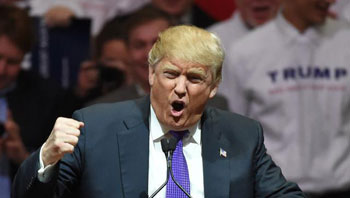 WASHINGTON, May 8: The United States will raise tariffs on $200 billion worth of Chinese imports to 25% from 10% effective on Friday, according to a notice posted to the Federal Register on Wednesday.
 MUMBAI, May 6: Bharti Airtel May 6 reported a 24 percent sequential jump in its fourth-quarter FY19 net profit to Rs 107.2 crore helped by an exceptional gain of Rs 2,022 crore. Analysts were expecting a net loss of over Rs 1,000 crore.
Aviation
| Business | Defence
| Foreign Affairs | Communication
| Health | India |
United Nations
India-US | India-France
| Entertainment | Sports
| Photo Gallery | Tourism
| Advertise with Us | Contact
Us
© Noyanika International, 2003-2009. All rights reserved.