


United Nations
|
‘Thank you,’ says Ban, bidding farewell to staff and delegations at UN Headquarters
Thanking staff and delegations for their “hard work [and] leadership for humanity,” Mr. Ban said that he had been motivated by this commitment and that he was “proud to call you my colleagues.” Citing sustainable development, climate change, gender empowerment and youth, among the issues that had been at the top of his agenda, he urged the enthusiastic gathering to “keep believing [and] working hard” to achieve the noble goals of the UN, and to be a “voice for the voiceless.” “It has been a privilege to serve the world’s people. And it has been an honour to serve with you and all our partners – including Member States, civil society, and many more,” he stated. For his last day in office, Mr. Ban will serve as a special guest tomorrow at the annual New Year’s Eve celebration in Times Square, joining New York City Mayor Bill de Blasio to push the Waterford crystal button and lead the sixty second countdown to the New Year. Approximately one million revellers are expected to fill the fabled Square, joined by over 198 million Americans and more than one billion television viewers worldwide who will ring in the New Year watching the historic Times Square New Year’s Eve Ball Drop, according to the event organizers. Mr. Ban’s last day in office will be the culmination of a decade of service at the helm of the United Nations, during which he sought to mobilize world leaders around a set of new global challenges, from climate change and economic upheaval to pandemics and increasing pressures involving food, energy and water. In addition, he has sought to be a bridge-builder, to give voice to the world’s poorest and most vulnerable people, and to strengthen the Organization itself. Mr. Ban began his first term as Secretary-General on 1 January 2007, and was unanimously re-elected by the General Assembly to a second term on 21 June 2011. He will be succeeded on 1 January 2017 by António Guterres, of Portugal, who was formally appointed by the UN General Assembly on 13 October. UN General Assembly revises biennial budget to $5.61 billion; approves $639.53 million for special political missions
Actions taken by the General Assembly – the universal body that comprises all 193 UN Members States – included revising the Organization's budget for the 2016-2017 biennium to $5.61 billion and approving $639.53 million to keep the 33 UN special political missions running smoothly. In another text, the General Assembly called for $1.57 million gross ($1.46 million net) before recosting to continue improving UN's administration of justice system. The call had been deemed necessary after an independent review last year concluded that, despite increasing transparency, only about half of the workforce had access to the system and many were unaware of it. The Assembly also adopted a wide-ranging human resources resolution aimed at finishing major reforms begun half dozen years ago. It also tasked the Secretary-General to investigate the reasons for delays at each stage of the staff selection and recruitment as well as made some changes to recruitment processes on a provisional basis as a pilot phase. Also yesterday, the General Assembly adopted 11 resolutions from its plenary and First Committee (dealing with disarmament and international security matters) tackling a wide range of issues, including nuclear disarmament, oceans and international law. India warns Pakistan at UN, renews call for action against Jaish, Lashkar-e-Taiba
Denouncing the two organisations, whose leadership is based in Pakistan, as affiliates of al-Qaida, India’s Permanent Representative Syed Akbaruddin told the Security Council that it was imperative to take action against the support they get from outside. In an implied criticism of China, he blamed the “split” in the UN bodies that mete out sanctions on terrorist organisations for the world body’s inability to deal with the terrorism. China has blocked India’s efforts to have international sanctions imposed on Pakistan-based JeM chief Masood Azhar by a committee that takes action against al-Qaida and its affiliates. Azhar was behind the attack on the Pathankot air force base this year. As a member of the Security Council, China has also provided cover for Pakistan releasing on bail Zaki-ur-Rehman Lakhvi, the LeT commander who masterminded the 2008 attack on Mumbai which killed more than 160 people. He was already on the UN list of those facing sanctions as terrorists. “We need to address, as an imperative, the support that terrorist organizations like the Taliban, Haqqani Network, Daesh, aI-Qaeda and its designated affiliates such as Lashkar-e-Toiba and the Jaish-e-Mohammed which operate entirely outside the fabric of international law draw from their shadowy supporters outside Afghanistan,” Akbaruddin said. “While the Taliban sanctions regime remains split for more than five years, the designated terrorist group makes concerted effort to capture and hold territory,” he said. “Therefore, for numerous Afghan women, men and children there is no respite from the plague of terrorism.” The international community has to make “it clear that we will neither roll over in the face of terror, nor will we of allow the roll back of the achievements of the resolute people and government of Afghanistan in the last decade and a half,” he said. 'Every migrant is a human being with human rights,' says UN chief on International DayBy Deepak Arora
"We have seen the continued devastating effect of armed conflict on civilian populations [...], witnessed the unacceptable loss of thousands of lives of people in transit in the Mediterranean and elsewhere, and the rise of populist movements that seek to [...] blame [refugees and migrants] them for various ills of society," said UN Secretary-General Ban Ki-moon in his message on the International Day. Yet, within this turbulence there are rays of hope, with concerned citizens and communities opening their arms and hearts. There has also been a promising international response, culminating with the New York Declaration adopted in September at the UN Summit for Refugees and Migrants. "It is now crucial that governments honour and build on their commitments to govern large movements of refugees and migrants in a way that is compassionate, people-centred, gender-responsive and rooted in fundamental human rights," said Mr. Ban, calling the Declaration a critical step towards the adoption of a global compact for safe, orderly and regular migration in 2018. Underscoring that "every migrant is a human being with human rights," the UN chief said that to protect and uphold those rights stronger international cooperation is needed among countries of origin, transit and destination that is guided by international law and standards. "We must reject intolerance, discrimination and policies driven by xenophobic rhetoric and the scapegoating of migrants. Those who abuse and seek to harm migrants must be held to account." Picking up that thread, William Lacy Swing, Director General of the International Organization for Migration (IOM), the UN focal point agency on the issue, said: "The upheaval we see all around in our politics should serve as a wake-up call to prepare rather than panic. We need to mould the future rather than ignore it [by] embracing the inevitability of migration, changing the perceptions of migrants among our publics and better integrating migrants in our societies." "There is a real demographic revolution going on today and it is up to us to manage it for the benefit of all," he continued, noting that while most migrants simply want an opportunity and would welcome even a temporary one, with the right support, those that stay will contribute to whatever society they settle in, whether it is economically or culturally. For its part, UN Women, the United Nations Entity for Gender Equality and the Empowerment of Women, noted that there are more than 244 million migrants in the world, almost half are women, and with ongoing movements of refugees and migrants, it is critical that the global community comes together with unified and gender-responsive solutions that address both the opportunities and challenges that migration presents. The New York Declaration underlines the need for promoting and protecting the rights of migrant women and girls at all stages of migration. Moreover, the global compact for safe, orderly and regular migration in 2018 is expected to become a dynamic vehicle for migration governance, which sees migrants, including women and girls, as agents of change with valuable skills, powerful voices and the potential for leadership. Taking oath of office, António Guterres pledges to work for peace, development and a reformed United NationsBy Deepak Arora
“The United Nations needs to be nimble, efficient and effective. It must focus more on delivery and less on process; more on people and less on bureaucracy,” said Mr. Guterres after taking the oath of office at a ceremony before the 193-member UN General Assembly. Mr. Guterres, a former Prime Minister of Portugal (1995 to 2002) and former UN High Commissioner for Refugees (2005-2015) took the oath of office following the Assembly’s tribute to Secretary-General Ban Ki-moon, who steps down at the end of the month after leading the global Organization for the past 10 years. At the onset of his remarks at the swearing-in-ceremony, the Secretary-General-designate paid tribute to Secretary-General Ban for his “principled leadership [that] helped to chart the future of the UN – through the 2030 Agenda for Sustainable Development; through [his] commitment to peace and security; through [his] initiative to put human rights at the heart of [UN’s] work.” Mr. Guterres then highlighted three strategic priorities for the Organization: working for peace; supporting sustainable development; and reforming its internal management. Noting that, often, the UN is tasked with peacekeeping in places where there is no peace to keep, he said that a greater conceptual clarity and a shared understanding of the scope of peacekeeping was needed so as to pave the way for urgent reforms. “Inspired by the new concept of sustaining peace, it is time for us all to engage in a comprehensive reform of the UN strategy, operational set-up and structures for peace and security,” he highlighted. Mr. Guterres also emphasized the need to do more to prevent and respond to the sexual violence and exploitation committed by those serving under the UN flag against those they are supposed to protect. “I will work closely with Member States on structural, legal and operational measures to make the zero-tolerance policy […] a reality,” he underscored, adding: “We must ensure transparency and accountability – and offer protection and effective remedies to the victims.” On the second key element of the reform agenda, concerning the UN support to Member States in achieving the Sustainable Development Goals (SDGs), Mr. Guterres said that development will form the centre of the UN’s work, and that he will engage in a comprehensive reform of the UN development system – both at headquarters and at country levels. “This must involve leadership, coordination, delivery and accountability. We will build on the outcome of the recent discussions among Member States,” he said, underlining the need to bring humanitarian and development spheres closer together from the very beginning of a crisis. “Humanitarian response, sustainable development and sustaining peace are three sides of the same triangle,” he highlighted. On management reforms, Mr. Guterres underlined the need to build on existing efforts and to implement recent reform initiatives. “Looking at UN staff and budgetary rules and regulations, one might think some of them were designed to prevent, rather than enable, the effective delivery of our mandates,” he said, adding: “It benefits no one if it takes nine months to deploy a staff member to the field,” He also underlined the need to foster a culture of accountability and effective protection for whistleblowers, as well as to better communicate the work of the UN, so that people understand it better. “We need a substantial reform of our communications strategy, upgrading our tools and platforms to reach people around the world,” he said. He also pledged to respect gender parity from the start in all appointments to the Senior Management Group (SMG) and the Chief Executives Board (CEB), stressing: “By the end of my mandate, we should reach full gender parity at the Under-Secretary-General and Assistant Secretary-General levels, including special representatives and special envoys.” Concluding his remarks, Secretary-General-designate Guterres said that while the world is getting better connected, fragmentations within societies are increasing, and that more and more people are living within their own bubbles, unable to appreciate their links with the whole human family. “In the end, it comes down to values, as was said so many times today. We want the world our children inherit to be defined by the values enshrined in the UN Charter: peace, justice, respect, human rights, tolerance and solidarity,” he said, adding: “The threats to these values are most often based on fear. Our duty to the peoples we serve is to work together to move from fear of each other, to trust in each other.” “Trust in the values that bind us, and trust in the institutions that serve and protect us,” he emphasized. Mr. Guterres, was appointed by the General Assembly on 13 October this year in what was the culmination of an historic process Member States set in motion late last year: the selection of a new UN Secretary-General, traditionally decided behind closed-doors by a few powerful countries, for the first time in history, involved public discussions with each candidate vying for the leadership position. UN Internet Governance Forum closes with call to close ‘digital divide’
“Leading up to the twelfth IGF next year, innovations in programming and intersessional activities will continue to be implemented in a bottom-up manner, based on feedback from the multistakeholder community and in line with our new mandate which calls for greater participation from stakeholders from developing countries and improved working modalities,” Juwang Zhu, Director of the Division for Sustainable Development in the UN Department of Economic and Social Affairs (DESA) said in a news release today. Further, according to the release, experts at the global event highlighted that in addition to the physical challenges of getting people connected at affordable rates, many people do not yet fully recognize the Internet’s value. Participants at the Forum also noted that no one solution fits all problems. For instance, sub-Saharan Africa accounts for the lowest levels of Internet usage in the world with less than three per cent of the population using it in countries including Chad (2.7 per cent), Sierra Leone (2.5 per cent), Niger (2.2 per cent), Somalia (1.8 per cent) and Eritrea (1.1 per cent). Furthermore, while connectivity between developed and developing countries, within regions and even within countries continues to be an economic and infrastructural challenge, others barriers also exist in digital literacy. One of this is the “gender gap.” There are 257 million more men online than women and it is particularly concerning that women face a wider variety of online harassment and abuse than men. “It is very important to bring women online because the part of the population that is not online is missing out a lot. They need to enhance their businesses, they need to enhance their lives, and part of that comes with them being online,” said Evelyn Namara, Founder and CEO of !nnovate Uganda, an organization that works toward sustainable technological development. The IGF this year included some 150 sessions discussing a number of issues such as human rights and freedom of expression online, multi-stakeholder cooperation, and cybersecurity. The Forum also recognized the “critical role” of the Internet in providing access to opportunities to all people. Participants, including from governments, the technical community, private sector and civil society also advocated for more capacity-building, training as well as closer collaboration and partnerships. The release further added that an emerging consensus has developed among the IGF community that the Internet’s core values of openness, freedom, resilience, safety and decentralisation are fundamental for enabling sustainable growth. Each year, the UN convenes the IGF meeting to unify various stakeholders and discuss Internet governance issues, as well as opportunities and challenges in an open, inclusive and transparent forum. This year's theme was Enabling Inclusive and Sustainable Growth. |
|
||||||
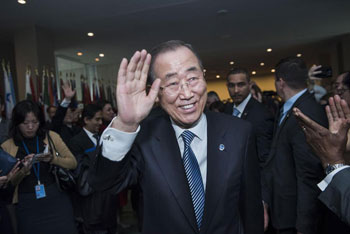 UNITED NATIONS, Dec 30: Secretary-General Ban Ki-moon said goodbye to staff and Permanent Representatives at United Nations Headquarters in New York today, saying that though he had delivered many speeches over his decade in office, he had but two important words for those gathered to wish him well: “thank you.”
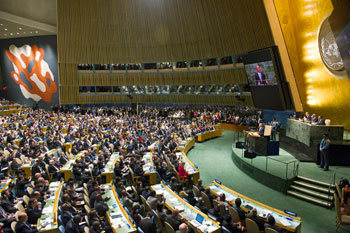 UNITED NATIONS, Dec 24: Concluding the main part of its 71st session, the United Nations General Assembly last night adopted 15 texts – 14 resolutions and one decision – recommended by its Fifth Committee which is responsible for administration and budgetary matters.
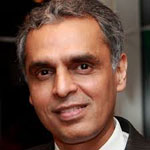 UNITED NATIONS, Dec 19: India has renewed its demand for international action against Lashkar-e-Taiba (LeT) and the Jaish-e-Mohammed (JeM) and “their shadowy supporters”
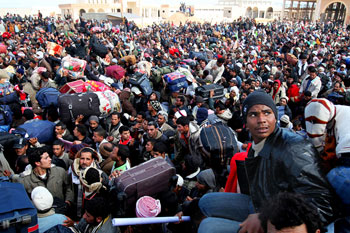 UNITED NATIONS, Dec 18: Despite appearances and media spin, "migration does not have to be chaotic or seem like an invasion," and as yet another turbulent year for millions of people on the move comes to an end, the United Nations is marking International Migrants Day with a worldwide call for more cooperation and a resolute rejection of intolerance and policies driven by xenophobic rhetoric.
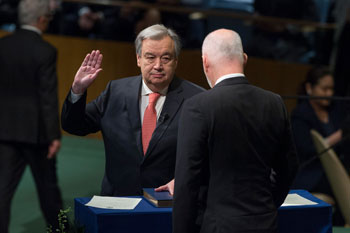 UNITED NATIONS, Dec 12: Sworn in today as the ninth and next United Nations Secretary-General, António Guterres pledged to reposition development at the centre of the Organization’s work and ensure that the UN can change to effectively meet the myriad challenges facing the international community.
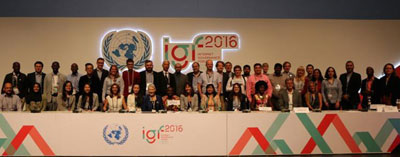 JALISCO (Mexico) Dec 9: Underlining the urgency to close the “digital divide” – socio-economic inequalities that impact access to or use of information and communication technologies – the 11th annual United Nations Internet Governance Forum (IGF) closed today with a call for concerted actions to ensure that all people in all countries are able to reap the benefits of the Internet.
Aviation
| Business | Defence | Foreign
Affairs | Communication | Health
| India | United Nations
India-US
| India-France | Entertainment
| Sports | Photo Gallery |
Tourism | Advertise with Us
| Contact Us
© Noyanika International, 2003-2009. All rights reserved.