


United Nations
Climate Change Moving Faster Than We Are: UN Chief GuterresBy Deepak Arora
Speaking to reporters at the world body’s New York Headquarters here today, the UN Chief said “Scientists are now worried that unless accelerated action is taken by 2020, the Paris goal may become unattainable.” The Paris Agreement on climate change, adopted by world leaders in December 2015, aims to keep global temperature rise to well below 2 degrees Celsius and pursues efforts to limit the temperature increase even further, to 1.5 degrees. “I am beginning to wonder how many more alarm bells must go off before the world rises to the challenge,” Guterres said, noting that 2017 had been filled with climate chaos and 2018 has already brought more of the same. “Climate change is still moving much faster than we are,” he warned, calling the phenomenon the greatest threat facing humankind. Recent information from the World Meteorological Organization (WMO), the World Bank and the International Energy Agency shows the relentless pace of climate change. For instance, the UN chief said, energy-related carbon dioxide emissions rose 1.4 per cent, to a historic high of 32.5 gigatonnes. Moreover, weather-related disasters caused some $320 billion in economic damage, making 2017 the costliest year ever for such losses. In social as well as economic terms, the 2017 Atlantic hurricane season was devastating, washing away decades of development in an instant. In South Asia, major monsoon floods affected 41 million people. In Africa, severe drought drove nearly 900,000 people from their homes. Wildfires caused destruction across the world. Arctic sea ice cover in winter is at its lowest level, and the oceans are warmer and more acidic than at any time in recorded history. “This tsunami of data should create a storm of concern,” Mr. Guterres said, noting that next year he will convene a climate summit in New York aimed at boosting global ambition to meet the level of the climate challenge. “The Stone Age did not end because the world ran out of stones. It ended because there were better alternatives. The same applies today to fossil fuels,” he said, stressing the need for a further cut in greenhouse gas emissions of at least 25 per cent by 2020. Responding to a question about the United States’ decision to pull out of the Paris Agreement, Mr. Guterres said he received information from his Special Envoy on climate change and former New York City Mayor, Michael Bloomberg, that there are expectations that the US – independently of the position of its Administration – might be able to meet the commitments made in Paris as a country due to the positive reactions of the American business community and local authorities. “All around the world, the role of governments is less and less relevant. The role of the economy, the role of the society is more and more relevant,” he said. Facebook privacy debate shows most countries not ready for digital economy: UNBy Deepak Arora NEW YORK, March 28: The main UN agency dealing with the economics of globalization said Wednesday that the privacy concerns raised after the revalation that a political data firm gained access to millions of Facebook users without their consent “vividly illustrates that most countries are ill prepared for the digital economy.” This is all the more worrying given that about 90 per cent of new Internet users over the last five years live in developing countries – about half of which currently lack legislation to protect their privacy. In addition, with global e-commerce estimated to have reached $26 trillion in 2016, ensuring that no one is left behind in enjoying its benefits is vital. “We know that the digital economy can bring great benefits to developing countries, but we need to address some critical questions to ensure that digitalization leads to the future we want,” said Mukhisa Kituyi, the Secretary-General of the UN Conference on Trade and Development (UNCTAD). Mr. Kituyi’s call coincides with the agency’s E-Commerce Week – the leading forum for Governments, private sector, development banks, academia and the civil society to discuss development opportunities and challenges before the evolving digital economy. Being held from 16-20 April, in Geneva, under the theme Development Dimensions of Digital Platforms, the E-Commerce Week will look into the role of evolving technologies to strengthen sustainable development. Some of its highlights include a high-level dialogue on these platforms as well as Ministerial roundtable discussions. The Week will also feature events on digital identities and protection of consumers online, conducting trade and e-commerce in the digital era; blockchain technologies; and role of regional banks. World cannot take water for granted: UN Chief António GuterresBy Deepak Arora
Most directly linked to Sustainable Development Goal 6, safe water and adequate sanitation are indispensable for healthy ecosystems, reducing poverty, and achieving inclusive growth, social well-being and sustainable livelihoods – the targets for many of the 17 Goals. However, growing demands, poor management and climate change have increased water stresses and scarcity of water is a major problem in many parts of the world. Furthermore, more than two billion people worldwide lack access to safe water and over 4.5 billion to adequate sanitation services, warned UN Secretary-General António Guterres. “By 2050 at least one in four people will live in a country where the lack of fresh water will be chronic or recurrent,” he said, speaking at the launch of the International Decade for Action: Water for Sustainable Development, 2018-2028. “Quite simply, water is a matter of life and death. Our bodies, […] our cities, our industries and our agriculture all depend on it.”
“As with most development challenges, women and girls suffer disproportionately. For example, women and girls in low-income countries spend some 40 billion hours a year collecting water,” he stressed. Addressing these and other challenges needs a comprehensive approach to water supply, sanitation, water management and disaster risk reduction, said the UN chief, highlighting that aligning existing water and sanitation programmes and projects with the 2030 Agenda will also be vital. Also crucial is the political will for strengthened cooperation and partnerships, he added. Alongside the Secretary-General, Mahmoud Saikal, the Vice-President of the General Assembly (speaking on behalf of Assembly President Miroslav Lajčák) said that while many in the world have adequate safe drinking water and sanitation facilities, billions on the same planet lack even a basic toilet and are forced to drink water that can make them ill. “This is the reality we all have to face. It is not pretty. But, it should not come as a surprise. We have known about it for a while,” he said. “Luckily, we still have enough time to do something about it,” added Saikal, calling on for action on everyone’s part to capitalize on the opportunities offered by the International Decade. The launch of the International Decade coincides with the World Water Day, marked annually on 22 March, to focus attention to importance of and challenges facing freshwater availability. Commemorated this year with the theme, Nature for Water, the Day urges people to explore nature-based solutions to contemporary water problems. Some of these could include planting trees and increasing forest cover, reconnecting rivers to floodplains, and restoring wetlands to rebalance the water cycle. Karen Pierce is Britain’s new Ambassador to the UNBy Deepak Arora
Karen is uniquely suited for the position having previously served as Deputy Permanent Representative to the UN in New York, and more recently as the Permanent Representative to the UN in Geneva. On being announced as Ambassador to the United Nations, Karen Pierce said: The UK has long been a strong supporter of the UN and its role at the heart of the global rules-based international system at a time when it is coming under challenge. Through our role as a permanent member of the Security Council and position as the UN’s third largest donor, the UK will continue to work with others to tackle the pressing security, stability, development and prosperity challenges of today. Our security and economic interests depend to a large extent on a strong and effective United Nations. I am honoured to be appointed as the UK’s Ambassador and to head the UK cross-government effort at the UN. I undertake to ensure we are an active force in New York for progress and partnership right across the UN. In remarks to the press, she said "This is my second time here. I was excited the first time; I’m very excited the second time. It’s a job I’ve wanted since I was a kid. But there’s a lot to do in the international system. The United Kingdom prides itself, in all humility, on being a friend of the UN, and there are a lot of challenges we want to work with partners on in international peace and security, development and human rights, and collaborating in the General Assembly and elsewhere on all those issues like new technology, CT, cyber, that are going to define public policy for generations to come." Prior to her move to New York, Karen served as the Director General for Political Affairs and Chief Operating Officer of the Foreign and Commonwealth in London, from 2016. She has held a range of positions in London including Team Leader for Ukraine, Belarus and Moldova, Deputy Head of Eastern Adriatic (Balkans) Department, Head of Newsroom, Head of EU Department, Director of South Asia and Afghanistan Department and was the UK’s Special Representative for Afghanistan and Pakistan. In addition to postings in Geneva and New York, Karen was the UK’s Ambassador to Afghanistan and has served in Tokyo and Washington. She is the first woman to take up the role of UK Ambassador to the United Nations in New York. On International Day, UN chief urges greater protection for Organization’s staff
“Whether in their countries of origin or far from their families and homes, United Nations personnel work tirelessly to help the world’s most vulnerable,” Mr. Guterres said in his message on the International Day of Solidarity with Detained and Missing Staff Members. “Let us strengthen our resolve and our means to protect UN staff as they work tirelessly for peace, sustainable development and human rights for all,” he added. The Secretary-General also noted that the Organization continues to monitor cases of its staff having being arrested or detained as well as pursue their release. Today, 29 UN civilian personnel are in detention. Eight are being held without known or clear charges or without the Organization being given any reasons for their arrests. Guterres also noted that only 92 UN Member States are party to the 1994 Convention on the Safety of UN and Associated Personnel, and that only 32 have ratified the 2005 Optional Protocol, which extends protection to UN personnel delivering humanitarian, political or development assistance. “I urge all countries that have not joined these instruments to promptly do so,” he said, stressing, “the safety [UN staff] need to carry out this vital mission should be our priority.” The International Day of Solidarity with Detained and Missing Staff Members is marked each year on 25 March, the date of the abduction of Alec Collett, who was taken by armed gunmen in 1985 while working for the UN Relief and Works Agency for Palestine Refugees in the Near East (UNRWA). His remains were finally found in Lebanon's Bekaa Valley in 2009. Earth Hour: UN joins iconic landmarks ‘going dark’ globally with a call to protect environmentUNITED NATIONS, March 24: The United Nations this evening turned off the lights at its iconic Headquarters in New York as well as at other facilities around the world in observance of “Earth Hour” – a global event highlighting the need for climate action and sustainable energy consumption. In a video message, UN Secretary-General António Guterres urged people around the world to join him in “turning out the lights and turning up the pressure” for a healthy planet. “Climate change is moving much faster than we are. Its alarming impacts are upon us; resources and ecosystems across the world are under assault. Earth Hour is an opportunity to show our resolve to change,” he said. “Protecting the environment is preserving life itself,” stressed the UN chief. Organized by the World Wildlife Fund (WWF), Earth Hour encourages individuals, companies, organizations and Governments throughout the world to switch off their lights for one hour at 8:30 p.m. local time. This year, Earth Hour is stressing the link between climate change and biodiversity loss, as thousands of plant and animal species are threatened with extinction as a result of increasing temperatures. First launched in 2007 in Australia, Earth Hour has been commemorated every year since, mobilizing hundreds of millions of individuals to participate and growing to become one of the world’s largest grassroots movement for the environment and climate action. UN chief denounces terrorist attack in southern France
In a statement attributable to his spokesperson, Secretary-General António Guterres also commended the response of the security forces, noting “[their] quick action helped save lives.” “The UN stands in solidarity with the Government of France in its fight against terrorism and violent extremism,” the statement added. Guterres also extended his condolences to the families of the victims and wished a speedy recovery to those injured. According to reports, at least three people lost their lives and 16 were injured in the attack that took place at a supermarket in the town of Trèbes in southern France. Among those who died was a French police official who swapped himself for one of the hostages taken by the gunman. UN Commission delivers a blueprint to ensure the rights and development of rural women and girlsNEW YORK, March 24: The United Nations’ largest annual gathering on gender equality and women’s rights wrapped up Friday in New York with the strong commitment by its Member States to achieving gender equality and the empowerment of rural women and girls. Coming on the heels of unprecedented global activism and public outcry to end gender injustice and discrimination worldwide, the 62nd session of the UN Commission on the Status of Women (CSW) reached a robust agreement highlighting the urgency of empowering and supporting those who need it most and have, for too long, been left behind. The outcome of the two-week meeting, known as the Agreed Conclusions adopted by Member States, puts forth concrete measures to lift rural women and girls out of poverty and to ensure their rights, well-being and resilience. These include ensuring their adequate living standards with equal access to land and productive assets, ending poverty, enhancing their food security and nutrition, decent work, infrastructure and technology, education and health, including their sexual and reproductive health and reproductive rights, and ending all forms of violence and harmful practices. Attacks on women journalists on the rise, online and off: UNESCOUNITED NATIONS, March 23: Over the past 15 years there has been “a marked increase” in cyber harassment, making the safety of women journalists a major issue for reportage in today’s digital era, participants highlighted Thursday at a United Nations event. “In Slovakia we see the murder of an investigative journalist, with his fiancé murdered alongside him,” so not only were women journalists in danger, but women in general, according to Alison Smale, the head of UN global communications. She made this chilling observation during an event held on the side lines of 62nd UN Commission on the Status of Women (CSW), which has been running at UN Headquarters in New York since last week and wrapped up on 23 March. The UN Educational, Scientific and Cultural Organization (UNESCO) convened the panel discussion, entitled Safe Journalists, Strong Democracies: How on and offline attacks on women journalists are hurting us all, drawing attention to numerous ways women journalists can be placed in vulnerable settings – in the workplace, the field and online – leaving them open to harassment, intimidation and violence. Calling the Slovakia incident “absolutely grotesque,” the UN Under-Secretary-General for Global Communications, herself a former journalist, recognized the “huge value of the UN, which pledges to discuss and try to deal with everything, for example, “a workshop like this.” Chairing the event, Guy Berger, UNESCO Director of Freedom of Expression and Media Development, highlighted the UNESCO World Trends in Freedom of Expression and Media Development report, which with a special focus on gender equality in the media provides an essential perspective to understand the changing global media landscape. On a upbeat note, he displayed one chart showing that the number of States responding to UNESCO’s request for more information on the judicial follow-up of journalists’ killings went from 30 to 75 per cent, showing progress that Governments are becoming increasingly more sensitized. “Unfortunately,” he said, “you still have only one out of 10 cases of killings of journalists being resolved.” Under the framework of the UN Plan of Action on the Safety of Journalists and Issue of Impunity, panellists shared their first-hand experiences of these threats and consequences on the press’ fundamental role in strengthening democratic societies. Maria Ressa, former CNN correspondent and Founder, Editor, Director and Chief Executive of online publication Rappler, has faced “orchestrated trolling and instigated mob misogyny.” “With technology and social media, women are targeted” online more than men, she said, elaborating that a Rappler study in the Philippines of online, State-sponsored hate revealed that the Government aimed to stifle any type of dissent. She spoke about weaponized propaganda and gender-charged attacks against her and other female journalists there. “The only defense we’ve had is to shine a light” on the attacks with a “frequency that only technology allows,” said Ms. Ressa, adding that the day after running an expose showing the data, “I received for one month exactly […] an average of 90 hate messages per hour.” Her story is featured in UNESCO’s publication An Attack on One is An Attack on All. Another panelist, Matthew Caruana Galizia, Pulitzer prize-winning journalist, spoke about his mother, Daphne Caruana Galizia, a Maltese journalist who had 57 defamation cases against her when she was assassinatied in October 2017. “We need to do more about the context in which these attacks take place. We need to do more to prevent them from happening,” he said. Mr. Caruana Galizia emphasized the need hold to accountable, stressing “There has to be a cost for the perpetrator that is greater than the life of a journalist.” “After you continue fighting back and they see that the verbal threats do not work, they move on to legal threats, violence and ultimately murder. We want justice for the assassination of Daphne Caruana Galizia and justice for the crimes she reported on state corruption”, he underlined. For her part, Jennifer Clement, Mexican-American author and the first woman President of PEN International, drew parallels between the situations of women writers and journalists, and the hostility with which social systems often regard a woman ‘who walks by herself.' Ms. Clement presented the PEN International Women’s Manifesto – a set of principles that aim to protect freeexpression – to combat the silencing of women writers. Use of chemical weapons, under any circumstances, unjustifiable and abhorrent: UN
In a statement attributable to his spokesperson, Secretary-General António Guterres expressed that the use of chemical weapons, under any circumstances, is unjustifiable and abhorrent. “Equally unjustifiable is a lack of response to such use, if and when it occurs. Impunity cannot prevail with respect to such serious crimes,” he added. The statement follows a meeting on 20 March, between Mr. Guterres and Ahmet Üzümcü, the Director General of the Organization for the Prohibition of Chemical Weapons (OPCW). During the meeting UN chief reiterated his support for OPCW’s work in investigating allegations of the use of chemical weapons in Syria as well as his confidence in its integrity and expertise as well as in that of its Fact-Finding Mission and its conclusions. The OPCW is an international organization which works closely with the UN to implement the Convention against Chemical Weapons Convention (CWC), and eliminate the use of chemical weapons as well as the threat of their use. International Day of Happiness on March 20
In 2015, the UN launched the 17 Sustainable Development Goals that seek to end poverty, reduce inequality, and protect our planet – three key aspects that lead to well-being and happiness. Last year, the Smurfs rallied behind the 17 Sustainable Development Goals for the International Day of Happiness. The United Nations invites each person of any age, plus every classroom, business and government to join in celebration of the International Day of Happiness that falls on Marach 20. Over US $ 400 million sitting dormant in public funds designed to expand internet accessBy Deepak Arora
With an estimated US$408 million collected to expand internet access throughout Africa sitting dormant in public coffers, the report finds that many African governments are failing to take action to connect women and other offline populations—despite the existence of funds earmarked for this purpose. The report warns that failure to utilize these funds—enough to bring six million women online, or to provide digital skills training to 16 million women and girls—to expand connectivity to all, risks widening global inequality and undermining global development. Though nearly half the world is online today, close to four billion people remain unconnected. Just 22 per cent of the population in Africa is online, and the continent has the widest gap in internet use between men and women (25 per cent). Universal Service and Access Funds (USAFs) are communal public funds dedicated to expanding internet connectivity and access opportunities for these populations and other underserved communities who are least likely to be connected through market forces alone. The report, Universal Service and Access Funds: An Untapped Resource to Close the Gender Digital Divide, examines the existence and use of USAFs across Africa, and the extent to which these funds are being put to use to improve internet access and use among women. The research finds that: A majority of African countries have a USAF in place that is collecting funds. 37 African countries (or almost 70 per cent) have a USAF set up, and 62 per cent of these funds are considered ‘active’. But, most governments are failing to spend the USAF funds collected. In 2016, USAFs across Africa disbursed just 54 per cent of funds collected. Across all 37 USAFs in Africa, unspent funds total an estimated US$408 million—enough to bring 6 million women online, or to provide digital skills training to 16 million women and girls. Few countries are focused on improving women’s internet access and use — despite the worsening digital gender gap. Just three of the 37 countries with USAFs have universal access policies guiding the USAF that explicitly aim to connect women and girls through the fund. Most USAF managers do not yet appreciate the importance of investing in solutions to reduce the gender digital divide. Many assume that investment in any internet access solution will equally benefit both men and women, which is unfortunately not the case. Analysis in the report shows that in order to reduce the growing global gender gap in internet use—a gap which is widest in Africa—USAFs should boost investments in programmes that aim specifically to tackle obstacles to internet use and access faced by women. Commenting on the report’s findings, Phumzile Mlambo-Ngcuka, Under-Secretary-General of the United Nations, Executive Director of UN Women, said: “Universal Service and Access Funds offer an incredible and vastly underutilized opportunity for making real progressan opportunity we cannot afford to miss. Every day that these funds remain unused is another day women and girls are sidelined in the digital revolution. We call on governments to take immediate action to put these funds toward their intended purpose, and to work to make the digital divide history—starting with women and girls.” Sonia Jorge, Executive Director of the Alliance for Affordable Internet and Head of Digital Inclusion Programmes at the Web Foundation, added: “We can’t reduce global inequality without closing the digital divide and online gender gap. We must act now to stothe online world from entrenching offline inequalities. We call on governments to make effective and timely use of available funds, and to invest at least 50 per cent of them in projects aimed at bringing more women online.” UN appeals for nearly $1 billion to address ‘critical needs’ of Rohingya refugeesBy Deepak Arora
“We are talking about truly critical needs here both on the part of the Bangladeshi communities who have so generously opened their doors, and of a Stateless and refugee population that even prior to this crisis was among the world’s most marginalised and at risk,” UN High Commissioner for Refugees Filippo Grandi said in Geneva, launching the 2018 Joint Response Plan (JRP) for the rohingya humanitarian crisis. Over the months since the most recent Rohingya influx began, it has become the world’s fastest growing refugee crisis – with tens of thousands fleeing by land and sea daily from Myanmar’s northern Rakhine state at the peak of the emergency. The Bangladesh Government and people have responded with extraordinary generosity and hospitality to the 671,000 Rohingya refugees who have arrived since 25 August. Almost seven months in, refugees continue to arrive and the situation in Cox’s Bazar remains fluid. The Kutupalong-Balukhali site, where some 600,000 refugees are living, is now the largest and most densely populated refugee settlement in the world. Precarious conditions and the ongoing emergency response there are about to be further challenged by the approaching monsoon season, placing more than 150,000 Rohingya refugees at risk of landslides and floods, threatening disaster on top of the current emergency. “The solutions to this crisis lie inside Myanmar, and conditions must be established that will allow refugees to return home,” said Grandi. “But today we are appealing for help with the immediate needs, and these needs are vast.” Complementing Bangladesh’s continuing efforts, the 2018 appeal aims to bring together more than 100 UN agencies and national and international non-governmental organizations to ensure that refugees and host communities receive the life-saving assistance, protection and the support they desperately need. It also includes contingency planning for 80,000 more refugees in the coming months. “The needs and vulnerabilities of the Rohingya refugee population in Bangladesh are immense,” said William Swing, Director General of the UN International Organization for Migration (IOM). “Many Governments generously supported the last Rohingya crisis appeal. Given the large scale of the emergency and the amount of humanitarian services needed to ensure lives can be protected with dignity, continued and enhanced support is necessary,” he added. Fifty-four per cent of the appeal is to ensure food, water and sanitation, shelter and other basic aid, with food alone accounting for 25 per cent of the total. While acknowledging great appreciation for the generosity with which the response has been funded, Mia Seppo, UN Resident Coordinator in Bangladesh, lauded the Government’s efforts. “In terms of being the first responders, in terms of providing land, in terms of keeping its borders open, in terms of providing asylum, in terms of building roads, extending electricity networks, providing food, seconding civil servants, providing police and army to keep order in the camp. The biggest donor to this crisis continues to be the people and the Government of Bangladesh.” The humanitarian response faces immense challenges, including congested conditions, gender-based violence and critical public health concerns, namely measles, diphtheria and diarrhoea. So far, the emergency response from September 2017 to February 2018 has received $321 million of the $434 million required. Four countries on track to graduate from UN list of least developed countriesBy Deepak Arora
Bhutan, Kiribati, Sao Tome and Principe and the Solomon Islands have increased national earning power and improved access to health care and education, making them eligible to exit the group of least developed countries (LDCs). “This is an historic occasion,” said Jose Antonio Ocampo, chair of the Committee for Development Policy (CDP), noting that only five countries have graduated since the UN established the LDC category in 1971. LDCs are assessed using three criteria: health and education targets; economic vulnerability and gross national income per capita. Countries must meet two of the three criteria at two consecutive triennial reviews of the CDP to be considered for graduation. The Committee will send its recommendations to the UN Economic and Social Council (ECOSOC) for endorsement, which will then refer its decision to the UN General Assembly. For CDP member Diane Elson, a professor at the University of Essex in the United Kingdom, Thursday’s announcement was good news for millions of women in rural areas. She pointed out that the latest session of the UN Commission on the Status of Women (CSW), currently under way in New York, is discussing the challenges facing this population. “The success of the countries that are graduating reflects things like the improvement of the health and the education of the population, which extends to rural women, and the increase in incomes in the country, which extends to rural women,” she said. However, Ms. Elson stressed that the countries will need continued international support because they remain vulnerable to external shocks, including the impact of climate change. Mr. Ocampo said this vulnerability is particularly evident in Pacific Island states such as Kiribati. Globally, there are 47 LDCs, according to the UN Office of the High Representative for the Least Developed Countries, Landlocked Developing Countries and Small Island Developing States. The majority, 33, are in Africa, while 13 can be found in the Asia-Pacific region, and one is in Latin America. In the 47 years of the LDC category’s existence, only five countries have graduated (Botswana, Cabo Verde, Equatorial Guinea, Maldives and Samoa) The CDP said two more countries, Vanuatu and Angola, are scheduled for graduation over the next three years. Nepal and Timor-Leste also met the criteria but were not recommended for graduation at this time, due to economic and political challenges. That decision will be deferred to the next CDP triennial review in 2021, according to Mr. Ocampo. Bangladesh, Lao People’s Democratic Republic and Myanmar met the graduation criteria for the first time but would need to do so for a second time to be eligible for consideration. UN-World Bank panel calls for ‘fundamental shift’ in water managementBy Deepak Arora
According to the report, 40 per cent of the world’s people are being affected by water scarcity. If not addressed, as many as 700 million could be displaced by 2030 in search for water. More than two billion people are compelled to drink unsafe water and more than 4.5 billion do not have safely managed sanitation services. The report says women and girls suffer disproportionately when water and sanitation are lacking, affecting health and often restricting work and education opportunities. Some 80 per cent of wastewater is discharged untreated into the environment and water-related disasters account for 90 per cent of the 1,000 most devastating natural disasters since 1990. “It is my deep belief that water is a matter of life and death,” UN Secretary-General António Guterres commented upon receiving the report on Wednesday, noting that 60 per cent of human body is water. He said that water-related natural disasters are occurring more frequently and becoming more and more dangerous everywhere, which means “water is indeed a matter of life and death” and “must be an absolute priority in everything we do.” In a press release, World Bank Group President Jim Yong Kim stressed that Heads of State and Government make up the panel “because the world can no longer afford to take water for granted.” “The ecosystems on which life itself is based – our food security, energy sustainability, public health, jobs, cities – are all at risk because of how water is managed today,” he warned. The panel, created in 2016 for an initial period of two years, is advocating for evidence-based policies and innovative approaches at the global, national and local level to make water management as well as water and sanitation services attractive for investment and more disaster-resilient. The panel calls for policies that will allow for at least a doubling of investment in water infrastructure in the next five years. The report also highlights the essential need for partnerships between Governments, communities, the private sector and researchers. The members of the panel are Ameenah Gurib-Fakim, Mauritius’ President (Co-Chair); Enrique Peña Nieto, Mexico’s President (Co-Chair); Malcolm Turnbull, Australia’s Prime Minister; Sheikh Hasina, Bangladesh’s Prime Minister; János Áder, Hungary’s President; Hani Mulki, Jordan’s Prime Minister; Mark Rutte, Netherlands’ Prime Minister; Pedro Pablo Kuczynski Godard, Peru’s President; Jacob Zuma, South Africa’s President; Macky Sall, Senegal’s President; Emomali Rahmon, Tajikistan’s President; and Han Seung-soo, Special Advisor and former Prime Minister of the Republic of Korea. In an open letter, they conclude: “Whoever you are, whatever you do, wherever you live, we urge you get involved, and contribute to meeting this great challenge: safe water and sanitation for all, and our water resources managed sustainably. Make every drop count. It’s time for action.” Civil society in forefront of struggle for gender parity, Guterres tells special townhall meeting at UNBy Deepak Arora
“So it is civil society that is indeed being in the forefront of this struggle... Without civil society leadership and pressure, I doubt we would be where we are today,” he added. The Commission is taking place from 12 to 23 March, with the theme, ‘Challenges and opportunities in achieving gender equality and the empowerment of rural women and girls,’ bringing together global leaders, non-governmental organizations, private sector actors, UN partners and activists from around the world. The UN chief stressed that the Organization must reach gender parity, starting from the upper echelons, noting that his Executive Office now has a staff ratio of 56 per cent for women against 44 per cent for men. The female-male ratio was 40 per cent to 60 per cent when he started as the top executive. At the most-senior management level, gender parity was reached last month – for the first time in UN history – with 23 women against 21 men. “This is the clear symbol that when I talked about gender parity, it is not just an intention,” he said. In April, he expects to increase the proportion of female resident coordinators from 47 per cent now to 50 per cent. The next target for gender parity is the ranks of Special Representatives and Envoys, in which only one third of positions are held by women. He also said he has issued a roadmap to achieve full gender parity in 2028, having already asked all UN departments and agencies to present their plans. Mr. Guterres also said he is addressing the problem of UN staff sexually exploiting and abusing the people they serve as well as sexual harassments happening within the UN. Calling the townhall-style meeting an opportunity to build the relationship between the Organization’s leadership and civil society, UN Women Executive Director Phumzile Mlambo-Ngcuka said it is “part and parcel of our movement” to work with you in different parts of the world.” She highlighted that there were an increased number of woman participating from rural areas. “This is the tipping point,” she said, “this is the constituency we are discussing in this CSW that is critical for ensuring we leave no one behind.” In the question-and-answer portion of the event, one participant asked Mr. Guterres for specific actions on how all women, girls, gender non-conformists, those at risk and other marginalized groups, would “truly not be left behind.” Admitting that “we have a hard job in front of us,” the UN chief pointed out that the world has a long way to go before gender equality could be ensured. He noted that many countries have abhorrent penal mechanisms, saying that the UN denounces those situations, adding “our role is advocacy.” A representative from feminist group YWC World explained how some of her “sisters” were unable to attend. Ticking off members’ names from Nepal, Iran and South Sudan, she asked how the UN could justified having CSW in the US – with its travel bans and visa denials. Mr. Guterres agreed that it was a serious question, especially since the UN wants civil society represented. He said that unfortunately visa denials and travel bans still exist although the Organization “engages actively with governments to solve it,” and will do everything it can to avoid them. An indigenous Guatemalan woman asked what the UN chief would do to guarantee the Organization’s technical support and economic resources for women’s and indigenous women’s organizations globally to improve the conditions for women and girls. Acknowledging that not enough has been done in this area, Mr. Guterres said that in the context of human rights instruments and economic and social resources, there are “action plans that are geared to the rights of indigenous people and those that are most vulnerable, which includes women,” conceding that the programmes are smaller than they should be, given the real need. Report highlights UN progress in fight to stamp out sexual exploitation and abuseBy Deepak Arora
“The report underscores the Secretary-General’s consistent message that no one serving under the UN flag should be associated with sexual exploitation and abuse,” she said. “It remains one of his key priorities.” Ms. Lute said data from 2017 indicates a “downward trend” in the number of allegations reported. Overall, there were 138 allegations last year, compared to 165 in 2016. Of this number, 62 concerned personnel deployed to UN peacekeeping and special political missions: down from 104 the previous year. However, she said allegations emanating from other UN entities and their implementing partners increased over the same period: from 42 to 75. At the same time, there was “a sharp decline” in allegations involving non-UN forces, from 18 in 2016 to one in 2017. Ms. Lute reminded journalists of measures the UN has implemented over the past year since Secretary-General António Guterres launched a system-wide strategy to prevent and respond to sexual exploitation and abuse. The initiatives focus on areas such as putting victims first, ending impunity and increasing partnerships; for example, with civil society. They include the appointment of a Victims’ Rights Advocate, responding rapidly to allegations and ensuring that UN staff understand their responsibilities and obligations to prevent and report incidents. “On ending impunity, the Secretary-General has strengthened mandatory reporting through the development of a uniform incident reporting form,” Ms. Lute continued. “We have strengthened investigations in cooperation with Member States. We have encouraged Member States to promptly appoint and deploy national investigation officers where allegations have been reported, and we continue to support the capacity building and training of national investigative officers.” Ms. Lute added that a trust fund to support victims has seen a three-fold increase in contributions, and she encouraged countries to “maintain this positive momentum.” The trust fund was established in March 2016. As of December 2017, it stood at $1.89 million in commitments and/or contributions. Additionally, grants have been made available or approved to support victims through projects, services and training in three countries: the Democratic Republic of the Congo, the Central African Republic and Liberia.
|
|
||||||
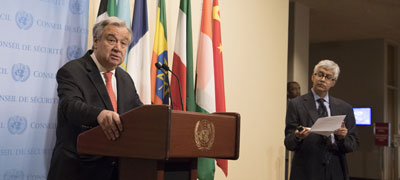 UNITED NATIONS, March 29: Climate change “is still moving much faster than we are,” United Nations Secretary-General António Guterres warned on Thursday, calling for the political will, innovation and financing to cut global emissions by at least 25 per cent over the next two years.
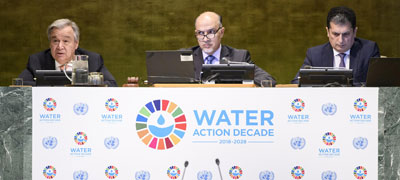 UNITED NATIONS, March 22: The United Nations on Thursday launched a 10-year water action plan that seeks to forge new partnerships, improve cooperation and strengthen capacity to implement the 2030 Agenda for Sustainable Development.
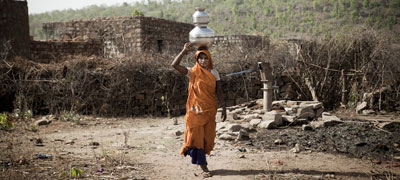 Stressing that water cannot be taken for granted, the UN chief said that while solutions and technologies to improve water management exist, these are often not accessible to all. In many cases, end up perpetrating inequity within and among countries.
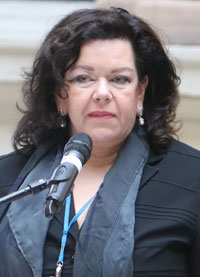 NEW YORK, March 26: Karen Pierce has taken up the position of the United Kingdom’s Ambassador and Permanent Representative to the United Nations in New York on Monday.
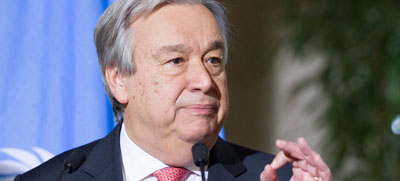 UNITED NATIONS, March 25: Drawing attention to the dangers United Nations personnel face while serving the world’s most vulnerable, Secretary-General António Guterres has called for greater protection for the Organization’s staff to allow them to carry out their mission safely.
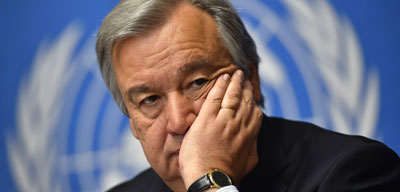 UNITED NATIONS, March 24: Strongly condemning the terrorist attack in France, the United Nations Secretary-General has reiterated his support to the Government in its fight against violent extremism.'
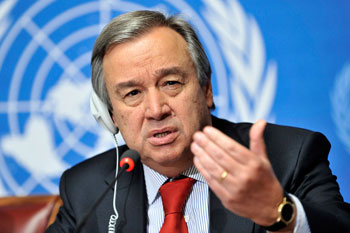 UNITED NATIONS, March 22: Alarmed at persistent reports of chemical weapons use in Syria, the United Nations Secretary-General has called on the Security Council to demonstrate unity and resolve in response to bringing to justice those who use.
 NEW YORK, March 19: What is the International Day of Happiness? It’s a day to be happy, of course! Since 2013, the United Nations has celebrated the International Day of Happiness as a way to recognise the importance of happiness in the lives of people around the world.
 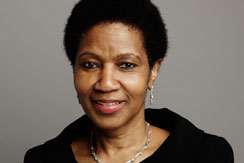 NEW YORK, March 19: New research from the Web Foundation, the Alliance for Affordable Internet and UN Women, released today at the 62nd UN Commission on the Status of Women, calls on governments to invest at least 50 per cent of funds collected for expanding connectivity in projects targeting women’s internet access and use.
 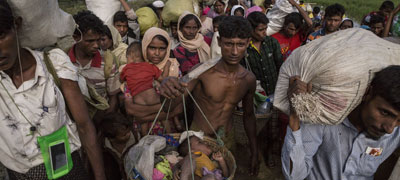 GENEVA, March 16: To meet the urgent needs of nearly 900,000 Rohingya refugees and more than 330,000 vulnerable Bangladeshis in the communities hosting them, United Nations agencies and their humanitarian partners appealed jointly on Friday for $951 million.
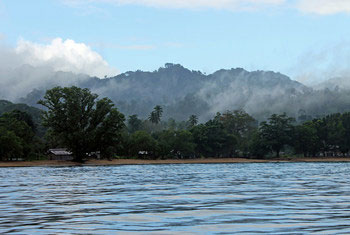 UNITED NATIONS, March 15: Four countries could soon “graduate” from the ranks of the world’s poorest and most vulnerable nations, a United Nations expert committee announced on Thursday
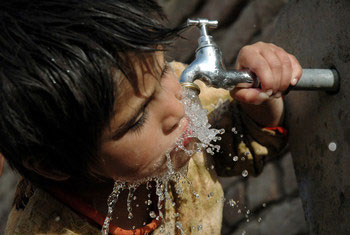 UNITED NATIONS, March 14: Making Every Drop Count: An Agenda for Water Action, released by a panel of 11 Heads of State and a Special Advisor, calls for a fundamental shift in the way the world manages water so that the Sustainable Development Goals (SDGs), particularly Goal 6 on ensuring availability and sustainable management of water and sanitation for all, can be achieved.
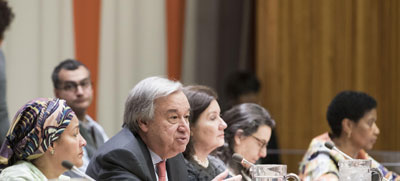 UNITED NATIONS, March 13: “The struggle for gender equality is a tough struggle, and obviously it is tougher when we look at it from the perspective of Governments and institutions,” Mr. Guterres said during a town hall-style discussion at UN Headquarters in New York, an event held on the margins of the 62nd session of the UN Commission on the Status of Women (CSW62), the UN’s largest gathering on gender equality.
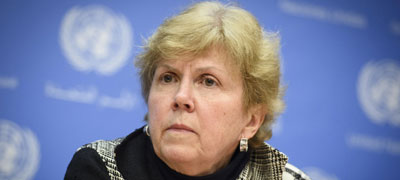 UNITED NATIONS, March 13: The Special Coordinator on Improving UN Response to Sexual Exploitation and Abuse, Jane Holl Lute, outlined some of its main messages during a press conference at UN Headquarters in New York on Tuesday.
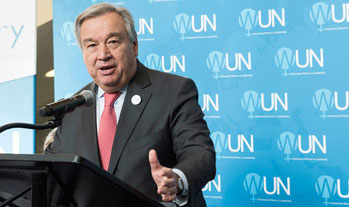 Guterres reiterates support for peaceful denuclearization of Korean Peninsula
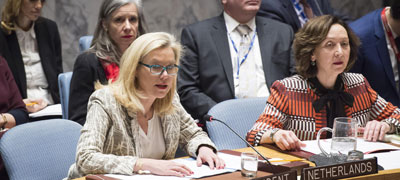 UNITED NATIONS, March 8: The Security Council on Thursday renewed the mandate of the United Nations political mission in Afghanistan for another year to continue providing assistance to the Government and the people of the conflict-plagued country.
 UNITED NATIONS, March 8: India has expressed its support for the Afghanistan government’s offer to the Taliban to participate in a peace process without preconditions despite the group’s “irreconcilable” nature, and called for international backing for Kabul’s reconciliation efforts.
  UNITED NATIONS, March 5: The imbalance between spending on conflict, and spending on peace, must be tackled head-on, Secretary-General António Guterres said Monday, urging the United Nations to rally all international actors “for our efforts across the peace continuum – from prevention, conflict resolution and peacekeeping to peacebuilding and sustainable long-term development.”
Aviation
| Business | Defence | Foreign
Affairs | Communication | Health
| India | United Nations
India-US
| India-France | Entertainment
| Sports | Photo Gallery |
Tourism | Advertise with Us
| Contact Us
© Noyanika International, 2003-2009. All rights reserved.