


United Nations
UN to help 135 nations get vital COVID-19 medical kitBy Deepak Arora GENEVA, April 28: A major UN-led initiative is under way to secure supplies of key medical equipment for 135 low to medium-income countries facing down the COVID-19 pandemic, the World Health Organization (WHO) said on Tuesday. The COVID-19 taskforce initiative follows a direct request to WHO from UN Secretary-General António Guterres to coordinate the Organization’s response to the new coronavirus. It comes amid unprecedented global shortages of critical supplies, skyrocketing prices and export bans, said Paul Molinaro, Chief, Operations Support and Logistics, WHO Health Emergencies Programme. “The demand has obviously increased in those markets 100 or 200 times normal demand”, he told journalists via video conference. “On the supply side we saw a lot of shutdowns in manufacturing, we saw a lot of export controls, we saw the international air transport system on which we’re quite dependent for the movement of cargo, gradually shut down, so we’re at the point where we need to look for solutions to this.” As part of the collective effort by the UN and public and private partners, a dedicated “COVID-19 Supply Portal” is set to launch within days, offering countries the opportunity to submit supply requests via a single platform. This will enable the humanitarian supply chain system “to plan and coordinate allocation of critical supplies” to those 135 countries deemed to be most vulnerable, WHO said in a statement: “We need to streamline demand at country level to really look at the highest priority and to try and get the numbers to something manageable and coordinated,” Molinaro said, highlighting the first of the initiative’s four priorities. “Step two is collaborative procurement amongst ourselves in the UN and some of our key partners in approaching the market together. This gives us a bigger voice, particularly in a constrained market with a lot of intense competition”, he added. “The third part is allocation process based on vulnerabilities and gaps and on critical needs. And then the fourth step – in light of difficulties with transportation – is to create a unified transport system, and this is something our partners are currently doing, particularly WFP.” After raising the alarm earlier this year about the health threat posed by the new coronavirus that emerged in central China in December, the WHO announced that it was stepping up support to countries with beleaguered public health systems. To date, it has distributed 1.1 million tests to 129 countries, and “we have another 1.5 million on the way”, Molinaro said, noeting that the new supply chain initiative should secure a further nine million tests, which would be allocated as needed. In addition, partner agency UNICEF (the UN Children’s Fund) has shipped supplies to 44 countries including 1.2 million surgical masks, more than 320,000 respirators, 6.4 million surgical gloves and over 250,000 gowns. UNICEF has also shipped oxygen concentrators, basic surgical equipment, stethoscopes, medication and nutrition to the Democratic Republic of the Congo (DRC), along with personal protective equipment to Iran and Venezuela, and a 50-bed COVID-19 isolation and treatment unit to Cox’s Bazar, Bangladesh. According to WHO, the taskforce aims to procure 75 million face masks, 50 million respirators, 28 million surgical gloves, 10 million face shields and three million goggles for distribution. Discussions are also ongoing with the Jack Ma Foundation for 100 million surgical masks and one million respirators, WHO said in a statement. The positive development comes amid concerns about border closures or delays which are already impacting aid deliveries, including at the border between Uganda and Kenya, WFP spokesperson Elisabeth Byrs said: “We are seeing long queues of trucks waiting, because…some governments like Uganda, Kenya and Rwanda are taking the temperature of the truck drivers; this slows the delivery of food in the country.” There are also concerns that frontier delays and protective trade measures may hamper life-saving immunization work. “There’s enormous challenges and the longer we continue to face this situation, it’s clear there are going to be repercussions outside the COVID response,” said Molinaro. “We already see UNICEF vaccine shipments which are highly dependent on commercial air cargo, we do see those having been disrupted in the month of April. If this continues into May, there will be gaps in routine immunisation and also in campaigns against outbreaks of other diseases.” Asked about distribution of supplies to Latin American countries, the WHO official replied that although there may have been some “difficulties…in the beginning” when the caseload wasn’t high, “the situation has changed and as mentioned, we’re in the process of now planning that the next acquisitions and batch volumes we get, at least in PPE, will be making their way in that direction, certainly.” Moving forward, the COVID-19 taskforce’s strategy is to “speak up for those countries that don’t have the means to access life-saving supplies”, WHO said. Its partners include UN agencies, The Global Fund, the World Bank, and other partners. In a related development, the World Food Programme (WFP) issued an alert about a potentially massive spike in global food insecurity in East African nations and the Horn of Africa, as a direct result of the pandemic. “WFP estimates that 20 million people are now food insecure in many countries in the region. Ethiopia, South Sudan, Kenya, Somalia, Uganda, Rwanda, Burundi, Djibouti and Eritrea,” said WFP spokesperson Elisabeth Byrs. “We have done projections about the situation there, about the number of food insecure people, and this number is likely to increase to 34 million up to 41 million during the next three months, due to the social-economic impact of COVID-19.” WHO Chief Tedros warns against complacency for ‘long-stay’ CoronavirusBy Deepak Arora
Addressing a virtual press conference here on Wednesday, Dr Tedros clarified that the UN health agency had declared a global emergency in good time on January 30 for countries to prepare and plan their response. The body has been heavily criticised by the United States for its handling of the pandemic but Tedros brushed off calls for him to resign. He said early evidence suggested that most of the world’s population remained susceptible. That means epidemics can easily re-ignite. “One of the greatest dangers we face now is complacency. People in countries with stay-at-home orders are understandably frustrated with being confined to their homes for weeks on end. People understandably want to get on with their lives, because their lives and livelihoods are at stake. That’s what WHO wants too. And that’s what we are working for, all day, every day.” But, WHO chief said “the world will not and cannot go back to the way things were. There must be a “new normal” – a world that is healthier, safer and better prepared. The same public health measures we have been advocating since the beginning of the pandemic must remain the backbone of the response in all countries.” Unveiling the six-point plan, Dr Tedros said “Find every case; Isolate every case; Test every case; Care for every case; Trace and quarantine every contact; And educate, engage and empower your people. The fight cannot be effective without empowering people and without the full participation of our people.” He said “Countries that don’t do these six central things, and do them consistently, will see more cases, and more lives will be lost.” Dr Tedros said the easing of movement restrictions does not mark the "the end of epidemic" for any country. "Most of the epidemics in western Europe appear to be stable or declining," he said. "Although numbers are low, we see worrying upward trends in Africa, Central and South America, and eastern Europe." "Most countries are still in the early stages of their epidemics. And some that were affected early in the pandemic are now starting to see resurgence in cases. "Make no mistake: we have a long way to go. This virus will be with us for a long time." Tedros was pressed on whether the WHO had acted swiftly enough. “Looking back, I think we declared the emergency at the right time” on January 30, he said, adding that the world “had enough time to respond”. WHO Chief said “we are also committed to human rights, and to fighting stigma and discrimination wherever we see it. There are disturbing reports in many countries, in all regions, about discrimination related to COVID-19. Stigma and discrimination are never acceptable anywhere at anytime, and must be fought in all countries. As I have said many times, this is a time for solidarity, not stigma.” Dr Tedros said “WHO is also working actively to address the impacts of the pandemic on mental health. Working with mental health experts around the world, WHO has produced technical guidance for individuals and health workers, recognizing the enormous strain they’re under.” In addition, he said “we’ve also developed a free children’s book about COVID-19 with partners from UNICEF, UNHCR, IFRC and UNESCO among others. In less than two weeks, we received requests to translate the book into more than 100 languages, and the book is now being used among Rohingya children in Cox’s Bazaar, and children in Syria, Yemen, Iraq, Greece and Nigeria.” UN chief salutes India, other nations for helping others in fight against Corona virusBy Deepak Arora
Responding to a question from Deepak Arora of TheTribuneOnline on India's efforts to send medicines and other supplies to other countries around the world, the UN chief’s spokesperson Stephane Dujarric said here during the noon briefing on Friday: “the Secretary General calls for global solidarity in this struggle against the virus, and that means that every country who is in a position to help another country should. And we salute those countries that are doing so.” Hydroxychloroquine has been identified by the US Food and Drug Administration as a possible treatment for the Covid-19 and it is being tested on more than 1,500 corona virus patients in New York. US President Donald Trump had thanked Indian Prime Minister Narendra Modi for his strong leadership in helping not just India, but humanity, in this fight. “ Extradordinary times require even closer cooperation between friends. Thank you India and the Indian people for the decision on HCQ. Will not be forgotten!,” President Trump had earlier tweeted.
In a tweet, India’s UN Ambassador Syed Akbaruddin informed that a consignment of hydroxichloroquine from India reached the United States on April 11. He also informed that New Delhi was working on providing Covid-19 related medical support through the India-UN Development Partnership Fund. India also donated 200,000 tables of HCQ to Dominican Republic, the current President of the UN Security Council. In another tweet, Ambassador Syed Akbaruddin thanked US Mission in India and US Ambassador Ken Juster for helping us piggy back on Delta charter flight from Mumbai to Atlanta. Consignment later reached Santo Domingo, Dominican Republic. “The #USIndia partnership is strong as we work together to help third countries combat the #COVID19 virus,” said the tweet. Thank you @USAmbIndia & @StateDept for helping us piggy back on 1 of your charter flights from India to deliver essential medicines to r distant friends. Working in partnership helps. #InThisTogether, added the tweet. Special Envoy from Dominican Republic to UN Ambassador Jose Singer also expressed his gratitude to India. “Dear Ambassador! My country the Dominican Republic is so grateful for this help in challenging times!!!” Singer said in response to a tweet by India’s Permanent Representative to the UN Ambassador Syed Akbaruddin on India’s donating the medicines to the Caribbean nation. Russia President Vladimir Putin also spoke with Modi and thanked him. He also welcomed India's decision to ship medicines to combat corona. Germany also received 1.5 metric tonnes of hydroxychloroquine (active pharmaceutical ingredient) in the first consignment from India. The countries that have received medicines to fight Covid 19 include Bahrain, Nepal, Bhutan, Bangladesh, Afghanistan, Maldives, Seychelles, Mauritius, Sri Lanka, Madagascar, Myanmar, Zambia, Uganada, Burkina, Niger, Mali, Congo, Egypt, Armenia, Kazakhstan, Ecuador, Jamaica, Marshall Islands, Syria, Ukraine, Eswatini, Chad, Sierra Leone, Zimbabwe, France, Jordan, Kenya, Netherlands, Nigeria, Oman, Peru, Phillippines, Russia, Slovenia, South Africa, Tanzania, UAE, Uzbekistan, Uruguay, Colombia, Ageria, Bahmas, Bolivia, Guyana, the UK and the USA. South African President Cyril Ramaphosa also thanked Modi for allowing the import of medical supplies from India to South Africa. It may be mentioned that India had sent a Rapid Response Team to Kuwait with medical team and equipment. Now is ‘not the time’ to reduce funding for WHO, urges GuterresBy Deepak Arora
“As I said on 8 April, the COVID-19 pandemic is one of the most dangerous challenges this world has faced in our lifetime. It is above all a human crisis with severe health and socio-economic consequences”, he added. The UN chief’s statement, came as the President of the United States, Donald Trump, announced early on Tuesday evening that he was halting funding for the UN health agency, pending a review of its response to the initial outbreak. WHO, with thousands of its staff aiding and assisting operations across the world to limit the transmission of the coronavirus, “is on the front lines, supporting Member States and their societies, especially the most vulnerable among them, with guidance, training, equipment and concrete life-saving services”, said the Secretary-General. “It is my belief that the World Health Organization must be supported, as it is absolutely critical to the world’s efforts to win the war against COVID-19.” Reiterating the argument which he made last week, the UN chief noted that given the unprecedented nature of COVID-19 and the subsequent global response that was needed to defeat it, “it is possible that the same facts have had different readings by different entities. Once we have finally turned the page on this epidemic, there must be a time to look back fully to understand how such a disease emerged and spread its devastation so quickly across the globe, and how all those involved reacted to the crisis.” The lessons learned will be essential to effectively address similar challenges, as they may arise in the future”, Guterres added. “But now is not that time.” Until then, “it also not the time to reduce the resources for the operations of the World Health Organization or any other humanitarian organization in the fight against the virus.” Guterres made it clear that unity must prevail, so that the international community can work together, “in solidarity to stop this virus and its shattering consequences.” Ever since the disease emerged in Wuhan, China, and the first case of a pneumonia “of unknown cause” was reported to WHO on 31 December last year, the agency has been working 24/7 to analyze data, provide advice, coordinate with partners, and help countries prepare. The outbreak was declared a Public Heath Emergency of International Concern, a month later. UN Chief António Guterres warns COVID-19 threatening global peace and securityBy Deepak Arora
António Guterres said heightened solidarity is needed if the world is to defeat the crisis, which he called the "gravest test since the founding of this Organization", with Governments already struggling to address rising unemployment and economic downturn. "But the pandemic also poses a significant threat to the maintenance of international peace and security -- potentially leading to an increase in social unrest and violence that would greatly undermine our ability to fight the disease", he warned, later stating that the Council’s engagement will be critical to mitigate these implications. "Indeed, a signal of unity and resolve from the Council would count for a lot at this anxious time", he said. The UN chief outlined eight ways COVID-19 could undermine global peace and security, beginning with a further erosion of trust in public institutions if people perceive that their authorities had mishandled response or were not transparent. The pandemic’s economic impacts could create "major stressors" in fragile societies or less developed countries, for example, while the ensuing economic instability will have devastating consequences for women as they make up the majority in the worst-affected sectors. Stressing that "this is not a time for political opportunism", the Secretary-General also feared electoral processes could be affected as postponing or proceeding with votes could spark political tensions and undermine legitimacy. "In some conflict settings, the uncertainty created by the pandemic may create incentives for some actors to promote further division and turmoil. This could lead to an escalation of violence and possibly devastating miscalculations, which could further entrench ongoing wars and complicate efforts to fight the pandemic", said Guterres. With most Governments focused on the pandemic, terrorist groups could see "a window of opportunity to strike", with the situation in the Sahel a particular concern. COVID-19 has also hindered conflict resolution efforts, and many peace processes have stalled as countries respond. The pandemic also has triggered or worsened numerous human rights challenges. "We are witnessing discrimination in accessing health services.Refugees and internally displaced persons are particularly vulnerable. And there are growing manifestations of authoritarianism, including limits on the media, civic space and freedom of expression". The UN chief reminded Ambassadors of his recent appeal for an immediate global ceasefire during the pandemic. Some warring parties have taken steps to lay down their arms, and UN representatives will continue their efforts on this front. Following the meeting, Security Council members issued a statement expressing support for the Secretary-General's efforts concerning the potential impact of the pandemic to conflict-affected countries, and the need for unity and solidarity with all those affected. WHO ‘absolutely critical’ to neutralizing coronavirus threat: UN chiefBy Deepak Arora
“The Covid-19 pandemic is one of the most dangerous challenges this world has faced in our lifetime”, the UN chief said in a statement. “It is above all a human crisis with severe health and socio-economic consequences. Guterres pointed out that thousands of WHO staff were in the field, fighting the virus on the front lines, supporting Member States and serving the most vulnerable among them with guidance, training, equipment and concrete life-saving assistance. “I witnessed first-hand the courage and determination of WHO staff when I visited the Democratic Republic of the Congo last year, where WHO staff are working in precarious conditions and very dangerous remote locations as they fight the deadly Ebola virus”, he asserted. Noting that no new cases of Ebola have been registered in months, the UN chief called it “a remarkable success for WHO”. “This virus is unprecedented in our lifetime and requires an unprecedented response”, Mr. Guterres spelled out. Maintaining that it is possible that the same facts have been interpreted in different ways, by different entities, he assured that that once the world finally turns the page on the epidemic, “there must be a time to look back fully to understand how such a disease emerged and spread its devastation so quickly across the globe, and how all those involved reacted to the crisis”. “The lessons learned will be essential to effectively address similar challenges, as they may arise in the future”, he continued. But now is not that time, added the UN chief: “Now is the time for unity, for the international community to work together in solidarity to stop this virus and its shattering consequences.” Trump puts China, WHO on line for UNSC meet on Coronavirus
“The WHO really blew it. For some reason, funded largely by the United States, yet very China centric. We will be giving that a good look. Fortunately, I rejected their advice on keeping our borders open to China early on. Why did they give us such a faulty recommendation,” Donald Trump tweeted on Tuesday. It is not what prompted the outburst but as one Indian analyst put it, Trump had hit the nail on its head. WHO director general Tedros Adhanom Ghebreyesus was elected to the post after China backed him in the May 2017 election as he defeated US-backed Dr David Nabarro, who was the candidate of the UK. Despite the coronavirus being detected in Wuhan in China as early as November 17, 2019, the WHO categorised Covid 19 outbreak as a pandemic on 12 March 2020 when it had crossed the borders and created havoc in Europe. By then, the virus had already killed 1,000 people in the european region. All the 10 non-permanent members of the UN Security Council have backed the informal discussion led by the UNSC President; the post is held by the Dominican Republic. But whether the closed-door discussion will conclude with any outcome depends on the proposals put up and the exercise of veto powers of China and its ally Russia. If President Trump’s tweet is indicative of the US mind, then the vote will be 13 to 2 or 14 to 1 depending on how Russia plays. Other two members of the P5, the UK and France have suffered at the hands of pandemic and so has Europe. While China may say that the pandemic is not a peace and security issue - the argument used to block a request by Estonia for a discussion last month - the economic misery that the pandemic has hurled the world towards a deep crisis. UNSC to discuss Covid-19 pandemicNEW DELHI, April 5: Three days after China demitted Presidency of the UN Security Council, 10 non-permanent members led by Dominican Republic have forced the UN Secretary-General Antonio Guterres to agree to a closed-door informal consultation on the Covid-19 pandemic this week. This comes after an attempt by Estonia to have the UNSC discuss the pandemic with more transparency and accountability was blocked by China, Russia and South Africa who argued that the coronavirus spread was not a peace and security issue and hence outside the UNSC’s mandate. According to diplomatic sources in Washington and Delhi, the demand for informal consultation on the pandemic, made as it impacts the peace and security of the world, was pushed by UNSC President Dominican Republic on Friday. It was backed by Vietnam, Indonesia, Germany, Belgium, Estonia, St Vincent and the Grenadines, South Africa, Niger and Tunisia. It is understood that UN Secretary General Guterres will first address the UNSC through video conference and then announce the date for informal consultations this week. Guterres is expected to brief the member countries on the status of the pandemic and measures taken to control the killer disease. There is, however, a huge question on the possible outcome of the discussions on the disease that originated in China’s Wuhan city before it rapidly spread across the world. China is expected to be supported by Russia. The United States, on the other hand, is yet to take a stand. But the Trump administration has of late adopted a softer stand on China, particularly after Beijing supplied 1,000 ventilators for New York. France and the United Kingdom are likely to be in favour of an outcome at the informal consultations. As per John Hopkins Coronavirus Resource Centre, the Sars-CoV-2 pathogen has infected 1.2 million people across the world and killed 66,542. The US has reported the maximum number of cases with over 3,12,000 Covid-19 patients and over 8,500 deaths. Experts believe that the virus will destroy a lot more lives than it will take. Governments across the world have ordered lockdowns to slow the pandemic and minimise the lives that it takes, forcing the global economy into a recession that may take years to get over. UN Secretary-General Antonio Guterres wants a global ceasefire to be announced so that member countries can focus on the fight against the virus and the global misery that will follow. But this may not be accepted by Russia which has stakes in the Syrian civil war and the Libyan strife. To be sure, little is expected of the informal consultations on Covid-19 at UNSC. But permanent member China, which is riled up at any description of the disease as Wuhan virus, will have to allow itself to be targeted by other UNSC members. UNSC members also surely expected to raise questions on the role of World Health Organisation that failed to recognise the disease as a pandemic earlier and Beijing’s initial denials when the outbreak took place as early as November 17, 2019. UN chief urges unity in mobilizing ‘every ounce of energy’ to defeat coronavirus pandemicBy Deepak Arora
Ten days ago, António Guterres called for an immediate global ceasefire to help people in war-torn regions receive life-saving aid to fight the coronavirus pandemic. “We know the pandemic is having profound social, economic and political consequences, including relating to international peace and security”, the UN chief said, in a virtual press conference outlining the impact so far of the ceasefire appeal. He cited sustained restrictions on movement by governments everywhere, and factors that could contribute to rising discontent and political tensions, but maintained that “the global ceasefire appeal is resonating across the world”. He said that the call has been endorsed by 70 Member States, regional partners, non-State actors, and others. “Religious leaders – including Pope Francis – have added their moral voice in support of a global ceasefire, as have citizens through grassroots mobilization online”, he told reporters. Although a substantial number of fighters and militias have accepted the call, the UN chief stressed that “there is a huge distance between declarations and deeds – between translating words into peace on the ground, and in the lives of people”. He acknowledged the “enormous difficulties” in implementing a truce to halt conflicts that have festered for years, where “distrust is deep”, and recognized that “any initial gains are fragile and easily reversible”. The UN chief observed that in many critical situations, there has been no let-up in fighting, and in some, conflicts have even intensified. “We need robust diplomatic efforts to meet these challenges”, he asserted. “To silence the guns, we must raise the voices for peace”. Guterres explained that he and his envoys are engaging with conflict actors to help push forward ceasefires. As the UN Special Envoy in Yemen works to convene the parties to discuss COVID-19 crisis management and nationwide ceasefire mechanisms, the conflict has spiked – despite expressed support for a truce by the Government and warring parties. “I call on all governments and movements involved and their supporters to put an end to the catastrophic conflict and humanitarian nightmare – and come to the negotiating table”, implored the UN chief. In Syria, where the first COVID-related deaths have now been reported, the UN Special Envoy has appealed for a “complete and immediate” nationwide ceasefire to allow for “an all-out-effort against COVID-19”. Turning to Libya, although the warring parties have welcomed calls to stop the fighting, clashes have escalated drastically on all frontlines, obstructing efforts to effectively respond to COVID-19. “I urge both parties, and all others directly and indirectly involved in the conflict, to immediately halt hostilities to allow authorities to effectively address the COVID-19 threat”, underscored Guterres. In Afghanistan, a 21-member team was announced last week to directly negotiate with the Taliban, and technical contacts established for an initial prisoner release. Pledging his full support, the Secretary-General stated his belief that “the time has come for the Government and the Taliban to cease hostilities as COVID-19 looms over the country”. For all nations in conflict, the UN chief made a special appeal to those with influence on warring parties “to do everything possible for the ceasefire to become a reality”. He called on “all those that can make a difference, to make that difference”, by urging and pressuring combatants around the world to lay down their arms. Noting that there is a chance for peace, Guterres maintained, “but we are far from there”. “The need is urgent”, he said. “The COVID-19 storm is now coming to all these theatres of conflict”. Against the backdrop of a coronavirus moving swiftly across borders, devastating countries and upending lives, Guterres projected that, “the worst is yet to come”. “We need to do everything possible to find the peace and unity our world so desperately needs to battle COVID-19”, concluded the Secretary-General. “We must mobilize every ounce of energy to defeat it”. |
|
||||||
 GENEVA, April 22: While warning the world against any complacency against the Coronavirus, WHO Director General Tedros Adhanom Ghebreyesus unveiled six-point plan to fight the virus and said that Covid-19 will stalk the planet for a long time to come.
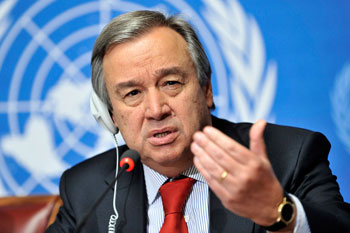 UNITED NATIONS, April 17: The UN Secretary General António Guterres has saluted India and other nations for helping others in the global fight against the Covid-19 pandemic. India, as messenger of peace, has sent medicines to over 50 countries, including the US, over the past two weeks to help them fight the Covid-19 pandemic. The cargo included 85 million anti-malarial drug Hydroxychloroquine tablets and 500 million Paracetamol tablets.
 In a telephonic call on April 4, President Trump had requested PM Modi to allow the sale of hydroxychloroquine tablets ordered by the US to treat the growing number of corona virus patients in his country.
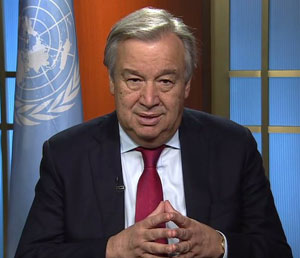 UNITED NATIONS, April 14: Now is a time for unity in the global battle to push the COVID-19 pandemic into reverse, not a time to cut the resources of the World Health Organization (WHO), which is spearheading and coordinating the global body’s efforts, said UN chief António Guterres, on Tuesday.
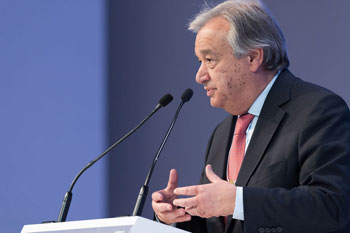 UNITED NATIONS, April 10: While the COVID-19 pandemic is first and foremost a health crisis, its implications are more far-reaching and could threaten global peace and security, the UN Secretary-General told members of the Security Council in a closed video-conference held on Thursday.
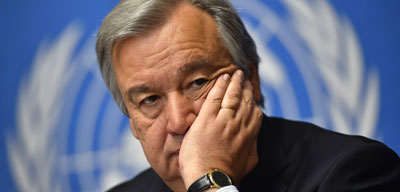 UNITED NATIONS, April 8: The World Health Organization (WHO) must be supported across the world, United Nations Secretary-General António Guterres said on Wednesday, describing the UN health agency, which has led the multilateral response since the beginning, as “absolutely critical” in overcoming the COVID-19 pandemic.
 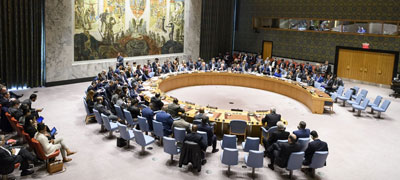 NEW YORK, April 7: After US President Donald Trump virtually blamed the World Health Organisation for playing the Chinese side on the coronavirus pandemic, heat will now mount on Beijing at an informal discussion on the virus outbreak in the UN Security Council on Thursday, April 9, at 3 pm (EST). The informal discussion will be preceded by a briefing by the UN Secretary General Antonio Guterres.
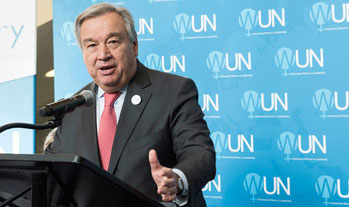 UNITED NATIONS, April 3: There should be only one fight in our world today, the United Nations Secretary-General António Guterres said on Friday, issuing a loud clarion call to join “our shared battle against COVID-19”.
Aviation
| Business | Defence | Foreign
Affairs | Communication | Health
| India | United Nations
India-US
| India-France | Entertainment
| Sports | Photo Gallery |
Tourism | Advertise with Us
| Contact Us
© Noyanika International, 2003-2009. All rights reserved.