


United Nations
|
Bangladesh’s Khalilur Rahman Elected President of 81st UN General AssemblyBy Deepak Arora
Rahman secured 99 votes against 91 for Kakouris, with 190 ballots cast. There were no invalid votes or abstentions. His election gives Bangladesh the presidency of the 193-member General Assembly at a critical time for the United Nations, which is confronting armed conflicts, deep geopolitical divisions, climate-related challenges, development financing pressures and growing demands for institutional reform. Rahman will take office when the 81st session opens on September 8 and will serve a one-year term. The presidency rotates among the UN’s five regional groups, and the Asia-Pacific Group was allocated the position for the upcoming session. The election was closely watched because the new Assembly president will be expected to steer negotiations on a wide range of international issues at a time when reaching consensus among member states has become increasingly difficult. Rahman, who has served as Bangladesh’s Foreign Minister since February, brings more than four decades of diplomatic experience to the post. He joined Bangladesh’s foreign service in 1979 and has held a number of senior diplomatic and multilateral positions, including assignments with the United Nations in New York and Geneva. Before becoming foreign minister, he served as Bangladesh’s National Security Adviser and High Representative on the Rohingya issue. Speaking after his election, Rahman acknowledged the difficult circumstances surrounding his appointment and said he was accepting the responsibility with “humility and respect”. He warned that the United Nations was entering its ninth decade at a time when confidence in the international system was being tested from several directions. “The UN will commence its ninth decade at a time when trust in our organization is being tested on multiple fronts,” Rahman told member states. He said the accumulation of global challenges risked weakening public confidence in the organisation and its ability to deliver on its commitments. The incoming president has made rebuilding confidence in multilateralism a central theme of his programme. His overarching theme for the 81st session will be “Restoring Trust, Managing Transformation: A United Nations that Delivers for All.” Rahman has identified six broad priorities for his presidency: international peace and security, accelerating progress towards the Sustainable Development Goals, climate action and environmental protection, human rights, governance of emerging technologies including artificial intelligence, and reform of the United Nations. Peace and conflict prevention are expected to feature prominently in his agenda. Drawing on Bangladesh’s extensive involvement in UN peacekeeping operations, Rahman has pledged to support preventive diplomacy, peacebuilding and stronger protection for civilians affected by conflict. Development will also be a major focus. Rahman has stressed the need to address financing gaps that continue to hinder progress towards the Sustainable Development Goals, particularly in developing countries. He has also highlighted the importance of implementing the Global Digital Compact and ensuring that developing countries are able to participate meaningfully in discussions surrounding technological change. Artificial intelligence and other emerging technologies are increasingly shaping economies and societies, and Rahman has indicated that their governance should be addressed through inclusive international cooperation. The President-elect has promised to adopt a bridge-building approach and engage all member states in an effort to find common ground despite political differences. “As your president, I will dedicate myself to rebuilding trust, nurturing consensus, and opening space for good faith negotiations that will lead to outcomes for all that are owned by all,” he said. Rahman has also pledged to uphold the UN Charter and pay attention to geographical and gender balance within his office. He said the concerns and practical needs of smaller delegations would also receive attention during his tenure. Outgoing General Assembly President Annalena Baerbock highlighted the difficult environment awaiting her successor. Addressing member states after the election, she described the current period as one in which the UN was facing “not only headwinds, but immense pressure”. Baerbock said consensus was becoming increasingly difficult and that defending the principles of the UN Charter had become a daily necessity. “The role of the president of the General Assembly is no longer simply procedural,” she said. She also pointed to the challenges associated with implementing the Pact for the Future and advancing institutional reform through the UN80 initiative. Wider geopolitical tensions are expected to continue influencing the Assembly’s work during the coming year. The General Assembly is the UN’s most representative organ, bringing together all 193 member states, with each country holding one vote. Although its resolutions are generally not legally binding, the Assembly serves as the principal global forum for debate on international peace and security, development, human rights and international law. Rahman’s election is also significant for Bangladesh. He will become only the second Bangladeshi to head the General Assembly. The first was diplomat and former Parliament speaker Humayun Rasheed Choudhury, who served as president of the 41st session in 1986. Rahman will now preside over an agenda expected to include conflicts and humanitarian crises, climate change, sustainable development, technology governance and UN reform. The 81st session will open on September 8 at UN Headquarters in New York, followed later that month by the annual high-level general debate, when world leaders traditionally gather to address the international community. For Rahman, the challenge will be to translate his election victory into broad political consensus and demonstrate that the General Assembly can remain an effective forum for cooperation despite the divisions confronting the international system. Guterres Backs Bangladesh’s Rahman as He Takes UN General Assembly Helm, Warns of Global Trust CrisisBy Deepak Arora
Guterres said Rahman’s theme for the 81st session, “Restoring Trust, Managing Transformation: A United Nations that Delivers for All,” offered an important call to action at a time when the multilateral system is facing mounting pressure. The Secretary-General said the theme reflected Rahman’s commitment to reinforcing the international mechanisms that have been at the center of global cooperation since the United Nations was established in 1945. Addressing Rahman following Tuesday’s election, Guterres said the Bangladeshi diplomat’s extensive political and diplomatic experience would benefit not only the General Assembly but the United Nations as a whole. He also assured the President-elect of his support as Rahman prepares to take up the position for the one-year 81st session beginning September 8. Rahman won a closely contested secret-ballot election against Cyprus’ candidate Andreas Kakouris, receiving 99 votes to Kakouris’ 91. A total of 190 ballots were cast, with no invalid votes or abstentions. The General Assembly presidency rotates among the UN’s five regional groups. The 81st session falls to the Asia-Pacific Group, paving the way for Rahman to lead deliberations involving all 193 member states. Guterres also paid tribute to outgoing General Assembly President Annalena Baerbock of Germany, praising her leadership during the 80th session. Baerbock, who became only the fifth woman to serve as President of the General Assembly, had placed the theme “Better Together” at the centre of her tenure. Guterres said she had worked to bring member states together around implementation of the Pact for the Future, particularly at a time when international relations were under severe strain. The Pact for the Future is intended to strengthen international cooperation and provide a framework for addressing challenges that extend beyond the capacity of individual countries. Guterres also highlighted Baerbock’s support for the UN80 Initiative, which seeks to advance reforms aimed at making the organisation more effective, agile and prepared for future challenges. He praised her advocacy for women’s rights as well, noting that she had repeatedly emphasised their connection to the founding principles of the United Nations and their importance to global justice. “President Baerbock — thank you for your wisdom, guidance and deep commitment to the United Nations and multilateral solutions,” Guterres said. As Rahman prepares to assume the presidency, Guterres warned that the international community is confronting an unusually broad range of crises. He pointed to ongoing conflicts and political divisions, rising inequality and the worsening consequences of climate change. The Secretary-General also expressed concern about the slow pace of progress towards the Sustainable Development Goals, which serve as the international community’s principal framework for addressing poverty, inequality, health, education, climate and other development challenges. Only around one-fifth of the goals are currently on track, Guterres said, describing the situation as unacceptable. The warning comes as developing countries continue to face financial pressures and competing demands for resources, making it increasingly difficult to maintain momentum on long-term development programmes. Guterres also argued that some of the world’s key institutions no longer adequately reflect contemporary geopolitical and economic realities. He pointed specifically to the UN Security Council and the global financial architecture, saying both remain heavily shaped by a world that existed in 1945 rather than the international system of today. As Rahman prepares to take the chair in September, the Secretary-General’s message was both a vote of confidence in the incoming president and a reminder of the enormous expectations surrounding the next chapter of the United Nations’ multilateral work. Bangladesh, Cyprus Set for Contest Over UN General Assembly PresidencyBy Deepak Arora UNITED NATIONS, June 1: Bangladesh and Cyprus are set for a closely watched contest on Monday to determine who will preside over the 81st session of the United Nations General Assembly, with the outcome coming at a time of mounting pressure on the world body to address conflicts, climate challenges and financial constraints. Bangladesh Foreign Minister Khalilur Rahman and Cyprus' Special Envoy for Multilateralism, Ambassador Andreas Kakouris, are the two candidates seeking to lead the 193-member General Assembly for a one-year term beginning in September. The election is scheduled for June 2 and follows the UN's established regional rotation, under which the presidency of the 81st session falls to the Asia-Pacific Group. The vote will take place just a day before member states elect five new non-permanent members to the 15-member Security Council for the 2027-28 term, adding to the diplomatic significance of the week's proceedings. The new General Assembly president will succeed Annalena Baerbock, the former German foreign minister who currently occupies the post and is only the fifth woman in the UN's history to serve as Assembly president. Rahman assumed office as Bangladesh's foreign minister in February. Before that, he served as National Security Adviser and as High Representative for the Rohingya issue under Bangladesh's interim administration headed by Muhammad Yunus. Kakouris, meanwhile, has more than 40 years of experience in diplomacy and public administration. His previous assignments include serving as Cyprus' ambassador and high commissioner to the United States. He is currently the country's Special Envoy for Multilateralism and most recently held the position of Permanent Secretary/State Secretary at the Cypriot Foreign Ministry. The election is taking place against a challenging international backdrop. Wars and other conflicts continue to dominate the global agenda, while divisions within the Security Council have repeatedly hampered efforts to address threats to international peace and security. The UN is also facing growing financial pressures and questions over its ability to deliver effectively on its expanding responsibilities. Rahman has placed development, peace, inclusion and climate action at the centre of his campaign. His vision for the 81st session is built around six broad themes, including ending conflicts, ensuring that no country or community is left behind, protecting the planet, advancing human rights, promoting inclusive innovation and strengthening the connection between the UN and the people it represents. Presenting himself as a candidate of the Global South, Rahman has stressed that, if elected, he would seek to represent the interests of the entire UN membership rather than any particular bloc. He has identified issues including rising sea levels, pandemic preparedness, the right to development and nuclear disarmament as some of the major tests facing the international community during the next Assembly session. Rahman has also pledged to make consensus-building and dialogue central to his tenure, saying the presidency should create conditions for genuine negotiations and decisions that command broad ownership among member states. A victory would make Rahman only the second Bangladeshi to serve as President of the General Assembly. The first was diplomat and former Parliament speaker Humayun Rasheed Choudhury, who presided over the 41st session in 1986. Kakouris has framed his candidacy around strengthening the Assembly's ability to turn political commitments into concrete action. His programme highlights five areas: improving the Assembly's effectiveness, advancing peace and security, promoting development and resilience, strengthening financing and technological cooperation, and improving governance, inclusion and accountability. The Cypriot diplomat has argued for a stronger emphasis on practical outcomes, including measurable goals and credible implementation mechanisms. He has also highlighted the importance of effective multilateral cooperation as the UN prepares for a transition in its top leadership. If elected, Kakouris would make history as the first Cypriot to serve as President of the UN General Assembly. The result of the election is expected to offer an early indication of how member states view competing approaches to the Assembly's role at a particularly consequential moment for the United Nations. IAEA says peace deal gives it access to Iran nuclear sitesTOKYO, June 26: The interim US-Iran peace accord gives inspectors from the UN nuclear watchdog access to Iran, the agency's chief said on Friday, after Tehran indicated that key sites would remain off-limits until a final deal with Washington is reached and sanctions are lifted, according to reports. "There is an agreement and to comply with that agreement, the IAEA will have to have access and inspect," International Atomic Energy Agency chief Rafael Grossi said at a news conference in Japan. "We hope to be there soon." UN agency to begin evacuating thousands of seafarers stranded in the GulfUNITED NATIONS, June 23: The UN’s International Maritime Organization (IMO) will begin evacuating the more than 11,000 seafarers who have been stranded in the Gulf since the start of the war. “After months of hardship and distress for thousands of innocent seafarers, and negative impact for the whole world, I welcome with deep satisfaction the peace agreement concluded between the United States and Iran, marking a decisive step towards restoring maritime security and bringing to an end the unacceptable attacks against civilian shipping,” IMO chief Arsenio Dominguez said in a statement. “This large-scale operation will be carried out in close cooperation with Iran, Oman, all other coastal States in the region, the United States and the maritime industry. We have secured the necessary safety guarantees and have thoroughly verified the conditions for safe navigation to support these operations.” IAEA urges Iran to ‘re-engage’ after US' resolutionVIENNA, June 8: UN nuclear watchdog chief Rafael Grossi urged Iran on Monday to “re-engage” so inspections can resume at sites the US and Israel bombed a year ago, Reuters news agency reported. This comes after the US' resolution to that effect at the agency's board. Iran still has not informed the International Atomic Energy Agency of what happened to those bombed nuclear sites or the nuclear material, including uranium enriched to near bomb grade, that was stored there. UN tells world to brace for extreme weather as El Nino loomsUNITED NATIONS, June 2: The United Nations’ climate agency has warned of an increased risk of extreme weather in the coming weeks and months due to the emerging El Nino weather pattern. The World Meteorological Organization (WMO) issued the alert in a news release on Tuesday, saying that there was an 80 percent chance of an El Nino event – marked by unusually warm sea surface temperatures in the central and eastern Pacific Ocean- between June and August and a roughly 90 percent chance of it forming by November. “The science is clear: El Nino is arriving on our doorstep in the coming months with 90 percent certainty,” said UN Secretary-General Antonio Guterres in a video statement. “The world must treat it as the urgent climate warning it is.” Bringing worldwide changes in winds, pressure and rainfall patterns, El Nino is a naturally occurring phenomenon that generally happens every two to seven years and lasts about nine to 12 months. El Nino can trigger increased rainfall in the southern parts of South America and the United States, parts of the Horn of Africa and Central Asia. It can also cause drought in Australia, Central America, Indonesia and parts of South Asia, and spur hurricane formation in the central and eastern Pacific, according to the WMO. The UN agency predicted this year’s El Nino phenomenon to be “at least moderate – and possibly strong”. “Impacts will hit even harder, travel even farther, and cross borders with devastating speed,” said Guterres. The trend could help fuel especially severe wildfires this year, according to researchers at Imperial College London and the World Weather Attribution network of climate scientists. In anticipation, the European Union has announced plans to deploy a record number of firefighters and aircraft in high-risk areas – spanning Cyprus, Greece, Italy, France, Spain and Portugal. The last El Nino, in 2023 to 2024 – which meteorologists said was strong, contributed to making 2024 the hottest year on record, said WMO Secretary-General Celeste Saulo. Saulo said other risks associated with extreme heat included a wider spread of diseases borne by vectors, such as mosquitoes and ticks, and reduced food and water supplies. “Communities that were already struggling will be pushed farther beyond their limits,” she said. For consumers, facing inflation because of the US-Israel war on Iran, food prices may rise further because of El Nino. Hein Schumacher, CEO of Barry Callebaut, one of the world’s biggest cocoa processors, warned that crops in the growing regions of Ecuador and West Africa, which account for 60 percent of global output, could be reduced. “This is something that we are very cautiously observing,” he said. “El Nino could have an effect that could lead to, you know, a few thousands per tonne.” Guterres said the climate trend was a reminder of the need for a shift away from fossil fuels towards renewable energy. “El Nino conditions will pour fuel on the fire of a warming world,” he said. UN raises alarm over Israeli ops in LebanonUNITED NATIONS, June 1: The United Nations on Monday expressed its alarm and called for all sides to respect the ceasefire as Israel expanded its offensive into Lebanon, while negotiations to end the US-Iran war appeared in peril. "We are deeply alarmed by the escalation in military activities across southern Lebanon and beyond," Stephane Dujarric, spokesman for UN Secretary-General Antonio Guterres, said. “We urge all actors to respect the cessation of hostilities and avoid further escalation,” they added. |
|
||||||
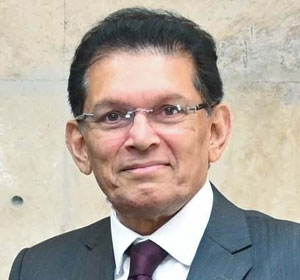 UNITED NATIONS, June 2: Bangladesh Foreign Minister Khalilur Rahman was elected President of the 81st session of the United Nations General Assembly on Tuesday, defeating Cyprus’ candidate Andreas Kakouris in a closely fought secret-ballot election.
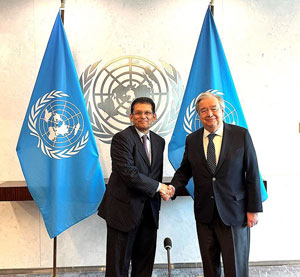 UNITED NATIONS, June 2: UN Secretary-General António Guterres has congratulated Bangladesh Foreign Minister Khalilur Rahman on his election as President of the 81st session of the UN General Assembly, expressing confidence in his diplomatic experience while warning that the incoming Assembly will operate against a backdrop of conflicts, inequality, climate disruption and a deepening crisis of trust in the international system.

India-US | India-France | Entertainment | Sports | Photo Gallery | Tourism | Link Partners | Contact Us
© Noyanika International, 2003-2024. All rights reserved.