


United Nations
|
Managing national borders ‘cannot be based on any form of discrimination’: GuterresBy Deepak Arora
“Refugees fleeing conflict and persecution are finding more and more borders closed and increasingly restricted access to the protection they need and are entitled to receive, according to international refugee law,” Mr. Guterres said in a statement. The UN chief made a particular mention of Ethiopia, the largest refugee-hosting country in Africa, that, he noted “for decades has been keeping its borders open to hundreds of thousands of refugees from its neighbours, many times in dramatic security situations.” Further stating that countries have the right and the obligation, to responsibly manage their borders to avoid infiltration by members of terrorist organizations, Mr. Guterres cautioned that this cannot be based on any form of discrimination related to religion, ethnicity or nationality, noting that doing so “is against the fundamental principles and values on which our societies are based.” He also warned that it could “trigger widespread anxiety and anger that may facilitate the propaganda of the very terrorist organizations we all want to fight against” and that “blind measures, not based on solid intelligence, tend to be ineffective as they risk being bypassed by what are today sophisticated global terrorist movements.” At the start of the regular noon-briefing at UN Headquarters, Spokesperson Stéphane Dujarric said Mr. Guterres is currently on his way back to New York from the African Union Summit in the Ethiopian capital, Addis Ababa, and he had had the opportunity to express his disagreement with the United States Executive Order on refugees. The statement follows President Donald Trump’s signing last Friday of an Executive Order that, among things, suspends the US refugee programme for 120 days and, according to the media, bars entry of refugees from several mostly Muslim countries, including Syria, until further notice. Banks, UN set standards on channelling investments for sustainable developmentBy Deepak Arora
The Principles for Positive Impact Finance – a first of its kind set of criteria for investments to be considered sustainable – provide financiers and investors with a global framework applicable across their different business lines, including retail and wholesale lending, corporate and investment lending and asset management. “Achieving the Sustainable Development Goals (SDGs) – the global action plan to end poverty, combat climate change and protect the environment - is expected to cost $5 to $7 trillion every year through 2030,” said the head of the UN Environment Finance Initiative, Eric Usher, in a press release. The UN Environment Finance Initiative is a partnership between the UN Environment Programme (UNEP) and the global financial sector created in the wake of the 1992 UN Conference on Environment and Development, widely known as the Earth Summit, with a mission to promote sustainable finance. Over 200 financial institutions, including banks, insurers and fund managers, work with UN Environment to understand today’s environmental challenges, why they matter to finance, and how to actively participate in addressing them. “The Positive Impact Principles are a game changer, which will help to channel the hundreds of trillions of dollars managed by banks and investors towards clean, low carbon and inclusive projects,” Mr. Usher said. The Principles provide guidance for financiers and investors to analyse, monitor and disclose the social, environmental and economic impacts of the financial products and services they deliver. “With global challenges such as climate change, population growth and resource scarcity accelerating, there is an increased urgency for the finance sector both to adapt and to help bring about the necessary changes in our economic and business models,” said Deputy Chief Executive Officer of Société Générale, Séverin Cabannes. “The Principles for Positive Impact Finance provide an ambitious yet practical framework by which we can take the broader angle view we need to meet the deeply complex and interconnected challenges of our time,” he added. The Principles were developed by the Positive Impact Working Group, a group of UN Environment Finance Initiative banking and investment members, as part of the implementation of the roadmap outlined in the Positive Impact Manifesto released in October 2015. Currently, the Positive Impact Working Group includes: Australian Ethical, Banco Itaú, BNP Paribas, BMCE Bank of Africa, Caisse des Dépôts Group, Desjardins Group, First Rand, Hermes Investment Management, ING, Mirova, NedBank, Pax World, Piraeus Bank, SEB, Société Générale, Standard Bank, Triodos Bank, Westpac and YES Bank. Guterres pledges commitment to achieving world free of nuclear weapons
“I am committed to achieving a world free of nuclear weapons,” the Secretary-General declared in a video message to the Geneva-based Conference on Disarmament, which opened the first segment of its three-part 2017 session yesterday. Recalling that upon taking office he had described a world of new and old conflicts woven in a complex, interconnected web, Mr. Guterres said today that those conflicts have precipitated gross violations of international humanitarian and human rights law. As such, while disarmament can play an important role in ending existing conflicts and preventing the outbreak of new strife, disarmament and arms control processes provide the breathing space for confidence to be built, stability to be strengthened and trust to be established. “This was true during the Cold War and it is true now,” continued the UN chief, stressing that the need for breathing space is more urgent than ever as global tensions are rising, “sabres have been rattled and dangerous words spoken about the use of nuclear weapons.” As the sole multilateral disarmament negotiating body, “the world looks to the Conference to provide rationality and diplomatic solutions, to promote security through peaceful action, and to create the instruments we need to develop confidence, trust and international stability,” Mr. Guterres told the 65-member panel, adding: “You have a responsibility to all States and all peoples. Now is the time to live up to it.” “I encourage you to work hard to find compromise and to make the most of your partners in civil society and academia. The United Nations will be your ally and assist however we can,” he concluded. The Conference on Disarmament, established in 1979 as the single multilateral disarmament negotiating forum of the international community, is not formally a UN body but reports annually, or more frequently as appropriate, to the UN General Assembly. Michael Møller, the Director-General of the UN Office at Geneva, serves as Secretary-General of the Conference, as well as Mr. Guterres’ personal representative to the body. Currently, the consensus-based body focuses primarily on the following issues: cessation of the nuclear arms race and nuclear disarmament; prevention of nuclear war, including all related matters; prevention of an arms race in outer space; effective international arrangements to assure non-nuclear-weapon States against the use or threat of use of nuclear weapons; new types of weapons of mass destruction and new systems of such weapons including radiological weapons; comprehensive programme of disarmament and transparency in armaments. FAO urges support for small farmers to help them not just get by, but thrive and feed othersBERLIN, Jan 22: Highlighting growing challenges, such as climate change and natural resource scarcity, facing small farmers in developing countries, the head of the United Nations agricultural agency called for information technology tools that can help boost their resilience as well as feed a growing world population. “Millions of small family farmers need technical and financial assistance to be more resilient and adapt to the impacts of climate change,” said José Graziano da Silva, the Director-General of the UN Food and Agriculture Organization (FAO). “They must be able to stay on their land, produce their own food and also have access to markets,” he added. In his remarks at the G20 agricultural ministers meeting in the German capital, Berlin, Director-General Graziano da Silva noted that rural areas around the world will also be key in the implementation of the 2030 Agenda for Sustainable Development given that this where poverty and hunger are most concentrated. At the same time, increases in agricultural yields in these regions are required to feed a world population set to cross the 9-billion mark by 2050, and this will greatly depend on small family farmers, according to FAO studies. Turning to the importance of information and communication technologies to build efficiency, resilience and inclusion of poor family farmers, the FAO Director-General spoke about the agency's digital strategy that aims to support them through knowledge sharing and bottom-up learning. As part of the strategy, the UN agency is working with Google to make high-resolution satellite data an everyday tool to monitor and manage natural resources, promote sustainable agriculture and strengthen food security. It is also engaging with the World Meteorological Organization (WMO) – the UN system's weather agency – to improve weather forecasts for farmers, as well as exploring ways to provide small farmers with microclimate forecasts. UN Secy Gen Guterres calls for surge in diplomacy for peaceBy Deepak Arora
Thanking the Observer Research Foundation and the Indian Ministry of External Affairs for this invitation, Secretary General Antonio Guterres stated in the video that he and India's Foreign Secretary Jaishankar spoke last month about multilateralism with multi-polarity, the theme of your dialogue. "And today’s conflicts are more complex and interlinked. Human rights violations are occurring on a mass scale and terrorism affects every region. The rules-based international order is under threat. We have a multi-polar environment but we need multilateral solutions and United Nations is the cornerstone of multilateralism." He stated "It is no longer enough to address crises situations. People and countries pay too high a price if we only deal with conflicts. That is why I am calling for a surge in diplomacy for peace. Now the causes of crises are interlinked and to respond, the UN has to connect its efforts for peace and security, for sustainable development and for human rights." The Secretary General said "We have the plans, the 2030 agenda for sustainable development, along with the resolutions on sustaining peace. But now we need an integrated approach and changes in our culture, strategy, structure and operations. I am committed to achieving a shift from putting out fires to preventing war and sustaining peace, and partnerships with regional organizations are essential." He said the Raisina Dialogue can contribute to preventive diplomacy in Asia. "Asia is one of the most diverse regions in the world. India itself is very diverse. The Indian constitution recognizes 22 official languages. And in India, people practice all major religions. Diversity is strength. But we see tensions in Asia, often on communal, societal and religious lines. And you speak in the theme of the dialogue about navigating Asia's new normal and the way to navigate in Asia globally is based on common values - peace, justice, respect, human rights, tolerance and solidarity." In conclusion, Secretary General Antonio Guterres said "Our challenge is to build trust in each other and in institutions including the United Nations, and I am committed to inspiring trust in the UN. I hope you will join me in working to make 2017 a year of peace." One journalist killed every four days in 2016: UNESCO
The UN Educational, Scientific and Cultural Organization (UNESCO) said 101 journalists were killed in 2016, the equivalent of one journalist every four days. “The profession of a journalist is not a safe one, and a press accreditation card or display of media equipment has often served as an extra reason to be targeted,” said Frank La Rue, UNESCO Assistant Director-General for Communication and Information. The UN agency coordinates the UN Plan of Action on the Safety of Journalists and the Issue of Impunity , which aims to aid media workers and journalists working in conflict and non-conflict situations. According to the figures recently released, the most lives were lost in the Arab States – where the armed conflicts in Syria, Iraq and Yemen have claimed the largest share – followed by Latin America and the Caribbean. Each killing has been condemned by UNESCO Director General Irina Bokova, who called on authorities to investigate the murders. In addition to physical violence, journalists were also threatened through online hate speech and gender-based harassment. “When crimes against journalists, of any kind, remain unpunished, it implies that media can continuously be harassed and attacked,” added Mr. La Rue. “Impunity slowly gags journalists and media, where fear of reprisal turns into self-censorship, depriving each and every one of us from vital information.” In opinion piece, Secretary-General António Guterres shares new vision for UN
“The greatest shortcoming of the international community today is its failure to prevent conflict and maintain global security,” he wrote. The new Secretary-General, whose five-year term began on 1 January, is urging the international community to respond to recent crises by committing to a more diplomatic and peaceful 2017. To do that, he argued, we must focus on the basics: stronger institutions and more resilient societies. To strengthen prevention efforts, he urged, the global community must put human rights at the forefront of its national and international policies and ensure that women are free from violence and discrimination. This approach, he emphasized, is essential to sustainable development. In situations where prevention has failed, Mr. Guterres advocated for greater mediation, arbitration, and “creative diplomacy backed by all countries with influence.” He called for countries to settle differences through peaceful means and hailed the 2030 Agenda for Sustainable Development as a “blueprint for making our world more equitable, sustainable, and liveable.” The Secretary-General also outlined a plan of reform for the United Nations itself, promising simplification, decentralization, and flexibility within the Organization. “The United Nations must focus on delivery rather than process and on people rather than bureaucracy,” he wrote. That vision, explained Mr. Guterres, includes a “culture of accountability, strong performance management, and effective protection for whistleblowers.” In addition, the Secretary-General spoke of improvements to peacekeeping operations and a commitment to gender parity. He intends to ensure that women hold senior roles at the UN and that women continue to be represented at all levels of the organization. However, he stressed that reforms are dependent upon trust among leaders, people, and institutions at national and international levels. Leaders, he added, must prove that they care about their people as well as global stability and solidarity. “It is time for all of us to remember the values of our common humanity, the values that are fundamental to all religions and that form the basis of the UN Charter: peace, justice, respect, human rights, tolerance, and solidarity,” he urged. Secretary-General António Guterres cites multilateralism, teamwork as critical to achieving UN goalsBy Deepak Arora
“It is very important for us to recognize our achievements […] but we also need to recognize our shortcomings, to recognize our failures and where we are not able to deliver as we should,” he said, outlining the multitude of challenges – ranging from complex conflicts to global terrorism – confronting the world. Mr. Guterres called on the entire Organization for a collective effort to address the shortcomings and underlined the need to reform the UN development system, as well as address bureaucratic constraints that hamper its performance, saying the world body must try and get rid of its “bureaucratic straight jacket.” “There are no miracles […] and the only way for us to achieve our goals is to work as a team,” he said. In his remarks, the UN chief also recalled the selection process that culminated with the UN General Assembly appointing him as the ninth chief of the global body in October last year.
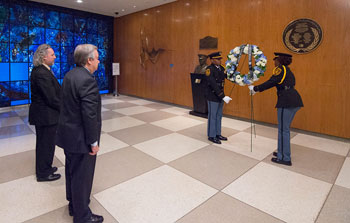
“This requires a lot of efforts from ourselves but also a lot of dialogue with [UN] Members States and to overcome the divides that still exist in the Organization,” he added. Mr. Guterres’ first day at UN Headquarters as Secretary General began with the laying of a wreath at the Memorial Wall in the Visitors’ Lobby. Shortly after taking office two days ago, he made an appeal for peace. “Let us make 2017 a year in which we all – citizens, governments, leaders – strive to overcome our differences,” Mr. Guterres said Sunday morning, urging people to share his New Year's resolution: “Let us resolve to put peace first.” He will serve for a five-year period until 31 December 2021. He was Prime Minister of Portugal from 1995 to 2002, and the UN High Commissioner for Refugees from June 2005 to December 2015. He succeeds Ban Ki-moon who served as the Secretary-General from 2007 until 31 December 2016. New UN chief Guterres pledges to make 2017 'a year for peace'
“On this New Year's Day, I ask all of you to join me in making one shared New Year's resolution: Let us resolve to put peace first,” said Mr. Guterres in an appeal for peace. He said one question weighs heavy on his heart. “That is: how can we help the millions of people caught up in conflict, suffering massively in wars with no end in sight?” “Peace must be our goal and our guide,” he said, urging all citizens, governments and leaders to strive to overcome differences. “I appeal to you all to join me in committing to peace, today and every day. Let us make 2017 a year for peace,” he added. Having been formally appointed by the UN General Assembly on 13 October 2016, Mr. Guterres, aged 67, will serve for a five-year period from today to 31 December 2021. He was Prime Minister of Portugal from 1995 to 2002, and the UN High Commissioner for Refugees from June 2005 to December 2015. |
|
||||||
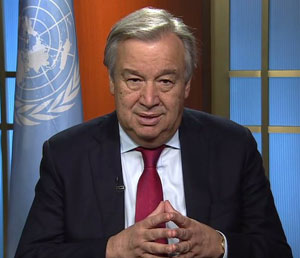 UNITED NATIONS, Jan 31: Refugees fleeing conflict and persecution are entitled to protection, United Nations Secretary-General António Guterres said today, expressing concern at decisions around the world that have undermined the integrity of the international refugee protection regime.
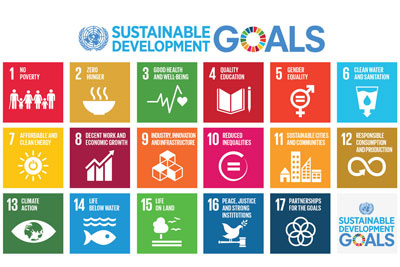 UNITED NATIONS, Jan 31: Nearly 20 leading global banks and investors, totalling $6.6 trillion in assets, have launched a United Nations-backed global framework aimed at channelling the money they manage towards clean, low carbon and inclusive projects.
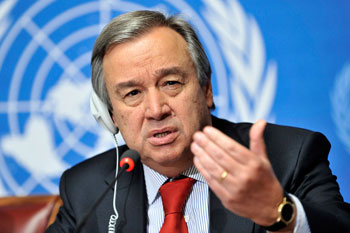 GENEVA, Jan 24: Disarmament can play an important role in ending existing conflicts and preventing the outbreak of new strife, United Nations Secretary-General António Guterres said today, pledging to actively pursue the abolition of all weapons of mass destruction and the strict regulation of conventional weapons.
 NEW DELHI, Jan 17: UN Secretary General Antonio Guterres has called for a surge in diplomacy for peace. In a video message for the Raisina Dialogue here, he said it was no longer enough to address crises situations. "People and countries pay too high a price if we only deal with conflicts. That is why I am calling for a surge in diplomacy for peace."
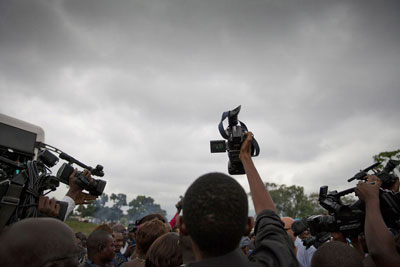 GENEVA, Jan 17: More than 100 journalists were killed last year while doing their jobs, according to the United Nations agency tasked with defending press freedom.
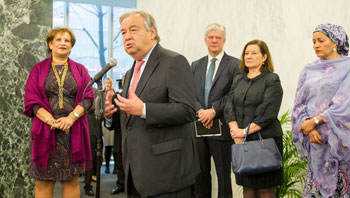 UNITED NATIONS, Jan 3: On his first day in office, United Nations Secretary-General António Guterres called for teamwork, telling staff at the world body’s New York Headquarters that it is not enough to the “do the right thing, we need to earn the right to do the right thing.”
 “I know that the way this selection process has been developed has raised a lot of expectations,” he noted.
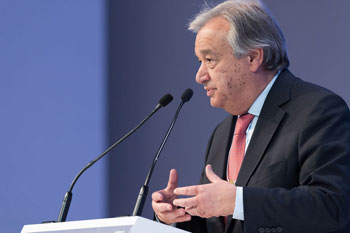 UNITED NATIONS, Jan 1: On his first day at the helm of the United Nations, Secretary-General António Guterres today pledged to make 2017 a year for peace.
Aviation
| Business | Defence | Foreign
Affairs | Communication | Health
| India | United Nations
India-US
| India-France | Entertainment
| Sports | Photo Gallery |
Tourism | Advertise with Us
| Contact Us
© Noyanika International, 2003-2009. All rights reserved.