


United Nations
UN agriculture agency looking at cactus as climate resilient food
“Climate change and the increasing risks of droughts are strong reasons to upgrade the humble cactus to the status of an essential crop in many areas,” said Hans Dreyer, the Director of Plant Production and Protection Division at FAO, noting the plant’s potential. According to the UN agency, cultivation of cactus pear is slowly catching on, in part, boosted by growing need for resilience in the face of drought, degraded soils and higher temperatures. This was evident during the recent intense drought in southern Madagascar, where the plant – once viewed as a worthless invasive species – provided a crucial supply of food, forage and water for local people and their animals. While most cacti are inedible, the Opuntia species – also referred to as prickly pear – has much to offer, especially if treated like a crop rather than a weed run wild. “Today the agriculturally relevant Opuntia ficus-indica subspecies – whose spines have been bred out but return after stress events – is naturalized in 26 countries beyond its native range,” says FAO, adding: “Its hardy persistence makes it both a useful food of last resort and an integral part of sustainable agricultural and livestock systems.” Historically, cactus’ culinary qualities have been a prominent feature in Mexico as well as the Italian island of Sicily, renowned for its gourmet tradition. In Mexico alone, the yearly per capita consumption of nopalitos – the tasty young pads, known as cladodes – is 6.4 kilograms and the plant is grown on small farms (as primary or supplemental crop) and harvested in the wild on more than three million hectors. Cactus as source of water and to lower greenhouse gas emissions This usefulness is all the more important during droughts, when livestock survival rate has been far higher on farms with cactus plantations. And with pressure on water sources only projected to rise in the future, cactus could become one of the important crops for the 21st century. Furthermore, there is evidence that yields in barley – a major cereal grain globally – rise when cactus is grown alongside it as a soil-improving alley crop, and there is research showing that use of cactus in cattle diets reduces the ruminants’ methanogenesis (production of methane in the guts of animals, especially cattle and other ruminants), thus contributing to lower greenhouse gas emissions. Nearly 21 million people now have access to HIV treatment: UN agency
“People, no matter what their health needs, require comprehensive health solutions that are accessible, available, acceptable and of good quality,” Michel Sidibé, the Executive Director of the Joint UN Programme on HIV/AIDS (UNAIDS), said in the foreword of the agency’s new report, Right to health, which was launched yesterday in South Africa. Mr. Sidibé cited South Africa as an example of a dramatic scale-up of HIV treatment, saying that while in 2000, the country had 90 people on treatment, today, there are more than four million. “Today, South Africa has the biggest life-saving treatment programme in the world […] This is the kind of acceleration we need to encourage, sustain and replicate,” he said. The rising treatment helps keep more people living with HIV alive and well. As treatment access has increased for pregnant women living with HIV, new infections among children have been rapidly reduced by almost half worldwide, according to UNAIDS. The new report highlights the gaps in accessing to health, while also providing some innovative examples of AIDS response. One challenge is to ensure 17.1 million people, including 1.2 million children, have access to HIV treatment, especially in the countries where new HIV infections are rising. In that regard, the report points out that new HIV infections are rising at a rapid pace in countries that have not expanded health services to those most affected. Wherever the right to health is compromised, HIV spreads, says UNAIDS. In eastern Europe and Central Asia, for example, new HIV infections have risen by 60 per cent since 2010, and AIDS-related deaths by 27 per cent. While in sub-Saharan Africa, the majority of new HIV infections are among young women and girls aged between 15 and 24 years. The report “has been giving a voice to people living with HIV and giving affected communities and civil society the means to demand their right to health,” stressed Mr. Sidibé. He further called on Governments to respect, protect and fulfil the right to health of everyone and reiterated the world’s commitment to Sustainable Development Goal 3, to ensure good health and well-being for all. UN conference closes with renewed urgency for greater ambition to tackle climate change
Participants focused on how to maintain momentum two years after the adoption of the Paris Agreement on climate change in the context of the recent announcement by the United States of its decision to withdraw from the accord. At COP23, cities and local governments, including American cities and states, intensified their push to achieve the goals set out in Paris. The Conference, which ran from 6 to 17 November, was chaired by Fiji, an island State particularly affected by the impacts of climate change. The Fiji Presidency announced an agreement on a Gender Action Plan, highlighting the role of women in climate action. Apart from negotiations among Parties to the UN Framework Convention on Climate Change (UNFCCC), several new climate action initiatives, commitments and partnerships were announced by States and non-State actors in the areas of energy, water, agriculture, oceans and coastal areas, human settlements, transportation, industry, and forests. Climate finance and climate resilience were also at the center of the discussions at the conference. More than 20 countries, including the Canada, Finland, France, Mexico, and the United Kingdom, launched a new global coal alliance aimed at achieving the rapid phase-out of existing traditional coal power and at placing a moratorium on any new traditional coal power stations without operational carbon capture and storage. Businesses and other non-government partners have in turn made commitments to focus on powering their operations without coal. The 19 Member countries of the 'Biofuture Platform,' including Brazil, China, Egypt, France, India, Morocco, Mozambique, also announced on Thursday formal agreement on the development of targets for biofuels and to construct an action plan to achieve them. “Sustainable biofuels can provide solutions to the energy transport nexus. This partnership offers us that chance,”said Rachel Kyte, Special Representative of the UN Secretary-General and CEO, Sustainable Energy for All (SE4All). Among other initiatives announced during the Conference, a global initiative was launched Tuesday with the aim of providing insurance to hundreds of millions of vulnerable people by 2020 and to increase the resilience of developing countries against the impacts of climate change. The 'InsuResilience' Global Partnership is a major scaling-up of an initiative started by the G7 in 2015 under the German Presidency. The Conference took place one year after the entry into force of the Paris Agreement. The Agreement, which was adopted by the 196 Parties to the UNFCCC in December 2015, calls on countries to combat climate change by limiting the rise of global temperature below 2 degrees Celsius and strive not to exceed 1.5 degrees Celsius. Today, 170 Parties have ratified the treaty. The Conference, which was attended by some 27.000, took place in a sobering context of alarming scientific reports of climatic changes. A week before the opening of the Conference, the World Meteorological Organization (WMO) announced that the levels of carbon dioxide (CO2) in the atmosphere surged at “record-breaking speed” to new highs in 2016. COP23 will be followed by a series of summits and conferences on climate change which are scheduled ahead of the UN Climate Summit in September 2019, including the 'One Planet summit' to be convened by France next month and focusing on financing, a gathering in California, bringing together non-State actors, and the COP24 in Katowice, Poland, in December 2018. Brazil has offered to host COP25 in 2019. UN chief urges more ambition, leadership and partnerships on climate actionBy Deepak Arora
“Our duty – to each other and to future generations – is to raise ambition,” said Mr. Guterres at the opening of the high-level segment of COP23, which was also attended by Heads of State and Government, including President of Germany Frank-Walter Steinmeier, German Chancellor Angela Merkel, French President Emmanuel Macron, and Prime Minister of Fiji, Frank Bainimarana, who is also the President of COP23. “We need to do more on five ambition action areas: emissions, adaptation, finance, partnerships and leadership,” the Secretary-General added. The Bonn Conference, which opened on 6 November 2017, is taking place one year after the entry into force of the Paris Climate Agreement. The Agreement, which was adopted by the 196 Parties to the United Nations Framework Convention on Climate Change (UNFCCC) in December 2015, calls on countries to combat climate change by limiting the rise of global temperature below 2 degrees Celsius and strive not to exceed 1.5 degrees Celsius. Today, 170 Parties have ratified the treaty. Regarding emissions reductions, the UN chief urged countries “to use the 2020 revision of the Nationally Determined Contributions (NDCs) to close the 2030 emissions gap.” He also stressed how essential climate mitigation is, calling for adaptation measures and strengthening resilience. The Green Climate Fund can play a catalytic role in this regard. He appealed to its members, especially donor nations, to reinvigorate engagement with that vital finance mechanism. As greater ambition on emissions, adaptation and resilience “is inextricably linked to funding,” the Secretary-General stressed the need “to mobilize the agreed $100 billion annually for developing countries.” “The world should adopt a simple rule: If big infrastructure projects aren’t green, they shouldn’t be given the green light. Otherwise we will be locked into bad choices for decades to come. Investing in climate-friendly development is where the smart money is needed,” Mr. Guterres said. The Secretary-General stressed that more ambition required action coalitions across all key sectors and by all actors. “We must engage all actors – national, regional and local governments, philanthropists and investors and consumers – in the transformation to a low-emission economy,” he said. As for political leadership, Mr. Guterres encouraged countries to be bold in their deliberations and decisions in Bonn and at home. “Show wisdom in investing in the opportunities of the future. Show compassion in caring what kind of world we build for our children,” he stated. Also addressing the COP23 High-Level segment, the President of the UN General Assembly, Miroslav Lajčák, reminded participants that “the decisions we make today will affect not only us – but also those who come after.” He added: “If we hand over a planet with an uncertain future, history will not forgive us.” For his part, Mr. Guterres welcomed a series of summits and conferences on climate change which are scheduled ahead of the UN Climate Summit in September 2019, including the ‘One Planet summit’ to be convened by France next month and focusing on financing, a gathering in California, bringing together non-State actors, and the COP24 in Katowice, Poland, in December 2018. France’s former Culture Minister appointed new UNESCO chief
“I now think of all the people I met in recent months, or had met in my various professional capacities, who have great expectations from UNESCO,” Ms. Azoulay told the UNESCO General Conference, which endorsed her 13 October nomination by agency’s Executive Board. Ms. Azoulay, who will replace outgoing Director-General Irina Bokova, will take office on 15 November. “I think of UNESCO’s mandate, which is strikingly modern. I think of all of you who are aware of the difficulties of the Organization but who know that it is irreplaceable, that it is essential, in facing current global challenges and who aspire to the unity and serenity necessary to let it exercise its mandate to best effect,” Ms. Azoulay said. Born in 1972, Ms. Azoulay was France’s Minister of Culture and Communication from February 2016 to May 2017. She has occupied senior positions in France’s public broadcasting sector and then served as rapporteur to France’s public auditing authority, the Cour des comptes, and as a European Commission legislative expert on issues of culture and the media. Ms. Azoulay served France’s National Cinema Centre (CNC), first as Deputy Audiovisual Director, then as Director of Financial and Legal Affairs, and finally as Deputy Director-General. A graduate of the Ecole National d’Administration and the Paris Institut d’études politiques, Ms. Azoulay also holds a Masters degree in Business Administration from the University of Lancaster (UK). She is the 11th Director-General of UNESCO and the second woman to occupy this position. UNESCO is responsible for coordinating international cooperation in education, science, culture and communication. The organization’s theme is ‘Building peace in the minds of men and women,’ and the themes that fall under its mandate include education in the twenty-first century, fostering free expression, protecting cultural heritage and stewardship of the planet’s oceans. India to contribute $100 million to UN development fundNEW YORK, Nov 7: India has pledged to contribute $100 million to the India-UN Development Partnership Fund to help the poorest nations achieve the world organisation’s Sustainable Development Goals (SDGs) to reduce poverty and raise the quality of life. Anjani Kumar, a Counsellor in India’s UN Mission, announced the multi-year contribution at the 2017 UN Pledging Conference for Development Activities on Monday. This contribution would be in addition to $10.582 million India is contributing to various other UN programmes, he said. A total of $398.98 million was pledged by about 20 countries during Monday’s conference session. The Fund launched on June 8 is managed by the UN Office of South-South Cooperation (UNOSSC) and focuses on the least developed countries (LDCs) and Small Island Developing States (SIDS). The $100 million that India is contributing is not earmarked “in the spirit of sustained predictable funding for SDGs and South-South Cooperation,” Kumar said. This means that unlike much of international aid that is tied to donors’ interests, the utilisation of India’s contributions will be flexible and attuned to the needs of the receiving countries. Criticising the practice of donors earmarking their contributions, Kumar said it leads to the collective priorities of the UN being disregarded. While the resources required for meeting the core UN mandates are stagnant and unable to keep up with multiplying demands on the system, the situation is made worse by the increasing mismatch between the earmarked and non-earmarked funding, he added. He said, “India believes that the UN should have the necessary resources to finance its activities, in an appropriate and balanced manner.” “The first project from the Fund is being executed in partnership with seven Pacific Island countries,” Kumar said. “The Fund has since then identified 15 more projects.” Of the $5 million India contributed to the Fund this year, $2 million would be utilised for reconstruction in Dominica and Antigua and Barbuda, which took a big hit from hurricanes, Kumar said. The Fund project currently underway is an early warning system for extreme weather conditions for the Cook Islands, Kiribati, the Marshall Islands, Micronesia, Nauru, the Solomon Islands and Tonga. When the Fund was launched in June, UNOSSC Director Jorge Chediek said that it was yet another example of India’s contributions to “shaping a better world” and its “notable leadership and drive towards ensuring that no one is left behind, both in India and worldwide.” The $100 million contribution pledged to the Fund and $10.582 million to other programmes are in addition to the annual dues of about $35 million mandated by the General Assembly as India’s contributions towards the UN’s regular budget, the peacekeeping operations and the tribunals. The contributions totaling $10.582 million are for the UN Development Programme ($4.5 million), World Food Programme ($1.92 million), UN Relief and Works Agency for Palestinians ($1.25 million), UN Women ($1 million), Unicef ($862, 000), UN Population Fund ($500,000), UN HABITAT ($150,000), UN Environment Programme ($100,000), UN Office on Drugs and Crime ($100,000) and Voluntary Fund for Technical Cooperation ($200,000). Kumar said that India will also be making contributions to the trust funds for victims of torture and modern slavery, and to the programme for UN Volunteers. UN chief says 68 million girls may face genital cuts by 2030UNITED NATIONS, Feb 7: UN Secretary-General Antonio Guterres is warning that without accelerated action 68 million girls could be subjected to female genital mutilation by 2030. He said in a statement on International Day of Zero Tolerance for Female Genital Mutilation that the practice is “a gross violation of the human rights of women and girls.” His statement Tuesday says over 200 million women and girls in 30 countries across three continents have experienced genital mutilation. The UN Population Fund projects that the estimated 3.9 million girls subjected to genital cutting every year will rise to 4.6 million by 2030 due to expected population growth unless urgent action is taken. Agency Executive Director Natalia Kanem urged greater political will, community engagement and spending to reach the UN goal of ending the practice by 2030. Journalism under fire amid rise of ‘fake news’ and social media-driven echo chambers: UNESCO reportNEW YORK, Nov 6: The media industry, which remains the primary source of news and information in the digital age, faces both vast opportunities and steep challenges, the United Nations cultural agency said on Monday in its flagship analysis of new trends in media freedom, pluralism, independence and the safety of journalists. “Covering the period 2012 to 2017, this study not only maps emerging global trends – it makes an unequivocal call to action to counter new and persistent challenges,” stated Irina Bokova, Director-General of the UN Educational, Scientific and Cultural Organization (UNESCO) in the foreword of the report, titled the World Trends in Freedom of Expression and Media Development. “This provides a unique reference point for Member States, intergovernmental organizations, civil society groups, academia, journalists and media professionals, and all those who wish to understand the fundamentals of press freedom in a changing world,” she added. The report highlights such positive developments as civil society mobilizing to push for greater access to information, media houses cooperating with fact-checking services to push back against a torrent of disinformation, and more and more Governments adopting freedom of information laws. In the digital age, the report says, women journalists are able to develop an online presence liberated from newsroom hierarchies, and citizen journalists and activists have access to modes of mass communication that were previously unthinkable. The report, however, warned that “across the world, journalism is under fire,” citing the rise of ‘fake news’ stories that shroud the truth and muddy information, as well as social media algorithms that are contributing to the creation of virtual ‘echo chambers’ and exacerbating political polarization. Governments have shut down the internet, notably before elections. Journalists are under wide-ranging attack, facing rising violence. “The stakes are even higher for citizens across the world, women and men, who rely on professional journalism to navigate the development and transformation of their societies,” Ms. Bokova said. The key findings were presented by Guy Berger, Director of UNESCO’s Division of Freedom of Expression and Media Development at an event, held alongside the Communication and Information Commission of UNESCO’s General Conference in Paris. 'Injustice against journalists costly for society,' says UNESCO chief on International DayNEW YORK, Nov 2: Justice must be done for the murder of journalists, who perform important functions in taking forward fundamental freedoms and bolstering the strength of societies, a senior United Nations official said Thursday, marking the International Day to end impunity for crimes against them. “Justice is a cornerstone of a free society. It dissuades those who threaten freedom of expression and emboldens those who stand to defend it,” said Irina Bokova, the Director-General of the UN Educational, Scientific and Cultural Organization (UNESCO), in her message for the International Day, observed annually on 2 November. The date was chosen in commemoration of the assassination of two French journalists in Mali on 2 November 2013. “This is why injustice against journalists is so costly for all societies,” she added. From 2006 to 2016, at least 930 journalists were killed. In 2016 alone, some 102 journalists were killed in the line of duty. Worryingly, more than nine out of 10 cases, the perpetrators are never brought to justice. “We must ensure justice is done for every journalist killed,” she declared. Journalists must be defended through concerted action by Governments, supported by the UN, working with all relevant actors, from international regional organizations, judiciaries and media to private companies, academia and civil society. This partnership for action was embodied UNESCO's recent Multi-Stakeholder Consultation, held in Geneva to strengthen implementation of the UN Plan of Action on the Safety of Journalists and the Issue of Impunity. For his part, UN Secretary-General António Guterres said that when journalists are targeted, societies as a whole also pay the price. Indeed, the kind of news that gets silenced – corruption, conflicts of interest, illegal trafficking – is exactly the kind of information the public needs to know. The UN General Assembly, Security Council and Human Rights Council have all condemned attacks against journalists and called for ensuring their safety. The United Nations system has also endorsed a Plan of Action on the Safety of Journalists and the Issue of Impunity. “We are committed to helping to create the environment journalists need to perform their vital work,” said Mr. Guterres, announcing that he is mobilizing a network of focal points from throughout the UN system to propose specific steps to intensify the Organization’s efforts to enhance the safety of journalists and media workers. On Wednesday in Geneva, two UN experts warned that the world is witnessing a “downward spiral of attacks” on journalists, spurred on by hate speech even from senior politicians. Speaking on the eve of International Day, the Special Rapporteurs on arbitrary, summary and extrajudicial executions, Agnes Callamard, and on freedom of expression, David Kaye, said that when authorities fail to follow up such attacks with independent and impartial investigations, the killers and their allies achieve their objectives. The attacks need to stop, so too does the public demonization of reporting and specific media outlets and reporters by political leaders at the highest levels, they added. In Tehran, UN atomic chief says Iran implementing nuclear-related commitments
According to the press release issued by the International Atomic Energy Agency (IAEA), its Director General Yukiya Amano met with Iranian President Hassan Rouhani, Vice-President and President of the Atomic Energy Organisation of Iran Ali Akbar Salehi, and Foreign Minister Mohammad Javad Zarif, during a visit to the capital, Tehran. Since January 2016, the IAEA has been verifying and monitoring Iran's implementation of its nuclear-related commitments under the Joint Comprehensive Plan of Action (JCPOA), which was endorsed unanimously by the UN Security Council in 2015. The accord between its five permanent members (China, France, Russia, the United Kingdom and the United States), plus Germany, the European Union (EU) and Iran, set out rigorous mechanisms for monitoring limits on Iran's nuclear programme, while paving the way for lifting UN sanctions against the country. The release said that the IAEA's verification and monitoring activities are conducted in an impartial and objective manner and in accordance with the modalities defined by the JCPOA and standard safeguards practice. Mr. Amano reiterated that the JCPOA represents a clear gain from a verification point of view, and stressed the importance of full implementation by Iran of its nuclear-related commitments in order to make the JCPOA sustainable.
|
|
||||||
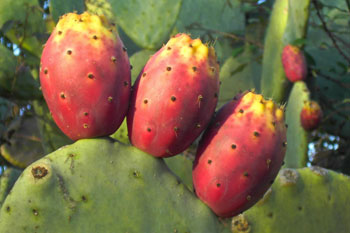 NEW YORK, Nov 30: With the reality of climate change becoming more real by the day, including its impact on food sources, the United Nations Food and Agriculture Organization (FAO) is urging communities around the world not to take the prickly cactus for granted.
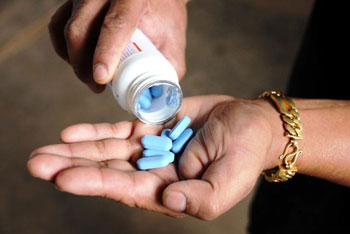 CAPE TOWN, Nov 21: About 20.9 million people now have access to the antiretroviral therapy, according to a new report by the UN agency leading the global push to end AIDS, spotlighting that this remarkable progress has been made possible by people living with HIV demanding their rights, strong leadership and financial commitment.
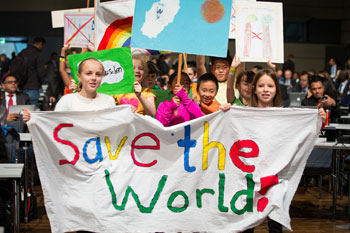 BONN, Nov 17: The United Nations Climate Change Conference (COP23) wrapped up on Friday in Bonn, Germany, with delegations expressing a renewed sense of urgency and a need for greater ambition to tackle climate change.
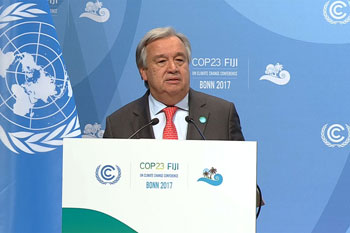 BONN, Nov 15: Addressing the United Nations Climate Conference (COP23) in Bonn, Germany, on Wednesday, Secretary-General António Guterres called for more ambition, more leadership and more partnerships to tackle climate change.
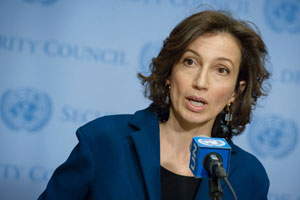 PARIS, Nov 10: Member States of the United Nations Educational, Scientific and Cultural Organization (UNESCO) on Friday appointed Audrey Azoulay, a former culture minister of France, to the top post of the agency.
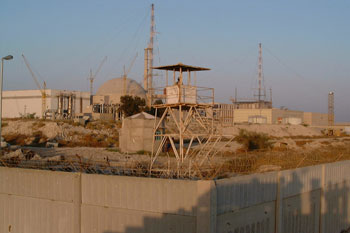 TEHRAN, Oct 29: Visiting Iran, the head of the United Nations atomic energy agency on Sunday reiterated that the commitments undertaken by the country under the nuclear accord of 2015 are being implemented.
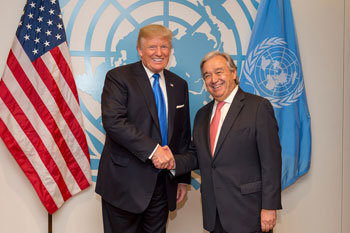 UN chief Guterres, US President Trump commit to work together to address common challenges
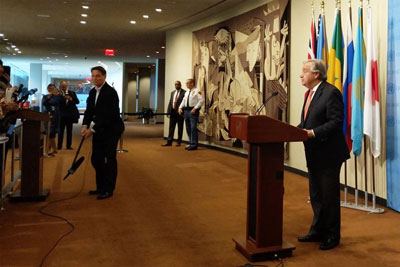 UNITED NATIONS, Oct 4: Pointing to scientific evidence warning of increased extreme weather events, United Nations Secretary-General António Guterres, ahead of a trip to the storm-ravaged Caribbean, urged all countries to implement the Paris Agreement on climate change “with greater ambition.”
 KATHMANDU, Oct 3: Through a partnership between the United Nations Development Programme (UNDP) and a private aircraft company, airplanes flying in Nepal’s skies will bear UN Sustainable Development Goals (SDGs) branding icons, disseminating the globally-agreed targets far and wide.
Aviation
| Business | Defence | Foreign
Affairs | Communication | Health
| India | United Nations
India-US
| India-France | Entertainment
| Sports | Photo Gallery |
Tourism | Advertise with Us
| Contact Us
© Noyanika International, 2003-2009. All rights reserved.