


United Nations
UN chief issues 'red alert' for the worldBy Deepak Arora
“On New Year's Day 2018, I am not issuing an appeal. I am issuing an alert – a red alert for our world,” said the Secretary-General. “As we begin 2018, I call for unity. […] We can settle conflicts, overcome hatred and defend shared values. But we can only do that together,” he expressed. Recalling that last year he urged that 2017 be a year for peace, the UN chief noted that unfortunately – in fundamental ways, the world went in reverse. Perils, including deepening conflicts and new dangers emerged, and global concerns over nuclear weapons reached the highest since the Cold War, he added. At the same time, impacts of climate change worsened at an alarming rate, inequalities grew and there were horrific violations of human rights. “Nationalism and xenophobia are on the rise,” said Mr. Guterres. Underscoring his belief that the world can be made more safe and secure, conflicts can be settled, hatred can be overcome and shared values defended, he emphasized that unity is indispensable to achieving these goals. “Unity is the path. Our future depends on it,” said the Secretary-General, urging leaders everywhere to resolve in the New Year to: “Narrow the gaps. Bridge the divides. Rebuild trust by bringing people together around common goals.” General Assembly approves $5.4 billion UN budget for next two yearsBy Deepak Arora UNITED NATIONS, Dec 26: Concluding the main part of its 72nd session, the United Nations General Assembly on Sunday took a number of key actions, including approving a nearly $5.4 billion programme budget for the Organization for the biennium 2018-2019. The budget covers UN activities across a range of areas, including political affairs, international justice and law, regional cooperation for development, human rights and humanitarian affairs, and public information. The approved amount is $286 million (or 5 per cent) below the budget for the current two-year period 2016-2017 and $193 million below the proposal made by the Secretary-General in October this year. In addition to the budget, the 193-member General Assembly also adopted a number of key resolutions, including reforms in areas of peace and security, and of management. Speaking at the closing session, Miroslav Lajcák, the President of the General Assembly, stated that progress is not measured by the number of resolutions adopted, but rather by the impact the United Nations makes on people’s lives. “Our work is not yet done. We have more to do next year,” he said, noting areas, including the Global Compact for Migration, the peacebuilding and sustaining peace agenda, maintaining momentum on the Sustainable Development Goals (SDGs), as well as Security Council reform. “To have meaningful outcomes from all these processes we need to talk, and more importantly, to listen, to one another. These agenda items represent global challenges. And multilateralism is the tool we need to solve them,” he added. In approving the budget, the General Assembly also endorsed the proposal to move from a biennial planning and budgeting period to annual programme budget on a trial basis, as of 2020. “This signals one of the most significant shifts in the programme planning and budgeting process of the Organization since the 1970s,” stated a note issued by the Spokesman for the Secretary-General. Explaining the details of the new budget, Johannes Huisman, the Director of Programme Planning and Budget, in the Office of the Controller, told UN News that most of the cuts were under operating or “non-post” areas, such as information technology or travel. To a lesser extent, reductions also applied to personnel or post resources, he said. Emphasizing that the UN budget will ensure that there is value for money, he said “This is a reassurance we can give to the tax-payers that no stone will be left unturned to make sure that the money is spent properly and ultimately benefits the world community in the areas where the UN is needed.” Nikki Haley announces $285 million cut to United Nations budget
The international body’s budget for fiscal 2016 was $5.4 billion. Haley called the cuts a “historic reduction” that will help with the organization’s “bloated management.” “The inefficiency and overspending of the United Nations are well known,” Haley said in a statement from the U.S. mission. “We will no longer let the generosity of the American people be taken advantage of or remain unchecked.” Haley said she was “pleased” with the result’s of the budget negotiations, adding, “[Y]ou can be sure we’ll continue to look at ways to increase the UN’s efficiency while protecting our interests,” The former South Carolina governor has become a force at the United Nations, telling the 193-member General Assembly the United States would be “taking names” of who voted to denounce President Trump’s recognition of Jerusalem as Israel’s capital. “The United States will remember this day in which it was singled out in this assembly for the very act of exercising our right as a sovereign nation,” Haley said ahead of last week’s vote. “We will remember it when, once again, we are called up to make the world’s largest contribution to the UN, and we will remember it when many countries come calling on us to pay even more and to use our influence for their benefit.” A total of 128 countries voted in favor of the resolution denouncing the Trump administration’s announcement. Another nine voted no, 35 abstained and 21 did not show up for the vote. UN adopts tough new sanctions on North KoreaUNITED NATIONS, Dec 23: The UN Security Council unanimously adopted a new set of draconian US-drafted sanctions on North Korea that will further strangle its energy supplies and tighten restrictions on smuggling and the use of North Korean workers overseas. Nikki Haley, the US Ambassador to the UN, claimed that the new sanctions, levied in response to Pyongyang's November 29 ballistic missile test, went even further than sanctions passed in September that, at the time, were called the toughest yet. "Today, we cut deeper," Haley said. She said that the UN had repeatedly offered Pyongyang a choice and repeatedly, in its continued missile tests, the regime had "chosen the path of isolation." Hailing the unity of the Security Council vote and referring to leader Kim Jong Un, Haley said that, "we will continue to match the Kim regime's choice of aggressive action with actions of international sanctions." North Korea, she said, is "this most tragic example of evil in the modern world." Resolution 2397 cuts exports of gasoline, diesel and other refined oil products by a total of 89%, Haley said. The resolution also bans exports of industrial equipment, machinery, transportation vehicles and industrial metals to the DPRK. It requires countries using North Korean laborers to send them back home within 12 months. The resolution also requires countries to stop ships from illegally providing oil to North Korea through ship-to-ship transfers and prohibits them from smuggling North Korean coal and other prohibited commodities by sea. North Korea calls new UN sanctions 'an act of war'UNITED NATIONS, Dec 24: North Korea has called the latest UN sanctions to target the country "an act of war" that violates its sovereignty. The UN Security Council unanimously approved tough new sanctions against North Korea on Friday in response to its latest launch of a ballistic missile that Pyongyang says can reach anywhere on the US mainland. The resolution was drafted by the United States and negotiated with the North's closest ally, China. North Korea's foreign ministry said in a statement on Sunday that the sanctions are an act of war violating peace and stability in the Korean peninsula and the region and are tantamount to a "complete economic blockade" of the country. A spokesman also said it is a "pipe dream" for the US to think North Korea will give up its nuclear weapons. "If the US wishes to live safely, it must abandon its hostile policy towards the DPRK and learn to co-exist with the country that has nuclear weapons and should wake up from its pipe dream of our country giving up nuclear weapons which we have developed and completed through all kinds of hardships," said the statement, carried by the North's official Korean Central News Agency. DPRK is short for North Korea's official name, the Democratic People's Republic of Korea. The resolution adopted by the Security Council includes sharply lower limits on North Korea's refined oil imports, the return home of all North Koreans working overseas within 24 months, and a crackdown on ships smuggling banned items including coal and oil to and from the country. US President Donald Trump's administration's success in achieving the resolution won praise from the top Democrat on the Senate Foreign Relations Committee, Ben Cardin of Maryland. "That was a good move," the senator said, "a major accomplishment". Mr Cardin said the stepped-up sanctions should be followed by diplomacy aimed at bringing the US and China together on a sustained effort to ease tensions in that region. But the resolution does not include even harsher measures sought by the Trump administration that would ban all oil imports and freeze international assets of the government and its leader, Kim Jong Un. The resolution drew criticism from Russia for the short time the Security Council nations had to consider the draft, and last-minute changes to the text. Two of those changes were extending the deadline for North Korean workers to return home from 12 months to 24 months - which Russia said was the minimum needed - and reducing the number of North Koreans being put on the UN sanctions blacklist from 19 to 15. New UN centre boosts use of real-time data to better respond to humanitarian crisesTHE HAGUE, Dec 22: With more than 135 million crisis-affected people across the globe in need of humanitarian assistance, the United Nations today opened a data centre that will give aid organizations and relief workers access to vital information they need to make responsible and informed decisions. “Accurate data is the lifeblood of good policy and decision-making. Obtaining it, and sharing it across hundreds of organizations, in the middle of a humanitarian emergency, is complicated and time-consuming – but it is absolutely crucial,” said UN Secretary-General António Guterres, speaking at the opening of the Centre for Humanitarian Data in The Hague in the Netherlands. “This Centre will make that difficult task far easier, speeding up the flow of data from collection to application,” he added. Managed by the UN Office for the Coordination of Humanitarian Affairs (OCHA), the Centre is focused on four key areas: data services, to make data accessible; data policy, to ensure data is used responsibly; data literacy, to improve how data is used; and network engagement, to ensure human-centred approach. One of the primary activities of the Centre is managing the data-sharing platform, Humanitarian Data Exchange (HDX), and its data standard, the Humanitarian Exchange Language (HXL). The goal of the HDX is to make humanitarian data easy to find and use for analysis. The HXL is based on spreadsheet formats (such as Excel or Comma-Separated-Values) and adds hashtags with logical information to allow software to validate, clean, merge and analyse data more easily. “The idea of ‘a simple standard for messy data’ will appeal to anyone like me, who has worked with humanitarian statistics and not always very able to understand them,” expressed Mr. Guterres, highlighting the potential of the application of technologies on the ground. Recent examples of HDX deployment include the response to the 2015 earthquakes in Nepal, where it provided visualizations to illustrate whether humanitarian programmes were meeting people’s needs. The exercise resulted in significant changes to the humanitarian response. It was also used in preparation efforts during the recent hurricanes in the Caribbean region as well as in the response to the crisis caused by the arrival of over 600,000 Rohingya refugees from Myanmar into Bangladesh. In his remarks, the UN chief also underlined the importance of keeping data secure and protected. “Coming from UNHCR, I know exactly the value of sensitive data to be protected for the protection of people,” he said, noting that the Centre will make the work of humanitarians around the world easier. The Centre is one of the major initiatives of the Agenda for Humanity, unveiled ahead of the World Humanitarian Summit held in 2016 in Turkey. 127 Nations At UN Oppose Trump's Move To Recognise Jerusalem As Israel’s CapitalUNITED NATIONS, Dec 21: The US faced complete isolation and humiliation in the UN General Assembly on Thursday as the world body took up for voting a draft resolution criticising President Donald Trump’s decision to recognize Jerusalem as Israel’s capital, bucking an international consensus lasting decades. The General Assembly adopted the resolution with 128 countries voting in favour, nine against and 35 abstaining. Those who voted against Trump’s move also disregarded his threat of cutting aid to countries that backed the draft resolution and called out the US president for “bullying”. Trump’s threat came a day after his ambassador to the UN, Nikki Haley, said the US will be “taking names” as “we don’t expect those we’ve helped to target us”. She had just vetoed to defeat a proposed resolution in the Security Council asking America to reverse its decision. India was among the countries that voted in favour of draft resolution. It had earlier said its position on Palestine is “independent and consistent” and that “it is shaped by our views and interests, and not determined by any third country”. But diplomatic sources said it was a tough call, in view of India’s growing proximity to the US and Israel, whose prime minister Benjamin Netanyahu is visiting India in January. The resolution, which is non-binding, is likely to go through, given the overwhelming support a similar resolution received in the UN Security Council on Monday — 14 of its 15 members, including allies France, Britain and Italy, voted in favour of the resolution which failed only because the US vetoed it. However, there are no veto powers in the General Assembly. On Wednesday, Trump had said: “Let them vote against us... We’ll save a lot. We don’t care. But this isn’t like it used to be where they could vote against you and then you pay them hundreds of millions of dollars. “We’re not going to be taken advantage of any longer.” Haley echoed the sentiment in remarks on the floor of the general assembly. “When we make generous contributions to the UN, we also have a legitimate expectation that our good will is recognized and respected. When a nation is singled out for attack in this organisation, that nation is disrespected. What’s more, that nation is asked to pay for the ‘privilege’ of being disrespected.” The draft resolution, which has been moved by Turkey and Yemen and co-sponsored by Iran, Pakistan and other countries, cited past Security Council resolutions to say “that all states comply with Security Council resolutions regarding the holy city of Jerusalem, and not to recognise any actions or measures contrary to those resolutions”. It’s similar in nature and texture to the resolution vetoed on Monday, which was moved by Egypt. “United States should decide whether to stand with the world or an occupying force which is the reason for instability and chaos in the Middle East,” Pakistan’s permanent representative to the UN Maleeha Lodhi said in a statement. “Pakistan is among the countries which have co-sponsored this resolution.” Pakistan is already under notice from the United States for not doing enough on counter-terrorism, and its co-sponsorship of the Jerusalem vote is unlikely to go down well in the White House. “As you consider your vote, I encourage you to know the president and the US take this vote personally,” Haley said in a letter to UN member nations ahead of the General Assembly vote. “The president will be watching this vote carefully and has requested I report back on those who voted against us.” UN Declares May 20 World Bee DayBy Deepak Arora UNITED NATIONS, Dec 20: Today, the United Nations General Assembly adopted by consensus a resolution declaring 20 May as World Bee Day. Every year on this day, the attention of the global public will be drawn to the importance of preserving bees and other pollinators. People will be reminded of the importance of bees for the entire humanity and invited to take concrete action to preserve and protect them. The resolution was co-sponsored by 115 UN Member States, including the USA, Canada, China, the Russian Federation, India, Brazil, Argentina, Australia and all the European Union Member States. Dejan Židan – head of the World Bee Day project and Deputy Prime Minister of the Republic of Slovenia, the country that proposed the proclamation of World Bee Day to the UN in response to an initiative of the Slovenian Beekeepers' Association – expressed his satisfaction at the outcome: "After three years of efforts both in terms of the official procedures at the UN and with regard to the intensive process of informing countries around the world, we have succeeded with this initiative. Bees and other pollinators finally have the place they deserve in view of their importance for the world and for humanity. The proclamation of World Bee Day proves that the will to take action does exist. I am happy that realization of the importance of bees for sustainable development and the future of humanity in general has reflected in the consensual support to the resolution." Mr Židan also took the opportunity to thank all countries for their support, but ended with a warning: "This is just the beginning of the difficult process of the protection of bees and other pollinators. In order to be successful, we must bring on board the governments of all countries, the business community and civil society. Awareness of the vital importance of saving the bees must reach every individual. And we must do more than just talk – we must undertake concrete activities to increase care for bees and promote the development of beekeeping – everywhere, including in developing countries." Carla Mucavi, Director of the Food and Agriculture Organization of the United Nations (FAO) Liaison Office in New York, commented: “Bees play a crucial role in increasing crop yields and promoting food security and nutrition. Without them, we could lose a variety of food such as potatoes, pepper, coffee, pumpkins, carrots, apples, almonds, tomatoes, just to name a few. In short, without bees, FAO cannot achieve a world without hunger. World Bee Day recognizes the importance of these tiny helpers and will increase awareness of the need to protect them.” "I believe we all agree that every human being on this planet deserves food every day. We have to produce more food every day, and every day more food is dependent on pollinators – with honey bees in the lead. To talk about reducing global hunger without ensuring conditions for the survival of bees and other pollinators, is simply throwing sand in people's eyes! It is time for everyone to listen to bees, in particular leaders and those who make decisions," said Boštjan Noc, promoter of the World Bee Day initiative and president of the Slovenian Beekeepers' Association, adding: "From today on, 20 May will be a worldwide celebration of bees and beekeepers. I believe that with the proclamation of World Bee Day, the world will begin to think more broadly about bees, in particular in the context of ensuring conditions for their survival, and thus for the survival of the human race." Slovenia proposed the celebration of World Bee Day in the month of May, when bees in the Studies of United Nations and the International Union for Conservation of Nature show that bee populations and the populations of other pollinators have significantly decreased, making them more and more endangered. This is affected by numerous factors which are the consequence of human activity: intensive agriculture, widespread use of pesticides and pollution caused by waste. Bees are exposed to new diseases and pests. The data of the Food and Agriculture Organization of the United Nations show that bees and other pollinators are priceless when it comes to ensuring the global safety of the food supply chain. A third of all food produced in the world, i.e. every third spoon of food, depends on pollination. The international study of Intergovernmental Science-Policy Platform on Biodiversity and Ecosystem Services (IPBES) in 2016 estimated that between US$ 235 billion and US$ 577 billion worth of annual global food production relies on direct contributions by pollinators. In addition, agricultural plants which require pollination are an important source of jobs and income for farmers, particularly for small and family farms in developing countries. Last but not least, bees have an important role in the preservation of the ecological balance and biodiversity in nature. Bees as good bioindicators of environmental conditions inform us that something is happening to the environment and that we must take action. Prompt protection of bees and other pollinators will significantly contribute to solving Slovenian initiative to declare World Bee Day In 2015 these considerations led the Republic of Slovenia, at the initiative of the Slovenian Beekeepers' Association, to begin procedures at the Food and Agriculture Organization of the United Nations (FAO) for the declaration of World Bee Day and to propose a resolution underlining the importance of bees and other pollinators. The initiative has been endorsed by the Conference of the Food and Agriculture Organization of the United Nations at its 40th Session in Rome on 7 July 2017; and the the procedure was successfully concluded today with the consensual adoption of the World Bee Day Resolution by the UN General Assembly. Slovenia is one of the top countries in the world in terms of the number of beekeepers per capita, with every 200th inhabitant a beekeeper. For tens of thousands of Slovenian citizens, beekeeping is a way of life with a long tradition. The bee, in particular the indigenous Carniolan honey bee, is part of Slovenian national identity. Slovenia is the only country in the European Union to have introduced legal protection for its bees. In 2011 it became one of the first countries in the EU to prohibit the use of certain pesticides harmful to bees. ‘American Dream’ quickly becoming an ‘illusion,’ says UN human rights expert
“The American Dream is rapidly becoming the American Illusion, as the US now has the lowest rate of social mobility of any of the rich countries,” said the UN Special Rapporteur on extreme poverty and human rights, Philip Alston, Friday, at the end of a fact finding mission to the country. “Instead of realizing its founders’ admirable commitments, today’s United States has proved itself to be exceptional in far more problematic ways that are shockingly at odds with its immense wealth and its founding commitment to human rights,” he added. In his statement, the Mr. Alston also stated that the assumption that poor came from ethnic minority groups is not correct and in fact there are eight million more white people than African-Americans living in poverty. “The face of poverty in America is not only black or Hispanic, but also white, Asian and many other colours,” he said. He went on to add that he was “struck” by the extent to which construed narratives about supposed distinctive differences between the rich and poor have been “sold” to the electorate by some politicians and the media. Such misconceptions included notions that “the rich are industrious, entrepreneurial, patriotic and the drivers of economic success [while] the poor are wasters, losers and scammers,” he explained. “Despite the fact that this is contradicted by the facts, some of the politicians and political appointees with whom I spoke were completely sold on the narrative of such scammers sitting on comfortable sofas, watching colour TVs, while surfing on their smartphones, all paid for by welfare.” “I wonder how many of these politicians have ever visited poor areas, let alone spoken to those who dwell there,” he noted. Proposed policy and welfare cuts could ‘essentially shred’ safety nets – UN expert “The dramatic cuts in welfare, foreshadowed by President [Donald] Trump and [House of Representatives] Speaker [Paul] Ryan, and already beginning to be implemented by the administration, will essentially shred crucial dimensions of a safety net that is already full of holes.” “Several administration officials told me that as far as welfare reform is concerned, states are, in Justice Louis D. Brandeis’ famous phrase, ‘laboratories of innovation.’ Recent proposals to drug-test welfare recipients in Wisconsin and West Virginia, along with Mississippi’s recent purge of its welfare rolls, raise concerns that the administration would happily look the other way while states conducted what were in essence unethical experiments on the poor.” Mr. Alston’s final report on his US visit will be available in Spring 2018 and will be presented to the UN Human Rights Council in Geneva in June 2018. The statement he delivered in Washington DC today can be found here. During his two-week mission, at the invitation of the federal government, the UN expert visited California, Alabama, Georgia, West Virginia and Washington, D.C., as well as Puerto Rico. UN Special Rapporteurs and independent experts are appointed by the Human Rights Council to examine and report back on a specific human rights theme or a country situation. The positions are honorary and the experts are not UN staff, nor are they paid for their work. UN chief stresses need to denuclearize Korean Peninsula, avoid ‘sleepwalking into war’
“I think we all want to avoid that things get out of control and that misperceptions and mishandling of situations make us sleepwalk into a war that will have devastating consequences,” Mr. Guterres told a press conference held at Japan National Press Club, stressing the need for the implementation of all Council resolutions, first by the DPRK and then all the other countries that have such obligations. “The objective is the denuclearization of the Korean Peninsula, and it is extremely important to preserve the unity of the Security Council,” he added. Mr. Guterres is set to brief the Security Council on the DPRK, tomorrow, Friday, 15 December. Asked about the outcome of a recent visit to Pyongyang by UN Under-Secretary-General for Political Affairs Jeffrey Feltman, Mr. Guterres said that “in diplomacy and especially in discreet diplomacy, it is difficult to measure an immediate result of any initiative” but “the message was conveyed.” He said that the message was that not only that Security Council resolutions must be implemented, but there must be a sense of urgency in creating the conditions for a meaningful dialogue to achieve the denuclearization of the Peninsula. On questions about a possible military strike against the DPRK by the United States, he refused to comment on “things that have not happened” but said he is “a believer that a military solution would have dramatic negative consequences and that we need to be able to achieve the goal to denuclearize the Korean peninsula and to achieve it through diplomatic engagement.” Asked what the UN can do in a concrete manner about the situation, he said that the Security Council has taken the right decisions, and the Secretariat has to explore all ways to convey the messages that are necessary for those decisions to be implemented peacefully. “We are not miracle makers. We are people committed to a cause, and that cause is the cause of peace and security in line with international law,” he said. To a question about a possible visit to the DPRK by himself, the Secretary-General said he would go anywhere at any time when it is useful. “But I am not aiming at a protagonism just to appear in the cameras of the televisions,” he said. “We are available, but we can only mediate when both parties accept our mediation.” The main purpose of the Secretary-General trip to Japan was to address the global Universal Health Coverage Forum 2017 held in Tokyo. UN chief spotlights power of universal health coverage to unlock economic growth
“Our goal must be to protect and promote physical and mental well-being for all. Health is both an outcome and a driver of progress,” Mr. Guterres told the global Universal Health Coverage Forum 2017, currently taking place in Tokyo, Japan. “It is at the centre of our vision of a more sustainable, inclusive and prosperous future [...] When we invest in health – particularly of women and adolescents – we build more inclusive and resilient societies,” he added. Commending Japanese Prime Minister Shinzo Abe's announcement of $2.9 billion to fund universal health coverage programmes in developing countries, the UN chief acknowledged Japan for being one of the first countries to demonstrate the power of universal health coverage, achieving it in 1961 and unlocking economic growth for the decades that followed. Next September marks the 40th anniversary of the Alma Ata Declaration, which famously set out a goal of achieving health for all. Mr. Guterres said that targeted investments in recent decades led to major progress on a variety of health challenges. “More women have access to modern contraception. Vaccination levels are up. More people living with HIV have access to anti-retrovirals. More people at risk of malaria are sleeping under an insecticide-treated nets. And an end to diseases such as polio is within sight,” he said. However, gross inequities continue to leave the most vulnerable behind. For too many, health is inaccessible, unaffordable or altogether unavailable. Out-of-pocket spending on health causes an estimated 100 million people to fall below the poverty line every year. Furthermore, new threats, such as antimicrobial resistance, the impacts of climate change and the spread of non-communicable diseases, have emerged. All of this will require more integrated health systems capable of responding effectively and equitably to the unique needs of their communities, he said. Noting that every $1 spent on health yields up to $20 in full-income growth within a generation, Mr. Guterres stressed the critical importance of political commitment to unlocking these investments. “There is of course no one-size-fits-all solution, and each country must walk its own path toward universal health coverage,” he said, pledging UN support in that regard. “Just as peace is not simply the absence of conflict, so is health not just the lack of illness. Our goal is not only a band-aid or a single dose of medicine, important as those are. Our goal must be overall well-being, physically and mentally for everyone in all countries,” he concluded. The Secretary-General will convene a General Assembly high-level meeting on universal health coverage in 2019. Meeting with Prime Minister Abe Later in the day, Mr. Guterres met with Prime Minister Abe. Speaking to the press afterwards, the Secretary-General said that Japan is a pillar of the international system and thanked the Government for its strong support to the UN in many fields. Mr. Guterres also underscored Japan’s leadership in human security which, he said, reflects his own priority on prevention and sustainable development. Regarding the situation on the Korean Peninsula, the Secretary-General underscored the need for the full implementation of Security Council resolutions by the Democratic People’s Republic of Korea and all other countries. He called for the unity of the 15-member body on the aim of denuclearizing the peninsula as well as the need to allow for the possibility of diplomatic engagement to peacefully achieve that objective. “The worst possible thing for us to happen would be for us to sleepwalk into a war that might have very dramatic circumstances,” he said. The Secretary-General also delivered a lecture, titled “Global Challenges: The Role of Human Security,” at Sophia University, citing the nuclear threat, mass movement of people, increased inequality and other challenges the world faces today. The solutions to these challenges, the Secretary-General said, have to compassionate, rational and based on enlightened self-interests, with a strong emphasis on prevention. He added, however, that the investments in prevention are unfortunately not enough. He then met with about 40 students from Japanese universities linked with the UN’s Academic Impact programme. Earlier in the morning, he met with Mr. Shinichi Kitaoka, President of the Japan International Cooperation Agency (JICA), thanking JICA’s close cooperation with the UN. Mr. Guterres underscored his focus on prevention and sustaining peace, and expressed appreciation for Japan’s role in promoting the concept of human security to address the link between peace, development and humanitarian assistance. Before leaving Tokyo, the Secretary-General held a press conference at Japan National Press Club. Half the world lacks access to essential health services – UN-backed report
“It is completely unacceptable that half the world still lacks coverage for the most essential health services,” said Tedros Adhanom Ghebreyesus, Director-General of the World Health Organization (WHO), in a press release. “A solution exists: universal health coverage allows everyone to obtain the health services they need, when and where they need them, without facing financial hardship,” Mr. Tedros added. The study, Tracking Universal Health Coverage: 2017 Global Monitoring Report, co-authored by the World Bank and WHO, notes that 800 million people spend at least 10 per cent of their household budgets on health expenses for themselves, a sick child or other family member. For almost 100 million people, these expenses are high enough to push them into extreme poverty, forcing them to survive on just $1.90 or less a day. “The report makes clear that if we are serious – not just about better health outcomes, but also about ending poverty – we must urgently scale up our efforts on universal health coverage,” said World Bank Group President Jim Yong Kim. Wide gaps exist in the availability of services in Sub-Saharan Africa and Southern Asia. In other regions, basic health care services such as family planning and infant immunization are becoming more available, but lack of financial protection makes it difficult for families to pay for these services. Even in more affluent regions such as East Asia, Latin America and Europe, a growing number of people are spending at least 10 per cent of their household budgets on out-of-pocket health expenses. Inequalities in health services are seen not just between, but also within countries: national averages can mask low levels of health service coverage in disadvantaged population groups. In low- and lower-middle income countries, only 17 per cent of mothers and children in the poorest fifth of households received at least six of seven basic maternal and child health interventions, while 74 per cent for the wealthiest fifth of households did so. The report is a key point of discussion at the global Universal Health Coverage Forum 2017, currently taking place in Tokyo, Japan. In addition to Mr. Kim and Mr. Tedros, attendees include heads of State and ministers from over 30 countries. UN Secretary-General Antonio Guterres will address the Forum on Thursday. UN Assembly calls on Member States to ‘accelerate progress’ on goal of universal health coverage
In one of the two resolutions adopted today, the UN General Assembly – composed of all 193 UN Member States – called for efforts ensure that all people have equal access, without discrimination of any kind, to quality promotive, preventive, curative, rehabilitative and palliative basic health services. It also encouraged all Member States to promote the effective, full and meaningful participation of all – in particular those who are vulnerable or in vulnerable situations – in the design, implementation and monitoring of law, policies and programmes relevant to realizing the right of everyone to the enjoyment of the highest attainable standard of physical and mental health and to implementing the health-related Sustainable Development Goals (SDGs), including strategies for universal health coverage. Also in the resolution, the General Assembly called for reinforcing the protection of medical and humanitarian personnel exclusively engaged in medical duties, their means of transport and equipment, and hospitals and other medical facilities, especially in armed conflict, consistent with their specific obligations under international humanitarian law. Further, the Assembly also announced that it would hold a high-level meeting in 2019 on universal health coverage. Acting on a related text, the Assembly proclaimed 12 December as International Universal Health Coverage Day and invited all Member States, entities of the UN system and all other relevant stakeholders, including the civil society and the private sector to observe the International Day annually “in an appropriate manner and in accordance with national priorities, through education and activities, in order to raise awareness of the need for strong and resilient health systems and universal health coverage.” ‘Invest in the future, not the past;’ green business key to winning war on climate change: UN chief
“Green business is good business,” the UN chief said, speaking at the opening of the One Planet Summit, in Paris, alongside French President Emmanuel Macron and Jim Yong Kim, the President of World Bank. “Renewables are now cheaper than coal-powered energy in dozens of developed and developing countries […] we need to invest in the future, not the past,” he added. The Summit, taking place on 12 December, the anniversary of the adoption of the historic Paris Agreement, is providing an opportunity to fast-forward action on climate change. In his remarks, Mr. Guterres pointed to the large under-utilized global financial resources and called for ensuing that financing – which by its nature if forward-looking – is used future of people and the planet in addition to being used for profit. “It is a fact that fossil fuels remain heavily subsidized – meaning we are investing in our own doom,” he emphasized, noting cities, regions, states and territories across the globe along with thousands of private enterprises – including major oil and gas companies – are already taking climate action, resulting in new industries and markets as well as in healthier environments and more jobs. “I have heard it said that the stone age did not end because we ran out of stones. We don’t have to wait to run out of coal and oil to end the age of fossil fuels,” he stated, adding: “The message is simple: those who fail to bet on a green economy will be living in a grey future.” The UN chief stressed that it is not funds but trust that is lacking. “We need to fix it. This means, first and foremost, ensuring that rich countries honor their commitment and provide $100 billion a year through 2020 for developing countries.” It also means that the Green Climate Fund must become an effective and flexible instrument, especially for the most vulnerable countries such as small island States and least developed countries. “These two conditions are essential for trust between developed and developing countries,” he emphasized. “We need to build trust and reduce risk, make the best use of available resources, and find innovative ways of financing, such as green bonds whose viability and success are already realities,” the Secretary-General said. Also at the summit, Jim Yong Kim, the President of the World Bank Group, announced that the Group will no longer finance upstream oil and gas after 2019 and that it would be mobilizing finance for climate change impact mitigation and resilience. The International Finance Corporation (IFC) a subsidiary of the World Bank Group will invest up to $325 million in the Green Cornerstone Bond Fund, a partnership with the asset management company, Amundi, to create the largest ever green-bond fund dedicated to emerging markets. “This is a $2 billion initiative aiming to deepen local capital markets, and expand and unlock private funding for climate-related projects. The fund is already subscribed at over $1 billion,” read the announcement. Time running out for construction sector to cut energy use, meet climate goals: UN
The Global Status Report 2017, from the Global Alliance for Buildings and Construction – first launched by the UN Environment Programme (UNEP) and France at the 21st Climate Change Conference – finds that the sector continues to grow, with the energy intensity per square meter of buildings needing to improve 30 per cent by 2030. “Over the next 40 years, the world is expected to build 230 billion square metres in new construction – adding the equivalent of Paris to the planet every single week,” said Fatih Birol, Executive Director of the International Energy Agency, at a side event of the One Planet Summit in Paris. “This rapid growth is not without consequences,” he warned. In 2016, an estimated 235 billion square metres (m2) of total floor area was reached. Over the next 40 years, an additional 230 billion m2 buildings will be constructed – the equivalent of adding the floor area of Japan to the planet every year to 2060. When upstream power generation is included, buildings and construction account for 39 per cent of energy-related CO2 emissions. According to the IAEA-prepared, UNEP-coordinated report, the clock is ticking in part because more than half of building constructions expected by 2060 will be done in the next 20 years – two-thirds in countries that lack mandatory building energy codes. However, the report highlights many opportunities to deploy energy-efficient and low-carbon solutions, and points to a number of global examples showing how the goals can be met with clear and concerted efforts. To date, Paris Agreement pledges have fallen short – with CO2 emissions from buildings and construction having risen by nearly one per cent annually between 2010 and 2016, releasing 76 gigatonnes of Carbon Dioxide in cumulative emissions. “Ambitious action is needed without delay to avoid locking in long-lived, inefficient buildings assets for decades to come,” he stressed. Buildings with near-zero energy, zero-emissions need to become the global construction standard within the next decade for two per cent energy performance improvements to 2030, according to the report. The rate of building energy renovations also needs to improve three per cent in the coming decade, particularly important in Organisation for Economic Co-operation and Development (OECD) countries, where roughly 65 per cent of the total expected 2060 buildings stock is already built today. “Similar to many areas linked to the Paris Agreement, the building sector is seeing some progress in cutting its emissions, but it is too little, too slowly,” underscored Erik Solheim, UNEP Executive Director. An energy savings potential from improved building envelope performance can be huge. Globally, high-performance construction and deep energy renovations of existing building envelopes represent a savings potential of more than all the final energy consumed by the G20 countries in 2015. “Realizing the potential of the buildings and construction sector needs all hands-on deck – in particular to address rapid growth in inefficient and carbon-intensive building investments,” said Mr. Solheim. UNSC rejects U.S. recognition of Jerusalem as Israeli capitalUNITED NATIONS, Dec 9: The United States found itself isolated at a special United Nations Security Council meeting in its recognition of Jerusalem as the capital of Israel, a move that set off alarms about the risk of escalating conflict in the Middle East. Eight of the 15 members of the UN Security Council, the organisation which looks out for peace and security around the world, had called for an urgent meeting on Friday to analyse the decision taken by Washington, Efe news agency reported. A sense of how isolated the United States had become was in the air due to the decision announced by President Donald Trump, who since his electoral campaign had expressed an obvious favouritism for Israel’s stance on the matter. “The status of Jerusalem must be determined through negotiations between Israelis and Palestinians leading to a final status agreement,” the five European nations said in a statement at the end of the meeting. The European Union “has a clear and united position: we believe that the only realistic solution to the conflict between Israel and Palestine is based on two States, and with Jerusalem as the capital of both the State of Israel and the State of Palestine,” the statement said, indicating that until that occurs, the EU will not recognise any sovereignty over Jerusalem. The European statement was the only collective position issued at the end of the Security Council meeting, which closed without a joint statement or resolution of any kind. Meanwhile, the U.S. envoy to the United Nations, Nikki Haley, defended Trump’s announcement and took the occasion to slam the United Nations for what she believes is its “hostility” toward Israel. Ms. Haley said that for many years, the United Nations “has outrageously been one of the world’s foremost centers of hostility towards Israel”. At the start of the Security Council meeting, the UN special envoy to the Middle East, Nickolay Mladenov, sounded the alarm about the recent U.S. decision to recognise Jerusalem as the capital of Israel. In a videoconference from Jerusalem, Mr. Mladenov warned of the “potential risk of violent escalation” that exists following that decision and asked that all parties choose dialogue and avoid provocations. Mr. Mladenov said that for both Israelis and Palestinians, Jerusalem “is and always will be the centre of their life, their culture,” as well as the “symbol and cornerstone” of the faith of many millions of people around the world. “Jerusalem is a final status issue for which a comprehensive, just and lasting solution must be achieved through negotiations between the parties,” said the UN special envoy to the Middle East. Referring to U.S. President Donald Trump’s decision to recognise Jerusalem as the capital of Israel, the special envoy said it has caused great “anger” among Palestinians and “anxiety” across the Middle East. “Only through constructive dialogue can we hope to achieve peace and I call on all parties to remain engaged,” Mr. Mladenov said. Jerusalem issue must be resolved through direct negotiations between parties: UN chiefBy Deepak Arora
“In this moment of great anxiety, I want to make it clear: there is no alternative to the two-state solution. There is no Plan B,” said Mr. Guterres, speaking to the press at UN Headquarters in New York. In his remarks, the UN chief noted that it is only by realizing the vision of two states “living side-by-side in peace, security and mutual recognition, with Jerusalem as the capital of Israel and Palestine, and all final status issues resolved permanently through negotiations,” that the legitimate aspirations of both peoples will be achieved. “I understand the deep attachment that Jerusalem holds in the hearts of so many people. It has been so for centuries and it will always be,” he added. I will do everything in my power to support the Israeli and Palestinian leaders to return to meaningful negotiations and to realize this vision of a lasting peace for both people. He also noted that since he took up his post as UN Secretary-General, he has consistently spoken out against any unilateral measures that would jeopardize the prospect of peace for Israelis and Palestinians. “For my part as the UN Secretary-General, I will do everything in my power to support the Israeli and Palestinian leaders to return to meaningful negotiations and to realize this vision of a lasting peace for both people,” he stated. |
|
||||||
 UNITED NATIONS, Dec 31: In his message on the New Year, United Nations Secretary-General António Guterres is calling for unity among the global community to tackle overwhelming challenges and defend values shared by all.
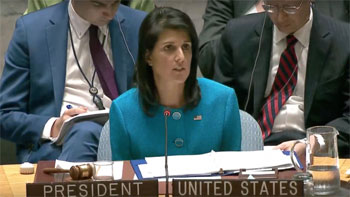 NEW YORK, Dec 24: U.S. Ambassador to the United Nations Nikki Haley announced Sunday that the United States had slashed the U.N.’s budget by more than $285 million for fiscal 2018.
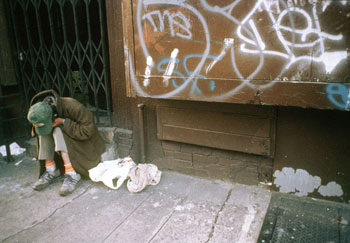 NEW YORK, Dec 15: The number of Americans living in poverty and the already high income inequality could worsen further in the days to come, making the United States the most unequal society in the world, the United Nations expert on extreme poverty and human rights warned Friday.
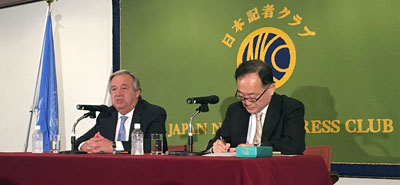 TOKYO, Dec 14: United Nations Secretary-General António Guterres wrapped up a short visit to Tokyo on Thursday with an appeal to the Democratic People’s Republic of Korea (DPRK) and other countries to implement relevant Security Council resolutions to denuclearize the Korean Peninsula.
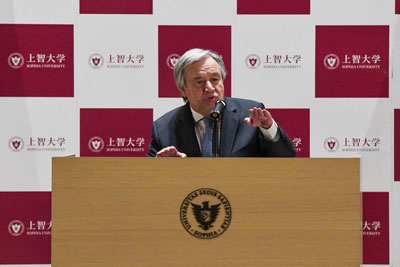 TOKYO, Dec 14: Health is everyone's right and a driver of economic development, United Nations Secretary-General António Guterres stressed Thursday, expressing the UN's readiness to help countries move towards health coverage for all.
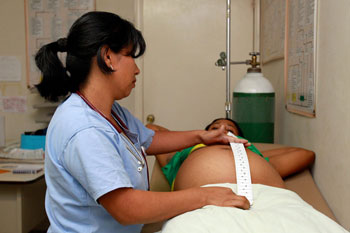 NEW YORK, Dec 13: At least half of the world's population cannot obtain essential health services, and nearly 100 million people are being pushed into extreme poverty each year due to the out-of-pocket health expenses they must pay, according to a United Nations-backed study.
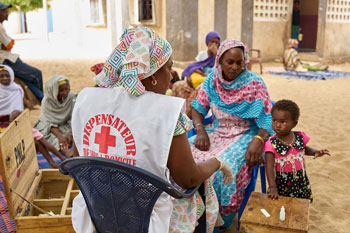 UNITED NATIONS, Dec 12: The United Nations on Tuesday called for greater efforts on the part of its Member States to ensure universal health coverage, and designated 12 December as International Universal Health Coverage Day.
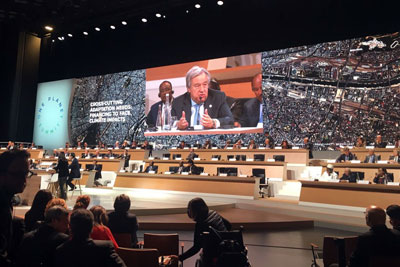 PARIS, Dec 12: Those who fail to bet on a green economy will be living in a grey future, United Nations Secretary-General António Guterres warned Tuesday, calling for greater ambition by governments, civil society, the private sector and finance partners to help tackle the global climate challenge.
 PARIS, Dec 12: The clock is ticking on efforts to reform the buildings and construction sector's energy performance and keep the Paris Agreement on track, new United Nations-backed research revealed on Tuesday.
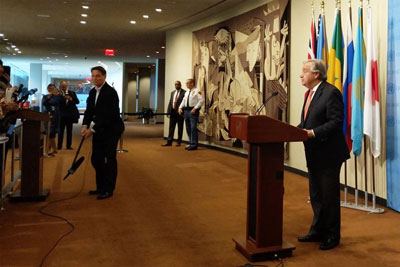 UNITED NATIONS, Dec 6: In the wake of the announcement by the United States President recognizing Jerusalem as the capital of Israel, United Nations Secretary-General António Guterres on Wednesday stressed that there is no alternative to the two-state solution and that Jerusalem is an issue that must be resolved through direct negotiations between the parties.
Aviation
| Business | Defence | Foreign
Affairs | Communication | Health
| India | United Nations
India-US
| India-France | Entertainment
| Sports | Photo Gallery |
Tourism | Advertise with Us
| Contact Us
© Noyanika International, 2003-2009. All rights reserved.