


United Nations
UN Chief António Guterres urges China, India to lower border tensionsBy Deepak Arora
Responding to a question on the tensions on the border between India and China, the Secretary General's Spokesperson Stephane Dujarric said "We're, obviously, looking at the situation, and we would urge all the parties involved to avoid any action that would make the situation even more tense. To another question on US President Donald Trump's offer to mediate in this potential conflict, the spokesperson said it was not for us to opine. "Look, that would be for the parties involved to decide who they would want to mediate this, not for us to opine," he added. China is believed to have marshalled close to 5,000 soldiers on its side of the disputed border in Ladakh sector, where India has also sent military reinforcements to strengthen defences amid the growing tensions on the LAC. Indian and Chinese soldiers are eyeball-to-eyeball at four locations along the LAC and several rounds of talks between local military commanders have failed to end the standoff that began with a violent confrontation between rival patrols three weeks ago near Pangong Lake. Tensions have grown near Pangong Lake and three pockets in Galwan Valley, where Chinese troops have pitched close to 100 tents and erected temporary structures to establish a presence. On May 10, tensions flared between India and China in north Sikkim, where 150 soldiers were involved in a tense clash a day earlier. Four Indian and seven Chinese soldiers were injured at Naku La during the confrontation. Around 250 soldiers from the two sides also clashed near Pangong Lake on the night of May 5-6, with the scuffle leaving scores injured. While an immediate flare-up was avoided as both armies stuck to protocols to resolve the situation, tensions spread to other pockets along the LAC. The latest standoff is not confined to a small area, and has triggered an increase in troops at multiple locations on both sides and seems to suggest a greater design rather than adventurism by local commanders. UN Chief Guterres commends India and Bangladesh for life-saving work in face of deadly Cyclone AmphanBy Deepak Arora
In a statement, the Secretary-General expressed his sadness at the loss of dozens of lives due to the most powerful storm to form in the Bay of Bengal, that packed powerful winds, slamming into the vulnerable coastal area along the border between the two nations, compounding the on-going COVID-19 crisis, and compromising efforts to maintain physical distancing. Jens Laerke, spokesperson for the UN humanitarian affairs office (OCHA), said on Friday that Cyclone Amphan had impacted some 10 million people in Bangladesh, killing at least 25 there, and more than 70 in India. Half a million families may have lost their homes, he added. The storm caused unprecedented damage across the historic India city of Kolkota, cutting off power supply to cities and towns, many of which are working to contain the COVID-19 pandemic, where there are more than 30,000 confirmed COVID-19 cases in Bangladesh and 432 deaths, according to latest figures from the World Health Organization (WHO). The Bangladesh government evacuated around two million people before the storm hit, Laerke said, and more than 12,000 cyclone shelters had been set up with COVID-19 prevention equipment, including masks, sanitizers, soap and handwashing facilities. About one million people had also been evacuated in India. According to WHO figures, there are more than 125,000 coronavirus cases there, with 3,720 deaths reported. On Friday, the Indian Prime Minister, Narendra Modi, announced a $132 million emergency relief package, after travelling to the region to survey the damage. “The Secretary-General commends the governments, first responders and communities for their pre-emptive work to make people safe ahead of the storm and to meet their immediate needs afterwards”, said the statement from the UN Spokesperson’s Office. “The United Nations stands ready to support these efforts.” The Secretary-General expressed his “solidarity with the people of India and Bangladesh as they face the impact of a devastating cyclone while also responding to the impacts of the COVID-19 pandemic.” Elisabeth Byrs, from the World Food Programme (WFP), told journalists on Friday a team was conducting a Rapid Needs Assessment. While most crops had been harvested already, early reports suggest that there was damage to fisheries, particularly smallholder shrimp farmers. WFP had prepositioned food stocks, including high energy biscuits for 90,000 families, in affected areas and extra food stocks could also be made available and ready for distribution, if needed. The Rohingya camps had been largely spared from damage when Cyclone Amphan made landfall in Bangladesh and India on 20 May, however a direct hit from a cyclone had the potential to be devastating, said the agency. The UN refugee agency’s Charlie Yaxley (UNHCR) said that in Cox’s Bazar, home to around a million Rohingya refugees from Myanmar, 118 shelters had been destroyed and 1,423 had been damaged, affecting just over 7,000 Rohingyas refugees in the settlement. Of that number, 555 had been moved to temporary shelters or were staying with relatives while their homes were repaired. Clare Nullis, for WMO, the World Meteorological Organization, said the disaster mobilization for the cyclone had been “a textbook example of how it should be done. The forecast provided by the Indian Meteorological Department, which served as WMO’s regional specialized meteorological centre and provided forecast for the entire basin, “had been spot on”. The information that it provided had been the basis for the massive evacuation and the community response, Ms. Nullis added. India's Harsh Vardhan Takes Charge As Chairman Of WHO's Executive Board
The Health Minister, who is at the forefront of India's battle against COVID-19, succeeded Dr Hiroki Nakatani from Japan. "I am aware I am entering this office at a time of global crisis on account of this pandemic. At a time, when we all understand that there will be many health challenges in the next 2 decades. All these challenges demand a shared response," the Union Health Minister said after taking charge as the WHO Executive Board Chairman. The main functions of the executive board are to give effect to the decisions and policies of the Health Assembly, to advise it and generally to facilitate its work. Last year, WHO's South-East Asia group had unanimously decided to elect India's nominee to the executive board for a three-year-term beginning May. The proposal to appoint India's nominee to the executive board was signed by the 194-nation World Health Assembly on Tuesday. The chairman's post is held by rotation for one year among regional groups and it was decided last year that India's nominee would be the Executive Board chairman for the first year starting Friday. It is not a full-time assignment and the minister will just be required to chair the Executive Board's meetings, an official said. The Executive Board comprises 34 individuals, technically qualified in the field of health, each one designated by a member-state elected to do so by the World Health Assembly. Member States are elected for three-year terms. The board meets at least twice a year and the main meeting is normally in January, with a second shorter meeting in May, immediately after the Health Assembly. India's Harsh Vardhan to be next WHO Executive Board chairmanGENEVA, May 19: Health Minister Harsh Vardhan, who is leading the country’s battle against Covid-19 in the country, will be India’s nominee to be the next WHO Executive Board chairman. A senior government official said the health minister would be elected at the World Health Organisation‘s Executive Board’s meeting on 22 May. The election is a procedural formality. “It is not a full time assignment… But Dr Harsh Vardhan will be required to chair the executive board’s bi-annual meetings,” according to a senior government official. The WHO’s South-East Asia group had unanimously decided last year that New Delhi would be elected to the executive board for a three-year-term beginning May. It was also decided at this meeting that New Delhi’s nominee would be the Executive Board chairman for the first year beginning Friday. The chairman’s post is held by rotation for one year among regional groups. On Tuesday, the 194-nation World Health Assembly signed off on the proposal to appoint India’s nominee to the executive board. Former health minister JP Nadda had chaired a similar session of the WHA back in 2016. Harsh Vardhan, an ENT surgeon by training, will replace Dr H Nakatani, who is the advisor for international affairs to Japan’s health minister. As head of the 34-member Executive Board that is mandated to implement the decisions of the World Health Assembly, health minister Harsh Vardhan will have to work closely with Director General Tedros Adhanom Ghebreyesus who has lately been the punching bag for many countries led by the United States over the WHO’s initial response to Covid-19. Harsh Vardhan, who will continue in the executive board after the one-year term as chairman ends, will also have a say in shortlisting the next WHO director general when Tedros Adhanom’s five-year-tenure ends in May 2021. Earlier, the executive board would select the WHO director general and get its choice vetted by the health assembly. But this procedure was changed before Tedros Adhanom was appointed. The board is now required to shortlist candidates whose candidature is put before the World Health Assembly for election by a secret ballot. UN chief recommends scaled-back UN meeting of world leaders amid pandemic
Guterres suggested in a letter to the president of the General Assembly that heads of state and government deliver prerecorded messages instead, with only one New York-based diplomat from each of the 193 U.N. member nations present in the General Assembly Hall. Assembly President Tijjani Muhammad-Bande has said a decision on the annual gathering will be made after consultations with U.N. member states. The meeting of world leaders usually brings thousands of government officials, diplomats and civil society representatives to New York for over a week of speeches, dinners, receptions, one-on-one meetings and hundreds of side events. This year was expected to bring an especially large number of leaders to U.N. headquarters to celebrate the founding of the United Nations in 1945 on the ashes of World War II. But New York has been an epicenter of the coronavirus pandemic with over 190,000 cases and nearly 16,000 confirmed deaths. Guterres said in the letter that although September is some months away “the medical community anticipates that the pandemic will continue to cycle with varying degrees of severity, depending on the ability of the affected nation to implement aggressive identification, testing, tracing and containment measures.” “It is expected, therefore, that international travel restrictions may remain in place for some destinations — meaning quarantines might affect travelers to and from New York City,” he said. While the General Assembly could consider postponing the high-level meeting to a date in 2021, he said it would be better to hold it at the start of the new General Assembly session in September. This will allow the U.N.’s work “to continue uninterrupted, albeit in a different format, and for world leaders to convey their views on important international issues, including on the international response to the pandemic, as well as to hear the views of other leaders,” Guterres said. General Assembly spokeswoman Reem Abaza reiterated Tuesday that “no decision has been made yet” regarding the annual gathering. With pressure mounting at WHO meet, China agrees for probe into Covid-19 originGENEVA, May 18: China on Monday gave in to mounting international pressure for a probe into the origin of Covid-19 and a review of the World Health Organisation’s response to the pandemic. President Xi Jinping told the World Health Assembly that China had acted with ‘openness, transparency and responsibility’ when the disease, which has impacted billions of people across the world, first broke out. President Xi, who had been invited to speak at the opening ceremony after the European Union-drafted resolution to push for a probe was supported by more than a 100 countries, said Beijing supported calls for a comprehensive review of the global response but felt this exercise should be carried out after the world gets a grip on the situation. The world’s immediate priority should be saving people. “China supports the idea of a comprehensive review of the global response to COVID-19 after it is brought under control to sum up experience and address deficiencies,” President Xi told the assembly, the UN global health body’s policy making body. China had previously opposed calls for such investigations from Washington and Canberra. The health assembly is expected to formally take up the resolution backed by over 120 countries tomorrow. “It is a formality now… No one is objecting to it now,” according to a diplomat. President Xi’s argument at the assembly mirrored the one presented by World Health Organisation director general Tedros Adhanom Ghebreyesus after a barrage of criticism, much of it emanating from the United States in the initial days. Tedros has been blamed for backing Beijing’s narrative and showering praise on President Xi for his handling of the disease around the same time that there was growing evidence of efforts to play down the spread of the disease in January. He was seen standing with Beijing again when the United States restricted flights from China. There is no need for measures that “unnecessarily interfere with international travel and trade”, the WHO chief said on February 3. At Monday’s World Health Assembly, President Xi reciprocated, telling the 194-member body that the WHO’s contribution under Dr Tedros had been applauded by the international community. “At this crucial juncture, to support WHO is to support international cooperation and the battle for saving lives as well,” President Xi said. The draft resolution that had been pushed by Australia and the European Union had proposed an inquiry into the animal to human transmission of the Sars-CoV-2 President Xi’s comments, made during a video speech to the World Health Assembly, come as a resolution pushed by the European Union and Australia calling for a review of the origin and spread of the coronavirus disease picked up momentum. By the time the truncated virtual meet started, the 54-nation Africa Group also extended support. This includes Ethiopia, home to Tedros Adhanom Ghebreyesus who made history in 2017 when he was elected WHO chief. Tedros was not just the first African to hold the post but also the first WHO chief not to be a medical doctor. The former Ethiopian minister holds a masters in immunology of infectious diseases and a Doctorate of Philosophy (PhD) in community health. Tedros, who spoke minutes after President Xi, said the inquiry would come “at the earliest appropriate moment” and provide recommendations for future preparedness. “We all have lessons to learn from the pandemic. Every country and every organisation must examine its response and learn from its experience. WHO is committed to transparency, accountability and continuous improvement,” Tedros said. The review must encompass responsibility of “all actors in good faith,” he said. India's Health Minister Harsh Vardhan said India has taken all necessary steps well in time to fight the pandemic. "Global collaboration is paramount. Governments, industry and philanthropy must pool resources to pay for the risk, the research, manufacturing and distribution, but with the condition that the rewards should be available to everyone, regardless of where they have been developed," he said in his address to the 73rd World Health Assembly via video conferencing. India undertook the COVID-19 challenge with the highest level of political commitment, he added. Therapeutics, diagnostics and vaccines for the whole world is the only way out of this pandemic, the Health Minister said. His address came after India on Monday joined 120 countries at the World Health Organisation (WHO) in pushing for an impartial and comprehensive evaluation of the global response into the coronavirus crisis as well as to examine the origin of the deadly infection. India backs 62-nation coalition’s push for probe into Covid-19 originNEW DELHI, May 17: India has backed calls to identify how the Sars-CoV-2 virus that causes Covid-19 was transmitted from animals to humans and conduct an ‘impartial’ evaluation of the World Health Organisation’s response to the pandemic, according to a draft resolution proposed for the WHO’s annual meet beginning tomorrow. New Delhi’s decision to sign off on the push for an inquiry led by the European Union and Australia is the first time that India has formally articulated its stand on the Covid-19 outbreak that was detected in central China’s Wuhan city late last year. The disease has, at last count, killed over 300,000 people worldwide and devastated the global economy. But Prime Minister Modi did indicate New Delhi’s stand at the G20 summit in March where he backed WHO reform and referred to the need for transparency and accountability. China, which has been accused of concealing information about the virus in the early days of the outbreak, had later contested that the deadly Sars-CoV-2 pathogen detected in its territory could have originated just about anywhere. Chinese foreign ministry officials even shared conspiracy theories that accused the US military of starting the coronavirus outbreak. World Health Organisation and its director general Tedros Adhanom Ghebreyesus, on the other hand, have been blamed for playing along with China till the virus reached enough countries and spread rapidly. Ghebreyesus, a former Ethopian minister, was elected with support from China in 2017. The accusations - he has denied them - also led United States President Donald Trump to suspend funding to the UN global health body. Diplomats in Geneva, where the WHO headquarters is located, said that the draft resolution - supported by 62 countries including Bangladesh, Canada, Russia, Indonesia, South Africa, Turkey, the United Kingdom and Japan - was an effort to bring about transparency and accountability for the spread of the disease that has been widely-acknowledged to be the worst crisis since the second world war. To be sure, the draft resolution does not mention China or its Wuhan city. It asks the WHO director general to work with the World Organisation for Animal Health to conduct “scientific and collaborative field missions” and “identify the zoonotic source of the virus and the route of introduction to the human population, including the possible role of intermediate hosts”. The seven-page draft resolution also proposes to ask the WHO chief to start, “at the earliest appropriate moment”, a stepwise “impartial, independent and comprehensive evaluation” to review experience gained and lessons learned from the WHO-coordinated international health response to Covid-19. This, the document says, should include an evaluation of the effectiveness of the mechanisms at WHO’s disposal and “the actions of WHO and their timelines pertaining to the COVID-19 pandemic”. The draft also asks countries to provide WHO “timely, accurate and sufficiently detailed public health information related to the COVID-19 pandemic as required by the international health regulations. It is not clear if, and how the draft resolution would be discussed at the virtual meeting since the WHO leadership opted for a truncated agenda, a move that has been seen as an effort to silence its critics. The showdown on Monday, where countries will push for the draft resolution to be taken up, is largely seen to target China which has come under scrutiny over the pandemic that has devastated the global economy. UN chief calls to end hate speech globallyBy Deepak Arora
“COVID-19 does not care who we are, where we live, what we believe or about any other distinction. We need every ounce of solidarity to tackle it together. Yet the pandemic continues to unleash a tsunami of hate and xenophobia, scapegoating and scare-mongering”, he said. Guterres listed examples of hate speech that have surfaced during the crisis, ranging from anti-foreigner sentiment, to antisemitic conspiracy theories and attacks against Muslims. Migrants and refugees also have been “vilified” as a source of the virus and subsequently denied access to treatment, he continued, while “contemptible memes” suggest that older persons are the most expendable in the pandemic. Meanwhile, journalists, health professionals, aid workers, human rights defenders and others have been targeted simply for doing their jobs. “We must act now to strengthen the immunity of our societies against the virus of hate”, the Secretary-General said, adding “that’s why I’m appealing today for an all-out effort to end hate speech globally”. Guterres called on political leaders to build and reinforce social cohesion, while educational institutions were urged to focus on digital literacy at a time when billions of young people are online, where extremists are also lurking. He said the media, and particularly social media companies, can also do more to flag and remove racist, misogynist and other harmful content. “I call on civil society to strengthen outreach to vulnerable people, and religious actors to serve as models of mutual respect”, Guterres continued. “And I ask everyone, everywhere, to stand up against hate, treat each other with dignity and take every opportunity to spread kindness”. The United Nations has been mobilizing against what has been described as a “groundswell” of xenophobia, racism and intolerance. Last year, the Secretary-General launched the UN Strategy and Plan of Action on Hate Speech to enhance these efforts, which outlines commitments that include supporting countries in policy development. Billions raised for Covid-19 vaccine: WHO chief
“Billions raised for virus vaccine is a powerful show of global solidarity,” WHO chief Tedros Adhanom Ghebreyesus told a virtual news briefing. He was referring to the 7.4 billion euros ($8.1 billion) that had been raised as funds to help in the frantic search for a vaccine for the novel coronavirus which had spread to around 184 nations across the world. He also emphasized that nations needed to ensure equitable distribution of the vaccine, once a suitable one is developed. Political leaders of all major European countries on Monday called for cooperation and not competition in the quest for a vaccine for the coronavirus, as they pledged 7.4 billion euros at a fundraising teleconference that had been turned down by the United States. Major European nations, along with Japan and Canada, made some of the biggest contributions. The fund raising teleconference was, however, marred by the absence of any representation from the United States. President Donald Trump has been openly critical of the global health watchdog’s handling of the Covid-19 pandemic. In total around 40 countries, along with the United Nations and several philanthropic agencies that included the Bill and Melinda Gates Foundation and research institutes made donations for the coronavirus vaccine. President Trump who will contest for re-election later this year had said only a day earlier on Sunday, that the United States would have a coronavirus vaccine ready by the end of the year. Scientists and health experts across the globe, however, have warned against such optimism saying that it may take a few years for countries to develop an effective vaccine which would help tackle the contagious Covid-19 disease. Ahead of WHO’s virtual meet, some real pressure on TedrosGENEVA, May 4: The World Health Organisation on Monday told member states that it will soon start sending out formal invites for the truncated version of its annual meet later this month. The World Health Assembly’s virtual meet comes at a time the global health body chief Tedros Adhanom Ghebreyesus is at the centre of a huge row over its initial response to the outbreak of coronavirus disease in China’s Wuhan. WHO director general Tedros Adhanom Ghebreyesus has been accused by the United States of helping China play down the disease in the early stages. Last month, Donald Trump declared that the US would hold back $ 400 million funding to the Geneva-headquartered WHO. A fortnight later, the US Director of National Intelligence issued a rare statement announcing a review of intercepted communications and other data to determine whether China, and possibly the WHO, concealed information about coronavirus. Diplomats in Washington and Geneva suggest that the WHO meet might eventually be a staid affair because it would have a very limited agenda. It is not clear if there would be an opportunity to discuss the impact of the United States’ suspension of funding on the global health body’s projects since the meeting of the Programme, Budget and Administration committee has been indefinitely deferred. But diplomats insist the effort to mount pressure on Tedros, who still has one more year to go, would continue to mount. The Ethopian politician, who was the health minister between 2005 and 2012 before taking over as foreign minister for the next four years in the government then run by his party, Tigray People’s Liberation Front, has a doctoral degree in community health. The WHO chief already has letters of support issued by the Non-Aligned Movement and the African Union leadership, a signal that he wasn’t willing to stand down. Neither is the United States. US Secretary of State Michael Pompeo has continued to pile pressure on China on Sunday, insisting that there was “enormous evidence” to show that the coronavirus outbreak began in a laboratory in Wuhan, China. That renewed offensive spooked investors who saw signs of a flare-up in US-China tensions and contributed to southeast Asian stocks slipping on Monday. To be sure, the US decision to hold back money committed to the WHO has been criticised by many countries. But it has put the focus back on the initial response by China, and by default, the chief of WHO that calls itself the “global guardian of public health”. Some of the criticism aimed at Tedros is powered by his statements too. Like the one made two days after a closed-door meeting with Chinese President Xi Jinping on 28 January. On 30 January, Tedros told the world that China is “setting a new standard for outbreak control”. A few hours after his effusive praise, the WHO declared the disease that may have originated from one wet market in China’s Wuhan a Public Health Emergency of International Concern for the world. Three months later, the disease has killed over 245,000 people, infected 3.4 million, forced half of humanity to live under some form of lockdown and pushed the global economy towards its worst downturn since the Great Depression. Long before the Tedros-led World Health Organisation begins the annual meet, it has found itself in another bit of a complication, also involving China and the United States. The self-ruled island, which Beijing considers a wayward province awaiting reunification, has been excluded from WHO membership due to objections from China. Taiwan has attended the assembly as an observer from 2009-2016 when Taipei-Beijing relations warmed, but China blocked further participation after the election of Taiwan President Tsai Ing-wen, who China views as a separatist. Taipei rejects that stand and insists that its exclusion creates a glaring gap in the global fight against the coronavirus. Taiwan has reported far fewer cases of the new coronavirus than many of its neighbours, due to early and effective detection and prevention work. The United States has already supported Taiwan’s participation at the assembly as an observer calling its exclusion an “affront” to UN principles, provoking a sharp outburst by the Chinese foreign ministry which expressed “strong outrage and firm opposition”. |
|
||||||
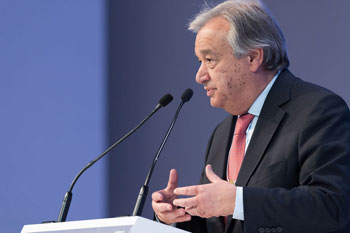 UNITED NATIONS, May 27: UN Secretary General António Guterres has urged China and India to avoid any action that would make the situation even more tense.
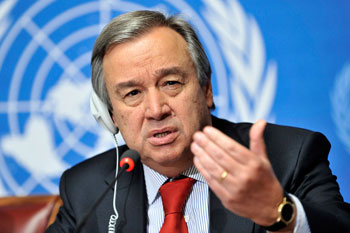 UNITED NATIONS, May 23: The UN chief António Guterres commended the governments and people of India and Bangladesh on Saturday, for their life-saving efforts ahead of devastating Cyclone Amphan, and for the effective relief effort, wishing those survivors injured and affected by the disaster, a speedy recovery.
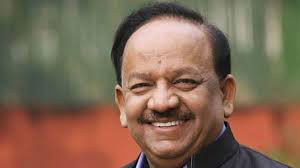 NEW DELHI, May 22: Union Health Minister Harsh Vardhan today took charge as the chairman of the 34-member World Health Organisation (WHO) Executive Board.
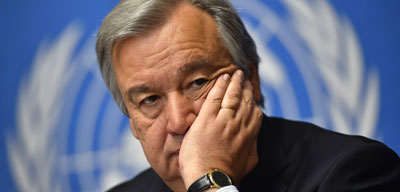 UNITED NATIONS, May 19: Secretary-General Antonio Guterres is recommending that the annual gathering of world leaders in late September, which was supposed to celebrate the 75th anniversary of the United Nations, be dramatically scaled back because of the COVID-19 pandemic.
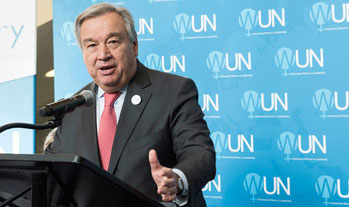 UNITED NATIONS, May 8: UN Secretary-General António Guterres is calling for concerted global action to quash the “tsunami” of hate speech that has risen alongside the COVID-19 pandemic.
 GENEVA, May 4: The World Health Organization (WHO) on Monday praised the efforts of global leaders who had managed to raise funds worth billions of euros to boost work on the development of a coronavirus vaccine, as a “powerful show of global solidarity”.
Aviation
| Business | Defence | Foreign
Affairs | Communication | Health
| India | United Nations
India-US
| India-France | Entertainment
| Sports | Photo Gallery |
Tourism | Advertise with Us
| Contact Us
© Noyanika International, 2003-2009. All rights reserved.