


United Nations
UN High-Level Debate In September To Go Virtual; World Leaders To Stay At HomeBy Deepak Arora
While taking the decision, the General Assembly noted "with concern" the situation regarding the coronavirus pandemic and the "limitations recommended on meetings within the United Nations premises as precautionary measures aimed at containing the spread of COVID-19". In a press briefing on Thursday, Reem Abaza, Spokesperson for the President of the General Assembly, Tijjani Muhammad-Bande, said that each Member State, Observer State, and the European Union, was invited to submit a pre-recorded video, delivered by its designated high-level official, which will be played in the General Assembly Hall. The Hall will not be empty, however. Ms Abaza explained that the videos will be introduced by a representative of each State, who will be physically present. The new format will mean that it will be for the first time in the world organization’s 75-year history that global leaders from 193 UN member States will not gather here for the high-level week that annually brings thousands of diplomats, government officials, civil society members and media persons from around the world to New York City. The landmark 75th session of the UN General Assembly will begin on September 15. The meeting to commemorate the 75th anniversary of the United Nations will take place on September 21 and the Declaration will be formally adopted at the meeting. The General Debate of the 75th session of the Assembly will commence from September 22. Along with the General Debate and 75th anniversary commemoration, key sessions will also be held virtually at the UN, the Assembly decided. Ms. Abaza informed that more details regarding the organization of this year’s events, including logistics, will be released “in due course”. The decision to introduce pre-recorded videos to the High-Level General Debate, which takes place at the beginning of the 75th session of the General Assembly, was made by the UN body on Wednesday, using the novel ‘silence procedure’ method. Under this method, draft resolutions are circulated by the President of the General Assembly, which gives Member States a deadline of at least 72 hours, to raise objections. If there are no objections, the President circulates a letter, confirming that the resolution has been adopted. It may be mentioned that the telecommuting arrangements have been in place at the UN headquarters here since mid-March as coronavirus spread rapidly across New York, making the state the epicentre of the pandemic in the US. The spokespersons of the UN Secretary General and the President of the UN General Assembly have been 'virtually' addressing the daily press briefings. The UN headquarters began its first phase of re-opening on July 20, under which no more than 400 people will be allowed to be present at the premises on any given day, in order to minimise the risk of exposure to the virus and to allow for physical distancing. Those present in the premises will have to follow strict social distancing guidelines. The UN has said that given the evolving nature of the situation and the many remaining uncertainties regarding COVID-19, the transition from one phase to another may not be linear and at any time could revert to a previous phase. In phase 2, the UNHQ occupancy will gradually increase from 10 to 40 per cent, while phase 3 or the "new normal" is being designed and will draw on lessons learned from the earlier phases. World ‘at the breaking point’ due to inequalities: UN chief António GuterresBy Deepak Arora
“Covid-19 has been likened to an X-ray, revealing fractures in the fragile skeleton of the societies we have built,” António Guterres said as he delivered the Nelson Mandela Annual Lecture, held online for the first time, in light of the ongoing COVID-19 pandemic. The lecture series, held annually by the Nelson Mandela Foundation, on the birthday of the first democratically-elected President of South Africa, aims to encourage dialogue by inviting prominent personalities to discuss major international challenges. In his major strategic vision statement, by invoking the importance of international cooperation and solidarity, he said “We belong to each other. We stand together, or we fall apart.” The world, he concluded, is at breaking point, and it is time for leaders to decide which path to follow. The choice presented by Guterres, is between “chaos, division and inequality”, or righting the wrongs of the past and moving forward together, for the good of all. Guterres began by noting that the COVID-19 pandemic has played an important role in highlighting growing inequalities, and exposing the myth that everyone is in the same boat, because “while we are all floating on the same sea, it’s clear that some are in superyachts, while others are clinging to the floating debris.” Global risks ignored for decades – notably inadequate health systems, gaps in social protection, structural inequalities, environmental degradation, and the climate crisis – have been laid bare, he said. The vulnerable are suffering the most: those living in poverty, older people, and people with disabilities and pre-existing conditions. Guterres pointed out that inequality take many forms. Whilst income disparity is stark, with the 26 richest people in the world holding as much wealth as half the global population, it is also the case that life-chances depend on factors such as gender, family and ethnic background, race and whether or not a person has a disability. However, he noted that everyone suffers the consequences, because high levels of inequality are associated with “economic instability, corruption, financial crises, increased crime and poor physical and mental health.” Colonialism, a historic aspect of inequality, was evoked by the Secretary-General. Today’s anti-racist movement, he said, points to this historic source of inequality: “The Global North, specifically my own continent of Europe, imposed colonial rule on much of the Global South for centuries, through violence and coercion.” This led to huge inequalities within and between countries, including the transatlantic slave trade and the apartheid regime in South Africa, argued Guterres, and left a legacy of economic and social injustice, hate crimes and xenophobia, the persistence of institutionalized racism, and white supremacy. Guterres also referred to patriarchy, another historic inequality which still resonates: women everywhere are worse off than men, and violence against women is, he said, at epidemic levels. The UN chief, who described himself as a proud feminist, said he was committed to gender equality, and has made gender parity a reality across senior UN posts. He also announced his appointment of South African international rugby captain, Siya Kolisa, as a global champion for the Spotlight Initiative, which aims to engage men in fighting violence against women and girls. Turning to contemporary inequality, Guterres said that the expansion of trade, and technological progress, have contributed to “an unprecedented shift in income distribution”. Low-skilled workers are bearing the brunt, he warned, and face an “onslaught” from new technologies, automation, the offshoring of manufacturing and the demise of labour organizations. Meanwhile, he continued, widespread tax concessions, tax avoidance and tax evasion, as well as low corporate tax rates, mean that there are reduced resources for social protection, education, and healthcare - services that play an important part in reducing inequality. Some countries have allowed the wealthy and well-connected to benefit from tax systems, but “everyone must pay their fair share”, said Guterres, and governments need to tackle the “vicious cycle” of corruption, which weakens social norms and the rule of law, and shift the tax burden from payrolls to carbon, which would help to address the climate crisis. Although climate change is a global problem, the effects are felt most keenly by those countries which are least to blame. The issue is likely to become more pronounced in the coming years, and millions risk malnutrition, malaria and other diseases; forced migration, and extreme weather events. The only way towards a fair and sustainable future for all, he suggested, involves what he called a “New Social Contract”, which allows young people to live in dignity; women to have the same prospects and opportunities as men; and protects the vulnerable, and a “New Global Deal”, which ensures that power, wealth and opportunities are shared more broadly and fairly at the international level. As part of the New Social Contract, labour market policies would be based on constructive dialogue between employers and workers, and would ensure human rights and fundamental freedoms. The Secretary-General called for new social safety nets, including universal health coverage, the possibility of universal basic income, boosted investment in public services, and, to reverse long-standing inequalities, affirmative action programmes and other policies to address inequalities in gender, race or ethnicity. The UN chief explained that quality education for all, and the effective use of digital technology, will be crucial to achieving these aims. Governments also need to transform the way children are taught, said Guterres, and invest in digital literacy and infrastructure, and help them to prepare for a rapidly changing workplace that is being upended by technology. The Secretary-General outlined some of the ways that the UN is supporting these efforts, including The Roadmap for Digital Cooperation, launched at the United Nations in June, which promotes ways to connect four billion people to the Internet by 2030, and “Giga”, an ambitious project to get every school in the world online. Greek and Guinean rights activists bag Mandela PrizeBy Deepak Arora
The Prize was established in June 2014 by the General Assembly to recognize the achievements of those who dedicate their lives to the service of humanity by promoting the purposes and principles of the United Nations while honouring and paying homage to Nelson Mandela’s extraordinary life and legacy of reconciliation, political transition, and social transformation. The selection Committee entrusted with the responsibility for selecting the winners decided on two laureates for the second United Nations Nelson Rolihlahla Mandela Prize. Marianna V. Vardinoyannis is a Greek philanthropist and world advocate for human rights and the protection of children’s health and welfare. She is a Goodwill Ambassador of UNESCO since 1999, founder and president of “Marianna V. Vardinoyannis Foundation” and of “ELPIDA Friends’ Association of Children with cancer.”
Dr. Morissanda Kouyaté of Guinea is a leading advocate on ending violence against women and girls in Africa and Executive Director of the Inter-African Committee on Harmful Traditional Practices (IAC). He initiated efforts that resulted in an Africa’s regional instrument on ending violence against women. Dr. Kouyateě carried out exceptional efforts in the fight against harmful traditional practices, particularly the elimination of Female Genital Mutilation. The laureates will be recognized at the annual commemoration by the General Assembly of Nelson Mandela International Day which due to the COVID-19 global pandemic is being marked virtually on July 20. The in-person award ceremony will take place at a later date at United Nations Headquarters here in New York, according to Reem Abaza, spokesperson of the UNGA President. Human Life Needs Human Contact: UN chief António GuterresBy Deepak Arora
“Whether we are living in countries currently locked down or slowly opening up again, we all are facing a reality different from what we have ever known”, said UN Youth Envoy Jayathma Wickramanayake, moderator of the public series that is jointly sponsored by her office along with the World Health Organization (WHO) and the UN Children’s Fund (UNICEF). “Coping with COVID” offered young people a platform to connect amidst uncertainty, generate mental health awareness among youth worldwide, and strengthen demand for integrated mental health and psychosocial interventions. Secretary-General António Guterres said the pandemic has highlighted the fragility of our societies and the need to build back better. Asked about what the so-called “new normal” means to him, the UN chief refused to characterize our collective state today in those terms, calling it instead “abnormal”. “For me, human life needs human contact”, he told the participants. Explaining that he missed his family, friends and colleagues, Guterres maintained “we will not have a new normal before we are able to establish that contact”. He did however, credit the ability of UN staffers over the past four months of lockdown, to easily adapt to the virtual world, which has kept the Organization “open for business”. Guterres stressed not only the importance of universal healthcare, but that mental health needs to be given the priority it deserves. “It is absolutely essential that governments make mental health central to their responses to COVID-19”, he spelled out. He also stressed that youth have a “key role in helping to imagine a better future for everyone”, one that is more sustainable and inclusive. Also taking part, WHO Director-General Tedros Adhanom Ghebreyesus, acknowledged that “while “COVID-19 is a crisis, it's also an opportunity to improve things”. Regular breaks and exercise are part of the curriculum for students in China who are learning from home during the COVID-19 outbreak. Noting that the full integration of mental health services for young people is "one of the greatest challenges”, he pointed out the need “to increase investment and political commitment”. “There is no health without mental health”, he concluded. “The role of youth is crucial to make this happen”. For her part, UNICEF Executive Director, Henriette Fore, maintained that “mental health will be a top priority for us”. “Mental health and psychosocial support will be deeply engrained in all of our programmes”, she upheld, promising to “engage young people” and talk about good policies and services “in every country.” Although this is already being done in many countries, she underlined that “it has to be part of a primary health care system". Finally, Ms. Fore stressed to the young people in attendance that it is crucial not to talk “about” youth but “with” them. Meanwhile, Queen Mathilde of Belgium, told the virtual assembly that there was a need to “be active on all fronts: prevention, improve resilience, raise awareness, fight stigma and guarantee access to care for all". “We can use the momentum created by the mobilization around COVID-19 to accelerate the mobilization around mental health”, she added. In sharing responses to an online polling session, one young speaker in the Philippines highlighted some of the challenges young people are facing as well as actions they are taking either to protect themselves or others around them, calling youth “front liners” in the response. Commented on their engagement around the word he said: “There is a rainbow in every storm.” ‘Turn the tide’ across a turbulent world: António GuterresBy Deepak Arora
While acknowledging that the planet was not on track last year to deliver the Sustainable Development Goals (SDGs) by 2030, he told the start of the Ministerial Segment of the High-level Political Forum (HLPF) that today “our world is in turmoil”. In addition to unacceptably high levels of poverty; a rapidly worsening climate emergency; persistent gender inequality; and massive gaps in financing, the UN chief called COVID-19 “another massive global challenge”. Pointing to more than 12 million infections, 550,000 deaths, hundreds of millions of jobs lost and the sharpest decline in per capita income since 1870, the top UN official bemoaned that “some 265 million people could face acute food insecurity by year’s end – double the number at risk before the crisis”. “The gravity of the crisis should not be lost on anyone”, he said, “and the impacts of this pandemic are falling disproportionately on the most vulnerable”. “Although “we desperately need to leap ahead, COVID-19 is taking us further away from the SDGs”, the UN chief commented. The Secretary-General cited inequalities within and between countries; a lack of resiliency investments; and disregard for the natural environment as some of the reasons sparking the “devasting impacts” of the COVID-19 crisis. And although “we have yet to take the SDGs seriously”, he maintained, that “we can turn this around”. “With the 2030 Agenda [for Sustainable Development], and the SDGs, we have an enduring and unifying vision; a framework to guide our decisions as we look to respond and recover better”, upheld the UN chief. The world cannot go back to “the previous so-called normal”, Guterres acknowledged, stressing the need for SDG-inspired solutions. “We must rise to meet the moment”, he said, urging the HLPF to “share experiences, understand what works and can replicated” and renew determination for multilateral responses to help turn the tide globally. The HLPF aims to chart a clearer path for countries to better recover, share experiences and fend off challenges in pursuing the Global Goals, while sharing strategies to tackle the pandemic and help countries meet their commitments by 2030. According to Mona Juul, President of the Economic and Social Council (ECOSOC), under whose auspices the meeting is being held, the pandemic is “not only a threat to our health, but a human crisis of multiple dimensions”. After a week of expert-level discussions, she noted the setbacks caused by COVID-19, and encouraged a response in alignment with the 2030 Agenda “if we hope to accelerate and maintain social and economic progress”. The ECOSOC head spelled out: “Global leadership must be strengthened in all areas” and we must galvanize our responses both individually and collectively “to work together better, and ensure that this decade ushers a new era of peace and prosperity for all”. She elaborated on some of the steps needed, including sharing economic benefits, revamping social protection programmes, delivering universal health care for all, empowering women and girls, listening to youth and halting the reversal of gains made by the most vulnerable groups of countries. “We must find the way to leverage political will, to ensure evidence-based decision-making”, she underscored. “The recovery phase from the pandemic represents an opportunity for all levels of government to build back more inclusive, equal, resilient and sustainable societies”. In closing, Ms. Juul commended the participants and the 47 countries that presented their Voluntary National Reviews (VNR) on concrete plans of action to meet the 2030 challenge. General Assembly President, Tijjani Muhammad-Bande, called for “collective efforts to accelerate action and carve out transformative pathways to ensure that we leave no one behind”. “Humanity cannot survive these multiple parallel crises if we do not work together with full respect for all peoples and all life on this planet”, he stressed, pushing for “a whole of Agenda approach”. The Assembly president elaborated on the need to provide social protection, protect human rights, promote health and invest in infrastructure while prioritizing education, clean water and sanitation. “We must work to alleviate the impact on the well-being and livelihoods of people in developing countries and build back better to bolster their economies”, he advised, underlining the need to “uphold our commitments to finance sustainable development efforts”. Creating vital fiscal space for investments to guarantee sustainable development for countries in need requires “improved governance, fair tax systems and a renewed commitment to eliminate illicit financial flows”, the UN official stated. “Make no mistake, durable solutions emanate from strong political will and resilient institutions”, he explained and building economies with decent work for all is “the foundation” of an inclusive future. “This is a moment of reckoning”, concluded the Assembly president. “Now is the time to build back better, to step up our ambition and translate the Global Goals into local action… to create the future we want”. On behalf of youth speakers, Farai Mubaiwa, Co-Founder of the Afrika Matters Initiative (AMI) and the lead at South Africa’s Youth Employment Service, spoke about what she identified as other pandemics, including femicide, which “ravages women and girls across Member States”; the plight of black bodies globally; and the human impact on climate change. Calling young people “the leaders of today” who are “actively changing their communities for the better”, Ms. Mubaiwa declared that “youth inclusion is no longer a debate, it is a necessity” to confront what lies ahead. Meanwhile, in her keynote statement, youth speaker Tina Hocevar, Vice-President of the European Youth Forum, counselled against a future that goes back to “normal”, saying that it had never worked “for the majority of us, nor for our planet”. In looking ahead, she advised participants instead to embrace change with compasses “set on promoting fairness, equity, integrity, human dignity and human worth”. Women's leadership to shape pandemic response and recoveryBy Deepak Arora
“Over the past months, people around the world have come to see what many of us already knew: women’s leadership makes a profound difference”, Amina Mohammed said on Tuesday. “The evidence has shown — in country after country — how governments led by women are more effective in flattening the curve and positioning for economic recovery.” Ms. Mohammed was addressing Women Rise for All, a virtual gathering of influential women from across different regions, sectors and generations, to examine how their leadership is shaping pandemic response and recovery that benefits all people. “We want to shape the way we define leadership. And ensure that we emerge from this pandemic with women leading, in equal numbers, and equal partnership”, she explained. Women’s proven leadership has emerged as a “silver lining” in the pandemic, one of the world’s leading advocates for the rights of women and children told the gathering. Graça Machel believes it was no accident that countries with women Heads of State—such as New Zealand, Germany, Finland and Taiwan—have been comparatively successful in beating back the deadly new coronavirus. “This crisis has brought to light an undeniable truth: that the leadership of women is essential for us to effectively recreate the world…that is more human-centred, that is more equal; a world in which such social justice is the goal”, she said in her keynote address. For former Mozambican minister Ms. Machel, the pandemic must also lead to a re-examining of dominant value systems as the world cannot return to how it was prior to the crisis. “We must live on a planet where materialism, greed, inequalities no longer divide the human family”, she stated. Women Rise for All was launched on social media in April, to support the UN Secretary-General’s call for solidarity and urgent action during the pandemic. Even in the midst of this “devastating crisis”, there is an opportunity to build a better world that works for all, according to Ms. Mohammed. “That will only be possible when we recognize the value of women front and centre, together leading the way and rising for all”, she said. UN designates Pakistan Taliban leader Noor Mehsud as global terroristWASHINGTON, July 16: The United Nations on Thursday designated Pakistan based terror organisation Tehrik-e Taliban Pakistan’s leader, Mufti Noor Wali Mehsud, as a global terrorist. The United States Security Council 1267 Al-Qaida Sanctions Committee added Mehsud to its ISIL (Da’esh) and Al-Qaida Sanctions List. Mufti Noor Wali Mehsud was listed pursuant to paragraphs 2 and 4 of resolution 2368 (2017) for “participating in the financing, planning, facilitating or perpetrating of acts or activities by, in conjunction with, under the name of, on behalf of, or in support of” entities associated with Al-Qaida. The United States has welcomed the development. “Welcome news that the @UN has added Tehrik-e-Taliban Pakistan leader Noor Wali Mehsud to its ISIL & AQ sanctions list. TTP is responsible for many deadly terrorist attacks in Pakistan. The United States domestically designated Noor Wali as a terrorist in September 2019,” State SCA tweeted. TTP, also known as Pakistan Taliban, is responsible for carrying out multiple suicide bombings, and have killed hundreds of civilians. TTP was earlier designated as Specially Designated Global Terrorist (SDGT) by the Department of State. Noor Wali, also known as Mufti Noor Wali Mehsud, was named the leader of TTP in June 2018 following the death of former TTP leader Mullah Fazlullah. Under Noor Wali’s leadership, TTP has claimed responsibility for numerous deadly terrorist attacks across Pakistan, according to the US State Department. Last year in September, The United States had domestically designated Mehsud as a terrorist. This comes as another blow to Pakistan which has been repeatedly called out by the world community for supporting the terrorist groups. Pakistan has been under the FATF radar for its complicity towards terror groups like Lashkar-e-Taiba (LeT) and Jaish-e-Mohammed (JeM) among others. Last year, the United Nations designated Jaish-e-Mohammed chief, Masood Azhar as a “global terrorist”. SDGs more important than ever before, says India's Rajiv KumarBy Deepak Arora UNITED NATIONS, July 14: India's Dr. Rajiv Kumar, Vice Chairperson, NITI Aayog, has underscored the need for multilateralism and global solidarity in these challenging times brought about by the COVID-19 pandemic and other pressing challenges inlcluding climate change. Therefore, Dr Rajiv Kumar said the Sustainable Development Goals were more important than ever before. Faster implementation of SDGs can put countries on the path of inclusive and sustainable recovery from the impacts of the pandemic. He said India's Prime Minister has reminded us that people, planet and profits are interlinked, and our decisions should be people centric and planet friendly. He was speaking during the general debate at the ECOSOC High Level Political Forum, 2020, on “Accelerated action and transformative pathways: realizing the decade of action and delivery for sustainable development”. He said India was one of the world’s most vibrant market economies and, through consistent growth and social inclusion initiatives, has made significant progress towards the SDGs. "We have been able to lift 271 million people from multidimensional poverty. There is near-universal access to bank accounts, expanded financial and digital inclusion, promotion of entrepreneurship and rural employment guarantee resulting in increased incomes. Programmes aimed at universal access to housing, sanitation, quality education, health protection, and clean energy are improving the quality of life of the most vulnerable. "Since the advent of the 2030 Agenda, we have expanded access to clean cooking fuel to over 80 million households in need; built over 110 million toilets in rural areas to improve sanitation; and added over 385 million accounts for the unbankedmajority of them women. Simultaneously, our technology-driven Direct Benefit Transfer system has been instrumental in delivering ambitious programmatic interventions and in improving the efficiency of public service delivery. "Our food security programmes are successfully addressing issues of malnourishment among children and women. India has a robust institutional framework for protection of peoples’ rights, maintenance of peace and social justice. The Right to Information Act and strengthening of several other accountability legislations have resulted in greater transparency in governance. Dr Rajiv kumar said "Government of India’s response to the pandemic has been articulated through the Indian Prime Minister’s vision of an Aatmanirbhar Bharat or a Self-Reliant India. It has been operationalised through a stimulus package of USD 276 billion, which is 10 per cent of India’s GDP, and includes several reform and relief measures across numerous sectors to protect lives and livelihoods, spur investment and employment, and safeguard the interest of frontline workers." He said "The principle of Leaving no One Behind resonates with our Constitution. The needs and aspirations of our 1.3 billion people of socio, economic and cultural diversities, continue to guide our actions." UN provides fastest funding to flood-hit BangladeshBy Deepak Arora
On 4 July a high probability of severe flooding was forecast for mid-July along the Jamuna River in Bangladesh, with one-third of the area’s total population likely to be affected. That warning was the trigger for the UN to immediately release $5.2 million from the Central Emergency Response Fund (CERF) to help communities urgently prepare and protect themselves. The money went to three participating agencies – the Food and Agriculture Organization (FAO), the United Nations World Food Programme (WFP) and the United Nations Population Fund (UNFPA) to enable them to prepare to distribute cash, livestock feed, storage drums, and hygiene, dignity and health kits. On 11 July, the activation trigger was reached when forecasting predicted the floods would reach critical levels in five days. At this point, aid workers began distributing the aid. Bangladesh is highly vulnerable to climate-related shocks and stresses, including monsoon flooding. In an average year, approximately one quarter of the country is inundated. In some years, flooding is more intense and surpasses the ability of communities to cope, leading to death and the destruction of infrastructure, livelihoods and homes, and creates deep humanitarian needs. However, monsoon flooding can be predicted, and humanitarian needs minimized.
Working alongside government, staff from the Bangladesh Red Crescent Society (BDRCS), the International Federation of Red Cross and Red Crescent Societies (IFRC), and Non-Governmental Organizations (NGOs), the three UN agencies and implementing partners began giving communities at risk in the Bogura, Gaibandha, Kurigram, Jamalpur and Sirajgonj districts the means to protect themselves and their livelihoods from the worst effects of the floods. FAO is delivering sealable drums in which farmers can safely store their seeds and farming tools. The drums can be fixed to immoveable structures and withstand submersion in water, keeping the contents safe and undamaged by flood waters, allowing farmers to resume productive activities as soon as it’s safe to return. This is coupled with feed support to smallholder farmers at evacuation centres to keep their livestock healthy and alive throughout the peak of the floods. In all, 15,000 families will benefit. “Innovations like this are the bright spots in a bleak humanitarian outlook. Advances in data and predictive analytics mean we can predict many crises and take action as soon as we know the problem is coming. If disasters take us by surprise, it’s because we weren’t looking. |
|
||||||
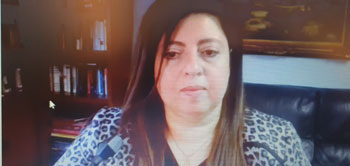 UNITED NATIONS, July 23: The high-profile Debate of the UN General Assembly will be a slimmed-down affair this September, with world leaders staying away from New York, and submitting pre-recorded video statements, according to Ms Reem Abaza, Spokesperson for the President of the 74th Session of the General Assembly.
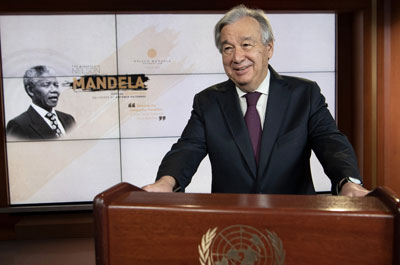 UNITED NATIONS, July 18: While saying “we are at the breaking point,” UN Secretary-General António Guterres has made a call to end the global inequalities that sparked this year’s massive anti-racism protests and have been further exposed by the coronavirus pandemic.
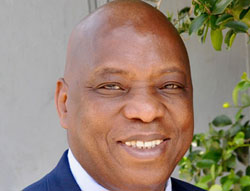 UNITED NATIONS, July 17: Tijjani Muhammad-Bande, President of the 74th Session of the General Assembly (PGA), has announced that Mrs. Marianna Vardinoyannis, of Greece and Dr. Morissana Kouyaté, of Guinea, are the laureates of the United Nations 2020 Nelson Rolihlahla Mandela Prize.
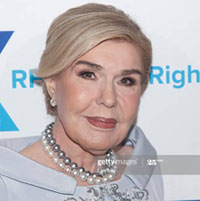 For more than 30 years, she has been fighting against childhood cancer and for a world without borders in health, helping thousands of children to be cured.
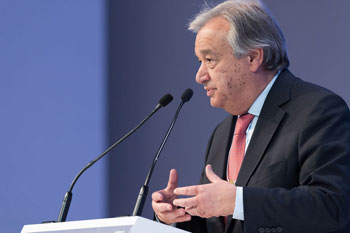 UNITED NATIONS, July 15: How to adapt and move forward in the new reality of a COVID-19 world was the focus of a UN webinar on Wednesday, which considered how young people can maintain good mental health and a sense of wellbeing.
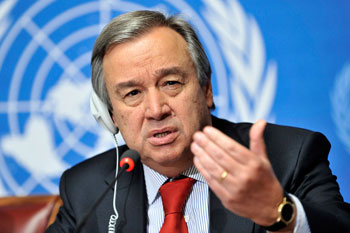 UNITED NATIONS, July 14: “Concrete, bold and implementable solutions” are needed to turn the tide on the many challenges the world is facing, including the COVID-19 pandemic, Secretary-General António Guterres said on Tuesday, on the biggest day so far for the UN’s key international forum on sustainable development.
 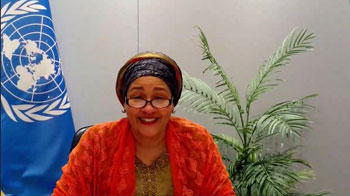 UNITED NATIONS, July 14: Although the COVID-19 pandemic has generated an unprecedented global health, humanitarian and development crisis, it has also revealed the power of women’s leadership, according to the UN Deputy Secretary-General.
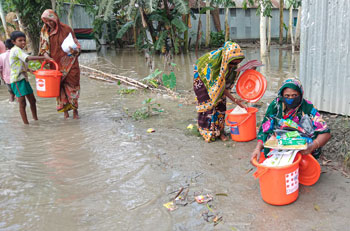 UNITED NATIONS, July 15: In an innovative approach to dealing with the effects of severe flooding in Bangladesh, the United Nations is using the latest in data and predictive analytics to forecast the next major monsoon floods, gauge likely impacts – and take action – before possible disaster hits.
 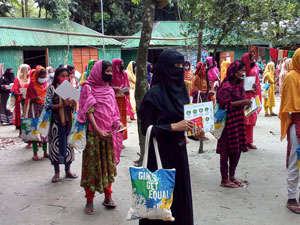 This is the latest example of anticipatory humanitarian action. Developments in data and predictive analytics make it possible to anticipate when disaster is about to strike and take action in advance. This approach offers a more dignified, swifter, cheaper and more efficient solution to humanitarian needs.
Aviation
| Business | Defence | Foreign
Affairs | Communication | Health
| India | United Nations
India-US
| India-France | Entertainment
| Sports | Photo Gallery |
Tourism | Advertise with Us
| Contact Us
© Noyanika International, 2003-2009. All rights reserved.