


United Nations
|
Antonio Guterres, Modi Discuss BRICS Priorities, Global Conflicts and AI WeaponsBy Deepak Arora
Nepal floods hit vulnerable communities as UNDP estimates 2.2 million tonnes of debrisBy Deepak Arora
Guterres Warns of Global Breakdown as Wars, AI Risks and Power Shifts Test UNBy Deepak Arora
Opening his final press conference before the high-level week of the 81st UN General Assembly, Guterres delivered a blunt assessment of the global situation and warned that continued deterioration in Ukraine and the Middle East could trigger a catastrophe with consequences far beyond the regions at war. “When we see the Russia-Ukraine war and when we see the whole Middle East, every day, things get a little bit worse,” Guterres said. “We are at a serious risk of an explosion that can create a catastrophic situation with absolutely devastating impacts at a global level.” With about 140 world leaders expected for bilateral meetings during the General Assembly high-level week, Guterres urged them to use New York as a place for direct engagement, particularly between countries caught in conflict. His central message was simple: the world cannot afford to abandon international rules just when they are under the greatest strain. “The world is changing. And our institutions must change with it,” he said, while insisting that reform cannot mean giving up the principles of the UN Charter. Guterres put the Middle East at the top of his concerns, calling de-escalation “priority one, priority two and priority three.” He urged all parties to stop actions that harm civilians and allow humanitarian operations to proceed safely. He also demanded that freedom of navigation in and around the Straits of Hormuz and Bab al-Mandab be fully restored and respected under international law. The Secretary-General said the suffering of Palestinians must not be forgotten amid the wider regional upheaval. The Gaza peace plan, he said, must be implemented with unrestricted humanitarian access, while the “creeping annexation” of the West Bank must stop. “There will be no peace in the Middle East without realizing the Two-State solution,” he said. On Ukraine, Guterres called for an immediate ceasefire as the first step toward a just, lasting and comprehensive peace. He warned that the continuing war was not only devastating civilians but also worsening problems involving food, fertilizer and energy supplies. He called for safe movement of Ukrainian and Russian food, fertilizer and energy exports through the Black Sea. Guterres also pointed to his recent visit to India for the BRICS Summit, where he said countries with sharply different positions had managed to agree on a common declaration. Asked about the Delhi Declaration adopted under India’s chairmanship, Guterres said the gathering demonstrated that major powers could still find common ground around multilateralism and the United Nations. His comments come as he argues for a major overhaul of international institutions, particularly the UN Security Council and the Bretton Woods system. Guterres said the institutions created after the Second World War no longer reflect today's distribution of global power. Emerging economies have gained greater economic weight, he said, while the structures governing global decision-making have failed to keep pace. He also blamed the Security Council's paralysis for contributing to a growing climate of impunity. Artificial intelligence was another major warning in Guterres' address. He acknowledged AI's enormous potential in education, health, climate resilience and sustainable development. But he said governments cannot ignore warnings from people working at the frontier of the technology who say its development is moving faster than their understanding of the risks. “AI does not stop at borders, and neither do its risks,” he said. Guterres rejected reliance on isolated, voluntary pauses and called for international rules that can determine when increasingly powerful AI systems require stronger safeguards. He warned against a global “race to the bottom” on AI safety, particularly as geopolitical competition between major powers intensifies. Governments, technology companies, scientists and civil society, he said, all need to be part of the response. Guterres also sounded the alarm over climate change, warning that the world is approaching dangerous tipping points involving glaciers, forests, coral ecosystems and the melting of Greenland and West Antarctica. He said current national climate commitments are not enough and called for much faster emissions reductions. At the same time, he argued that economics and energy security are increasingly pushing governments toward renewables. Renewable energy, he said, is becoming cheaper while fossil fuel supplies remain vulnerable to wars and geopolitical disruptions. For developing countries already facing debt, food and energy pressures, Guterres said the international financial system must also change. “There is no peace without development. There is no development without peace. There is no development, peace, without human rights,” he said. As he enters his final months as Secretary-General after a decade in office, Guterres resisted attempts to define his legacy. He did highlight one development he considers particularly important, the progress toward gender parity across the United Nations. Asked what advice he would leave for his successor, Guterres offered a brief answer: “Be yourself and be independent, and act according to your conscience.” His larger message was unmistakable. A more multipolar world needs institutions that reflect today's realities, not the balance of power that existed decades ago. Without that reform, he warned, the UN risks remaining unable to respond effectively to the wars, inequalities, climate dangers and technological threats confronting the world. |
|
|||
 NEW DELHI: With wars continuing in the Middle East and Ukraine, global food supplies under pressure and major questions hanging over the future of international cooperation, UN Secretary-General António Guterres met Prime Minister Narendra Modi in New Delhi on Friday on the sidelines of the BRICS Summit. The meeting brought together several of the most pressing issues facing the world, from reform of global institutions and freedom of navigation to food security, sustainable development, renewable energy and the rapidly growing role of artificial intelligence.
 UNITED NATIONS: Floods and mudflows along Nepal’s BhoteKoshi–Trishuli river system have left at least 2.2 million tonnes of debris within the analysed areas, according to a preliminary estimate by the United Nations Development Programme (UNDP). The flash flood, reportedly triggered by a glacial collapse on 26 August, swept water, mud and rocks through communities in the affected districts. Nepal has reported over 1000 dead, with over 4,000 people reported missing.
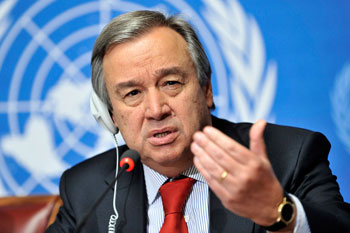 UNITED NATIONS, Sept 16: The world is becoming more dangerous by the day, with wars spreading, international institutions losing their ability to act and artificial intelligence advancing faster than governments can control its risks, UN Secretary-General António Guterres warned Wednesday.
India-US | India-France | Entertainment | Sports | Photo Gallery | Tourism | Link Partners | Contact Us
© Noyanika International, 2003-2024. All rights reserved.