


AVIATION
|
Airspace reopens, carriers add flightsNEW DELHI, April 21: In a major relief to stranded passengers, European airspace finally opened on Wednesday, including London’s Heathrow airport that became operational at 2am IST. Most major airlines started operations but warned that the situation could change if the Icelandic volcano spewed any more ash. Indian carriers like Air India and Jet, that had been operating flights to Europe since Sunday, added more flights to their schedule and Kingfisher also resumed its flights out of Mumbai and Delhi to London. Air India aircraft that had been stranded at Frankfurt and London were pressed into service, two flights expected to arrive in India and another one flying to Toronto on Wednesday. From an earlier 41,000 passengers stranded at Delhi and Mumbai, Wednesday saw about 30,000 waiting to board flights back home. The remaining had left India when Jet and Air India started their US operations a few days back. However, officials warn that due to the massive backlog, there could be severe delays and disruption of schedules. Air India has positioned additional cockpit and cabin crew to operate additional flights if required. They are operating an additional flight to London from Mumbai on Friday. The International Air Transport Association (IATA) said that the volcanic ash disruption had caused the airline industry losses to the tune of $1.7 billion in the past six days that operations to and from Europe were suspended. About 1.2 million passengers were affected in the process. The backlog of passengers is so huge that several airlines are unable to issue fresh tickets even though airlines like Lufthansa have opened bookings. According to agencies, British Airports Authority had restricted entry to the Heathrow Airport only to those passengers who had valid tickets. At present, about 3,000 passengers who were booked on Air India were stranded in Delhi, around 1,300 in Amritsar and about 2,300 passengers in Mumbai. AI, Jet commence flight to US, CanadaNEW DELHI, April 19: Air India, Jet Airways and Kingfisher Airlines on Monday cancelled their flights to the UK and other parts of Europe in the wake of huge clouds of volcanic ash emanating from Iceland. Air India and Jet would, however, operate their flights to the US and Canada by taking a diversion, sources in these airlines said. An Air India spokesman said the airline will operate its flights from Delhi to New York and New York to Delhi and also Mumbai-New York and New York-Mumbai flights with a diversion through a polar route. A polar route refers to an aircraft route across the uninhabited polar ice cap region. Jet Airways has also started its Delhi-Toronto and Mumbai-New York flights with a technical stop-over at Athens in Greece. Some airlines have started talks with various foreign missions in India to take care of the stranded passengers from those countries. Maintaining that they had already provided full accommodation and other facilities to hundreds of passengers for past 2-3 days, they also said they were finding it difficult to continue this facility any longer. Airline sources also said the carriers could not be held liable for disruption of flight operations due to these circumstances. RIL announces strategic investment in Deccan 360MUMBAI, April 16: Mukesh Ambani-led Reliance Industries on Friday forayed into the aviation space as a "strategic investor" in captain Gopinath-founded cargo airline Deccan 360. While the quantum of investment could not be ascertained immediately, RIL said that a wholly-owned subsidiary would provide "growth capital" for the new cargo airline. "We believe that our collaboration with Deccan 360 will see a transformation in the logistics domain in India," RIL's chairman and MD Mukesh Ambani said in a statement. RIL's investment would help Deccan 360 increase its air and surface network coverage across the country, the company said. Deccan 360 is developing a 50-acre hub at Nagpur in Maharashtra and currently has eight freight aircraft covering 15 airports and a fleet of over 300 trucks and 850 vehicles nationwide. Ash cloud: UK extends curbs on most flights againLONDON, April 17: Britain has extended a ban on most flights until 1:00 pm (1200 GMT) Saturday because of the cloud of ash from the Iceland volcano eruption, air authorities said. The lifting of flight restrictions over Scotland and Northern Ireland, announced earlier Friday, had now come into force, said the National Air Traffic Services (NATS). "The restrictions currently in place across UK-controlled airspace will remain in place until at least 1300 (UK time) on Saturday April 17," said the air authority in a statement Friday. "There are currently no airspace restrictions in Scotland, Northern Ireland," it added. NATS, which manages British airspace, added that Manchester and Liverpool, in northwest England, and all airports north might be available for some flights for several hours early Saturday. Indian Parliament panel slams govt on AI-IA mergerNEW DELHI, March 12: A parliamentary committee on Friday lambasted the decision to merge Air India and Indian Airlinesand asked the govt to have separate domestic andinternational airlines under a single holding company. It also recommended fixing of responsibility on "agencies and individuals" who took such a "whimsical" decision and sought "suitable action" to prevent such "intangible loss" being caused to a state-run company. Describing the merger as "ill-conceived and erroneous", the Committee on Public Undertakings (COPU) said, "The root cause of the ills plaguing NACIL (National Aviation Company of India Limited) is the 'merger' which was flawed at its very inception and which never really took off." In its hard-hitting report tabled in Parliament, the COPU, headed by Congress leader V Kishore Chandra S Deo, said the multiplication of losses suggested "something radically wrong either with the projections of the benefits of the merger or with the implementation of the merger." It recommended converting NACIL into a holding company under which NACIL-Indian Airlines with its headquarters in Delhi and NACIL-Air India with headquarters in Mumbai would function. Each of the entities should be headed by a Managing Director who would report to the Chairman of NACIL, it said, stressing that the government should "immediately" work this out. Asked about a similar recommendation of a holding companyand two separate entities for domestic and foreign air services made by the Parliamentary Standing Committee, Deo said, "This only strengthens our findings. We presented our report with the hope that our recommendations will be met." Attacking the Civil Aviation Ministry, the COPU said "having imposed the merger" of the two airlines, it "has shown little initiative in monitoring the progress" and its "failure" in not ensuring continuity of leadership. While there was "no justifiable explanation for this abrupt haste" to merge the two carriers, it said, "The so-called merger is a kind of marriage between two incompatible individuals having wide variances with hardly any meeting ground." Recommending capital infusion to make NACIL credit worthy, it said strict compliance to defined performance benchmarks should be made a precondition to a phased capital infusion. It took the government to task on route rationalisation saying disadvantage was caused to the national carrier in allocation of prime commercial routes which favoured not only private airlines like Jet Airways and Kingfisher, but also foreign carriers like the Emirates. The parliamentary panel asked the Civil Aviation Ministry to conduct a "transparent review" of the entire route and slot allocations to ensure that NACIL was not put at any disadvantage. Air India to get fresh equity worth Rs.800 croreNEW DELHI, Feb 18: Beleaguered national carrier Air India will get equity infusion of Rs.800 crore ($160 million) to tide over its cash flow problems and finance the fleet expansion plans. A meeting of the Cabinet Committee on Economic Affairs, presided over by Prime Minister Manmohan Singh here Thursday, approved the fresh equity for National Aviation Co of India Ltd, the company that runs the national carrier. The airline had posted a loss of Rs.7,200 crore last fiscal. India to get first air ambulance soonBy Deepak Arora
Speaking to newsmen here, V Krishnan, CEO of OSS, said HEMS would enable government and other healthcare agencies to set-up HEMS network based on its fully equipped specialized Agusta helicopter which would be made available for charter. Air Vice Marshal K Sridharan, who is also President of the Rotary Wing Society of India (RWSI) said world over air ambulances are deployed to provide timely intervention in times of natural or medical crisis or disasters and have saved millions of lives due to their ability to respond quickly and precisely to literally "pluck" human lives out of the jaws of death. While he said India has no air ambulance, the US has over 800 and these machines have saved over 4 million lives in America. Presently helicopters from the Defence Services are employed to provide air evacuation in natural disasters and other emergencies. Generally, armed forces helicopters are mobilized from the helicopter units located nearest to the location where the event may have occurred. In many cases helicopter resources, if not available within the state, take as much as 24 to 48 hours to arrive at the scene, informed Air Commodore B S Sowacj. Secretary General, RWSI. In the Chernobyl disaster, over 1800 helicopter sorties were flown to extinguish the fire and contain the damage to the populated areas surrounding the burning reactor. During the Los Angeles earthquake helicopters were deployed within minutes of the disaster resulting in saving innumerable lives and helping the governments better manage administration of relief. However, in absence of availability of properly equipped HEMS, the speed and effectiveness of response to such calamities is severely limited.
International seminar on Heli Power India on Feb 12By Deepak Arora
He said senior delegates from the Ministry of Civil Aviation, MOCA, DGCA, BCAS, AAI, PHHL, Helicopter manufacturers, Operators, Rotary Wing Society of India, Army, Navy, Air Force, BSF, ARC, Coast Guard, print and electronic media, foreigners and other Aviation related organizations will be attending the Seminar. The growth of helicopter industry in India has been very modest. India being the fourth largest economy in the world has only about 250 plus civil registered helicopters. It is pertinent to mention that United States has about 13000 civil helicopters including 800 dedicated to Helicopter Emergency Medical Services. China will have 1000 helicopters by the end of this year. Russia, Brazil and number of European countries have many more helicopters then our country, informed Air Cdr B S Siwach, Secretary General, RWSI.
Additionally, in the aftermath of YSR Reddy’s helicopter crash, public concern about the safety of helicopter travel has been repeatedly highlighted in the print and electronic media. Some of the information broadcast by the media about safety of helicopters are not based on facts and therefore needs to be harmonized. In the interest of the Public good, concentrated efforts are required to project that helicopter is a safe and efficient mode of air transportation for point to point travel. Besides, it can perform many roles in support of public good. Since the first recorded rescue off a foundering barge in 1943, helicopters have saved more than 4 million lives. Only the helicopter, with its unique capabilities, can pluck people off burning buildings, lift them from raging floods, pick injured people from clogged highways, rescue them from high mountain peaks and recover them from numerous hostile territories and during natural disasters. In India too, Helicopters have been extensively used for providing disaster relief year after year. Air India magazine bags Best House Journal awardBy Deepak Arora
The President, Mrs Pratibha Patil, presented the First Prize to Mr Arvind Jadhav, Chairman and Managing Director, Air India, at a function in Vigyan Bhawan, Delhi on Tuesday. Last year, Air India had won the second prize in the same category. Air India to bolster connectivity to North-East: Arvind JadhavBy Deepak Arora
Speaking at the IATO three-day annual convention here, the CMD said the airline was not taking this initiative as a mere directive from the government. The proposed improvement in connectivity to the region is now a part of Air India’s programme to provide better connectivity to Tier II cities. The programme is being worked out considering the needs of customers. Mr Jadhav said this will help provide national and international connectivity to the North-East region. “This expansion will be implemented with the assistance of the Union government, and the national carrier will sign a memorandum of understanding (MoU) in this connection.”
“There is a lot of movement between Guwahati and Bangkok,” he added. The programme was being worked taking into account the needs of the customer and requirement of aircraft. “This will not be a low fare model and is not being implemented for subsidy.” As part of this strategy, Air India will make Agartala as second hub in the North East after Guwahati. Though the content of this programme depends on the funding received by the Central government, he said that it was being viewed from a commercial point of view. Stating that a 20-seater aircraft would be viable for operations in the northeast, he said Air India now had 40-seater aircraft in its fleet. “Purchasing new 20-seater aircraft depends on the funding we get from the government. We are hopeful of getting 70 per cent load factor on these routes, which are now being worked out. In all, we expect to carry about 2,000 passengers daily,” he added. Air India designated as an official carrier for Commonwealth Games 2010BANGALURU, Sept 4: Air India has been designated as the official carrier for Commonwealth Games 2010, according to Rohita Jaidka, Executive Director marketing (India region). She said foreign athletes will now get to experience India’s rich culture onboard the Maharaja, which is the mascot of Air India. Being the official carrier for Commonwealth Games, the national carrier aims to serve most of the visiting guests during the event. Air India, SIA sign FFPNEW DELHI, Sept 14: Air India has expanded its partnership with Singapore Airlines, by entering into an FFP agreement, in addition to the existing code share and interline arrangements. The frequent flyer programme members of both airlines will now be able to earn and redeem mileage points on flights operated by each other. Effectively, it means that members of Air India's frequent flyer programme Flying Returns will be able to earn mileage points when they travel on Singapore Airlines network, or can choose to redeem their mileage points on Singapore Airlines, which operates to over 65 destinations in 35 countries. Likewise, members of Singapore Airlines' frequent flyer programme KrisFlyer, will have the option of using their miles on Air India flights or earning miles when they fly on Air India. "Air India is pleased to enlarge the scope of its partnership with Singapore Airlines, which will be of immense benefit to the FFP members of the two airlines. Members will now enjoy even greater opportunities of earning and redeeming their mileage, on a single FFP membership card", says Arvind Jadhav, Chairman and Managing Director, Air India. Jet offers 50 pc fare discount for five days
The discount would be applicable on the total fare, which includes basic fare and fuel surchage. It would be valid for all bookings between Monday till Friday in the economy class on all domestic sectors, the airline said. Incidentally, Jet Airways executive director Saroj Dutta announced that the private carrier had suffered a loss of over Rs.200 crore ($40 million) on account of the pilots' stir since last Tuesday. Jet Airways, along with Jet Airways Konnect and low-cost carrier JetLite, makes the country's largest private airline with a fleet of 107 aircraft, 450 daily flights to 43 domestic and 20 international destinations. With a pilot strength of nearly 1,800, Jet Airways carries over 25,000 passengers every day. The pilots' stir ended amicably around midnight after the Jet Airways management decided to reinstate the four pilots it sacked recently. It decided not to initiate any disciplinary action against the pilots who took part in the five days of mass "sick leave" agitation, and also to withdraw the contempt of court proceedings against them before the Bombay High Court. On their part, the pilots said they would resume duties with immediate effect, with nearly 100 reporting for work Sunday. They also agreed to the management proposal to sort out pending issues through a consultative committee that will include two directors and the chief executive along with two representatives of the pilots. Air India demonstrates its relevance in Indian Aviation once again
In addition to accommodating Jet Airways strike affected passengers on its flights on domestic and international sectors and flying out the Indian cricket team to Colombo on a specially operated flight to avoid their being stranded, Air India has also ensured travel of general passengers on its flights by keeping its fares at normal levels. Air India's presence in the market, in fact, ensures stability and provides confidence to the travelling public. The faith of the travelling public in Air India is of far greater value than a few crores of rupees that Air India would have garnered if it had followed some of the other airlines and increased fares to take advantage of the market situation. India, Nepal agree on increasing air seat capacity to 30,000 per weekBy Deepak Arora
Three new destinations have been granted to Nepal viz. Dehradun, Gorakhpur and Bagdogra. Likewise, Pokhara, Lumbini, Biratnagar, Nepalgunj, Jankpur, Dhangadi and Bhairahawa have been granted to India. Recognising that Air Services Agreement (ASA) of 1997 between the governments of Nepal and India needed to be revised in the wake of developments in aviation sector of both countries, the ministry of civil aviation, government of India and government of Nepal, finalised the text of a revised ASA. Both governments have agreed to implement the accord on provisional basis with immediate effect. The delegations representing the Government of India and the Government of Nepal met here for two days beginning September 8 for consultations on air services matters. Regarding the revised Route Schedule, the Nepalese delegation stated that barring Kathmandu, there is no other airport in Nepal, which is suitable for operation of international flights. As such, the designated airlines of India would be in a position to operate to these points as and when these airports are made available for international operations. The Indian delegation expressed similar views in regard to operations by the designated airlines of Nepal to Dehradoon and Gorakhpur, while Bagdogra is operational. The Nepalese delegation accepted the SAARC offer made by the Government of India in March, 2006. However, after discussions, it was agreed by both sides to further liberalise the entitlements contained in the SAARC offer. On the revised capacity entitlements, the two sides agreed that the designated airlines of each side shall be entitled to operate 30,000 seats per week to/from the points specified in Route I of Section I and Section II of the Route Schedule with any type of aircraft. Within their overall capacity entitlements, the designated airlines of Nepal shall be entitled to operate not exceeding 10,000 seats per week to/from Mumbai and Bangalore each and not exceeding 15,000 seats per week to/from Delhi. This restriction shall cease to apply with effect from January 1, 2011. The designated airlines of each side shall be entitled to operate any number of services with any type of aircraft to/from points specified in Route II of Section I and Section II of the Route Schedule. The designated airlines of each side may exercise unlimited intermediate or beyond fifth freedom traffic rights to/from any points within the SAARC Region. The designated airlines of each side shall be permitted to exercise beyond fifth freedom traffic rights to/from the three points, other than the points in the SAARC region, specified in the Route I of Section I and Section II of the Route Schedule. However, the designated airlines of both sides may exercise beyond fifth freedom traffic rights to/from points other than the points in the SAARC Region, on not more than seven flights per week in each direction to/from each point. The designated airlines of each Party shall be entitled to operate any number of all-cargo services between each other’s territory with any type of aircraft with full 3rd, 4th and 5th freedom traffic rights. Such all-cargo services may also be operated under co-operative marketing arrangements such as code sharing blocked space etc. The delegations took note of the Technical Co-operation Agreement signed between the Airports Authority of India and the Civil Aviation Authority of Nepal. Both sides agreed to take further action for implementation of this Agreement. The Indian side reiterated its request that permission for the deployment of sky marshals on the flights operated by the designated airlines of India to/from Nepal may be expedited. The Nepalese side took note of the request and informed that the matter had already been referred to the appropriate authority of the Government of Nepal. The Nepalese side will pursue the matter. It was agreed that this Memorandum of Understanding shall super cede all previous arrangements to the extent applicable and shall come into force with immediate effect. The Indian delegation was led by M. Madhavan Nambiar, Secretary, Ministry of Civil Aviation, Government of India, and the Nepalese side was led by Nagendra Prasad Ghimire, Secretary, Ministry of Tourism & Civil Aviation, Government of Nepal. New air agreement between India, FinlandNEW DELHI, Sept 10: The government of India has given its approval to the renewed bilateral Air Services Agreement (ASA) between India and Finland. In the updated ASA, co-operative marketing arrangements and inter-modal services have been introduced. According to the ministry of civil aviation, this modernised ASA has the potential to spur greater trade investment, tourism and cultural exchange between the two countries besides bringing it in line with developments in international civil aviation scenario. In addition to the existing points of call, the designated airlines of each side shall be entitled to operate code share services to any two points in the territory of the other side to be specified later. Earlier, bilateral air services consultations between India and Finland were held on November 26, 2008 and both sides agreed to modernize the existing Air Services Agreement (ASA) signed on July 18, 1995. The designated airlines of Finland are now entitled to operate 7 frequencies/ week with any type of aircraft each to Delhi and to Mumbai or Chennai, subject to the condition that only after operating 7 frequencies out of one of the airports, the Finnish designated airlines shall be permitted to operate to/from other airports. On the other hand, the designated airlines of India are now entitled to operate 14 frequencies/ week with any type of aircraft to Helsinki and one other point of call in Finland to be specified by Indian side, without any restriction on the number of frequencies that can be operated to any one point. There shall no provision of mandated commercial agreements between the airlines for unilateral operations including the exercise of 5th freedom rights. The provision of multiple designations has been agreed and now both sides can designate any number of airlines as they wish. Committee of Secretaries reviews Air IndiaNEW DELHI, Aug 29: The Committee of Secretaries reviewing Air India met on the today under the Chairmanship of Cabinet Secretary. This was the second meeting of the Committee. The CMD Air India presented a turn-around plan to the Committee of Secretaries which included cost reduction, revenue enhancement and business transformation measures that have been undertaken by Air India in the last two months. The Committee of Secretaries has now directed the Ministry of Civil Aviation to move a proposal to the Cabinet in consultation with Ministry of Finance. |
| |||
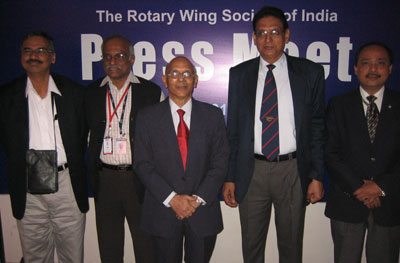 NEW DELHI, Feb 11: India will soon get an air ambulance. OSS Air Management, a private helicopter operator, on Thursday announced its intention to bring into the country air ambulance, which is popularly referred to as HEMS (Helicopter Emergency Medical Service.
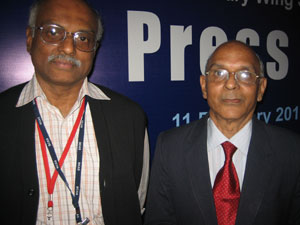 Air Marshal Sridharan said there was an urgent need to have dedicated civilian helicopter resources in every state as a rapid response for emergency air evacuation requirements.
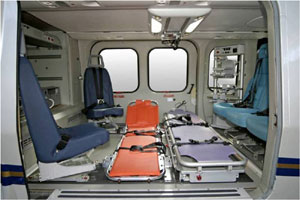
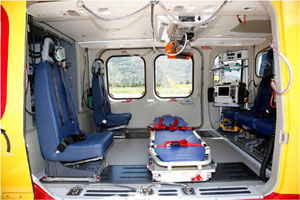 The HEMS helicopter is more than an Air Ambulance. It has an Air born ICU and Trauma care equipment on board with HEMS trained personnel following international protocol of HEMS units. It also follows Indian protocol as prescribed by the Indian DGCA.
 The RWSI has been the driving force behind HEMS and have been asking companies to include it as an important chapter in their bit of Corporate Social Responsibilities.
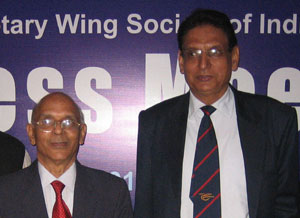 NEW DELHI, Feb 9: In order to promote growth of Helicopter Industry in India and to enhance safety and efficiency of Helicopter Operations, Rotary Wing Society of India (RWSI) is organizing an international seminar, Heli Power India -2010 on February 12 and 13 at Air Force Auditorium, subroto Park, New Delhi, according to Air Vice Marshal K Sridharan, President, RWSI.
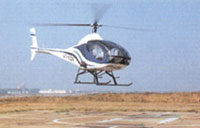 Helicopters can be utilized in multifarious roles for public good and to boost the economic growth. Hence, there is a need to highlight the importance of the growth of helicopter industry. Concerted efforts have to be made to mitigate existing impediments such as lack of awareness about the utility and versatility of the helicopters, high cost of operations attributed to various taxes, duties and other charges, lack of helicopter related infrastructure, less than optimum Helicopter Air Traffic Management and slow process of getting approval for conduct of helicopter operations.
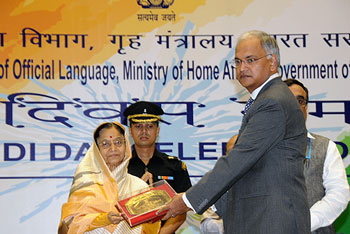 NEW DELHI, Sept 15: Air India's Hindi magazine 'Vimanika' has been adjudged the Best House Journal of PSUs/Undertakings by the Ministry of Home, Government of India, for 2008-09.
  BANGALURU, Sept 4: As part of its strategy to provide better connectivity to Tier II cities, Air India (AI) is planning to strengthen its network in the north-east region. Air India plans to increase the number of weekly flights from the present 65 to around 1,000 over the next three years, according to Arvind Jadhav, Chairman and Managing Director of the airline.
  It will entail connecting Guwahati to Bangkok, intra-connectivity in the northeast, connecting northeast with the rest of the centers in India with the introduction of daily return flight and plans to shift aircraft to Guwahati and Agartala stations.
  MUMBAI, Sept 13: In a bid to lure back passengers, Jet Airways and Jet Airways Konnect have announced a 50 per cent discount in fares for five days from Monday. An official spokesperson for the airline confirmed this on Sunday evening, hours after the airline started limping back to normalcy after the crippling five-day agitation of its pilots was called off around midnight.
  NEW DELHI, Sept 12: The strike by Jet Airways pilots this week has once again demonstrated the importance, significance and relevance of Air India in the Indian civil aviation sector.
 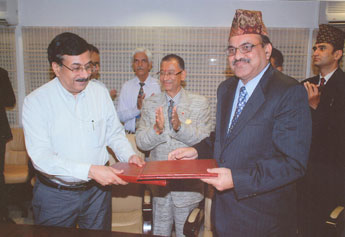 NEW DELHI, Sept 10: India and Nepal have agreed on increasing the air seat capacity to 30,000 seats a week from existing 6,000. Nepal has not only accepted the ‘SAARC offer’ of India, but both sides also agreed to further liberalise the entitlements.
Aviation
| Business | Defence | Foreign
Affairs | Communication | Health
| India | United Nations
India-US
| India-France | Entertainment
| Sports | Photo Gallery |
Tourism | Advertise with Us
| Contact Us
© Noyanika International, 2003-2009. All rights reserved.