


BUSINESS
|
The new GAAR to boost FIIs, foreign equityBy Rakesh Nangia
The Indian Government’s acceptance of the safeguards and scope limitations proposed by the Expert Committee (EC) is a positive step towards boosting FII and other foreign equity and strategic investor confidence, given the fact that the investors had become significantly wary of investing in Indian markets due to the uncertainty created by GAAR and various retrospective amendments in law.
The decision to defer GAAR to April 1, 2016 will provide taxpayers with much needed time to plan and reorganize their affairs in light of the new provisions as well as allow the administration vital time to gear up with the administrative and enforcement aspects.
The implementation of the deferral and some of the proposals would require amendment of the Indian Income-tax Act, 1961 which is expected to be introduced in the Parliament along with the Union Budget proposals due on February 28. It may be mentioned that the GAAR was incorporated in the Income Tax Act, 1961 by the Finance Act, 2012. GAAR was a broad set of provisions which grant powers to authorities to invalidate and declare any arrangement as an ‘impermissible avoidance arrangement’. Pursuant to various representations, the application of GAAR provisions was initially deferred to April 1, 2013. One of the main reasons for deferral, as clarified by the Finance Minister, was to provide more time to taxpayers and the tax administration to address all related issues. The key contents of the final EC report as well as the Finance Minister’s comments are summarized below: Tax Evasion, Mitigation and AvoidanceAs the EC observes, tax avoidance through artificial structures is economically undesirable. In a regime of moderate tax rates, the correct tax base needs to be protected and aggressive tax planning needs to be countered. Transactions have to be real and are not to be looked at in isolation. The fact that they are legal does not imply that they are acceptable with reference to the underlying intent embedded in the fiscal statute. There cannot be any objection to legitimate tax planning, but, tax planning without any supporting justification in terms of commercial, economic or business purpose is undesirable. Where there is no business purpose except to obtain a tax benefit, GAAR provisions would not allow such a tax benefit to be availed of through the tax statute. GAAR provisions codify substance over form doctrine of the Act. The provisions overreach grey areas of tax avoidance. The Finance Minister has not expressed any comments on this part of the EC Report. On overarching principle for applicability of GAARThe Final ECR has recognized the apprehension that GAAR may be widely invoked by the Tax Authority whenever a tax benefit is perceived to have been taken by the taxpayer, whether or not the arrangement represents impermissible tax avoidance. It further appreciates that every case of tax avoidance should not be considered under GAAR unless it is an abusive, artificial and contrived arrangement. The threshold of abuse or contrivance may be examined upfront to determine whether or not the arrangement is tax avoidance and, if tax avoidance, whether it is within permissible norms. It has also recommended evolving an illustrative mitigation or negative list of cases where GAAR may not be invoked. In this regard, it has recommended illustrative lists/cases where GAAR provisions should not be invoked as being cases of tax mitigation. The Final ECR has also provided 27 illustrations to highlight principles which should govern applicability and implementation of GAAR provisions. The illustrations highlight the scope of key mitigation principles which chiefly highlight choice principle, protection to the Court-approved scheme, override of GAAR by Specific Anti-avoidance Rules The FM has also not expressed any comments on this part of the ECR. On interplay between GAAR & SAARThe Final ECR has recommended that in a case where SAAR is applicable to a particular aspect, GAAR shall not be invoked to scrutinize that aspect. Accordingly, it has also recommended that GAAR will not apply to a treaty which has a specific Limitation of Benefit (LOB) clause. Further, in a case where Circular No. 789 of 2000 with reference to the India-Mauritius Double Taxation Avoidance Agreement (DTAA) is applicable, GAAR should not be invoked to examine genuineness of the residency of an entity set up in Mauritius. It has been stated by the Finance Minister that in a case where GAAR and SAAR are both in force, only one of them will apply to a given case and guidelines will be made regarding the applicability of one or the other. The Finance Minister has remained silent on the important questions arising out of this segment regarding the basis on which selection will be made between GAAR and SAAR, the impact of LOB provisions in a treaty on the applicability of GAAR and the approach to be adopted in case of Mauritius companies which are presently covered by the aforesaid Circular. On deferment of GAARThe final ECR recommended the deferral of GAAR provisions till assessment year 2016-17. The Finance Minister has stated that after considering all the circumstances and relevant factors, it has been decided to defer implementation of GAAR till the assessment year 2015-16 (as against the current provision of assessment year 2013-14). Accordingly, tax assessment of income accruing up to and including assessment year 2015-16 will be as per existing norms. On grandfathering existing investmentsThe Final ECR recommended that all investments existing as on date of commencement of GAAR provisions should be grandfathered. The FM has conveyed the decision that investments made before August 30, 2010 (i.e., the date of introduction of DTC, 2010) will alone be grandfathered. This provides certainty to the extent that future effects of grandfathered investments will remain protected. In any case, income for assessment tear up to and including assessment year 2015-16 will be computed without considering GAAR. On Foreign Institutional InvestorsThe Finance Minister has accepted the recommendation of the Final ECR that GAAR will not apply to FIIs that choose not to take any benefit under the DTAA. The Final ECR had recommended that all investors above the FII should be excluded from the purview of GAAR as otherwise it may result in multiple taxation of the same income, whether or not an FII chooses to take a treaty benefit. Such Non-residents include persons holding offshore derivative instruments (commonly known as Participatory Notes) issued by the FII. The Finance Minister has, on principles, accepted that GAAR will also not apply to Non-resident investors in FIIs. On the commercial substance testAs per the existing provisions of the Act, the following factors are not considered relevant in determining whether an arrangement lacks commercial substance: (i) Period of time for which an arrangement exists. (ii) Payment of taxes, directly or indirectly, under the arrangement. (iii) Availability of exit route under the arrangement. The Finance Minister has also concurred with the above recommendation and has stated that these three factors can be taken into account by the Approving Panel. The FM has also concurred that such factors may be relevant but not sufficient to determine whether the arrangement is an IAA. The Final ECR has recommended restoring the definition of “lacks commercial substance” as present in DTC 2009 and DTC 2010. The said definition gives due regard to the presence of significant business risks or net cash flow impact on any party to the arrangement, to determine, whether or not, an arrangement lacks commercial substance. On Onus of the Tax AuthorityThe Finance Minister has concurred with the recommendations in the Final ECR and has clarified that the tax authority will be required to issue a show cause notice, containing reasons, to the assesses before invoking GAAR. The taxpayer shall have an opportunity to prove that the arrangement is not an IAA. Statutory forms will be prescribed for the different authorities to exercise their powers under the Act. On the main purpose of Impermissible Avoidance ArrangementThe Finance Minister has concurred with the recommendations of the EC by observing that only arrangements which have the main purpose (as opposed to one of the main purposes) of obtaining tax benefit should be covered under GAAR. The Finance Minister has accepted that where only a part of the arrangement is impermissible, the tax consequences should be limited only to that portion of the IAA and not to the whole arrangement. On corresponding adjustmentsThe Finance Minister has concurred with the recommendations in the Final ECR that while applying impact of an IAA, it will be ensured that the same income is not taxed twice in the hands of the same taxpayer in the same year or in different assessment years. On minimum monetary threshold for application of GAARThe Finance Minister has concurred with the recommendation in the Final ECR that a monetary threshold of INR 30 million of tax benefit in the arrangement will be provided in order to attract the provisions of GAAR. On constitution of the Approving PanelAs per recommendations in the Final ECR, the Approving Panel (AP) should be a permanent body constituting five members, the Chairman (who should be a retired judge of the High Court), two members from outside the Government of India having eminence in the fields of accountancy, economics, business and income tax. Two members should be Chief Commissioners of Income Tax or one Chief Commissioner and one Commissioner. The Finance Minister has stated that the AP shall consist of a Chairperson who is or has been a judge of a High Court, one member of the Indian Revenue Service not below the rank of Chief Commissioner of Income Tax, one member who shall be an academic or scholar having special knowledge of matters such as direct taxes, business accounts and international trade practices. But, contrary to the suggestion in the Final ECR, it has been stated by the Finance Minister that the directions issued by the AP shall be binding on the taxpayer as well as the Tax Authorities. The current provision is that it shall be binding only on the Income Tax Authorities and the law will be modified accordingly. This departure on the part of the Government could be a matter of some concern for taxpayers. On Time LimitsThe recommendations in the Final ECR state that in case where the Commissioner is not satisfied with the objections of the taxpayer, he must make a reference to the AP within The Finance Minister has, albeit without any further indication, stated that time limits will be provided for action by the various authorities under GAAR. On Advance RulingThe Finance Minister has accepted the recommendation in the Final ECR and has provided that the Authority for Advance Rulings (AAR) route will be available to determine whether an arrangement can or cannot be regarded as an IAA. It is also stated that administration of AAR will be strengthened. On definition of 'connected person'The Finance Minister has accepted the recommendation in the Final ECR that, unlike two separate definitions in the current provisions for “associated person” and “connected person”, the same will be combined and there will be only one inclusive provision defining a “connected person”. On applications for NIL/lower withholding of tax at sourceThe taxpayer should submit a satisfactory undertaking to pay tax along with interest in case it is found that GAAR provisions are applicable in relation to the remittance during the course of assessment proceedings; or in case the taxpayer is unwilling to submit a satisfactory undertaking, the Tax Authority should have the authority, with the prior approval of the Commissioner, to inform the taxpayer of his likely liability in case GAAR is to be invoked during the assessment procedure. On reporting requirementThe Finance Minister has concurred with the view of the EC that a tax auditor will be required to report any tax avoidance arrangement. |
|
||
 NEW DELHI: GAAR (General Anti-Avoidance Rules) has been widely criticized since its introduction in the Indian tax statue with fear expressed over the ambiguities in its application, lack of safeguards and possibilities of misuse by the tax authorities.
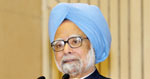 Prime Minister Dr Manmohan Singh had constituted an Expert Committee on GAAR under the chairmanship of Dr. Parthasarathi Shome to undertake stakeholder consultations and finalise the GAAR guidelines. The Expert Committee analyzed the GAAR provisions, discussed the inputs of various stakeholders and had presented its draft report to the Government on August 31 last year. Based on the representations received from the stakeholders, the EC submitted its final report to the Government on October 1 last.
 Even though Finance Minister P Chidambaram has expressed himself on some of the recommendations, there are quite a few critical issues including treaty override provisions and the issue of offshore transfer of shares that still remain unaddressed. The Government’s approach on these issues may also be expected over the next few weeks.

Aviation
| Business | Defence
| Foreign Affairs | Communication
| Health | India |
United Nations
India-US | India-France
| Entertainment | Sports
| Photo Gallery | Tourism
| Advertise with Us | Contact
Us
© Noyanika International, 2003-2009. All rights reserved.