


COMMUNICATIONS
Facebook to launch ‘something awesome’ next week: ZuckerbergBOSTON, July 1: Facebook founder Mark Zuckerberg has a surprise up his sleeve for the over 500 million users of his social networking site with the billionaire CEO on Thursday saying his company is planning to “launch something awesome” next week. Mr. Zuckerberg, speaking at his company’s office in Seattle, did not divulge any further details apart from saying that the company planned to “launch something awesome” next week. However, it is being speculated that the new feature to be launched could be in the mobile or tablet space. A report in the Los Angeles Times said there are various mobile products in development at Facebook, including the release of a long-awaited Facebook app for Apple’s iPad and a specialised app for photo-sharing on the iPhone. “We are working on a number of exciting things that we have not yet announced, but stay tuned for next week,” the report quoted Facebook director of engineering Andrew Bosworth as saying. The project has been developed at the 40-person Seattle office, which is Facebook’s only major engineering hub outside of its Palo Alto, California headquarters. In the past, the Seattle office has played a key role in Facebook’s mobile efforts, the report said. Facebook’s Seattle office has made a mark on the company’s mobile efforts, playing a central role in the development of Facebook’s unified mobile site, unveiled in March, it added. Apple iPad now has over 100,000 appsNEW DELHI: Apple's stellar gadget iPad has hit another milestone! Amid growing rivalry between iconic iPad and other tablets, especially those powered by Google Android operating system, Apple has scored another hit by taking the number of iPad apps to over 100,000 in its App Store. According to a report in MacStories, "In 453 days since the original iPad came out, the App Store has more than 100,000 iPad-exclusive apps available." The report claims that there are 100,161 iPad apps in the Store, either specifically targeting the tablet, or released as universal updates to the existing iPhone apps. The latest achievement comes barely 15 months after the iconic tablet was launched on April 3, 2010. This year in March, Apple's revered CEO Steve Jobs introduced the second-generation iPad, leaving tablet makers including Samsung, Acer, HTC, Dell, scrambling to launch their updated devices. While unveiling the iPad 2 in March, Jobs had announced that there are more than 65,000 native iPad apps available from a range of apps in 20 categories, including games, business, news, sports, health, reference and travel. More recently, at the Apple's Worldwide Developers Conference (WWDC) in June, Jobs had announced that iOS developers have created over 90,000 applications just for iPad since its initial launch. Launched in 2008, Apple's App Store currently boasts of the highest number of apps compared to any other mobile app store. According to a CNN report, Google's Android Market has only 1,200 free Android tablet apps and 145 paid apps. Similarly, RIM's BlackBerry App World has roughly 3,000 tablet apps for PlayBook. Apple's next iPhone planned for September, says reportSAN FRANCISCO, June 22: Apple's next iPhone is coming in September and will blur the lines with the run-away iPad but beat it in other areas. Bloomberg has reported Steve Jobs's company will introduce a new iPhone in September, advancing different reports of an update in the smart-phone line of August. That will mean more overlap between Apple's touch-phone and touch-tablet. Already, it was known that the new phone will use iOS 5 that will also be available for the iPad and iPod Touch. iOS5 was unveiled at Apple's World Wide Developers' Conference (WWDC) two weeks ago. The updated device will ensure Apple's phone line continues to beat the iPad in one important area, however: the camera. Bloomberg's sources reckon the iPhone will pack an eight mega pixel camera, up from the five mega pixels in the current phone. That compares to the cheapo, "VGA-quality" still camera on the iPad 2. Apple will hope the new phone can help arrest some of the growth enjoyed by Google's Android. In just four years, the iPhone has carved out around a quarter of the US smart-phone market but growth has leveled off and now Android is racking up the positive numbers. Apple Unveils a ‘Cloud’ Music and Storage Service
Mr. Jobs said the new, free service, iCloud, would replace the personal computer as the central hub of people’s digital lives — storing photos, music and documents. Relying on the PC, he said, no longer works now that millions of people have multiple devices, each with photos, documents, songs, phone applications and other files. “Keeping these devices in sync is driving us crazy,” Mr. Jobs said, speaking at the opening day of Apple’s Worldwide Developers Conference. “We have a great solution for this problem. We are going to demote the PC to just be a device. We are going to move the digital hub, the center of your digital life, into the cloud.” Mr. Jobs added, “Everything happens automatically and there is nothing new to learn.” At the center of iCloud is a new version of iTunes that will allow users to download on any device any song they have ever purchased. Songs that were not purchased from iTunes can be added for $25 a year, Mr. Jobs said. The iCloud service also works with documents, apps and photos through a new service, Photo Stream. And it will replace MobileMe, a failed $99-a-year service that allowed people to synchronize their calendar, e-mail and contacts across devices. At the event, Mr. Jobs and other top Apple officials also showcased new versions of Apple’s Macintosh and iOS operating systems, which include scores of new features. With iCloud, Apple wants to make it easier for the 200 million iTunes users to listen to their entire music collections on PCs, iPads, iPhones and iPods. Until now, people had to manually transfer songs among devices by syncing them with their PCs. Under the new system, Apple will scan people’s iTunes libraries and then offer access to any song in those libraries over the Internet. A linchpin of the service is that Apple has reached deals with the major record labels and music publishers to license their recordings. Amazon and Google offer similar services. But because those two companies did not obtain licenses from the labels, users have to upload their own music libraries — and any new song purchases — to the Web before they can listen to them from multiple devices. And that process can take hours, if not days, for people with large collections. By cementing the deals with the music industry, Apple is able to save users that time-consuming step. What’s more, Apple, which is already the world’s largest distributor of music, is expected to find a ready audience in its millions of iTunes users, virtually guaranteeing that its service will leapfrog the offerings from Amazon and Google. But music is only one part of Apple’s iCloud service. At the presentation at the Moscone Center West, Mr. Jobs laid out a vision in which the cloud would play a far more central role in all aspects of people’s digital life, from e-mail to the viewing of photos and video. Apple typically keeps its new products under tight wraps until they are unveiled. But in an unusual move, the company said last week that it would use Monday’s event to update the Macintosh and iOS operating systems and introduce iCloud. Some analysts said Apple’s pre-announcement was meant to put to rest fevered speculation that it would introduce a new version of the iPhone. Since Apple first announced the iPhone in 2007, it has introduced a revamped version every year, in June or July. But analysts said the next version of the iPhone is not ready and would not be announced until later this year or sometime next year. Apple’s more aggressive move into so-called “cloud computing” services has been expected for some time. Apple has built a 500,000-square-foot data center in North Carolina that opened earlier this year. Mr. Jobs showed pictures of the data center, which will power iCloud, as evidence that Apple was “serious” about the new services. Nokia launches two handsetsNEW DELHI, June 6: Nokia has unveiled two new handsets-Nokia C 2-00 Dual sim internet and Nokia X1-01 Dual Sim music phones for the Indian market. The two mobile phones offer smarter multiple SIM management like the Easy swap and huge memory capacity. The Nokia C2-00 mobile set contains 32 GB memory while Nokia X1-01 with inbuilt loud speakers at a whopping 106phon will offer to the consumers enhanced music capabilities. "We are proud top manufacture Nokia's latest dual SIM phones in Chennai," Viral Oza, Marketing Director, Nokia India said. He also said that the two sets will set new benchmarks in the mobile internet and music space in the entry level dual SIM category. He said that the sets will be available in the market from this month. "We conducted our own market research and consumer research before the launch of the sets and the results we received were quite positive," he said. Bharti Airtel launches On-demand online movie services
The service would be powered by BigFlix. With this, the customers can enjoy over 500 Movies along with 100 TV shows, 100 trailers and 100 music videos @just Rs 229 month on their computer/laptop/tablet at home. The service can also be accessed on WiFi and movies can be enjoyed anywhere in the house. Whats more-the enjoyment is totally advertising-free and adds absolutely nothing towards bandwidth consumption charges. Airtel Movies retains the unique advantage of its recent innovative offerings- Airtel Broadband TV and Airtel Photos that does away with the hassle of payment through credit/debit cards! Mr. Girish Mehta, Chief Marketing Officer, Telemedia Services, Bharti Airtel said, “The launch of ‘Airtel Movies’ comes on the back of a rousing response to our recent offerings of Airtel broadband TV and Airtel Photos and is in line with our commitment of enabling our customers in doing more with the Internet. Airtel has always led the way in bringing in innovative services through industry leading partnerships. We are confident that this service will enrich our customer’s lives and enable them to balance their work, family and entertainment needs by transforming their experience from appointment viewing to one of choice. We will look to continuously refresh content in response to feedback and customer needs.” Mr. Manish Agarwal, Chief Operating Officer, Reliance Entertainment – Digital said, “The launch of Airtel Movies powered by BigFlix is a novel association that will bring in an exciting package of on-demand entertainment content for the Indian broadband customer. It will allow consumers to watch movies & TV shows of their choice sitting in their homes through their Airtel broadband connection that is free of advertisements. We at BigFlix believe that future of content lies in "on demand" nature of service and with partnership with Airtel, BigFlix is able to provide millions of Indians a choice & convenience of content consumption and content owners a new way of reaching out to consumers at much cheaper cost." Airtel broadband customers can now watch movies, full length TV shows and their archives across genres including Bollywood, regional, and Hollywood. In addition to this, customers can also enjoy the music (film and non-film) and trailer videos from recently released movies on www.airtelmovies.com without subscribing to any pack. ‘Airtel Movies’ also works on Wifi, offering the flexibility to multiple users to watch different movies at the same time. Radiation from cellphones possibly cancerous: WHONEW DELHI, June 1: Confirming the worst fears of mobile phone users, the World Health Organisation (WHO) has said that radiation from cellphones is possibly cancerous. It has classified the radiofrequency electromagnetic fields as “possibly carcinogenic to humans, based on an increased risk for glioma – a malignant type of brain cancer – associated with wireless phone use.” The number of mobile phone users globally is estimated to be 5 billion and over the past few years there had been mounting concern about the possibility of adverse health effects resulting from exposure to radiofrequency electromagnetic fields such as those emitted by wireless communication devices. A study conducted by the WHO and International Agency for Research on Cancer (IARC) has placed cellphones on a par with the carcinogenic hazards category as lead, engine exhaust and chloroform. The findings of the study will be published in the British medical journal The Lancet Oncology in its July edition. A team of 31 scientists from 14 countries, including the United States, arrived at the decision after reviewing peer-reviewed studies on cell phone safety. The team found enough evidence to categorise personal exposure as “possibly carcinogenic to humans.” In simple terms they found some evidence of increase in glioma and acoustic neuroma brain cancer for mobile phone users, but have not been able to draw conclusions for other types of cancers. The type of radiation coming out of a cellphone is called non-ionizing. It is not like an X-ray, but more like a very low-powered microwave oven. Results from the largest international study on cell phones and cancer was released in 2010. It showed participants in the study who used a cell phone for 10 years or more had doubled the rate of glioma. To date, there have been no long-term studies on the effects of cellphone usage among children. In February, a study by researchers at the National Institute of Health, revealed radiation emitted after just 50 minutes on a mobile phone increases the activity in brain cells. The effects of brain activity being artificially stimulated are still unknown. Dr. Jonathan Samet (University of Southern California), overall Chairman of the Working Group that prepared the study, indicated that “the evidence, while still accumulating, is strong enough to support a conclusion and the 2B classification. The conclusion means that there could be some risk, and therefore we need to keep a close watch for a link between cell phones and cancer risk.” “Given the potential consequences for public health of this classification and findings,” said IARC Director Christopher Wild, “it is important that additional research be conducted into the long-term, heavy use of mobile phones. Pending the availability of such information, it is important to take pragmatic measures to reduce exposure such as hands-free devices or texting. “ This category is used for agents for which there is limited evidence of carcinogenicity in humans and less than sufficient evidence of carcinogenicity in experimental animals. It may also be used when there is inadequate evidence of carcinogenicity in humans but there is sufficient evidence in experimental animals. An agent may be classified in this category solely on the basis of strong evidence from mechanistic and other relevant data. WHO's findings not conclusive: COAINEW DELHI, June 2: The Cellular Operators Association of India (COAI) has claimed that the World Health Organisation's research has not concluded that the radio frequency electromagnetic field is a cause for cancer. In its latest report, the WHO's International Agency for Research on Cancer (IARC) warned that radiation from mobile phone handsets can cause cancer. “It is significant that the IARC has concluded that radio frequency electromagnetic fields are neither a definite nor probable human carcinogen… The IARC has only concluded that it may still be possible that radio frequency fields are carcinogenic and has identified areas for further research,” COAI Director-General Rajan S. Mathews said in a statement on Thursday. COAI represents GSM operators in India. “The IARC has only assessed the possibility of risk, not the likelihood of risk, in normal use. Its assessment will now be considered by health authorities, who will determine its overall impact. While there is still further long-term epidemiology research to be done to clarify this possibility, we recommend that if people are concerned they can easily reduce their exposure to mobile phone signals,” Mr. Mathews said. Apple iPhone 4 launched in India
Two Indian mobile firms launched the iPhone 4 using a pricing scheme that permits customers to recover the cost of the smartphone in monthly credits over a two-year period. Indian mobile phone company Aircel is charging 34,500 rupees ($764) for the iPhone 4 with a 16 GB capacity and 40,900 rupees for the 32 GB version. Market leader Bharti Airtel, which already sells earlier models of the iPhone, has a similar scheme for the iPhone 4, which boasts a better quality screen and greater battery life than earlier versions. India, which has the fastest-growing mobile market, has more than 800 million cellular subscribers in the country where high-speed third-generation (3G) mobile networks, offering high speed data transfer capabilities, now are being rolled out. But smartphones represent only five percent of Indian handset sales. Mobile firms making smartphones see India as a market with vast potential with the new 3G services increasing consumer demand for the devices. Aircel director Sandip Das, whose company is one of India's newer players, said in a statement he expected strong demand for the iPhone 4 thanks to the "robust rollout" of 3G services. 3G services will "drive the next wave of growth in the country's telecom industry," added Atul Bindal, Bharti Airtel president of mobile services. CyberMedia Research has forecast overall sales of smartphones will total nearly 12 million in India in 2011, nearly double last year's number. iPad2 a good purchase
There are plenty of reasons to own the Apple iPad2. However, if you already own an iPad, there may not be enough reasons to upgrade. Those who want easy access to the internet on the move and are avid multi-media users, a tablet device makes for a good choice. The iPad2 has a catalogue of 65,000 dedicated applications, promises a 10-hour battery life, an enhanced operating system and the facility to make video calls, but maintains the same price tag as the first generation iPad. While we agree that the iPad2 is a step ahead of the iPad 1, if you already have an iPad, there’s really little rationale in upgrading. We feel that owners of the original device should hold onto it for another year or so until the next generation of tablets hit the market. Those still lugging notebooks to vacations or office trips, should head to the demo units at Apple stores. Equipped with a dual core processor, which makes it a credible device for creating multimedia content, the iPad2 can be your standalone computing device. We have maintained that the iPad is primarily superior to any other product out in the market because of the apps. It has more apps than the Android, BlackBerry, Symbian or Windows Phone 7. According to Apple, dedicated tablet applications on its app store are now close to 65,000. Even if you choose to download just the free apps, you would have ample content to keep you engaged. The iMovie editing suite and Garage Band apps show off what the iPad is capable of — creating tunes, editing videos or adding audio clips to your vacation images is just a touch away. Even if you have never tried editing your videos or adding music to your slideshows, you will have no problems doing so on your iPad2, thanks to the apps. There’s still no USB, SD card-reader, Flash support and no removable battery – and while it may be unfair to expect these features from Apple – it’s clear that rivals like Samsung, Acer, Sony and Motorola are delivering on the features front. The iPad2 comes with an HD connection kit (though it costs extra). Simply, plug on the iPad to your television and watch shows or surf on a larger screen. Imagine watching YouTube videos or your Powerpoint presentations on TV. The iPad2 is significantly faster than the iPad 1 especially while running CPU- and GPU-intensive functions. The credit goes to the new 1 GHz dual-core A5 processor that powers the iPad2 Although the screen size and resolution remains the same (9.7 inches and 1024 x 768, respectively), since iPad2’s graphics chip pumps out visuals nine times faster, you can expect to see an impressive rendering of apps and games. We noticed that the hardware improvement on the iPad2 allows better speeds while exploring virtual worlds or scrolling through simulated landscapes than the iPad 1. The iPad2 is 15 per cent lighter (607g down from 730g of iPad 1) and 33 per cent thinner than its predecessor. Numbers aside, the new 8.8-mm thick iPad2 is a beauty to hold. While you may argue the quality of the camera on the iPad2 – the front-facing camera is a VGA and the one on the rear does not hit the 1-megapixel mark – the images that you capture on your tablet PC are not bad. They are not sharp but they are good to share. Clearly, Apple didn’t design this device for taking high-quality still photos but it is ideal for video chatting with friends. It was Apple that revived the tablet PC industry with the launch of the iPad last year. Having witnessed the overwhelming consumer reaction to iPad1, the competition spurred into action and launched its own tablet PCs hoping to cash in on the emerging opportunity. Second, no one can claim an app store with 65,000 tablet-ready apps. Most of the Android-supported tablets give access to smartphone apps from the Android market place and that’s simply not good enough. According to the specifications available, Motorola Xoom and Samsung Galaxy Tab 10.1 seem to be technically superior devices and the Android 3.0 Honeycomb (tablet-ready version of the OS) that comes pre-loaded has also been received positively. What remains to be seen is how soon these devices will be available in India and at what price range. Entry-level model of the iPad2 costs Rs 29,500 (16GB’ only Wi-Fi) while the 32GB Wi-Fi-only model is priced at Rs 34,500 and the 64GB Wi-Fi model comes for Rs 39,500. The iPad2 with Wi-Fi and 3G is between Rs 36,900 and Rs 46,900 for the 64GB model. Don’t forget to add that chic Smart Cover – available in a range of colours in vibrant polyurethane or rich leather for Rs 2,100 and Rs 3,800 respectively – to complete your iPad2 buy. If you are planning to buy your first iPad, then choosing between a Wi-Fi and 3G model might seem like a daunting task. The answer is simple: If you have an iPhone then it makes sense to purchase a Wi-Fi-enabled iPad2 and tether the iPad to your iPhone using the new HotSpot feature in iOS 4.3. But why pay an extra premium for the 3G unit that could a punch a hole in your pocket while paying the monthly data charges, when you can simply tether your tablet PC to your iPhone? Apple iPad 2 arrives in India on April 29
The Apple announcement did not mention the prices in Indian rupees or any specific pricing for India. According to Apple, he iPad 2 with Wi-Fi will be available for $499 (Rs 22,161) for the 16GB model, $599 (Rs 26,602) for the 32GB model and $699 (Rs 31,043) for the 64GB model. iPad 2 with Wi-Fi + 3G will be available for a suggested retail price of $629 (Rs 27,934) for the 16GB model, $729 (Rs 32,375) for the 32GB model and $829 (Rs 36,816) for the 64GB model. Even before Apple announced the official release of the iPad 2 for India, it was already available in the Indian market through online shopping sites, such as HomeShop18.com, and a number of retail vendors. The iPad 2 is thinner than the iPhone 4, twice as fast as the first generation iPad and is also camera-equipped for taking photos and video chatting. The battery life is also the same as the original - about 10 hours of usage and a month on standby. The iPad 2 was launched on March 11 in the US and went on sale in 26 other markets from March 26. Apple has been criticised for its delayed releases in the Indian market, often only months before the company announces a new generation of the product. With a relatively early release in India, Apple could be making amends to appease consumers and sceptics in one of the world's largest growing markets for consumer electronics. Apple sold 4.7 million iPads of both kinds in its latest quarter. Apple launched the original iPad last April, and it's turned out to be the first really successful tablet computer. The company has sold 19.5 million iPads through the latest quarter. According to Apple the demand for iPads is greater than the supply and the company couldn't manufacture the new iPads fast enough. The rush for iPads sparked dozens of copycat touch-screen devices, but so far, none have broken into the mainstream consciousness the way the iPad has. Apple's iPad is expected to continue to dominate the tablet market, controlling more than half of the tablet market for the next three years, but its share is seen gradually declining to 47 per cent in 2015 from 69 per cent this year, giving way to Android devices. |
|
|||
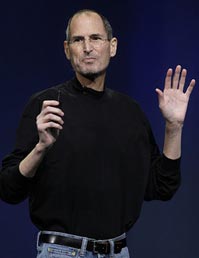 SAN FRANCISCO, June 6: In an effort to simplify how millions of people gain access to music, photos and files across multiple devices, Steven P. Jobs, Apple’s chief executive, took the stage here on Monday at a company event to unveil its new online storage and syncing service.
  MUMBAI, June 2: Redefining On-Demand Home entertainment on Broadband, Bharti Airtel, India's leading telecommunications company, has announced the launch of Airtel Movies, a unique On-demand online movie viewing service. Airtel Movies will be an On-demand digital video library with original DVD quality content that would be available exclusively to Airtel broadband customers in the form of a unique add on monthly pack.
 NEW DELHI, May 27: Apple's iPhone 4 made its debut in India on Friday, nearly a year after the updated model of the handset was launched in the United States, amid growing demand for smartphones.
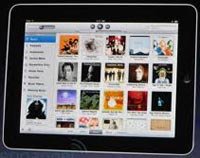 NEW DELHI, May 9: The iPad2, which was launched in India on April 29, has already become a craze with people owning it announcing its proud possession on Facebook, Twitter etc. With a host of new features, the device is definitely worth a buy.
Aviation
| Business | Defence
| Foreign Affairs | Communication
| Health | India |
United Nations
India-US | India-France
| Entertainment | Sports
| Photo Gallery | Tourism
| Advertise with Us | Contact
Us
© Noyanika International, 2003-2009. All rights reserved.