


DEFENCE
|
Clear evidence that Pak planned, launched Mumbai attack: IndiaNEW DELHI, July 8: Slamming Pakistan for the expanding terrorist footprints on its soil, India on Thursday said it had clear evidence that the Mumbai attack was planned and launched by the western neighbour, and this had strained the peace process. The Defence Ministry, in its annual report for 2008-09 released here on Thursday, said: "The terrorist attack on Mumbai in November 2008 and the clear evidence that the attack was planned and launched by Pakistan have thereafter led to a pause in the (peace) process" between New Delhi and Islamabad. The 220-page report said the fact that many of the extremist outfits in Pakistan had known record of terrorist attacks against India amounted to a security challenge with serious implications for the country. "The continuing links of these organisations (terrorists) with organs of the Pakistan State adds greater complexities and dangers to the evolving situation confronting us," it said. "Strengthening of our security apparatus, both internally and on our frontiers is, therefore, a national priority of the highest order. Pakistan's history of military and quasi-military adventurism underscrore the seriousness of the threat we face," the Defence Ministry added. It also noted that the year had witnessed a marked rise in terrorist incidents all over Pakistan including capital Islamabad, apart from the previously affected areas of FATA and NWFP. The Defence Ministry said the unimpeded growth of extremist and terrorist organisations in Pakistan was marked by an increase in ceasefire violations, continued infiltration across the LoC, as also major terrorist attacks. "All this placed an immense strain on the India-Pakistan Composite Dialogue process," it added. On Afghanistan, the Defence Ministry said the deteriorating internal security there and the resurgence of Taliban, Al Qaeda and other terror groups since 2006 constituted a threat to stability of the entire South and Central Asian region. "The terrorist attack on the Indian Embassy in Kabul on July 7, 2008, in which five Embassy personnel and a large number of Afghan nationals were killed, demonstrated that India's efforts at reconstruction and development were implacably opposed by these groups," it said. The report said security in southern and eastern Afghanistan was closely related to developments in the borders with Pakistan, where sanctuaries provided the bases from which these groups operated. India said the convergence of extremist and terrorist groups in Afghanistan with those operating out of Pakistan, often with the patronage of its State agencies, had consequently contributed immensely to the deterioration of India's external security environment. Referring to the US-led global war on terror, the Defence Ministry said after a policy review in March 2009, Washington announced a comprehensive new strategy for Afghanistan and Pakistan, emphasising a regional approach. "In the aftermath of the terrorist attacks in Mumbai, the US goal is to disrupt, dismantle and defeat Al Qaeda and its safe havens in Pakistan and to prevent their return to Pakistan or Afghanistan," the report said. On the security situation in Sri Lanka, India said the Lankan Army had succeeded in taking control of areas held by LTTE since the internal strife began. But, New Delhi was concerned about the humanitarian cost of the conflict and has actively worked to ensure the safety and welfare of the affected civilian population. "India has advocated a political solution of the conflict and is committed to a peaceful resolution of the conflict, taking into account the interests of all communities, including the Tamil population, within a united Sri Lanka," the report added. Regarding Nepal, India said a fragile situation there posed challenges to its security, especially in view of the open border between the two countries. "A stable and prosperous Nepal is in India's interest," it added, taking note of the recent political developments after Maoists formed a coalition government last year. Army concerned over reports of Pak increasing Nuke warheadsNEW DELHI, May 30: India has voiced its concern over reports about Pakistan's attempts to increase the number of nuclear warheads in its arsenal and said that it was "closely monitoring the situation". "We certainly are concerned about what is happening in our neighbourhood. We are closely monitoring the situation," External Affairs Minister S M Krishna said in Bangalore on Thursday night. Terming the developments in Pakistan as a "matter of concern", the Army Chief General Deepak Kapoor on Friday said, "If the media reports are to be believed, I am told the the number (of Pakistani nuclear weapons) is limited to 60, it is increasing. So definitely, that is matter for concern." A United States Congressional report had recently suggested that Pakistan had around 60 nuclear weapons in its arsenal and was working to add more in future. The Army Chief, talking to reporters at a function in New Delhi on Friday, said that Pakistan's attempts to expand its nuclear arsenal, more than it required for deterrence, should be stopped by the global community. "Even if Pakistan is looking at deterrence, they require a minimum amount. But when you keep increasing it, it is a matter of concern...I think the world community should put the kind of pressure, which is required for Pakistan to cap their nuclear weapons," he said. The Army Chief assured that India had its systems in place to take care of its security needs against the backdrop of developments taking place in Islamabad. Replying to a query if the jihadi groups in Kashmir were regrouping to fight against the security forces, Kapoor said, "You see, this kind of regrouping by jihadis will always continue to keep happening...I had said that this summer is going to be a testing time because we do expect them to try and enhance the level of infiltration to show that they can cause tremendous amount of damage and somehow reignite the movement in the valley." "But that is something (that) we are determined to make sure doesn't happen. We have already taken few steps to ensure that infiltration levels are minimised. Those who are able to come through, we are able to tackle them," he added. China bigger threat than Pakistan, says IAF chiefNEW DELHI, May 24: India faces a greater threat from China than Pakistan because New Delhi knows little about Beijing's combat capabilities, India's Air Force chief told a newspaper in an interview published on Sunday. The world's two most populous nations fought a brief but brutal war over their 3,500 km (2,200 mile) Himalayan border in 1962, and both sides claim the other is occupying big but largely uninhabited chunks of their territory. India has also been pursuing closer relations with the United States, something that worries China. China has a standing army almost three times the size of Pakistan's, according to official figures and defence industry estimates, but it is the lack of knowledge about China's military that concerned Air Chief Marshal Fali Homi Major. "We know very little about the actual capabilities of China, their combat edge or how professional their military is," Major told a newspaper. "They are certainly a greater threat." India and Pakistan have fought three wars since independence in 1947 and tensions between the nuclear-armed neighbours rose sharply after last November's Mumbai attack, which killed 166 people. A slow-moving peace process was paused after the attack. Islamabad has acknowledged that the attack was launched from and partly planned in Pakistan, but rejected New Delhi's accusations that the gunmen had support from official Pakistani agencies. Although India and China have signed a treaty to maintain "peace and tranquility" along their disputed frontier and agreed to find a political solution to the row, talks have hardly made progress even as their business ties boom. India blames the lack of progress on China's claim over the northeastern state of Arunachal Pradesh, in particular over its Buddhist enclave of Tawang. New Delhi says it cannot part with populated areas to settle the border dispute. Major said the Indian air force was upgrading about five airbases, of which two would operate Russian Su-30 MKI fighters. India, Israel sign USD 1.4 billion deal on air defence systemNEW DELHI, March 27: India has signed its biggest defence deal with Israel for the purchase of a state-of-the- art air defence system at a whopping cost of USD 1.4 billion (Rs 7,042 crore). Israel Aerospace Industries (IAI) has officially acknowledged that the defence deal between the two countries was inked on 27th February under which Israel will develop and manufacture seaborne and shore-based systems against missile attack on India, business daily 'Globes' reported. The signing of the deal comes as India is in advance stage of testing of its own anti-missile shield. The Defence Research and Development Organisation (DRDO) has already successfully test-fired its advanced air defence (AAD) missile. The two sides have agreed that part of the payment for the systems will be made during the development period and the balance will be paid during the 66 month delivery period, which is slated to begin 90 months from the date the advance payment is received, the report said. As per the agreement, IAI has also undertaken to procure military or aviation products and services from India. It will invest in defence companies in India up to an amount equal to 30 per cent of the contract. India is currently Israel's largest arms buyer. IAF likely to get first Phalcon radar in MayJERUSALEM, March 19: In a big boost to India's surveillance capability, the Indian Air Force is likely to receive the first of the three Israeli Phalcon Airborne Warning and Control Systems (AWACS) in the second half of May this year, almost a year and a half behind schedule. "Indian Air Force officials have been regularly checking the system and final details are being worked out which will enable the delivery of the system by second half of May", defence sources here said. "The remaining two deliveries are likely to come through by Mid of next year or by the third quarter of 2010 if everything works out on schedule", they said. The Phalcons will be mounted on Russia delivered Ilyushin-76 aircraft. The technical difficulties involved in integrating the whole system is said to have contributed the delay in its delivery. As per the deal inked in March 2004 at a whopping cost of USD 1.1 billion, all the three 'eye in the sky' airborne radar systems should have delivered by the end of this month. The system will provide the IAF with intelligence inputs, helping it to maintain air superiority, improve strike capabilities and conduct tactical surveillance deep into neighbouring countries without violating their airspace. It is an all weather system capable of logging 60 targets simultaneously and has a range of 400 Kms. The United States had earlier pressurised Israel to cancel a similar deal with China in 2000 but gave green light to the deal with India in May 2003. Meanwhile, the IAF is said to have been in advanced talks with Israel over the procurement of three more Phalcons which it plans to integrate with other air and ground assets through data link. The Israeli defence ministry last year announced that New Delhi was its single largest importer of defence equipment, constituting about 50 per cent of Israel's defence exports and about 30 per cent of India's imports. The heads of all the three Indian defence forces visited Israel during the past two and a half years demonstrating the strong ties between the two countries. All options open before India: Army ChiefNEW DELHI, Jan 14: Noting that Pakistan has moved troops towards border with India, Army Chief General Deepak Kapoor has said New Delhi has kept all options open, including the "fighting option" as a last resort, he said the Indian Army had already "factored this" into its planning and there was "no cause for concern" in India. Kapoor said tension between India and Pakistan were "larger" in the aftermath of the Mumbai attacks, but said there was no need to create any hysteria. "We expect Pakistan to move some troops from FATA (Federally Administered Tribal Areas) to its eastern borders with India. They have come to eastern border of Pakistan with India," Kapoor told a press conference at New Delhi on Wednesday. "There is a larger amount of tension after 26/11. Because we feel that the perpetrators of 26/11 came from Pakistan. In view of that, we in India are keeping all options open," he said. Elaborating on the options, he said these were "diplomatic, economic, or as a last resort, a fighting option." Kapoor said, there was "no need to create any kind of hysteria" On the use of military option as a last resort, Gen Kapoor said the decision was dependent on the political leadership when they felt that all other options, including international opinion, were exhausted. "Our political leadership has said war is not an option. But all options are open. The situation remains at that stage," he said to a query. Regarding reports of some strike formations of the Indian Army moving towards the western borders, Kapoor said some of the formations were currently carrying out exercise in both the Mahajan ranges and Pokhran ranges and that the information had already been shared with the neighbouring country. "It is part of an understanding that practice training be intimated. There has been some amount of clearing up of bunkers, which need to be maintained regularly. It need not become a cause for a war frenzy," the Army chief said. On the threat of nuclear arsenal from Pakistan falling into terrorists' hands, Kapoor said: "I wish it doesn't happen." But, he said, if there was a degree of stability in Pakistan, this threat would not become a reality. "Nuclear weapon (in the wrong hands) is a cause for worry for the entire globe," he added. Asked if India, having helped Afghanistan to rebuild infrastructure, should get a strategic presence there to squeeze Pakistan, the General said it was for the political leaders to take a policy decision on the matter. India places $ 2 bn missile order with RussiaMOSCOW, Aug 19: India has placed missile orders worth $2 billion with India-Russia military joint venture BrahMos, the firm's managing director was quoted as saying by Russia's Interfax news agency on Tuesday. Sivathanu Pillai, speaking in Moscow, said the total order book for the BrahMos supersonic cruise missile, including supplies to other countries, could reach $ 10 billion. A senior defence official in India said the deal was part of a long-term agreement between BrahMos and the Indian military. "We are looking to place more orders in future, but at the moment there is nothing new to share," he said. The missile has a range of up to 290 km and can travel at speeds of up to 2.8 times the speed of sound, according to Interfax. BrahMos could not be reached for comment. The joint Russian-Indian development of the BrahMos missile, named after Brahmaputra River and Russia's Moskva River, is part of growing military co-operation between the countries. India, with the world's fourth largest military, plans to spend $30 billion on imports over the next four years to modernise its largely Soviet-era arms and assert its military power in South Asia. An Indian defence spokesperson said India and Russia signed agreements on Tuesday to upgrade tanks and fighter jets India bought from Russia over the years. To overhaul its inventory of ageing fighter aircraft, it wants to buy 126 new multi-role jets, with the $10 billion outlay likely to be spread over several years. Citing China, Army chief raises pitch for space commandNEW DELHI, June 16: Citing China's rapid militarisation of space, Army chief Deepak Kapoor raised the pitch for establishing the much-delayed tri-services space command for persistent surveillance and quick response to any threat to India's assets in orbit. Kapoor's remarks came in the wake of India's defence establishment, shaken up after China demonstrated its capabilities to shoot down satellites in January last year, initiating counter measures to ward off the anti-satellite (ASAT) threats. Only last fortnight, Defence Minister A K Antony had announced the setting up of an integrated space cell at the Integrated Defence Staff headquarters to act as a single window for military use and security of space resources, apart from performing the role of interface among army, navy and air force, besides Department of Space and Indian Space Research Organisation (ISRO). "Chinese space programme is expanding at an exponentially rapid pace in both offensive and defensive content. There is an imperative requirement to develop joint structures in the Indian armed forces for synergising employment of space assets," Kapoor said, inaugurating a day-long training for army officers on 'space applications for military use' in New Delhi. "There is an attempt to try and militarise space. There are also agreements that space militarisation should be restricted," Kapoor told reporters on the sidelines of the seminar organised by the Army Headquarters' Perspective Planning Directorate and Centre for Land Warfare Studies (CLAWS). Stating that the Indian army recognised space as an emerging arena for important military applications, he told the seminar that space was being increasingly identified as "the ultimate military high ground" for battle space dominance. He said space-based applications such as surveillance, intelligence, communications, navigation and precision guidance played a dominant role in recent conflicts. However, the military usage of space in the Indian context was at a comparatively nascent stage, he pointed out. "Indian army, which has large user base, needs to expand its knowledge base about space applications and optimise space-based capabilities to the maximum," he stressed. Noting that Indian Army had already taken certain space initiatives, Kapoor said the formulation of Army Space Vision 2020 and the creation of an army space cell in the Perspective Planning Directorate were measures in the direction of space-related training for its officers and personnel. "The Indian Army's agenda for exploitation of space will have to evolve dynamically. It should be our endeavour to optimise space applications for military purposes," Kapoor said. He also called for a capability development through a synergistic approach between the three services in the interim, before the tri-services space command became operational in the future. Referring to the US experience of 50 years in military use of space applications, the Army chief said they (US) had established five space commands, including two for US Army. "The recent conflicts have shown that the use of space-based resources for military operations provided an asymmetric advantage over adversaries. Integrated Defence Staff chief Lt Gen HS Lidder told the seminar that future warfare will see increased dependence on space applications. "We may get sucked into the inevitable military race of space-based applications in warfare and protection of space assets. In a life-and-death situation, only space resources would provide advantage to any military force in the future," Lidder predicted. Noting that the Integrated Space Cell was a good way to go forward, he said it was not aimed at alarming anybody but to be used as means for building capabilities of the Indian armed forces. CLAWS director Brig Gurmeet Kanwal said the training programme aimed at creating awareness among the officers on the potential of space-based resources for military use. Agni-3 missile test-fired successfullyNEW DELHI, May 7: India on Wednesday test-fired the 3000 km range surface-to-surface nuclear capable Agni-3 missile from the Wheelers' Island off Orissa coast since the missile is fitted with on-board computer for its guidance system. The intermediate range ballistic missile (IRBM) was test-fired from a mobile launcher from the launch complex (LC-4) of the integrated test range (ITR) at about 0956 hours, defence sources said. The 16 metre-long and 1.8-metre wide missile roared into the sky in a vertically slanted position leaving behind a thick column of orange and white smoke and, within seconds, became invisible to the naked eye, an eyewitness said. A battery of sophisticated radars, electro -optic tracking systems, telemetric data centres in the mainland apart from two naval war ships anchored near the impact point, were engaged to monitor the entire trajectory in Wednesday's test launch. "The test result will be known after detailed analyses of the flight data recovered," the sources said. Weighing about 48 tonnes, the Agni-3 missile was first test-fired on 9th July, 2006 but it failed to meet its mission objectives due to cascaded failure of booster flex nozzle controller. However, during the second test conducted on 12th April, 2007, the entire flight path of 15 minutes duration validated all mission objectives, they said. Unlike Agni-I and Agni-II, the Agni-III missile has been designed and optimised to carry lighter 200 KT thermo nuclear pay-load weapons. The third stage booster being installed for the future Agni range of missiles will give them capability of hitting targets at longer distances fairly accurately. "The missile reached the pre-designated target in a time of 800 seconds, travelling through a peak height of 350 kms with a velocity of more than 4000 mts a second," Avinash Chander, Director of the Agni Project, told reporters. He said, "All the sub-systems of the missile functioned in a copy book manner giving an outstanding integrated performance of the missile in terms of range and accuracy." For the first time, the missile scientists flight-tested high performance indigenous Ring Laser Gyro based navigation system in the Agni range of missiles. So far the DRDO has been using Strap-dowm Inertial Navigation Systems. With the revival of the Indo-Russian GLONASS project, which will be in orbit by 2010, Indian missiles are expected to have more precision. Two Indian naval warships positioned near the target location, South of Equator, confirmed the impact of the missile. This was the third test-flight of the missile. The intermediate range ballistic missile (IRBM) was test-fired from a Rail-mobile launcher from the launch complex (LC-4) of the integrated test range. The A3 Rail Mobile System is capable of launching the missile from anywhere in India. Agni-III is a two stage solid propellant system with a length of 17 mts, diameter of 2 mts and launch weight of 50 tonnes with a capability of carrying a pay-load of 1.5 tonnes. The missiles re-enters into the atmosphere with a very high velocity and experiences a de-celeration of more than 35 g and a temperature of more than 2500 degree Celsius, but the pay-load is protected by all carbon composite heat sheet. Chander, the Project Director, declared the Agni-III flight-test a "complete success and having met all mission objectives." The missile systems is equipped with sophisticated navigation, guidance and controlled systems along with advanced distributed architecture based on-board computer systems. The missile has an electronic system which are hardened for higher vibration, thermal and acoustic effects. Defence Minister A K Antony congratulated the Mission Director and all the scientist of DRDO for the successful launch of the missile. The launch was witnessed by M Natarajan, Scientific Advisor, Shekhar Dutt, Deputy National Security Advisor and other senior officials of the Forces. The test of the missile comes in the backdrop of spy satellites showing China possessing five nuclear submarines equipped with long-range nuclear tipped missiles which are located at Sanya Island in the southern tip of Hanian Island off the South-China sea. Though the defence Ministry is tight-lipped about India's nuclear deterrent assets, international strategic study groups estimate that India currently has 18-36 Agni-II, IRBMS with a range of 3500 kms, 8-16 missiles of Agni-I, MRBM with a range of 900 kms. Besides this, India is supposed to have in operation 150-180 short range surface-to-surface Prithvi missiles with a strike range of upto 330 kms. Weighing about 48 tonnes, the Agni-3 missile was first test-fired on 9th July, 2006 but it failed to meet its mission objectives due to cascaded failure of booster flex nozzle controller. However, during the second test conducted on 12th April, 2007, the entire flight path of 15 minutes duration validated all mission objectives, DRDO scientists said. Though defence scientists had planned more than three tests of the missile before its induction but after today's copy-book launch, they said that the missile is ready for induction. Indigenously designed Advanced Air Defence missile test firedBALASORE (ORISSA), Dec 6: India on Thursday test-fired its indigenously designed and developed Advanced Air Defence (AAD) missile, capable of destroying any hostile ballistic missiles at low altitude, from the Integrated Test Range off Orissa's east coast. Aimed at developing a full fledged multi-layer Ballistic Missile Defence (BMD) system, the test-fire exercise was carried out from two different launch sites of the ITR in the Bay of Bengal, defence sources said. The target missile, a modified indigenously built Prithvi was first test-fired from a mobile launcher at 1100 hrs from ITR's launch complex-3 at Chandipur-on-sea, while 2 minutes 40 seconds later the interceptor was fired from Wheeler's Island, 70 nautical miles from here, to intercept it at an altitude of 15 km in the mid air. Though both the launch, conducted successfully, were like 'text book flights', detail results, specifically the 'kill' effects of the interceptor of the co-ordinate exercise will be known after all data analysis from multiple sources, a defence official associated with the test said. Scientists from the country's premier institute, the Defence Research and Development Organisation (DRDO), have been working on the project for the last couple of years, said the source. Yet to get a formal name, this new hypersonic interceptor missile is only termed as 'AAD-02' meant to be engaged in 'endo-atmospheric conditions', the source said. India on November 27, 2006 had successfully tested an 'Exo-atmospheric' interceptor missile, PAD-01 which destroyed an incoming Prithvi missile at an altitude of 50 km and on December two, this year, a solo and mock trial of the present variant, was carried out with an simulated electronic target from the Wheeler's Island. The seven-meter long AAD interceptor is a single stage solid rocket propelled guided missile, equipped with an inertial navigation system, a hi-tech computer and an electro- mechanical activator totally under command by the data uplinked from the sophisticated ground based radars to the interceptor, sources said. Though AAD missile is designed to reach an altitude of almost 30 meters above the launch surface, Thursday's trial was conducted within 15 km altitude from it, they added. The interceptor missile had its own mobile launcher, secure data link for interception, independent tracking and homing capabilities and its own radars. The trial was conducted in the presence of top defence scientists including V K Saraswat, Chief Controller of DRDO's research and development (missile and strategic systems), they said. India eyes nuclear submarine trials by 2009MUMBAI, Dec 4: India will be ready to test its first domestically built nuclear-powered submarine at sea by 2009, its navy chief said on Monday. A long-running secret project, India's nuclear-powered submarine is said to be a 5,000-tonne modified version of the Russian Charlie-II class vessel. Code-named "the Advanced Technology Vessel", the submarine will be capable of launching nuclear-tipped ballistic missiles and give India's navy an advantage over nuclear rival Pakistan. "Scientists have confirmed that they (will) have the project ready for trials by 2009," according to Admiral Sureesh Mehta as saying. With about 140 ships in its fleet and dozens of new frigates and French Scorpene submarines to be delivered soon, India's navy is increasing its capabilities. India leased for three years a nuclear-powered submarine from the former Soviet Union in 1988, and Mehta said there were plans for another similar agreement with Russia. "We want the Russian nuclear submarine to enable our boys to train on how to operate nuclear reactors and platforms and other systems," he said. Keeping pace with its new economic powerhouse image, India's military, the world's fourth largest, is on a modernising spree, trying to project power beyond its shores. It is building a domestically-produced aircraft carrier and is also buying one from Russia. Naval wargame does not target China, says USWASHINGTON, Sept 7: The ongoing naval wargame in the Bay of Bengal involving five nations does not "target" China but is designed to shape strategic choices by regional actors like India, a senior Pentagon official has said. "This exercise does not target China. It is designed to shape strategic choices being made by all regional actors. Malabar is a sign of responsible stakeholders interested in promoting peace and security by a visible presence," said Brigadier General John Toolan, Principal Director for South and South East Asia at the US Department of Defence. The four-day 'Malabar Exercise' started on September 4 with the participation of warships from five countries -- India, Australia, Japan, Singapore and the US. "US and Indian cooperation does not seek to contain China. India, and the countries engaged in this naval exercise, would not stand for this," Toolan said at a meeting on Capitol Hill organised by the Indian American Security Leadership Council. The senior official said the "unique" relationship between India and the US would not be defined by a treaty due to overlapping interests and shared value systems, and added that Washington would like to see its evolving ties with New Delhi transform into something it has with key allies like Britain, Australia and Japan. "Our relationship with India is unique, and unlikely to be defined by a treaty alliance. The US is confident that, by virtue of our overlapping interests and shared value systems, the US and Indian strategic partnership will deepen organically, without requiring a treaty," Toolan said. Major naval drill kicks off in Indian OceanPORT BLAIR, Sept 4: A massive naval drill started in the Indian Ocean on Tuesday with warships from the United States and four other nations flexing their muscle in one of the world's busiest shipping lanes. Twenty-seven ships and submarines from the United States, Australia, Japan and Singapore will join seven from host India off the Andamans archipelago in the Bay of Bengal for the six-day manoeuvres, officials said. It will be one of the biggest ever peacetime joint military exercises, including anti-piracy, reconnaissance and rescue missions besides honing inter-operability or coordination skills between the navies of the four nations, Indian Navy spokesman Vinay Garg said. The exercise, stretching from India's eastern coast to the Andamans near Indonesia, will include super-carriers USS Nimitz and USS Kitty Hawk of the US Navy's Pacific fleet and India's lone aircraft carrier, the INS Viraat. The international exercises, codenamed Malabar, are facing stiff resistance from anti-US Left parties, who denounced them as proof of "India's growing subservience to the United States." The Left parties, who prop up the government in parliament, also oppose a landmark Indo-US civilian nuclear energy deal to bring New Delhi back into the loop of global atomic commerce after decades in the nuclear wilderness. The exercises -- the 13th to be held since 1995 -- will spill into the Malacca Strait, a 805-kilometre strip between Malaysia and Sumatra. The renowned shipping lane accounts for 60 percent of the world's maritime energy transport. India had opposed the United States during the Cold War, has denied claims that the exercise is aimed at intimidating neighbouring giant China, with which the country fought a brief border war more than four decades ago. "This is simply directed at ensuring security of the sea lanes of communication," Minister of State for Defence Pallam Raju said. In the past, India has held exercises with navies from Britain, France, Russia, Singapore and Vietnam. A tri-nation event involving Brazil, India and South Africa is likely to be held in May 2008. The nuclear-armed Indian navy, which operates 137 ships, wants its supremacy in the region unchallenged and during the 2004 tsunami it rebuffed US offers of aid and sent out relief ships to ravaged Sri Lanka and Indonesia. Experts said India cannot afford to abstain from joint exercises due to the strategic importance of the sea lanes. "Reluctance to participate in joint naval manoeuvres sends wrong signals to countries that share common interests," said retired Rear Admiral Raja Menon. The latest drill is the second Malabar exercise since April 2006 when the Indian and US navies met off the Japanese coast of Yokosuka. Sri Lanka, which is battling a Tamil separatist revolt, has welcomed the exercises saying they would bolster maritime military cooperation in the troubled Bay waters infested with pirates and Tamil Tiger arms smugglers. "Whatever activity is taking place, if that strengthens international trade and commerce through the high seas, it's something intrinsically welcome to us," Sri Lankan Ambassador to India C R Jayasinghe told reporters. Military industry sources said the event would also give US and other nations a chance to showcase their newest armaments to India's navy which is on a shopping spree for more hardware. "The navy has been on a shopping binge since it abandoned its doctrine of coastal protection and embraced an aggressive policy of bluewater expansion," analyst Sujoy Banerjee said. The navy plans to lease a 12,000-tonne Russian nuclear-powered submarine next year and hopes to acquire five more such vessels. BrahMos now in Army arsenalNEW DELHI, June 21: The supersonic land attack cruise missile BrahMos was inducted into the Indian Army on Thursday, giving the force a tactical edge over its major adversaries who have only subsonic missiles in their arsenal. President A P J Abdul Kalam handed over a replica of the missile to Army chief General J J Singh at a function here marking the delivery of the first battery of the 290-km range BrahMos to the Army. Speaking about the success of the joint venture project between India and Russia, President Kalam said the BrahMos project already has orders of $2 billion and serious business interest exists for an order of an equal amount. Kalam, however, reminded that India needs to market this world-class missile aggressively as it would have a market shelf-life of not more than five years. He expressed apprehension that more competitors would emerge in this category very soon. Though in a subsonic range, Pakistan has test-fired its 500-km cruise missile Babur and moved swiftly towards its large-scale induction into its Army to counter the BrahMos. The Indian supersonic missile, however, has a tactical edge over Babur as the former flies at a speed of 2.8 Mach (three times the speed of sound). The joint venture project is already working on a hypersonic version capable of flying at a speed between 5 and 7 Mach. The Army plans to induct three batteries, each with four road-mobile autonomous launchers on 12x12 Tatra vehicles, to constitute its first BrahMos regiment in the near future to use the missile as a precision strike weapon. The long-term plan of the Army is to have nuclear-tipped land attack cruise missiles, with strike ranges in excess of 1,500 km. Agni III test fired successfulNEW DELHI, April 12: India has successfully test fired its nuclear capable intermediate range ballistic missile Agni-III from the Interim Test Range (ITR) at the Wheeler's Island in the Bay of Bengal off the Orissa coast, nine months after its first launch failed. The indigenously developed surface-to-surface missile, blasted off at 10.52 am from a fixed platform with the help of an auto launcher in the launch complex-4 of the ITR, located about 72 km from Balasore, defence sources said. The sleek missile vertically roared into the clear sky leaving behind a thick column of white and yellow smoke, eyewitness accounts said. A four-hour "range countdown" for test-firing of India's 3,000 km intermediate range ballistic missile Agni III from the launch pad at the Wheeler's Island here began at six am this morning, defence sources said. The missile was likely to be fired before noon, the sources indicated. The range countdown can be put on hold if any snag was found in the missile and commence again after the same was rectified, the sources explained. According to the sources, three minutes before the blast-off, there would be a hold in the range countdown process and an "auto launch sequence" would take over so that a network of computers in the main control station could check all the health parameters of the missile as well as its sub-systems and allow the missile to move forward in the pre-programmed trajectory. Air Traffic Controls at Kalaikunda base, the Airports Authority of India at Kolkata and Eastern Naval Command at Visakhapatnam had been intimated about the test firing of the missile. The administration in the coastal districts of Balasore, Bhadrak and Kendrapara have also been intimated to warn fishermen not to venture into the sea during the launch period, the sources said. According to the top Defence Ministry officials, "The missile has been re-configured and would be test launched tomorrow (Thursday) morning." This will be the second launch of the 3,000-km range missile after an unsuccessful test on July nine last year from the integrated test range. If successfully test-fired, Agni-III will become the missile with the longest reach in South Asia and more powerful than any missile in Pakistan's arsenal. However, China has missiles with a longer reach than Agni-III. Though DRDO scientists put the range of Agni-III at 3,000 km, defence experts say the solid-fuel propelled missile's range could be extended up to almost 5,000 km. During the launch of Agni-III last year, the second stage booster of the missile failed to separate and the missile plunged into the sea just seconds after taking off. Defence scientists traced the failure of the test to a defective shield which was unable to withstand the heat generated due to friction during the flight. They devised a flexible heat shield for the missile without changing its other parameters. The 16-metre Agni-III weighs 48 tonnes and is capable of carrying conventional and nuclear warheads weighing up to 1.5 tonnes. Eurocopter wins big Indian Army dealNEW DELHI, April 9: Eurocopter has won the Indian Army's much-awaited deal for 197 modern light helicopters, estimated at around US$ 550 million. Sources said the Army chose Eurocopter's AS 550 C3 Fennec over the Bell Helicopter's Bell 407 after trials in hot, humid and high altitude conditions in Rajasthan, Punjab and Kashmir, including in Siachen - the Himalayan battlefield between Indian and Pakistani forces. The new machines will replace the old and aged 1970s generation Chetak and Cheetah helicopters of the Indian Army, which has an appropriate plan to modernize and expand its Army Aviation Corps (AAC) in line with current and future rapid mobility battlefield requirements. Eurocopter will supply 60 helicopters in a fly-away condition, made at its plants in France and Germany, while the remaining 137 will be manufactured by Hindustan Aeronautics Limited (HAL) at its Bangalore facility. Company sources said that it would take three years to supply the Made in Europe lot, but that assembly lines would be set up simultaneously at HAL to facilitate their manufacture in India under Transfer of Technology (ToT). Eurocopter also has the obligation to invest 30 percent of the deal back in the Indian defence industry under the now mandatory offset clause, a brainchild of Defence Secretary Shekhar Dutt. Commercial negotiations between Eurocopter, a subsidiary of the European Aeronautic Defence and Space (EADS) company, and the Ministry of Defence (MoD) are slated to begin this month to fine-tune the deal as also to work out the weapons and electronic warfare package. A formal contract would be signed then. The cost of weapons and other systems would be extra. HAL has manufactured more than 600 Chetaks and Cheetahs, variants of the French Alouette, of which some 350 are used by the Indian Army. The remaining are with the Indian Air Force (IAF), Navy and Coast Guard. It stands to reason that as their helicopters also need replacement, the Eurocopter's current order would multiply three-fold over the next few years to nearly $2 billion. The three services have had an element of commonality in some systems in the past, but now, this is a requirement mandated by MoD to effect savings both in money and time. It is cheaper to manufacture and maintain a common system. The acquisition of the new helicopter is timely and that as the Fennec is a sophisticated multi-role machine, the Indian Army could use it for Reconnaissance and Observation, Electronic Warfare, Anti-Tank role, and also to inject and extricate personnel from the battlefield. The Indian Army, which needs many more helicopters for varied roles for medium to heavy lift requirements, had been wanting a light, agile machine the for the last 15 years to replace the now-vintage Alouette. Incidentally, Allouette was the first turbine helicopter in the world, and its maker, Aerospatiale, was later absorbed into Eurocopter, which already has a strong relationship with HAL. The two companies have an agreement to co-develop business, and EADS has supplied parts for the slightly bigger and versatile HAL-made Advanced Light Helicopter (ALH) Dhruv, which has already been inducted by both the IAF and Army. It may be recalled that more than 70 percent of various systems with the Indian armed forces are of Soviet vintage, and all the three services were starved of modernization due to the freeze imposed by the V.P. Singh government over allegations of corruption in the Bofors guns deal in the late 1980s. The 1999 Kargil war, in which India neither had the gun locating radars to find and neutralize Pakistani artillery, nor adequate munitions for its Bofors guns, triggered the removal of the paralysis in the MoD, and ever since, many new systems from ships to submarines, tanks and aircraft have been ordered. The deal for the Fennecs is the second helicopter deal by India, the first being the IAF's follow-on order for 80 Mi 17 IV medium lift helicopters from Russia last year. Notably, all the helicopters with the Indian armed forces are more than 20 years old and need to be replaced. EADS President and CEO Lutz Bertling said during a recent visit to India that his company could supply the first helicopter within 2007 itself, adding that he was also willing for collaboration to produce a medium lift helicopter in India. The Indian government had floated the requirement for the light helicopters in 2004 but revised it in 2005 to introduce the offset clause. Initially, there were five contenders including Agusta (Italy), Bell (US), Eurocopter, and Kamov and Kazan (Russia). EADS manufactures the Ariane rockets used sometimes by the Indian Space Research Organisation (ISRO) for its satellite launches as also the commercial Airbus aircraft. According to an EADS statement, HAL has a contract to provide 600 sets of doors for various Airbus aircraft, and of which it has delivered over 300. A new batch of A320 doors has been ordered recently. HAL has also produced parts for the A320 nose undercarriage. The production of A340 emergency doors is also due to start at HAL. Astra test fired againCHANDIPUR, March 29: Indigenously developed air-to-air missile "Astra" was test fired from the Interim Test Range (ITR) in Chandipur-on-sea once again. According to defence sources, this is the third test firing of the missile in the last five days. The sleek beyond visual range air-to-air misile (BVRAAM) soared into the clear sky at 11.33 am from a vertical position. Developed by the Defence Research and Development Laboratory (DRDL), Hyderabad, Astra is an advanced missile capable of engaging targets over 80 km away. Experimental flight tests of the missile were conducted from the ITR on 25th March last and again the next day. The sources said Thursday’s test firing's thrust was to study the control and guidance system of the missile as part of its ongoing development programme. There was a possibility of one more test firing of the missile during the day, they informed. As a precautionary measure, a population of over 6,100 from six villages located within a radius of 2.5 km of the launch complex at ITR were evacuated temporarily and housed in four shelters with the assistance of the civil authorities. India tests Astra missile for second time in two daysNEW DELHI, March 26: India Monday test-fired for the second time in two days its home-grown air-to-air missile Astra, considered a new system in the guided missile development programme, from a defence base in this eastern coastal state. Officials said the Astra, meaning weapon in Hindi, was tested from the Integrated Test Range (ITR) at Chandipur in the coastal district of Balasore, about 230 km from here, just a little after 10 a.m. Scientists had tested the missile, which has a striking range of 25-40 km, from the same range on Sunday as well. Astra has been developed by the Defence Research Development Organisation (DRDO) and is likely to be ready by 2011-2012. The latest test-firings are aimed at providing the Indian Air Force with a beyond visual range (BVR) air-to-air missile to equip the Mirage 2000, MiG-29, Su-30 MKI and the Light Combat Aircraft, sources said. The local administration has evacuated over 6,000 people in six villages, within 2.5 km from the ITR campus, to temporary shelters early Monday. 'Fishermen have also been asked not to enter the sea within a 20 km radius from the ITR,' said a police official. India had earlier planned to test the Dhanush, a naval version of the Prithvi surface-to-surface missile, from a warship in the Bay of Bengal off the Orissa coast on Sunday. However, it was postponed due to certain technical problems, the sources added. India tests n-capable Prithvi-II missile
The
missile was test-fired at 9.55 a.m. from a mobile launcher at the
Launching Complex 3 of the integrated test range (ITR) at Chandipur-on-sea
in the coastal district of Balasore, about 150 km from capital Bhubaneswar
on Sunday. Prithvi
is one of the five missiles developed under the Integrated Guided
Missile Development Programme of the (DRDO). The Sunday test comes
four months after the failed test firing of the intermediate range
ballistic missile (IRBM) Agni-III. Describing the latest test as routine, an ITR official said several top officials of the DRDO and defence scientists witnessed the Sunday test. They include Chief Controller Research and Development (CCR&D) of the DRDO and programme director of Prithvi-2, V. Saraswat and director of Defence Research and Development Laboratory (DRDL), Hyderabad Dr Prahallad.
It
is believed to be designed for battlefield use against troops or
armoured formations. Its two variants, the Prithvi-II and Prithvi-III,
have a range of up to 250 km and 350 km respectively. The
Prithvi-II was first tested by the DRDO in January 1996. It flew
250 km and reportedly landed accurately at a pre-determined point
in the Bay of Bengal. As many as 2,786 people from 600 families
in five villages surrounding the ITR campus were shifted to two
temporary shelters for a day prior to the testing, a district official
said. India test fires Agni-III missile ORISSA, July 9: India's most sophisticated intermediate range ballistic missile (IRBM) Agni-III was on Sunday test-fired from a range off the Orissa coast. The indigenously built surface-to-surface nuclear capable missile, with a range of 3,500 km, was test-fired from a fixed platform at the launch complex of the Integrated Test Range (ITR) at the Wheeler's Island at about 11:05 am, defence sources said. Described as the most powerful of India's missiles developed by the Defence Research and Development Organisation (DRDO), Agni-III has the capability of carrying a payload of 1000 kg, the sources said. Defence minister Pranab Mukherjee and his scientific advisor M Natarajan were present at the launch complex located in the Wheeler Island off the Dhamra coast to witness the launch of the missile. Eyewitnesses said the sleek missile roared into the overcast sky leaving behind a trail of thick yellow smoke and fire and vanished into the clouds within seconds. Fitted with an onboard computer, it took off vertically into space and re-entered again to the splash down point near Nicobar island in the Bay of Bengal, the sources said. Textron, Bell lobby for N-deal with India By
Deepak Arora
Textron is a holding company of Bell Helicopter that is in race to sell 197 helicopters to Indian Army. "This will be the biggest international deal for us. The last big deal for us was when we sold Cobras to Taiwan," said Jay Oritiz, Campaign Director, International Military Sales, Bell Helicopters. Oritiz said "Textron officials have been lobbying with lawmakers in Washington DC for the nuclear deal as it's important for the American business and for the strategic alliance between the two countries." Oritiz informed that he was also in Washington DC recently in this regard. It may be mentioned that lobbying is very important part of American culture and it is such groups which have brought back the nuclear deal, which looked dead a few months ago, back on track.
Besides Bell, the Eurocopter of the European Aeronautic Defence and Space (EADS) is vying for the deal, which is estimated at about 400 million dollars. He said while 60 of the 197 helicopters would be delivered in a fully configured frame, the remaining are to be manufactured in cooperation with the Hindustan Aeronautics Limited (HAL) in Bangalore. Without giving details, he said Bell Helicopter, as part of its overall strategy, plans to establish biggest presence in India. He informed that the company has submitted offset proposal to the Indian Government and expressed confident of meeting 30 per cent sourcing target fixed in the Request for Proposal (RFP). The Bell official, who was accompanied by Director Communications Greg Hubbard, who expressed confidence in bagging the Indian contract, said it was much easier to maintain a Bell 407 as compared to its competitor. "The primary (first) service of a Bell 407 is done in 300 hours and one person can do it. Its competitor needs primary service after 25 hours and needs five technicians," he said as an example. HAL, Bell India chief Wing Commander (Retd) B S Singhdeo said, HAL has already assembled one Bell-407 for civilian use in April this year. If the deal goes through, Oritiz said Bell would deliver 60 helicopters off the shelf from its plant in Canada and rope in HAL to co-produce the rest. It would also transfer technology to manufacture single light helicopters to Hindustan Aeronautics, he added. Thales keen on upgrading Mirage 2000 PARIS, June 27: French aerospace major Thales has proposed upgradation of Mirage 2000 fighters of the Indian Air Force (IAF) and has also sought clarifications on the Indian government's newly-introduced offset clause in defence deals, officials said. A Thales team would travel to New Delhi July 14 to take forward the proposal, which was submitted earlier this month, the officials added. The retrofitting of the Mirage 2000 would take place at Bangalore's Hindustan Aeronautics Limited (HAL) and this would upgrade the fighter to the Dash-5 category. This would increase the life of the aircraft, inducted by the IAF in the mid-1980s, by 20-25 years, the officials said. The IAF has 52 Mirage 2000s in three squadrons. Under the Indian government's offsets policy introduced earlier this year, 30 percent of all defence deals worth over Rs.3 billion ($64 million) has to be reinvested in the country. The Thales team would discuss with their Indian counterparts the mechanics of this, the officials said. The IAF had informally approached Thales last year for the upgrades to extend the fleet's operational capability, as well as air-to-air and air-to-ground superiority to take on multiple targets with multi-role and swing-role capabilities. 'If we are given the order today, we should be able to retrofit the first set of two aircraft in three years. Then after we can do two per month,' Frederic Andre, programme manager for Mirage 2000, had said. The aerospace giant has provided avionics and other high-technology systems to most planes flown by the IAF, including the Mirage 2000, SU-30 and MIG-29K for aircraft carrier Gorshkov and proposes to upgrade these systems to the latest generation. French aircraft maker Dassault that manufactured the Mirage 2000 has now shut down its production line. Dassault is in the race for the 126 medium multi-role fighter aircraft the IAF plans to buy to replace it ageing MiG-21 fleet. Seven countries, besides India, fly the Mirage 2000. These are Egypt, France, Greece, Peru, Qatar, Taiwan and the United Arab Emirates. Of them, France, Greece and the UAE, have opted for Thales upgrades. Lockheed offers latest F-16s; keen to forge tie-ups with Indian firms By Deepak Arora
In an interview with this correspondent, the Lockheed Martin's Director Communications Joseph W. Stout said "with more than 100 different weapons, sensor pods and fuel tanks certified in 5,000 combinations, the F-16 can be readied for virtually any task. It is a proven performer in some of the most critical missions flown around the world." It is for this reason, Stout said 24 countries, including the US Air Force, have selected more than 4,300 F-16s, with a record number of reorders. Expressing confidence of bagging Indian Air Force order for 126 multi-role aircraft, he said "we are ready to offer the latest technologies and offset business that will provide high value and capability to India." He said over the years F-16s have evolved to become the most capable multi-role fighter in the world. The company has made improvements in cockpit, avionics, sensors and weapons for scaling up combat efficiency. Currently, Lockheed is offering Block 50/52 and Block 60 versions of the aircraft. Referring to the aircraft's Block 60 version, Stout said an important feature of this version is the Active Electronically Scanned Array (AESA) radar that combines increased pilot situational awareness with improved reliability. "We have delivered 40 of 80 aircraft of this version to the UAE and are ready to offer it to India, subject to the US Government approvals." He said Lockheed was in talks with Indian firms like the state-owned Hindustan Aeronautics Limited (HAL) and the Tata group for the outsourcing of aircraft components. Stout said that the firm's Advanced Development Programs divisions, which works on research in cutting edge areas like stealth and surveillance technologies, was also keen on forging ties with Indian information technology and research firms. He said that they had had preliminary talks with firms like the HAL, Tatas, Wipro and Larsen and Toubro and their teams had surveyed their capabilities and were "encouraged by their capabilities." As part of efforts to establish a presence in India, Lockheed was eyeing the prospect of outsourcing components for the F-16 fighter jets and other aircraft, including the hugely successful C-130 Hercules transport aircraft, to Indian firms. If Lockheed bags the deal to supply 126 jets to the Indian Air Force, the request for proposals (RFP) for which are likely to be issued soon, as many as 108 jets will be built by the HAL following the transfer of technology, he said. Stout informed that Frank Cappuccio, the executive vice-president of Advanced Development Programs or Skunk Works which worked on network-centric warfare systems and unmanned aerial vehicles (UAVs), would visit India later in the year to scout avenues for cooperation. He added that though they had no agreements in place, "it is important for Lockheed Martin to establish a presence in India." Stout said the F-16s could form an important element of Indo-US strategic partnership in the long term and provide strong relationship with the US Air Force in areas of training and tactics development. On the offset business, he said "Lockheed has always met or exceeded a country's offset requirements and never defaulted." Among the 23 foreign countries that have ordered the F-16s, he said "Lockheed helped in set up new start up factories in Turkey and South Korea who had no experience." As for competition from American company, Boeing's F-18 Super Hornets, he said the twin-engine aircraft was essentially a navy aircraft suited for operating from aircraft carriers. "We have competed with F-18s many times and haven't lost to them in 10 years. Twin-engine planes add to costs towards spare parts and maintenance," Stout claimed. He
said the F-16 had the record of being the safest single-engine multi-role
fighter in the USAF history. "Though F-16 has a single engine,
its safety statistics are the same as F-18s." Lockheed is also in the running for a deal to supply eight P-3 Orion maritime surveillance aircraft to the Indian Navy. |
|
||||||
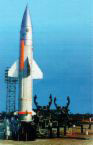 BALASORE
(Orissa), Nov 19: India has successfully test-fired the nuclear-capable
air force version of the surface-to-surface Prithvi-II missile from
a defence base in Orissa, official sources said.
BALASORE
(Orissa), Nov 19: India has successfully test-fired the nuclear-capable
air force version of the surface-to-surface Prithvi-II missile from
a defence base in Orissa, official sources said. 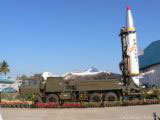 First
tested in 1988, the Prithvi-I has a range of 150 km and can carry
conventional or low-yield nuclear warheads.
First
tested in 1988, the Prithvi-I has a range of 150 km and can carry
conventional or low-yield nuclear warheads.  NEW
DELHI, June 28: While the Bush Administration is busy to get the
Congress to clear the nuclear deal with India, Textron Inc., one
of the world's largest and most successful multi-industry companies,
is among the several other American interest groups that have been
lobbying with US lawmakers.
NEW
DELHI, June 28: While the Bush Administration is busy to get the
Congress to clear the nuclear deal with India, Textron Inc., one
of the world's largest and most successful multi-industry companies,
is among the several other American interest groups that have been
lobbying with US lawmakers. He
informed that the Bell 407 has completed all-weather trials including
hot and cold weathers and have met all the requirements of the Indian
Army. The helicopter put up a power show for the Indian Army's Aviation
corps and it was a successful testing of raw power under extreme
weather conditions at Leh and Siachen during winter and at Bhatinda
in Punjab during summer.
He
informed that the Bell 407 has completed all-weather trials including
hot and cold weathers and have met all the requirements of the Indian
Army. The helicopter put up a power show for the Indian Army's Aviation
corps and it was a successful testing of raw power under extreme
weather conditions at Leh and Siachen during winter and at Bhatinda
in Punjab during summer.  NEW
DELHI, June 23: US aviation major Lockheed Martin has offered India
the latest technologies, including the Active Electronically Scanned
Array (AESA) radar, for its best combat-proven multi-role aircraft
F-16s.
NEW
DELHI, June 23: US aviation major Lockheed Martin has offered India
the latest technologies, including the Active Electronically Scanned
Array (AESA) radar, for its best combat-proven multi-role aircraft
F-16s.

Aviation
| Business | Defence
| Foreign Affairs | Communication
| Health | India |
United Nations
India-US | India-France
| Entertainment | Sports
| Photo Gallery | Tourism
| Advertise with Us | Contact
Us
© Noyanika International, 2003-2009. All rights reserved.