


Foreign Affairs
|
Rafsanjani admits Pak helped build Iran's N-Programme
Rafsanjani also said in an interview with Iranian media this week that Iran considered pursuing a nuclear deterrent when it began its atomic programme in the 1980s in the midst of an eight-year war with Iraq. He did not state clearly whether the transfer of the technology and designs had the sanction of the Pakistani government or was the work of the proliferation ring run by disgraced scientist AQ Khan. Khan was among those who believed Iran should have the bomb, he said. Both Rafsanjani and Ayatollah Khamenei – Iran’s current Supreme Leader – tried unsuccessfully to meet Khan during visits to Pakistan. “At the time that we started, we were at war and we were looking to have this capability (the nuclear bomb) for the day that our enemy would want to resort to the nuclear bomb,” Rafsanjani said. Iran turned to Pakistan for help with its nuclear programme after it “lost faith in the Germans” following the 1979 revolution and “began thinking of alternative approaches”, he said. “We had talks with the Pakistanis, a scientist called Mr Abdal-Qadir Khan (AQ Khan),” Rafsanjani said in the interview with Etemad newspaper. “During my visits to Pakistan, I wanted to meet him but they did not introduce him to me. Ayatollah Khamenei too did not meet him. But during the (Iran-Iraq) war, we both tried to restart the program. It seems (AQ) Khan himself was of the belief that the world of Islam should have a nuclear bomb,” he said. “At any rate, it was agreed that they (Pakistan) should help us a bit – for example, by delivering second-hand first-generation centrifuges, along with some designs – so that we could build it ourselves. Gradually, we started the work...,” he added. “The Pakistanis gave us 4,000 second-hand first-generation centrifuges, along with designs.” The centrifuges received from Pakistan were used for the “first part of the enrichment work” at a facility established in Amir Abad. Rafsanjani also provided details of the help provided by Pakistan’s close ally China. “In Saghand, the Chinese drilled very deep wells until we reached uranium,” he said. “The Isfahan UCF (uranium conversion facility) was built by the Chinese. They produced the plans,” Rafsanjani said. “We gave the Chinese $60 million for Isfahan, but they left the job unfinished.” There were also “all sorts of black market offers”. Without giving details, Rafsanjani said: “Some offered us 90% enriched uranium, others 100%, and others offered technology.” Pakistan has insisted for long that all nuclear transfers to Iran were the work of Khan’s clandestine network. Khan was placed under house arrest after he confessed to running the proliferation ring in 2004. He subsequently retracted the confession and said he had acted on the instructions of successive governments. In 2009, Pakistan lifted most of the restrictions imposed on Khan. However, it has not allowed him to be questioned by US or IAEA investigators. In the past, Iran has informed the IAEA that the Pakistani network had provided centrifuge specifications and equipment and a document on shaping enriched uranium for use in a bomb. India Announces $10 Billion Concessional Credit to Africa
In his address at the 3rd India Africa Forum Summit, PM Modi assured 41 Heads of State and Government and hundreds of senior officials from 54 African countries that India will extend all possible assistance to them including in areas of defence, security, trade and infrastructure development. In the concluding session, the summit adopted 'Delhi Declaration' and a India Africa Framework for Strategic Cooperation to chart a new course of engagement in diverse areas with PM Modi describing it as a historic day for both sides. "Today, it is not just a meeting of India and Africa. Today, the dreams of one-third of humanity have come together under one roof. Today, the heart beat of 1.25 billion Indians and 1.25 billion Africans are in rhythm," PM Modi said. On India's development works in Africa, he said it will strengthen the monitoring system to ensure effective implementation of the projects noting that "We are conscious of the shadow that falls between an idea and action, between intention and implementation." He said a joint monitoring mechanism with African Union will be set up.
Identifying reform of UN Security Council as a major issue, PM Modi cautioned that the global body ran the risk of becoming irrelevant unless it adjusted to the changing world. The Delhi Declaration said Africa took note of India's position and its aspirations to become a permanent member with full rights in an expanded UN Security Council, calling for a decisive push in achieving "concrete outcomes" in reforming the top decision making body. When asked why the African leaders did not clearly spell out their support for India's candidature for permanent membership of UNSC, Secretary West in Ministry of External Affairs Navtej Sarna said the summit was not about reform of the global body and that it was one of the subjects discussed in it. The Prime Minister specifically called for stronger ties between India and Africa in the strategic areas of counter-terrorism and climate change. "Closer defence and security cooperation, will be a key pillar of India-Africa partnership. We will intensify our cooperation against terrorism and rally the world to build a common cause against it," he said. 'India, Africa two bright spots of hope': PM Modi’s statement at India-Africa Forum SummitYour Majesties, Chairperson of the African Union, His Excellency Robert Mugabe Chairperson of the African Union Commission, Madam Dlamini-Zuma, Excellencies, The fabric of this world is richer because of the 54 sovereign flags of Africa. Today, their brilliant colours have made Delhi the most special place in the world. To the 41 Heads of State and Government and the other eminent leaders; to the hundreds of senior officials, business leaders and journalists from Africa, I say this: we are deeply, deeply honoured by your presence today. To our visitors from the land where history began, humanity grew and new hope rises; From the deserts of the north, where the glory of human civilisation shines through the shifting sands of time; From the south, where the conscience of our age has been forged – from Mahatma Gandhi to Albert Luthuli to Nelson Mandela; From the shores of Atlantic that has been at history’s tragic crossroads and now at the frontiers of many successes; From our neighbours on the resurgent east coast; From Africa’s heart, where Nature is generous and culture is rich; And, from the sparkling gems of island states; A very warm embrace of welcome and friendship from India. Today, it is not just a meeting of India and Africa. Today, the dreams of one-third of humanity have come together under one roof. Today, the heart beat of 1.25 billion Indians and 1.25 billion Africans are in rhythm. We are among the world’s oldest civilisations. We are each a vibrant mosaic of languages, religions and cultures. Our histories have intersected since ages. Once united by geography, we are now linked by the Indian Ocean. The currents of the mighty ocean have nurtured the ties of kinship, commerce, and culture through centuries. Generations of Indians and Africans have travelled to each other’s land in search of their destiny or by the force of circumstances. Either way, we have enriched each other and strengthened our ties. We have lived in the long shadow of colonialism. And, we have fought for our liberty and our dignity. We have struggled for opportunity, and also for justice, which, the African wisdom describes, is the prime condition of humanity. We have spoken in one voice in the world; and, we have formed a partnership for prosperity among ourselves. We have stood together under blue helmets to keep peace. And, we have fought together against hunger and disease. And, as we look to the future, there is something precious that unites us: it is our youth. Two-thirds of India and two-thirds of Africa is under the age of 35 years. And, if the future belongs to the youth, then this century is ours to shape and build. Excellencies, Africa is already on that path. We are all familiar with Africa’s ancient achievements. Now, its modern strides are catching the attention of the world. The continent is more settled and stable. African nations are coming together to take responsibility for their development, peace and security. African struggles and sacrifices are upholding democracy, combating extremism and empowering women. Women now constitute around 20 percent of the elected Members of Parliament in Africa. Africa’s economic growth has gathered momentum and has a more diversified base. African initiatives are replacing old fault lines with new bridges of regional economic integration. We see many successful examples of economic reforms, infrastructure development and sustainable use of resources. They are turning adrift economies into dynamic ones. Four hundred thousand new businesses were registered in Africa in 2013; and, mobile telephone now reaches 95 percent of the population in many places. Africa is now joining the global mainstream of innovation. The mobile banking of M-Pesa, the healthcare innovation of MedAfrica, or the agriculture innovation of AgriManagr and Kilimo Salama, are using mobile and digital technology to transform lives in Africa. We see strong measures that are radically improving healthcare, education and agriculture. Primary school enrolment in Africa now exceeds 90 percent. Africa’s sports, art and music delight the entire world. Yes, Africa, like the rest of the developing world, has its development challenges. And, like others in the world, it has its own concerns of security and stability, especially from terrorism and extremism. But, I have confidence in African leadership and the African people to rise to those challenges. Excellencies, for the past six decades, so much of our independent journeys have been together. Now, so much of India’s development priorities and Africa’s lofty vision for its future are aligned. Today, Africa and India are two bright spots of hope and opportunities in the global economy. India is honoured to be a development partner for Africa. It is a partnership beyond strategic concerns and economic benefits. It is formed from the emotional bonds we share and the solidarity we feel for each other. In less than a decade, our trade has more than doubled to over 70 billion dollars. India is now a major source of business investments in Africa. Today, 34 African countries enjoy duty free access to the Indian market. India has committed 7.4 billion dollars in concessional credit and 1.2 billion dollars in grant since the first India-Africa Summit in 2008. It is creating 100 capacity building institutions, and developing infrastructure, public transport, clean energy, irrigation, agriculture and manufacturing capacity across Africa. In the last three years alone, nearly 25,000 young Africans have been trained and educated in India. They are the 25,000 new links between us. Excellencies, There are times when we have not done as well as you have wanted us to. There have been occasions when we have not been as attentive as we should be. There are commitments we have not fulfilled as quickly as we should have. But, you have always embraced India with warmth, and without judgement. You have rejoiced in our success, and taken pride in our achievements. And, you have stood for us in the world. And, as we travel on the road ahead, we will do so with the wisdom of our experience and the benefit of your guidance. We will raise the level of our support for your vision of a prosperous,integrated, and united Africa that is a major partner for the world. We will help connect Africa from Cairo to Cape Town, from Marakesh to Mombassa; help develop your infrastructure, power and irrigation; help add value to your resources in Africa; and, set up industrial and information technology parks. Excellencies, As the great Nigerian Nobel Laureate Wole Soyinka insisted, human entity remains the primary asset in overall development. Our approach is based on the same belief: that the best partnership is one that develops human capital and institutions; that equips and empowers a nation to have the freedom to make its own choices and shoulder the responsibility for its own progress. It also opens doors to opportunities for the youth. The Egyptian Nobel Prize winning writer Naguib Mahfouz said, “Science brings people together with the light of its ideas…and prods us towards a better future.” There can be no better expression of the ability of science to unify people and advance progress. So, technology will be a strong foundation of our partnership. It will help develop Africa’s agriculture sector. Africa has 60 percent of the world’s arable land reserves, and just 10 percent of the global output. Agriculture in Africa can drive the continent’s march to prosperity, and also support global food security. India’s expertise in healthcare and affordable medicines can offer new hope in the fight against many diseases; and give a newborn a better chance to survive. We will also collaborate to develop Indian and African treasures of traditional knowledge and medicines. We will make available our space assets and technology. We will use the possibilities of digital technology to transform development, public services, governance, disaster response, resource management and quality of life. Excellencies, When the sun sets, tens of millions of homes in India and Africa become dark. We want to light up lives of our people and power their future. But, we want to do it in a way that the snow on Kilimanjaro does not disappear, the glacier that feeds the River Ganges does not retreat and our islands are not doomed. No one has done less to contribute to global warming than India and Africa. No one can be more conscious of climate change than Indians and Africans. We are each making enormous efforts with our modest resources to combat climate change. For India, 175 Gigawatts of additional renewable energy capacity by 2022 and reduction in emission intensity by 33-35 percent by 2030 are just two aspects of our efforts. We will also deepen India-Africa partnership on clean energy, sustainable habitats, public transport and climate resilient agriculture. But, it is also true that the excess of few cannot become the burden of many. So, when the world meets in Paris in December, we look to see a comprehensive and concrete outcome that is based on the well established principles in the UN Convention on Climate Change. We will all do our part for it. But, we also want to see a genuine global public partnership that makes clean energy affordable; provides finance and technology to developing countries to access it; and the means to adapt to the impact of climate change. I also invite you to join an alliance of solar-rich countries that I have proposed to launch in Paris on November 30 at the time of COP-21 meeting. Our goal is to make solar energy an integral part of our life and reach it to the most unconnected villages and communities. India and Africa seek also seek a global trading regime that serves our development goals and improves our trade prospects. When we meet at Nairobi Ministerial of the WTO in December, we must ensure that the Doha Development Agenda of 2001 is not closed without achieving these fundamental objectives. We should also achieve a permanent solution on public stockholding for food security and special safeguard mechanism in agriculture for the developing countries. Excellencies, This is a milestone year when we are setting the agenda for our future and celebrating the 70th anniversary of the United Nations. The world is undergoing political, economic, technological and security transition on a scale and speed rarely seen in recent history. Yet our global institutions reflect the circumstances of the century that we left behind, not the one we are in today. These institutions have served us well, but unless they adjust to the changing world, they risk becoming irrelevant. We cannot say what will replace them in an uncertain future. But, we might have a more fragmented world that is less capable of dealing with the challenges of our era. That is why India advocates reforms in global institutions. This is a world of free nations and awakened aspirations. Our institutions cannot be representative of our world, if they do not give voice to Africa, with more than a quarter of UN members, or the world’s largest democracy with one-sixth of humanity. That is why India and Africa must speak in one voice for reforms of the United Nations, including its Security Council. Excellencies, Today, in many parts of the world, the light of a bright future flickers in the storm of violence and instability. When terror snuffs out life on the streets and beaches, and in malls and schools of Africa, we feel your pain as our own. And, we see the links that unite us against this threat. We also see that when our oceans are no longer safe for trade, we all suffer together. And, when nations are caught in conflict within, no one around remains untouched. And, we know that our cyber networks bring opportunities, but also carry huge risks. So, when it comes to security, distance no longer insulates us from each other. That is why we wish to deepen our cooperation in maritime security and hydrography, and countering terrorism and extremism; and, why we must have a UN Comprehensive Convention on International Terrorism. We will also provide support for Africa Union’s peacekeeping efforts. And, we will train African peacekeepers here and in Africa. We must also have a stronger voice in decisions on UN Peacekeeping Missions. Excellencies, From connecting lives to collaborating for our prosperity, from keeping our people safe to advancing our global interests, the agenda of our partnership stretches across the vast territory of our linked aspirations. To add strength to our partnership, India will offer concessional credit of 10 billion U.S. dollars over the next five years. This will be in addition to our ongoing credit programme. We will also offer a grant assistance of 600 million U.S. dollars. This will include an India-Africa Development Fund of 100 million U.S. dollars and an India-Africa Health Fund of 10 million U.S. dollars. Excellencies, If this century is going to be one in which all humans have a life of opportunity, equality and dignity; stand in peace with each other; and live in balance with nature, then India and Africa must rise together. Today, we pledge to walk together, with our steps in rhythm and our voices in harmony. This is not a new journey, nor a new beginning. But, this is a new promise of a great future for an ancient relationship. Your presence here today, Your Majesties and Excellencies, is the strongest proof of our resolve and our commitment. Thank you! Thank you very much!! Pak supported, trained terror groups; Osama was our hero: MusharrafLAHORE, Oct 28: Former military ruler Pervez Musharraf has admitted that Pakistan supported and trained groups like Lashkar-e-Taiba (LeT) in 1990s to carry out militancy in Kashmir. “In 1990s the freedom struggle began in Kashmir...At that time Lashkar-e-Taiba and 11 or 12 other organisations were formed. We supported them and trained them as they were fighting in Kashmir at the cost of their lives,” Musharraf said in an interview to Dunya News on Sunday. The former army chief was responding to a question about action against LeT’s Hafiz Saeed and Zakiur Rehman Lakhvi. He said Saeed and Lakhvi type people enjoyed the status of heroes at that time. “The Kashmiri freedom fighters including Hafiz Saeed and Lakhvi were our heroes at that time. Later on the religious militancy turned into terrorism. Now they (referring to militants in Pakistan) are killing their own people here and this should be controlled and stopped,” he said. To a question whether Saeed and Lakhvi should also be “controlled and stopped”, Musharraf said: “No comments.” Musharraf said that “religious militancy” was started by Pakistan which brought militants from all over the world to fight against Soviet forces. He said in 1979 Pakistan was in favour of religious militancy. “We trained Taliban and sent them to fight against Russia. Taliban, Haqqani, Osama Bin Laden and Zawahiri were our heroes then. Later they became villains,” he said, adding that people need to understand the whole environment at that time. India desires 'dialogue' but Pakistan uses terrorism as instrument
Swarup expressed contentment that the Haqqani network and the Lashkar-e-Taiba had been specifically mention for the first time in a joint statement by the US and Pakistan, as India had been firm with their stand that both these terror organisations have been actively operating out of Pakistan. "You have also read the assurance about these two organisations and terrorism offered by Pakistan. We hope that they deliver on these commitments. In September 2014 and January 2015, the US and India had agreed to joint and concerted efforts to disrupt entities such as the LeT, Jaish-e-Mohammed, D-Company and the Haqqani network," Swarup added. The MEA spokesperson also said that through this joint statement Pakistan should get the message that the international community is deeply concerned about their 'support and sponsorship of terrorism'. However, on the matter of US support for funding for the Diamer Bhasha and Dasu dams located in Pakistan occupied Kashimir, Swarup asserted that India has always opposed the construction of the hydro-electric projects in the disputed region of Kashmir that includes PoK and Gilgit-Baltistan. "We oppose any developmental projects in an area that belongs to India but is forcibly under the illegal occupation of Pakistan. We have made this clear to all countries," Swarup said. Talking about Pakistan Foreign Secretary recent statement that their nuclear program is mainly a deterrent against India's conventional and nuclear military capability, Swarup said it was definitely a matter of concern given Islamabad's history of 'clandestine and illegal activity' on the nuclear side and such an implication will have to be carefully monitored. "I do draw attention to the reference in the joint statement that President Obama and Prime Minister Sharif discussed, 'nuclear terrorism'," Swarup added. Speaking on the appointment of Retired Lieutenant General Nasser Khan Janjua as the new National security Advisor (NSA) of Pakistan, Swarup said that it was internal matter of the country. "As far as we are concerned, it is an internal matter for Pakistan and it is their choice who they want to make the NSA... We remain open to the NSA-talks as decided in the Ufa understanding," Swarup said. Swarup also announced that Geeta (the mute woman who has spent over a decade in Pakistan) would be coming back to India on October 26, along with five members of the Edhi Foundation who looked after her in Pakistan. "On the 26 October, we will be bringing Geeta back to India, together with Geeta we have invited five officials' family members of Edhi foundation. They will be treated as state guest during their stay in India," Swarup said. "Geeta has already identified one family as possibly being that of her parents, we will be doing the DNA testing to establish conclusive proof if the DNA test match Geeta would be handed over to the family. If not, we have identified suitable institution where Geeta would be looked after," he added. Swarup also talked about the seven-decade-old mystery surrounding Netaji Subhas Chandra Bose that was raised by External Affairs Minister Sushma Swaraj during her meeting with Russian Foreign Minister Sergey Lavrov. "Lavrov said that he would see if Russia has any files pertaining to this particular subject and if so they would certainly tried to share them with us," Swarup said. Commenting on the terrorism in Syria, he said that it had to be dealt with concerted, global action and there should be "no distinction between good terrorists and bad terrorists." "In so far, the political issues in Syria are concerned, then it has to be in accordance with the Geneva process. That is something that the international community has signed up to and we certainly support that," he added. "Swarup also spoke on the upcoming Africa summit. He said, "There will be no agenda. There will be a plenary session where the media will be invited. There will be probably some kind of a declaration at the end of the summit which will tell you what conclusions were reached." India has invited 56 countries and all of them are expected to be in attendance. Asian political parties Beijing conclave a grand success: Vijay JollyBy Deepak Arora
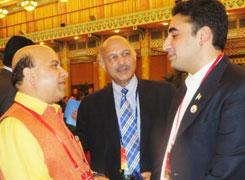
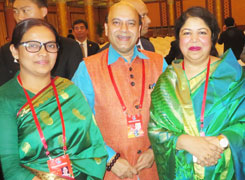
Ex-Speaker Philippines and Chairman ICAPP Jose De Venecia Jr. presided while the Secretary General Chung Eui-Yong from South Korea along with IDCPC China Minister Wang Jiarui conducted the program successfully. The VIPP's at the closing ceremony were Vice President of China Li Yuanchao, Pakistan Special Rapporteur and Senator Mushahid Hussain Sayed, Vice President Maldives Ahmed Adeeb and Bangladesh Speaker Mrs Shirin Sharmin haudhury. Pakistan People's Party Chairman Bilawal Bhutto Zardari and former Indonesian President Mrs. Megawati Soekarnoputri specially participated in the conclave. BJP Vice President Dr. Vinay Sahasrabuddhe delivered a forceful speech on "Political Leadership : New Consensus for Political Parties.
Vijay Jolly said after the end of the cold world war, the magic word today followed was "Economic Cooperation" and not political confrontation. It promotes economic growth and political stability at the international level. At the International Conference of Asian Political Parties (ICAPP), which had China’s Silk Road connectivity projects as its core theme, CPI-M General Secretary Sitaram Yechury advocated convergence between China’s Maritime Silk Road (MSR) concept and India’s Maritime Spice Route. He stressed that China’s “one belt one road” concept, of which the MSR is a part, cannot “comprehensively realise the inherent potential of the region unless the Maritime Spice Route is simultaneously revived”. Indian Ambassador in China Ashok K. Kantha hosted a special luncheon for the Indian leaders at Taj Pavillion restaurant in Beijing.
Communist Party of China values ties with CPI-M: Yechury
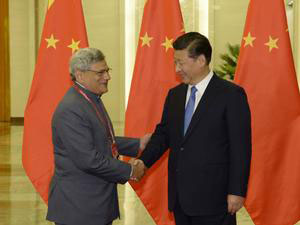
Yechury, who was in the Chinese capital to participate in an international conference of Asian political parties, called on President Xi last Thursday. He said that President Xi conveyed to him that the Communist Party of China (CPC) highly valued its relations with the CPI (M). Xi added that the CPI (M) was a strong votary for driving the relationship between China and India, including people-to-people ties. Yechury said that his detailed conversation with China’s Vice President Li Yuanchao focused on the ongoing economic transition in China. Li pointed out that the CPC was developing ties with all Indian political parties including the CPI (M). It is also said that the Chinese Vice President, without mentioning Pakistan, told Yechury that Beijing’s ties with other countries would not stand in the way of the development of Sino-Indian ties. Li is expected to visit India next month at the invitation of the Vice President Mohammad Hamid Ansari. At the International Conference of Asian Political Parties (ICAPP), which had China’s Silk Road connectivity projects as its core theme, Yechury had advocated convergence between China’s Maritime Silk Road (MSR) concept and India’s Maritime Spice Route. He stressed that China’s “one belt one road” concept, of which the MSR is a part, cannot “comprehensively realise the inherent potential of the region unless the Maritime Spice Route is simultaneously revived”. During his intervention, the CPI (M) general secretary had also counselled a visiting Pakistani delegation led by the chairman of the Pakistan Peoples Party (PPP), Bilawal Bhutto, to refrain from internationalising the Kashmir issue at the conference. Justin Trudeau to be next PM as Liberals bag clear majority in Canada elections
Her Majesty's Loyal Opposition, as Harper's Conservatives will now officially be designated, have 99 seats. "This is what positive politics can do," Trudeau told supporters in Ottawa early Tuesday as the last few results trickled in. "I didn't make history tonight, you did." The victory denied a fourth term to Harper and his Conservative party. Harper has held the position since February 2006. He conceded defeat and will resign as leader of the party, but said he'll remain in parliament as a lawmaker. "We put everything on the table, we gave everything we had to give and we have no regrets," he said just before 10 p.m. Monday in Calgary. "The people of Canada have elected a Liberal government, which we accept without hesitation," Harper said. As the crowd chanted his name, Trudeau said the Liberals won because "we listened." "We beat fear with hope, we beat cynicism with hard work. We beat negative, divisive politics with a positive vision that brings Canadians together," he said. "Most of all we defeated the idea that Canadians should be satisfied with less, and that better isn't possible. My friends, this is Canada, where better is always possible." The son of Pierre Trudeau and scion of Canada's first, nascent political dynasty, the 43-year-old surged into the lead in recent weeks, largely on the back of anti-Conservative sentiment that saw Harper's party lagging as Canadians went to the polls. Before the grueling, 78-day electioneering cycle began, many dismissed the younger Trudeau as trading off of his father's achievements and the famous family name. But pundits in Canada have praised his campaign and the way he has led the Liberals to what transpired to be a sweeping victory. Ahead of the election, many pundits were predicting a tight race, with Harper and Trudeau neck-and-neck and the New Democratic Party (NDP) making up the numbers. Thomas Mulcair's party holds 44 seats in the new parliament. The separatist Bloc Quebecois hold 10 and the Green Party one. Pundits are suggesting Mulcair may step down after a poor showing at the polls, especially as the rout followed a strong, positive campaign. The NDP suffered devastating defeats, slipping from official Opposition during the Harper government to a terrible showing on the night, with only 41 seats projected. Mulcair was gracious in defeat. "From the very outset this election has been about change. Tonight Canadians have turned a page and reject the politics of fear and division," he said in his concession speech in Montreal. He did not indicate if he would step down as leader. Who is Justin Trudeau?
Nearly 40 years ago, no less than the most powerful man on the planet predicted the younger Trudeau’s destiny. “Tonight we’ll dispense with the formalities. I’d like to toast the future prime minister of Canada: to Justin Pierre Trudeau,” Richard Nixon said during a state dinner in Ottawa hosted by Pierre Trudeau in 1972. Justin Trudeau was four months old that day, the first born of a dashing prime minister who drew comparisons to John F Kennedy after rising to power in 1968 on a wave of support dubbed “Trudeaumania.” The architect of Canada’s version of the Bill of Rights, Pierre Trudeau remains to this day one of the few Canadian politicians widely known to Americans. Harper fought hard to reverse the image of a Liberal Canada, cutting corporate and sales taxes and removing Canada from a climate change agreement. The younger Trudeau wants to put Canada back on the course his father set, pledging to hike taxes on the rich and run deficits for three years to boost government spending and shore up a shaky economy. Despite his grandiose beginnings, Justin Trudeau projects a more casual persona than his glamorous father, who dated movie stars such as Barbra Streisand, married, had children and divorced while serving as prime minister between 1968 and 1984, with a brief interruption. A 43-year-old former high school teacher who until recently sported long hair, Trudeau first captured national attention in 2000 with a moving eulogy at his father’s state funeral. He challenged the country to cement Pierre Trudeau’s vision of a united and multicultural Canada, moving many people to tears. “It’s all up to us, all of us now,” he said then. But it would be eight years later before Trudeau ran for office, winning a seat in Parliament representing a working class district of Montreal. By then, Harper had been in power for two years, intent on putting a distinctly more conservative face on the nation of 35 million people. The Liberals, beset by years of infighting and ineffective leaders, had their worst electoral defeat in 2011 when they came in third behind the traditionally weaker left-of-center New Democratic Party. But Trudeau increased his share of the vote in his own district and quickly rose to become the hope of his party. He became Liberal leader in 2013 and has worked to shed the party of its sense of entitlement. Harper’s Conservatives pilloried Trudeau during the campaign as inexperienced. But Trudeau tapped into an appetite for change and worked his boyish image to project an approachability that belied his privileged background. “He has an aura. He’s very personable. People like Justin. He projects sincerity and interest and openness,” said Stephen Clarkson, a political economy professor at the University of Toronto. In his memoir “Common Ground,” Trudeau discussed his turbulent upbringing. His mother, Margaret, was 22 years old when she married the 51-year-old prime minister in 1971, and she quickly earned a reputation for partying with the Rolling Stones and at New York’s Studio 54. The couple had three sons but separated when Justin was six. Justin Trudeau and his brothers were raised by his father. His mother battled depression, particularly after the death of her son Michel, Justin’s brother, in an avalanche in 1998. “The truth is, my mother was very ill,” Trudeau wrote. “She suffered a severe mental illness.” However, he wrote that that he grew up free of much of the emotional trauma that divorce can inflict on children. Trudeau, the second youngest prime minister in Canada’s history, now brings his own young family to Sussex Drive, the official residence of the prime minister in Ottawa. Married to former Quebec television host Sophie Gregoire, Trudeau has three children: Xavier, 8, Ella-Grace, 6, and one-year-old Hadrien. Like his father before him, Trudeau is sometimes compared to another US president who rose to power at a young age, Barack Obama. Nelson Wiseman, a political science professor at the University of Toronto, said Trudeau generates the same excitement among his supporters that Obama did in 2008, along with big expectations that will be difficult to meet. “There is no doubt about it, Justin is fabulous with people. He’s a great people person,” Wiseman said. “Barack Obama used to enter a room and it just changed.” And like Obama, he said, “There is a lot of hope invested in Justin.” 19 Indo-Canadians elected to Canadian parliamentOTTAWA, Oct 19: The 1.25 million-strong Indo-Canadian community had much to cheer about on Tuesday as it doubled its representation in the new Parliament with the election of a record number of 19 MPs. Though comprising only about 3% of the population of Canada, the community outperformed those numbers. The new number of Indo-Canadian lawmakers far outstripped the previous high of nine. In 2011, almost all the Indo-Canadians MPs were Conservatives, with no Liberals elected, reflecting the overall mandate. The triumph of Justin Trudeau catapulted at least 15 Indo-Canadian Liberals to the Parliament in Ottawa. There will also be an overhaul in the ranks of the community’s MPs, with only a couple of sitting members re-elected. Indo-Canadians won seats in four provinces – Ontario, Quebec, British Columbia and Alberta. Canadians voted out the Conservative Party by handing a landslide to the Liberal Party on Monday. If there were significant victors among these candidates, the biggest loser was minister of state for sports Bal Gosal, who lost by about 6,000 votes to Liberal Party candidate Ramesh Sangha in Brampton Centre constituency of Ontario. Among the prominent winners was Harjit Sajjan of the Liberal Party, a Canadian Armed Forces veteran who served three operational deployments in Afghanistan. The longest-serving Indo-Canadian MP, Deepak Obhrai, won for the seventh time from Calgary Forest Lawn, while four-time MP Nina Grewal lost the elections. Also a winner was Sukh Dhaliwal, another Liberal, who as an MP in 2010 had moved a resolution in the Canadian Parliament to have the 1984 riots in India declared a “genocide”. Dhaliwal lost in 2011 but he turned the tables on his opponent, sitting MP Jinny Sims of the New Democratic Party, this time. Some candidates emerged victorious in ridings (as constituencies are called in Canada) where the Indo-Canadian vote wasn’t a major factor. Among them was Liberal candidate Chandra Arya, a former executive and chair of the Indo-Canada Ottawa Business Chamber, who won from Nepean that falls within the boundary of Ottawa, Canada’s capital. His party colleague, Anju Dhillon, won from Dorval-Lachine-LaSalle, a constituency on Montreal island, becoming the first Indo-Canadian to win a seat in the French-speaking province of Quebec. Most Indo-Canadian victories came in Canada’s biggest province of Ontario as many seats in Brampton and Mississauga cities went to candidates from the community. Some Indo-Canadian MPs elected are: Anju Dhillon: Liberal, won the Quebec constituency of Dorval-Lachine-LaSalle Chandra Arya: Liberal, won from Nepean in Ontario Ramesh Sangha: Liberal, won from Brampton Centre in Ontario, defeating minister of state Bal Gosal Gagan Sikand: Liberal, won from Missauga-Streetsville in Ontario Deepak Obhrai: Conservative, won from Calgary Forest Lawn in Alberta Harjit Sajjan: Liberal, won from Vancouver South in British Columbia Sukh Dhaliwal: Liberal, won from Surrey Newton in British Columbia Raj Saini: Liberal, won from Kitchener Centre in Ontario Bardish Chagger: Liberal, won from Waterloo in Ontario Bob Saroya: Conservative, won from Markham-Unionville in Ontario Vijay Jolly supports closer economic ties with ChinaBy Deepak Arora
Delivering a key note address at the International Conference of Asian Political Parties (ICAPP) Standing Committee Meeting here on Friday, Vijay Jolly said after the end of the cold world war, the magic word today followed was "Economic Cooperation" and not political confrontation. It promotes economic growth and political stability at the international level. It’s time for India to be a good neighbour with NepalBy Nirupama Rao & Atul Pokharel
Prime Minister Narendra Modi, who is believed to understand the concept of a shared South Asian “commons”, is seen as having missed a unique opportunity to unify the people of the region. The introduction of a new Constitution in Nepal presented a chance to alter the entrenched belief that the outcomes of India’s special relationship with Nepal will always be unfair. Instead, weeks of suffering from the ‘blockade’ have led the Nepalese to drown in suspicion: may be India didn’t like the new Constitution; it knew northern trade points were still damaged by the quake; it callously imposed a weeks-long blockade on their crippled country; the international community silently stayed on India’s good side; and once Nepal’s government agreed to change the Constitution, the blockade appeared to ease. Unfortunately for India, most Nepalis blame Prime Minister Modi, the public face of the Indian government in Nepal. The relationship between India and Nepal is complex, but should it be damaged thus? India increasingly needs Nepal to safeguard its vital interests. But Nepal depends on India far more. Nearly all of its fuel imports come from the Indian Oil Corporation. The Nepalese Rupee continues to be pegged to the Indian Rupee. India is Nepal’s main trading partner, and the border is open. Nepalis have served in the Indian Army, and receive pensions in retirement. By some estimates, one seventh of the entire population of Nepal resides and works in India. Despite this uneven interdependence, Indian diplomats have sought to cultivate the delicate impression that they are not viceroys. Even before the recent events, they strained to convey that India cared about the well-being of the people of Nepal, regardless of political uncertainties. They reiterate that they attach the greatest importance to the relationship between India and Nepal. The people of Nepal are confused by the mixed messages. After eight years and two elections, they finally wrote a Constitution that they feel India coldly acknowledged. India then reacted indifferently, in their view, to the impending humanitarian crisis. Furthermore, they saw Prime Minister Modi’s invitation to the new Prime Minister of Nepal to visit New Delhi as a ‘summons’. So they ask, does India care about the people of Nepal or is it concerned only about its interests? Is it ready to subject an entire population of more than 27 million to eat bitterness, right when it hurts most, to get what it wants? How retributive is India going to be when the ups and downs of neighbouring democratic processes lead to outcomes it may not like? There is a critical need for India to shape perceptions in Nepal and erase misunderstanding. It must reaffirm the unity of the people of Nepal while recognising their diversity. Next, it should act visibly to provide relief to those facing scarcity just as the holiday season begins. This current crisis has political origins. But India should respond as it did after the earthquake. It was the compassionate first responder, decisive and focussed on alleviating the palpable suffering of the population of a neighbouring country. Nobody denies India’s immense power in Nepal. With power comes responsibility. As long as the people of Nepal perceive the outcomes of the special relationship to be unfair, it will be difficult to secure their cooperation. It is up to Prime Minister Modi to change that. South Asia and the world are watching. @ Nirupama Rao, a former Foreign Secretary of India and former Ambassador to China and the U.S., is currently at the Watson Institute for International and Public Affairs, Brown University, U.S. and Atul Pokharel is a postdoctoral fellow from Nepal at the Watson Institute for International and Public Affairs. Vijay Jolly to deliver keynote address in China
Iran parliament approves historic nuclear dealTehran, Oct 13: Iran's parliament approved its nuclear deal with world powers on Tuesday, paving the way for the historic agreement curbing Tehran's atomic programme to take effect and for the eventual lifting of sanctions. The vote came after fierce debate among lawmakers over the terms of the accord, which was struck on July 14 but has faced a rough ride from hardliners in Tehran and in the US Congress. A motion to approve the nuclear deal was however passed with 161 votes in favour, 59 against and 13 abstentions, Iran's official IRNA news agency and other media said. State television did not broadcast Tuesday's vote but Iranian media outlets reported that there were angry scenes and some MPs shouted that their concerns had not been addressed. A notorious critic of the nuclear diplomacy, Hamid Rasaie, was pictured on social media holding up a piece of paper declaring: "This is an official violation of law. Parliament is a sham." Another ultraconservative MP, Mehdi Kouchakzadeh, was quoted as saying: "This is no one's decision, it is Larijani's decision," in a reference to a refusal by parliament speaker Ali Larijani to allow him to speak. Kouchakzadeh was led away by other lawmakers, the ISNA news agency said. A tally of the vote to pass the nuclear deal, known officially as the Joint Comprehensive Plan of Action (JCPOA), said 250 of Iran's 290 MPs were present. The count suggested 17 members had attended but did not vote. The nuclear agreement between Iran and the so-called P5+1 group (Britain, China, France, Russia and the United States plus Germany) came after almost two years of diplomacy. Only lawmakers in the United States and Iran, sworn enemies since the Islamic revolution in 1979, had insisted on voting on it. The deal, which will lift nuclear-related sanctions on Iran in return for curbs on its atomic activities -- the Islamic republic denies seeking a bomb -- has been widely hailed as a diplomatic triumph that averts military confrontation and another possible war in the Middle East. But opponents of the diplomacy, including Israel and American lawmakers, say it has empowered Iran and will not halt a dash for atomic weapons should the Islamic republic want them. Members of the US Congress failed in September to torpedo the deal, with President Barack Obama's White House securing enough support in the Senate to protect the agreement. But the accord has been debated in Tehran for months, with some MPs repeatedly warning of holes in the text. Iran's President Hassan Rouhani, who is expected to speak on state television later Tuesday, and other officials have faced attacks over the way they engaged with the US and other countries to secure the agreement. In selling the deal to sceptics, Rouhani's government said its negotiators protected the future of Iran's nuclear programme while ensuring sanctions, that have ravaged its economy, would end. However, as late as Sunday parliament was the scene of a clear divide over the agreement. Ali Akbar Salehi, head of Iran's Atomic Energy Agency, went on the attack for the government after he and other negotiators were accused of having capitulated to the West. Guidelines, known as red lines, for the talks were laid down by Iran's supreme leader, Ayatollah Ali Khamenei, and the Supreme National Security Council that he oversees. Tuesday's motion, titled "Iran's Plan for Reciprocal and Proper Action in Implementing JCPOA" allows the government to proceed, IRNA reported. However Iran also has to satisfy the International Atomic Energy Agency, the UN nuclear watchdog, of the exclusively peaceful nature of its atomic programme. The IAEA faces a December 15 reporting deadline to resolve what it had termed "ambiguities" over Iran's past nuclear activities. Pak leadership knew about Osama's presence, says country's ex-defence ministerNEW DELHI, Oct 13: Pakistan's top civilian and military leadership knew about Osama bin Laden's presence in the country much before the US navy SEALs killed him in a raid in 2011, the then defence minister of Pakistan has claimed. The Pakistani establishment, the country's powerful army chief and the intelligence agency ISI were aware that Osama was living in Abbottabad, according to Chaudhry Ahmad Mukhtar, who was Pakistan's defence minister between 2008 and 2012. Former Pakistan President Asif Ali Zardari, then army chief Ashfaq Parvez Kayani and joint chief of staff all knew that Osama was in Pakistan, Mukhtar told CNN-IBN. The former defence minister's admissions are contrary to what Pakistan has been claiming so far that it was unaware of Osama's presence in the country until the US Navy SEALs killed him in a daring raid in May 2011. Asked if President Zardari and General Kayani had information about Osama and were there people both in the civilian and military chain of command who had prior information, Mukhtar answered in the affirmative. Asked if they had prior information in terms of suspicion of the location of the world's most wanted man, Mukhtar said, "Some people knew, people in the Pakistan army as well as people in the other forces they also knew it and they were on the lookout for somebody of the stature of Osama bin Laden." Mukhtar's admissions come on the heels of investigative reporter Seymour Hersh's claim that a Pakistani agent had leaked to the US Osama's Abbottabad hideout address. Osama was killed in Abbottabad on May 2, 2011 in a raid by the US navy SEALS. 86 killed in Turkey peace rally twin blasts
A Reuters reporter saw bodies covered by flags and banners, including those of the pro-Kurdish opposition Peoples' Democratic Party (HDP), with bloodstains and body parts scattered on the road. "Like other terror attacks, the one at the Ankara train station targets our unity, togetherness, brotherhood and future," Erdogan said in a statement, calling for "solidarity and determination". Witnesses said the two explosions happened seconds apart shortly after 1000AM as hundreds gathered for a planned march to protest over a conflict between Turkish security forces and Kurdish militants in the southeast. "I heard one big explosion first and tried to cover myself as the windows broke. Right away there was the second one," said Serdar, 37, who was working at a newspaper stand in the train station. "There was shouting and crying and I stayed under the newspapers for a while. I could smell burnt flesh." There were no claims of responsibility for the attack. But the NATO member has been in a heightened state of alert since starting a "synchronized war on terror" in July, including air strikes against Islamic State fighters in Syria and Kurdistan Workers Party (PKK) bases in northern Iraq. It has also rounded up hundreds of suspected Kurdish and Islamist militants at home. Saturday's attacks came as expectation mounted that PKK militants would announce a unilateral ceasefire, effectively restoring a truce that collapsed in July. The government had already dismissed the anticipated move as an election gambit to bolster the HDP, whose success at June elections had helped erode the ruling AK party's majority. Hours after the bombing, the PKK announced it was ordering fighters to halt operations in Turkey unless they faced attack. The Hague Mayor visit to strengthen ties with IndiaBy Deepak Arora NEW DELHI, Oct 7: The Mayor of The Hague, Jozias van Aartsen, five-day visit to India from October 13 is expected to further strengthen the ties between The Hague and India. The Mayor’s visit is a follow-up of a mission in December 2011 which concentrated on law, peace and justice. The visit will focus on Cyber Security and The Hague’s position as ‘International City of Peace and Justice’; besides partaking in Cyfy conference 2015. The delegation comprises of The Hague Municipality,companies and knowledge institutes. The aim of the mission is closer cooperation and exchange of knowledge between The Hague and Indian government organizations, industry and research institutions. The delegation from The Hague will present the Dutch approach to cyber security consisting of close cooperation between government, business and science in order to combat cybercrime. Not only technology, but also aspects such as privacy and technical and legal questions are central to the theme. Representatives of The Hague Security Delta (HSD) – (largest security cluster in Europe, working on innovations and knowledge in the field of cyber security, national and urban security, protection of critical infrastructure, and forensics), who will be a part of the mission, will brief the Indian interlocutors from government and industry about The Hague method. The Dutch delegation is also keen to learn about the knowledge concentrated in New Delhi and Hyderabad. Apart from HSD, the delegation consists of TU Delft, Leiden University, The Hague University and companies such as FOX-IT. In Delhi, the delegation will meet Dr. Gulshan Rai, Chief Cyber Security, Prime Minister Office to discuss the possibilities of constructive collaboration in the field of Cyber Security. In addition, the delegation will meet with representatives of the organizations such as Department of Electronics & Information Technology; CERT-In (the Indian Computer Emergency Response Team), a government-mandated The delegation will also attend the India Conference on Cyber Security and Internet Governance (CyFY 2015) in New Delhi. The Mayor will offer four full scholarships for study programs at The Hague University. These scholarships are equally divided between Jawaharlal Nehru University in New Delhi and Nalsar University of Law in Hyderabad. In Hyderabad, the delegation will meet K. T. Rama Rao, Minister for Information and Technology and Jayesh Ranjan, Secretary IT, Telangana as also Palle Raghunatha Reddy, IT Minister of Andhra Pradesh. The delegation will also pay a visit to Tech-Mahindra (which has an operation in the city of The Hague) to learn about their Integrated Engineering in the field of Digital Practice and Internet of Things. Speaking on the occasion, Mayor Van Aartsen said, “The Netherlands, and in particular The Hague has created a niche for itself in the field of safety and security. We shall be happy to join forces with companies, knowledge institutes and the government bodies in dealing with the growing challenges in the domain of Cyber Security, besides offering input for the legal and regulatory framework! Our goal is to realize a safe, open and stable information society by sharing knowledge, providing insight and proper perspectives for action. There is a huge population of People of Indian Origin (PIO) in The Hague and already more than 10 Indian companies are based in The Hague region, of-which Tech Mahindra and HCL Technologies are the largest. All are playing a significant role in developing bilateral economic and trade cooperation in various fields.” With a reputation as International City of Peace and Justice, The Hague is highly committed towards the cooperation and exchange of knowledge and experience. Moreover, it has a large number of legal organizations within the city ambit, including the International Court of Justice and the International Criminal Court. The Hague and India have already been cooperating on the theme 'Peace and Justice'; cyber security is a logical extension of that collaboration. India, Germany sign deal to fast-track business approvals
The fast-track approvals process will ensure that German firms will have a single point of contact in the Indian administration, helping them to navigate a web of red tape that often thwarts business initiative. The agreement is the first of its kind and comes as Prime Minister Narendra Modi seeks to attract foreign investment in support of his Make in India drive to boost industrial investment and create skilled jobs. Commerce secretary Amitabh Kant said under the fast-track arrangement India "would monitor on a monthly basis all issue for German companies". Germany will also provide India more than 2 billion euros ($2.25 billion) for developing a clean energy corridor and solar projects, PM Modi said after talks with Merkel. Modi has made ambitious renewable energy targets a key part of his development agenda and climate change mitigation commitments ahead of a landmark international summit in Paris at the end of this year. "I admire German leadership in clean energy and commitment to combating climate change," Modi told journalists after meeting Merkel, who is on a three-day visit to India. In a joint press conference, PM Modi praised Merkel, saying her leadership is a source of confidence and reassurance at a difficult moment for Europe and world. "In a world of challenges and opportunities, India and Germany can be strong partners. German strengths and India's priorities are aligned. And so is our mutual goodwill," said Modi. Merkel, for her part, said Germany is going to be candid in the future and make the process run smoothly. "We are not going to take a break for two years before we meet next. We were taking stock of political issues and realised the world is full of conflicts. We will intensify our cooperation in this as well," said Merkel. She said the two countries will work together in combating terrorism and cooperate in the field of defence and arms, adding energy cooperation is "very much in the foreground, particularly in rural areas". "We believe that India's experience in digitisation will help us. There is great room for further projects." Earlier, the two countries also inked 18 MoUs for cooperation in various fields including higher education, civil aviation, railways and food safety. "The prospects are huge because India is just beginning its long spurt for growth," Kant told a business round table. Ways to deepen bilateral engagement in diverse sectors like defence, security, education and renewable energy figured in the summit-level Inter-Governmental Consultations (IGC) between Modi and Merkel which also deliberated on issues relating to trade and investment. Merkel, accompanied by a large delegation of cabinet ministers and top officials, arrived in New Delhi on Sunday night and was accorded a ceremonial welcome at the Rashtrapati Bhavan on Monday morning. |

| |||||||||||
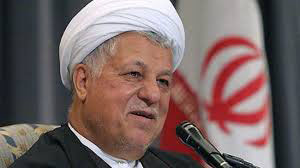 NEW DELHI, Oct 29: Former president Akbar Hashemi Rafsanjani has lifted the lid on Pakistan’s role in the development of Iran’s nuclear programme, saying Pakistan provided designs and technology, including 4,000 used centrifuges for enriching uranium.
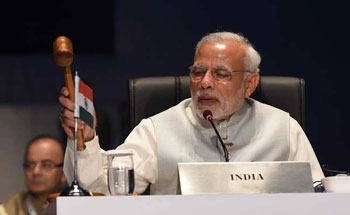 NEW DELHI, Oct 29: India today announced a concessional credit of USD 10 billion to Africa in the next five years and a grant assistance of USD 600 million as Prime Minister Narendra Modi strongly asked the continent to speak in "one voice" with it in pushing for UN Security Council reform and combating climate change and threat of terrorism.
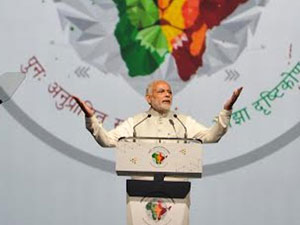 "To add strength to our partnership, India will offer concessional credit of USD 10 billion over the next five years. This will be in addition to our ongoing credit programme," PM Modi said, adding India will also offer a grant assistance of USD 600 million which includes an India-Africa Development Fund of USD 100 million and a Health Fund of USD 10 million.
 NEW DELHI, Oct 23: Reacting on the recent US-Pakistan joint statement on terrorism, the Ministry of External Affairs on Friday said that it was a positive sign that the Haqqani network and the Lashkar-e-Taiba were finally mentioned, but slammed Nawaz Sharif's charges that India had backed from a constructive dialogue with the hostile neighbour. "India has always desired resolution of all issues with Pakistan bilaterally through dialogue and peaceful means, but it is Pakistan which has chosen to use terrorism as an instrument of state policy," according to Vikas Swarup, spokesperson of the Ministry of External Affairs.
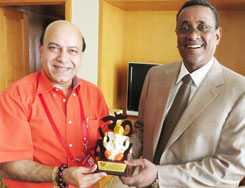
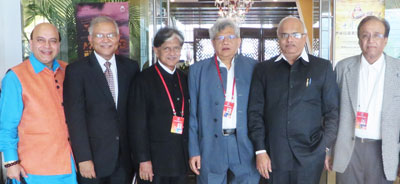 NEW DELHI, Oct 21: A three-day International Asian Political Parties Conclave (ICAPP), organized by Communist Party of China in Beijing recently, was a "Grand Success", claimed its standing committee member and senior Indian leader Vijay Jolly.
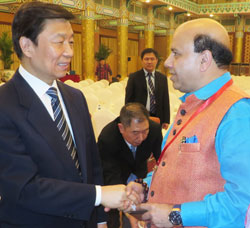 The opening session was addressed by Liu Yunshan, Member Political Bureau CPCCC, President Cyprus Nicos Anastasiades, Prime Minister Cambodia Hun Sen and Georgia Speaker Davit Usupashvilli.
 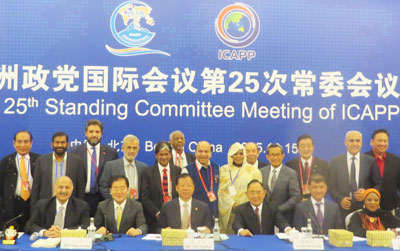 Vijay Jolly in his keynote address on "Regional Economic Cooperation" lauded the "One Belt - One Road" policy of China President Xi Jinping and "Look Neighborhood" policy of Indian Prime Minister Narendra Modi at the Beijing conclave.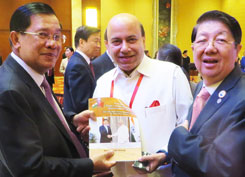
 BEIJING, Oct 21:
China has signalled that it is according top priority to its engagement with the Indian Left parties, following a call by Sitaram Yechury, the CPI (M) General Secretary, on Chinese President Xi Jinping and Vice President Li Yuanchao.
BEIJING, Oct 21:
China has signalled that it is according top priority to its engagement with the Indian Left parties, following a call by Sitaram Yechury, the CPI (M) General Secretary, on Chinese President Xi Jinping and Vice President Li Yuanchao. 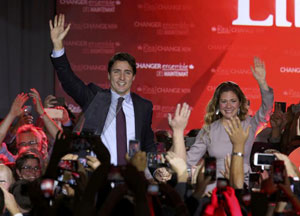 OTTAWA, Oct 19: Justin Trudeau will be the next Prime Minister of Canada. In a stunning blow to incumbet Premier Stephen Harper, Canadians gave an absolute majority to Liberals by giving them 184 seats -- or "ridings," the Canadian term for federal electoral districts -- putting them over the line for forming a majority government. A total of 170 seats are needed for a majority.
 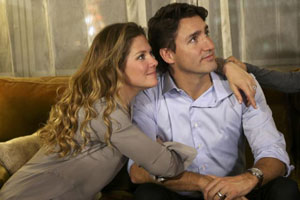 Justin Trudeau has fulfilled the great expectations he was born into, following in the footsteps of his storied father to become Canada’s next Prime Minister. Now, he has the chance to restore the late Pierre Trudeau’s Liberal legacy, which has been under siege during 10 years of Conservative rule under Stephen Harper.
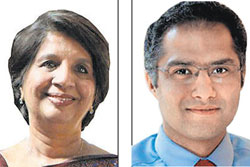 NEW YORK, Oct 16: It has been a difficult six months for the Nepali people. This week, they faced another humanitarian crisis because the flow of fuel and supplies from India stopped. Newspapers reported that hospitals and clinics ran out of supplies, restaurants and businesses closed, neighbours scrambled for firewood to cook and stay warm, and transportation shut down. They also questioned India’s claim that the protesting ethnic groups inside Nepal were obstructing supplies. How, they ask, has the fuel supply resumed but internal protests continued? Furthermore, a new government came to power in Nepal that seems less amenable to their dissenting views. So, was it all about India after all?
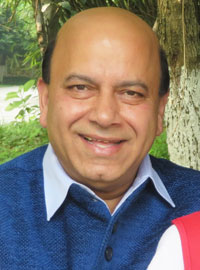 NEW DELHI, Oct 14: Senior BJP leader and President Delhi Study Group Vijay Jolly has been invited to deliver a keynote address on "Regional Economic Cooperation" at Beijing, China.
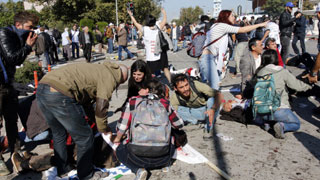 ANKARA, Oct 10: At least 86 people were killed after twin explosions hit a rally of pro-Kurdish and leftist activists outside Ankara's main train station on Saturday in what Turkish President Tayyip Erdogan has called a terrorist attack, weeks ahead of an election.
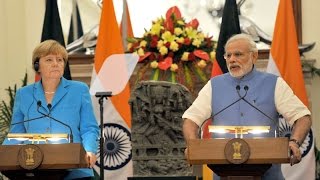 NEW DELHI, Oct 5: India and Germany signed a deal on Monday to fast-track business approvals, an arrangement that will make it easier for German companies to operate in Asia's third largest economy. The agreement was announced as Angela Merkel, Chancellor of the European country, visited New Delhi.
Aviation
| Business | Defence | Foreign
Affairs | Communication | Health
| India | United Nations
India-US
| India-France | Entertainment
| Sports | Photo Gallery |
Tourism | Advertise with Us
| Contact Us
© Noyanika International, 2003-2009. All rights reserved.