


Foreign Affairs
|
Vijay Jolly appointed Chief Advisor to ICAPP Youth WingBy Deepak Arora
Vijay Jolly also gave a keynote address at the Indonesian Parliament where Indian Prime Minister Narendra Modi was loudly cheered for his Good Governance in India. International delegates of 360 political parties of Asia-Africa-Caribbean & European Union were present. India, Indonesia have common religious bonds: Vijay JollyBy Deepak Arora
Has India scored a self-goal by withdrawing visa to Dolkun Isa?
India had taken the unusual step of allowing Uyghur leaders to attend a conference by the Dalai Lama. The move was seen to be India's way of upping the ante against China's block on a terrorist designation of Masood Azhar. It was the first time India was taking such a stand, particularly as Rebiya Kadeer, chief of the World Uyghur Congress was denied a visa in 2009, when India-China ties were more fragile. It was a sign to China that India had leverages it was willing to exercise. "India has lost face," said Srikanth Kondapalli, China analyst. Echoing the sentiment, Jayadeva Ranade said "India has egg on its face. Its counterproductive and sends the wrong signal, regardless of how the original visa was issued." On social media, which buzzed with activity after the Indian decision, the Modi government came in for a lot of flak. One of the top trending themes on Monday was #ModibowstoChina. The decision to withdraw the visa was taken by the home ministry, but without consulting the ministry of home affairs (MEA). It was another instance of government working in silos without informing each other. Senior government sources said the government was unwilling to draw equivalence between Pakistan and China on the issue of terrorism, that going down the path of embracing China's outlaws would impact business and regular relations with China. India, said sources, is not yet willing to go down that path. National security adviser, Ajit Doval, met his counterpart Yang Jiechi in Beijing last week, where he said he discussed terrorism and Masood Azhar with the Chinese leadership. It's not clear whether the decision to withdraw the visa to Uyghur activists was taken as a result of his talks there. Dolkun Isa and other Uyghur activists had applied for and received tourist e-visas. E-visas don't go through the stringent security checks others do, and are denied only if the name is on a blacklist. MHA sources said Isa's visa was given because he was not on any blacklist. But the Red Corner Notice against him by the Chinese government would have shown up at the immigration counter in Delhi and he would have had to return from the airport. A second reason trotted out by the MHA was the Uyghur activists should be on a conference visa but they were on a tourist visa. A home ministry official said, "Isa had applied for an e-tourist visa online. Since his name was not on our look out, his application was granted earlier. However, after we learnt through media reports that he is coming to India for attending a conference, we cancelled the visa because this e-visa is allowed only for tourism. Anyway, he was not on our blacklist so it didn't show on online system." It was actually media reports that alerted the government to its own actions. And for the past week, MEA was perfectly happy to bask in the implications of the decision, whether it had been thought through or not. One of the first cautionary notes was sounded by former foreign secretary and ambassador to China, Nirupama Rao. Former NSA, Shivshankar Menon told TOI, both decisions, to give and then rescind the visa "would have consequences for the bilateral relationship." Reacting to India's decision, Chinese foreign ministry spokeswoman Hua Chunying said last week: "What I want to point out is that Dolkun is a terrorist on red notice of the Interpol and Chinese police. Bringing him to justice is due obligation of relevant countries." Both Indian arguments are pretty thin. In October 2015, India hosted Sudan's president Omar Bashir, who is wanted by the International Criminal Court, but India assured him he would not be arrested. India explained this since it does not recognize ICC. Isa functions without fear in Germany, which is the biggest outpost for Uyghurs. Germany is China's biggest partner in Europe and vice versa. Isa and other activists are also allowed travel and work in the US. Secondly, converting a tourist visa to a conference visa really does not take much doing. So if India wanted to make a political statement to China to protest against Beijing's decision on Masood Azhar, the worst thing it could have done is to use the Uyghur card and then back away from it. It shows to China and the world that India can succumb to the least pressure from China. It also means there is little material reason for China to change its decision on Azhar. In 2010, India responded to China's depredations on the border and visas to Kashmir-born Indians by refusing to endorse the "One China" policy in their joint statement with Beijing. In a statement, Dolkun Isa said, "I express my disappointment on Indian authorities' cancellation of my visa to attend the annual Interethnic Interfaith Leadership Conference taking place in Dharamsala, India, from April 30 to May 1, 2016." "The Indian (government) had granted me a tourist e-visa, but it was cancelled after my visit was widely reported in the Indian press. Following numerous reports, Indian authorities then proceeded to rescind the visa on April 23, 2016. I recognize and understand the difficult position that the Indian government found itself, and regrets that my trip has generated such unwarranted controversy." He went on to dissociate himself from any comparison with Masood Azhar. "I also reject any comparison or association to China's recent veto by the UN security council sanctions committee of Pakistani militant leader, Masood Azhar. Such an unjustifiable comparison seeks only to delegitimize my decades of impassioned work as a strictly non-violent campaigner for Uyghur rights." 262 killed in Ecuador earthquake
Rescuers pulled survivors from rubble on Sunday after the strongest earthquake to hit Ecuador in decades flattened buildings and buckled highways along its Pacific coast. The magnitude-7.8 quake, the strongest to hit Ecuador since 1979, was centered on Ecuador’s sparsely populated fishing ports and tourist beaches, 105 miles (170 kilometers) northwest of Quito, the capital. Vice Minister Diego Fuentes gave the latest number to reporters Sunday night as search teams continued to pick at rubble looking for survivors and victims. Earlier, Vice President Jorge Glas said more than 2,500 people were injured in Saturday night’s earthquake. Glas says there is a long list of missing people that authorities are looking for but he has declined to disclose the number. He says only that the number of casualties is expected to go up more. Ecuadorean President Rafael Correa has rushed back from an overseas trip and is getting briefed on relief efforts after a powerful earthquake rocked a coastal area of the South American nation. Correa was in Rome when the 7.8-magnitude quake struck Saturday night, causing heavy damage. He had attended a conference at the Vatican a day earlier. The presidential office released photos showing he flew in Ecuador’s presidential plane directly to the city of Manta on the coast. He is being briefed at the airport. Earlier on Sunday, Pope Francis has offered prayers for the people of Ecuador affected by the violent earthquake overnight “that caused numerous victims and great damage.” Francis asked the faithful in St. Peter’s Square on Sunday to pray for those suffering in the aftermath of the magnitude-7.8 earthquake, as well as those hit by a separate magnitude-7.0 tremor in Japan early Saturday. Ecuador’s earthquake is about six times stronger and has released more energy than the one in Japan a day before. David Rothery, a professor of planetary geosciences at The Open University, northeast of London, says the total energy released by the earthquake in Ecuador was “probably about 20 times greater” than the magnitude-7.0 quake in Japan. Rothery said on Sunday that bigger quakes last longer, so both the strength of the shaking and the duration contribute to the total energy. Rothery says the quake in Ecuador began deeper underground than the recent Japan quakes, which would have lessened the shaking on the ground. But the greater loss of life and greater damage in Ecuador can be attributed to the country’s less stringent construction codes. The scientist also says “there is no causal relationship between the earthquakes in Ecuador and Japan.” Saudi Arabia could sell off billions in American assets if blamed for 9/11
The newspaper reported that Saudi foreign minister Adel al-Jubeir told US lawmakers last month that “Saudi Arabia would be forced to sell up to $750 billion in Treasury securities and other assets in the United States before they could be in danger of being frozen by American courts.” The bill, which passed the Senate Judiciary Committee earlier this year, would take away immunity from foreign governments in cases “arising from a terrorist attack that kills an American on American soil.” The New York Times, citing administration officials and congressional aides, said “the Saudi threats have been the subject of intense discussions in recent weeks between lawmakers and officials from the State Department and the Pentagon.” It added that the Obama administration had lobbied Congress to block the passage of the bill. The State Department said it stood “firmly with the victims of these acts of violence and their loved ones.” “We remain committed to bringing to justice terrorists and those who use terrorism to advance their depraved ideology,” said State Department spokesperson John Kirby. In September a US judge dismissed claims against Saudi Arabia by families of victims of the attacks, saying that the kingdom had sovereign immunity from damage claims by the families and from insurers that covered losses suffered by building owners and businesses. IS threatens India with coordinated attacks from Pakistan, BangladeshNEW DELHI, April 13: The Islamic State intends to use its fighters in Pakistan and Bangladesh to mount “guerrilla attacks inside India” and create fear and chaos by working with local mujahideen, the head of the terror group in Bangladesh has said. Shaykh Abu Ibrahim al-Hanif, the ‘amir’ of IS fighters in Bangladesh, made the remarks in a lengthy interview to the group’s online magazine Dabiq that was released on Wednesday. Bangladesh, referred to by the IS as “Bengal”, is an important region for the IS’s so-called caliphate and the global jihad due to its “strategic geographic position”, al-Hanif said. “Bengal is located on the eastern side of India, whereas Wilayat Khurasan is located on its western side. Thus, having a strong jihad base in Bengal will facilitate performing guerrilla attacks inside India simultaneously from both sides and facilitate creating a condition of tawahhush (fear and chaos) in India along with the help of the existing local mujahidin there...,” he said. This would allow IS fighters to “enter with a conventional army and completely liberate the region from the mushrikin (disbelievers), after first getting rid of the ‘Pakistani’ and ‘Afghani’ regimes”, he added. The IS had announced its expansion into Khurasan, the historic name for the area encompassing Afghanistan, Pakistan and parts of India, in January last year. Al-Hanif said IS fighters in Bangladesh “are able to connect and cooperate with the mujahidin in the various wilayat (branches) of the Khilafah (caliphate), including the brothers in Wilayat Khurasan”. The cover story of the 14th issue of the propaganda magazine focussed on Egypt’s Muslim Brotherhood and there was an article on the four IS fighters who carried out the Brussels attacks. A significant portion is dedicated to the group’s operations in Bangladesh. Al-Hanif described the jihad in Bangladesh as “a stepping-stone for jihad in Burma” or Myanmar. He claimed the Hindus of Bangladesh and India “have always been waging war against Islam and the Muslims. The only difference is that the Hindus in India show their animosity towards Islam and the Muslims openly whereas the Hindus in Bengal do it in a more deceptive and covert manner due to them being a minority sect here”. He further claimed that many high-ranking positions within the police and intelligence agencies in Bangladesh are “occupied by the Hindus” and the secular government of Prime Minister Sheikh Hasina “sees these filthy pagans as die-hard party loyalists”. Al-Hanif said the Hindus of Bangladesh had backed India’s RAW intelligence agency against Muslims “since the days of the so-called ‘Bangladesh Liberation War’ in 1971”. “Thus, we believe Shariah in Bengal won’t be achieved until the local Hindus are targeted in mass numbers and until a state of polarisation is created in the region, dividing between the believers and the disbelievers...,” he added. Philippines, Vietnam to explore joint patrols in South China SeaMANILA, April 13: Defence officials from the Philippines and Vietnam will meet this week to explore possible joint exercises and navy patrols, military sources said, shoring up a new alliance between states locked in maritime rows with China. Ties have strengthened between the two Southeast Asian countries as China's assertiveness intensifies with a rapid buildup of man-made islands in the Spratly archipelago, to which Vietnam and the Philippines lay claim. Both states are also on the receiving end of a renewed charm offensive by the United States, which is holding joint military exercises in the Philippines to be attended this week by U.S. Defense Secretary Ash Carter. Vietnam and the Philippines would discuss patrols and exercises, but a deal this week was unlikely, according to a senior military official. "These are initial discussions," he said. "These may take time but we would like to move to the next level." The official spoke on condition of anonymity because he was not authorised to speak to the media. The information was confirmed by another defence ministry source in Manila. Naval patrols between the Philippines and United States were proposed by Manila in January. They could happen within a year, a foreign ministry official said. "The two sides are still talking about this," said the official. The exploratory talks between Vietnam and the Philippines come as ships from the United States and Japan, which has its own maritime wrangles with China, have visiting ships currently docked at Subic Bay in the Philippines, which hosted Washington's main naval base during the Vietnam War. The regional dynamic has shifted substantially since then, with the United States now engaging Vietnam's military having eased a lethal arms embargo in 2014. Japan is also working closely in defence issues with Manila and Hanoi, and two of its guided-missile destroyers are currently on a rare visit to Vietnam's strategic base at Cam Ranh Bay. Vietnam and the Philippines agreed on a strategic partnership in November to boost security relations as China expands its presence in the strategic waterway and deploys military equipment in the Spratly and Paracel islands. Their closer ties mark a bold step in a region where China's economic influence has made some countries reluctant to take a joint stand against its maritime maneuvering. Joint exercises would be one of the biggest steps taken by the two countries' militaries since signing a defence agreement six years ago. The meeting between Vietnam's vice defence minister, Nguyen Chi Vinh, and Honorio Azcueta, the Philippine undersecretary of defense, is scheduled for Thursday and comes as a court in The Hague nears a decision in an arbitration case lodged by Manila. The ruling in the case, which seeks to clarify parts of a United Nations maritime law, could dent China's claim to 90 percent of the South China Sea, parts of which Taiwan, Malaysia and Brunei also claim. NIA court issues arrest warrant against Masood Azhar, India to approach Pak
The special National Investigation Agency court in Punjab’s Mohali also issued arrest warrants for Kashif Jaan and Shahid Latif, considered to be the handlers of the Pathankot attackers. “We had approached the court in this regard a few days back,” said a senior NIA official. The official added that the warrants will now be shared with Pakistan by sending another letter rogatory or a court-approved request for assistance in probe. The arrest warrants will also strengthen India’s case in the United Nations Security Council for putting Masood Azhar under the sanction regime of the world body. Six militants infiltrated the strategic Pathankot air base in January, killing seven soldiers and forcing a new low in troubled bilateral ties between the two countries. Pakistan has repeatedly said there isn’t enough evidence against Azhar. An Indian move to designate Azhar a terrorist at the UN security council was blocked by Islamabad’s ally Beijing recently. China in touch with India on JeM chief Masood Azhar’s ban
“China is opposed to all forms of terrorism and is willing to step up pragmatic cooperation with all countries,” foreign ministry spokesman Hong Lei told reporters in Beijing. When asked about foreign secretary S Jaishankar’s remarks that India has taken up Azhar’s ban issue with China, Hong said, “on anti-terrorism we always act based on facts and in accordance with rules and regulations of UN to deal with the listing in the 1267 sanctions committee”. “We always keep in close communication with all the countries including India on this issue,” he said. Jaishankar this week said that India has taken up at a “fairly high level” with China the issue of Beijing blocking its bid to have Azhar designated as terrorist by the UN. Last week, China stopped UN sanctions committee from designating Azhar as terrorist, maintaining that the case “did not meet the requirements” of the Security Council. This is not the first time China has blocked India’s bid to get Pakistan-based militant groups and leaders proscribed by the UN. The UN had banned the JeM in 2001 but India’s efforts for slapping sanctions on Azhar after the 2008 Mumbai terror attack did not fructify as China, that has veto powers, did not allow it, apparently at the behest of Pakistan again. Last July, China had similarly halted India’s move in the UN to take action against Pakistan for its release of Mumbai terror attack mastermind Zaki-ur-Rehman Lakhvi, saying its stand was “based on facts and in the spirit of objectiveness and fairness” with Beijing again claiming at the time that it was in touch with New Delhi. Key Paris attacks suspect, Mhd Abrini, arrested in BelgiumBRUSSELS, April 8: A fugitive suspect in the November 13 Paris attacks was arrested in Belgium on Friday, French police officials said, after a raid Belgian authorities said was linked to the deadly March 22 Brussels bombings. The suspect, Mohamed Abrini, is believed to be the mysterious “man in the hat” who escaped the double bombing at the Zaventem airport, according to one of the French officials. If true, that would mean Abrini had a key role in both attacks carried out by the Islamic State cell that left a total of 162 people dead - 130 in Paris and 32 in Brussels. The two officials spoke on condition of anonymity to offer details about the ongoing Belgian investigation, which has also involved French anti-terror police. Friday’s arrest of at least two people came a day after Belgian authorities released photos and video of the airport suspect. The Belgian federal prosecutor’s office confirmed “several arrests” but refused to provide more information. Abrini was the last identified suspect still at large from the November 13 attacks in Paris which killed 130 people, although his precise role has never been clear. He is a 31-year-old Belgian-Moroccan petty criminal believed to have traveled early last summer to Syria where his younger brother died in 2014 in the Islamic State group’s notorious francophone brigade. He has not resurfaced since the emergence of surveillance video placing him in the convoy with the attackers headed to Paris. He had ties to Abdelhamid Abbaoud, the ringleader of the Paris attacks who died in a police standoff on November 18, and is a childhood friend of brothers Salah and Brahim Abdeslam. He went multiple times to Birmingham, England, last year, meeting with several men suspected of terrorist activity, said a European security official. The official spoke on condition of anonymity because he was not authorized to provide details on the investigation. He said the meetings, including one later last summer, took place in several locations, including cafes and apartments. He was traveling with Salah Abdeslam, who is in jail in Belgium for involvement in the Paris attacks, in the convoy headed to Paris in the 36 hours leading up to the attacks. The man in the hat was with the two suicide bombers who killed 16 people at Brussels airport on March 22. A second arrest could also be linked to the Maelbeek subway bombing that killed another 16 people during rush hour that morning. On Thursday, authorities released photos and video of a man wearing a dark hat, leaving the airport on foot, walking to the nearby town of Zaventem and then into Brussels, where all traces of him were reportedly lost. The appeal for public assistance more than two weeks after the suicide bombings indicates that investigators were at a standstill. The arrest of Abrini was first reported by Belgian broadcaster VRT. Oppn trains guns on Modi govt on Pakistan
The strongest remark came from Delhi chief minister Arvind Kejriwal, who claimed that Prime Minister Narendra Modi was solely responsible for the way Pakistan had snubbed India. “Today’s announcements (on suspension of the dialogue process) by Pak are a slap on India’s face, thanks to our PM,” he tweeted. The AAP leader said BJP president Amit Shah had given Pakistan a “clean chit” by “lauding” its efforts. “Every Indian is feeling anguished today,” he said, adding that Modi should apologise in this regard. The Congress’ attack on Modi was nearly as scathing. Accusing the Prime Minister of walking into a situation that repeatedly led to national embarrassment, Congress deputy leader in Rajya Sabha Anand Sharma said: “By permitting a Pakistani joint investigation team (JIT) to visit India, we have taken the wrong decision. Instead, an NIA team should have visited Pakistan to probe the role of (JeM chief) Masood Azhar.” Pakistan also hinted on Thursday that the National Investigation Agency (NIA) may not be given access to Azhar, who is accused of orchestrating the Pathankot attack.
Congress spokesperson Manish Tewari, on the other hand, questioned the government’s Pakistan policy. “It is extremely unfortunate that Pakistan has decided to take this position. But a more fundamental question is: Are we ourselves to be blamed for Pakistan’s belligerence? There is a need for this government to get off the high horse of jingoism and really introspect and retrospect on their Pakistan policy over the past 22 months,” said Tewari. He described the BJP government’s policy as a “story of flip-flops and U-turns” that has allowed Pakistan and its terror groups to “run circles around India”. The Congress came down heavily on the Union government’s decision to allow a JIT from Pakistan to visit India for investigating the Pathankot attack, a move that the Opposition has been protesting against for the last few weeks. Former Jammu and Kashmir chief minister Omar Abdullah, for his part, termed Basit’s statement as a “body blow” on the Prime Minister’s Pakistan policy. “PM Modi’s Pakistan policy has been delivered a body blow today. Surprisingly, the dialogue has been called off by Pakistan,” Omar wrote on Twitter. Basit had said during an interaction at the Foreign Correspondents Club in New Delhi that the bilateral peace process between India and Pakistan stands “suspended”. Accusing India of creating unrest in its territory, he said Pakistan will not allow Indian investigators to travel there because the JIT’s visit to Pathankot was not based on reciprocity. Terrorism remains main focus of India's engagement with Pakistan: Foreign secretary S Jaishankar
Addressing the inauguration of US think-tank Carnegie Endowment for International Peace in India, Jaishankar said, "the issue of terrorism needs to be addressed effectively as it is hard to say that relationship with Pakistan is normal. This is what puts Pakistan in a different category than other neighbours. So yes, terrorism remains the focal point of our relationship and Pathankot has made it so as well." On China's decision to block the ban on Jaish-e-Mohammed chief Masood Azhar in the UN Security Council, Jaishankar confirmed India had taken up the issue with the Chinese at a "fairly high level". "We will continue to engage China on this issue but it's at the UN. This issue will not overflow into other issues." The foreign secretary's clarification that India would not carry this issue over into other areas of the bilateral engagement comes after sections of the security establishment suggested India should "punish" China for preventing the ban by restricting their economic presence in India. Reacting to the suggestion, China's official publication, Global Times cautioned India would lose more if it decided to tighten security checks on Chinese companies. "Chinese companies may think twice about their expansion plans in India over the possible security clearance review. Thus, India's development, which relies on China to improve its poor infrastructure, will be hindered," said Hu Zhiyong, a research fellow with the Institute of International Relations at the Shanghai Academy of Social Sciences. Despite the challenges of the Pakistan relationship, Jaishankar said, "we have fared well in keeping the focus firmly on the central issue of terrorism, in maintaining an engagement that factors in the complexity of that polity, and in enhancing global understanding of our approach. That said, we also look beyond to a more normal relationship featuring economic cooperation and people to people ties." The "quest" for "leading power status" by India, the foreign secretary said, involved several things, primary among them being the expansion of the Indian economy. Foreign policy and diplomacy play a key role in this, he said. "In that pursuit, the role of diplomacy in attracting foreign capital, technology and best practices is significant. That was the experience of Japan, the Asian tiger economies and China before us." But there is more. "Persuading key partners that it is in their strategic interest that the Indian economy is strengthened, both qualitatively and quantitatively, is one of the core objectives of our current diplomacy." In addition to traditional issues of foreign policy, Jaishankar said India finds itself in a fast-moving world where its growing interests are changing daily. There are challenges, but there are also opportunities. "The world is changing as we speak, with power shifts underway, new ideologies rising and sovereignty being eroded. But simply because it is complicated, we cannot fall back on passivity as a default position. To do that is to condemn ourselves to be perpetual spectators. As Mark Zuckerberg noted, "In a world that is changing really quickly, the only strategy that is guaranteed to fail is not taking risks". Therefore, assessing and re-assessing where our national interest lies and pursuing it relentlessly is the answer. And it is the scale and scope of how we define that interest that would characterize us." China begins operation of lighthouse on artificial island in South China Sea
China claims most of the energy-rich waters of the South China Sea, through which about $5 trillion in ship-borne trade passes every year. But neighbors Brunei, Malaysia, the Philippines, Taiwan and Vietnam also have claims. China's transport ministry held a "completion ceremony", marking the start of operations at the 55-metre (180-ft) high lighthouse on Subi Reef, where construction began in October, state news agency Xinhua said late on Tuesday. The US guided missile destroyer USS Lassen sailed within 12 nautical miles of Subi Reef in late October, drawing an angry rebuke from China, which called it "extremely irresponsible". Subi Reef is an artificial island built up by China over the past year or so. Under the UN Convention on the Law of the Sea, 12-nautical-mile limits cannot be set around man-made islands built on previously submerged reefs. China says much of its construction in the South China Sea is designed to fulfil its international obligations in terms of maritime safety, search and rescue and scientific research. 3 Pakistani terrorists may target Delhi, Goa or Mumbai: IntelCHANDIGARH, April 6: Three Pakistani militants and “a local” travelling in a car carrying weapons and possibly a suicide belt could target Delhi, Goa or Mumbai, a senior police officer said on Wednesday. “Input received from the Special Cell of the Delhi Police say a grey-coloured Swift Dzire… is likely to cross Banihal Tunnel later today (Wednesday),” television channels reported Punjab director general of police (Law and Order) HS Dhillon as saying. A security alert has been issued, he added. “You are directed to take all the necessary steps in this regard and specially focus on strict checking of vehicles, security of all vital installation including police buildings and defence establishments, religious places, crowded places such as market areas, malls, railway stations, railway tracks, and educational institutions,” an alert issued by the police said. Punjab has witnessed two major terror attacks in the past nine months. On July 27 last year, three suspected Pakistani terrorists attacked Dinanagar town in Gurdaspur district leaving seven people dead. Both attacks took place in areas of Punjab bordering Jammu and Kashmir. |

| |||||||
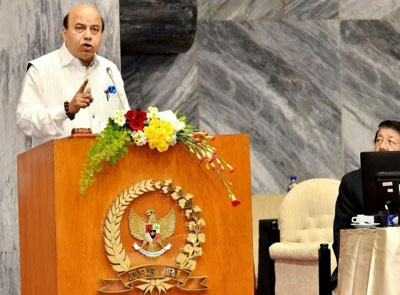 JAKARTA, April 26: The ICAPP Standing Committee has unanimously appointed Indian BJP Leader Vijay Jolly as Chief Advisor ICAPP Youth wing currently led by Malaysian Minister in Prime Minister Office, Dato Seri Shahidan Bin Kassim.
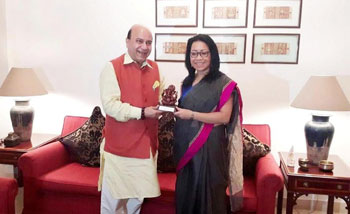 JAKARTA, April 22: Senior BJP leader and President of Delhi Study Group Vijay Jolly was greeted and hosted over a dinner by Indian Ambassador in Indonesia Mrs. Nengcha Lhouvum at India House in Jakarta.
 NEW DELHI, April 25: Taking the worst-of-both-worlds option, India cancelled an e-visa issued to Uyghur leader Dolkun Isa. Not only did it create major embarrassment for India, but strengthened the impression it had given in to Chinese pressure. On late Monday evening, government sources said the entire conference — an inter-faith/inter-ethnic meeting — had been scrapped, and it would now be only a closed door meeting between activists.
 QUITO, April 18: Over 262 peoploe have been killed and 2,500 injured from the powerful earthquake that shook coastal Ecuador on Saturday night, according to Vice President Jorge Glas.
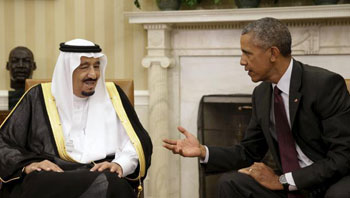 WASHINGTON, April 17: The Saudi Arabian government has threatened to sell of hundreds of billions of dollars’ worth of American assets should the US Congress pass a bill that could hold the kingdom responsible for any role in the September 11, 2001 attacks, the New York Times reported on Friday.
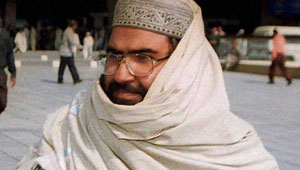 NEW DELHI, April 8: India will formally ask Pakistan to arrest terror outfit Jaish-e-Mohammad’s chief Maulana Masood Azhar and his brother Rauf for the Pathankot airbase attack case after a court issued arrest warrants for them on Friday.
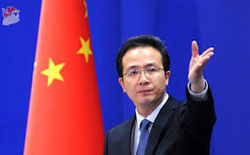 BEIJING, April 8: China on Friday said it was in “close communication” with India over its decision to block New Delhi’s bid to have Pakistan-based terror group JeM chief Masood Azhar designated as terrorist by the UN.
 NEW DELHI, April 8: Soon after Pakistani envoy Abdul Basit declared the dialogue process with India suspended on Thursday, the Union government faced a barrage of criticism from opposition parties for allegedly pandering to the neighbouring state at the cost of India’s pride.
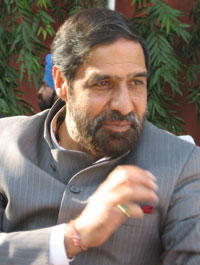 “Pakistan has tried to give an impression even in today’s statement that India – a victim of targeted terrorism – is the one that’s fermenting trouble. Nothing can be termed as a more serious setback,” Sharma said.
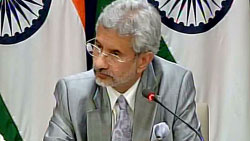 NEW DELHI, April 6: Terrorism remains the focus of India's engagement with Pakistan. Dispelling notions that a broad-based engagement with Pakistan was on the cards any time soon, foreign secretary S Jaishankar on Wednesday said "the change this government has brought in is the centrality of terrorism in the dialogue: whether it was Ufa, or the NSA meeting in Bangkok or the comprehensive bilateral dialogue when it happens."
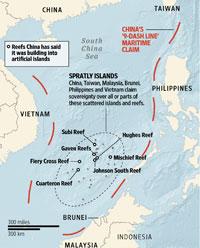 April 6: China has begun operating a lighthouse on one of its artificial islands in the South China Sea near which a US warship sailed last year to challenge China's territorial claims.
Aviation
| Business | Defence | Foreign
Affairs | Communication | Health
| India | United Nations
India-US
| India-France | Entertainment
| Sports | Photo Gallery |
Tourism | Advertise with Us
| Contact Us
© Noyanika International, 2003-2009. All rights reserved.