


Foreign Affairs
|
Pakistan confirms FATF will place it in terror financing ‘grey list’ in JuneISLAMABAD, Feb 28: Pakistan on Wednesday confirmed that the Financial Action Task Force (FATF) is set to include it in a watchlist of nations not doing enough to curb terror financing and said it will come up with an action plan to tackle the problem. Foreign Office spokesman Mohammad Faisal told a weekly news briefing in Islamabad that the financial watchdog had decided to place Pakistan on its “grey list” during a plenary meeting in Paris last week. “Pakistan will be placed on the grey list in June, but there is currently no chance of placement on the black list,” Faisal said, adding an action plan to eradicate terror financing is being prepared and will be shared with the FATF. The FATF has asked Pakistan to take additional steps to curb money laundering and terror financing and the country will cooperate with the watchdog in every possible way. There was considerable confusion in Pakistan after the FATF voted at the plenary to place Pakistan on the grey list and the matter was not mentioned in the official statement issued after the meeting. Officials said this was because certain formalities, such as the framing of an action plan, need to be completed before Pakistan’s inclusion in the watchlist. A move backed by the US, the UK, Germany and France to put Pakistan in the grey list was blocked during preliminary discussions at the FATF meeting by China, Turkey and the Gulf Cooperation Council. After the US and its allies intervened with China and Saudi Arabia, which was voting on behalf of the GCC, and the matter was put to vote again, Pakistan was backed only by Turkey. The development embarrassed Pakistani leaders, including foreign minister Khawaja Asif, who had tweeted that the country had been given a reprieve. Faisal said Pakistan has taken steps to remove deficiencies in its regime to counter money laundering and terror financing. He cited the presidential ordinance that was quietly passed days before the FATF meeting to amend the Anti-Terrorism Act to include all UN-listed individuals and entities in Pakistan’s list of banned groups and persons. Critics say Pakistan has done virtually nothing to control fund-raising and recruitment by the Jamaat-ud-Dawah and Falah-e-Insaniyat Foundation, declared as fronts for the Lashkar-e-Taiba. They also say Pakistan has not cracked down on LeT founder Hafiz Saeed, the alleged mastermind of the 2008 Mumbai terror attacks. Pakistan was included in the FATF’s grey list in 2012 and removed three years later, after it took some steps to counter terror financing. Pakistan will now have to follow come up with an action plan by May. Once the FATF approves the action plan, it will make a formal announcement about placing Pakistan in the grey list in June. If Pakistan fails to submit an action plan, or if the plan is not accepted by the FATF, it faces the possibility of being placed in the black list along with North Korea and Iran. Inclusion in the grey list means all international financial transactions involving Pakistan will face greater scrutiny. Justin Trudeau supports ‘rogue hand’ theory, angers IndiaTORONTO, Feb 28: Prime Minister Justin Trudeau is standing by a senior national security official’s startling accusation that a convicted Khalistani terrorist’s presence in India during his recent visit was an attempt by “rogue” elements in the Indian establishment to embarrass him on the issue of Sikh separatist activity on Canadian soil. As the debacle that was Trudeau’s visit to India captivated the Canadian political class, opposition Conservatives raised the issue in the House of Commons, the lower house of Parliament. They asked whether Trudeau agreed with the “conspiracy theory” advanced by the official, identified by Canadian media as National Security Advisor Daniel Jean. Responding to the Opposition attack, Trudeau said, “When one of our top diplomats and security officials says something to Canadians, it’s because they know it to be true.” Hours after Trudeau’s remarks, the external affairs ministry said any suggestion that the Indian government had anything to do with Atwal’s presence at two official events in Mumbai and New Delhi was “baseless and unacceptable”. Trudeau’s comment also brought a furious retort from Conservative MP and leader of Opposition, Andrew Scheer, who tweeted: “Justin Trudeau just made an incredibly serious charge against the Indian government – which has real implications for Canada’s foreign relations and national security. He needs to provide proof of this immediately.” Jean, during a news conference in New Delhi last Thursday, told the Canadian media it was “not an accident” that Jaspal Atwal was present in India and had been removed from a “blacklist” by the Indian government. Atwal and three men were convicted of attempted murder for a 1986 attack on Akali Dal leader Malkiat Singh Sidhu while he was visiting relatives in Canada. Sidhu, then a minister of state in the Punjab government, was injured in the attack. He was later killed by Sikh militants in Punjab in 1991. Trudeau faced embarrassment when it emerged that Atwal had attended an official event in Mumbai, where he was photographed with the Canadian prime minister’s wife, and was invited to an official dinner reception hosted by Canada’s envoy in New Delhi. The invitation was later rescinded. External affairs ministry spokesperson Raveesh Kumar said India had noted the exchange in the Canadian Parliament regarding the invitations issued to Atwal to two official events. “Let me categorically state that the government of India, including the security agencies, had nothing to do with the presence of Jaspal Atwal at the event hosted by the Canadian high commissioner in Mumbai or the invitation issued to him for the Canadian high commissioner’s reception in New Delhi. Any suggestion to the contrary is baseless and unacceptable,” he said. Canada’s Opposition MPs have been less than satisfied with the responses they received from the government. Conservative MP Candice Bergen asked, “Before our Prime Minister destroys our relationship with our ally, the government and country of India, will he please tell this House what proof he has of that allegation?” Without refuting the allegation against the Indian government, Canada’s public safety minister Ralph Goodale fired back that “the accusations and insinuations coming from the opposition are simply and utterly false”. New Democratic Party MP Charlie Angus was vehement: “They’ve doubled down using a senior civil servant and now the prime minister to spread a conspiracy theory that somehow the Indian government is trying to make the Liberals look bad.” Angus went on, as quoted by the Canadian media, “What is the prime minister thinking, putting the interests of the Liberal machine ahead of national security, international relations and Canada’s reputation?” Liberal Party MP Randeep Sarai has already owned responsibility for asking Atwal to be included in the list of guests for the dinner reception at the Canadian high commissioner’s residence in New Delhi, which was attended by Trudeau. Atwal was also charged but not found guilty of a murderous assault on British Columbia leader Ujjal Dosanjh. In recent years, he has softened his stance towards India and has often opposed Khalistan, leading to his removal from the Indian government’s “blacklist”. He was issued a visa by the Indian consulate in Vancouver. Canada’s NSA Daniel Jean, meanwhile, worked on the pathbreaking “Framework for Cooperation between India and Canada on Countering Terrorism and Violent Extremism” with his Indian counterpart Ajit Doval. The document was released after the bilateral dialogue between the two prime ministers in New Delhi on Friday. Have nothing to do with Khalistan sympathisers: Jaspal AtwalCHANDIGARCH, Feb 28: Surrey, Canada resident Jaspal Singh Atwal, the man in the middle of a who-invited-him controversy during Canadian Prime Minister Justin Trudeau‘s visit to India distanced himself from Khalistan supporters and claimed proximity to Indian and Candian politicians. Atwal was arrested in Canada in 1986 for a murderous attack on a visiting Punjab politician, served time, and was on an India black list till 2016. His invitation to a reception for Trudeau in Delhi raised eyebrows, and spiralled into a very public controversy. Atwal denies any association with Khalistan activists: “I have nothing to do with Khalistan sympathizers. They are a handful of people, who are misleading the youth,” he said over telephone. Atwal, 62, who hails from Pharala of Nawanshahr, grew up in Madhya Pradesh where his father ran a trucking business. He migrated to Canada in 1972. In 1986 he and three others were convicted for an attack on Punjab’s minister Malkiat Singh Sidhu who was visiting Canada. All four were sentenced for 20 years in jail but were paroled after serving just five years and six months. “Not only me, three persons sentenced with me also have been travelling to Indian frequently,” said Atwal, whose name was deleted from the ministry of home affairs’ black list in 2016. He has been coming to India regularly since 1999. Last week, Atwal shot into the limelight after his name was found in the guest list for a reception for Trudeau in NewDelhi. Surrey Liberal MP Randeep Singh Sarai has owned up to recommending his invitation and admitted it was bad judgement. Atwal admits he committed a mistake in 1986. “I repent getting emotional and taking drastic steps after 1984,” he said, referring to the year India quashed the militant Khalistani separatist movement by storming Amritsar’s Golden Temple where the separatists were holed up. People who now Atwal in Canada say he is a ‘reformed terrorist’ turned ‘fixer’, and add that he likes to be photographed with Indian and Canadian politicians. He admits to arranging interviews for them with radio stations in British Columbia. “This is my way of helping people, and I was engaged with the liberals” he said. In Punjab, Atwal supports the Shiromani Akali Dal and even been part of its campaign, but in Canada, he says he has “been helping all politicians – from Aam Aadmi Party (AAP), Congress and Akalis” when they visit. Atwal dabbles in the property business in Canada. India, Canada ink 6 pacts; To fight terror togetherNEW DELHI, Feb 23: Prime Minister Narendra Modi on Friday spoke of the primacy of India’s sovereignty, unity and integrity after a two-hour meeting with Canadian Prime Minister Justin Trudeau in which the countries named Sikh insurgent groups Babbar Khalsa International and Sikh Youth Federation along with Islamic State, al Qaeda and Pakistan-based outfits such as Lashkar-e-Taiba and Jaish-e-Mohammed. India and Canada signed six pacts to step up their ties in various spheres on a day Modi greeted Trudeau with a hug — and subsequently delivered a pointed message at the perceived soft approach of the Canadian government towards the Khalistan issue. With Trudeau at his side, Modi said in a media statement delivered in Hindi: “There should be no place for those who misuse religion for political goals. Challenges to the sovereignty, unity and integrity of our nations cannot be tolerated.” That remark was seen as a statement directed at the Canadian leadership and the Liberal Party government that Trudeau heads, and which has often been accused of pandering to Sikh separatists. The issue has been a major and recurring irritant in bilateral relations of late and has overshadowed Trudeau’s first state visit to India. India and Canada adopted a Framework for Cooperation on Countering Terrorism and Violent Extremism, which national security advisor Ajit Doval and his Canadian counterpart Daniel Jean were tasked to work on. In a first-of- its-kind statement, the two sides said they are “committed to work together to neutralise the threats emanating from terrorist groups such as al Qaida, ISIS, the Haqqani Network, Lashkar e-Toiba, Jaish-e-Mohammed, Babbar Khalsa International, and the International Sikh Youth Federation.” For New Delhi, the clubbing of banned Sikh insurgent groups with global terrorist outfits, including ones based out of Pakistan that target India, is a significant achievement. The two sides decided to further develop exchanges and facilitate “effective cooperation in the fields of security, finance, justice, and law enforcement, including, where appropriate, at the operational level,” as per the framework agreement. The joint statement after the meeting also found enough mention of terrorism and “emphasised that no country should allow its territory to be used for terrorist and violent extremist activities”. A ministry official said that while Khalistan had not been referred in any of the statements issued after the meeting, India’s concern found explicit expression in the naming of these banned groups. The issue of pro-Khalistan activism in Canada, often due to the soft approach of local politicians including some in Trudeau’s government, was a focus of the discussions between the two prime ministers, another Indian official said. “First of all, we agreed on strengthening our security cooperation. Terrorism and separatism are dangers to democratic, pluralistic societies like India and Canada. It is important for us to come together to counter such forces,” Modi said. While six agreements were signed in the presence of the two prime ministers, neither the Comprehensive Economic Partnership Agreement nor the Bilateral Investment and Promotion Agreement were inked. However, Modi said negotiators had been asked for “redouble” their efforts in finalising these pacts that are necessary to give the economic partnership an “institutional framework.” Trudeau stressed the need to expand India-Canada trade and commercial ties. “As Canada looks to diversify its own economy and looks for new opportunities to do business beyond its boundaries, India is a natural partner and a trusted friend for commercial cooperation,” he said. Trudeau met external affairs minister Sushma Swaraj prior to his summit encounter with Modi. Later, all six ministers accompanying Trudeau -- including Indo-Canadian ministers Navdeep Bains, Harjit Sajjan, Amarjeet Sohi and Bardish Chagger -- also met with Modi. Trudeau has invited Modi for a return visit to Canada “at an early date”; an invitation that Modi “accepted”. Canada supports 'one united India': Justin TrudeauNEW DELHI, Feb 20: Canada's Prime Minister Justin Trudeau has pointedly said that his country and he himself "support one united India" - a comment that is possibly a response to criticism that he's soft on Sikh separatists in his country. "My position and Canada's position has not changed. We support one united India," Trudeau said. His comment is extremely significant in the backdrop of reports that he received a lukewarm reception from the Indian dispensation as certain ministers in his Cabinet allegedly have links to the Khalistani movement. In fact, sections of the Canadian populace have lamented the possible deterioration of ties between their country and India, with one columnist even demanding Trudeau publicly denounce Khalistani extremists. In the video released by news agency 'The Canadian Press', Trudeau further says that "we will continue to advocate for one united India and that is something core to what Canada is." "Canada has been unequivocal - myself, all my ministers, my government - on a policy of one united India. We have been very strong on that and will continue to be," the Canadian PM added, in a possible endorsement of the Indian stand on the issue of the Sikh separatist movement. He reiterated that his government has been "diligent" in cracking down on extremism, and "standing up for the kind of peaceful dialogue that is essential in Canada." Yesterday, in a possible thawing of relations, Punjab chief minister Captain Amarinder Singh confirmed that he will meet the Canadian PM on February 21, when the latter visits Amritsar. This is noteworthy as Singh has shared a fraught relationship with some members of the Canadian cabinet, even refusing to meet the country's defence minister Harjit Sajjan, calling him "Khalistani sympathiser". In fact, even earlier this month, the CM had said that while he had no problem meeting Trudeau, there were some ministers in his cabinet he would not meet because they "have negative views regarding Punjab". Trudeau, who arrived in India on Saturday, is on a week-long state visit to the country. Justin Trudeau says India firms to invest $1 billion in Canada, create 5,000 new jobsMUMBAI, Feb 20: Canadian Prime Minister Justin Trudeau on Tuesday said corporate India has committed $1 billion worth of investments in his country, which will create over 5,000 jobs. Trudeau made the announcement after meetings with industry leaders including Tata group chairman N.Chandrasekaran; Birla Group chairman Kumar Mangalam Birla; Mahindra group chief Anand Mahindra; Salil Parikh of Infosys, and Cyrus Mistry of the Pallonjee Mistry group, among others. The Canadian premier also had a 90-minute roundtable with women business leaders including ICICI Bank chief Chanda Kochhar and Swati Piramal of the Piramal Group, among others at the iconic Taj Mahal hotel. “There are tremendous connections between Canada and India, whether it is natural resources or tech sector like IT, creativity, pharmaceutical...there are huge compatibilities and complementarities between our nations. “So much so that coming out of meetings this morning and a few other meetings we have had, we are able to announce today over 5,000 new jobs in Canada and over $1 billion of (Indian) investment in Canada,” Trudeau said at the Canada-India Business Forum in Mumbai. Briefing about his interactions with the Indian business leaders, he said prospects of Canadian investments in India were also discussed, especially the role played by the pension funds of Canada. “We also spoke about Canadian companies investing in India, whether it is pension funds or others,” he said. “It has really been a win-win morning,” Trudeau remarked but did not name the prospective Indian investors. The Canadian prime minister, who is on a week-long India visit, also spoke about the “extraordinary diversity” of this country and said “this pluralism comes with its own challenges but are immensely beneficial”. “There is extraordinary diversity and pluralism in India which is not without its challenges but we have to understand that diversity of views and background gives an incredible amount of strength, a source of resilience in any organisation, community or a country,” he said. “To be able to listen to different points of view, learn from them and draw on them. To feel that ‘yes we are challenged, but not threatened by them’, I think is a sign of maturity in a community,” he added. Trudeau felt that a country like India can and should be leading the way in respecting diversity and highlighting this incredible diversity. “It is not just Canada that is diverse, but other countries around the world as well.” Talking at length about the need for empowering women in all walks of life, he rued that India has only 26% women participation in the world of business, saying this was one of the lowest globally. “Business leaders should take the time to listen to women and empower them, because empowering women leads to good business and helps the community,” Trudeau said. Noting the huge amount of “compatibility and complementarity” between the two nations, the Canadian prime minister urged the leaders of both nations to work together for the common benefits of their people. Already home to 1.25 lakh Indian students on annual basis, he said he wants Canada to become the number one destination for Indian students. Welcoming more Indians to his country, Trudeau said the 1.3 million-strong India-Canadians are a great strength for this nation. Ex-Maldives President Nasheed welcomes India's statement, says Yameen has zero legitimacyNEW DELHI, Feb 20: Welcoming India's strong statement on the Maldives Tuesday, former Maldives President Mohamed Nasheed urged the Abdulla Yameen government to adhere to it even as he accused Yameen of 'ruling down the barrel of a gun.' In its statement, India had asked Yameen to not extend Emergency in the Maldives so as to allow the political process to resume immediately. “The Government (of Maldives) is unable to extend the State of Emergency legally, because they can't get 43 MPs to attend the Majlis. And the Constitution states that 43 MPs must be present during a vote on a matter of public compliance," said Nasheed minutes after the statement issued by the MEA. Maldives' Parliament or People's Majlis comprises 85 Members. “This means that the Emergency, and any extension to it, is illegal. It also means that any actions taken by the Government or security forces using emergency powers are illegal," he added. Nasheed recalled how the Supreme Court Chief Justice Abdulla Saeed and another judge had been illegally detained. "This means anything decided by the remaining SC justices is invalid. President Yameen is ruling down the barrel of a gun. There is zero legitimacy to anything he is doing," said Nasheed. In its statement, India also reiterated that the order issued by the Supreme Court of Maldives on 1 February 2018 be implemented in letter and spirit. Saeed, who passed that order, was later detained by the Yameen government and the Court ruling revoked. Yameen had placed the country under Emergency on February 5 for 15 days citing threat to national security which, the government claimed, had emanated from the Supreme Court ruling. The ruling ordered the release of political prisoners, including Nasheed, and also reinstated 12 MPs, who had been earlier disqualified, allowing the Opposition led by Nasheed's MDP a majority in Parliament. The Emergency ended on February 20 but Yameen has sought to extend it. However, his government has not been able to garner enough support from Parliament to extend the Emergency with the joint Opposition boycotting the Majlis. Maldives parliament extends emergency for 30 daysCOLOMBO/MALE, Feb 20: The Maldives’ parliament on Tuesday extended the state of emergency by another 30 days, approving President Abdulla Yameen’s recommendation. Only 38 MPs were present for the vote, which took place hours before the state of emergency was due to expire, despite 43 lawmakers being needed for the vote to take place as required by the constitution, Maldives Independent news website reported. All 38 were from the ruling party and all 38 approved the extension, it said. The opposition had boycotted the vote. The state of emergency will now end on 22 March. Parliament Speaker Abdulla Maseeh quoted parliamentary regulations which do not include state of emergency declarations among the votes where a constitutionally required quorum is needed. President Yameen declared the emergency on 5 February after the Supreme Court ordered the release of a group of Opposition leaders, who had been convicted in widely criticised trials. Among them was exiled ex-President Mohamed Nasheed. The court said his 2015 trial had been unconstitutional. Under the emergency law, Yameen had two Supreme Court judges arrested, accusing them of corruption. Later, the remaining three judges annulled the order to release Yameen’s opponents. There has been international condemnation of the government’s moves, with the US and India expressing concern. Canadian Prime Minister Justin Trudeau begins week-long India visitNEW DELHI, Feb 17: Canadian Prime Minister Justin Trudeau arrived in India on Saturday for a week-long visit aimed at enhancing business ties between the two countries. Trudeau and Indian Prime Minister Narendra Modi are also expected to focus on areas including civil nuclear cooperation, space, defense, energy and education. Trudeau was received at New Delhi’s Indira Gandhi International Airport by Gajendra Singh Shekhawat, a junior agriculture minister. A formal ceremony will be held on February 23 before his talks with Modi, who visited Canada in April 2015. “Wheels up for India and a busy visit, focused on creating good jobs and strengthening the deep connection between the people of our two countries,” Trudeau tweeted on Friday before leaving for New Delhi with his family. Canada has an estimated 1.4 million people of Indian origin. During his visit, Trudeau will meet with top business leaders in Mumbai and visit key Indian monuments, including the Taj Mahal in Agra, the Golden Temple in Amritsar and the Jama Masjid in New Delhi. At Davos last month, while US President Donald Trump supported new tariffs on imports, Trudeau and Modi came out forcefully against a drift toward protectionism in the global economy. In 2017, two-way merchandise trade between Canada and India amounted to $8.4 billion, split equally between exports to and imports from India, according to Indian media. Canada mainly imports pearls, organic chemicals, pharmaceutical products, textiles, bicycles and motorcycles from India. It exports vegetables, paper, fertilizers, wood pulp, iron and steel and precious stones to India. Maldives Prez Yameen facing biggest threat
The government of the Maldives will resist any attempt by the Supreme Court to impeach president Abdulla Yameen for disobeying its order last week to release jailed opposition leaders, the attorney general said on Sunday. Following are details of the tussle between the court and the president, which is threatening to spark a constitutional crisis and undermine Yameen’s control of the Indian Ocean nation since he took power in 2013. What is behind the tussle between the Supreme Court and president Yameen’s government? The court on Thursday ordered the immediate release of former president Mohamed Nasheed and eight other opposition leaders and ordered they be tried again, saying the previous proceedings had violated the constitution and international law. In its ruling ordering the release of Nasheed, the Supreme Court said it found that prosecutors and judges had been unduly influenced “to conduct politically motivated investigations” into the allegations levelled at Nasheed and others. The nine had been jailed on charges ranging from terrorism to treason and corruption. The court also ordered the reinstatement of 12 lawmakers who had been stripped of their parliamentary seats by Yameen’s party for defecting last year, saying their removal was unconstitutional. The reinstatement of the dozen legislators, who now belong to opposition parties, would cause Yameen’s party to lose its majority in the 85-member parliament. Should the opposition reach a majority, they would be able to unseat the speaker, who is a member of the ruling party, and pass no confidence motions against government officials. What’s behind the rivalry between President Yameen and former President Nasheed? Former President Nasheed won elections in 2008, but was forced to resign in 2012 after ordering the arrest of a top criminal court judge, Abdulla Mohamed, for alleged corruption. Nasheed then lost the 2013 election to Yameen, and was sentenced to a 13-year jail term in 2015 for arresting judge Mohamed. Though Western countries have said Nasheed’s action against the judge was against the law, they also raised concerns over his trial, which they called unfair. Nasheed is currently in Britain on medical grounds but is seeking to contest elections against Yameen due by October, posing a big threat to the current president. Nasheed, a graduate of Britain’s Liverpool University, is well connected in the West and has been able to bring pressure against Yameen’s administration. He even got the help of human rights lawyer Amal Clooney, married to Hollywood actor George Clooney, to expose alleged human rights violation by Yameen’s administration. What are Yameen’s options now? So far, Yameen has ignored the order, although he has stopped short of saying he will not obey it. He fired two police chiefs who said they would uphold the court verdict last week, however, and continues to jail opposition members. On Sunday, police raided the home of Hassan Saeed, the head of the judicial administration department, which the opposition said was considering a corruption investigation into Yameen. The Supreme Court later annulled the arrest warrant against Saeed. Members of the ruling party have also sought to shut down an independent TV station accusing it of spreading “discord,” sparking a call from the US embassy in Columbo, Sri Lanka, for Yameen’s government to respect the freedom of the press. But in terms of the order, Yameen has limited options. His administration can seek to arrest the Chief Justice of the Supreme Court and other judges on corruption allegations, targeting them the same way he has gone after opposition members, according to Western diplomats who are closely following developments. That would allow him to reverse the Supreme Court ruling, but at the risk of exacerbating a constitutional crisis. Close allies of Yameen say his main concern is that former President Nasheed and former Vice President Ahmed Adeeb have said they can prove the current president engaged in past corrupt deals if they are released. Yameen has denied any corruption allegations. But importantly, the army is supporting the president. On Sunday several police and soldiers said in a live broadcast they were ready to sacrifice their lives “in the defence of the lawful government”. The combined opposition says they fear a military takeover of the islands to preserve Yameen’s grip on power. What is the international reaction so far? What about domestically? Yameen has ignored calls from the United States and India, among other nations, to heed the court decision on Nasheed. When the Commonwealth pressed Yameen to uphold the rule of law, his government voted for the Maldives to quit the Commonwealth. He has also disregarded all international calls to solve the political crisis through dialogue. China, which has boosted its investments in the Maldives, has so far been silent. But the country is expected to slow down any deals, given concerns about political stability. Male, the capital of the Maldives, experienced some minor clashes between protesters and the police, but the streets were quiet over the weekend. Yameen has sought in the past to suppress protests, and on Sunday the Maldives National Defence Force (MNDF) said it would stop activities that “openly threaten the security and safety of the Maldives”. India keeping a close watch as Maldives political crisis deepens
New Delhi had asked its neighbour to follow the top court’s order on Thursday to release all political prisoners, including Yameen’s main rival and former president Mohamed Nasheed, who is in exile. “In the spirit of democracy and rule of law, it is imperative for all organs of the government of Maldives to respect and abide by the order of the apex court,” the Indian foreign ministry said. “We are keeping a close watch on the situation,” added an official, who doesn’t want to be named. But as of Sunday, no prisoners had been released while the Indian Ocean archipelago nation’s attorney general Mohamed Anil said the government has information the Supreme Court is preparing to unseat Yameen but law-enforcement authorities will resist such a move. “We have received information that things might happen that will lead to a national security crisis,” he warned. Nasheed, the nation’s first democratically elected president, responded angrily on Twitter, saying that Anil’s comments were “tantamount to a coup”. “Security services must uphold the constitution and serve the Maldivian people,” he tweeted. But the defiant government of the strategically located nation of about 400,000 people prepared for a crackdown and police detained two Opposition lawmakers on Sunday. More than 100 riot police stood guard outside government offices in Male, including parliament, as well as at Republic Square, a site of protests by opposition activists, although the streets were quiet. Soldiers guarded parliament and stopped an attempt by lawmakers of the opposition Maldivian Democratic Party (MDP) to hold a meeting there. The authorities had shut parliament indefinitely on Saturday to prevent MDP members from gathering there. President Yameen is facing the biggest threat since he wrested power in 2013 after the Supreme Court quashed charges against Nasheed and nine more political dissidents this week. The court also ruled that 12 parliamentarians sacked for defecting from Yameen’s Progressive Party of the Maldives should be reinstated. The return of the dozen lawmakers will put the Opposition in a majority in the 85-member parliament and have enough votes to remove the president. Under Maldivian law, a vote for impeachment removes a president from office. Lawmakers loyal to former president Nasheed, whom Yameen had defeated in a controversy-marred election, feared a military takeover of the islands to preserve the president’s grip on power. Yameen has stopped short of saying he will not obey the court order, but his government expressed concerns about releasing those convicted for “terrorism, corruption, embezzlement, and treason”. The president had been set to run for re-election this year virtually unopposed, but Nasheed said he would mount a fresh challenge for the presidency after the top court’s recent order. Nasheed was sentenced to 13 years in prison after he was convicted of the abduction charge under the Maldives’ anti-terror laws in a trial that was widely condemned by international rights groups. The conviction barred him contesting elections in the nation, known for its atolls and luxury resorts. Maldives delay in freeing opposition leaders fuels domestic, international concern
The Indian Ocean nation has been mired in political unrest since Mohamed Nasheed, its first democratically elected leader, was ousted in 2012. He has been in exile on medical grounds from a 13-year jail sentence on terrorism charges. The Supreme Court on Thursday said the trials of Mohamed Nasheed and eight others, many of whom had challenged President Abdulla Yameen, had violated the constitution and international law. It found that prosecutors and judges were unduly influenced “to conduct politically motivated investigations” against them. On Friday, Attorney General Mohamed Anil said he had held discussions with Chief Justice Abdulla Saeed over the administration’s concerns about releasing individuals whose offences ranged from terrorism to corruption and treason. “The prosecutor general is currently in the process of examining the cases to determine the best way to proceed with the implementation of the Supreme Court’s ruling, and the prosecutor general will present recommendations at the earliest,” the government said in a statement. The unexpected ruling frees opposition leaders to run against Yameen in the presidential poll expected to be completed by October. The terrorism convictions would normally bar them from competing unless they received presidential pardons after completing a third of their jail terms. The joint opposition of the Maldives expressed concern over Yameen’s refusal to abide by the order. “We are deeply fearful that the government’s refusal to implement the Supreme Court order could escalate to unrest and incite violence across the country,” it said in a statement. Hundreds of opposition supporters chanted slogans such as “Enforce the Supreme Court ruling,” and “Defend the constitution,” in a Friday night rally outside the opposition MDP campaign centre in Male, the capital. The United Nations, the United States, the European Union and India also urged Yameen’s government to follow the ruling. In a statement, the office of UN Secretary-General Antonio Guterres said, “The Secretary-General reiterates his belief in finding a solution to the political stalemate in the Maldives through all-party talks, which the United Nations continues to stand ready to facilitate.” “We understand the situation is extremely tense,” Rupert Colville, a spokesman for the UN High Commissioner for Human Rights told reporters on Friday. The agency was “closely watching how the situation develops in the aftermath of Thursday’s decisions by the Supreme Court, and in particular, the reactions of the government, military and police,” he added. The European Union urged the government to hold “inclusive dialogue with the leaders of all political parties that should pave the way for credible, transparent and inclusive elections”. Nasheed, who has been in exile in Britain, had sought UN help to restore the political rights of which he was stripped after a trial denounced as hasty and unfair by the United Nations human rights chief. Thursday’s decision also nullified a ruling in which 12 lawmakers lost their parliamentary seats for defecting last July from Yameen’s ruling party, costing him his majority in the 85-member legislature. Indonesian Minister calls for deepening engagements with IndiaBy Deepak Arora
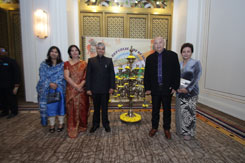
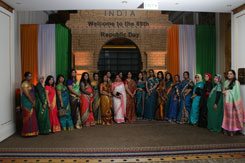
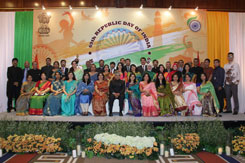
The reception was hosted at the Four Seasons Hotel in Jakarta by Indian Ambassador to Indonesia Pradeep Kumar Rawat. Indonesian Industries Minister Airlangga Hartarto, who was the chief guest on the occasion, addressed the gathering. The high profile gathering of over 300 guests at the reception included I Nyoman Nuarta, Padma Shri Awardee; Sofjan Wanandi, Advisor to Vice President of Indonesia, H.S. Dillon, former Advisor to President of Indonesia on Poverty Alleviation, I Made Andi Arsana and Ibu Shinta, members of India-Indonesia Eminent Persons Group; Suryo Bambang Sulisto, Chairman of Advisory Board of KADIN, captains of the business community, senior officials from various Ministries of the Indonesian government, representatives of think-tanks, academia, media, the Indian community and the diplomatic corps. In his remarks, Minister Airlangga Hartarto said that there was great potential for improving trade and investment between two countries through better market access mechanisms. He welcomed Indian pharmaceutical companies participation in API Sector in Indonesia. Earlier in his welcome address, Ambassador Pradeep Kumar Rawat highlighted that the pace of bilateral relations had picked up since the State visit of Indonesian President Joko Widodo to India in December 2016.
The Ambassador said these were complimented in last one year with four Ministerial level exchanges taking place in January 2018, which culminated in the visit of President Joko Widodo as Guest of Honour for the ASEAN India Commemorative Summit. The Ambassador also felicitated well-known Indonesian artist and sculptor I Nyoman Nuarta who through his art form had made invaluable contribution to promoting the shared cultural heritage of India and Indonesia. It may be noted that Government of India had announced conferment of Padma Shri, one of India’s highest civilian award to I Nyoman Nuarta on the occasion of the 69th Republic Day of India. A photo exhibition chronicling India-Indonesia relation was also put on display at the venue of the Republic Day reception. There was also a cultural performance of Ramayana by dance troupe of Ibu Bulantrisna, a reputed proponent of Balinese dance, who had led the Ramayana troupe to India recently for the AICS. ‘China firm on upholding territorial integrity, values ties with India’BEIJING, Feb 3: China is firm on upholding its sovereign interests and territorial integrity, but at the same time values friendship with India, the county’s foreign minister has said. The Doklam (Donglang) standoff between the border troops of the two countries was handled with restraint by China, Wang Yi said, adding it reflected Beijing’s emphasis on bilateral ties. Wang wrote on China’s foreign policy in the prestigious Chinese International Studies Journal last month, in which he touched upon the status of relations with India. The journal is published by China Institute of International Studies, a think-tank attached to the foreign ministry. “We handled the Indian border troops trespass into China’s Dong Long area in our national interest, on just grounds and with restraint. Through diplomatic means, we engaged with the Indian side and it withdrew its equipment and personnel,” Wang said. “This demonstrates not only the value and emphasis we put on relations with India but also our sincerity and sense of responsibility in maintaining regional peace and stability,” he said. “We believe as we continue to engage in in-depth strategic communication and promptly dispel strategic misgivings, the strategic value of China-India cooperation will speak for itself and there will be a prospect of ‘the Dragon and Elephant dancing together’ and 1+1=11 effect as expected by the leaders,” Wang said. “We are each other’s big neighbours and ancient civilisations,” he said, while adding that Beijing is firm on upholding its sovereign rights and territorial integrity. During his visiting to New Delhi in December, Wang had said the two countries should “boost strategic communication and trust, and should properly handle problems left over by history and some specific issues in bilateral relations, without politicising and complicating them to hamper the development of the Sino-Indian relations.” In a statement released by the Chinese foreign ministry, Wang said: “…in 2017, the relations between China and India have maintained their momentum of development as a whole. Both sides have made efforts in this regard. But they (the efforts) were not very satisfactory”. The MFA statement quoting Wang’s interaction with Indian external affairs minister, Sushsma Swaraj was unusually blunt and it was released after the Chinese foreign minister met her in New Delhi. |

| |||||||||||
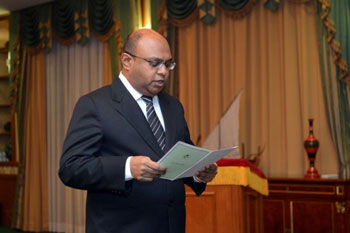 MALE, Feb 5: Maldives president Abdulla Yameen is facing the biggest threat since he wrested power in 2013 after the Supreme Court quashed charges against former president Mohamed Nasheed and nine more political dissidents this week.
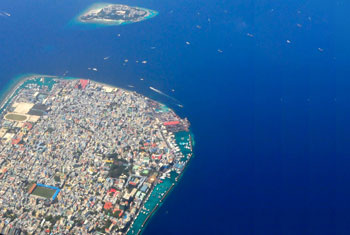 MALE, Feb 5: India is watching closely the turbulence in the Maldives where a political crisis deepened on Sunday as the government ordered soldiers to scuttle any move by the Supreme Court to arrest or impeach President Abdulla Yameen over his refusal to free imprisoned Opposition leaders.
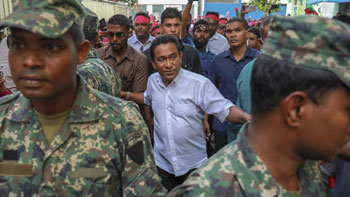 NEW DELHI, Feb 3:As domestic and international pressure mounts, the Maldives has delayed complying with a Supreme Court order for the immediate release and new trials of nine opposition leaders, freeing them to contest presidential elections this year.
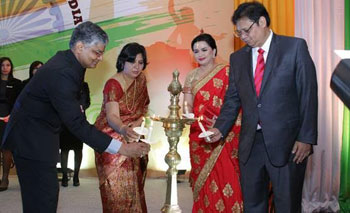 JAKARTA, Feb 1: The 69th Republic Day of India Reception was held here on Wednesday where Indonesian Industries Minister Airlangga Hartarto called for deepening engagements with India.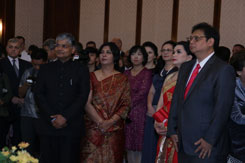
Aviation
| Business | Defence | Foreign
Affairs | Communication | Health
| India | United Nations
India-US
| India-France | Entertainment
| Sports | Photo Gallery |
Tourism | Advertise with Us
| Contact Us
© Noyanika International, 2003-2009. All rights reserved.