


Foreign Affairs
|
Modi, Imran Khan discuss regional peace in post-election callISLAMABAD, July 30: Indian Prime Minister Narendra Modi called Imran Khan on Monday to congratulate him on his party’s victory in the Pakistan general election, with both men discussing regional peace. It was their first call since Khan’s Pakistan Tehreek-e-Insaf (PTI) emerged victorious from last week’s vote that has been marred by claims of pre-election rigging and irregularities on the day. Relations between the nuclear-armed rivals have frayed in the last couple of years, with direct talks stalled amid diplomatic rows and military firing across the Line of Control frontier that divides the disputed region of Kashmir. Khan, widely seen as Pakistan’s prime minister-in-waiting, is now courting independent candidates and minor parties to form a coalition government in a nation that has fought three wars with India. In the phone call, Modi “reiterated his vision of peace and development in the entire neighborhood”, according to a statement by India’s Ministry of External Affairs. Khan declared in his victory speech that he wanted to resolve the long-standing territorial dispute over Kashmir, saying “if India comes and takes one step toward us, we will take two”. Khan’s media team said he had told Modi it was vital both countries focus on pulling millions out of poverty. The PTI said Khan had also told Modi that issues between the two nations must be resolved through talks. “Wars can breed tragedies instead of facilitating resolution of conflicts,” he said, according to a PTI statement. “Prime Minister (Modi) expressed hope that democracy will take deeper roots in Pakistan,” the Indian ministry said in a brief statement. European Union observers say there was an uneven playing field during the election as major obstacles were put in the way of a rival party that was led by jailed former premier Nawaz Sharif. The United States has also expressed concern about what it calls electoral “flaws”. Khan has offered to investigate all claims of irregularities, and promised to build a new Pakistan with an Islamic welfare state that would seek to elevate those mired in poverty. China, India must work towards creating a just world order: Xi to ModiBEIJING, July 28: China and India – being “vindicators” of the contemporary international order – should work towards upholding multilateralism and economic globalisation, official news agency Xinhua has quoted Chinese President Xi Jinping as telling Prime Minister Narendra Modi on the sidelines of the ongoing 10th BRICS summit in Johannesburg. Asserting that the objective of the two countries should be to bring about a more just and rational international order, Xi said China was willing to work with India to carry forward the impetus provided to bilateral ties through his informal summit with Modi in the central Chinese city of Wuhan in April. “The Wuhan meeting is of milestone significance in the history of India-China relations. It has greatly increased mutual trust, and will bring new impetus and opportunities to the long-term development of bilateral relations,” he said. The Chinese president said that the informal summit provided a “top-level design for bilateral ties in a macroscopic perspective and timely fashion that could help mobilise positive elements of all sectors in the two countries and unite the will of 2.6 billion people across the two countries, so as to form a force that would push bilateral ties into the future”. The meeting at Johannesburg was the third to occur between the two leaders in four months. After Wuhan, Modi and Xi had met in the Chinese coastal city of Qingdao during the Shanghai Cooperation Organisation summit. Details of the Modi-Xi meeting were published on the news agency’s website. According to Xinhua, the Chinese leader also called on the two sides to implement the consensus reached by the two leaders at the Wuhan meeting. “China is willing to consolidate and develop a closer development partnership with India,” he said. During their several one-on-one meetings in Wuhan, the two leaders had agreed to ensure peace and tranquility along the disputed boundary in the aftermath of the 73-day military standoff in Doklam (Donglang in Chinese) last year. “He (Xi) called on the two sides to strengthen strategic communication; increase mutual trust; promote practical cooperation as well as people-to-people exchanges; strengthen dialogue; and properly manage differences,” Xinhua quoted him as saying. Xi also echoed Modi in talking about “upholding multilateralism, championing globalisation and striving for a more just and rational international order”. In his address to the BRICS summit (comprising Brazil, Russia, India, China and South Africa), Modi had reaffirmed India’s commitment to multilateralism, international trade and a rules-based world order. “At the session with fellow BRICS leaders, I shared my thoughts on various global issues, the importance of technology, skill development and how effective multilateral cooperation creates a better world,” Modi tweeted. In his summit address, Xi urged fellow leaders of the BRICS emerging economies to “reject protectionism outright”. The 10th BRICS summit was held at Johannesburg’s Sandton Convention Centre from July 25 to 27. US voices concern over Pakistan elections, says steps taken at odds with stated goal of fair pollsWASHINGTON, July 28: Some steps, including the curbs on freedom of expression and association taken by authorities in Pakistan ahead of the general elections, were at odds with their stated goal of a free, fair and transparent polls, the Trump administration has said as it voiced its concern over the July 25 poll process. Cricketer-turned politician Imran Khan led his Pakistan Tehreek-i-Insaf (PTI) party to victory in the parliamentary elections this week, amid a growing consensus among South Asia experts and Pakistan-observers that it was greatly influenced and meddled by the strong Pakistani Army. The development of strong democratic and civilian institutions of governance and a vibrant civil society is critical to Pakistan’s long-term stability and prosperity, US State Department spokesperson Heather Nauert said in the first official US statement since the general elections in Pakistan on Wednesday. “In that context, the United States shares concerns about flaws in the pre-voting electoral process, as expressed by the Human Rights Commission of Pakistan,” she said. “These included constraints placed on freedoms of expression and association during the campaign period that were at odds with Pakistani authorities’ stated goal of a fully fair and transparent election,” Nauert said. Khan was inching closer to form a government in Pakistan with the support of allies and independents even as a multi-party meeting rejected the poll results alleging rigging and demanded “transparent” re-election. So far Khan’s PTI has bagged 115 of the 270 National Assembly seats on which elections were held. The US also joined the European Union in expressing concern over the pre-poll violence and restrictions posed on freedom of expression and association ahead of the general elections that were conducted in Pakistan and noted that it looks forward to working with the new elected government in Islamabad. “The United States concurs with the conclusions of the European Union Election Observation Mission, whose report notes that while there were positive changes to the legal framework for elections in Pakistan, these were overshadowed by restrictions on freedom of expression and unequal campaign opportunities,” she said. “The US also has deep reservations over the participation of terrorist-affiliated individuals in the elections, but we commend Pakistani voters for fully rejecting these candidates at the ballot box on Wednesday,” Nauert said. She said the US, along with its international partners, will continue to encourage a broadening of opportunities for political participation for all Pakistanis and for the further strengthening of legitimate, democratic institutions. “As Pakistan’s elected leaders form a new government, the United States will look for opportunities to work with them to advance our goals of security, stability, and prosperity in South Asia,” Nauert said. Taking note of the election results in Pakistan, Nauert said the US commends the courage of the Pakistani people, including many women, who turned out to vote and showed resolve to determine their country’s future. “We condemn the horrific acts of terrorist violence that marred this process, including the latest attack outside a polling station in Quetta on election day. We offer our deepest condolences to the victims and their families, and wish a speedy recovery to those injured,” she said. Imran Khan’s historic win breaks cycle of dynastic and army rule in PakistanISLAMABAD, July 27: Breaking the dynastic hold on Pakistani politics, former cricket hero Imran Khan won the most seats in an election tarred by widespread allegations of rigging and military interference. Khan’s Pakistan Tehreek-e-Insaf, or Movement for Justice party, clinched at least 109 national seats, according to results released by the Election Commission of Pakistan. He beat the incumbent Pakistan Muslim League-Nawaz headed by his jailed main rival Nawaz Sharif. The PML-N saw its majority erode to at least 62 seats in the 342-seat lower chamber of parliament. The Pakistan Peoples Party came in third with 42 seats, with the other rest split among smaller parties. The election agency has yet to declare 20 seats and Khan will have to form a coalition. The victory for the 65-year-old ex-cricket captain turned anti-corruption crusader ends the decades long rotational grip of the army, Sharif’s PML-N and the PPP headed by Bilawal Bhutto Zardari -- the son of assassinated former premier Benazir Bhutto -- parties Khan accused of entrenched graft, which they both deny. While Khan’s pledge to eradicate corruption appealed to voters, his campaign was characterized by complaints by journalists, politicians and activists of so-called pre-poll rigging by the military, which has dismissed the allegations. Sharif’s party rejected the results and other parties denounced irregularities in the election. In a victory speech, Khan said he would probe the rigging allegations and acknowledged that fixing the economy was the “greatest challenge” and he would implement wide-ranging reforms. He also called for improved trade ties and peace talks with rival neighbor India and said the two countries needed to end the “blame game” over the disputed and split region of Kashmir, which both claim in its entirety. “I assure if India takes one step forward, we will take two steps forward,” Khan said in a televised broadcast. The new government will also compete for influence over foreign policy with Pakistan’s powerful military, which has ruled for much of the nation’s history. Khan has courted right-wing religious leaders and has been highly critical of the American invasion and conduct in Afghanistan. He has long criticized the U.S. for drone strikes in Pakistan, taken a hard line against India and expressed support for China’s $60 billion infrastructure program. Khan, who has led a relentless anti-graft campaign was seen as the military’s top choice for prime minister despite his denials. Sharif has clashed repeatedly with the armed forces over the years and was jailed this month on corruption charges, which he is appealing. The PTI leader campaigned on making Pakistan an “Islamic welfare state,” but the party will first have to deal with a mounting financial crisis: four currency devaluations since December have made it likely the next government will need to seek another International Monetary Fund bailout. Pakistan’s main stock index has risen more than 2 percent since Thursday. Pakistan’s rapidly deteriorating finances will be top of the agenda for the next government. The currency -- the worst performer in Asia -- has plunged 15% since December. The central bank has raised interest rates, the current-account gap has widened by 43% in the last fiscal year and foreign-exchange reserves are dropping. “The economy is facing extreme stress,” Asad Umar, a member of Khan’s party favoured to become finance minister, told Bloomberg News before the result. “There is a need for urgent structural reforms.” With 44 percent of the electorate aged between 18 to 35%, Khan’s anti-corruption mantra and tirades against the two main dynastic parties won support particularly from young voters thirsty for change. “I vote for change -- we have no choice,” said 18-year-old Muzamil Asif, a communications student and PTI supporter who cast his ballot for the first time in Karachi, Pakistan’s financial hub and largest city. The election is only the second time there has been a straight transfer of power between civilians in Pakistan’s 71-year history. No prime minister has ever managed to complete their term, with many ousted in a range of coups and corruption charges. Despite Khan’s win, future civilian-military clashes are inevitable and will limit a new government’s ability to enact reforms, according to senior diplomats in Pakistan who asked not to be identified to discuss sensitive matters. They said the military’s meddling heading into the election has been unprecedented since the end of army rule in 2008. An army spokesman didn’t respond to a phone call or email request for comment. There are also concerns over Khan’s ability to govern at a national level. “They’re inexperienced and then having a large bunch of strong, experienced lawmakers in opposition will complicate things for them,” said Ishtiaq Ahmed, the vice chancellor of Sargodha University. Imran Khan says he wants better ties with India, is not a Bollywood villainISLAMABAD, July 27: Pakistani politician Imran Khan, who declared victory in the recently-concluded elections on Thursday, said Kashmir is the core issue between India and Pakistan, and said solving it will be good for the subcontinent. Khan also said he was portrayed as a Bollywood villain by Indian media and expressed his disapproval, saying he wants better ties with the neighbour. “I was saddened by the way Indian media recently projected me. They portrayed me as a Bollywood villain. I am one of those Pakistanis who wants good relations with India,” he said as results showed his Tehreek-e-Insaf party had a commanding lead amid tedious counting. “If we want to have a poverty free subcontinent then we must have good relations and trade ties. The core issue is Kashmir. We need to resolve this. Blame game should end,” he said. “Kashmiris have been suffering for long. If India’s leadership is willing then the both of us can solve this issue through dialogue. It will be good for the subcontinent also,” the former cricketer said. Khan’s support from the Pakistan Army and his support to Islamist voices have given rise to apprehensions that he would take a harder position on engagement with India than the Pakistan Muslim League’s Nawaz Sharif. Experts in India expect little chance for any turnaround in the frosty between the neighbours as they foresee the army continuing to dictate terms over Islamabad’s policy towards New Delhi. For the Indian government, ties with Pakistan are fraught with risk in an election year. It requires a lot of political capital that an elected government in India is averse to spending in its final days in office. Imran Khan, once a rock-star liberal and world-cup winning captain of Pakistan cricket team of 1992, had undergone major political transformation in the little over two decades history of his political party Pakistan Tehreek-e-Insaf (PTI). This had seen him endearing himself to the army as well echo the right wing Islamist voices on certain issues. US official claims China resumed Doklam activities, India says status quo prevailsWASHINGTON, July 26: A US Congresswoman has claimed that China has “quietly resumed” its activities in the Doklam area and neither Bhutan nor India has sought to dissuade it, an assertion that was denied by New Delhi today. Congresswoman Ann Wagner made the claim during a Congressional hearing of the House Foreign Affairs Sub-Committee for Asia and the Pacific. During the hearing, she posed a question to a State Department official, Alice G Wells, on Beijing’s actions in the Himalayan region and compared them with its manoeuvres in the disputed South China Sea. Tensions between India and China reached their peak during a 73-day standoff in Doklam near Bhutan over Beijing’s construction of a road in the area. The standoff ended after both sides agreed to disengage, and there have been no confirmed or official reports of China resuming any activities since then. “Although both countries backed down, China has quietly resumed its activities in Doklam and neither Bhutan nor India has sought to dissuade it. China’s activities in the Himalayas remind me of its south China Sea policies. How should our failure to respond to the militarisation of the South China Sea inform the international response to these Himalayan border disputes?” Wagner asked. Wager did not elaborate on her claim of China resuming its activities. In her response, Wells, the Principal Deputy Assistant Secretary of State for South and Central Asia, did not directly refer to Doklam, but told Wagner and other lawmakers: “I would assess that India is vigorously defending its northern borders and this (the situation at the northern borders) is a subject of concern to India.” Wells said US looks to the Indo-Pacific strategy put forward by the Trump administration in light of the ‘South China Sea’s Strategy’, a reference to China’s aggressive claims of sovereignty over all of South China Sea. Vietnam, Malaysia, the Philippines, Brunei and Taiwan have counterclaims. “How do we maintain the region to be open, to have maritime security, to not have militarisation that would imperil the 70 per cent of global trade?” Wells said. “We need to do that by giving authority to sovereign nations to have choices in how they develop, to have choices in their partnerships,” Wells said. In New Delhi, Minister of State for External Affairs Ministry V K Singh told Rajya Sabha today that there have been no new developments at the site of the face-off with China in Doklam and its vicinity, and status quo prevails in the area. “Since the disengagement of Indian and Chinese border personnel in the Doklam area on August 28, 2017, there have been no new developments at the faceoff site and its vicinity. The status quo prevails in this area,” Singh said in a written reply to a question on whether China has constructed new roads in the southern part of the Doklam Plateau. In a statement later, Ministry of External Affairs spokesman Raveesh Kumar repeated Singh’s comments. Although the Congressional hearing was to discuss the Trump administration’s budget request for the financial year 2019 for South Asia, the sub-committee chairman, Congressman Ted Yoho, raised the issue of China’s aggressive posture in South Asia. “What are your thoughts on what is the best way to counter China in that region?” Yoho asked. US should not be seeking to compete with China dollar for dollar, Wells responded. She added that instead of a state lending on terms that may not be to the benefit of countries or their citizens, the US and its companies are providing USD 850 billion in foreign direct investment in the region, which is far more than what has been injected by China. “We’re trying to gather like-minded countries who can bring resources to the table, who can coordinate assistance and an effort so as to provide countries with meaningful alternatives,” Wells said. Chandigarh lawyer gives wife Rs 25,000 maintenance in coins, woman cries foulCHANDIGARH, July 25: A woman, in her 30s, broke down and lashed out at her lawyer husband after he handed over her coins worth Rs 24,600 as monthly maintenance in a divorce case. The high drama took place during a trial in the court of additional district and sessions judge Rajnish K Sharma on Tuesday. Unable to control her emotions at what she called “sheer harassment”, the woman told the court how she got the majority of the monthly maintenance of Rs 25,000 in the form of Rs 1 and Rs 2 coins. Only Rs 400 were in Rs100 notes . The matter was adjourned for July 27 so that the money could be counted. The husband is an advocate in the Punjab and Haryana High Court . It was in 2014 that the husband filed for separation and later divorce. Two months back, the court directed him to give a monthly maintenance of Rs 25,000 to the woman. After he failed to do so, the woman moved the high court, which directed the husband to pay Rs 50,000. Finally, he paid a month’s amount to his estranged wife in court, but in coins. Infuriated, the woman said it was her husband’s another way to torture and harass her. “This is a clear mockery of law,” she said outside the courtroom. She refused to accept her husband’s argument that he did not have the money. “He is a practising advocate and has high-profile clients. In addition to this, he has a number of properties to his name,” she said. Meanwhile, the husband justified his move, stating that it’s nowhere written in what denomination the maintenance money has to paid. North Korea begins dismantling nuclear rocket launch site: ReportSEOUL, July 24: North Korea has started dismantling some facilities at its main satellite launch station, seen as the testing ground for its intercontinental ballistic missiles, according to expert analysis of recent satellite images. If confirmed, the analysis by respected US-based website 38 North could signal a step forward after last month’s landmark summit between Kim Jong Un and US President Donald Trump, although some experts questioned the significance of the gesture. After the summit, Trump had declared the North Korean nuclear threat was effectively over, and US media reports suggest he is privately furious at the lack of any subsequent progress on the denuclearisation issue. His public statements, however, remain upbeat and the 38 North analysis came as the president pronounced himself “very happy” with the way talks were progressing with Pyongyang. The website said imagery indicated the North had begun taking down a processing building and a rocket-engine test stand that had been used to test liquid-fuel engines at its Sohae Satellite Launching Station. Sohae, on the northwest coast of North Korea, is ostensibly a facility designed for putting satellites into orbit, but rocket engines are easily repurposed for use in missiles and the international community has labelled Pyongyang’s space programme a fig leaf for weapons tests. 38 North analyst Joseph Bermudez called the move an “important first step” for Kim in fulfilling a promise that Trump said the North Korean leader made during their June summit in Singapore. Since Sohae is “believed to have played an important role in the development of technologies for the North’s intercontinental ballistic missile program, these efforts represent a significant confidence-building measure on the part of North Korea,” Bermudez said. Trump said in Singapore that Kim had committed to destroying a “major” missile engine test site, without specifying the site. Sohae has been the North’s main rocket launch site since 2012, and South Korea — whose president brokered the landmark summit between Trump and Kim — called it a step towards denuclearisation. “It’s a better sign than doing nothing,” Nam Gwan-pyo, deputy director of the presidential national security office, told reporters. “I believe they are moving step by step towards denuclearisation.” But some experts cautioned against reading too much into the work described in the 38 North analysis. Melissa Hanham, senior research associate with the James Martin Center for Nonproliferation Studies in Monterey, said that while dismantling the engine test site was a “good move”, it amounted to “the bare minimum” that could be done at Sohae. “Unless they dismantle the whole site, it will remain North Korea’s premier location for space launches,” Hanham said on Twitter. “North Korea does not need the Sohae engine test stand anymore if it is confident in the engine design. As (Kim Jong Un) said himself, North Korea is moving from testing to mass production,” she said, adding that observers should look for signs of new sites where more missiles could be built. “We ignored North Korea too long, and now it’s about managing how many nuclear weapons and delivery systems they have, not IF they have them,” she said. A US defence official also played down the news, saying the Sohae site was not a priority in terms of monitoring the North’s denuclearisation efforts. “It’s not on the radar, so to speak,” the official said. In a sign of Washington’s impatience with what it sees as North Korean heel-dragging on the denuclearisation issue, Secretary of State Mike Pompeo was in New York last week urging UN member-states to keep tough economic sanctions in place to pressure Kim into moving forward. China and Russia have argued that North Korea should be rewarded with the prospect of eased sanctions for opening up dialogue with the United States and halting missile tests. South Korea has also pushed ahead with its reconciliation with the North since a landmark inter-Korean summit in April. Seoul’s defence ministry said Tuesday it was considering withdrawing some troops from the border Demilitarised Zone on a trial basis — a move which could expand into a gradual pullout later. The 1950-53 Korean War ended with an armistice rather than a peace treaty, leaving the two Koreas technically at war. The DMZ was designated as a buffer zone but the areas to the north and south of it are heavily fortified. At their April summit, Kim and the South’s president Moon Jae-in agreed to cease all hostile acts and turn their border into a “peace zone”. Greek Wildfires Kill At Least 74 People, Devastate Resort VillageATHENS, July 24: Fire officials in Greece say at least 74 people have died from surprisingly fast-moving wildfires that struck near Athens on Monday, with the death toll tripling in what has quickly become a national tragedy. The fires have sent people scrambling to escape and have put intense pressure on fire and rescue agencies. At least six major fires continue to burn in Greece, the national fire service says. The blazes have drawn power from strong winds to devastate homes and forests in towns near the Greek capital. Other areas hit by fire include the island of Crete. Rescue workers warn the death toll likely will rise, as they go through the scorched remains of hundreds of homes and cars destroyed by the flames. In addition to those killed, 164 adults and 23 children were injured, according to the fire service. The danger has not let up: From 6 a.m. to 6 p.m. on Tuesday, fire service officials said, firefighters were called to face 18 forest fires. Greeks trapped by fires in seaside resorts east and west of the capital have tried to flee by car, motorcycle — even by boat. People on the beach waved down fishermen. Others just swam out. The Greek Coast Guard, which evacuated hundreds of survivors from beaches, said it had recovered at least four bodies at sea. Early Tuesday, Greek Red Cross workers made a gruesome discovery — 26 bodies — near the badly burned resort village of Mati, in the Rafina area east of Athens. It's a popular vacation spot for older Greeks and kids attending summer camps. "What a terrible day," Nikos Economopoulos, the Greek Red Cross director, told state TV. Indians no longer require airport transit visa for France: Ambassador Alexandre ZieglerBy Deepak Arora NEW DELHI, July 17: France has announced that Indian passport holders will no longer require an airport transit visa (ATV) while transiting through the international zone of any airport in France. In a tweet, French Ambassador Alexandre Ziegler said “I’m pleased to announce that, with effect from July 23, 2018, holders of Indian passports will no longer require an Airport Transit Visa (ATV) while transiting through the international zone of any airport in France #ChooseFrance.” France forms part of the Schengen Area comprising 26 European states. India committed to speedy return of Rohingyas to Myanmar: Rajnath SinghDHAKA, July 14: India on Saturday told Bangladesh that it was “committed to helping in the safe, speedy and sustainable return” of Rohingya Muslims to their homes in Myanmar while lauding the neighbouring country for addressing the security concerns of New Delhi. Union home minister Rajnath Singh, who is on a three-day visit to the neighbouring country, told Bangladesh Prime Minister Sheikh Hasina that for return of Rohingya Muslims to Myanmar, India is working on a project to construct prefabricated housing in Rakhine State so as to meet the needs of the displaced persons. “India will also continue to provide relief material and supplies to help Government of Bangladesh deal with the needs of those in the relief camps,” a government statement quoted Rajnath Singh as saying while calling on Hasina in Dhaka on Saturday. More than six lakh Rohingya Muslims have taken shelter in Bangladesh following violence in Rakhine State in August last year. Rajnath Singh and Sheikh Hasina noted that “much has been achieved by India and Bangladesh by working together to counter the menace of terrorism and radicalisation”. “They agreed that all countries in the region that are afflicted by this menace should proactively join hands to effectively tackle it. The home minister also thanked the Prime Minister for the cooperation extended by Bangladesh in addressing India’s security concerns,” said the statement. Singh’s praise for Sheikh Hasina comes in the backdrop of upcoming elections in Bangladesh where the ruling Awami League party is always seen as more willing to address Indian security concerns than the opposition Bangladesh Nationalist Party of Begum Khalida Zia. Singh along with his Bangladesh counterpart Asaduzzaman Khan inaugurated a state-of-the-art visa centre in Dhaka. The new centre is equipped with a range of modern facilities. Indian High Commissioner to Bangladesh Harsh Vardhan Shringla told the media that “this is the largest Indian visa centre in the world and possibly the largest anywhere”. Bangladeshis constitute one of the largest numbers of visitors from a single country to India. Singh and Khan also jointly inaugurated the Bangladesh-India Friendship Building at the Bangladesh Police Academy in Sardah of Rajshahi. The newly inaugurated facility incorporates state-of-the-art forensic laboratories, mock crime scenes, mock police station and IT centre with computer labs. Nawaz Sharif, daughter arrested at Lahore airportLAHORE, July 13: Ousted Pakistani premier Nawaz Sharif and his daughter Maryam were arrested on their arrival in Lahore on Friday night to face lengthy prison sentences in a move aimed at galvanising their beleaguered PML-N party ahead of the July 25 general elections. After being detained within an Etihad Airways flight from Abu Dhabi by personnel from the National Accountability Bureau (NAB) and Pakistan Rangers, Sharif and his daughter were put on a special flight to Islamabad in order to be moved to Adiala Jail in Rawalpindi. The 68-year-old three-time premier and 44-year-old Maryam, his political heir, were sentenced in absentia for alleged corrupt practices linked to the acquisition of four apartments in London a week ago. Sharif, who was ousted from the premier’s post by the Supreme Court in July last year for alleged corruption, was in London with Maryam to care for his wife Kulsoom, who is being treated for cancer and is in a coma. The Etihad flight was boarded by the uniformed security personnel shortly after it landed at Lahore airport at 8.48pm and Sharif and his daughter were escorted to the terminal building. Instead of talking a car to the building, Sharif insisted on walking. After clearing immigration, Sharif was formally arrested by a team from NAB. Local media reported that Sharif’s mother was at the airport to receive him and he was allowed to see her briefly. Supporters of Sharif who accompanied him on the flight shouted slogans in his favour but were not allowed to disembark from the plane. The Pakistan Rangers encircled Sharif and his daughter and brought them out of the aircraft amid tight security. Other passengers were allowed to leave the aircraft only after their departure. Sharif and Maryam were convicted by an accountability, or anti-corruption, court in what has come to be known as the Avenfield Apartments case and given jail terms of 10 and seven years respectively. Sharif was found guilty of owning assets beyond his known sources of income and Maryam was convicted of aiding and abetting her father in covering up a “conspiracy”. Tens of thousands of supporters of Sharif, including some in a convoy led by his younger brother, former Punjab chief minister Shehbaz Sharif, were unable to meet the leader as the Pakistan Rangers had taken control of the airport and sealed the building. A number of flights were delayed due to the operation. The PML-N (Pakistan Muslim League-Nawaz) workers joined rallies despite a ban on public gatherings. Apart from placing empty truck containers, the caretaker government of Punjab province blocked several key roads in Lahore and suspended mobile phone services as a security measure. Local TV channels were not allowed to provide live coverage of Sharif’s return. Several journalists said on social media that they were prevented from airing interviews with Sharif or special programmes on his return. Shehbaz Sharif, whose caravan had gathered at Lohari Gate, led the main welcoming rally to the airport. However, his convoy was unable to make it to the airport by the time Sharif’s flight landed. Earlier, when his flight from Abu Dhabi to Lahore was delayed, Sharif wondered how a flight “that is never late” had been delayed and urged people to “think about who delayed this flight and why”. Asked if he believed returning to Pakistan in the current “tense” circumstances is a good idea, Sharif said he knew what the situation in the country is like. “I know I have been handed a 10-year sentence and Maryam has been given seven years in jail, but we are returning because this country’s fate needs to change — we need to change it,” he said in a hastily arranged news conference that was conducted over phone as journalists were barred from meeting him at Abu Dhabi airport. “The media also needs be brave and take a stand in the face of it all,” Sharif said, adding the media’s freedom is being curbed because “they see this nation has risen and the media is rising and they are afraid. Why else would they do all this?” He added, “What is happening in this country today, what is happening in Lahore, raises questions regarding the elections. No other province is facing the situation we see in Lahore – hundreds of our party workers have been arrested, people are being pressured into switching loyalties. All of this raises a question mark on the credibility of the election. “I am not afraid of being arrested. If I was, would I be coming back?...I am ready for it,” Sharif said. The return of Sharif could shake up an election campaign marred by accusations that Pakistan’s military is working behind the scenes to skew the contest in favour of cricketer-turned-politician Imran Khan. Even PML-N’s rival, the Pakistan People’s Party, criticised the crackdown, with its leader Bilawal Bhutto Zardari questioning why Sharif’s supporters were being prevented from gathering. “Why is Lahore under siege? Right to peaceful protest is fundamental for democracy,” he tweeted. Sharif has accused the military of aiding a “judicial witch-hunt” against him and the PML-N. The party’s five years in power has been punctuated by civil-military discord. The military, which has denied interfering in politics, plans to deploy 371,000 troops at polling stations for “free and fair” elections. In a video message tweeted by Maryam, Sharif urged his followers to stand with him when he arrives and “change the fate of the country”. He said: “The country is at a critical juncture right now. I have done what I could. I am aware that I have been sentenced to 10 years and I will be taken to a jail cell straight away — but I want the Pakistani nation to know that I am doing this for you.” Ahead of arrest, photo of Nawaz Sharif with ailing wife Kulsoom evokes sympathy in PakistanLONDON, July 13: A photograph of former Pakistan prime minister Nawaz Sharif and his daughter, Maryam, visiting Begum Kulsoom Nawaz – his ailing wife – in a London hospital has struck a chord with many netizens in the country ahead of their imminent arrest upon arrival in Lahore. Sharif and Maryam are expected to land at Lahore’s Allama Iqbal International Airport around 6.15 pm on Friday. The image, tweeted by a Pakistani journalist, shows Sharif keeping his hand on Kulsoom’s forehead even as Maryam weeps in the backdrop. “This picture will haunt many in the future,” the caption of the photograph, which was later retweeted by Maryam, read. The former premier’s wife, being treated at the Harley Street Clinic, had been in a comatic state for over a month. The photograph evoked sympathy among netizens in the country even as the country’s administration prepared to arrest Sharif and his daughter “as soon as they enter Pakistani territory”. Some even claimed that the image showcased the “ugliest face of the Pakistani establishment in a hundred years”. On July 6, Sharif was sentenced to 10 years’ imprisonment and fined eight million pounds by an Islamabad court over the alleged purchase of high-end properties in London. Maryam, on the other hand, was sentenced to seven years in jail and fined two million pounds by the accountability court. However, the premier remained defiant in the face of his tribulations. “Despite seeing the bars of prison in front of my eyes, I am going to Pakistan,” he said at a conference held by the Pakistan Muslim League-Nawaz party in London before leaving for the airport. “Put Nawaz Sharif in prison for life, send him to the gallows, but you will have to answer the questions that the people of Pakistan are asking.” According to an AFP report, his supporters responded with cries of “Nawaz Sharif, we love you!” However, bad as things may be for Sharif’s family, there still appears to be a silver lining. ANI reported Kulsoom’s son, Hussain Nawaz, as stating that she had finally opened her eyes after over a month. “My mother has opened her eyes after exactly one month. I don’t have anything else to share. Her sedatives were being reduced,” said Hussain, requesting the people to remember her in their prayers. 133 killed in suicide bombing at Pakistan election rallyISLAMABAD, July 13: At least 133 people, including a political leader, were killed and nearly 300 more injured in two separate bombings targeting political rallies in Pakistan on Friday, raising security fears ahead of the general elections on July 25. A suicide bomber detonated in the middle of a gathering of the Balochistan Awami Party in Mastung town, close to the provincial capital of Quetta, killing 128 people, including party leader Siraj Raisani, and wounding some 270 more. The meeting was organised by Raisani, a candidate in elections to the Balochistan assembly and the younger brother of former chief minister Aslam Raisani. He succumbed to his injuries while being shifted to Quetta. Provincial home minister Agha Umar Bangulzai told the media the death toll has “risen to 128”. Officials said 20kg of explosives and ball bearings were used in the attack. The Islamic State claimed responsibility for the attack through its Amaq agency, saying it was carried out by a Pakistani militant. The terror group has carried out several suicide bombings in Balochistan. Siraj Raisani had been chief of the secular Balochistan Muttahida Mahaz (BMM), formed by Ghous Bakhsh Raisani in the 1970s, till June. He recently merged the BMM with the newly formed BAP. The attack in Mastung came hours after five people were killed and 39 more injured when a bomb hidden in a motorcycle went off near a rally by Muttahida Majlis-e-Amal (MMA) candidate Akram Khan Durrani at Bannu in northwestern Khyber-Paktunkhwa province. Durrani survived the attack, police said, and no group claimed responsibility. Durrani, a former chief minister who is contesting against Pakistan Tehreek-e-Insaaf chief Imran Khan, said he would continue his campaign despite threats. In a video message, Durrani said this was second attack targeting him. “We are intimated that there are threats but we remain unaware about the forces that have threatened us. There were media reports that I am unsafe, I would like to ask media if they know about the threats, then please reveal the identity of those behind the threats,” he said. Condemning the attack on Durrani, caretaker interior minister Azam Khan said the interim government will not allow the polls to be sabotaged. “Extremist elements are trying to disrupt the election process. We will not be deterred by militants,” he said. On Tuesday night, a suicide bombing claimed by the Pakistani Taliban targeted a rally by the Awami National Party (ANP) in Peshawar city. ANP leader Haroon Bilour was among the 22 killed. Following the recent attacks, activists called for authorities to remain vigilant to protect candidates during the final days of the campaign. “The Pakistani authorities have a duty to protect the rights of all Pakistanis during this election period – their physical security and their ability to express their political views freely, regardless of which party they belong to,” said Omar Waraich, deputy South Asia director at Amnesty International. The military has warned of security fears in the run-up to the tense election and said it will deploy more than 371,000 soldiers on polling day. Iran says remark on Chabahar port misquoted, tells India it is flexible on oil supplyNEW DELHI, July 11: Iran on Wednesday said it will continue to be a reliable energy partner for India and adopt a flexible approach to ensuring secure oil supplies. At the same time, however, a statement issued by the Iranian embassy underscored the need for India to expedite its investments and to push partner companies to accelerate the execution of projects linked to the development of the strategic Chabahar port. The statement came a a day after Iran’s charge d’affaires Massoud Rezvanian Rahaghi was quoted as telling a seminar in New Delhi that India had not fulfilled its promise of making investments in Chabahar and that New Delhi stands to lose “privileges” if it cuts imports of Iranian oil due to pressure from the United States. The statement clarified that Rahaghi had been misquoted and said: “Iran understands the difficulties of India in dealing with the unstable energy market and it has done and will do its best to ensure security of oil supply to India through offering various flexibility measures which facilitates our bilateral trade in particular Indian export to Iran.” It added: “Iran has always been a reliable energy partner for India and others, seeking a balanced oil market and rational prices of oil which ensures the interests of both…consumer and supplier.” Without referring to the Trump administration’s threat to cut Iranian oil imports to zero by November 4 or face sanctions, the statement said India is a sovereign nation that would choose energy partners on the basis of criteria such as “friendly relations with supplier countries, market factors, geopolitical and geo-economical considerations and potentials and reliability of oil suppliers”. The statement acknowledged that Tehran has been pushing New Delhi to speed up work on Chabahar port and a related transit corridor to Afghanistan comprising rail and road links. “Iran has always welcomed Indian initiatives, however, due to the importance of the issue, Iran has frequently emphasised on expediting Indian investment, and pushing Indian partner companies to accelerate their engagement in execution of the projects,” it said. Referring to earlier reports that Iran could do away with special privileges if India cut its oil imports, former ambassador to Saudi Arabia, Oman and the UAE, Talmiz Ahmad, said this appeared to be “posturing”. “I would rather not take it seriously. This is not a decision which a diplomat can take. These are very high level decisions. I do not believe any country is going to take an aggressive posture,” he said in Hyderabad. Iran is India’s third-largest oil supplier after Iraq and Saudi Arabia. The country supplied 18.4 million tonnes of crude oil between April 2017 and January 2018, but latest figures showed India’s oil imports had declined by 15.9% in June, the first month after the US said it would reimpose sanctions. In June, India imported 592,800 barrels per day (bpd) of oil from Iran, compared to 705,200 bpd in May, the data showed. Rescued Thai boys better, shows first photoChiang Rai (Thailand), July 11: The first pictures and a video of the Thai boys rescued from a flooded cave after 17 days were released on Wednesday, showing them smiling and waving from their hospital beds, looking thin but fine after an ordeal that has gripped the world. The last group of the 12-member “Wild Boars” soccer team and their coach was brought out of the Tham Luang cave, near the border with Myanmar, on Tuesday night, safely ending a dangerous rescue and evoking international relief and joy. Rescue mission chief Narongsak Osottanakorn told a news conference the boys were just being children when they got lost and no one was to blame. “We don’t see the children as at fault or as heroes. They are children being children, it was an accident,” Narongsak said. A video of the boys in hospital was shown at the news conference. Some of them, wearing surgical masks, lay on their beds. Some sat and made the “peace sign” gesture for the camera. None of the boys was heard speaking in the clips shown at the news conference. The 12 boys and their soccer coach lost an average of 2 kg (4.4 lb) during their ordeal but were generally in good condition and showed no signs of stress, a senior health official said earlier. After being brought out of the cave, one by one beginning on Sunday, they were taken by helicopter to hospital in the town of Chiang Rai, about 70 km (45 miles) away, to stay in quarantine. The boys would have to stay in hospital for up to 10 days, hospital director Chaiwetch Thanapaisal told the news conference. They would then need to recuperate at home for 30 days, he said. Parents of the first eight boys freed have been able to visit them but had to wear protective suits and stand 2 metres (7 feet) away as a precaution. Authorities are worried about the possibility of infections picked up in the cave. Thongchai Lertwilairattanapong, a health department inspector, earlier told reporters one from the last group rescued on Tuesday had a lung infection and they were all given vaccinations for rabies and tetanus. Prime Minister Prayuth Chan-ocha asked that the boys be given time to recover. “The important thing is ... personal space,” Prayuth told reporters. “The best way is not to bother them and let them study.” The group ventured into the vast cave complex in the northern province of Chiang Rai after soccer practice on June 23 and were trapped when a rainy season downpour flooded tunnels. They were lost for nine days before British rescue divers discovered them on July 2, sitting on a ledge in a half-flooded chamber. Getting them out - which involved teaching boys as young as 11 who were not strong swimmers to dive through narrow, submerged passages - proved a monumental challenge. A former member of Thailand’s navy SEAL unit died during a mission in the cave on Friday. Narongsak, giving details of the rescue, said falling oxygen levels inside the cave complex had added a sense of urgency. The commander of the navy SEAL unit that oversaw the rescue, Rear Admiral Apakorn Yuukongkaew, hailed the international effort. “We are not heroes. This mission was successful because of cooperation from everyone,” he said. “For SEALs, this is what we were trained for. The navy has a motto: ‘We don’t abandon the people’. Official help came from Britain, the United States, Japan, Laos, Myanmar, China and Australia, a government document showed. There were volunteers from Denmark, Germany, Belgium, Canada, Ukraine and Finland. The rescue has dominated front-page headlines in Thailand and beyond for days. “Hooyah! Mission accomplished,” read one headline, echoing the rallying cry of the SEAL unit. The hashtag #Hooyah was hugely popular on social media with people showing their support for the hundreds of rescuers, including divers from around the world, who helped to get the boys out. The fate of the boys has even resonated as far as Russia, where soccer’s World Cup is reaching its final stages. Players from France and England welcomed news of the rescue and sent their best wishes to the “Wild Boars” on Twitter. “This victory goes to the heroes of the day, well done boys, you are so strong,” French midfielder Paul Pogba tweeted after his team beat Belgium 1-0 on Tuesday to reach the final. Manchester City and England defender Kyle Walker, whose team faces Croatia in the second semi-final later on Wednesday, said he wanted to send shirts to the boys. “Amazing news that all of the Thai kids are out of the cave safely!” Walker tweeted. A Google search on Tuesday for the words “Thai cave rescue” revealed 359 million results. India, South Korea sign 11 pacts; To double trade to $50 billionNEW DELHI, July 10: India and South Korea signed 11 agreements on Tuesday to expand business ties and more than double mutual trade to $50 billion by 2030, a day after the premiers of the two countries launched a Samsung mobile phone factory near Delhi. Major South Korean companies including Samsung and Hyundai Motor Co are household names across India, one of the world's fastest growing markets, and visiting South Korean President Moon Jae-in said he hoped that smaller companies from his country could replicate that success. "Going forward I hope that more Korean companies will invest in India so that the foundation for mutual prosperity can be further expanded," Moon said after meeting Prime Minister Narendra Modi on the third day of his four-day visit. Bilateral trade between the world's seventh and 11th largest economies rose by nearly a quarter to $20.8 billion in the 2017/18 fiscal year that ended in March, with $16.4 billion of that in favour of South Korea. The agreements signed between the countries included accelerating negotiations to upgrade a 'comprehensive economic partnership agreement' signed in 2009, as well as expand cooperation in railways, healthcare, telecommunications and cyber security. They also agreed to explore tripartite partnership for development in third countries, beginning with capacity building programmes in Afghanistan. India already has close ties with Afghanistan and is helping to rebuild the war-ravaged country. Moon and Modi on Monday formally opened a new Samsung factory on the outskirts of Delhi which the company called the world's biggest mobile phone manufacturing plant. The plant's inauguration comes at a time when Modi, who faces an election next year, is trying to create new jobs for millions of Indians who join the workforce every year. In an apparent endorsement of Modi's electoral prospects, Moon said he would eagerly await the Indian leader's visit to South Korea in 2020. Modi, in turn, credited Moon for South Korea's peace breakthrough with North Korea and offered India's support in taking that forward. Samsung goes big in India with 'world's largest mobile factory'NEW DELHI, July 9: Samsung is doubling down on India's soaring demand for smartphones by opening "the world's largest mobile factory." South Korean President Moon Jae-in and Indian Prime Minister Narendra Modi formally opened the company's expanded manufacturing plant in Nodia, about an hour outside New Delhi, on Monday. Built on 32 acres of land next to Samsung's (SSNLF) original factory in India, the plant will allow the South Korean firm to nearly double the number of smartphones it makes in India every year from 68 million to 120 million by 2020. Samsung India CEO HC Hong described the factory as a "symbol of Samsung's strong commitment to India and a shining example of the success of the government's 'Make in India' program," referring to Modi's initiative to encourage global companies to invest in manufacturing operations in the country. Until six months ago, Samsung was the top smartphone seller in India but it was overtaken by Xiaomi — the Chinese rival that just went public in Hong Kong — at the end of 2017. Samsung announced the expansion of its plant a year ago as part of a $715 million investment in India. Xiaomi is also building up its presence in India, where its cheaper devices have appealed to price-conscious consumers. It recently tripled its Indian manufacturing base by adding four smartphone plants in the country. It now has a total of six factories that it says can produce two smartphones every second. Samsung hopes the smartphones it makes in India will be sold locally and in other markets around the world. "We trust that with Korean technology and Indian manufacturing, we will produce the best products of the world," Prime Minister Modi said. "This [plant] is a big step in the direction of making India a hub of world manufacturing." India has more than 300 million smartphone users, making it the world's second-largest market for the devices behind China. And roughly two thirds of the country's 1.3 billion people still don't have access to the internet. Many of them are expected to get online via smartphones as mobile data prices have tumbled following a price war started by India's richest man. Taiwan asks India to stand against 'bully' ChinaRow over Air India changing ‘Taiwan’ to 'Chinese Taipei'By Deepak Arora
TECC Representative Ambassador Chung Kwang Tien calls on Air India to stand up against the unreasonable demand from the government of People’s Republic of China and promptly restore the name of “Taiwan” on its official website. Ambassador Tien stresses the need of consultation with TECC if Air India would choose to change the name of “Taiwan” on its website and hopes the Indian government can provide firm support to its public services and private businesses to defend themselves from a foreign country’s bully actions. The TECC has lodged a formal note concerning against the change to the Ministry of External Affairs, Government of India and is currently waiting for the MEA’s official response. It is afraid that if such politically motivated bully actions are let prevail, people’s freedom in doing business and in their expression of opinion may be undermined; therefore, free and democratic nations should work together to protect their common values and interests, added Ambassador Tien. At a Ministry of External Affairs briefing, spokesperson Raveesh Kumar defended the renaming, saying that it was “consistent with international aviation norms and with New Delhi’s position since 1949,” when New Delhi publicly accepted Beijing’s “One China” policy, which bars the recognition of Taiwan –and Tibet- as separate entities. Air India does not have any direct flights to 'Chinese Taipei', but it has a codeshare with Air China, which is why it is listed on its website. "On April 25, the Civil Aviation Administration of China (CAAC) had formally asked 44 foreign airlines to change how Taiwan is described on their websites." The CAAC said the airlines must comply with their demand before June 24, or face punitive action from the "relevant cyber-security authorities." Taiwanese media slammed India’s decision, describing it as “kowtowing” to Beijing. The only airlines which have not followed China’s diktat are American Airlines, Delta, United Airlines, Asiana Airlines, Korean Air, and Vietnam Airlines. The US had rubbished China’s instructions, with the White House saying it was nothing more than “this is Orwellian nonsense and part of a growing trend by the Chinese Communist Party to impose its political views on American citizens and private companies." American airlines continue to call it Taiwan. ‘Leave for India or convert to Islam’: Afghanistan’s Sikhs weigh future after IS terror attackKABUL, July 2: Many among Afghanistan’s dwindling Sikh minority are considering leaving for neighbouring India, after a suicide bombing in the eastern city of Jalalabad on Sunday killed at least 13 members of the community. The victims of the attack claimed by militant group Islamic State included Avtar Singh Khalsa, the only Sikh candidate in parliamentary elections this October, and Rawail Singh, a prominent community activist. “I am clear that we cannot live here anymore,” said Tejvir Singh, 35, whose uncle was killed in the blast. “Our religious practices will not be tolerated by the Islamic terrorists. We are Afghans. The government recognises us, but terrorists target us because we are not Muslims,” added Singh, the secretary of a national panel of Hindus and Sikhs. The Sikh community now numbers fewer than 300 families in Afghanistan, which has only two gurdwaras, or places of worship, one each in Jalalabad and Kabul, the capital, Singh added. Although almost entirely a Muslim country, Afghanistan was home to as many as 250,000 Sikhs and Hindus before a devastating civil war in the 1990s. Even a decade ago, the US State Department said in a report, about 3,000 Sikhs and Hindus still lived there. Despite official political representation and freedom of worship, many face prejudice and harassment as well as violence from militant Islamist groups, prompting thousands to move to India, their spiritual homeland. Following the Jalalabad attack, some Sikhs have sought shelter at the city’s Indian consulate. “We are left with two choices: to leave for India or to convert to Islam,” said Baldev Singh, who owns a book- and textile shop in Jalalabad. India has issued long-term visas to members of Afghanistan’s Sikh and Hindu communities. “They can all live in India without any limitation,” said Vinay Kumar, India’s ambassador to Afghanistan. “The final call has to be taken by them. We are here to assist them.” Kumar, who was in the Indian capital, New Delhi, to discuss the security situation, said the government was helping organise the last rites of Sikhs killed in the blast. But other Sikhs, with land or businesses and no ties to India, say they do not plan to leave, as Afghanistan remains their country. India has offered to take the dead bodies, but at least nine were cremated according to Sikh rites in Jalalabad. “We are not cowards,” said Sandeep Singh, a Sikh shopkeeper in Kabul. “Afghanistan is our country and we are not leaving anywhere.” The attack targeted “Afghanistan’s multicultural fabric”, Indian Prime Minister Narendra Modi said on Monday. He is expected to hold a meeting to discuss the security threats to Indian and religious minorities. India, a longstanding ally of Afghanistan, has invested in several large development projects, but heightened security risks have prompted its companies to cut back operations. The two countries’ officials have not been able to free seven Indian engineers kidnapped in May in the northern province of Baghlan. |

| |||||||
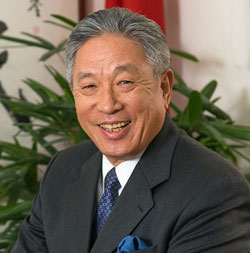 NEW DELHI, July 5: Taipei Economic and Cultural Center in India (TECC) has expressed its deep disappointment with Air India changing “Taiwan” into “Chinese Taipei” on its website and regrets that this move taken by Air India, a state-owned airline, can be seen as a gesture of succumbing to the unreasonable and absurd pressure from China.
Aviation
| Business | Defence | Foreign
Affairs | Communication | Health
| India | United Nations
India-US
| India-France | Entertainment
| Sports | Photo Gallery |
Tourism | Advertise with Us
| Contact Us
© Noyanika International, 2003-2009. All rights reserved.