


Foreign Affairs
|
Bangladesh’s ex-PM Khaleda Zia jailed for 7 years in corruption caseDHAKA, Oct 29: A special court in Bangladesh’s capital has sentenced former Prime Minister Khaleda Zia to seven years in jail involving a charity fund named after her late husband. Judge Md Akhtaruzaman on Monday found her guilty of misuse of power as prime minister in collecting $375,000 for the Zia Charitable Trust Fund from unknown sources in a court in Dhaka. Zia was absent in court as she is currently hospitalized while serving a prison term of five years in a separate case. The judge also sentenced three others to seven years in jail each for collecting the money from undeclared sources. In February, another court sentenced Zia to five years in jail in a separate charity corruption case. Zia’s party says the charges for both cases are politically motivated. India, Japan have special strategic partnership: ModiTOKYO, Oct 28: Prime Minister Narendra Modi on Sunday said the partnership between India and Japan was fundamentally transformed and strengthened as a “special strategic and global partnership” as he and Prime Minister Shinzo Abe held informal talks at a resort near Mount Fuji before visiting a factory of an industrial robot manufacturer on the first day of their two-day summit. Modi, who arrived in Japan on Saturday evening to attend the 13th India-Japan annual summit, later rode an express train to travel to Tokyo with Abe as the leaders spent eight hours together. Abe and Modi will hold a more formal summit in Tokyo on Monday, during which strengthening bilateral security and economic cooperation is expected to be high on the agenda. The two prime ministers are reaffirming their ties amid growing worries about trade and regional stability. Relations with China are a major issue shared by Modi and Abe, as their cooperation may balance China’s growing regional influence and military assertiveness. On Sunday, Modi was accorded a warm welcome that was characterised by special gestures. “There are no negatives but only opportunities in this relationship which are waiting to be seized,” he told Kyodo News service. The Japanese foreign ministry said the leaders had lunch at a hotel in Yamanashi Prefecture, west of Tokyo, and exchanged a wide range of views on pursuing “a free and open” Indo-Pacific region. Abe told Modi about his recent trip to China, and both sides agreed on the need to cooperate closely on getting North Korea to drop nuclear weapons development, the ministry said in a statement. Modi presented Abe two handcrafted stone bowls made from rose quartz and yellow quartz stone sourced from Rajasthan. Handwoven carpets from Mirzapur and a Jodhpuri wooden chest from Rajasthan with traditional work were also presented, an official said. The PM chose Japan among the first nations to visit after taking power four years ago. He has been urging countries in the Indo-Pacific region to unite against protectionism and cross-border tensions. In another sign of closer relations, India and Japan are also set to hold their first joint military exercises involving ground forces, starting next month. Modi was received by Abe on his arrival at the Hotel Mount Fuji in the scenic Yamanashi prefecture. “Delighted to meet PM @AbeShinzo in the picturesque prefecture of Yamanashi,” he tweeted. The two leaders were “holding talks through the day on deepening India-Japan ties,” the Prime Minister Modi’s office said. They took a stroll in the garden following which Abe hosted a luncheon for Modi at the scenic resort by Mount Fuji. After lunch, both prime ministers visited the FANUC industrial facility, which specialises in automation. “Taking our cooperation to modern and advanced technologies. PM @narendramodi and PM @AbeShinzo visited the FANUC Corporation, one of the largest makers of industrial robots in the world in #Yamanashi, and toured the robotics and automation facilities,” ministry of external affairs spokesperson Raveesh Kumar tweeted. Modi was briefed on the various robotic and automation capabilities of FANUC. Both the leaders observed several illustrations of the working of industrial robots. They also witnessed the assembling of a motor by a robot in 40 seconds, officials added. FANUC contributes to the manufacturing industry in Japan and other countries, including India, by promoting automation and efficiency in manufacturing. Later in the evening, Abe hosted Modi at his personal villa near Lake Kawaguchi for a private dinner. It is the first time that Abe has invited a foreign political leader to his holiday home in the village of Narusawa in the prefecture. “I am truly honoured by this gesture. PM Abe also taught me the Japanese way of eating food using chopsticks!” Modi tweeted. In September last year, Modi hosted Abe in his home state of Gujarat. Ahead of his departure from New Delhi, Modi described India and Japan as a “winning combination” and said the island nation was New Delhi’s most trusted partner in its economic and technological modernisation. Modi said it was his 12th meeting with Abe since he first visited Japan as PM in September 2014. Prime Minister Modi has said projects such as Mumbai-Ahmedabad High Speed Rail and Dedicated Freight Corridors reflect the “strength of our economic engagement”. The bullet train between Ahmedabad and Mumbai will run a total length of 508km, of which 21km will be covered in a tunnel under sea. The cost of the total train project is Rs 1.10 trillion, and Japan is giving a loan of Rs 88,000 crores for it at an interest of 0.1%, which has to be repaid over 50 years. Abe said India was driving the region and the world’s prosperity as a global power. The day when Japanese Shinkansen bullet trains start running between Mumbai and Ahmedabad through cooperation will mark a shining symbol of India-Japan friendship in the future, he added. “Japan is India’s partner in railway modernisation, including Mumbai Ahmedabad High Speed Railway,” Abe said. Modi will address members of the Indian community in Tokyo on Monday and will attend a series of events and address a business forum. Pak has highest number of terror bases, safe havens: ReportLONDON, Oct 27: Pakistan, which remains the breeding ground and supporter of global terrorism, is responsible for three times the terror risk to humanity that Syria poses, says a study -- `Humanity at Risk - Global Terror Threat Indicant (GTTI) -- by Oxford University and Strategic Foresight Group (SFG). As per the GTTI, while the Afghan Taliban and the Lashkar-e-Taiyyaba (LeT) pose the maximum threat to international security in future, Pakistan is placed on top of the list of countries with the highest number of terrorist bases and safe havens. “If we look at the most dangerous terrorist groups, based on hard facts and statistics, we find that Pakistan hosts or aids majority of them. Also, there are a significant number of groups based in Afghanistan, which operate with the support of Pakistan,” the report says. The over 80-page report, which has been prepared to discuss the challenges in the next decade, presents an analytical framework and tool to enable policy makers to look into the future. “The rise of competitive extremism of all shades, misuse of weapons of mass destruction and economic disruptions can undermine human progress or even survival in the period from now until 2030. They are all interlinked with terrorism”, the report reveals. Strategic Foresight Group had analysed almost 200 groups actively involved in committing acts of terror in the first half decade of the twenty first century. During that period, the groups motivated by their own interpretation of Jihadi ideology accounted for only a fourth of almost 200 groups around the world. Among these groups, Islamic State of Iraq and the Levant (ISIL)/Daesh has attracted much of media space in the last five years. But with swift rise and fall of ISIL/Daesh, the Al-Qaida remains the most resilient network. Until 2011, it was led by Osama bin Laden but now his son, Hamza bin Osama bin Laden has emerged, as what sections of the media describe, as the “new crown prince of terror”. The most significant factor influencing the future of Jihadi groups would be the support they get from states, intelligence agencies and criminal networks. “The birth of Al-Qaida was in Pakistan and then Pakistan influenced Afghanistan. Osama Bin Laden had a safe haven in a huge compound near the Pakistani military establishment in Abbottabad. The compound was much larger than the surrounding houses of retired Pakistani military officers. The occupants of the compound often bought expensive goods from a neighbourhood shop that most people in the vicinity could not afford. The presence of an important family in the compound was nothing but conspicuous,” the report reveals. The report has also given a comprehensive detail about the global terror outfits operating from Pakistan, Afghanistan, Libya, Syria, Yemen and many other countries who have linkages with each other. In Pakistan, the terror groups are based in FATA, Khyber Pakhtunkhwah, Pakistan Occupied Kashmir, Quetta and Kalat (Balochistan), Punjab and Sindh. Enjoying patronage of the law enforcement agencies, they easily plan and plot major attacks and raise funds for their activities. In a shocking revelation report says: “The Jihadi thought processes have proved to be most resilient for almost 150 years, beginning in what is today Pakistan and parts of Afghanistan. Many extremist movements rose and collapsed. But the Jihadi movement has survived in Pakistan and Afghanistan, now firmly spreading to the Middle East and North and West Africa.” On Friday, Afghanistan’s deputy defence minister, Hilaluddin Helal, said at the Beijing Xiangshan Forum on defence, that more than 50,000 militants from 21 terrorist organisations are currently operating in Afghanistan and out of these 70 per cent are Pakistanis. Sri Lanka crisis deepens as Wickremesinghe resists sackingCOLOMBO, Oct 27: Sri Lanka’s president issued a formal notice Saturday for Ranil Wickremesinghe to step down as prime minister and recognise his shock dismissal, in an unfolding constitutional crisis. Hours after sacking his former ally, President Maithripala Sirisena issued gazettes formalising the dramatic move, and the installation of one-time strongman president Mahinda Rajapakse as the new prime minister. However, Wickremesinghe continued to occupy Temple Trees, the official residence of the prime minister, and insisted in a letter to Sirisena that he was still in office. He has said that he can be removed only by parliament where his party enjoys a majority, and also vowed to seek legal action against what he condemned as an unconstitutional move against him. “I am addressing you as the prime minister of Sri Lanka,” Wickremesinghe told reporters at a nationally televised press conference on Friday night. “I remain as prime minister and I will function as the prime minister.” Since his rushed swearing in, Rajapakse is yet to announce the formation of a cabinet -- which under the constitution is automatically dissolved when a prime minister is removed. Parliamentary Speaker Karu Jayasuriya has said he will decide Saturday whether to recognise Rajapakse or not, after seeking legal advice. Parliament is not due to meet until November 5 when the 2019 national budget is due to be presented. The Supreme Court, which is empowered to resolve constitutional disputes, is shut for the weekend and reopens on Monday. The president’s United People’s Freedom Alliance party had earlier Friday quit the coalition that had governed with Wickremesinghe’s party. Speaking to jubilant supporters outside his Colombo home late Friday, Rajapakse also called on Wickremesinghe to step down. Members of his party must “respect democracy, respect the country and respect the law”, the former president said through a loudhailer from a balcony. Overnight, Rajapakse loyalists stormed two state-owned television networks -- which they regard as loyal to the outgoing government -- and forced them off the air. Video footage from private networks showed police overwhelmed by mobs at the Rupavahini national TV station but elsewhere in the capital streets remained calm. The United States called on all sides in Sri Lanka to operate within the constitution and refrain from violence, and urged the island to move forward on post-war reconciliation. Rajapakse crushed the decades-long Tamil Tiger uprising while in power, but refused to acknowledge abuses committed during the bloody civil war. “We call on all parties to act in accordance with Sri Lanka’s constitution, refrain from violence and follow due process,” the State Department said. “We expect the government of Sri Lanka to uphold its Geneva commitments to human rights, reform, accountability, justice and reconciliation.” After Sirisena’s election in 2015, Sri Lanka shifted from confrontation to conciliation with the US and other Western powers and promised at the UN Human Rights Council in Geneva to investigate allegations of abuses. Saudi crown prince says Jamal Khashoggi incident ‘very painful, not justifiable’ISTANBUL, Oct 24: Saudi Arabia’s crown prince said on Wednesday the case of Jamal Khashoggi was “painful” and that “justice will prevail” following the killing of the Saudi journalist at the Saudi consulate in Istanbul. Appearing on a discussion panel at an international investment conference in Riyadh, Crown Prince Mohammed bin Salman said all culprits would be punished, and that Saudi Arabia and Turkey would work together “to reach results.” “The incident that happened is very painful, for all Saudis... The incident is not justifiable,” he said. “Justice in the end will appear.” Hours earlier US President Donald Trump, in his toughest comments yet, told the Wall Street Journal that the crown prince bore ultimate responsibility for the operation that led to Khashoggi’s killing. Trump said he wanted to believe Prince Mohammed when he said that lower level officials were to blame for the killing at the Saudi mission. But he suggested responsibility lay higher up: “Well, the prince is running things over there more so at this stage. He’s running things and so if anybody were going to be, it would be him.” His comments heaped pressure on his close ally amid a global outcry over the journalist’s death, and came hours before Prince Mohammed’s appearance at a Saudi investment conference where he is due to make his most high profile comments since Khashoggi was killed on October 2. A number of high profile business and political figures have pulled out of the conference over the death of the journalist, a prominent critic of Saudi Arabia’s de facto ruler. Turkish President Tayyip Erdogan spoke to Prince Mohammed on Wednesday and the two discussed the steps needed to bring to light all aspects of the killing of Khashoggi, a presidential source said. An adviser to Turkey’s president said Prince Mohammed had “blood on his hands” over Khashoggi, the bluntest language yet from someone linked to Erdogan. Saudi authorities did not immediately respond to a request for comment about the remarks by Trump and the Erdogan adviser. Riyadh has blamed a “rogue operation” for the death of the prominent Saudi journalist and said the crown prince had no knowledge of the killing. The death of Khashoggi, a US resident and Washington Post columnist, has sparked global outrage and threatened relations between Riyadh and Washington as well as other Western nations. For Saudi Arabia’s allies, the burning question has been whether they believe that Prince Mohammed, who has painted himself as a reformer, has any culpability in the killing, a possibility raised by several US lawmakers. Modi awarded Seoul Peace Prize 2018
Calling Modi the ‘the perfect candidate for the prize, the Award Committee made the choice after assessing over a hundred candidates proposed by over 1300 nominators from around the world,' MEA said. “The Seoul Peace Prize Committee has decided to confer the 2018 Seoul Peace Prize on Prime Minister Shri Narendra Modi, in recognition of his dedication to improving international cooperation, raising global economic growth, accelerating the Human Development of the people of India by fostering economic growth in the world’s fastest growing large economy and furthering the development of democracy through anti-corruption and social integration efforts,” the MEA said. The award also credited Modi’s contribution towards regional and global peace through a proactive foreign policy with countries around the world under the ‘Modi Doctrine’ and the ‘Act East Policy.’ Established in 1990, the Seoul Peace Prize was an effort to crystallise the Korean people’s yearning for peace on the Korean Peninsula and in the rest of the world. It was initially established to commemorate the success of the 24th Olympic Games held in Seoul, Republic of Korea – an event in which 160 nations from across the world took part, creating harmony and friendship and a worldwide atmosphere of peace and reconciliation. Previous winners of the award include former UN Secretary General Kofi Annan, German Chancellor Angela Merkel and renowned international relief organizations like Doctors Without Borders and Oxfam. The prize has been awarded to those who have made their mark through contributions to the harmony of mankind, reconciliation between nations and to world peace. The committee includes over 1,300 nominators, including internationally renowned Korean and foreign figures in political, economic, social, cultural, athletic, academic and other fields. The Prize is given biennially and the nomination begins in November. The nominators should send back the forms after filling in the name of their candidates and their achievements three months before the advised date for the award giving ceremony. The final winner is selected through a vote by members of the committee. The awardee receives a diploma, a plaque and honorarium of US$200,000. The two-page, traditionally patted certificate has the emblem of the Seoul Peace Prize printed on the left side. The text of the certificate appears on the right side, in both Korean and English. The gold-plated, crystal plaque is fashioned after the traditional Taegeuk(two comma-shaped symbols united in a perfect circle) design. 5 Indian Canadians Victorious In Brampton, Mississauga, Oakville Municipal ElectionsBy Deepak Arora
A Big chunk of victory came from Brampton where Harkirat Singh was elected City Councillor; Gurpreet Singh Dhillon was chosen as Regional Councillor and Balbir Sohi was elected as Trustee, Peel District School Board from Wards 9 and 10. In Mississauga municipal election, Dipika Damerla was elected from Ward 7 as Councillor. Pavan Parmar won the post of Town and Regional Councillor for Ward 7 in Oakville. She became the first female of colour on Oakville council. Elections were held in 51 Ontario municipalities on Monday. The online voting at few municipalities was marred by election-day ‘system load issue’.
John Tory was easily re-elected mayor of Toronto, picking up 63 per cent of the vote. Left-leaning challenger Jennifer Keesmaat nabbed 23-per-cent support, while far-right candidate Faith Goldy won 3.4 per cent, or more than 20,000 votes. In his victory speech, Tory vowed to build more affordable housing, promised a “renewed effort” to address gun violence, and repeated his mantra about keeping taxes low.
He entered the race at the last minute, after Ford scrapped regional chair races, including the Peel Region contest where Brown was a candidate. A number of strategists and members of Ford’s caucus endorsed Jeffrey, who accused Brown of running for the mayor’s seat with “the ink barely dried on his lease.” In Mississauga Bonnie Crombie was elected as Mayor. In Ottawa, Jim Watson won a third term as mayor with more than 70 per cent of the vote. Hamilton voters re-elected Fred Eisenberger and his pro-light-rail stand. And London became the first Canadian city to use ranked ballots in a municipal vote. A winner won’t be known until tomorrow as each round of counting is conducted.
For the first time in more than three decades, someone other than Nando Iannicca will represent Ward 7 on Mississauga city council. Dipika Damerla cruised to victory after capturing 4,566 votes (41.3 per cent). Andrew Gassmann, the longtime president of the Cooksville Munden Park Homeowners Association, was second with 1,762 votes (15.9 per cent). “It feels good to be elected again,” the former Mississauga East-Cooksville MPP told her supporters during her victory speech on Monday. Iannicca had represented the ward on city council since being first elected in 1988 at the age of 27. In January, he announced that he wouldn’t be seeking an 11th term and that drew a crowded field of a dozen candidates – more than any other race in the city’s 11 wards – who stepped forward to toss their hats in the ring.
Gurpreet Dhillon and Harkirat Singh won Brampton Wards 9 and 10 seats from Brampton. Dhillon vacated his city council spot to run for the regional seat vacated by mayoral candidate John Sprovieri. Meanwhile, Singh was the Wards 9 and 10’s Peel District School Board trustee and opted to run for the vacant city seat. “It’s time we start focusing on your jobs now, not the councillors jobs,” Dhillon said during his victory party at Chadni Banquet Hall. “We want to focus on building businesses, improving our transit, prioritizing (Ryerson) University and improving community safety for everyone.” Dhillon, who was also the NDP’s candidate for Brampton-Springdale in the 2014 provincial election, received the majority of votes (14,319 — 55.52 per cent) in the riding. Michelle Shaw was runner up with 6,246 votes (24.22 per cent) and former Wards 9 and 10 councillor Vicky Dhillon was third with 5,228 (20.27 per cent). Singh claimed the city council seat with 42.93 per cent of votes (10,801), followed by Michael Farquharson (4,603 votes — 18.29 per cent) and Rohit Sidhu (3,891 votes — 15.47 per cent). Khashoggi’s death planned, savage murder: Turkish Prez
In a speech to parliament, Erdogan did not mention Crown Prince Mohammed bin Salman, who some U.S. lawmakers suspect ordered the killing. But he said Turkey would not complete its investigation into Khashoggi’s death until all questions were answered. He said Khashoggi was killed in a “savage way”. Khashoggi, a Washington Post columnist and critic of the crown prince, the kingdom’s de facto ruler, disappeared three weeks ago after he entered the Saudi consulate in Istanbul to obtain documents for his upcoming marriage. Turkish officials suspect Khashoggi was killed and dismembered inside the consulate by Saudi agents. Turkish sources say authorities have an audio recording purportedly documenting the killing of the 59-year-old. Riyadh initially denied knowledge of his fate before saying he was killed in a fight in the consulate, a reaction greeted sceptically by several Western governments, straining relations with the world’s biggest oil exporter. Following the global outrage prompted by the journalist’s disappearance, U.S. President Donald Trump’s comments have varied from playing down Riyadh’s role to warning of possible economic sanctions. Trump has also repeatedly highlighted the kingdom’s importance as a U.S. ally and said Prince Mohammed was a strong and passionate leader. For Saudi Arabia’s allies, the question will be whether they believe that Prince Mohammed, who has painted himself as a reformer, has any culpability. King Salman, 82, has handed the day-to-day running of Saudi Arabia to the 33-year-old prince. Defence, connectivity key in Modi’s Japan visit
The two governments will make announcements regarding two agreements allowing closer naval cooperation. Modi and Japanese Premier Shinzo Abe, said Japanese ambassador Kenji Hiramatsu, will unveil “a concrete infrastructure project implemented together” in South Asia. He said Abe, who had been impressed at the crowds who had greeted him when he visited Gandhinagar last year, was planning “a very personal arrangement and discussion.” Japan, say Indian officials, has become India’s most important strategic partner in Asia. Few governments align their foreign policies as closely to New Delhi’s as Tokyo. Even fewer have committed as much aid and investment to boost India’s economy. “A strong India is in Japan’s best interest and for that, we must provide even more support,” said Hiramatsu. Trade and investment have dominated relations. “Defence and security now need to catch up,” the ambassador added. An agreement on maritime domain awareness will be signed while talks on another on naval logistics will be initiated. Japan declined to bid for a recent Indian Navy submarine tender because, the ambassador indicated, New Delhi was holding separate talks over Japan’s Soryu-class attack submarine. “This is now being processed internally by India,” he said, and talks were on with a private sector Indian partner. Besides the high-profile trilateral Malabar Exercises, this month India and Japan are holding bilateral maritime exercises and the first-ever joint army exercises in November. Indian officials have in the past expressed unhappiness at Tokyo’s reluctance to provide defence equipment and technology. While Abe has been enthusiastic, his bureaucrats have dragged their heels citing the country’s pacifist constitution. Japan is a world leader in anti-submarine warfare and maritime awareness equipment. Its fifth-generation fighter prototype is undergoing flight tests. India and Japan have made common cause in countering the geopolitical consequences of China’s Belt Road Initiative. Hiramatsu noted the two countries have an agreement to carry out joint connectivity and infrastructure projects in the Indo-Pacific area. He indicated a new project would be announced at the summit in Tokyo. Expectations are that it would help connect India with one of its smaller neighbours. Japan recently identified more roads it would build or upgrade in the Northeast, including connectors to Bhutan, Bangladesh and Myanmar. Future discussions will identify more such projects. Indo-Japanese strategic cooperation has had its share of problems. Plans for India to buy and manufacture a Japanese maritime seaplane have foundered on technology issues. Nothing has come out of a civil nuclear agreement signed two years ago, in part because a key Japanese firm sold off its reactor business. The most ambitious project, a high-speed train between Ahmedabad and Mumbai, is facing land acquisition problems. Hiramatsu said he was confident the train project “will be completed as scheduled.” This will be Modi’s third visit to Japan as the Prime Minister World’s longest sea bridge brings China closer to Hong Kong
The $15 billion, 55-kilometer (34-mile) bridge, which Xinhua says is the world’s longest sea link, will open for traffic at 9 am on Wednesday and is tipped to carry some 29,000 cars and trucks daily between Zhuhai on the mainland and Hong Kong, a former British colony. The waters over which the bridge stands now was formerly patrolled by three navies, and the land borders were decades ago guarded by the People’s Liberation Army to mostly keep defectors from leaving. The project is part of President Xi Jinping’s sweeping plan to knit the so-called Greater Bay Area in southern Guangdong province into a high-tech megalopolis to rival California’s Silicon Valley. It also envisions a better marriage between China’s industrial might and its one-party state and the liberal, capitalist bastions of Hong Kong and Macau, which have their own passports, currencies, trade policies, courts and civil rights. The Greater Bay Area could serve as a new growth engine for the capital markets of Hong Kong, the casinos of Macau, formerly a Portuguese colony, and nearby Shenzhen, the economic powerhouse one of Xi’s predecessors, Deng Xiaoping, built on their doorstep almost four decades ago. The area — with 67 million residents — would boast a trillion-dollar economy and eclipse Japan as the world’s fourth-largest exporter, according to HSBC Holdings Plc. The bridge, inaugurated Tuesday by President Xi Jinping, “would enable Hong Kong and Macau to better leverage the favorable conditions and the unique advantage offered by the mainland” to help engage with the world, Vice Premier Han Zheng said at a function to mark the event in Zhuhai. The sea bridge is the latest to link Hong Kong directly to the mainland. In September, the city plugged into China’s 15,500-mile high-speed rail network with a futuristic new terminus overlooking the Victoria Harbor. A train to Beijing from Hong Kong now would take nine hours and cost less than half the price of flight ticket. About 4,00,000 metric tons of steel was used to build the bridge, or enough to build 55 Eiffel Towers, according to the Hong Kong-Zhuhai-Macao Bridge Authority. Bringing the less developed part of Guangdong closer to Hong Kong, the link will help reduce travel time by road to Zhuhai to about 30 minutes, from three hours. The bridge was built on one of the world’s busiest sea routes, where more than 4,000 vessels and 1,800 flights travel back and forth daily, carrying annually more than 20 million people and 1.2 billion tons of goods. The area is also known for strong typhoons each year and rare marine species including Chinese white dolphins. Several powerful earthquakes jolt Canada’s west coast, no damage reportedPORT HARDY, Oct 22: Several powerful earthquakes have been reported near Vancouver Island, Canada, including a magnitude 6.8 on the Richter Scale. According to the United States Geological Survey (USGS), several powerful quakes were reported Sunday evening. The depth of the largest quake is about 6 miles (10 km) and it struck about 149 miles (239 km) west of Tofino, Canada. The quake occurred at 10:39 pm (local time). Geophysicist Amy Vaughan says the three larger quakes ranged from magnitude 6.5 to 6.8 and that there were possibly some smaller ones as well as some aftershocks. Vaughan says the quakes were lightly felt onshore and that as of now no injuries were reported. The National Tsunami Warning Center tweeted that a tsunami is “Not expected”. As of now, no injuries or casualties have been reported. Khashoggi killing a grave mistake: Saudi Foreign MinisterWASHINGTON, Oct 21: Saudi Arabian officials do not know details of how dissident journalist Jamal Khashoggi was killed in their consulate in Istanbul or where his body is, Saudi foreign minister Adel al-Jubeir said on Sunday. He told Fox News in an interview that Khashoggi was approached by “Saudi security team” when he entered the consulate and their account of what happened after that differed from that of Turkish officials, which prompted the Saudis to investigate. “He was killed in the consulate. We don’t know in terms of details how. We don’t know where the body is,” Jubeir said. “We are determined to uncover every stone. ... We are determined to punish those who are responsible for this murder.” Jubeir was the first senior Saudi official to speak on the record since the Saudis admitted on Saturday that Khashoggi was dead. The Saudis have laid out different versions of the circumstances that led to the death of Khashoggi, a Washington Post columnist and critic of Saudi Crown Prince Mohammed bin Salman, who was not seen after entering the consulate on October 2. The crown prince has denied any involvement. Jubeir called the killing of Khashoggi a terrible mistake and offered condolences to his family. The journalist has relatives still living in Saudi Arabia and three children who hold US citizenship. “This is a terrible mistake. This is a terrible tragedy. Our condolences go out to them. We feel their pain,” Jubeir said in the interview. “Unfortunately, a huge and grave mistake was made and I assure them that those responsible will be held accountable for this.” 4 million vote in Afghanistan despite violenceKABUL, Oct 21: More than 4 million people cast their ballots in Afghanistan's parliamentary election amid spates of violence and logistical issues, Afghanistan's Independent Election Commission announced. The election had to be extended by one day due to security threats by the Taliban and logistical issues that left hundreds of thousands of people unable to vote on Saturday. On Sunday, up to one million Afghans returned to 76 voting centers across 22 of the nation's provinces. The four million voters represent half of the eligible voter base in the country. This election, the first parliamentary polls in eight years, came after three years of delays due to security issues and political infighting over electoral reform measures. This weekend's polls, which marked the introduction of biometric devices at voting centers, is also the first election since the 2014 presidential election, which was plagued by accusations of widespread fraud and dragged on for several months. At least 28 people have been killed in violent incidents across Afghanistan as people voted Saturday, officials said. In the last 48 hours, voters in 32 of the nation's 34 provinces cast ballots. The southern province of Kandahar is likely to go to the polls next week after a Taliban-claimed attack took the life of their powerful police chief, General Abdul Raziq, two days before the election. The eastern province of Ghazni has also seen their polls delayed due to security and logistical issues. No timeframe has been announced for the rescheduling of the ballot in Ghazni. This election also saw an unprecedented number of young people vying for the 250 seats in the lower house of the parliament, known as the Wolesi Jirga. In an address to the nation shortly after the polls closed on Sunday, President Ashraf Ghani thanked the Afghan people for such a large turnout despite security risks that saw reports of dozens of deaths and injuries throughout the nation. "By casting your votes, you sent a clear message to the world that you do not want violence, you demonstrated your determination through democracy. You proved to the Taliban that this nation will not surrender to anyone," he said. The president also made a note to address the female voters of the country, who came out in large numbers. "I thank these women and their families. Their participation is a historic success for Afghanistan's democracy and it is a great beginning for our new generation. I hope that you participate in the presidential elections in such a large scale." Seventeen civilians, 10 police officers and one army officer were killed, Afghan Interior Minister Wais Ahmad Barmak said, adding that at least 192 incidents had also left dozens of people injured. Khashoggi’s fiancee writes him parting message after Saudi confirms killingANKARA, Oct 21: The fiancee of journalist Jamal Khashoggi has published a final message to him, after Saudi authorities admitted he was killed at the country’s consulate in Istanbul, the media reported on Sunday. “They took your bodily presence from my world. But your beautiful laugh will remain in my soul forever. My darling #jkhashoggi,” she wrote on Twitter Saturday evening. Attached to the tweet is a video of Khashoggi giving a TV documentary interview, reports CNN. He is shown being interrupted by a cat which hops on his lap, making him laugh heartily. “You should leave this in the film,” a smiling Khashoggi tells the journalist. Cengiz, who was waiting outside the consulate when Khashoggi entered the building, had not previously accepted that he had died. Khashoggi had gone to the consulate on October 2 to conduct paperwork that would allow for the two of them to be married. In the event that he did not emerge, Khashoggi had told Cengiz to call his friend Turan Kislakci, the head of the Turkish Arab Media Association. “I do not know if Jamal is inside. I want to know where Jamal is. Did they detain him? Did they kidnap him? Is he imprisoned?” Cengiz told CNN outside the consulate, a day after his disappearance. At the time, she asked media outlets not to name her. “What is he eating? What is he drinking? Does he deserve this? He is not a terrorist. He is an analyst and a journalist,” she added. A journalist and former royal court insider, Khashoggi has been a prominent critic of Saudi Crown Prince Mohammed bin Salman, the kingdom’s de facto ruler, since he went into self-exile in June 2017. A day after Saudi Arabia’s public admission of his death, Turkish media released CCTV footage apparently showing Khashoggi and Cengiz hand-in-hand, entering an apartment building where the journalist had just bought a property for the couple. When Turkish officials privately told media outlets four days later that they believed Khashoggi had been killed, Cengiz tweeted that she refused to believe the news until an official statement was made. That official statement came in the early hours of Saturday, when Saudi Arabia admitted that Khashoggi died in the consulate, claiming he was the victim of a “fistfight” after a discussion turned violent. 22 killed in Taiwan after train derails and flips over, 171 injuredYILAN, Oct 21: At least 22 people have died after an express train derailed and flipped over on a popular coastal tourist route in Taiwan on Sunday, the island’s worst rail accident for more than 20 years. Taiwan’s railways administration confirmed 22 people had been killed and said 171 people had been injured, 10 seriously, in the accident in northeastern Yilan county. Authorities have not confirmed if any passengers remain trapped alive inside the train. A reporter at the scene said that more bodies were being brought out of the wrecked carriages. Images from the site showed the Puyuma Express train completely derailed and lying zig-zagged across the track. All of the train’s eight carriages had derailed and five had flipped onto their side near Xinma station, the railways administration said. “There are four carriages that were overturned at 90 degrees and the worst casualties were in those carriages,” Jason Lu, head of the Taiwan Railways Administration told reporters. “The exact cause of the accident is pending investigation,” he added. Chang Yi-long, 62, said that he had “heard a loud bang” as he was working at a construction site nearby. When he arrived at the scene he saw local residents helping train passengers to escape. One passenger told Apple Daily Taiwan that the train had put on its “emergency brake” twice on the journey and that the electricity supply had been patchy. Hong Kong’s broadcaster RTHK reported another passenger saying the train had been preparing to accelerate before overturning and had been shaking intensely, adding that some passengers were asleep at the time of the accident. Taiwan authorities said the accident had happened at 4:50 pm local time (0850 GMT). The railways administration said there had been 366 people on board the service en route to the southern city of Taitung. The defence ministry said it had sent in 120 soldiers to help the rescue. President Tsai Ing-wen described the accident as a “major tragedy” in a Tweet Sunday evening. “My thoughts are with all the victims and their families,” she added. The crash was the worst rail accident in Taiwan since 1991 when 30 passengers were killed and 112 injured after two trains collided in Miaoli. Thirty were also killed in 1981 after a truck collided with a passenger train at a level crossing and sent coaches over a bridge in Hsinchu. The worst crash in recent years was in 2003 when 17 died and 156 were injured after a train on the Alishan mountain railway plunged into a chasm at the side of the track. Taiwan, India natural partners: Ambassador Chung-Kwang TienBy Deepak Arora
Speaking at a reception here to celebrate the 107th National Day (Double Tenth) of the Republic of China (Taiwan), Ambassador Tien said “we share the same values of peace, freedom, democracy, rule of law and market economy.” The Ambassador said the bilateral trade volume between Taiwan and India increased 27 per cent year-on-year to US $ 6.4 billion in 2017. India is Taiwan’s 16th trading partner in 2017 with a relatively balanced trade. In terms of investment, he said a ground breaking ceremony for the Technology Innovation International Park (TIIP) was held in Bangalore on July 11 last. “We expect an ICT industry cluster will soon be in shape when more and more Taiwan’s high-tech industries open branch companies there in responding to Prime Minister Modi’s ‘Make in India’ initiatives.” Taipei Economic and Cultural Center in India (TECC) hosted the reception on Tuesday and it was attended among others by Ronald Sapa Lau, MP of Rajya Sabha; Sunil Kumar Jakhar and Meenakshi Lekhi, MPs of Lok Sabha. They wished Taiwan continued success and prosperity. Ambassador Tien informed that under the leadership of the President Tsai Ing-wen, the first woman president in the Chinese-speaking world who was sworn-in in May 2016, the ROC (Taiwan) has initiated a number of significant reforms while pursuing a new economic model for sustainable developments that accelerated Taiwan’s economic growth to a three-year high in 2017.
He said Taiwan’s exports increased to a 7-year high in 2017, making it the 18th largest exporter and importer worldwide. Taiwan also managed to cut its unemployment rate to 3.66 per cent, a 17-year low, in the first half of 2018. Implementing President Tsai’s New Southbound Policy (NSP) that looks to deepen Taiwan’s relationships with South Asia, Southeast Asia, Australia and New Zealand, he said Taiwan boosted it external trade with these NSP countries by 15.61 per cent to US $ 110.9 billion last year. Ambassador Tien said the New Southbound Policy synergizes with the “Act East Policy’ initiated by Prime Minister Narendra Modi, thus creating many potentials for cooperation between Taiwan and India. The Ambassador said over 5,000 Indian students have taken mandarin language courses at the Taiwan Education centres in India. Currently, 1,500 Indian students are studying in Taiwan, an increase of 15 per cent than last year. To enhance cultural exchanges and better understanding between Taiwan and India, he said a special exhibition of Mahatma Gandhi and the world heritage of India were inaugurated on October 2 in Taichung City and a plan to set up a permanent Gandhi museum in Taiwan is underway. Building on existing achievement, Ambassador Tien said he firmly believed Taiwan and India would further enhance the close partnership in the fields of economic development, people-to-people contacts and cultural, educational and scientific cooperation. Lauding the willingness for further cooperation between India and Taiwan, Ronald Sapa Lau (Member of Parliament) said the two countries have build up cordial and friendly relationship in areas such as economic cooperation, cultural and educational exchanges. Expressing happiness on celebrations of 107th Double Ten Day, Ms Meenakshi Lekhi (MP) said it reminds us of good political relationship India has with Taiwan. “We share same values of democracy, trade, commerce and culture.” She said the relationship between the two countries is very strong as the governments of the two countries invest in democratic values and ethos and happiness of the people. In conclusion, Ms Meenakshi Lekhi said “we all value friendship with Taiwan. This the better moment and the best is yet to come.” Sunil Kumar Jakhar (MP) said “Taiwan has been bulwark of real human values. Taiwan has shown to the world that progress can be achieved without compromising on human dignity, liberty and value of life.” The celebration was started by a group of Fo Guang Shan sramanera’s vigorous lion dance which won thunderous applause from more than 350 guests. A 10-minute video titled “People Centered, Joint Happiness” was screened to introduce Taiwan’s achievements in cultural integration, economy, international cooperation and technological innovations etc. over the past year. Jamal Khashoggi's Fiancée Pens Obituary-Style Op-Ed For Missing Saudi WriterBy Carla Herreria
Unlike a Washington Post op-ed she published earlier this week, which called on President Donald Trump to investigate Khashoggi’s disappearance, Cengiz wrote frankly Saturday of her fiancé’s possible death. Cengiz also didn’t just call for an investigation into Khashoggi’s disappearance, she urged for the responsible party, “irrespective of their political positions,” to be punished. “When we arrived at the consulate, he went right in,” Cengiz, a doctoral student in Instabul, wrote of her and Kashoggi’s visit to the Saudi consulate in Istanbul, Turkey. “Had I known it would be the last time I would see Jamal, I would have rather entered the Saudi consulate myself,” she added. “The rest is history: He never walked out of that building. And with him, I also got lost there.” Khashoggi is a Saudi journalist and Washington Post columnist who was formerly close to Saudi Arabia’s royal family but had grown critical of Saudi policies in recent years. He had been living in a self-imposed exile in Washington D.C. for over a year when he went to the Saudi consulate on October 2 to obtain a document that would allow him to marry Cengiz.
Many experts presume Khashoggi has been murdered. According to the Post, U.S. intelligence documents revealed that Saudi Crown Prince Mohammed bin Salman recently attempted to lure Khashoggi back to Saudi Arabia. Speaking on the condition of anonymity, top Turkish authorities have told U.S. news organizations that they believe Khashoggi was assassinated at the consulate on orders from Saudi Arabia’s royal court. One Turkish official told the New York Times that Khashoggi had been killed by a team of Saudi agents within hours of arriving at the Saudi consulate and an autopsy expert helped dismember his body. The Saudi government has denied they were involved in Khashoggi’s disappearance. In a “60 Minutes” interview, President Donald Trump said the incident was “being investigated” and warned that “there will be severe punishment” if Saudi Arabia was involved with Khashoggi’s death. In her op-ed for the Times, Cengiz mourned Khashoggi while celebrating his life’s work. “If the allegations are true, and Jamal has been murdered by the errand boys of Mohammed bin Salman, he is already a martyr,” Cengiz wrote. “Jamal spoke up against oppression, but he paid for the Saudi people’s demand for freedom with his own life,” she continued. “His voice and his ideas will reverberate, from Turkey to Saudi Arabia, and across the world. Oppression never lasts forever. Tyrants eventually pay for their sins.” US warns Yameen against disrupting democratic process in Maldives
After accepting the results of the September election, in which Ibrahim Mohamed Solih’s Maldivian Democratic Party posted a decisive victory, Yameen mounted a legal challenge to the verdict earlier this week and alleged rigging and unfair practices. “The United States is concerned by troubling events in Maldives that threaten to undermine the will of the Maldivian people, including a Supreme Court complaint filed by president Yameen contesting the election results, and reports of serious threats to member of the election commission,” state department spokesperson Robert Palladino said in a video post on Twitter on Friday. “The United States will consider appropriate measures (which might be in the nature of sanctions) against anyone who undermines democracy, the rule of law or free and fair electoral process in Maldives,” he said. Palladino laid down the rules that the US and the international community will view with concern any attempt to undermine the democratic process, including delaying the inauguration scheduled for November 17. The blunt message came from the US just a day after Alice Wells, the head of the state department’s south and central Asia bureau issued a similar but more conciliatory message in the nature of an appeal from Maldives which she was visiting. “This was a decisive victory (for president-elect Solih) and President Yameen did the right thing when he acknowledged his loss and he said he would be a responsible opposition candidate,” Wells said of the September election results in an interview to a local TV network. There is no doubt who won the election and the United States expects “President Yameen will accept the voice of his citizens”, the diplomat added. Yameen had promised to, but has since gone back on his word. He was widely expected to rig the elections himself in a bid to cling to power despite a massive groundswell of opposition to him and his policies, chiefly engineering a precarious economic dependence on China. The US had then warned of “appropriate measures” against anyone who undermined the free and fair election. Yameen’s actions since the election cast a doubt on whether he will allow a peaceful transfer of power. In her meetings with President-elect Solih and other members of the newly elected government, Wells had assured them of deeper and all-round US engagement with the Maldives, with enhanced economic cooperation and help in fighting corruption, improving governance in the larger context of America’s own evolving strategy for the Indo-Pacific. Canada set to become largest country with legal marijuana salesDelta (British Columbia), Oct 10: Mat Beren and his friends used to drive by the vast greenhouses of southern British Columbia and joke about how much weed they could grow there. Years later, it’s no joke. The tomato and pepper plants that once filled some of those greenhouses have been replaced with a new cash crop: marijuana. Beren and other formerly illicit growers are helping cultivate it. The buyers no longer are unlawful dealers or dubious medical dispensaries; it’s the Canadian government. On October 17, Canada becomes the second and largest country with a legal national marijuana marketplace. Uruguay launched legal sales last year, after several years of planning. It’s a profound social shift promised by Canadian Prime Minister Justin Trudeau and fuelled by a desire to bring the black market into a regulated, taxed system after nearly a century of prohibition. It also stands in contrast to the United States, where the federal government outlaws marijuana while most states allow medical or recreational use for people 21 and older. Canada’s national approach has allowed for unfettered industry banking, inter-province shipments of cannabis, online ordering, postal delivery and billions of dollars in investment; national prohibition in the US has stifled greater industry expansion there. Hannah Hetzer, who tracks international marijuana policy for the New York-based Drug Policy Alliance, called Canada’s move “extremely significant,” given that about 25 countries have already legalized the medical use of marijuana or decriminalised possession of small amounts of the drug. A few, including Mexico, have expressed an interest in regulating recreational use. “It’s going to change the global debate on drug policy,” she said. “There’s no other country immediately considering legalising the non-medical use of cannabis, but I think Canada will provide almost the permission for other countries to move forward.” At least 109 legal pot shops are expected to open across the nation of 37 million people next Wednesday, with many more to come, according to an Associated Press survey of the provinces. For now, they’ll offer dried flower, capsules, tinctures and seeds, with sales of marijuana-infused foods and concentrates expected to begin next year. The provinces are tasked with overseeing marijuana distribution. For some, including British Columbia and Alberta, that means buying cannabis from licensed producers, storing it in warehouses and then shipping it to retail shops and online customers. Others, like Newfoundland, are having growers ship directly to stores or through the mail. Federal taxes will total $1 per gram or 10 percent, whichever is more. The feds will keep one-fourth of that and return the rest to the provinces, which can add their own markups. Consumers also will pay local sales taxes. Some provinces have chosen to operate their own stores, like state-run liquor stores in the US, while others have okayed private outlets. Most are letting residents grow up to four plants at home. Canada’s most populous province, Ontario, won’t have any stores open until next April, after the new conservative government scrapped a plan for state-owned stores in favor of privately run shops. Until then, the only legal option for Ontario residents will be mail delivery — a prospect that didn’t sit well with longtime pot fan Ryan Bose, 48, a Lyft driver. “Potheads are notoriously very impatient. When they want their weed, they want their weed,” he said after buying a half-ounce at an illicit medical marijuana dispensary in Toronto. “Waiting one or two three days for it by mail, I’m not sure how many will want to do that.” British Columbia, home of the “B.C. Bud” long cherished by American pot connoisseurs, has had a prevalent marijuana culture since the 1970s, after US draft-dodgers from the Vietnam War settled on Vancouver Island and in the province’s southeastern mountains. But a change in government last year slowed cannabis distribution plans there, too, and it will have just one store ready next Wednesday: a state-run shop in Kamloops, a few hours’ drive northeast of Vancouver. By contrast, Alberta expects to open 17 next week and 250 within a year. There is no immediate crackdown expected for the dozens of illicit-but-tolerated medical marijuana dispensaries operating in British Columbia, though officials eventually plan to close any without a license. Many are expected to apply for private retail licenses, and some have sued, saying they have a right to remain open. British Columbia’s ministry of public safety is forming a team of 44 inspectors to root out unlawful operations, seize product and issue fines. They’ll have responsibility for a province of 4.7 million people and an area twice as large as California, where the black market still dwarfs the legal market that arrived in January. Chris Clay, a longtime Canadian medical marijuana activist, runs Warmland Centre dispensary in an old shopping mall in Mill Bay, on Vancouver Island. He is closing the store Monday until he gets a license; he feared continuing to operate post-legalization would jeopardize his chances. Some of his eight staff members will likely have to file for unemployment benefits in the meantime. “That will be frustrating, but overall I’m thrilled,” Clay said. “I’ve been waiting decades for this.” The federal government has licensed 120 growers, some of them enormous. Canopy Growth, which recently received an investment of $4 billion from Constellation Brands, whose holdings include Corona beer, Robert Mondavi wines and Black Velvet whiskey, is approved for 5.6 million square feet (520,000 square meters) of production space across Canada. Its two biggest greenhouses are near the U.S. border in British Columbia. Beren, a 23-year cannabis grower, is a Canopy consultant. “We used to joke around all the time when we’d go to Vancouver and drive by the big greenhouses on the highway,” he said. “Like, ‘Oh man, someday. It’d be so awesome if we could grow cannabis in one of these greenhouses.’ We drive by now and we’re like, ‘Oh, we’re here.’“ Next to Canopy’s greenhouse in Delta is another huge facility, Pure Sunfarms, a joint venture between a longtime tomato grower, Village Farms International, and a licensed medical marijuana producer, Emerald Health Therapeutics. Workers pulled out the remaining tomato plants last winter and got to work renovating the greenhouse as a marijuana farm, installing equipment that includes lights and accordion-shaped charcoal vents to control the plant’s odor. By 2020, the venture expects to move more than 165,000 pounds (75,000 kg) of bud per year. Some longtime illegal growers who operate on a much smaller scale worry they won’t get licensed or will get steamrolled by much larger producers. Provinces can issue “micro-producer” licenses, but in British Columbia, where small-time pot growers helped sustain rural economies as the mining and forestry industries cratered, the application period hasn’t opened yet. Sarah Campbell of the Craft Cannabis Association of BC said many small operators envision a day when they can host visitors who can tour their operations and sample the product, as wineries do. Officials say they intend to accommodate craft growers but first need to ensure there is enough cannabis to meet demand when legalization arrives. Hiccups are inevitable, they say, and tweaks will be needed. “Leaving it to each province to decide what’s best for their communities and their citizens is something that’s good,” said Gene Makowsky, the Saskatchewan minister who oversees the province’s Liquor and Gaming Authority. “We’ll be able to see if each law is successful or where we can do better in certain areas.” British Columbia safety minister Mike Farnworth said he learned two primary lessons by visiting Oregon and Washington, US states with recreational marijuana. One was not to look at the industry as an immediate cash cow, as it will take time to displace the black market. The other was to start with relatively strict regulations and then loosen them as needed, because it’s much harder to tighten them after the fact. Legalisation will be a process more than a date, Farnworth said. “Oct. 17th is actually not going to look much different than it does today,” he said. Indo-Canadian MP moves bill to mark October as Hindu Heritage Month
“I am honoured to have introduced this bill in recognition of the important role played by Hindu Canadians in our country’s economic growth and social development,” said Indo-Canadian MP Deepak Obhrai. “Hindu Canadians are a vital link in Canada’s fabled multicultural mosaic. They are part of the success story that has made Canada one of the best countries in the world...It will be an opportunity to remember, celebrate and educate,” said the MP from Calgary Forest Lawn in the province of Alberta. The text of the Bill notes that its passage into an Act will recognise the "important role played by Hindu Canadians from coast to coast while providing an opportunity for all Canadians to reflect on, celebrate and educate others about the role that Hindu Canadians play in communities across the country." October is already designated Hindu Heritage Month in the province of Ontario and by the Toronto District School Board. A similar Bill to designate April as Sikh Heritage Month, moved by Sukh Dhaliwal, an MP from the province of British Columbia, is currently before the House. India inks $5.43 billion deal for S-400 missiles from Russia
The deal has been signed despite the looming threat of US financial sanctions. S-400 can track and destroy hostile strategic bombers, jets, missiles and drones at a range of 380 km. The deal has been an issue of much speculation after US President Donald Trump's administration's law — Countering America's Adversaries Through Sanctions Act (CAATSA) — came into effect in January. Another deal for space cooperation has been signed between Russia and India. An Indian monitoring station will be built near the Russian city of Novosibirsk in Siberia. As Modi received Putin at the Hyderabad House in New Delhi, the two leaders warmly shook hands and hugged each other obliging cameramen. Around 20 agreements are expected to be signed between the two sides. Putin, who arrived in New Delhi late Thursday, was also set to discuss with Indian Prime Minister Narendra Modi further agreements worth some $3 billion for Russian naval ships and military helicopters. Russia building its second nuclear power plant in India is on the table too, as is the training of Indian astronauts in Russia for New Delhi's first crewed space mission in 2022. India, walking a tightrope between Russia and the United States while keeping a wary eye on China, is expected to seek sanctions waivers but President Donald Trump's administration has signalled this is unlikely. However, Washington is in a difficult position when it comes to New Delhi, seeking to bolster ties with India to counter China's growing assertiveness while maintaining pressure on Russia. Washington and New Delhi announced plans last month for joint military drills in 2019, and agreed on the exchange of sensitive military information. The US is now India's second biggest arms supplier. India, Russia to sign S-400 air defence systems deal during Vladimir Putin’s visit: Kremlin aide
“The president is leaving for India on October 4,” Putin’s top foreign policy aide Yury Ushakov told reporters. “The key feature of this visit will be the signing of the agreement to deliver S-400 air defence systems,” he said. “The value of the contract will be more than $5 billion.” Moscow has been negotiating to sell the S-400 long-range surface-to-air missiles to India for months. The sale has irked India’s defence partner Washington, which has wanted to wean India off Russian technology, and a senior Pentagon official said in August that sanctions against India would come under consideration if its purchase goes through. India has signalled it will ask Washington for a special waiver from sanctions, though a US official last week said there is no guarantee it would do so. Indonesia quake, tsunami death toll climbs to 1,347PALU, Oct 3: The death toll from an earthquake and tsunami on the island of Sulawesi in Indonesia has climbed to 1,347, according to the country's disaster management agency, as rescue teams scramble to search for survivors buried in the rubble from the deadly disaster. Authorities and aid workers struggled to reach the affected areas made inaccessible by damaged infrastructure on Tuesday, four days after the disaster hit Palu, a small city about 1,500km northeast of the capital, Jakarta, and other parts of Sulawesi Island. Some remote areas have been largely cut off after Friday's magnitude 7.5 quake triggered massive tsunami waves, destroying roads and bridges; their losses have yet to be determined. "The team is racing against time because it's already D+four," Sutopo Purwo Nugroho, spokesperson for the National Disaster Mitigation Agency, told reporters in Jakarta on Tuesday, referring to four days since the quake. More than 65,000 homes have been damaged and at least 60,000 people have been displaced and are in need of emergency help, according to the government. "Experts here say that just by looking at the devastation, one must expect the number of those dead to rise in the coming days because many areas remain unreachable and the full extent of the devastation has yet to be realised," said Al Jazeera's Jamela Alindogan, reporting from Makassar, a port city in eastern Sulawesi. Earlier, President Joko Widodo called for reinforcements in the search for survivors, saying everyone had to be found. About 1,700 homes in one Palu neighbourhood were swallowed up, with hundreds of people believed buried, the national disaster agency said. Among those killed in the area were 34 children at a Christian bible study camp, a Red Cross official said. There was also mounting concern over Donggala, a region of 300,000 people north of Palu and closer to the epicentre, and two other districts - with a combined population of about 1.4 million. Initial reports from Red Cross rescuers who had reached the outskirts of Donggala district were chilling. "The situation in the affected areas is nightmarish," Jan Gelfand, head of the International Federation of Red Cross and Red Crescent Societies (IFRC) office in Jakarta, said in a statement. "The city of Palu has been devastated and first reports out of Donggala indicate that it has also been hit extremely hard by the double disaster," Gelfand said. India, Uzbekistan sign 17 agreementsNEW DELHI, Oct 1: India and Uzbekistan set an annual bilateral trade target of $1 billion to be achieved within two years and agreed to boost connectivity as the two sides signed 17 agreements across a range of sectors following delegation-level talks led by Prime Minister Narendra Modi and Uzbekistan President Shavkat Mirziyoyev in New Delhi on Monday. The two sides also agreed to further strengthen their Strategic Partnership which will be a boost to India’s increasing engagements with Central Asia. “We have agreed to strengthen trade and investment ties and have set a bilateral trade target of $1 billion by 2020,” Modi said in a joint address to the media with Mirziyoyev following the the talks. “We have also decided to start negotiations for a preferential trade agreement,” he said. India-Uzbekistan bilateral trade stands at around $350 million now and the new target represents a six-fold increase over this. Modi also said that India has decided to extend a line of credit (LoC) of $200 million to Uzbekistan for housing and other social infrastructure projects. “Apart from this, we will welcome Uzbekistan’s proposals under $800 million line of credit and buyer’s credit from Exim Bank,” he said. “We have proposed to help Uzbekistan in the areas of space, human resource development and information technology.” Modi said that in Monday’s talks, they discussed ways to boost connectivity. In this connection, he stressed on the importance of Chabahar port in Iran that is jointly being developed by India, Iran and Afghanistan. He also expressed gratitude to Uzbekistan for its support in India becoming a member of the Ashgabat Agreement, which seeks to establish an international transport and transit corridor between Iran, Oman, Turkmenistan and Uzbekistan, earlier this year. “We are happy that Uzbekistan has agreed to be a part of the International North South Transport Corridor (INSTC),” he said. The INSTC is a 7,200-km-long multi-modal network of ship, rail and road routes for moving freight between India, Iran, Afghanistan, Armenia, Azerbaijan, Russia, Central Asia and Europe. Modi said that during the talks, both sides shared their vision and plans to further strengthen the Strategic Partnership that they share. The India-Uzbekistan relationship was elevated to that of a Strategic Partnership during the visit of then Uzbek President Islam Karimov to India in 2011. “Meaningful discussions were also held on regional issues of importance that are linked to our security, peace, prosperity and cooperation,” Modi said. He said that both sides also agreed to deepen cooperation in the Shanghai Cooperation Organisatin (SCO) and other international forums. India was made a member of the SCO, a Eurasian inter-governmental organisation, last year. In terms of defence cooperation, the Prime Minister said that India and Uzbekistan discussed joint military exercises and military education and training among other areas. Stating that both India and Uzbekistan seek a secure and prosperous external environment, he said that a stable, democratic, inclusive and prosperous Afghanistan will be beneficial for the whole region. “We also discussed issues of e-visa, tourism, academic exchanges and air connectivity,” Modi said. On his part, Mirziyoyev said that the India-Uzbekistan Strategic Partnership is very important for Tashkent’s foreign policy. He said that Uzbekistan supports India’s bid for permanent membership in the UN Security Council. “We discussed the fight against terrorism, extremism, and narcotics trafficking,” the Uzbek President said. “We are very concerned about the conflict in Afghanistan and feel that the only solution is a dialogue between the Afghan government and the opposition.” Following the talks, 17 agreements were signed between the two sides, including in the areas of tourism, military training, law and justice, agriculture, science and innovation, health, and pharmaceuticals. Earlier in the day, Mirziyoyev was accorded a ceremonial welcome at the Rashtrapati Bhavan here. External Affairs Minister Sushma Swaraj also called on the visiting dignitary and discussed cooperation in trade and investment, development cooperation, education, renewable energy, connectivity and tourism. The Uzbek President arrived here on Sunday on his first official visit to India since assuming office in 2016. Pak chopper intrudes into Indian airspace, reports say PoK PM was aboardJAMMU, Oct 1: A Pakistani helicopter crossed 700 metres into Indian air space along the Line of Control in Jammu and Kashmir’s Poonch sector on Sunday afternoon. According to reports from Pakistan, Pakistan-occupied Kashmir’s prime minister Raja Farooq Haider Khan was travelling in this chopper. Raja Farooq Haider Khan said that his civilian helicopter was fired upon by India. “The Indian army fired to show that Pakistan had violated their airspace,” Khan’s office said in a statement, but added “when the firing took place, we were within our own airspace”. Khan claimed his helicopter was not armed in any way, and called for calm heads. “We do not want any war hysteria in this region,” he said. Defence spokesman Lt Col Devender Anand said a white-coloured Pakistani helicopter had violated Indian airspace around noon on Sunday. It entered around 700m inside the Indian territory and flew over Krishna Ghati sector before returning, he said. Air sentries at forward locations had engaged it with small arms, a move intended to warn the pilot about the intrusion and force the chopper to turn back. The chopper wasn’t hit. Defence sources said the chopper flew over Gulpur area across the Line of Control in Jammu and Kashmir’s Krishna Ghati sector at 12:13 pm before returning to Pakistani airspace. The incident comes at a time when relations between the two neighbours are at a low. Indonesian quake, tsunami toll crosses 832PALE, Oct 1: Two natural disasters — a 7.5-magnitude earthquake and a tsunami that unleashed a six meter wave — have turned parts of Palu, Indonesia and the surrounding strip of coastline into a graveyard. As of Sunday evening, disaster mitigation officials said that at least 832 people had been confirmed killed. The toll, which has more than doubled from Sunday morning, is expected to climb, with heavily populated areas outside the city still cut off from any assistance. With the prospect that thousands may have been killed, questions have begun mounting as to why residents were not adequately warned, given the area’s long and deadly history of facing killer waves. Pak minister shares stage with LeT founder Hafiz Saeed ‘on PM’s instructions’ISLAMABAD, Oct 1: Pakistan’s religious affairs minister Noor-ul-Haq Qadri, a member of Prime Minister Imran Khan’s Pakistan Tehreek-e-Insaf party, shared the stage with Lashkar-e-Taiba founder Hafiz Saeed at an event in Islamabad that focused on the Kashmir issue. Several pro-Jamaat-ud-Dawah Twitter handles quoted Qadri as saying that he attended the all-party conference organised by the Difa-e-Pakistan Council (DPC) on Sunday on the instructions of the prime minister as its agenda represented the “sentiments of the whole Pakistani nation”. Qadri’s presence at the event came just a day after Pakistan’s foreign minister Shah Mahmood Qureshi said at the UN General Assembly that the country “will continue to strengthen our counter-terrorism frameworks and regimes”. Qadri was seen in photos and video footage seated close to Saeed. Saeed, accused by India of masterminding the 2008 Mumbai terror attacks, carries a $10 million bounty on his head. The DPC is an alliance of some 40 religious and extremist groups. Qadri told the gathering that Pakistan is an atomic power and will respond to any “mischief” by India in a befitting manner. “Our military is ready, don’t be under the impression that there won’t be any response to a surgical strike,” he was quoted as saying. “I joined this conference on the instructions of Prime Minister Imran Khan,” he was quoted as saying. Reports said Qadri also signed a declaration adopted at the meeting to “declare India a terrorist state”. Though Pakistan wants to resolve all political and territorial issues through dialogue, the Indian response was “stubborn”, he alleged. “They are reluctant to come across the table for negotiations,” he added. Qadri said the government had highlighted Indian alleged involvement in terror activities in Pakistan at the UN General Assembly. India has dismissed foreign minister Qureshi’s allegations in this regard. The meet was organised by the DPC to discuss alleged “Indian threats”, the situation in Kashmir and other issues. In his address at the meet, Saeed alleged the BJP wants to fight next year’s general elections by “uniting the Hindu votes and oppressing Muslims” and on the “basis of enmity towards Pakistan”. External affairs minister Sushma Swaraj had mounted a frontal attack on Pakistan at the UN General Assembly on Saturday, calling it “an expert in trying to mask malevolence with verbal duplicity,” accusing it of funding and glorifying terrorists and warning of a “conflagration” if terrorism is not rooted out. |

| |||||||||
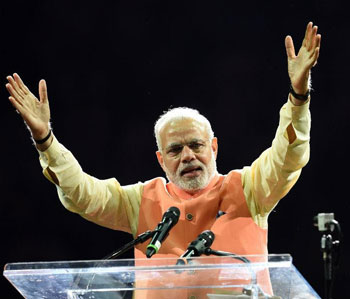 NEW DELHI, Oct 24: Prime Minister Narendra Modi on Wednesday was conferred with the Seoul Peace Prize 2018 for his contribution to high economic growth in India and world through Modinomics. Modi, who is the fourteenth recipient and the only Indian to bag the award will receive a diploma, a plaque and honorarium cash prize at a mutually convenient time, the Ministry of External Affairs said in a statement.
 TORONTO, Oct 23: In the just concluded Ontario municipal elections, four Indian Canadians won the elections in the Greater Toronto Area (GTA) that consists of Toronto, Bramption and Mississauga and one from Oakville.
  Toronto’s election was thrown into chaos in July when Ontario Premier Doug Ford cut the number of wards from 47 to 25, making it inevitable that some long-time councillors would be knocked out as incumbents were forced to go head-to-head.
 In Brampton, Patrick Brown won his bid to become mayor just 10 months after resigning as leader of the Ontario Progressive Conservatives following sexual-misconduct allegations. Brown received about 44 per cent of the vote, beating incumbent Linda Jeffrey by a few points.
  Milton Mayor Gord Krantz won his twenty-first term. Gord Krantz was first elected Mayor of Milton in 1980, when the city was less than one-quarter the size it is now. He was re-elected to his 21st term with more than 80 per cent of the vote.
 Damerla had served as a Liberal MPP since first being elected in 2011 and was also Minister of Seniors Affairs in Kathleen Wynne’s government. Her time out of politics was brief as she finds herself moving to the municipal level just months after losing her seat in the provincial election.
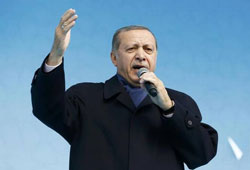 ANKARA, Oct 23: Turkish President Tayyip Erdogan said on Tuesday there were strong signs Jamal Khashoggi’s killing was planned and attempts to blame it on intelligence operatives - Riyadh has suggested it was a rogue operation -- “will not satisfy us”.
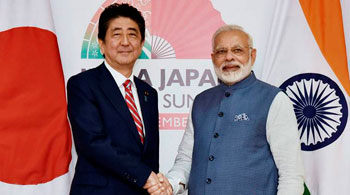 NEW DELHI, Oct 23: Defence and connectivity, with an eye to China, will top the agenda when Prime Minister Narendra Modi makes his two-day state visit to Japan from October 28.
 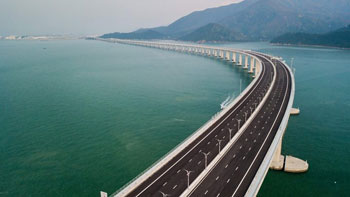 BEIJING, Oct 23: Another step in China’s project to bring Hong Kong into its bosom is complete and is set to connect the former European outposts of Hong Kong and Macau with the mainland.
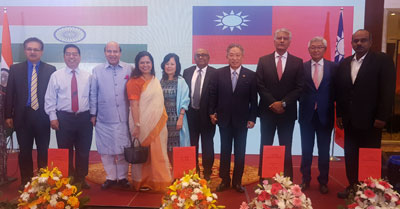 NEW DELHI, Oct 10: Republic of China (ROC) Ambassador Chung-Kwang Tien has said that Taiwan and India are natural partners.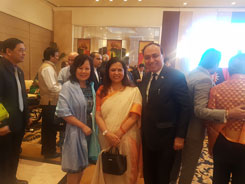
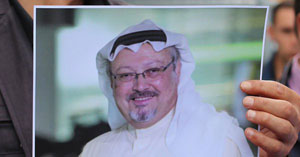 NEW YORK, Oct 14: Hatice Cengiz, the fiancée to the Saudi journalist who has been missing for nearly two weeks, has written an obituary-style op-ed on Jamal Khashoggi, which was published Saturday by the New York Times.
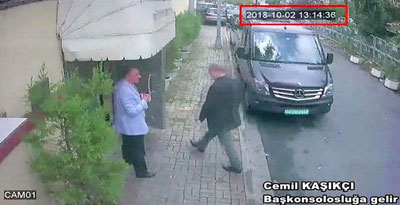 “Since then, I have been thinking that Jamal and I are no longer in the same world,” Cengiz wrote for the Times. “I keep asking the same questions to myself: Where is he? Is he alive? If he is alive, how is he?”
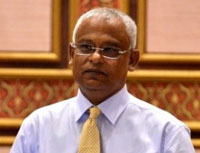 WASHINGTON, Oct 13: The United States has warned of “appropriate measures” against anyone who tries to undermine the peaceful transfer of power in the Maldives and directly pointed to “troubling actions” by outgoing president Abdulla Yameen, who has challenged the election result in a dramatic turnaround.
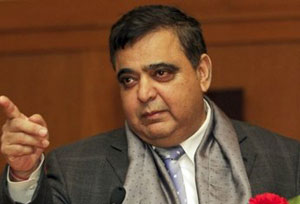 TORONTO, Oct 6: A bill has been introduced in Canada’s House of Commons to designate October as Hindu Heritage Month in the country.
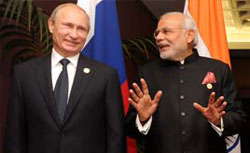 NEW DELHI, Oct 5: India inks $5.43 billion (Rs 40,000 crore) deal for five advanced S-400 Triumf surface-to-air missile squadrons with Russia
Aviation
| Business | Defence | Foreign
Affairs | Communication | Health
| India | United Nations
India-US
| India-France | Entertainment
| Sports | Photo Gallery |
Tourism | Advertise with Us
| Contact Us
© Noyanika International, 2003-2009. All rights reserved.