Centre launches campaign to screen slum dwellers for diabetes, hypertension
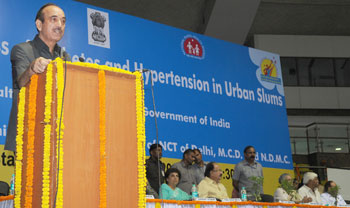 NEW DELHI, July 19: A mass screening programme to identify persons afflicted with “silent killers” – diabetes and hypertension – in Delhi's slums was launched by Union Health and Family Welfare Minister Ghulam Nabi Azad in the presence of Chief Minister Sheila Dikshit and Delhi Health Minister A. K. Walia at Talkatora Stadium here on Tuesday. NEW DELHI, July 19: A mass screening programme to identify persons afflicted with “silent killers” – diabetes and hypertension – in Delhi's slums was launched by Union Health and Family Welfare Minister Ghulam Nabi Azad in the presence of Chief Minister Sheila Dikshit and Delhi Health Minister A. K. Walia at Talkatora Stadium here on Tuesday.
Mr. Azad said the mass screening would cover the Capital's slum clusters to identify persons afflicted with diabetes and hypertension as these two disorders result in a number of complications.
Noting that retinopathy, cataract, nephropathy, neuropathy, heart diseases, paralysis, gangrene, ulcers and fungal infections can be caused by diabetes and hypertension, the Health Minister urged slum dwellers to get examined in these camps, which would be organised close to their residence.
“The screening will be conducted for all persons above the age of 30 years and all pregnant women irrespective of their age. Early detection will go a long way in curbing diabetes and hypertension,” he said.
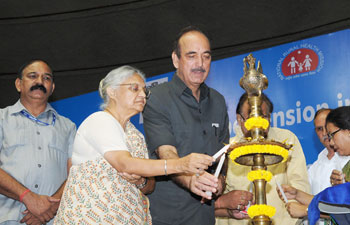 During the launch, 20 testing units were also deployed at Talkatora Stadium to conduct screening and provide on-the-spot reports to the slum dwellers who had come in for the event. During the launch, 20 testing units were also deployed at Talkatora Stadium to conduct screening and provide on-the-spot reports to the slum dwellers who had come in for the event.
On the need for the project, Mr. Azad said non-communicable diseases have become the cause for about 50 per cent of all deaths in the country.There are 5.1 crore diabetic patients in India, second after China.More than 30 lakh people die due to diabetes every year in the world and in India the number would touch 2.36 lakh in 2015.
The Central Government has decided to screen around 5 crore people before September 2011 when the United Nations General Assembly will hold a special session to discuss measures to control these diseases, the Minister said. This pilot project, costing Rs.1,230 crore, would seek to control cancer, diabetes, heart diseases and strokes in 100 districts of 21 States and urban slums in 33 cities.
While a nationwide project will be launched in 2012 to root out such diseases, Mr. Azad said under the pilot project, a cardiac care unit at cost of Rs.1.5 crore will be established in 100 district hospitals. Besides, 700 other places would be provided facilities for diagnosis and management of cardiovascular diseases, diabetes and strokes.
Ms. Dikshit said the Delhi Government is already organising special diabetes clinics in all its 31 hospitals on Mondays and Wednesdays. She said all persons diagnosed with diabetes and high blood pressure during the screening in the slums will be treated and referred to hospitals for further guidance and treatment.
Noting that the campaign is focused on slums as the population there has poor access to health facilities, she said these diseases can be contained with good eating habits, better life style and exercise.
Manipal Health launches Karnataka's first Robotic Surgery facility in Bangalore
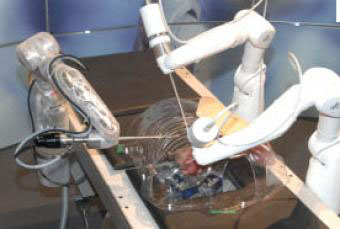 BANGALORE, July 12: The Robotic Assisted Surgery (RAS), a boon in these times when going under a surgeon’s scalpel is routine, can now be accessed in the city. Besides oncological treatment, RAS can be performed in urology, gynaecology, ENT and select cardiac procedures. BANGALORE, July 12: The Robotic Assisted Surgery (RAS), a boon in these times when going under a surgeon’s scalpel is routine, can now be accessed in the city. Besides oncological treatment, RAS can be performed in urology, gynaecology, ENT and select cardiac procedures.
Over the past five days, Manipal Hospital has undertaken about 16 successful surgeries with assistance from a robot, the da Vinci surgical system.
On Monday, the Manipal Health Enterprise (MHE) launched the Manipal Vattikuti Institute of Robotic Surgery in their flagship hospital in the city.
Speaking on the occasion, Dr Sudarshan Ballal, medical director, MHE, said, “RAS can be used for many types of surgeries, from oncology to urology. The major advantage of RAS is that the incisions made during surgery are tiny. Thus, the recovery is quick.”
On an average, a patient undergoing RAS would leave the hospital two to five days earlier than those who have undergone traditional surgery and return to work with normal activity 50% faster. An additional benefit of RAS is that it can reach where surgeon’s hands cannot and allows 3600 rotation, which is humanly not possible. Thus, robots take surgery beyond the limits and reach of the human hand.
Launching Manipal Vattikuti Institute of Robotic Surgery, Padmabhushan Dr Ramdas Pai, chairman, Manipal Education and Medical Group, said: “RAS would take surgery to the next level of medical excellence. It will open a new chapter in delivering quality healthcare and enhance clinical outcome for the community at large.”
P Balaram, director, Indian Institute of Science, said, “It is about time that we focus on the fusion of research, medicine and engineering. Today, India has no dearth of good physicians and surgeons. But now we should think of how to move to a stage where technology can improve patient care in hospitals.”
Azad refutes criticism over gay sex remarks
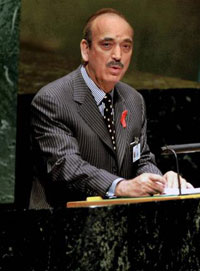 BEIJING, July 12: Under fire from gay rights groups and AIDS activists, Union Health Minister Ghulam Nabi Azad on Tuesday sought to draw a line over the controversy surrounding his remarks on homosexuality, stressing he neither described gay sex as “unnatural” nor called it a “disease.” BEIJING, July 12: Under fire from gay rights groups and AIDS activists, Union Health Minister Ghulam Nabi Azad on Tuesday sought to draw a line over the controversy surrounding his remarks on homosexuality, stressing he neither described gay sex as “unnatural” nor called it a “disease.”
Mr. Azad, in China to attend the first meeting of health ministers from the BRICS nations — Brazil, Russia, India, China and South Africa — told reporters on Tuesday his remarks had been taken out of context, and were intended to bring focus to the challenges faced by the government in bringing down high infection rates among MSM (men who have sex with men).
In China, the Health Minister also drew attention to India’s “extraordinary work” in bringing down infection rates — a success, he said, only paralleled in two other BRICS nations, China and South Africa. “Other countries are still grappling with it, but these three countries have made big headway,” he said. “In our country, we have reduced it by 50 per cent, so far as new infections are concerned. We have not only reduced it, but we are continuing with our policy to reduce it further.”
He said India’s success stories were with regard to bringing infection rates down among female sex workers and the migrant population.
”What is worrying for us is we have not been able to reduce this number for MSM,” he said. “That is a cause for worry because their location and persons are not known. There is only an estimation that MSM are 400,000.”
Mr. Azad said he had referred to infection rates of HIV among MSM — and not the gay community — as a disease. He also said that it was not his view that homosexuality was “unnatural”.
“I said this disease is posing a great problem. I was naturally talking about the HIV disease, when the subject of the conference [in New Delhi] was HIV/AIDS, not MSM,” he said.
“Some activists thought by disease I meant homosexuality. They put superlatives as their own. I never used the word homosexuality, or gays, in my speech. I only used technical terms that the Health Ministry uses... The disease, I said, was HIV.”
Asked about his “unnatural” comment, he said: “There has been a long debate, for two years, in electronic and print media, with some people saying this is natural, some people saying this is not natural. I was not referring to my [opinion]. I said there has been a big debate in our country, in the media, that some people are saying natural, some people are saying unnatural.” Different views, he said, were not his concern. “My problem is how to reduce the infection rate,” he said.
In talks this week, Mr. Azad, along with his counterparts from the BRICS countries, discussed how they can work together to make drugs more affordable in the fight against HIV/AIDS, tuberculosis and malaria.
At this week’s meeting, which was also attended by officials from UNAIDS and the World Health Organisation (WHO), the BRICS countries called on developed countries to boost funding for both organisations.
The BRICS nations also agreed to stand together against moves by Western countries to tighten the Intellectual Property Rights (IPR) regime, which they say will pose barriers to access to generic drugs in developing countries.
“Over a period of time, some multinationals and big companies have realised that… there are countries like India making affordable drugs, and these countries are supplying medicines across the globe,” Mr. Azad said. “So they [are looking to] incorporate some other ifs and buts that it will come in the way of countries like India who produce affordable drugs.”
In a speech to the BRICS health ministers’ meeting, Mr. Azad said cooperation among BRICS countries “opens significant opportunities of lobbying for and leveraging a global health agenda” for universal access to affordable health care.
“This is our strength and we must be cautious and guard against all strategic moves which impede local innovation and availability of affordable medicines,” he said. “IPR barriers, including patents and data exclusivity, cause delays in generic competition in the market which is one of the most efficient ways to bring prices down.”
Rs 3 crore concession given under Manipal KMC Hospital's Arogya Card Scheme
By Deepak Arora
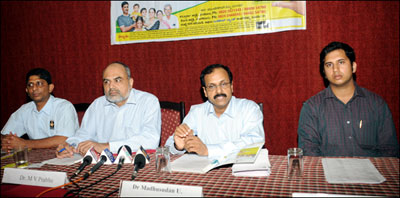 MANGALORE, JulY 8: Manipal Arogya card scheme that has completed 10 years of service to the community has given concession to the tune of Rs 3 crores in the year 2010. MANGALORE, JulY 8: Manipal Arogya card scheme that has completed 10 years of service to the community has given concession to the tune of Rs 3 crores in the year 2010.
Speaking to newsmen, Dr Madhusudhan Upadya, Deputy Medical Superintendent, KMC Hospital, Attavar, said Manipal Arogya Card is Manipal University's social initiative to provide quality health care at affordable cost to a large section of the society. Last year, he said there was a total usage of about 1,75,000 times by the members at Kasturba Hospital, Manipal, KMC Hospitals Mangalore, Dr T M A Pai Hospital Karkala.
He said the total billing was about Rs 10 crore and the concession given was Rs 3 crore.
Dr Upadya said the the membership drive for the current year (2011) concludes on July 31.
Dr Upadya said subscribers of the card are eligible to get discounts on inpatient and outpatient treatments at various hospitals within the network of Manipal Health Enterprises.
The card is available for individuals at a cost of Rs. 250 and Rs. 500 for the family.
He said this affordable subscription amount can be recovered within just few treatments and additional cards are available for parents who have primary card under the family card scheme for Rs. 100 per parent. He said the expired cards can be renewed at 10 per cent discount.
Dr Upadya said that consultations with any specialist or super specialist doctors, any number of times during the year by paying only 50 per cent of the consultation fee is the most attractive benefit for the subscribers.
“Twenty percent discount on diagnostics and laboratory investigations give considerable relief to patients. There is a 10 per cent rebate on medicines purchased from hospital pharmacy with prescriptions, apart from a flat 25 percent concession on medicines purchased from pharmacy,” he said.
He said that the scheme is also available at all networked hospitals under Manipal Health Enterprises and Syndicate Bank branches in Udupi, Mangalore, Shimoga, Uttara Kannada, Davangere, Chitradurga, Chikmagalur, Kodagu and in North Kerala- Kannur and Kasargod districts in Kerala.
Earlier Dr M V Prabhu, Associate Dean, KMC Mangalore, welcomed the gathering. Fr Ananda Venugopal and Deepak Prabhu were also present.
Too much coffee causes nervousness and irritability
BERLIN, July 6: At a certain point coffee no longer works as a pick-me-up but instead leads to a loss in concentration as well as increased nervousness and irritability.
According to Lucie Nusbaum from Germany’s Association of Nutritionists, once this breaking point has been reached, further cups of coffee no longer lead to improved concentration or performance.
Instead the contrary occurs, which is the clearest difference between coffee consumption and suffering from an addiction.
Alcoholics, for example, experience the desired effects from alcohol with every extra drop.
The so-called coffee addiction is no more than a habit, according to the nutrition expert. Despite this reality, many people suffer from withdrawal headaches if they don’t get the required amount of coffee in a day. Coffee gives a short-term boost to the body’s blood pressure and when this boost fails to arrive then this can affect the head.
If a person wants to give up coffee due to a sensitive stomach, for instance, then he or she will have to wait some time until feeling fully normal again. “I have to live with the withdrawal headaches, which can last a couple of days,” explains Nusbaum, who doesn’t want to give up drinking coffee entirely.
“It’s an effective way for people with low blood pressure to get up and running in the day,” she says.
A cup first thing in the morning can give a boost that lasts the whole day although the effects only last between 10 and 30 minutes for people with normal blood pressure.
“The general rule is that coffee works quickly, for a short length of time and the effects wear off,” concludes Nusbaum.
E coli death toll increases to 50 in Germany
BERLIN, July 2: German authorities have reported another death in the European E coli outbreak bringing the total to 50.
The national disease control centre said Friday 48 deaths have been reported in Germany, up from 47 a day earlier.
One death in Sweden and another in the United States are linked to the outbreak, according to the World Health Organisation.
A total of 3,999 people have now been reported ill in Germany, including 845 suffering from a complication that can lead to kidney failure. Another 122 cases have been reported in 16 other countries.
New infections have been declining for weeks but the total tally is still rising due largely to delays in notification.
On Thursday, European health experts warned that contaminated Egyptian fenugreek seeds are likely the source of the deadly outbreak.
Manipal KMC Hospital's Arogya Card Scheme kicks off
By Deepak Arora
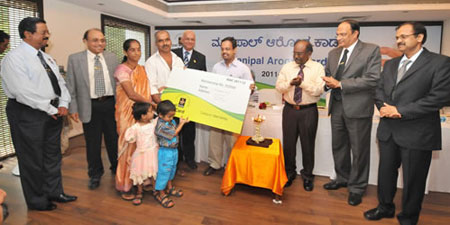 MANIPAL, June 11: Udupi Deputy Commissioner Dr M T Reju kicked off KMC Hospital's Arogya Card 2011 scheme on Saturday by handing over the initial card to one Krishna Kulal's family. MANIPAL, June 11: Udupi Deputy Commissioner Dr M T Reju kicked off KMC Hospital's Arogya Card 2011 scheme on Saturday by handing over the initial card to one Krishna Kulal's family.
The Arogya card plan is Manipal University's social scheme to offer up top notch medical care at reasonable rates to a big portion of society. The membership is open till July 26 next.
Praising the idea of the Arogya card plan, Dr. Reju stated that he was delighted to introduce the card as it will be advantageous to lots of patients mainly to the rustic poor. He recalled how patients from Kerala preferred Kasturba Hospital, Manipal for advanced health care needs.
Manipal Arogya Card enables a member to avail large benefits by way of discounts on in patient and outpatient treatment in various networked hospitals under Manipal Health Enterprises.
Explaining the advantages of the scheme, Dr H S Ballal, Pro-Chancellor of Manipal University, stated that the Arogya card could be availed by everyone at a membership charge of Rs 250 for a single person and Rs 500 for a family, with children below the age of 21.
Any person can get membership and receive the investment as grants in only two or three usages of the card, he said.
Under the plan, Dr Ballal said an add-on card is also obtainable for parents who have primary card beneath the family card plan for Rs 100 per parent. For renewal card, 10 per cent discount on membership charge is provided.
About the plan, he stated that meetings with any professional or super professionals, any number of times during the year by paying only 50 per cent of the consultation charge is the most appealing benefit plan for out patients. Around 20 per cent discount on diagnostics and laboratory probes offer significant relief to patients.
“There is a flat 25 per cent concession on the in patient bill (excluding consumables) for any number of times during the year and 10 per cent concession on medicines purchased from pharmacy,” he added.
Dr K Ramnarayan, Vice Chancellor, Manipal University honoured the agents who worked to enroll members under the scheme in Manipal Area. The leading agents in Manipal area were A N Vijendra Rao, Kenchana Gowda and Panduranga Prabhu.
Dr Sripathi Rao, Dean KMC Manipal, Manipal University did the honours for agents who worked to enroll members under the scheme in Mangalore area. The agents were Manjula, Yogish B and Jayachandra M G.
Dr (Col) R R Pulgaonkar COO and Medical Superintendent, Kasturba Hospital, Manipal welcomed the gathering and Dr Madhusudan Upadya, Deputy Medical Superintendent, KMC Hospital, Mangalore proposed the vote of thanks.
Applications for the said plan is obtainable at all networked hospitals under Manipal Health Enterprises and Syndicate Bank divisions in Udupi, Mangalore, Shimoga, Uttara Kannada, Davangere, Chitradurga, Chikmagalur, Kodagu and in North Kerala -- Kannur and Kasargod districts in Kerala.
A helpline: 0820-2571343 or 99808 54700 in Manipal and 0824 2444590 94482 54700 in Mangalore has also been established to offer up info regarding the plan. |


