


Health
Ebola 'easier to avoid than malaria': USAIDMonrovia, Aug 26: The head of the US Agency for International Development on Tuesday said poor understanding of Ebola was undermining the fight against the epidemic, pointing out that the fever is harder to get than malaria. USAID director Jeremy Konyndyk, in Liberia to support the fight against an epidemic which has claimed the lives of almost 1,500 West Africans, said educating people on how to protect themselves was the best way to beat Ebola. "Compared to something like malaria, it is much harder a disease to get. But obviously must worse when you do get it," he said. "So helping people to better understand how they can protect themselves, how they can avoid Ebola, is a critical piece of controlling this outbreak." The epidemic has sent shockwaves throughout the world since it emerged in southern Guinea at the start of the year, grounding flights to the afflicted countries and damaging African economies. But the death toll since it was discovered in 1976 is under 3,000 while, at conservative estimates, malaria is estimated to kill that many people every two days, the vast majority of them African children aged under five. Ebola transmission can be prevented by avoiding contact with an infected person's bodily fluids. Malaria, spread through the bite of the Anopheles mosquito, often while the human host is asleep, is more difficult to avoid. "One of the biggest challenges that we are faced with in this outbreak is misinformation or poor understanding. You know Ebola is not a hard disease to avoid, if you know how to avoid it," Konyndyk said. Konyndyk is due to hold talks with the affected communities in Liberia, where 624 people have died, as well as health authorities in the field and the government. USAID is a government agency working in more than 100 countries with a mission to end extreme global poverty. The science of alcohol: How does it affect your liver and heart?Alcohol, the presumed panacea of low confidence, bad days in the office, and social cohesion, has built-up quite the reputation. The social drinkers, binge drinkers, occasional drinkers, and abstainers, after-all, all share an opinion on this 21 Century drug. Yet I am going to actively side-step these psycho-social issues and take you on a journey of a different kind. It begins with that infamous phrase, "Fancy a drink?". When the answer is "Yes", the journey begins with your alcoholic drink slipping past your lips, down your oesophagus and into your stomach, dancing its way around your gastric juices. For those of you drinking a carbonated drink your alcohol will be absorbed faster as the pressure increases inside your stomach, forcing alcohol into your blood stream. This compared to the savvy consumer, who already has a stomach lined with food to curtail absorption. Soon, alcohol is absorbed into your blood stream. The portal vein, connecting your gut to your liver, acts as the super-highway transporting your alcohol, now neatly dissolved in your bloodstream. At the liver, the Mecca of alcohol metabolism - alcohol meets its fate - where it becomes a mere shadow of its former self. The complex alcohol dehydrogenase enzyme pathway breaks down alcohol into safe bi-products of acetate, water and carbon dioxide with ruthless efficiency. Of course, there are limits. Too much alcohol can fast overwhelm your liver's capacity to metabolise your liquid panacea, and consequently your blood alcohol level rises. A rising level will have a plethora of effects. However, to give it a fair trial we need to consider both the short and long term. Now if I were the PR rep for alcohol I would highlight that the alcohol in your body (which is currently within safe, recommended limits) is relaxing, aiding social interaction, and even promoting cardiovascular disease prevention. It relaxes you by travelling to your central nervous system where it depresses activity by interfering with chemical neurotransmitter signals, in particular, Gamma-Aminobutryric Acid (GABA). As your alcohol alters these, communication between your brain cells becomes increasingly impaired. We've all heard the phrase "I just didn't know what I was thinking!" Now you have part of the answer! Cardiovascular disease prevention from alcohol is, for many, a prickly chair to sit on, leaving them shifting, uncomfortable at the thought that a drug with such negative effects could be painted in such positive light. It is suggested that safe, moderated levels of alcohol promote your aforementioned relaxation which consequently improves your blood pressure - an established risk factor for vascular disease including heart attacks and strokes. Of course, we are only human. Since your first alcoholic drink touched your lips, many more may have passed, with the assistance of friends, drinks deals, and a wave of excitable disinhibition as your central nervous system becomes increasingly impaired. Your blood alcohol level has now snuck past that happy and euphoric level of 10-30 milligrams per decilitre and you are now slurring your speech, with impaired balance (due to brain cerebellar dysfunction), and feeling sick. Vomiting, the hallmark of "I think I've had one too many" is triggered to get rid of your toxic, poisonous level of alcohol now achieved. Thank your stomach for this, whose lining has become too sharply irritated by the alcohol and on sending electrical signals to your vomiting centre in your brain, contracts sharply to produce a vomit. So you have survived the night. Now fast forward 5 years, 10 years, even 30 years. Chronic, excessive alcohol consumption can affect nearly every single organ in your body - often as a result of imbalance between how much fat you deposit and how much fat you metabolise from energy dense alcohol. Your liver bears the brunt of this, slowly and insidiously sliding along a progressive spectrum of hepatic steatosis (where fat from alcohol deposits in the liver cells), alcoholic hepatitis and finally alcoholic cirrhosis. Having seen patients in intensive care not survive this, I can assure you that no drink is worth it. Your heart can beat abnormally, your stomach can develop gastric ulcers that can rupture and cause bleeding, your can pancreas can fail with diabetes ensuing, and your risk of cancer of the oesophagus, tongue, and liver increase. I have barely scratched the surface of the damaging chronic effects of alcohol excess but trust me - it is not a club you want to belong to. We also know violence can easily join hands with its consumption. One study by the Office of National Statistics linked over 880,000 violent incidents in 2012-2013 to alcohol (or drugs) in England and Wales. New ankle bracelets (known lovingly as 'sobriety tags'), which test for any alcohol consumption through the owner's sweat, is being trialled for offenders already guilty of alcohol-related crimes; just another marriage of technology, medicine, and social service! Alcohol is here to stay, ingrained on the fabric of our modern society. Yes, your body is designed to cope with it in moderation but excess leads to significant short and long term health implications. Remember too that your health is not just about physical wellbeing; Total Health comprises your physical, psychological, social, and spiritual health. I will close by being a cliched Doctor and say please drink responsibly. If you are concerned about your drinking then your GP can help - you just have to ask. Minimum age to buy cigarettes in New York is 21 nowNEW YORK, May 20: New York raised the minimum age to buy cigarettes to 21, in its latest initiative to encourage healthier behaviour among residents. The law, signed on November 19 shortly before former mayor Michael Bloomberg finished his second term, had a six-month waiting period before it came into effect — but its impact can already be clearly felt. "Under 21, no tobacco," warned a small sign at a shop that sells smokes, newspapers, candy, coffee and cakes, in the Nolita neighbourhood. Canara Bank, Biocon Foundation and OTTET join hands to strengthen Healthcare Delivery in OdishaBy Deepak Arora
An MOU was signed today between Biocon Foundation, Canara Bank and OTTET. OTTET has been actively engaged in an e-Health program with the Government of Odisha through PPP to provide access to quality healthcare for 51,000 villages in Odisha. Biocon Foundation has joined hands with OTTET to augment and implement a unique mega-ICT based e-Health project in the state. The partners through this collaboration will strive to deliver evidence-based health care to effectively deal with primary health and chronic conditions in communities that have poor access to quality healthcare. Under this PPP, Biocon Foundation & OTTET will set up an electronic diagnostic facility, an e-Health Centre, managed by local young entrepreneurs, at all the Primary Health Centers (PHC) of the Odisha government. This young entrepreneur will be provided financial assistance by Canara Bank and will be trained by Biocon Foundation & OTTET to support the medical officer at the PHC for various healthcare and diagnostic services. Commenting on this unique PPP model, Kiran Mazumdar Shaw, Chairperson, Biocon said, “We are very pleased to receive support from Canara Bank for enabling our partnership with OTTET to realize the objectives of delivering e-healthcare to the people of Odisha. We aim to strengthen the present public healthcare delivery system in Odisha, by providing solutions around primary & secondary healthcare with effective use of technology. Additionally this unique social entrepreneurship model will result in the creation of real jobs and development of semi-skilled talent in the rural areas. This demonstrates our commitment towards inclusive development by empowering rural communities.” OTTET Managing Trustee Mr. K. N. Bhagat said that the project aims to provide rapid diagnosis, reduce out of pocket expenses and drastically, cut down hospitalization whilst ensuring transparency and accountability for every single patient”. Expressing his delight R. K. Dubey, Chairman& Managing Director, Canara Bank said, “Canara Bank has always been at the forefront in delivering financial services to underserved communities. The bank’s support to this Public Private Partnership demonstrates the bank’s commitment to lifting communities out of poverty and poor health. Mr Dubey also informed that Canara Bank is underataking various capacity and entrepreneurial development programmes such as “Udan ” project in Jammu and Kashmir. This single point, see and treat model of e -health centre is critical to improving the health of rural communities for whom even reaching a PHC is a major challenge. The e- health centre entrepreneur trained to deliver good quality healthcare services will support the Medical officer at the PHC for the following: Measuring each patient’s vital stats like BP, Pulse, Haemoglobin, & Blood sugar. Providing diagnostic tests that the doctor prescribes and requires for accurate diagnosis Providing telemedicine consultation for patients who require specialist advice Additionally, this model will focus on getting all the patient records captured on the electronic system which will provide easy access for the treating doctors both at the PHC and at tertiary hospitals. It will ensure that each patient’s life long medical record is available online thus improving the treatment standards across all health centres. In addition, patient data will be available to the government to study disease patterns and to create a database, which will help implement evidence based health care interventions. Executive Directors of Canara Bank, Mr A K Gupta, Mr V S Krishna Kumar and Mr P S Rawat and officials for Biocon Ltd, senior executives from Canara Bank were alos present on the occasion. Canara Bank, Apollo Munich launch health insurance for diabeticsBy Deepak Arora
The Canara CMD, Mr Dubey, launched the new product called “Energy – The Sweetest Thing” in the presence of Mr Antony Jacob, Chief Executive Officer of Apollo Munich Health Insurance company, Canara's Executive Director V S Krishna Kumar and Chief General Manager Mythili Krishnamurthy and Apollo Munich Deputy Executive Officer Krishnan Ramachandran. Speaking on the occasion, Mr Dubey said "we believe that 'Energy' not only covers the medical conditions arising of this silent killer but also provides those suffering from Type 2 diabetes with a wellness tool to manage one's health condition." He said Canara Bank has become the first bank to offer “Energy” to its customers. We aim to help our customers take care of their health, in addition to providing appropriate wealth management tools that our customers can utilize over their entire life cycle.” Mr Antony said "we are proud to be able to offer a first-of-its-kind solution to the millions suffering from diabetes in India. “Energy" will now be available for Canara Bank customers, as their banking channels will ensure deeper penetration of this much-needed insurance product." He said “what makes ENERGY unique is that it combines health insurance, wellness, counseling, incentives, technology and community together in a very holistic and seamless way, keeping the needs of people living with Diabetes in mind.” Canara Bank customers, who buy the plan, will have access to the vast network of Apollo Munich's hospitals and clinics for pre-policy check up, wellness tests and treatment. To start with, Mrs Mythili Krishnamurthy said the product will be available in eight big cities. The health insurer is a joint venture between India's Apollo Hospitals Group and Germany's Munich Health. Sunlight may help lower blood pressureExposing skin to sunlight may help lower blood pressure and cut the risk of heart attack and stroke, a new study has found. Research carried out at the Universities of Southampton and Edinburgh found that sunlight alters levels of the small messenger molecule, nitric oxide (NO) in the skin and blood, reducing blood pressure. "NO along with its breakdown products, known to be abundant in skin, is involved in the regulation of blood pressure," said Martin Feelisch, Professor of Experimental Medicine and Integrative Biology at the University of Southampton. "When exposed to sunlight, small amounts of NO are transferred from the skin to the circulation, lowering blood vessel tone; as blood pressure drops, so does the risk of heart attack and stroke," Feelisch said. While limiting sunlight exposure is important to prevent skin cancer, the authors of the study, including Dr Richard Weller of the University of Edinburgh, suggest that minimising exposure may be disadvantageous by increasing the risk of prevalent conditions related to cardiovascular disease. Cardiovascular disease, often associated with high blood pressure, accounts for 30 per cent of deaths globally each year. Blood pressure and cardiovascular disease are known to vary according to season and latitude, with higher levels observed in winter and in countries further from the equator, where ultraviolet radiation from the Sun is lower. During the study, the skin of 24 healthy individuals was exposed to ultraviolet (UVA) light from tanning lamps for two sessions of 20 minutes each. In one session, the volunteers were exposed to both the UVA rays and the heat of the lamps. In another, the UV rays were blocked so that only the heat of the lamps affected the skin. The results suggested that UVA exposure dilates blood vessels, significantly lowers blood pressure, and alters NO metabolite levels in the circulation, without changing vitamin D levels. Further experiments indicated that pre-formed stores of NO in the upper skin layers are involved in mediating these effects. The data are consistent with the seasonal variation of blood pressure and cardiovascular risk at temperate latitudes, researchers said. The study was published in the Journal of Investigative Dermatology. |
|
|||||||
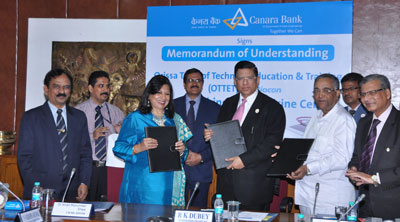 BANGALORE, March 6: Canara Bank has lent support to Biocon Foundation and OTTET (Orissa Trust of Technical Education) for a unique public private partnership (PPP) with the Odisha government to deliver a novel e-healthcare program for the underprivileged and rural communities in the state.
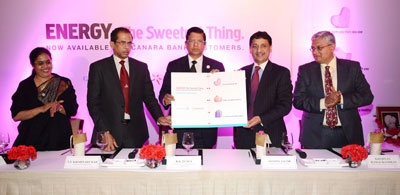 NEW DELHI, Feb 4: Canara Bank, which has been aggressively launching new products for its customers since its Chairman and Managing Director R K Dubey took over the reins, has launched country’s first health insurance cover for diabetic people in cooperation with Apollo Munich. In other words, for the customers of Canara Bank, living with diabetes do not have to be bitter any more.

Aviation
| Business | Defence
| Foreign Affairs | Communication
| Health | India |
United Nations
India-US | India-France
| Entertainment | Sports
| Photo Gallery | Tourism
| Advertise with Us | Contact
Us
© Noyanika International, 2003-2009. All rights reserved.