


United States
|
US suspects 'dry run' in parcel bomb plot
Two parcels addressed to Jewish institutions in Chicago and containing the lethal explosive PETN hidden in ink toner cartridges were uncovered on Thursday on cargo planes en route to the United States in Britain and Dubai. But now it has emerged that the United States first uncovered suspicious packages from Yemen back in September and linked them "several weeks ago" to Al-Qaeda in the Arabian Peninsula, according to a US official. "The boxes were stopped in transit and searched," the official told AFP confirming that the packages contained no explosives. "At the time, people obviously took notice and -- knowing of the terrorist group's interest in aviation -- considered the possibility that AQAP might be exploring the logistics of the cargo system," the official added. "When we learned of last week's serious threat, people recalled the incident and factored it in to our government's very prompt response." ABC News, which broke the news of the dry run, said it had been told by senior officials that ever since the September discovery US intelligence agencies had specific concerns about AQAP's interest in Chicago. The dry run contained household goods including books, religious literature, and a computer disk and were shipped by "someone with ties to Al-Qaeda in the Arabian Peninsula," a US official told ABC. Meanwhile, Western governments imposed new restrictions on freight in the wake of the plot, as Yemen scrambled to contain the fallout by announcing exceptional security measures on all freight leaving Yemeni airports. A team of US experts is heading to Yemen to provide screening, training and equipment to examine cargo shipments at the main international airport in the capital Sanaa. Qatar Airways has revealed that one of the packages had been flown from Sanaa to Doha and then on to Dubai on one of its passenger aircraft, raising even more concern in Western capitals. Germany said it was banning all flights from Yemen, after the discovery of the bomb at East Midlands airport in Britain, which passed through the German city of Cologne. British Prime Minister David Cameron vowed to work with partners in the Middle East to "cut out the terrorist cancer that lurks in the Arabian Peninsula. "The fact that the device was being carried from Yemen to the UAE to Germany to Britain en route to America shows the interest of the whole world in coming together to deal with this," Cameron told parliament. The Dubai bomb was composed of a highly explosive combination of PETN and lead azide, hidden inside a computer printer with a circuit board and mobile phone SIM card attached, security officials said. British Home Secretary Theresa May announced a ban on passengers carrying toner cartridges larger than 500 grams in their hand luggage. The BBC reported that the bombs had been discovered following a tip-off from a former Al-Qaeda militant who handed himself in to Yemeni authorities two weeks ago. Jabr al-Faifi is a former Guantanamo detainee who was returned to Saudi Arabia for rehabilitation in 2006 but later escaped to Yemen and rejoined Al-Qaeda. An alleged Saudi bombmaker, Ibrahim Hassan al-Asiri, has emerged as a key suspect in the bomb plot. "Al-Asiri's past activities and explosives' experience make him a leading suspect," a US counter-terrorism official told AFP on condition of anonymity. The militant, thought to be hiding in Yemen, was already wanted for designing the "underwear" bomb worn by the young Nigerian accused of trying to bring down a packed airliner as it landed in Detroit on Christmas Day 2009. Months earlier, Asiri sent his 23-year-old younger brother on a suicide mission, with 100 grams of PETN under his white Saudi robe, to kill Saudi intelligence chief Prince Mohammed bin Nayef, who was wounded but survived. Endorse India for permanent UNSC seat: USIBC asks ObamaWASHINGTON, Nov 2: The US-India business community wants President Barack Obama to endorse India for a permanent seat in the UN Security Council, and address issues of concern for New Delhi like the H-1B visa fee hike and fears about outsourcing of U.S. jobs to India. Ahead of Mr. Obama’s India visit this week, they have also advocated the lifting of most dual-use export licensing requirements specific to India and batted for making licensing and clearance for defence articles easier for India. At the same time, the report submitted by the U.S.-India Business Council (USIBC) has said suggested that India needs to increase the FDI investment cap to 74 per cent to spur greater investment and transfer of technology. “The United Nations Security Council remains the clearest symbol of decision—making in world security matters. The U.S.-India business community strongly feels that our partnership should begin here,” said the report ‘Partners in Prosperity Business Leading the Way’ released by the USIBC, whose chairman is Terry McGraw, chairman president and CEO of The McHGraw-Hill Companies. “President Obama calling for a renewal of the UN Security Council and the inclusion of India as one of its new permanent members will galvanise both societies, laying the groundwork for deeper collaboration at every level,” it said. Observing that the U.S. midterm election season has resurrected unfounded fears about outsourcing of U.S. jobs to India, the report also noted that the U.S. Congress’ recent move to raise H1-B and L1 visa fees for foreign companies has caused concern in the industry. “These bumps in the road present both a challenge and an opportunity. The way ahead is full of promise, but in order to get there, executives in the US and India must bring along and carry public sentiment on both sides favouring deeper U.S.-India commercial ties. “To accomplish this, we must achieve positive change via specific advocacy,” said the 12-page report. It said the U.S. should treat India as a favoured nation when it comes to information exchange relative to advanced technology or defence cooperation. The U.S. should also raise India’s partner status and category tier-listing on the National Disclosure Policy, the U.S. Munitions List, and the Commerce Controls List, it said. Contending that American procedures are complicated when it comes to defence articles, it said the US should designate a senior official with the authority to act as ombudsman to resolve complex licensing and clearance issues. At the same time, it says India has the responsibility to make its complex bureaucratic procedures defense procurement simpler. It also called for increasing the 26 per cent cap on FDI in the defence industry to 74 per cent. USIBC also urged India to open the multi-brand retail sector to organised players. With U.S. interest in India at an all-time high, U.S. industry believes that the natural next step is to conceive a Free Trade Agreement (FTA) especially tailored for India. The two countries should revitalise Bilateral Investment Treaty negotiations to come up with a treaty that will spur greater investment and employment opportunities in both the US and India. Businesses in both countries must advocate for the protection and vigilant enforcement of intellectual property across all sectors. This will spur research, invention, and discovery, it said, adding that the US and Indian governments should facilitate greater movement of technical professionals between the US and India by advocating a special technical visa/work permit regime. “Developing a viable alternative to a Totalisation Agreement, and making it suitable to today’s Knowledge Partnership with India, is a practical fix which is especially important as our two economies become more closely intertwined,” the report said, adding that the industry should continue to press for the opening up of India’s legal sector to foreign law firms. “Legal alignment will be a conduit for greater two-way investment between our economies,” it said. USIBC also called for modernising US export controls by lifting most dual-use export licensing requirements specific to India. This would place India on par with the closest allies of the United States, it said. It has also demanded granting dual-use licensing exception for intra company transfers that would permit U.S. companies to transfer commodities, software, and technology to their foreign subsidiaries without prior approval. It also pressed for full and satisfactory implementation of the U.S.-India civil nuclear accord, the successful implementation of which will spur a new era of commerce in high technology. It called for encouraging establishment of a Global Entry-Trusted Traveller programme between the US and India to allow business travellers between the two countries greater ease of access. Besides, it supported a Bilateral Aviation Safety Agreement that will allow India to upgrade its Air Traffic Control technology to world-class standards. $2.29 billion U.S. aid to Pakistan to fight terror
Applauding Pakistan's role in the war against terror, U.S. Secretary of State Hillary Clinton said Washington had “no stronger partner when it comes to counter terrorism” than Islamabad. Ms. Clinton made the remarks at the opening of the third U.S.-Pakistan Strategic Dialogue with her Pakistani counterpart Shah Mahmood Qureshi. Of the new aid, $2 billion comes under the foreign military financing programme and $29 million is being given under the international military education and training funding. Ms. Clinton said a request would be made to Congress for the aid to be made available for the period from 2012 to 2016. This would complement the five-year $7.5 billion in civilian aid to Pakistan under the Kerry-Lugar Bill. This is for the first time that the U.S. has made a multi-year commitment of international military education and training. Meanwhile, the U.S. has rejected fresh calls by Pakistan seeking Washington's intervention on the Kashmir issue. The U.S. made it clear that it was for India and Pakistan to find a resolution through “additional dialogue.” The American position was affirmed after Mr. Qureshi insisted earlier in the day that the U.S. play an active role in the resolution of Kashmir and other disputes in the South Asian region. “We recognise the importance of Kashmir to both countries. We absolutely want to see tensions eased and ultimately a resolution to the situation in Kashmir,” State Department spokesman P.J. Crowley said at a news conference at the Foreign Press Center here on Friday. “That we believe needs to come through additional dialogue between Pakistan and India. We have not been asked by both countries to play a particular role. But this is the reason why, for a number of reasons we continue to encourage further dialogue between India and Pakistan,” he said. Mr. Qureshi was responding to a question at an event jointly organised by the prestigious Brookings Institute and Asia Society. His comments came hours after the third round of the Strategic Dialogue. Contending that Pakistan was “deeply interested” in a peaceful and stable South Asia, he claimed that the prospect, however, “is in danger again by the recent events in Kashmir.” He said: “any person of conscience cannot ignore the use of brute force against defenceless Kashmiri youth. In this unfolding tragedy, over 100 Kashmiris have lost their lives in the past three months, many of them teenagers.” His comments have come despite the U.S.' repeated assertion that Kashmir is a bilateral issue between India and Pakistan and it has to be solved by the two countries. US hi-tech sanctions against India to goWASHINGTON, Oct 20: US President Barack Obama is expected to announce the end of advanced nuclear technology sanctions against India when he arrives on his first state visit to the country in early November. The end of so-called "export controls" will fulfill one of the most important reasons why India negotiated a civilian nuclear agreement with the US and is being seen as the biggest deliverable of the Obama visit. Though former US President George W Bush ended India's nuclear isolation, it is Obama who will actually allow India to access US dual-use technology and equipment. The term "dual use" refers to sensitive technology that has both nuclear and conventional uses. These technologies, that number in the thousands, are tightly controlled globally and were denied to India because of its nuclear tests and refusal to sign the Nuclear Nonproliferation Treaty. Officials from India and the US are racing against the clock to wrap up the highly technical agreement in time for the visit. Officials remain cautious, since a set of last minute high-profile US visits, including that of under secretary William Burns, are still taking place. Dual-use technology sanctions have been tightened against India over the years with more and more technologies being added to the list. These technology sanctions and the number of Indian agencies on the entities list were expanded after the Pokhran II nuclear tests. This technology straitjacket began to ease after October 2001, with Bush waiving sanctions and then changing its policy on nuclear and missile products from a "policy of denial" to a case-by-case review. The number of banned entities also came down from 159 to the present 16 agencies. India wants to be off the entities list completely and be rid of export controls. Winning US support for its membership of multilateral trade control regimes would be useful but would still require much diplomatic effort to persuade other member countries. The expectation is that India may get a substantial part of this package, if not all of it. "I think we're looking to find a positive way forward here, but we're not quite there yet," US assistant secretary for South and Central Asia Robert Blake said recently, adding, "We need to continue to work on that." There are three components to the export control negotiations. The Entities List: Has Indian defence and Department of Atomic Energy organisations, including nuclear power plants and fuel reprocessing and enrichment facilities on it. They can't be sold any dual-use item by US firms. Recategorisation: India is at the same level as Pakistan and North Korea as far as exports from US are concerned. India expects to be upgraded from this list. India also wants the US to back its membership to export control regimes for manufacture of and trade in dual use items. These include the Nuclear Suppliers' Group, the Wassenar Convention and the Australia Group. NATO official: Bin Laden, deputy hiding in northwest PakistanKABUL, Oct 18: Osama bin Laden and his deputy Ayman al-Zawahiri are believed to be hiding close to each other in houses in northwest Pakistan, but are not together, a senior NATO official said. "Nobody in al Qaeda is living in a cave," said the official, who declined to be named because of the sensitivity of the intelligence matters involved. Rather, al Qaeda's top leadership is believed to be living in relative comfort, protected by locals and some members of the Pakistani intelligence services, the official said. Pakistan has repeatedly denied protecting members of the al Qaeda leadership. The official said the general region where bin Laden is likely to have moved around in recent years ranges from the mountainous Chitral area in the far northwest near the Chinese border, to the Kurram Valley which neighbors Afghanistan's Tora Bora, one of the Taliban strongholds during the U.S. invasion in 2001. Tora Bora is also the region from which bin Laden is believed to have escaped during a U.S. bombing raid in late 2001. U.S. officials have long said there have been no confirmed sightings of bin Laden or Zawahiri for several years. The area that the official described covers hundreds of square miles of some of the most rugged terrain in Pakistan inhabited by fiercely independent tribes. The official also confirmed the U.S. assessment that Mullah Omar, the leader of the Taliban, has moved between the cities of Quetta and Karachi in Pakistan over the last several months. The official would not discuss how the coalition has come to know any of this information, but he has access to some of the most sensitive information in the NATO alliance. Pakistan's Interior Minister Rehman Malik said Monday that similar reports of bin Laden and Mullah Omar's whereabouts have proven false in the past. Malik denied the two men are on Pakistani soil, but said that any information to the contrary should be shared with Pakistani officials so that they can take "immediate action" to arrest the pair. The NATO official, who has day-to-day senior responsibilities for the war, offered a potentially grimmer view than what has been publicly offered by others. "Every year the insurgency can generate more and more manpower," despite military attacks, he said. Although there has been security progress, he pointed to an internal assessment that there are 500,000 to 1 million "disaffected" men between the ages of 15 and 25 along the Afghan-Pakistan border region, he said. Most are Afghan Pashtuns and make up some of the 95 percent of the insurgency who carry out attacks just to earn money, rather than fight for a hard-core Taliban ideology. The official said it is now absolutely vital for the Afghan government to address the needs of this group with security, economic development and jobs in order for the war to end, and for Afghanistan to succeed. "We are running out of time," he said. The entire scenario is made more complex by the fact that "there is a huge criminal enterprise in this country," dealing in human, drug and mineral trafficking, he said. Those crimes are also tied into the insurgency. He acknowledged the overall strategy now is to increase offensive airstrikes and ground attacks in order to increase the pressure on the Taliban and insurgents groups to come to the negotiating table with the current Afghan government. There is a growing sense that many insurgent leaders may be willing to accept conditions such as renouncing al Qaeda because they want to come back to Afghanistan. But, the official cautioned, hard core Taliban groups such as the Quetta Shura run by Mullah Omar, the Haqqanis, the HiG (Hezb-e-Islami Gulbuddin) and the Pakistani Taliban still could potentially muster as many as 30,000 fighters. The U.S. continues to face a more localized insurgency in the south. In places like Marja and the Helmand River Valley, the majority of the fighters are captured within a few miles of their homes. The insurgent leader Mullah Abdullah Zakir has increased his strength in the south, the official said. He essentially exerts some levels of control and influence both in the greater Kandahar region and across the south from Zabul to Farah province. The official continued to stress the urgency of getting the Afghan government to deal with the multitude of problems it faces. Right now, the U.S. war plan approved by President Barack Obama extends through 2014, the official said. That is the official document that spells out matters such as troop rotation schedules. The U.S. military could sustain a war "'indefinitely," the official said. But the goal is to achieve reconciliation and allow the Afghan government to function and provide security and services to the people. Without that, he said, "we will be fighting here forever." NATO flies Taliban leaders to Kabul for talks: OfficerBRuSSELS, Oct 13: NATO aircraft sometimes ferry Taliban leaders to Kabul to allow them to hold tentative peace talks with the Afghan government, an alliance official said on Wednesday. As part of efforts to support Afghan President Hamid Karzai's bid to launch peace negotiations, the NATO-led International Security Assistance Force has helped transport Taliban figures to the capital, said the official, who spoke on condition of anonymity. "These are contacts that have taken place in Kabul. It would be extremely difficult for a senior Taliban member to get to Kabul without being killed or captured," if ISAF was not involved, he told reporters. "These are in the very preliminary stages of discussions. So you would not yet characterise this by any means as a negotiation, these are preliminary discussions," the official said of the talks. The official did not offer more details but US commanders have said previously that coalition forces have at times "facilitated" contacts between insurgents and the Kabul government. Apart from insurgent leaders operating in neighbouring Pakistan, most senior Taliban figures are based in the Pashtun-dominated south, where US-led forces operate a major airfield in Kandahar. Afghan President Hamid Karzai confirmed in a US television interview Sunday that his administration has been holding talks with the Taliban "for quite some time" to try to end the nine-year war. Afghanistan's former president Burhanuddin Rabbani on Saturday was elected chairman of a new peace council, a Karzai brainchild set up to broker an end to the war. The Taliban, toppled in 2001 after a US-led invasion, have said publicly they will not enter into a dialogue with the government until all 152,000 coalition troops in the country leave. Suspected US missiles strikes kill 11 in PakistanDERA ISMAIL KHAN: Suspected US unmanned aircraft launched four missile strikes at a house and two vehicles in northwestern Pakistan near the Afghan border Wednesday evening, killing 11 militants, including three foreigners, said intelligence officials. The attacks occurred within about an hour in the Datta Khel area of North Waziristan, part of Pakistan's semiautonomous tribal region that is dominated by militant groups that often attack US and other foreign troops in Afghanistan. The first attack occurred at about 9 pm and targeted a house in Lataka village, killing four militants, said the intelligence officials, speaking on condition of anonymity because they were not authorized to talk to the media. Minutes later, a drone attacked a vehicle nearby, killing two foreign militants, said the officials. A second vehicle was attacked about 15 minutes later, killing three militants, including one foreigner, they said. The final attack targeted militants collecting bodies from the house destroyed in the first strike, killing two of them, said the officials. The US is now suspected of carrying out 14 missile strikes in Pakistan's tribal belt this month, continuing a trend of Washington relying more heavily on the attacks to target militants out of reach its troops in Afghanistan. The US carried out 21 such strikes in September, nearly double the previous monthly record. Obama trip a clear statement of US' support to India: Clinton
"The President's visit in November will be yet another very clear statement of our support and our commitment to the relationship," Clinton told Naina Kidwai of the HSBC India in response to a question at the 12th annual Fortune Most Powerful Women Summit in Washington on Wednesday. "Look, I think our relationship with India, which I was very pleased to open up in the 90s and then followed by the work of my husband and his visit and then the follow-on work by the Bush Administration on the civil nuclear agreement is going from strength to strength. I mean, we are now implementing a very comprehensive Strategic Dialogue between us," Clinton said. "By that, I mean it's not just the visits and the meetings at high levels between the president and myself and our counterparts, but really getting into our respective bureaucracies, which, as you know in both of our countries, pose problems to actually getting things done," she said. "Also, looking for ways to network our business communities, our academic institutions, our NGOs we are very bullish on India. We think that India's growth rates and India's commitment to lifting people out of poverty and doing the necessary economic reforms is essential for further development for India," Clinton said. And at the same time, India is assuming more of a regional leadership role and a global leadership role, which the US welcomes and encourages, the secretary of state said. Early this week, Assistant Secretary of State for South and Central Asia Robert Blake said Obama is preparing for a landmark visit to India in November. "I foresee our great nations becoming ever closer in the years and decades to come. President Obama intends to make a landmark visit to India in November to help further grow the ties between our two knowledge societies, our economies, and our people," he said. "In just a decade there has been a transformation in the way the US views India. President Obama has called India our "indispensable" partner for the 21st century," Blake had said in his remarks at the San Diego World Affairs Council. India's strategic importance to the US reflects several factors, he said, including the centre of gravity of US foreign policy has shifted from Europe to Asia. Within Asia no other country has the thriving democracy, economic promise, the sheer human capital and the growing record of cooperation with America that India has, he argued. US scrambling for alternate route to Af-Pak amid spat with IslamabadWASHINGTON, Oct 6: The United States is scrambling to extricate itself from a logistical nightmare in the Af-Pak theatre. Multiple attacks on US/ Nato convoys (six by last count) by Pakistani militants, aggravated by Islamabad closing a key supply route (now in its 7th day), is forcing Washington to move to an alternate supply chain to reduce dependency on Pakistan. US officials say the situation is far from dire and military operations in Afghanistan could continue to be fully supplied even if Pakistan continues what amounts to a blockade. "It has not in any way impacted our ability to resupply fuel to our operations around Afghanistan," Pentagon spokesman Geoff Morrell said on Tuesday. "And we don't suspect it will even if this were to last into the future." But the growing crisis, amid deteriorating relations with Pakistan, is driving Washington to accelerate the switch to the so-called "Northern Distribution Network" through Russia, the Caucasus, and Central Asian states. The U.S has already opened five supply routes from the countries north of Afghanistan, according to Lisa Curtis, a regional analyst with the Heritage Foundation. Curtis is among the experts recommending an alternate supply chain to reduce American reliance on Pakistan, which is said to currently account for 80 per cent of non-lethal supplies into the Af-Pak theatre. "U.S. dependence on Pakistani supply routes provides Islamabad leverage to resist U.S. pressure to shut down Taliban sanctuaries and to crack down more forcefully on terrorist networks that attack coalition forces across the border and threaten the overall mission in Afghanistan," she warned in a paper this week. For now though, the Obama administration is still trying to work things out with an increasingly recalcitrant ally. Pentagon officials said there had been some progress in talks with Islamabad about the Nato chopper attack on a Pakistani post (which caused Islamabad to retaliate with the shutdown) and the US hope to "have the gate reopened as soon as possible." Late on Wednesday, the U.S made what clearly was a pro-forma apology to Pakistan to get things rolling. "We extend our deepest apology to Pakistan and the families of the Frontier Scouts who were killed and injured," US ambassador to Pakistan Anne Patterson said after nearly three days of talks between the two sides over the border spat. But US officials are also signaling that its switching to an alternate route could hurt Pakistan commercially and otherwise, even as the White House on Tuesday turned the heat on Islamabad, virtually accusing it backing off in the war on terrorism. Suggesting that Pakistan itself would benefit from reopening the border, Pentagon's Morrell described the supply chain as a "huge commercial enterprise" for Pakistan. In fact, the two countries, which some US analysts are now saying are virtually at war, battled for days over two key issues: Resolving the chopper attack and the issue of hot pursuit, and protection for the Nato convoys. In the first instance, Pakistan was said to be insisting on an outright apology for the chopper attack and assurances that Nato forces will not cross the border in hot pursuit. But the US military is in no mood to offer this, and is in fact, insisting that it attacked the Pakistani post in self-defense after its choppers were fired on as they tailed terrorists fleeing back to safe havens in Pakistan. Under the arrangement that emerged on Wednesday, the apology came from the U.S State Department; the U.S military only offered regrets. The two sides are also locked in war of words over responsibility for protecting the supply convoys. With attacks on the supply chain extending from outside Karachi in the south to outside Islamabad in the north, Pakistan's civilian dispensation has thrown up its hands, saying it is not responsible for the security. But US officials say they are by prior arrangement. In fact, a Pentagon official said the Pakistanis do not get paid until the supplies, mainly fuel, is delivered to the point of destination in Afghanistan. "So they have incentive to protect the convoys, to make sure that the situation is such that they can get to their destination safely," Pentagon's Morrell said. The suspicion in Washington – and even among some Pakistani experts – is that the attacks on Nato convoys are being engineered by the Pakistani intelligence community, possibly renegade elements among them. "'Militants' torched Nato supplies in Shikarpur and Islamabad two nights apart? Tell me another. Who in heaven are we trying to fool?" Kamran Shafi, a Pakistani analyst known for his trenchant views on the military state, said in his column in Dawn newspaper. US warns of terror attacks in EuropeWASHINGTON, Oct 3: It's a travel route and a ritual passage that is so commonplace for Americans that it's been dubbed "crossing the pond," euphemism for flying across the Atlantic. But in an extraordinary security alert on Sunday, the United States asked its citizens travelling to Europe to be vigilant about possible terrorist attacks there amid fears of imminent strikes by al- Qaida and its affiliates. The alert was also linked to the CIA director Leon Panetta's visit to the Indian subcontinent with an unpublicized schedule that had stops in both Islamabad and New Delhi. The security scuttlebutt, based on intelligence gleaned from a German citizen of Pakistani or Afghan origin who trained in Pakistan's Waziristan region, is that a bunch of terrorists holding western passports have been trained for a Mumbai-style attack on western interests. Although Britain, Germany and France have been identified as the principal targets, mainland USA and India, which is hosting the Commonwealth Games, are not excluded from the heightened security sweep, which accounts partly for Panetta's unexpected New Delhi stopover. Details are sketchy, but the unprecedented US travel guidance on Europe comes amid a ferocious American Drone strike campaign in Pakistan's Waziristan region that officials said was aimed at disrupting the plot. That Washington is risking its goodwill gained with during calamity with such a fierce barrage points also to the seriousness with which Americans are regarding the threat. Obama believes 'cancer of terrorism' is in Pak: Book
The soon-to-be-released book entitled 'Obama's War', written by noted journalist Bob Woodward, says the then Director of National Intelligence had told Obama soon after his victory in the November 2008 presidential elections that Pakistan was a "dishonest" and "unwilling partner" in the war on terrorism. The book, which claims that the Obama administration is sharply divided on the Afghan policy, is set to be released on Monday. Two days after he was elected as President, Obama was told by Mike McConnell, the then Director of National Intelligence, that Pakistan was not trustworthy. India third most powerful nation: US reportWASHINGTON, Sept 22: India is listed as the third most powerful country in the world after the US and China and the fourth most powerful bloc after the US, China and the European Union in a new official US report. The new global power line-up for 2010 also predicted that New Delhi's clout in the world will further rise by 2025, according to "Global Governance 2025" jointly issued by the National Intelligence Council (NIC) of the US and the European Union's Institute for Security Studies (EUISS). Using the insights of a host of experts from Brazil, Russia, India and China, among others, and fictionalised scenarios, the report illustrates what could happen over the next 25 years in terms of global governance. In 2010, the US tops the list of powerful countries/regions, accounting for nearly 22 percent of the global power. The US is followed by China with European Union at 16 percent and India at eight percent. India is followed by Japan, Russia and Brazil with less than five percent each. According to this international futures model, by 2025 the power of the US, EU, Japan and Russia will decline while that of China, India and Brazil will increase, even though there will be no change in this listing. By 2025, the US will still be the most powerful country of the world, but it will have a little over 18 percent of the global power. The US will be closely followed by China with 16 percent, European Union with 14 percent and India with 10 per cent. "The growing number of issues on the international agenda, and their complexity, is outpacing the ability of international organisations and national governments to cope," the report warns. This critical turning point includes issues of climate change, ethnic and regional conflicts, new technology, and the managing of natural resources. The report also highlights the challenges proponents of effective global governance face. On one hand, rapid globalization, economic and otherwise, has led to an intertwining of domestic politics and international issues and fuelled the need for more cooperation and more effective leadership. But on the other hand, an increasingly multipolar world, often dominated by non-state actors, has put a snag in progress toward effectual global governance, it said. Obama: Work harder to beat the Bangalore challenge
Obama has repeatedly said that American schools would have to ensure that they continue producing leagues of top professionals, so that the American hegemony in human resource continues in this century. "At a time when other countries are competing with us like never before, when students around the world in Beijing, China, or Bangalore, India, are working harder than ever, and doing better than ever, your success in school is not just going to determine your success, it's going to determine America's success in the 21st century," Obama said. "The farther you go in school, the farther you're going to go in life," he told students at a school in Philadelphia, Pennsylvania. Last year, while announcing an end of tax incentives to US companies which created jobs overseas, Obama had launched the 'Say no to Bangalore and yes to Buffalo,' slogan. Since then, he has time and again mentioned the competition coming in from developing countries like China and India while asking Americans to rise to the challenge to keep the American supremacy alive. "You've got an obligation to yourselves, and America has an obligation to you, to make sure you're getting the best education possible," Obama said in his latest remarks. He said preparing the students for success in classroom, college and career would also require an enormous collective effort of teachers, principals as well as the administration. "It's going to take outstanding principal and outstanding teachers who are going above and beyond the call of duty for their students," he said. Asking the students to work harder than everybody else and seek out new challenges, he said his call was directed at all Americans alike. "I'm not just speaking to all of you, I'm speaking to kids all across the country. And I want them to all hear that same message: That's the kind of excellence we've got to promote in all of America's schools," Obama said. Obama looking forward to his India trip: US
"The President looks forward to his trip to India," State Department spokesman, P J Crowley, told foreign journalists at the Washington Foreign Press Center. "As we've said many times, it is a vitally important relationship to the region and to the world," Crowley said in response to a question. "The world's oldest democracy and largest democracy should have constructive relations, and we do. India, as an emerging global player, will be essential to solving challenges in the region, Afghanistan being one, and challenges globally, climate change, you know, being one," he said when asked about the agenda during the Obama trip to India. A day earlier, Secretary of State Hillary Clinton has said that US is laying the foundation for an indispensable partnership with India, and this effort would be bolstered by Obama's November visit. "India, the world's largest democracy, has a very large convergence of fundamental values and a broad range of both national and regional interests, and we are laying the foundation for an indispensable partnership," Clinton said in her major foreign policy speech at the Council on Foreign Relations, a Washington-based think-tank. "President Obama will use his visit in November to take our relationship to the next level," Clinton said referring to the scheduled visit of the US President to India in the first half of November. The Secretary of State said US is also taking into account the countries that are growing rapidly and already exercising influence, like China, India, Turkey, Mexico, Brazil, Indonesia, South Africa as well as Russia. Deepening engagement with these emerging centres of influence is one of the major steps for the US. At his daily news conference, Crowley said that India is an anchor of stability in the region. "We recognize that India is an anchor of stability in a critical part of the world," he said, adding that India will have to play a significant role in the global action to combat climate change. Noting that US has an ongoing strategic dialogue with India, he said US believes earnestly that the world's oldest democracy and the world's largest democracy have a great deal in common. "And in fact India can be -- as the Secretary (of State) said in her remarks, developing new partners who are able to assume greater responsibility for critical issues in the future," Crowley said. Oxford, Harvard minds helped N-BillNEW DELHI, Aug 29: The contentious Nuclear Liability Bill, that was finally passed with bipartisan support in Parliament earlier this week, got a helping hand from Harvard and Oxford universities. A group of law students — all of them Indians — from the world's best institutes had briefed the Parliamentary Standing Committee of Science and Technology with suggestions to make the nuclear damages Bill legally sound. The suggestions impressed the MPs so much that a senior BJP leader called up a member of the group for consultation just before the final agreement with the government was struck. The scholars were consulted on which of the four amendments being discussed with the government on clause 17 of the draft Bill would be best. Another senior leader appreciated that the students had come to depose before the committee at their own expense: "They were here to visit the country and came readily to share their knowledge of international law with us." Arghya Sengupta, Shivprasad Swaminathan, Sanhita Ambast and Prashant Reddy are part of the group that wants to use its legal skills to assist Indian policy-making. And their advice is free. "There is a desire to be engaged with India and its policies," Sengupta told HT. He feels that in the absence of bipartisan academic inputs, Indian legislators have to depend on the ideologically-coloured inputs of NGOs and industry bodies. Some of these scholars had earlier been consulted by the the Joint Parliamentary Committee on the Office of Profit and Karnataka's Public Health Bills, when they were students of National Law School University, Bangalore. Constructive ties needed between India, Pak, Af: USWASHINGTON, Aug 24: Asking South Asian nations to avoid a “zero-sum mentality”, the U.S. has asked Pakistan to engage in a constructive relationship with India and Afghanistan, saying effective and coordinated action was needed to meet the common challenge of terrorism. “Does Afghanistan need to have a constructive relationship with Pakistan? It does. Does Pakistan have to have a constructive relationship with India? It does,” State Department spokesman P.J. Crowley said. “Should all these countries need to avoid a zero-sum mentality that a gain on one side is necessarily a detriment on the other? We think that to the extent that these countries can work more effectively together, that will ultimately help reduce the threat of terrorism to any one of them,” he said. Crowley was responding to recent media reports that the Pakistan’s ISI no longer considers India as its top threat, but considers internal terrorism as its main threat. These are individual judgements made country by country, he said. “We have certainly encouraged countries in the region to work collectively together because they confront a shared threat, and we think some of these challenges can only be resolved through effective and coordinated action across the region,” Crowley said. Tough credit card law takes effectWASHINGTON, Aug 24: The Obama administration has put in place the final provisions for a new financial regulation law, called the CARD Act, which will bring unprecedented controls to bear upon the heretofore lightly regulated credit card industry in the United States. Speaking after the Credit Card Accountability, Responsibility and Disclosure (CARD) Act was finalised, United States President Barack Obama said, "Yesterday, the final reform provisions of the CARD Act took effect. As of today, consumers will be protected against unreasonable fees and penalties for late payments, as well as unfair practices involving gift cards." Arguing that this law would put a stop to deceptive credit card practices and hold credit card companies accountable to their customers, Mr. Obama noted that it would also make the terms of credit cards more understandable and put a stop to practices designed to trap consumers. Further, the CARD Act would restrict rate increases that apply retroactively to old balances and would prevent companies from increasing rates within the first year an account is opened. Touching upon the broader context of the Wall Street Reform and Consumer Protection Act that the President signed into law in July, he said a new Consumer Financial Protection Bureau would be empowered to look out for consumers in the U.S. financial system. “In the wake of a terrible recession, these reforms and this independent consumer watchdog will not only protect consumers, they’ll strengthen our economy as a whole, levelling the playing field for responsible lenders and ensuring that families and small business owners are better able to make financial decisions that work for them,” he said. U-turn? Obama says doesn’t endorse 9/11-site mosqueWASHINGTON, Aug 15: US President Barack Obama, who strongly backed the building of a proposed Muslim community center and mosque near ground zero in Manhattan, has defended his decision to wade into the controversy the night before, but backed off from his previous stance. "In this country we treat everybody equally and in accordance with the law, regardless of race, regardless of religion," Obama said when questioned about his remarks at a White House dinner on Friday marking the start of Ramadan. He did, however, insist that his defense of the organizers’ right to build the mosque did not mean he endorsed the project, Politico reports. "I was not commenting and I will not comment on the wisdom of making the decision to put a mosque there," Obama said on Sunday. "I was commenting very specifically on the right people have that dates back to our founding. That’s what our country is about. And I think it’s very important as difficult as some of these issues are that we stay focused on who we are as a people and what our values are all about," he said. Families of victims of September 11 attacks on the World Trade Center and the Pentagon have criticized Obama for saying that he supports building a mosque near Ground Zero, Politico reports. India faces external terror threats: USWASHINGTON, Aug 5: India continues to face "persistent and significant" external terror threats from Islamist groups, but its counter terrorism efforts remain hampered by its outdated and overburdened legal system and law enforcement, an official US report said today. "In the wake of the Mumbai terrorist attacks of 2008, India's Parliament has introduced bills to restructure its counter-terrorism laws and established a National Investigative Agency (NIA) to create a national-level capability to investigate and prosecute acts of terrorism," it noted. The State Department said India remained one of the countries most afflicted by terrorism with over 1,000 deaths attributed to terrorist attacks in 2009, primarily in Kashmir, the Northeast, and the Maoist-affected "Red Corridor." "India continued to face persistent and significant external threats from groups including LeT, Jaish-e-Mohammad, and Harakat-ul-Jihad-i-Islami-Bangladesh," it said. Though there was no major terrorist attack like 26/11, the report said Indian government officials warned that India remained at risk on the basis of the volume of credible threats the government continued to receive. The State Department said Jammu and Kashmir, historically victim to the largest number of foreign terrorist attacks, saw casualties decline significantly from previous years. "The Ministry of Home Affairs (MHA) reported that 71 civilians and 52 members of the security forces were killed in terrorist-related violence in the state through November," it said. The Congress mandated report said Home Minister P. Chidambaram "reported to Parliament in December that 700 foreign insurgents were active in the state, down from 800 earlier in the year". Ethno-nationalist insurgent groups remained active, particularly in the Northeast, it said, adding that ULFA, a domestic terrorist group banned by India in 1990, continued a campaign of bombings in Assam resulting in 27 fatalities this year. "On December 2, security forces arrested ULFA Chairman Arabinda Rajkhowa near the Bangladesh border," it said, adding the Assam government offered talks and free passage to ULFA leaders in a bid to make peace with the group. Chidambaram reported to Parliament that the central government would agree to hold talks with the ULFA, if the group "abjured violence," the report said. The United States today warned that the politial instability in Nepal could pose a serious terrorist threat to India, which has sent a top envoy to Kathmandu to help end the month-long constitutional crisis over the election of a new prime minister. Even though there is no indication that Nepal is a safe haven for international terrorists, the United States cautioned New Delhi that the continued instability in this nascent democratic country could pose a serious terrorist threat to India. "There were no indications that Nepal was a safe haven for international terrorists. Given Nepal’s continued instability, however, there is a possibility that members of extremist groups could transit Nepal, especially into India," said the State Department?s annual Congressionally-mandated 'Country Reports on Terrorism for the year 2009'. The report warned that the porous border, the large ungoverned space along the Nepal-Indian border and the security deficiencies at the country's only international airport in the capital exacerbates this vulnerability. "The large ungoverned space along the Nepal-Indian border exacerbates this vulnerability, as do security shortfalls at Tribhuvan Airport, Nepal's international airport," the State Department said. In June, Lashkar-e Taiba (LeT) member Muhammad Omar Madni traveled through Nepal enroute to New Delhi, the report noted. In its annual report, the State Department said while Nepal experienced no significant acts of international terrorism, several incidents of politically-motivated violence occurred in the country. "Maoist-affiliated Young Communist League (YCL) criminal activity continued, including intimidation and extortion. In response to the YCL violence, other political parties condoned the use of violence by their youth wings," it said. The report also warned that unrest in the Terai plains bordering India remained high with the proliferation of numerous armed criminal groups and an inadequate police presence. "Unrest in the southern Terai plains remained high with the proliferation of numerous armed groups and an inadequate police presence. More than 100 armed groups are estimated to be operating in the Terai, some in pursuit of independence or autonomy, most composed of opportunistic criminal elements," it said. LeT's emergence post 26/11 attacks has added a new dimension to the terrorist threat landscape as the Pakistan-based terror outfit's activities have made clear its deepening commitment to undertake "bold and mass-casualty operations" against US and western targets, an official US report said today. US State Department's annual Congressionally-mandated Country Reports on Terrorism for the year 2009 also said the core of Al-Qaeda based in Pakistan continue to pose a major threat to the US. On the LeT, the report said: "Since the 2008 Mumbai attack, analysts have deepening concern that it could evolve into a genuine global threat. (LeT operative David) Headley and others indicate the diversity, mobility, and versatility of self-selecting recruits whom organisations can pick to meet strategic goals." "Organisations may set these goals, but their training resources and recruits are increasingly modular and interchangeable," the State Department said. The report also noted that Headley, an American citizen of Pakistani origin, has pleaded guilty in a US court to crimes relating to his role in the 26/11 attacks and to crimes relating to a separate plot to bomb the Danish newspaper 'Jyllands-Posten'. On Al-Qaeda, the report said its core in Pakistan remained the most formidable terrorist organization targeting the US homeland. "It has proven to be an adaptable and resilient terrorist group whose desire to attack the United States and US interests abroad remains strong,? it said. The US intelligence community assessed that al-Qaida was actively engaged in operational plotting against the US and continued recruiting, training, and deploying operatives, including individuals from Western Europe and North America. "Moreover, al-Qaeda continued to try to expand its operational capabilities by partnering with other terrorist groups, with varying degrees of success," said the report in its strategic assessment. Noting that al-Qaeda suffered several significant setbacks in 2009, the report said the group remained under pressure in Pakistan due to Pakistani military operations aimed at eliminating militant strongholds in the Federally Administered Tribal Areas (FATA). India concerned with outcome of terror war in Af-Pak: MullenWASHINGTON, July 31: The US Sunday acknowledged India's vital role in the war against terror in the region, saying New Delhi is more than concerned with the overall outcome in Afghanistan and Pakistan. Admiral Mike Mullen, Chairman of the US Joint Chiefs of Staff, underlining the vital role of India in the war against terror in the region, said New Delhi is more than just concerned with the overall outcome in Afghanistan and Pakistan. "There's a regional approach here and certainly India, which is where (British) Prime Minister (David) Cameron spoke from, India is certainly more than just concerned with the overall outcome here, Mullen told in an interview. Reiterating that terrorists have safe havens in Pakistan, he said it causes the US great problems in Afghanistan as well. "That we are anxious to have that addressed is well known. So this isn't going to turn overnight," he said. We have to continue to develop this relationship and evolve this relationship with Pakistan," the top Pentagon official said. Mullen said in many ways Pakistan is working with the US. "I mean, their military, their intelligence agency, I mean, we've got a very strong relationship in the positive sense with their intelligence agency. That doesn't mean there aren't some challenges," he said. "They (Pakistan) have shared intelligence with us. They have killed as many or more terrorists as anybody. They've captured them. Certainly the focus on changing the strategic shift if you will in that agency so that that doesn't happen at all is a priority for us," he said. Mullen said the Taliban are incredibly unpopular with the Afghan people. "The overall mission is to dismantle and defeat and disrupt al-Qaeda. But we have to make sure there's not a safe haven that returns in Afghanistan," he said. Afghanistan has to be stable enough, has to have enough governance, has to create enough jobs and have an economy that's good enough so that the Taliban cannot return to the brutality, he noted. US endorses ‘export of terror’ remarksWASHINGTON, July 30: The Obama administration has been trying to disregard the WikiLeaks as “old news,” but it suddenly ratcheted up the pressure on Pakistan by endorsing British prime minister David Cameron’s remarks in India that the West would not tolerate the export of terror by Pakistan. The US state department indicated that “clearly there was more to be done” when asked about the comments made by Cameron on Wednesday in Bangalore which set off a furious diplomatic row between London and Islamabad after Cameron accused elements of the Pakistani state of promoting the export of terrorism. US state department spokesman PJ Crowley told reporters, “Well, we don’t want to see the export of terror by any country. We are concerned about and have said many times that extremist elements within the borders of Pakistan, in the tribal areas between Pakistan and Afghanistan, first and foremost represent a threat to Pakistan and to Afghanistan.” “We have seen, extremists with links to these areas have made their way to Europe, have made their way to the US,” he said. When a reporter raised the point that Britain, one of America’s main allies in the war on terror, seemed unhappy with Pakistan, Crowley said, “Pakistan has, in our view, made a strategic shift in the last year. It has taken aggressive action at considerable expense to Pakistan. (But)… there is more to be done.” He added, “Our joint concern here is to eliminate the safe havens that exist in the region and to prevent the emergence of new safe havens from which there can be the export of terrorism that can threaten the US, Europe or other parts of the world.” Pakistan has faced mounting US pressure to take tougher action against the Haqqani network, the al-Qaida linked group that directs operations against US forces in Afghanistan from safe havens in Pakistan. The Indian embassy in Kabul was also attacked in 2008 and 2009 by the Jalaluddin Haqqani network. It was done at the at behest of Inter Services Intelligence, Pakistan’s spy agency. Obama to address joint session of Parliament during India visit
In view of this plan, the Winter Session of Parliament, that usually starts in the second week of November, will be advanced, they said. Obama, who took over as the US President in January last year, will be undertaking his first State visit to India with an aim of pushing the bilateral ties to new heights. Bush, who visited India in March 2006, could not have the honour of addressing the joint session of Parliament of the world's largest democracy. Initially, he was tipped to address the joint session but the plan was dropped when the Left parties threatened to boycott it. Left parties were critical of Bush over the war in Iraq. However, Bill Clinton had addressed the joint session during his visit in 2000. Among others to have addressed the Indian MPs at a joint session was the then Japanese Prime Minister Shinzo Abe who visited India in August 2007. Haqqani network a very deadly terrorist network: PentagonWASHINGTON, July 29: Pakistan-based Haqqani network is a deadly terrorist outfit, which is responsible for more than 90 per cent of the civilian casualties in eastern part of Afghanistan, a top US military official based in this part of the war-torn country believes. Incidentally, the Haqqani network which has been involved in a large number of major terrorist attacks in both Afghanistan and Pakistan, besides being held responsible for killing of a number of American soldiers is yet to be designated as a Foreign Terrorist Organisation by the US. The State Department says the process is on, but has not set a time line for it. "If it was declared a foreign terrorist organisation, there are certain other factors that other organisations, whether it's Treasury, State, international communities, could enact against the Haqqani Network that could potentially help or disrupt the Haqqani Network," Major General John Campbell said. Campbell is the Commanding General of the Regional Command East which consists of 14 Afghan provinces including Bamyan, Nangarh, Laghman, Wardak and Ghazani. In a news briefing with Pentagon reporters through a secure video conferencing from Afghanistan, Campbell said the Haqqani network is one of the most dangerous networks that he faces in Eastern Afghanistan. "The Haqqani network is probably one of the most dangerous networks here that we face -- direct tie right back into Kabul, for years has been based out of Khost and Paktia and has now moved into several different provinces like Wardak and Logar," he said. "If you take a look at what happened with the Kabul conference here last week, where the Haqqani network and other insurgent networks had claimed that they would really attack that, and their desired goal was to upset and disrupt that convention," Campbell said. "The result was, they were not able to do that, that's because of the great work done by the coalition forces in and around Kabul, by our special operating forces, and then by our Afghan partners. So it is still a very deadly network," he said. Referring to the first female suicide bomber up in Kunar recently, Campbell said the Haqqani network is now a little bit desperate. "Over the course of the last nine years, there's been about 450, somewhere around there, suicide attacks in Afghanistan. That's the first by a female, which really shows you that I think the Haqqani network is getting a little bit desperate, that they've stooped down to use females as suicide bombers, really disgracing the Muslim culture here of doing that," Campbell said. Pakistan needs to go after all aspects of terror: US NSANEW DELHI, July 15: The US said on Thursday that existence of terror groups in Pakistan was against the interest of the region and that country would have to take the "tough" decision of going after such groups without making any discrimination. "In our bilateral relationship with Pakistan, we have expressed strong concerns over the existence, within the borders of Pakistan, of terrorist organisations that have goals to destabilise and attack our way of life, your way of life, to prevent strategic goals from being achieved in Afghanistan," US National Security Adviser James Jones said. He viewed the existence of terror outfits in Pakistan as being in "violent conflict" with the way the US sees the world collectively and bilaterally in the 21st century. "It is contrary to their (Pakistan's) own interests, for the future and the stablity of the region to continue to tolerate the existence of insurgents within their borders," he told CNN-IBN. He said if Pakistan wants to correct that and show that it wants the "same thing we want", it will have to "make the tough decision to go after" the terrorist organisations and "state concretely and publicly that this is a matter of policy that this cannot be tolerated." Asked whether action against Jamat-ud-Dawa chief Hafiz Saeed, the alleged mastermind of the 26/11 Mumbai attacks, would be a test case for Pakistan, Jones said the US expected Islamabad to deal with all aspects of terror. "We want to see a more comprehensive programme that addresses all aspects of terror and all these groups, we are finding out are linked," he said. "They are not necessarily targetting one nation or the other. They are terrorist organisations that have in mind to disrupt India, to disrupt our way of life and are actively planning to do that," said Jones who was here on a two-day visit. On whether the US has been equally firm in pressing Pakistan to deal with terror targetted against India, he said, "We do not subscribe to the idea that a-la-carte terrorism (which allows one to choose) is a viable strategy". He emphasised that terrorist organisations are "anathema for future peace and prosperity, whether it is in this region, whether it is in our country, whether it is in Europe, whether it is in Africa or the Middle East." Asked whether Indian investigators will get more access to Pakistani-American LeT operative David Coleman Headley, he said the state of India-US ties was such that the US was willing to cooperate on anything that New Delhi required to better understand threats to it from terror outfits. Jones said the access Indian investigators got to Headley reflected growing good relations between the two countries. "We have to have more cooperation on intelligence matters so that we can be successful in defeating terror," he said. US and Russia in spy swapNEW YORK, July 8: Ten convicted agents for Russia have reportedly been deported from the US in exchange for four people convicted of betraying Moscow to the West, in the biggest public spy swap since the Cold War. Before their deportation, the agents, many of them speaking in heavy Russian accents despite having spent years posing as US citizens, pleaded guilty to conspiracy in a Manhattan, New York, courtroom on Thursday. They were sentenced to time served and ordered out of the country. All the 10 convicted agents were deported late on Thursday, local television NY1 in New York reported. US and Russian officials said the agents were being exchanged for four Russian citizens convicted of spying for the West. A US administration official said what he called the quick and pragmatic arrangement of the spy swap spoke to the progress made in US-Russian relations. Barack Obama, the US president, who met his Russian counterpart Dmitri Medvedev in the US last month, said after the talks that the two leaders had "succeeded in resetting" the sometimes difficult relationship between the two countries. Rahm Emanuel, the White House chief of staff, told broadcaster PBS that Obama was aware of the investigation, the decision to go forward with the arrests and the spy swap with Russia. Eric Holder, the US attorney-general, said the "extraordinary" case took years of work, "and the agreement we reached today provides a successful resolution for the United States and its interests". The 10 US defendants, captured last week in suburban homes across the country, were accused of embedding themselves in ordinary American life for more than a decade while leading double lives complete with false passports, secret code words, fake names, invisible ink and encrypted radio. US slaps toughest sanctions against IranWASHINGTON, July 2: Even as he signed into law the toughest sanctions against ever passed by the US Congress at the White House, US President Barack Obama said the doors of diplomacy are still open for the regime in Tehran. Iran Sanctions Act affects the gasoline, financial, insurance and shipping sectors, among others, as it seeks to impose a heavy economic cost on Iran for continuing with its nuclear programme. The sanctions bar foreign countries from exporting refined petroleum to Iran, as well as restrict access to US financial institutions for any entities that help Iran's Revolutionary Guard Corps. Also, it prevents investment, transfer of technology and development of Iran's energy sector, and makes it easier for states and localities to divest from companies that do business with Iran. The Senate approved the Comprehensive Iran Sanctions, Accountability and Divestment Act of 2010 on 24th June in a 99-0 vote, and the House of Representatives passed it 408-8 later the same day. "With these sanctions, along with others, we are striking at the heart of the Iranian government's ability to fund and develop its nuclear programme. We are showing the Iranian government that its actions have consequences," Obama said in his remarks. "And if it persists, the pressure will continue to mount, and its isolation will continue to deepen. There should be no doubt - the US and the international community; both are determined to prevent Iran from acquiring nuclear weapons." At the same time, the President said the Iranian government still has a choice. "The door to diplomacy remains open. Iran can prove that its intentions are peaceful. It can meet its obligations under the NPT and achieve the security and prosperity worthy of a great nation," he said. Consistent with the Security Council mandate, this legislation strengthens existing sanctions and authorises new ones and supports our multilateral diplomatic strategy to address Iran's nuclear program, he said. "It makes it harder for the Iranian government to purchase refined petroleum and the goods, services and materials to modernise Iran's oil and natural gas sector. It makes it harder for the Revolutionary Guards and banks that support Iran's nuclear programs and terrorism to engage in international finance," Obama said. "It says to companies seeking procurement contracts with the US government if you want to do business with us, you first have to certify that you're not doing prohibited business with Iran," he added. The President said "even as we increase pressure on the Iranian government, we are sending an unmistakable message that the US stands with the Iranian people as they seek to exercise their universal rights." The legislation also imposes sanctions on individuals who commit serious human rights abuses. And it exempts from our trade embargo technologies that allow the Iranian people to access information and communicate freely. In Iran and around the world, the United States would continue to stand with those who seek justice and progress and the human rights and dignity of all people, he said. Obama said since taking office, he made it clear that the US was prepared to begin a new chapter of engagement with the Islamic Republic of Iran. "We offered the Iranian government a clear choice. It could fulfill its international obligations and realise greater security, deeper economic and political integration with the world, and a better future for all Iranians. Or it could continue to flout its responsibilities and face even more pressure and isolation," he said. "To date, Iran has chosen the path of defiance. That's why we have steadily built a broader and deeper coalition of nations to pressure the Iranian government. Last month, we joined with our partners at the UN Security Council to pass the toughest and most comprehensive multilateral sanctions that the Iranian government has ever faced," Obama said. While signing the bill, US Treasury Secretary Timothy Geithner said the President and the Congress have set forth a new and effective means of applying financial pressure against Iran's continued pursuit of a nuclear weapons capability and its support for terrorists. "The law provides Treasury with powerful new authorities to impose mandatory sanctions against foreign banks that knowingly provide financial services related to such conduct by Iran, or to the IRGC and its affiliates. These authorities strengthen Treasury's ongoing efforts to protect the international financial system from abuse," he said. Republican Congresswoman, Ileana Ros-Lehtinen, Ranking member on the House Foreign Affairs Committee, said to protect American people, these sanctions must be fully implemented and enforced now, before it is too late. "This bipartisan bill, overwhelmingly passed by Congress, was designed to impose crippling sanctions on the Iranian regime to force it to abandon its illicit nuclear weapons program and other dangerous activities. But its impact depends entirely on its implementation by the President," she said, adding "by targeting Iran's energy sector, we can strike at the regime's jugular." Obama nominates Indian American to key USAID postWASHINGTON, July 2: The US President Barack Obama has nominated Indian-American Nisha Desai Biswal as Assistant Administrator for Asia in the United States Agency for International Development (USAID). Incidentally, USAID is headed by Raj Shah, who is the highest ranking Indian-American in the Obama Administration. Biswal is currently a Majority Clerk for the State Department and Foreign Operations Subcommittee on the Committee on Appropriations in the US House of Representatives. Announcing her nomination among several others, Obama said: "I am grateful that these impressive individuals have agreed to join my administration. I am confident they will serve ably in their new roles, and look forward to working with them in the coming months and years." In her present position, she has jurisdiction over the State Department, USAID and other aspects of the international affairs budget. With a Bachelor of Arts from the University of Virginia, Biswal provides staff support to Appropriations Committee Chairman David Obey and Subcommittee Chairwoman Nita Lowey in managing the appropriations and oversight of the US international affairs budget. Biswal was the Director of Policy and Advocacy at Inter Action, the largest alliance of US based international humanitarian and development non-governmental organisations. She previously served on the professional staff of the House International Relations Committee where she was responsible for South and Central Asia policy as well as oversight of the State Department and USAID. Biswal worked at USAID where she served as Special Assistant to Administrator. During her four years at USAID, Biswal also worked in the Office of US Foreign Disaster Assistance, the Office of Transition Initiatives, and served as chief of staff in the Management Bureau. She had also worked with the American Red Cross both in their Washington headquarters and overseas as an international delegate in Armenia, Georgia and Azerbaijan. India has legitimate stake in Afghanistan: US Gen
At a confirmation hearing before the Senate Armed Forces Committee, Gen David Petraeus, the newly appointed US commander for Afghanistan in place of sacked General Stanley McChrystal, spoke of facilitating a dialogue between Kabul, Islamabad, and possibly New Delhi, to bring peace to the region. "I think it's very important that they realize that we are in this with them, with both of them (Afghanistan and Pakistan) -- and by the way with India as well," Petraeus told the panel. "India has a legitimate interest in this region without question as do others if you want to extend it further. So I think we can facilitate that (dialogue)." Petraeus remarks are significant because he is regarded as a philosopher-general who recast the US war in Iraq with some success. Although some critics have suggested he has been "demoted" to Afghanistan (he is currently also the chief of US Central Command with oversight of the arc from Afghanistan to Middle-East), President Obama had evidently drafted him to rework the US approach to the situation in Afghanistan, a task that now involves resolving the struggle for influence there between India and Pakistan. Pakistan is seen to be facilitating a reconciliation between Karzai and the Taliban in an effort to outmanoeuvre India, a strategy that is not meeting with Washington's approval. At the hearing, Petraeus joined lawmakers in expressing considerable distrust and scepticism about Pakistan's role in the region while at the same time expressing gratitude for the sacrifices its armed forces have made in the war on terror. Asked about Pakistani intelligence agency ISI's widely reported and occasionally acknowledged -- ties with the Taliban, he said there is no doubt about the links buts its exact nature was hard to determine. "What we have to always figure out with Pakistan is: Are they working with the Taliban to support the Taliban or to recruit sources in the Taliban? And that's the difficulty, frankly, in trying to assess what the ISI is doing in some of their activities in Fata, in contacts with the Haqqani network, or the Afghan Taliban," Petraeus said, responding to Republican Senator John McCain, who wanted to know whether he was concerned that the ISI continued to work with the terrorist Haqqani group, an ally of al-Qaida and other Taliban groups. Petraeus also embraced Washington's self-critical mea culpa about past American policy in the region, saying the US funded the ISI to build these organizations when they were the Mujahideen and helping to expel the Soviets from Afghanistan. "And so certainly, residual links would not be a surprise. The question is what the character of those links is and what the activities are behind them," he added. Pakistan's role has come up for intense scrutiny in recent days after Islamabad and Rawalpindi (euphemism for the country's political and military headquarters) have reportedly brokered talks between Afghan President Hamid Karzai and the Haqqani group of the Taliban. Al Jazeera went as far as reporting that Karzai had a face-to-face meeting with Sirajjudin Haqqani in the presence of Pakistan's military strongman Ashfaq Kiyani and the ISI chief Shuja Pasha. But Petraeus said Karzai had told him there was no such meeting, and in fact, he had never ever met Haqqani. The US General also said he did not expect any Pakistani effort to lead to an immediate reconciliation between the Afghan government and the Taliban. However, Petraeus said Pakistan's involvement in a reconciliation agreement in Afghanistan is essential and the United States needs to further this developing partnership between the two countries, who were always going to be neighbours. "Now, whether that is possible, such an agreement, I think is going to depend on a number of factors that will play out over the course of the summer, including creating a sense among the Taliban that they are going to get hammered in the field and perhaps should look at some options," Petraeus said, while ruling around a swift turnaround in the war. Petraeus also backed the rather confusing White House plan of a conditional and graduated withdrawal from Afghanistan, saying, "July 2011 will mark the beginning of a process, not the date when the US heads for the exits and turns out the lights." US unveils new initiative to strengthen cooperation with India
"The growth in emerging metropolitan sectors like Pune and Nagpur will accelerate and form new markets for US and Indian businesses," said the Under Secretary of Commerce for International Trade, Francisco Sánchez. "Developing the economies of these cities and states is critical as we work together as equal partners with mutual interests," he said at an event jointly hosted by the US-India Business Council and the Department of Commerce to announce the Growth in Emerging Metropolitan Sectors (GEMS) initiative of the United States. "However, significant and productive the relationship between our national governments, this new approach to these growing metropolitan areas can help sink deeper into the ground the pillars that already support our common US-India partnership," Sanchez said. It is expected that nearly 600 million people would live in India's urban areas, with 68 Indian cities surpassing one million inhabitants in each of the next two decades. The annual income of households in cities would grow from about $700 billion today and double every five years and reach almost $4 trillion in 20 years. "If we can work together to harness the potential of these new areas of growth, we can grow the economies of both of our nations. This is a win-win situation," Sánchez noted. "These figures represent the changes we are witnessing in the world market and the potential for India's growth," he said in his speech on "Accelerating Inclusive Growth: The Future of the US-India Commercial Relationship." With rapid economic development and a growing middle class, the Indian demand for US goods and services is increasing and bilateral trade is growing as a result, he added. As part of President Obama's National Export Initiative – with the goal of doubling exports in the next five years – Commerce's International Trade Administration has targeted India as one of the most promising global markets, he said. "The smaller and medium-sized cities of India are, indeed, gems. We want to showcase one of these gems at a conference in the fall when we will bring together representatives from local and state governments and from the infrastructure, energy, healthcare and retail sectors within and from outside India," Sanchez said. Times Square bomb suspect Faisal Shahzad indicted on 10 counts
Six of the charges against Shahzad, 30, carry a maximum life sentence if convicted, including two that bring a mandatory life sentence, according to a Department of Justice statement issued after his indictment in New York Thursday. "The facts alleged in this indictment show that the Pakistani Taliban facilitated Faisal Shahzad's attempted attack on American soil," Attorney General Eric Holder said. Shahzad received explosives training and money from people believed to be associated with Tehrik-e-Taliban, a militant extremist group in Pakistan, according to the indictment and a previous criminal complaint. Shahzad, a Pakistan-born naturalised American citizen, is accused of attempting to set off the botched vehicle bomb in Times Square on May 1. He was arrested two days later while trying to flee to Pakistan on a flight from New York's John F. Kennedy International Airport. Shahzad is expected to be arraigned Monday, according to the Justice Department statement. CNN cited senior counterterrorism officials as saying Shahzad also pondered attacks on Rockefeller Center, Grand Central Terminal and the World Financial Centre in New York City, as well as Connecticut helicopter manufacturer Sikorsky. He cased some of the targets, the officials said. Shahzad's arrest heightened concerns about the Pakistani Taliban, which authorities believe directed the Times Square plot. US intelligence officials fear that the Taliban are actively plotting to strike within the United States and are targeting American interests overseas. The court documents allege that Shahzad bought a semi-automatic rifle, a Nissan Pathfinder and components to make an explosive device, then drove the vehicle loaded with the bomb to Time Square on May 1. "After parking the Pathfinder, Shahzad attempted to begin the detonation process of the improvised explosive and incendiary devices," the Justice Department said. After his May 3 arrest as he attempted to fly to Dubai, "Shahzad admitted that he had recently received bomb-making training in Pakistan," it said. "He also admitted that he had brought the Pathfinder to Times Square and attempted to detonate it," the statement added. Making sure Pak not using military aid against India: USWASHINGTON, June 9: Addressing one of India's major concerns, Obama Administration's point man for South Asia has said that US is taking appropriate steps to ensure that the military aid given to Pakistan is not used against India. The issue was discussed during last week's Strategic Dialogue between India and the US; which was co-chaired by External Affairs Minister S M Krishna and Secretary of State Hillary Clinton. "I think they (India) understand that we are trying to build up Pakistan's counter-insurgency capabilities and we are seeking end use assurances to insure that the weapons that are provided will not be used against India," Assistant Secretary of State for South and Central Asia, Robert Blake said in response to a question at a State Department Blog Forum. This is for the first time the US has come out in public to state that it was taking appropriate steps to ensure that its military aid to Pakistan was not diverted for use against India. Blake is Obama Administration's point man for South Asia. The end use of US military aid to Pakistan has been one of the major concerns of the Indian leaders which were effectively conveyed to their American counterparts in the last week's strategic dialogue held at the Foggy Bottom headquarters of the State Department. Blake also said India has voiced understanding for US's policy with regard to Pakistan, including the massive aid plan to the terror-hit country. "They (India) believe we have a shared interest in helping to stabilise Pakistan, and they're certainly well aware that a spiral down would not be in India's interests," Blake said. It is understood that the Indian delegation categorically told the American leaders that it wants stability in Pakistan as well as the development of democratic institutions. As such it was in support of all the economic aid to Pakistan aimed towards civilian development. Though the Indian delegation also expressed support to some extent--military aid to Pakistan, it underscored the fact that these should be meant "only" for taking action against terror groups and not to build up the Pakistan Army against India. At the same time, based on its past experiences, the Indian delegation is believed to have expressed strong apprehensions towards US military aid to Pakistan, like the fighter jets and naval ships, which are directly targeted towards India. Blake also emphasised that it is important for Pakistan to take action against terror groups and do not discriminate against them. "It is very important in particular for Pakistan to take action against these groups that are targeting not only India but increasingly the United States," he said. Blake also said the Strategic Dialogue was a "momentous achievement" as it set the pace and tone of partnership between the two largest democracies of the world. Headley's grilling by NIA continuesCHICAGO, June 9: Lashkar-e-Taiba operative David Headley, a key accused in 26/11 attacks, continues to be grilled by a four-member team of Indian investigators, who will return home with the details of the questioning next week. The National Investigation Agency (NIA) team, led by Loknath Bahera, has been questioning Pakistani-American Headley face-to-face, eliciting information about his role in the Mumbai attacks, the wider conspiracy and all those involved in the carnage. The interrogation of Headley, who is accused of having conducted recce for the Mumbai attacks, is expected to shed more light on the LeT's plans regarding terror attacks in India. The questioning of 49-year-old Headley, currently being held in the federal lock-up Metropolitan Correctional Centre in Chicago, revolved around the places he had visited in run up to the Mumbai terror attacks of November 2008 and the people he had been in touch with. "The interrogation is going on. Its details can't be revealed as this is not cricket where ball-by-ball account can be provided," a source familiar with the developments said. The team is coordinating with its American counterparts with regard to the investigation. It will return home next week and compile a report on the basis of which further steps will be taken, the sources said. The NIA team, which also includes Special Public Prosecutor Daya Krishan and two Superintendents, has been in Chicago since June one. Headley's interrogation by Indian sleuths was facilitated by his plea bargain with the US government under which he expressed readiness to be subjected to questioning by foreign investigators. Prior to the NIA team, India's Solicitor General Gopal Subramaniam had visited the US in April to work out legal formalities required for Headley's questioning. US Assistant Secretary of State for South Asia Robert Blake has said the Indian government was "satisfied" with the cooperation it has offered in the case but the country's media appeared frustrated by the "delay" in the process. India granted access to Headley: JonesWASHINGTON, June 5: India has been given access to David Coleman Headley, Pakistani-American LeT operative who has confessed to his role in the Mumbai attacks, US National Security Adviser James Jones said. "Yes access (to Headley) has been given. This is an ongoing process and I don't have any detailed information that will be helpful except to say that it is in the hands of right professionals from both countries," Jones said at his White House office on Saturday. "We have fulfilled our commitment," he said. However, Jones did not have detailed information about how and when a team of visiting Indian investigators was given access to Headley, who is being held in Chicago. "We are very happy that in this world of terrorist activities that our two countries can work together to make sure that we exchange information rapidly, we exchange intelligence that we have, when we capture people that are mutual interest we try to arrange for those people to be interviewed by all interested sides in the interest of solving the problems of these networks," he said. Asked if this access to Headley is going to be one-time affair or whether Indian investigating agencies would be given access multiple times, Jones said: "I don't know but the spirit of cooperation and respect for each other's position is alive and well and we have taken the first step, we just have to wait and see whether there is any other request beyond this one." When asked what does this case symbolises, the US National Security Adviser said: "If I were a terrorist, it would tell me that looks like India and the United states are working very closely together and that is going to make my job a lot more difficult to be successful and that's a good thing." Jones said: "What we need is a network of countries that can operate in the same way with speed, with precision, with openness because there is not one country that is going to defeat terrorism; it is going to be many countries working together." His remarks follow visiting External Affairs Minister S M Krishna's statement that investigations of this nature are very sensitive. A team of NIA officers had arrived in Chicago early this week with the objective of interrogating Headley. "Investigations of this kind are of a very delicate and sensitive nature. We cannot go on spelling out day to day updates. Right now the time is not appropriate," Krishna said on Friday evening. "There is overwhelming evidence that Headley is a conspirator in 26/11. India will use all the force at its command and will put forward the plea that we should have access to Headley," he said, but was quick to assert that New Delhi had been assured it would get access to Headley. "We have been assured that we will have access to Headley. How it is going to be accommodated and how it is being arranged within the legal framework is something which is being worked out within the legal framework of the United States," Krishna said. US 'definitely committed' to consider India for SC membershipWASHINGTON, June 3: US on Thursday said it was "definitely committed" to consider India for a permanent membership in an expanded UN Security Council but rued that there was no international consensus yet on the reforms of the world body. Addressing a joint press conference with External Affairs Minister S M Krishna after the inaugural session of the Indo-US Strategic Dialogue, Secretary of State Hillary Clinton said the US was committed to consider India for the membership. "We don't have any way forward yet on the United Nations Security Council reforms but we are obviously very committed to considering India. At this point, as you probably know, there is no consensus over all," Clinton said in a response to a query what is stopping the US from endorsing India for a permanent membership in an expanded UNSC. She said in multilateral forums things move slowly and that there was no consensus yet on the issue of the reforms of the world body. "...but we are definitely committed to the consideration of India," she said. Earlier, in her opening remarks at the Dialogue, Clinton said India's rise would "certainly be a factor in any future consideration of the reforms" of the United Nations. Hillary hints support for India's UNSC bidWASHINGTON: A seat at the UN high table to reflect India's growing stature, the security situation in AfPak and regional stability, and cooperation on a raft of bilateral and global issues are being discussed as the United States and India kicked off their first ever strategic dialogue on a warm, steamy morning here. India’s External Affairs Minister S.M.Krishna and US Secretary of State Hillary Clinton buckled down for talks with their respective delegations in an effort to upgrade ties that seemed to have plateaued despite their five other previous engagements and at least three meetings between President Obama and Prime Minister Manmohan Singh. In remarks ahead of the talks at the US State Department, Clinton, perhaps anticipating New Delhi’s pitch for US support for a UNSC bid, said suo motu that "India’s rise will be a factor in any future consideration of reform of the Security Council," indicating some forward thinking on the subject. The UNSC issue is quickly turning out to be the bellwether for US’ professed goal of helping India’s global rise. President Obama is to drive down to the State Department later in the day to deliver closing remarks at a post-dialogue reception Secretary of State Hillary Clinton is hosting for External Affairs Minister to underscore his reinvigorated commitment to building deep and lasting ties with India even as Washington is losing traction with other allies and friends. Obama is expected to visit India in the second week of November, an event that has now been penciled into the diplomatic calendars in both countries, and for which the strategic dialogue appears to be a stage-setter. On Wednesday, China scrubbed a proposed visit later this week by US Defense Secretary Robert Gates, in a sign of continued friction in relations between the two sides over American arms sales to Taiwan and disagreement over the Korean spat. Although none of these developments presage an immediate fundamental change in U.S priorities, there is a general recognition in Washington now that ties with China and India will be the two most important challenges in the 21st century. President Obama has said India is going to be one of the indispensable partners of the United States in the 21st century and US officials think it's very much in Washington own strategic interests “to help advance the growth of India on the world stage.” Against this backdrop, India has begun pressing for active US support for its bid for a permanent UN Security Council seat even as the General Assembly has begun text-based negotiations on reforming the body. Krishna is expected to raise the issue with Hillary Clinton, who will brief Obama at the Oval Office about her talks before returning for the reception. It is being suggested from the Indian side that the time has come for Washington to go beyond platitudes, and an explicit gesture of US support ahead of President Obama’s New Delhi visit will electrify ties in the same way as President Bush energized it with the big-ticket nuclear deal. The two sides will also tackle a host of prickly matters on which they don’t exactly see eye-to-eye, including Iran and broader trade issues, although none of them have assumed crisis proportions. The Obama Administration -- and more so trade bodies such as the US-India Business Council -- is a tad impatient that the UPA government has been sluggish on getting the nuclear liability bill through Parliament after sealing the US-India Civilian Nuclear Agreement. The political stand-off in New Delhi over the bill is stopping American companies from capitalizing on business from India after they pulled their weight in getting the bill through US Congress. On Wednesday evening, Obama, still deeply troubled by the BP oil spill, spent a rare relaxed moment listening to the Beatle Sir Paul McCartney and other entertainers performing in the White House East Room. But not even a star-cast of Sir Paul, Stevie Wonder, Elvis Costello and Faith Hill, among others, kept a score of Washington mandarins, including three former National Security Advisers, from attending a reception for Krishna hosted by Ambassador Meera Shankar around the same time. Earlier in the day, Krishna, staying at the Four Seasons close to his old digs (he was a Fulbright scholar at the nearby George Washington Law School in the 60s) drove to the U.S Chamber of Commerce to tell American businesses that the time had come for the two countries “to set our sights on new milestones.” Krishna also said India was committed to getting the Nuclear Liability Bill passed in Parliament, speaking to one of Washington’s major concerns. "We are well within the agreed timelines, of course. The Government is committed to put in place a nuclear liability regime. We look forward to US companies investing in India,” he told a meeting of the U.S-India Business Council. But it is Obama’s remarks at the evening reception that is being awaited for signs of how far he will reach out to India to offset the impression that it has not been a priority for him, a reading that is disputed by US officials. Krishna, who is of older vintage than Hillary Clinton or Obama, will remind the gathering that the latter is first US President of some Asian heritage and also invoke the President’s mother’s work in microfinance in Asia. India is a global hub for innovation: KrishnaWASHINGTON, June 2: In a keynote address to the US-India Business Council, which celebrates its 35th anniversary, External Affairs Minister S M Krishna, recognising the vital role industry plays in shaping the policy of governments, said it is "the contribution of many pioneering entrepreneurs like those present here today, who have built the strong resilient edifice of the India-US bilateral economic partnership." He said it was their "vision and leadership," that had "achieved a mutually beneficial synergy that bridges distances, spans the oceans and lie between us and enriches the bilateral discourse in a way that was not imaginable 35 years ago." Krishna, a Fulbright Scholar and an alumnus of the South Methodist University in Texas, recalling Prime Minister Manmohan Singh's address to the USIBC when he visited Washington last November, said, "In today's economically integrated world, economic relationships constitute the bedrock on which social, cultural and political relationships are built." Thus, he argued that "the India-US example, similarly, draws its strength not merely from engagement and understanding between governments, but from the vitality of private partnerships and the warmth of ties between our peoples." Krishna then wasted no time making a strong pitch for more US businesses to invest in India, declaring that if the 20th century was a century of capital accumulation, the 21st century would be the century of innovation, and that India is a "global hub for innovation, design and development and manufacturing." He then cited several examples of how India's corporate sector was a key player in the country's innovation initiative, including the Nano, where the Tatas saved production costs with their 'design to cost' strategy, by challenging its vendors to come up with supplies under pre-set price caps, and Titan, producing the world's slimmest water resistant watch, "and I believe the Swiss were impressed." "A product like the small car or a portable low cost ECG machine are powerful examples of global capabilities applied to local needs, and have great potential in other markets," the external affairs minister, a former chief minister of Karnataka, said. "A growing number of patents of US companies are coming out of their Indian operations," he pointed out and argued that "the nature of our business ties has brought people together in an unprecedented manner that has had a profound impact on the overall relationship." Krishna said he had "observed the transformation at its earliest stages from close quarters as chief minister of Karnataka." He predicted that as the Indian economy grows, as the global economy recovers and the US economy regains its momentum, "our trade and investment figures can multiply exponentially." But Krishna exhorted, "We must go beyond that, make innovation the defining principle of our cooperation, and achieve its true potential." The minister pointed out that Indian and American businesses have a proven track record of partnership in innovation, from civil nuclear cooperation to the Chandrayan space mission. "The bonds between our engineers, scientists, entrepreneurs and innovators can make a major contribution to shaping the 21st century in every area of human endeavour -- in science, in tracking monsoons, for warning of natural disasters, guiding cultivators and farmers with environment predictability, crossing frontiers in e-learning, e-health and bringing about the e-revolution that one had only imagined a few decades ago." Quoting the late management guru C L Prahalad, Krishna said, the prospective rewards would be "growth, profits and incalculable contribution to humankind." Krishna then went down memory lane, reminiscing about his student days in the US, saying, "As a young law students in America who witnessed the historic Apollo launch to the moon and having personally expedited the IT revolution in Bangalore, I am absolutely confident that the emphasis, going forward, must be on the India-US partnership in high technology cooperation and innovation that will generate prosperity for both our peoples in the years to come." "Indian importers have a 100 per cent compliance record when it comes to safeguarding imported technology," the minister said and pointed out that "we have been implementing the End-Use Verification Agreement with US partners for years now, and have, last year, agreed to a Technical Safeguards Agreement in space cooperation." Krishna said India also had reached a End Use Monitoring arrangement for defence acquisitions and added: "We have given a number of written assurances that US technology will enjoy the level of security stipulated by the relevant US laws and not be diverted in contravention of US regulations." "With this background and the trust that we have built as strategic partners, we should be able to create an environment for a robust two-way trade in advanced technology products," he said. Assuring US businesses, under the USIBC's umbrella that lobbied vigorously for the passage of the US-India civil nuclear agreement in the United States Congress, Krishna assured the audience that besides being well within the agreed timelines for the implementation of the agreement so that US industry can get a chunk of the civil nuclear market pie in India, "the government is committed to put in place a nuclear liability regime." Obviously buoyed by Krishna's remarks, Ron Somers, president, USIBC, warned those present that business and industry must lead because "if we leave the partnership solely in the hands of the government, then we risk a quid pro quo relationship. Then bureaucracies will continue to give the other country importance only insofar as that country is helpful on certain issues." "Put another way," he said, "if one country fails to be helpful, then so be it -- chalta hai! Relations will be cordial, but less than spectacular." "Industry must not let that happen," Somers said. "We must exhort our governments, our bureaucracies to think of the larger vision to align these two great democracies in the 21st century." "We must ensure that President (Barack) Obama's upcoming visit in November, yields deliverables and we must take up from there and keep delivering. All industry must be involved," he added. US Ambassador to India, Timothy Roemer, while throwing open the 35th anniversary celebrations of the US-India Business Council at the gala reception in the cavernous National Building Museum, told the 500-odd gathering that in a world riddled with conflict and malaise, India is "a good news story with so much hope." "It is good news today, it has been great news for the past decade, and it will be even better news for the next 50 years as these two countries (India nad the US) - people to people, business to business, university to university - become closer and closer." He said, "There are rich partnerships in what President (barack) Obama and Prime Minister (Manmohan) Singh agreed to at the State Dinner in November - new energy opportunities for clean energy in India and jobs (green partnership jobs) in the United States." Roemer also referred to the "historic new Obama-Singh 21st century Knowledge Initiative" that both leaders also signed in November, "where we will be exchanging faculty members, exchanging technology, exchanging ideas, between our two countries, showing more and more business opportunities." The envoy said, "There will be great opportunities in the weeks and the months ahead to work on export controls review and the exchange of some of the best technology between the United States and India." He pointed out that this is something President Obama had "designated his entire government to review and something that our businesses are very interested in pursuing and something that Prime Minister Singh is very, very determined to achieve as he has tasked his country to try to grow to some place between 9.5 to 10 per cent per year." Roemer spoke of the relationship between Washington and New Delhi being "at a historic time with great potential moving forward - in trade, commerce, in industry, on defense sales, on security." "President Obama and Prime Minister Singh have talked about energy security relationships, intelligence security relationships, business security relationships, and of course, the university relationships," he said, "where there are over 103,000 Indians in American schools - something that we are extremely proud of and that contribution not only to our universities, but to our economy, is robust, important, and significant to our economic growth." At the outset of his remarks, Roemer said, "I have had the honour of being the United States Ambassador representing 300 million people to a country with 1.2 billion people for the past year." "And, I remember President Obama when I met him at the White House last summer ...and the President gave me my marching orders and said, "Tim, when you have the opportunity in India to help US businesses to help create jobs in America, to help increase our export opportunities to new countries, especially our friends in India, I want you to take every advantage of that and to work as hard as you can on that endeavour." Roemer recalled that Obama at his State of the Union speech had said he wanted to double the exports from the United States to the rest of the world in the next five years, "and there are rich and robust opportunities to do that between the United States and India." Talking about his attendance at the USIBC's anniversary last year "and meeting so many of you, and I had the opportunity to network as you are doing right now. And, I think I left that evening weighing about 15 pounds heavier with business cards because of all the changes, and all the talk and all the opportunities that takes place at these events." "I think it's a real salute to, and a real recognition because of the business opportunities between the US and India," he said. Roemer predicted that the 'United States-India relationship has no limits going forward' The new chairman of the USIBC, Terry McGraw, chairman and CEO, McGraw-Hill Companies, who took over from PepsiCo chairman and CEO Indra Nooyi, paid rich tributes to Nooyi "for her leadership in the last two years and the vision that she's taken on in helping to get where we wanted to be." "What a tremendous achievement we've made in a relatively short period of time," he said, and went on to speak of "the tangible results not only in both of our countries in terms of jobs and growth, but also in terms of the strength of the relationship and the dialogue we are having." McGraw also declared, "I am proud of the fact that the USIBC has been a critical factor in this transformed relationship," between the US and India, particularly in the past decade. The US-India Business Council is the premier business advocacy organisation representing America's top companies investing in India, joined by global Indian companies, promoting economic reforms with an aim to deepen trade and strengthen commercial ties. Celebrating its 35th Anniversary in 2010, USIBC was formed in 1975 at the request of the government of the United States and India to involve the private sectors of both countries to enhance investment flows between the two. Its primary mission is to serve as a direct link between business and government leaders, resulting in increased trade and investment. The US-India Business Council is the principal interlocutor for industry operating in the U.S. and Indian marketplace, playing a critical role supporting US Government initiatives that include the US-India Economic Dialogue (CEO Forum), the US-India High Technology Cooperation Group, US-India Energy Dialogue, the Defense Procurement & Production Group, and the US-India Trade Policy Forum. Obama to attend Krishna reception to underscore India tiesWASHINGTON, May 30: It is rare for the US president to attend a reception for a visiting minister, but to counter a public perception that President Barack Obama is not as warm towards India as his predecessor George Bush was, the White House has made it known that he would attend a reception for visiting External Affairs Minister SM Krishna. Obama plans to drive down from the White House to the State Department at Foggy Bottom for the reception being hosted by Secretary of State Hillary Clinton after chairing the inaugural India-US strategic dialogue with Krishna on June 3. "On Thursday, the President will attend and deliver remarks at the Secretary of State's reception in honour of the Indian delegation to the United States-India Strategic Dialogue, which will meet at the State Department earlier that day," the White House said in a memo for the media releasing Obama's schedule for the next week. Indian and more so US officials have been at pains to counter suggestions that India-US relations have slipped from their glory days under Bush who had pushed hard to make the landmark India-US civil nuclear deal a reality to bring about a dramatic transformation in ties. "Let me just say that there has not been any change," Assistant Secretary of State for South and Central Asian Affairs Robert O Blake told reporters on Friday when asked about a perception in India that ties with New Delhi have taken a backseat with Obama focusing his attention on Pakistan and Afghanistan. "The Obama Administration attaches great importance to our relations with India," he asserted. "As President Obama himself has said, this will be one of our signature partnerships in the 21st century," Blake said pointing to the fact that Obama had invited Prime Minister Manmohan Singh for the first state visit of his administration last November "to reaffirm the importance that we attach to our relations with India." "One of the purposes of the strategic dialogue is to think through what are the big, new opportunities and where are the big areas of cooperation," Blake said suggesting sceptics perceptions would be best addressed "just by delivering results and by showing, in a concrete way, all of the various things that we're doing." Krishna and Hillary Clinton will lead a team of ministers and officials at the June 2-3 dialogue covering a wide range of areas, including high technology trade, science & technology, civil nuclear cooperation, agriculture, human resource development, security and other strategic issues. Tone for the discussions was set by Obama's phone call Friday to Manmohan Singh when the "leaders agreed that the Dialogue is an important milestone in the development of the US-India strategic partnership and looked forward to its results." Obama and Singh "also expressed their hope that the Dialogue will initiate a regular exchange of ideas and discussion between their governments and both pledged their support toward that end," according to a White House readout of the call. US increases visa application fee from June 4NEW DELHI: US has announced that it will increase the fee of issuing non-immigrant visas in all categories with effect from June four so as to meet its increasing processing cost. "The Department is increasing fees to ensure sufficient resources to cover the rising cost of processing non-immigrant visas," the State Department said in a statement. For a number of reasons, including new security enhancements, the $ 131 fee set on January 1, 2008 no longer covers the current, actual cost of processing non-immigrant visas, it added. Under the new schedule of fees, applicants for all visas that are not petition-based, including B1/B2 tourist and business visitor visas and all student and exchange visitor (F, M and J) visas, will pay a fee of $ 140, the State Department said. Applicants for petition-based visas will pay an application fee of $ 150. These categories include: H visa for temporary workers and trainees; L visa for intra-company transferees; O visa for aliens with extraordinary ability; P visa for athletes, artists and entertainers; Q visa for international cultural exchange visitors and R visa for religious occupations. The application fee for K visas for fiance(e)s of US citizens will be $ 350. The fee for E visas for treaty-traders and treaty-investors will be $ 390, the State Department said. "The new, tiered fee structure was created to cover the higher unit costs for processing certain categories of non-immigrant visas that are more complicated and require more in-depth consideration than most other categories of non-immigrant visas," the statement said. The State Department is required to recover, as far as possible, the cost of processing non-immigrant visas through the collection of the application fees. US-India strategic dialogue begins June 1WASHINGTON, May 22: The US and India will hold their four-day inaugural strategic dialogue beginning 1st June which would include an in-depth discussion between the leaders of the two countries on global and regional issues. "The Secretary (of State) looks forward to hosting Minister of External Affairs (S M) Krishna," State Department spokesman P J Crowley told reporters at his daily news conference. Leading the delegations of their respective countries, Clinton and Krishna would co-chair the high-level inter-agency discussions on a range of critical issues, including agriculture, education, energy, trade and counter-terrorism, Crowley said. "There will be in-depth discussions on global and regional issues. In addition, there'll be separate bilateral meetings, including between Cabinet members and Indian ministers on the margins of the dialogue," Crowley said. The State Department spokesman also announced that the Undersecretary of State for Political Affairs Bill Burns will be travelling to Afghanistan and India. "In Afghanistan, he will build on the progress achieved through the successful visit of (the Afghan) President (Hamid) Karzai and his cabinet to Washington. In India he'll meet with a range of senior Indian officials and make preparations for the upcoming strategic dialogue," he said. Also in India, from 23rd May until 4th June, Ambassador Philip Revere, the US coordinator for international communications and information policy, will lead an inter-agency delegation from the Departments of State, the Federal Communications Commission, Department of Homeland Security and National Telecommunications Information Administration to the fifth World Telecommunication Development Conference in Hyderabad, he announced. The conference is held under the auspices of the International Telecommunications Union. Burns, who has travelled to India several times since the inauguration of the Obama Administration in January 2009, has developed a personal rapport with top Indian diplomats. "We have a very rich agenda for cooperation and partnership between the United States and India on a wide range of regional and global issues before us, ranging from health to education, to civilian nuclear cooperation, to defence, to clean energy and climate change," Burns had said during a trip to India last October. The US-India partnership is one of the real keys to global order and prosperity in the 21st century, he had said. Speaking at the Carnegie Endowment for International Peace, a Washington-based think tank, Burns recently said the US would continue to engage India on such basic issues as education, scientific exchange and human development and it will emphasise on global security challenges. Specifically, greater US-India cooperation can be expected on counter-terrorism, reconstruction in Afghanistan, non-proliferation and defence, he had said. "Few relationships around the world matter more to our collective future, or hold greater promise for constructive action on the challenges that matter most to all of us, than the partnership between the United States and India." India has an increasingly significant role to play on virtually all of the major challenges of this new century -- from global economic dislocation to energy security, climate change, the spread of weapons of mass destruction, and violent extremism, Burns had said. "Its role in Asia, already significant, will only grow in the years ahead, and India will be an increasingly valuable partner in the historic effort to, as President (Barack) Obama put it, 'cultivate spheres of cooperation' throughout Asia. "A rising India is an essential part of the peaceful and prosperous world that the United States seeks in the 21st century, and our partnership is an essential ingredient for success," he had said. Faisal Shahzad admits attending training camp in Waziristan
In a 10-page compliant file yesterday before the Court of Judge Nathaniel Fox, Southern District of New York, the FBI alleged Shahzad travelled from Connecticut to New York on a sports-utility vehicle (SUV) that was laden with a bomb. The 30-year-old was arrested from the New York's John F Kennedy Airport on Monday night when he was trying to flee the country. Earlier, US Attorney General Eric Holder told reporters that Shahzad was co-operating with the federal investigating agencies and was providing useful information. "After the arrest Shahzad admitted that he had attempted to detonate a bomb in Times Square. He also admitted that he had recently received bomb-making training in Waziristan, Pakistan," the FBI said. The federal compliant said Shahzad, who gained US citizenship in April last year, returned from Pakistan on February 3. He had arrived on a one-way ticket. During an immigration inspection, Shahzad told officials that he had been in Pakistan for at least five months to visit his parents. He indicated that he intended to stay in a motel in Connecticut while he looked for a place to live and a job. Shahzad further advised his wife to remain behind in Pakistan, the FBI told the court. In addition, Shahzad admitted that he had brought the Pathfinder to Times Square and attempted to detonate it. Shahzad also noted that he had driven a particular car to the airport on May 3, 2010 and stated that the car contained a gun, the FBI said, adding the gun was recovered from his car. "Shahzad, after receiving bomb-making training in Waziristan, Pakistan travelled to the US, transported a sports utility vehicle to the vicinity of 45th Street and Seventh Avenue in Manhattan, New York, and attempted to detonate explosive and incendiary devices located inside the sports utility vehicle," the complaint stated. Following his arrest late Monday night, the FBI said Shahzad used a pre-paid cellular telephone, which has not been used since April 28, both to call a fireworks store and to receive a series of calls from Pakistan following his purchase of Nissan Pathfinder. The Pakistani-American bought the vehicle, which he used to fit explosives inside, with cash on April 24, 2010, the FBI added. Pak Taliban claim responsibilityDUBAI, May 3: The Pakistani Taliban claimed responsibility for the attempted car bomb attack in New York's Times square, a statement on an Islamist website said on Sunday. The statement said it was to avenge the killing of two Islamists and "Muslim martyrs". "The Pakistani Taliban announced its responsibility for the New York attack in revenge for the two leaders al-Baghdadi and al-Mahajer and Muslim martyrs," said a statement on a website commonly used by Islamists. It was not immediately possible to verify the authenticity of the claim. Al-Qaida's Iraq leader Abu Ayyub al-Masri —also known as Abu Hamza al-Muhajir — and Abu Omar al-Baghdadi, the purported head of its local affiliate, the Islamic State of Iraq, were killed last month. Iraqi PM Nuri al-Maliki said the two were found dead in a hole in the ground inside a house after it was stormed by troops. US warns of imminent terror attacks in New DelhiNEW DELHI, May 1: In a fresh advisory, the US on Saturday warned of "imminent" terror attacks in New Delhi, particularly in market places like Connaught Place, Greater Kailash and Chandni Chowk, which are "attractive targets" for terrorist groups. "This Warden Message provides updated information related to the April 21, 2010 Warden Message and additional information related to the Travel Alert issued for India on April 16, 2010," said the renewed advisory primarily intended for American citizens in India. It said there are "increased indications that terrorists are planning imminent attacks in New Delhi." The advisory noted that terrorists have targeted places in the past where US citizens or Westerners are known to congregate or visit. "Markets such as those located in Chandni Chowk, Connaught Place, Greater Kailash, Karol Bagh, Mehrauli, and Sarojini Nagar, can be especially attractive targets for terrorist groups," the advisory said. It advised American citizens that if they are in an area where unattended packages are spotted, they should immediately exit the area and report the packages to authorities. "Americans travelling or residing in India are strongly encouraged to maintain a high level of vigilance, remain aware of their surroundings, monitor local news reports, and take appropriate steps to bolster their personal security," it said. India gets access to Headley, may grill him anytimeNEW DELHI, May 1: Indian authorities have obtained access to David Coleman Headley and can question him anytime about his role in the Mumbai carnage any time now, reports said on Saturday. Moreover, the US has not imposed any pre-conditions for allowing access to Headley, who is currently under the custody of FBI. The roadblocks, what so ever existed in the process, were cleared in a meeting between the Solicitor General of India Gopal Subramanium and the US Attorney General Eric Holder. Recently, US President Barak Obama had promised Prime Minister Manmohan Singh of providing Indian authorities access to question Headly. During his trail in America, Headley has already confessed to his role in the November 26, 2008 Mumbai attack, mainly to avoid the death penalty. What Headley can tell India: Information about the plan of 26/11 attacks and the more names behind it US warns of terror strikes in DelhiNEW DELHI, April 22: The US on Wednesday issued a fresh warning to its citizens in India asking them to refrain from visiting congested areas of Delhi, following “increased indications” of terrorists planning attacks. “Markets such as those located in Chandni Chowk, Connaught Place, Greater Kailash, Karol Bagh, Mehrauli, and Sarojini Nagar can be especially attractive targets for terrorist groups,” the message issued by the US Embassy said here. "There are increased indications that terrorists are planning attacks in New Delhi," the alert said. "Terrorists have targeted places in the past where US citizens or Westerners are known to congregate or visit," it said, naming half-a-dozen of the city's shopping areas and markets which it described as "especially attractive targets". "Americans travelling or residing in India are strongly encouraged to maintain a high level of vigilance for terrorist groups." In Washington, State Department spokesman Philip Crowley said the upgraded travel advisory was in response to "specific concerns" but declined to elaborate on the threats. "We are very mindful of the fact that in the attacks in Mumbai, Americans died and Indians died, and citizens of other countries as well," Mr Crowley told reporters. "So it was just a prudent warning... to our citizens, as they continue their business in the country." The alert was an upgrade to an existing advisory issued on April 16 that contained a general warning about possible attacks in India. In February, a bomb ripped through a crowded restaurant popular with travellers in the western city of Pune, killing 16 people, including five foreigners. It was the first major incident since the 2008 Mumbai attacks in which 10 Islamist gunmen launched an assault on multiple targets in India's financial capital, killing 166 people. India broke off all official dialogue with Pakistan following the Mumbai carnage, which it blamed on the Pakistani-based militant group Lashkar-e-Taiba. The last major attack in New Delhi was a series of bomb blasts in busy, up-market shopping areas in September 2008 that killed 22 people and wounded 100 more. A group calling itself the Indian Mujahideen claimed responsibility. |
|
|||||||
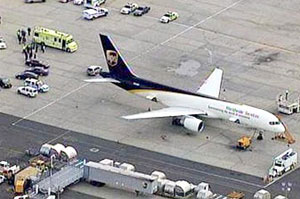 WASHINGTON, Nov 2: The United States intercepted parcels from Yemen in September thought to be a dry run for the package bomb plot, a US official said, as Western governments tightened freight security.
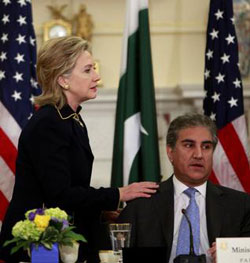 WASHINGTON, Oct 22: The United States on Friday announced that it would provide a whopping $2.29 billion as military aid to Pakistan to bolster its army's anti-terror capabilities, notwithstanding India's concerns that Islamabad has been diverting a portion of such assistance against it.
  WASHINGTON, Oct 7: The November trip to India by US President Barack Obama will be another clear statement of American support and commitment to the US-India relationship, Secretary of State Hillary Clinton has said.
 WASHINGTON, Sept 22: US President Barack Obama believed that the "cancer of terrorism" was in Pakistan and the war on terror in Afghanistan could not be won without attacking and eliminating the al-Qaeda and Taliban safe havens in the Pakistani tribal belt, according to a new book.
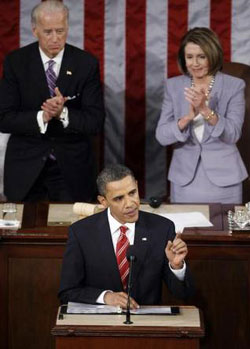 WASHINGTON, Sept 15: US President Barack Obama has exhorted American students to toil harder at school, saying their success would determine the country's leadership in a world where children in Bangalore and Beijing were raring to race ahead.
 WASHINGTON, Sept 10: US President Barack Obama is looking forward to his maiden trip to India in November, a senior administration official has said, describing the relationship between the two countries as "vitally important".
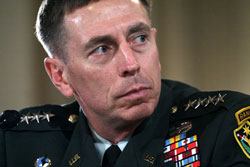 WASHINGTON, June 30: India has "without question" legitimate interests in Afghanistan, the top American military commander for the region told US lawmakers on Tuesday, indicating a developing policy in Washington aimed at reconciling New Delhi's stakes and Pakistani concerns in cooling the situation in the war-torn country.
  WASHINGTON, June 30: The United States has unveiled a new initiative to strengthen commercial co-operation with India, which is aimed at benefiting from new emerging Indian metropolitans like Pune and Nagpur.
 NEW YORK, June 18: A federal grand jury has indicted Pakistani American Faisal Shahzad in the Times Square bombing attempt on 10 counts, including attempt to commit international terrorism and use a weapon of mass destruction.

Aviation
| Business | Defence | Foreign
Affairs | Communication | Health
| India | United Nations
India-US
| India-France | Entertainment
| Sports | Photo Gallery |
Tourism | Advertise with Us
| Contact Us
© Noyanika International, 2003-2009. All rights reserved.