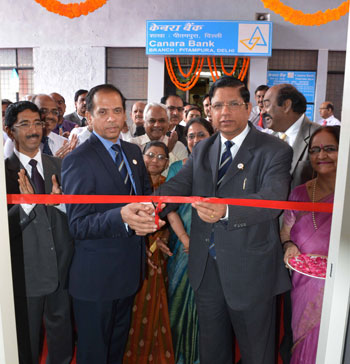
 Canara Chairman & MD R K Dubey inaugurates 2 E-Lounges in Delhi Canara Chairman & MD R K Dubey inaugurates 2 E-Lounges in Delhi
By Deepak Arora
NEW DELHI, April 29: Canara Bank Chairman and Managing Director, Mr R K Dubey inaugurated E-Lounge facilities for Pitampura and Maharani Bagh branches here at a simple function held at the Pitampura branch.
With these, the total number of E-Lounges in the Capital city of Delhi has increased to three.
Mr Dubey had opened Canara Bank’s first E-Lounge in the country at Bangalore on the Republic Day.
Two days later, Executive Director Ashok Kumar Gupta had inaugurated Delhi’s first E-Lounge at a function at Parliament Street branch of the Bank.
 E-Lounge is Canara Bank’s latest technology initiative to its customers and the first such delivery point which will provide customers facility to update their account, withdraw and deposit cash, deposit cheques, passbook printing etc without any manual intervention even beyond the banking hours. E-Lounge is Canara Bank’s latest technology initiative to its customers and the first such delivery point which will provide customers facility to update their account, withdraw and deposit cash, deposit cheques, passbook printing etc without any manual intervention even beyond the banking hours.
Customers can also use the Internet facility to do banking operations and stock trading, including video conference facility for interaction with the bank officials.
These E-Lounges cater to the needs of customers round-the-clock and all seven days of the week.
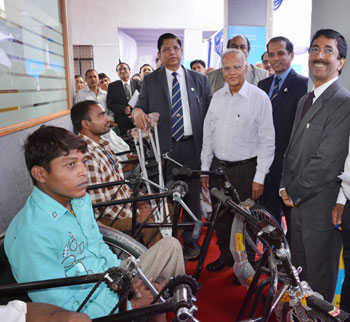
CMD Dubey distributes 15 tricycles
As a part of its CSR activities, Mr R.K.Dubey also distributed 15 tricycles to physically disabled.
Several senior officials of the bank, including the Executive Director, Mr V S Krishna Kumar, Bank Directors P V Maiya and Mr G V Manimaran and General Manager Delhi Circle Mr T Sreekanthan were present on the occasion.
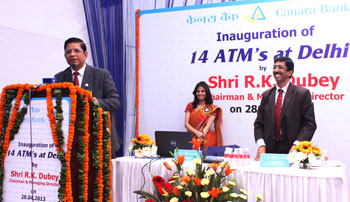 Canara CMD Dubey inaugurates 14 ATMs in Delhi Canara CMD Dubey inaugurates 14 ATMs in Delhi
By Deepak Arora
NEW DELHI, April 28: Canara Bank Chairman and Managing Director Mr R K Dubey on Sunday inaugurated 14 ATMs in Delhi at a simple function at the Kamla Nagar branch. With these ATMs, the total number of ATMs in Delhi city is 255 and of the bank it increased to 3,544.
The new ATMs have been opened at Khajuri Khas, Sivram, Sultanpuri, Budh Vihar, Okhla Main, Ashok Nagar, Pandav Nagar, Mangal Bazaar at Lakshmi Nagar, Maujpur, Sangam Vihar, Moti Nagar, Trilok Puri, Ranikheda and Kamla Nagar.
 Present at the function were senior officers of the bank including General Manager Mr Sreekanthan, DGMs Mr Ashok Aggarwal, Mr Radhakrishnan and Mr Suresh Kumar. Present at the function were senior officers of the bank including General Manager Mr Sreekanthan, DGMs Mr Ashok Aggarwal, Mr Radhakrishnan and Mr Suresh Kumar.
Mr Dubey also visited another branch in Kamla Nagar where a cancer detection camp has been orgranised in association with Rajiv Gandhi Cancer Institute & Research Centre, New Delhi.
This programme has been organized under the bank’s Corporate Social Responsibility.
China has big stake in India’s growing market, may not harm it: ASSOCHAM
NEW DELHI, April 28: Chinese stake in the growing Indian market is increasing massively and the current annual trade surplus of over USD 40 billion (about Rs 2,22,000 crore) may touch USD 44 billion by at the end of the current year, an ASSOCHAM analysis of the bilateral trade has shown.
Without suggesting for a moment that India should strain its ties with China, ASSOCHAM said, “it is in the best interest of the two neighbourly countries that their relations improve and are cemented through expanding commercial engagement”.
It said, ASSOCHAM is looking forward to the visit of Chinese Premier next month and is confident that the two countries would be able to resolve their strategic differences, including that of the border.
The chamber said, against its mammoth imports of USD 50 billion from China alone, India’s exports of merchandise goods were far short at USD 12.41 billion during April-February, 2012-13 (the latest disaggregated data) to that country. For the fiscal 2012-13 as a whole while imports from China may well exceed USD 57 billion while India’s exports to that country may not exceed USD 14 billion.
The trend in the financial year of 2012-13 has more or less followed that of the previous fiscal when China ran a trade surplus of USD 40 billion despite repeated concerns raised by the Indians at the highest level.
“At a time when Chinese economy, like most other economies of the world, is slowing, its exports to India would be of vital interest to the Chinese dispensation. In a way, the economic engagement is the best way to bridge all other differences. China alone accounts for over 11 per cent of India’s total imports making it a high stake commercial interest for the neighbouring country,” ASSOCHAM commented.
Electronics, machinery, precious pearls and other commodities are the principal items of import from China. In the last fiscal (11 months for which disaggregated data is available), of the total imports of USD 141 billion of five top items of imports , China alone accounted for USD 22.80 billion.
When it comes to exports, main items which are shipped to China are petroleum products, transport equipment, machinery and drugs and pharmaceuticals.
In the fiscal 2012-13, the exports to China are estimated to have been lower than that in the previous fiscal.
A large trade imbalance has been a matter of concern and should again be raised at the highest level with the Chinese leadership. The Indian exports of several items, especially drugs and pharmaceuticals face trade barriers in China.
A large-scale dumping of Chinese goods has hurt interest of the Indian businessmen and manufacturers in their own markets. Most of the damage has been done to the small and medium enterprises which find it difficult to compete with the economies of scale from aggressive exporters. Be it toys, worship idols, lightings, tubes, the Chinese goods are all there.
In the recent past, the Chinese commercial aggression has not limited itself to small and medium scale items, but to heavy engineering. The home-grown PSU and private firms such as BHEL and L and T have suffered a lot at the hands of Chinese power equipment manufacturers. The story is somewhat similar in the telecom gear.
“Net-net, it is more in the interest of the Chinese to stay commercially engaged maintaining the best of strategic and political relations as well, “ASSOCHAM said.
India, on the other hand, always respects its ties with the neighbouring countries, it added.
IFFCO Places Fertiliser Plants On High Alert: Dr U S Awasthi
By Deepak Arora
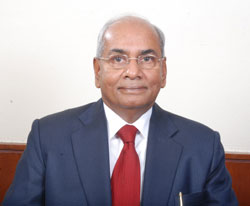 NEW DELHI, April 18: Following the blast at a US plant, IFFCO has placed all its fertilizer production units on high alert and informed the local police authorities. NEW DELHI, April 18: Following the blast at a US plant, IFFCO has placed all its fertilizer production units on high alert and informed the local police authorities.
Speaking to this correspondent soon after the blast at the US plant, IFFCO Managing Director, Dr U S Awasthi, said “we are still not aware of the reasons behind the blast at the fertilizer plant in West, Texas in the USA. However, we have placed all our fertilizer units on high alert and informed the local police authorities.”
Dr Awasthi said “we are still not aware whether it was a safety or security issue behind the US blast. If it’s a safety issue then all our plants have been kept in safe condition.”
However, he said, if it’s a security issue than it becomes a matter of higher level of the government. “But we have a private security too that looks after security issue of the fertilizer units. And we also make sure that there is no unauthorized entry in the plant premises.”
He also added that the Government needs to be little pro-active as far as the security issue irrespective of the ownership of the plants.
IFFCO is world’s largest cooperative and is owned by the farmers.
IFFCO has plants in Kalol, Kandla, Phulpur, Aonla and Paradeep.
Americas Petrogas makes new Vaca Muerta shale exploration discovery - gas and liquids
CALGARY (Alberta), April 7: Americas Petrogas has announced the discovery of gas and natural gas liquids on its Aguada Los Loros well, ALL.x-1, a vertical well that was drilled on the Los Toldos I block (98,300 gross acres or 398 square kilometers or 154 sections) in central Argentina.
The ALL.x-1, which completed drilling in 2012, intersected the Vaca Muerta formation (thickness 562 metres or 1844 feet) along with other secondary targets. The well was hydraulically stimulated with four stages in the Vaca Muerta shale formation in early 2013. The initial production of the Vaca Muerta shale formation, after the clean-up flow back, at depths between 2570 to 2929 metres (8432 to 9609 feet), increased from 1.3 million cubic feet (36,738 cubic meters) per day to 3.2 million cubic feet (90,418 cubic meters) per day of natural gas with 9 to 18 barrels of oil per day condensate (54-58 degree API) on managed choke sizes (4-6mm).
The well-head pressure declined normally during flow testing. This, in addition to core and other studies, will help the broad evaluation of the future productivity and the potential of the well and the reservoir. Currently the well is shut-in for a Pressure Build-up test.
Mr. Barclay Hambrook, President and CEO of Americas Petrogas said, “We are very excited with the results of this test showing strong sweet gas rates and increasing rates of high quality condensate in a very large block. We continue to de-risk our shale blocks, potentially adding reserves, and we are encouraged with the potential of our Los Toldos blocks.”
Mr. Güimar Vaca Coca, Managing Director of the Company’s Argentina operation, said “Located approximately one kilometer from a major gas pipeline, this project may be very valuable to help restore Argentina’s gas self-sufficiency.”
Americas Petrogas is the Operator of the Los Toldos blocks and holds a 45% Work Interest. ExxonMobil also owns a 45% Work Interest with the remainder held by Gas y Petroleo del Neuquen.
Respond to the Aspirations of Billion People: Rahul Tells Industry
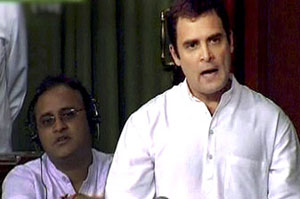 NEW DELHI, April 4: Mr Rahul Gandhi, Vice President, Indian National Congress (INC), called upon the business community to go for “smart interventions” in societal development to bring about qualitative changes in the lifestyles of common man and to propel ideations that can spur inclusive growth. NEW DELHI, April 4: Mr Rahul Gandhi, Vice President, Indian National Congress (INC), called upon the business community to go for “smart interventions” in societal development to bring about qualitative changes in the lifestyles of common man and to propel ideations that can spur inclusive growth.
Addressing the India Inc. at the CII’s Annual General Meeting and National Conference 2013, today in New Delhi, Mr Gandhi said that “India has an unstoppable tide of human aspirations”. Riding on the tide needs a boat and it is a joint endeavor of the government, business and civil society to create structures that address the aspirational paradigms of the common man”. This is the first time since taking over as the Vice-President of INC, he is addressing a business congregation.
Giving a clarion call to the Indian Industry to partner with the government in all its developmental activities, Mr. Gandhi wanted them to be intensely involved in infrastructural development, education, and the overall growth process, which is a win-win situation for everybody. “Harmony and development pre-supposes development of all and exclusion of none. Dalits, minorities, deprived people, destitutes and women are all important links in our societal structure and we have to reach out to them with compassion and empathy”, he added.
Taking a dig at the current milieu of political environment, Mr.
Gandhi, said that “presently the governance dependent on a few elected representatives and that too MPs and MLAs. The majority of the peoples’ leaders like pradhans of gram panchayats are denied of any say in the political process that goes into decision making. This is very frustrating”, adding that for a harmonious development, ideations have to move from all directions and the voice of the grass-roots level people has to be heard, recognized and acted upon.
Responding to a question from the floor on how to tackle the complex centre-state relationship, Mr. Gandhi, said that the real issue was not between the centre and state, but between people whose voice are being heard and of those who have been denied of any role in the political process. “ A generational shift has to take place in our complex social and political system to address creatively the grass-roots problem to find solutions to them. If you act on the suggestions of a few, one can go on expecting things to be done, but if you listen to our 1.2 billion people, we can get things done immediately. That is the importance of devolution of power”, he added.
In this regard, he said that perhaps barring a few, most political parties are bereft of connectivity with the masses. “This is what I am trying to change,” he asserted.
Mr. Gandhi’s speech was laced with anecdotes, his personal experiences gathered from interfaces with people and his perceptions as to what should be the future course of development actions for India. He said that the problems that India faces are complex and there were no straight-jacket solutions to that. “It is partly due to our political system which is deep-rooted into democratic ideals and values. Every voice has to be listened and responded to, unlike in countries like China, where sometimes the personal views and perceptions get drowned in the political apparatus. I am getting grooved into that mode gradually,” he added.
Mr. Gandhi said that political life should be a mission and should not be geared for personal gains. “Many people predict the probability of me becoming the Prime-Minister, when will I get married etc. But these are all irrelevant issues and what we should focus is on finding voice for a billion people. We have to channelize our attention to more important issues like corruption, under-development and the inept political structures”, he lamented.
Earlier welcoming Mr Gandhi, Mr Adi Godrej, President, CII, said that the industry was looking forward to have a pro-active policy initiatives from the government in areas like Goods & Services Tax (GST), fast-tracking large infrastructure projects, balanced land acquisition policy etc. Drawing attention of Mr Gandhi to ‘Young Indians’, an initiative of CII to groom up the youth to make them
employable and self-occupied, he pledged the support to the massive
youth awakening programs undertaken at Mr. Gandhi’s guidance.
Mr S.
Gopalakrishnan, President-Designate, CII, in his address said that as a partner in progress, CII would continue to lend support to the nation-building task.
Hooda seeks support for the poor
NEW DELHI, April 4: The Haryana Chief Minister, Mr Bhupinder Singh Hooda, has advocated for safeguarding the interests of farmers, labourers and vulnerable sections of the society, which did not have lobbies to protect their interests.
Mr Hooda was talking to mediapersons on the sidelines of CII National Conference 2013 in New Delhi today, where he spoke on ‘Can Good Economics be Good Politics’. He said that various lobbies watch the interests of their respective segments but farmers, farming labourers and lower strata does not have lobbies of their own and they should get more protection and support.
Mr Hooda said that good economics and good politics put together make good governance and Haryana is one of the shining examples of this. Economics and politics cannot be divorced from real life and they are the two sides of the same coin, he added.
Quoting Kautilaya, Mr Hooda said that good economics is driven by concerns for and welfare of all sections of the society, especially the lowest strata of the society, which certainly leads to good politics. What ultimately matters is whether we succeed in improving the lives of the people for whom we work, he added.
Referring to opinion of some people that political realities have been preventing the implementation of rational economic policies, Mr Hooda called for people friendly approach in economics and added that if a policy is not politically correct, it is difficult to assume its economic sustainability because the so called rational economics does not exist in vacuum. He said that politics generate it’s own economics. It creates its own dynamics of development.
Mr Hooda said that there is no such thing as an absolute good economics nor can there be good politics relevant forever. Both constructs are relative and they change their shades in time and space. What ultimately matters is whether we succeed in improving the lives of the people for whom we work. I leave the issue to your judgment, he added.
Referring to various achievements of Haryana, Mr Hooda said though Haryana is a small state accounting for just 1.3 per cent of the total area of the country. But it contributes nearly 3.4 per cent to the national GDP. With per capita income of about Rs 1.24 lakh in 2012-13, it occupies top position among the major states of the country.
The Chief Minister said, “Haryana has harnessed the progressive thrust of industrialization with its innovative policies and pragmatic strategies. The state-of-the-art infrastructure facilities, industry-friendly policies, responsive administration, peaceful law and order situation and abundant skilled manpower make it a preferred destination for setting up industry and enterprise.”
The economy of Haryana registered an average annual growth rate of 6.4 per cent from 1966-67 to 2004-05. But during the last eight years, the state’s economy grew at an excellent average annual growth rate of 9.3 per cent, much higher than the national economy which grew at 8.4 per cent. Exports from Haryana crossed Rs 55,000 crore in 2011-12.
According to Assocham report of October 2012, 87 per cent of the total investments received in Haryana are from the private sector, which speaks volumes about the vast investment opportunities the state offers. An Assocham Report of 2010 stated that Haryana achieved 81 per cent implementation rate of pledged investments, far ahead of other states.
As per the CMIE report of 2007, Haryana achieved top position in terms of per capita investment. As per INDIA TODAY’s “State of the States study report of 2011”, Haryana is ranked as the top State in most improved big State - Health and Education Sector categories.
Chief Minister said that creation of world-class infrastructure has remained the priority of the Haryana Government. “We are constantly striving to improve connectivity, ensure adequate power supply, water supply and provide effective logistics support to industry. We have already brought the metro to Gurgaon. Work on the metro project for Faridabad is in progress. Foundation of Bahadurgarh link has also been laid. We are proud to implement the first intracity metro in PPP mode, in Gurgaon. Our other initiatives include upgradation of national and state highways, new inter-city connectivities, intra-city transport etc.”, the Chief Minister added.
Agriculture sector too has been a priority area. Haryana is the second largest contributor of foodgrains to the central pool. We are the leader in the export of basmati rice. About 60 per cent of basmati export from India is from Haryana alone. Haryana has been awarded “KRISHI KARMAN AWARD” for two consecutive years 2010-11 and 2011-12 for outstanding performance in wheat production and productivity in the country.
In a reply to a query, Mr Hooda said that Haryana Government has added to the economic value of land by announcing Floor Rate Prices and giving other benefits like annuity to the farmers, which other states have been emulating.
Planning Commission Deputy Chairperson Mr Montek Singh Ahluwalia, BJP’s Chief Spokesperson Mr Ravi Shankar Prasad, CII Vice President Mr Ajay S. Shriram, Business Standard Editor Mr T.N. Ninan also participated in the panel discussion.
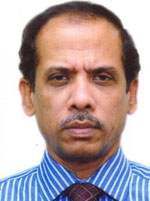 Krishna Kumar is new Executive Director at Canara Bank Krishna Kumar is new Executive Director at Canara Bank
By Deepak Arora
NEW DELHI, April 4: Mr V S Krishna Kumar has assumed charge as the Executive Director of Canara Bank, one of the leading public sector banks in India, from Thursday.
Mr Krishna Kumar carries with him vast knowledge and multi-dimensional banking
experience, spanning over three decades. He worked in different branches and diverse departments of Allahabad Bank with distinction. His key areas of expertise include Credit, Inspection, Vigilance and Human Resources Management.
Mr Krishna Kumar has done graduation in law and science. Born on May 1, 1955, Mr Krishna Kumar joined Allahabad Bank in the year 1981 as a Probationary Officer in JMG Scale I and moved up to the ranks of a General Manager in 2009.
Manmohan asks India Inc to be positive; hints at more reforms
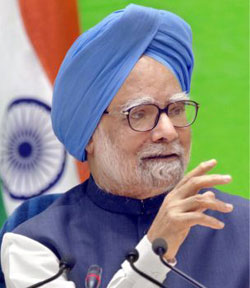 NEW DELHI, April 3: While asking India industry leaders to be positive, Prime Minister Manmohan Singh signalled a fresh spate of reforms despite an unsettled political environment and asked industrialists to keep faith in him to get the economy going. NEW DELHI, April 3: While asking India industry leaders to be positive, Prime Minister Manmohan Singh signalled a fresh spate of reforms despite an unsettled political environment and asked industrialists to keep faith in him to get the economy going.
Addressing the annual general meeting of the Confederation of Indian Industry (CII), Dr Singh said that the Centre would push the envelope on foreign direct investment (FDI), triggering speculation that the UPA would pack in plenty of policy action before general elections slated for next year.
"We are reviewing the FDI policy comprehensively to see what more can be done," said Singh, who presided over the opening up of the economy as finance minister in the 1990s.
The Prime Minister did not specify about changes in the FDI policy that the government was working on, but there were heightened prospects it could likely ease caps on foreign investment in several sectors.
Investors and companies in the pension and insurance sectors, in particular, are keen that a 26% investment cap be lifted.
"We welcome foreign investment, which has a critical role in bringing in modern technology and globalising our economy. Even as our Indian industry steps out to invest abroad, we must welcome foreign investors coming to India," he said.
A raft of fresh policy pronouncements are likely to soothe frayed nerves of investors who fear the government could be more focused on political risk management rather than reversing the slowdown in the economy, which is set to crash to a decade's low growth of 5% in 2012-13.
The UPA is struggling to balance the demands of unpredictable allies, having recently lost the support of one, Tamil Nadu's DMK, which reduced its strength in Lok Sabha to just above the half-way mark.
Significantly, the PM acknowledged that corruption and government red tape were major roadblocks and coalition politics was challenging, but noted that India had achieved robust economic growth in the past despite these concerns.
"There are indeed many deficiencies. Corruption is a problem. Bureaucratic inertia is a problem. Managing coalitions is not easy. But these problems have not arisen suddenly. They were all there even earlier, when the economy was growing at 8%," he said.
"We are seeing temporary downturn, partly due to global factors. We can get back to 8% growth rate," Singh said, adding that his administration was determined to do everything possible to rein in the fiscal deficit, a measure of how much the government borrows to fund its expenses.
Singh said a debt recast package for state power distribution companies should help nurse them back to health, and flagged an imminent solution to the issue of fuel supply to power projects.
"The ministries are working to reach resolution in a time bound matter. I hope we will see results in the next three weeks," he said.
The PM hinted that he was open to implementing the string of recommendations that the Financial Sector Legislative Reforms Commission has made.
The commission has suggested merging the oversight functions of regulators such as Securities Exchange Board of India, Insurance Regulatory Development Authority, Pension Fund Regulatory and Development Authority and Forward Markets Commission into a single agency, while leaving the banking business regulation under the Reserve Bank of India.
Anand Sharma pitches for Higher FDI cap for Defense Sector
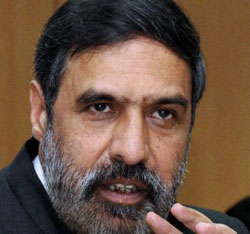 NEW DELHI, April 3: Mr Anand Sharma, Minister of Commerce & Industry and Textiles, said that the Commerce Ministry would push for higher foreign direct investment (FDI) cap in the defense sector, beyond the current 26%. NEW DELHI, April 3: Mr Anand Sharma, Minister of Commerce & Industry and Textiles, said that the Commerce Ministry would push for higher foreign direct investment (FDI) cap in the defense sector, beyond the current 26%.
He was addressing the session on ‘Future of India’s Industrialization’ at Confederation of Indian Industry’s (CII) Annual General Meeting and National Conference 2013, held in New Delhi today. This, he stressed would help India to become one of the major defence producers of the world.
Mr Sharma said that the Government was committed to address the issues constraining the industrial performance by putting in place an institutionalized arrangement for fast tracking infrastructural projects. All pending projects would get speedy approvals from the Cabinet Committee on Investment (CCI) in the coming months.
The Minister said that several steps were taken in the recent past by the Government to improve the investment climate and investor confidence in the country. The Delhi Mumbai Industrial Corridor is the most innovative project that could spur growth. The Central Government, in partnership with the State Government, has been fast-tracking the setting of integrated townships along the corridor, which would provide a fillip to industrial growth in the years to come, he added. The investors in this project would not need to acquire land as the land will be provided by the State Governments as their equity in this project, he mentioned. The impact of these measures would help India improve its ranking in the ‘Doing Business’ survey of the World Bank.
Mr. Sharma said that the domestic industrial performance has suffered considerably due to the difficult and challenging global macro-economic scenario, which lasted over almost five years. Despite the coordinated effort by the governments world-wide, the recovery has been slow. In order to guard against the ill-effects of the global slow-down, Mr. Sharma, suggested the India Inc. to stay optimistic and not let any negative sentiments to hamper the recovery process. India is a rule-based and rule-governed country. Hence, it’s pertinent to keep the growth engine ticking by not letting the shaky investment environment bog down the growth prospects, he stressed.
Elaborating on the importance of improving the availability of infrastructure for industrial use, Mr. Sharma, emphasized making land available at an affordable cost. The National Manufacturing Policy (NMP) has taken some noteworthy steps to address this problem, he added. “For sustenance of a large population, it’s pertinent to increase the share of manufacturing in the GDP”, the Minister elaborated and added that “for us, achieving high manufacturing growth is not a luxury, but a necessity and it must be a national imperative to achieve the same. India has to prepare itself for becoming a part of the world’s assembly line and in order to achieve this feat, we need to take steps to enhance technology, innovation and the skill levels of our labour-force,” he outlined.
While welcoming, Mr Sharma, Mr Adi Godrej, President, CII, stressed the need for taking urgent redressal steps for bolstering the industrial growth. Amongst these measures, are the need for nation-wide monitoring of projects, over-hauling of complex regulations including labor laws, focus on provision of infrastructure and boosting the production levels of SMEs. Mr S Gopalakrishnan, President Designate, CII, concurred with the views of Mr Sharma in the importance of lifting India’s ranking in the ‘Doing Business’ survey.
|


