


BUSINESS
|
PPP model to enhance coal production in India: S.K SrivastavaBy Deepak Arora
Speaking at a roundtable discussion on “Challenges in Meeting the Growing Coal Requirement of Indian Industry”, Mr S.K Srivastava, Coal Secretary, said the government is considering for public-private partnership involving Coal India Ltd (CIL) to increase coal prodction and thereby reducing the dependence on imports. Mr Srivastava said the ministry is examining two to three models suggested by the Planning Commission and the Finance Ministry on having PPP model in the coal sector to boost production. Coal ministry has set up a committee to devise a PPP policy framework with CIL as one of the partners in order to increase production of coal he added.
Mr Srivastava said in order to overcome the hurdles coming in the way of coal companies the ministry has been regularly interacting with the ministry of environment and forests. He said the Ministry is coordinating with the concerned state governments to address the issues related to land acquisition and rehabilitation and resettlement of project affected persons. Some other factors include revised norms for environmental/forest clearances, uncertainty on mining tax/ MMDR Act, delays in land acquisition, E- auction still needs special attention. The next meeting of Inter Ministerial Committee is initiating the process of allocation of coal mines. The government had earlier invited proposals from PSUs for allotting 17 blocks to them, including 14 for captive power plants. Mr A.C Verma, General Manager (S&M), Coal India Limited, said Railways play an important role in coal mining as over 70% (including MGR) coal moves by rail and urged to increase rail wagons. CIL is not in a position to give new committment due to negative coal balance, added Mr Verma. The discussion was organized by PHD Chamber here on Tuesday. Mr Shyam Bang, Chairman, Industry Affairs Committee, PHD Chamber of Commerce and Industry, said total world coal production reached a record level of 7,678 MT in 2011, increasing by 6.6% over 2010. The average annual growth rate of coal since 1999 was 4.4% The Demand for Coal in India has increased from 354 MT in 2001-2002 to 649MT in 2012, and the trend show the demand will further increase to 979.5 MT in 2012-2017 he added. He also said demand of coal is maximum in power sector and has increased from 239 Mt in 2011 to 415 in 2012, and is forecasted to increase till 682 in 2016. IFFCO in tie up with Brazilian firm
“This is a step towards backward integration strategy of IFFCO in order to strengthen its phosphate sourcing for manufacturing of phosphatic fertilisers in India,” IFFCO Managing Director U. S. Awasthi said in a statement. However, theterms of quantity of supplies would be further discussed, he said. Increasing link between smuggling counterfeiting and crimeCHANDIGARH, May 23: With the agenda to spread large scale consumer awareness against the menace of smuggling and counterfeit products, FICCI-CASCADE (Committee Against Smuggling and Counterfeiting Activities Destroying the Economy) organized a seminar in Chandigarh on ‘Curbing Counterfeiting and Smuggling—An Imperative for Indian Economy’. The seminar discussed the role of media in increasing awareness on the subject. Besides focusing on the losses to the government and industry, the seminar also highlighted growing link between smuggling and counterfeit activities and organized crime. The seminar was inaugurated by Mr Shivraj Patil, Punjab Governor and Administrator U.T, Chandigarh. Mr. Rajinder Gupta, Chairman FICCI Advisory Council (Northern States & Chairman Trident Group) welcomed the delegates. The seminar brought out the fact that Tobacco sector continues to account for the highest revenue to tax percentage loss to the government at over 60% and Punjab is no exception. The state of Punjab is one of the fastest growing markets for illegal / tax-evaded cigarettes in the country. These locally manufactured tax-evaded cigarettes have over 15% share of the total cigarette market and are continuously growing in the state of Punjab. These cigarettes are particularly popular amongst youth as they are available at a significantly lower price than the legal cigarettes. It is an alarmingly large and well-organized business: with some of India’s largest manufacturers of illegal cigarettes (based inside and outside the State), supply over 20 million illegal / tax-evaded cigarettes in the state every month. Consequently, the government suffers revenue loss of over Rs. 75 crore annually. Illegal cigarettes are sold in the market at one fifth the price of legal product. The loss of revenue to the Government because of the illegal cigarettes trade is staggering, but, the cost to the health of smokers of illegal cigarettes is incalculable. Illegal cigarettes pose major health hazards to smokers because of the inferior manufacturing processes and the low quality of tobacco with high levels of tar & nicotine used for such products. One can well imagine quality of such illegal products which are sold at such low rates. High taxation on cigarettes in India is the key reason for the large and growing market of illegal / tax-evaded cigarettes. Despite accounting for only 15% share of total tobacco consumption, cigarettes generate over 75% of the tax revenue from tobacco. According to the Euromonitor report on Illicit Trade in Tobacco Products, India is the fastest growing and is already world’s fifth largest market for illicit cigarettes. As per Euromonitor, Illicit cigarettes accounts for 18% of Industry volume in India & it has grown by 2 billion sticks in just 1 years (2011 - 2012). With special focus on Chandigarh the seminar highlighted the problems faced by the state due to the Grey / Illicit market, causing huge losses to the state ex-chequer. The seminar highlighted problems faced by local traders due to counterfeiting. According to the FICCI study on “Socio-economic Impact of Counterfeiting, Smuggling and Tax evasion in seven key Industry Sectors” the estimated annual Tax loss to government in the year 2012 is estimated at Rs. 26,190 crores. The study further estimates an annual sales loss to industry at a whopping Rs. 1,00,000 crores. The key sectors which were included in the study were Auto Components, Alcohol, Computer Hardware, FMCG (Personal Goods), FMCG (Packaged Goods), Mobile Phones and Tobacco. The highest loss to industry in terms of revenue is from FMCG (Packaged Goods) at Rs. 20,378 crores (23.4%), FMCG (Personal Goods) at Rs. 15,035 crores (25.9%), Auto Components at Rs. 9,198 crores (29.6%), Mobile Phones at Rs, 9,042 crores (20.8%) and Tobacco at Rs. 8,965 crores (15.7%). The maximum tax loss on account of smuggled and counterfeit products to the government is from the Tobacco Sector at Rs. 6, 240 crores followed by FMCG (Packaged food) at Rs. 5,660 crores and FMCG (Personal Goods) at Rs. 4,646 crores. The study also reconfirms government estimates of 5% of medicines in the market being fake that have a direct impact on the health and safety of consumers. Mr P.C.Jha, Adviser FICCI CASCADE stated that in India, 20% of road accidents result from the use of counterfeited auto parts, and more than 25,000 deaths in road accidents every year are caused because of such fake and substandard auto parts. Counterfeiting in items like medicines, baby food products, eatables, auto-parts, cell phone handsets, etc., pose grave health hazards and also serious risk to life. 2.5 million legitimate jobs are lost globally due to fake products each year. Mr. Jha also stated that, “The taxation policy of the government also needs to be examined properly so that there is a right balance between the revenue need of the government and the effect of taxes on the prices of the goods. It is necessary that the government takes into account the effect of taxation on the prices of the goods, and also the capacity of the citizens to pay taxes. If there is an imbalance in the policy decision, and the tax rates are unreasonably high; then this results in increased availability of counterfeited and substandard goods in the market, since the high rates of taxes also increases profit margin on tax-evaded goods. Consequently, the government does not get the revenue it has planned for, the consumers get more of substandard and harmful goods, and those indulging in illegal activities make big money without much difficulty. There is an urgent need to check this situation. Several steps are being taken by FICCI CASCADE and the government to create large-scale awareness among the most impacted segment of this menace: the consumer. The seminar on ‘Curbing Counterfeiting and Smuggling—An Imperative for Indian Economy’ has been organised in a series of such events to be organised across the country as part of a nation-wide awareness campaign to highlight the issue and focus on the growing menace of Counterfeit and Smuggling. The participants in this seminar included Ms Kalpana Reddy (First Secretary for Intellectual Property US Patent & Trademark Office, U.S. Department of Commerce) who spoke about International Practices to curb Counterfeiting and Smuggling particularly in United States; Mr. Ramesh Vinayak (Resident Editor, Hindustan Times, Chandigarh) -Role of Media in Spreading Consumer Education and Awareness in Curbing Counterfeiting and Smuggling. Ms. Jyoti Vij (Deputy Secretary General, FICCI ) proposed a vote of thanks. Toyota mulls launching more small cars, compact SUVs in IndiaMay 23: Global car giant ToyotaMotor Corporation will consider launching more small cars and entering fast growing segments like compact SUVs in order to achieve market leadership in India. The company, however, said in the absence of a clear cut Indian government policy relating the auto industry such as fuel policy and import tariff, it is adopting a wait and watch strategy before deciding on setting up of a new diesel engine plant in the country or launching more hybrid cars. "If you look at our portfolio in India, we have just one small car, Liva. We need more if we have to have big volumes in a fast growing market like India," said Toyota Motor Corporation Managing Officer Satoshi Ohiso. While he did not share details of the company's future product launches, Ogiso said another prime focus of the company is the fast growing compact SUV segment. "Globally, the compact SUV segment is getting more popular and in India it is also the same. We will definitely have our presence there," he said, without elaborating details. Ogiso also said the company will try to bring more contemporary global products keeping in mind how the Indian customer have evolved. "We launched the Etios which was developed keeping the Indian market in mind. Today, the Indian customer is more aware of the international trends, they are discerning and our endeavor will be to satisfy them," he added. Sharing the the company's long term ambition in India, Toyota Motor Asia Executive Vice President Bernie O'Connor said the idea was to replicate the global leadership position in the country. "Globally we are leaders, if you look in other Asian countries like Indonesia, the Philippines as well, we are leaders. Definitely, we have an ambition to be the number one in India as well in the long term," O'Connor said. While he did not share a timeline for realising such ambition, O'Connor said Toyota is watching out for a clear cut government policy before it decides on key decision like investing on a diesel engine manufacturing plant. "In the long term, we need to have a diesel engine manufacturing plant in India but the lack of clear cut direction in auto fuel policy is something we need to watch out for. We need to see which way India is going," he said. Similarly, there is a need to understand how import tariffs are going to be like, if the India-EU FTA materialises as is being reported. "We would have to see how things are (import tariff) before we decide to launch more hybrid vehicles. At the moment it is a very costly proposition to sell our hybrids in India," O'Connor said. The Prius is the only hybrid model that was launched in India by Toyota. IFFCO posts highest-ever profit before tax of Rs 1,107 CrBy Deepak Arora
“Our work speaks of its own. This has once again been proved this year based on our annual financial results,” said Dr Awasthi, Managing Director of IFFCO, soon after the financial results were released. At IFFCO, he said “our focus is always the growth and development of our farmers and cooperators with in turn growth of IFFCO itself. Our hard-work and sincere efforts fetch good returns to us, every time, year after year.” Record breaking and robust overall performance of the world’s largest processed fertilizer cooperative, IFFCO, has given advantage to cooperatives. With this remarkable performance, IFFCO has led the way in the fertiliser sector to stretch itself to provide price advantage to the farmers in the form of reduction in its retail prices. IFFCO has also been the leader in providing various services in the rural areas for the benefit of farmers and cooperatives to improve their farm practices, productivity, farm incomes and other schemes for the social benefits. IFFCO spent about Rs.160 Crore during the last four years for achieving these objectives. During 2012-13, IFFCO recorded fertilizer sales of 100 Lakh MT with turnover of Rs. 21,673 crore with its own domestic fertilizer production at 79 Lakh MT. In the record breaking 12th consecutive year, IFFCO will be paying dividend to its member cooperatives at the rate of 20 per cent on share capital. In addition to the dividend, IFFCO will also be paying a special rebate to its members to be quantified at the rate of Rs10 per ton of IFFCO fertilizer sold during the financial year 2012-13. This effort will further strengthen the cooperatives in the country. IFFCO had 39,368 member cooperative societies as its shareholders as on March 31, 2013. Dr Awasthi said “the challenges in the industry during the year 2012-13 kept us on tenterhooks. However, we successfully addressed these challenges and performed well in various spheres of production, sales, profitability, transportation and energy consumption.” Talking about the challenges, Dr. Awasthi said that “We mitigated our risks from quagmire of big challenges like erratic monsoons, limitations in sourcing of raw materials; highly volatile forex markets with wide ranging USD- INR parity, losses on Fertiliser Bonds and inordinate delays in payment of subsidy, but still kept ourselves afloat, consistency and continuously performing well in the industry.” IFFCO made its mark in various company rankings across the globe this year. Awards and recognition for its IT, Human Resource, Technical areas sum up IFFCO’s success. All plants of IFFCO bagged five top awards from FAI during the year 2012-13 besides other prizes in the category of industrial safety, environment protection etc. IFFCO is surpassing its own preceding records to become global leader in the production and marketing of processed fertilisers in the country. IFFCO’s agricultural services for farmers and cooperatives cater to the problems related to issues of soil health, better water management and best fertilizer use efficiency through balanced and integrated use of various nutrients available. This has indeed led to overall agricultural development in various villages and the areas spread around them. R K Dubey inaugurates new Canara Bank branches in DelhiBy Deepak Arora
The Executive Director, Mr V.S. Krishna Kumar and Mr T. Sreekanthan, General Manager Delhi circle, also graced the occasion. A large number of valued customers of the Bank and public attended the event. As a part of CSR activity, Mr R.K.Dubey presented a computer to Nirmal Seva Samiti for educational use of poor illiterate girls. Mr.Dubey also handed over keys of two cars financed by the branch and sanction letters for loans under SME/Micro Finance. Chairman and Managing Director R K Dubey also inaugurated the renovated premises in Delhi at Munirka and shifting of Yamuna Vihar Branch to new premises. The bank proposes to shift many more branches in Delhi for customer convenience, besides renovating branches for better ambience, opening of more e-Lounges and Tech Parks in the city. Singapore emerging as favourite destination for Indian entrepreneurs, companies & studentsNEW DELHI: Ash Singh was born in Canada and educated in Hong Kong. But ever since his first start-up — when still in university — was acquired by a Singapore-based company in 2004, Singh has lived in Singapore. He was 22 then. A serial entrepreneur, Singh has invested in six digital media companies and is CEO of Interactive SG, a business accelerator in Singapore. "I prefer Singapore over other countries for my entrepreneurial journey because it is, for me, the most pro-business country." And, he stresses, it's not just the low tax rate that's the attraction. "The government here offers various schemes and resources at every level of business to give you the best chance to succeed," adds Singh. Diversity and multiculturalism are among the top reasons for him to have decided in favour of Singapore as his work and home base. An avid basketball fan, he is a shareholder in Singapore Slingers professional basketball team. And in his free time he's busy with his favourite hobby: promoting turbans through The Turbanizer, a mobile app that he has developed. It's not just entrepreneurs who are rooting for Singapore over other destinations, including popular ones in the West. Gunit Chadha, co-chief executive officer Asia Pacific and member of the group executive committee of Deutsche Bank says: "For Indian entrepreneurs, Indian companies and Indian students, Singapore is fast emerging as an important destination in a growing look east mindset." In his Asia Pacific role, he is keen to connect Indian entrepreneurs to their counterparts in Thailand, Indonesia or the Philippines; or have Indian public sector companies share experiences with government-linked companies in Singapore. For Indian companies, Singapore provides an ideal location for regional or even global headquarters, he feels. "For the financial services sector across investment banking, hedge funds, wealth and asset management, Singapore has a great talent pool with many professionals coming from India," adds Chadha. To be sure, Singapore has even become an attractive destination for Indian finance professionals from the UK and the US who want to move because of a tight job market there and Singapore having emerged as one of the key banking hubs in the world. With a low average individual taxation rate, which is further lowered for those who make significant investments, the island nation is indeed an ideal choice. Besides, for Indians, the country is hospitable and unlike Dubai — another attractive location for Indians — provides an easier path to permanent residence and later citizenship for those eligible. Tax Cushion For All "Most taxes such as wealth tax, gift tax and capital gains tax are not there and there's no global income-tax for tax residents of Singapore. It's a territorial tax system and hence you are taxed only on what you earn here. There are no restrictions on overseas investment. It's a great location for high net worth individuals (HNIs) from India," says R Narayanamohan, chairman of Singapore India Chamber of Commerce. Narayanamohan has lived in Singapore for over three decades and runs his own accounting firm. Singapore's attractive tax regime includes a top personal tax rate of 20% which kicks in only on income exceeding S$320,000 (around Rs 1.4 crore). Up to S$320,000 there are gradual tax rates starting at zero for the first $20,000. Further, there are no estate duty or inheritance taxes and the corporate tax rate of 17% can be concessional in some cases and go down to 5-10%. "Singapore offers multiple incentives for entrepreneurs, including the global trader incentive programme; and an R&D incentive which includes a cashback scheme by the government," says Sonu Iyer, tax partner and national leader, human capital services at Ernst & Young. Those setting up regional headquarters there are also eligible for sops, she points out. She, however, adds a word of caution about the stricter rules put in place by the Singapore government recently in granting employment passes and permanent resident status. A report by Boston Consulting Group released last year put the number of millionaire households in the island nation at 188,000 or around 17% of its resident households. This means Singapore, which has a population of 5.31 million, has the largest percentage of millionaires in the world. Singapore's uber-rich population has grown, with 10 in every 100,000 households now classified as ultra-high-net-worth or those with more than $100 million in private financial wealth. R K Dubey opens 2 SME Canara Bank branches in DelhiBy Deepak Arora
By the click of a button and through video conferencing from the Naraina Vihar Branch, Chairman Dubey also inaugurated one more branch in Delhi at Jaitpur and upgraded three extension counters at IIT, ICMR and Vivekananda Mahila College into full-fledged branches taking the total number of branches in Delhi to 136. Mr Dubey said the bank proposes to open two more SME Sulabhs and 24 general banking branches in Delhi. He said the Bank also proposes to increase the lending to SME from Rs 3,617 crore as on March 2013 to Rs 4,500 crore during the current financial year. The Bank has an exposure of Rs 37,016 crore in MSME sector as on March, 2013. Several senior officials from the bank including Executive Director V.S. Krishna Kumar and Mr T Sreekanthan, General Manager, Delhi Circle were present on the occasion. Several eminent persons and valued customers of the Bank attended the event. IFFCO slashes fertilizer prices; Gives boost for Kharif SeasonBy Deepak Arora
The MRP of 22 grades of phosphatic, potassic and complex fertilisers have been slashed after the approval of fixation of new NBS rates for Phosphatic and Potassic (P&K) fertilizers for the year 2013-14 by the Union Cabinet. IFFCO will also provide the price protection to farmers for the old material which is already in the stocks as the new rates are applicable from April 1. IFFCO will be reducing Rs. 1500 per ton in DAP which will make a reduction of price to farmer by Rs. 75 per bag of 50 Kg, Rs 1300 per tonne reduction in NPK which means Rs 65 per bag of NPK –I & NPK-II will be reduced and Rs 1000 per tonne in NP which means Rs. 50 per bag of NP. On this very important announcement, the IFFCO Managing Director, Dr. U S Awasthi, said “We at IFFCO care for the our farmers and take every step for their benefit. I am very happy to announce the new reduced rates by IFFCO.” He further added that this announcement is very timely and encouraging and would certainly help bringing much needed succor to farmers of the country. He also said that this move will certainly help in rejuvenating the soils of the country thereby increasing farm productivity on sustainable basis so as to ensure food security of country. IFFCO being the farmers’ own cooperative Society, has been trying to draw attention of all concerned to the rising subsidy amount, depleting soil health and need to restore the soil fertility through balance application of nutrients. Dr Awasthi was of the firm opinion that to maintain soil health for sustainable agriculture where fertiliser manufacturers should come forward and shoulder responsibility to educate farmers as well as sales point personnel on efficient and judicious use of nutrients. Canara Bank Q4 net profit jumps to Rs 725 crore
Total provision made for the quarter ended March 31, 2013, was at Rs 972 crore compared to Rs 662 crore in the year-ago period, its Chairman and Managing Director R K Dubey told reporters here. The bank's total income reached Rs 9,472 crore, a 4.8 per cent growth (Rs 9,037 crore). Net interest income improved by 2.5 per cent from Rs 2,040 crore to Rs 2,091 crore. The bank's gross NPA ratio has come down to 2.57 per cent compared to December 2012 position of 2.77 per cent, and net NPA ratio to 2.18 per cent from 2.35 per cent, Dubey said. Global deposits of the bank stood at Rs 3,55,856 crore compared to Rs 3,23,963 crore as on December 2012, a growth of 9.8 per cent. Global advances (net) reached a level of Rs 2,42,177 crore compared to Rs 2,18,242 crore, up 11 per cent. The bank aims to reach an aggregate business figure of more than Rs seven lakh crore, with approximate deposit growth of 15 per cent and advances growth of 24 per cent. "We plan to take the number of branches from 3,728 to 5,000 and number of ATMs from 3,526 to 10,000 by March 2015," said Mr Dubey. The bank also has plans to open branches at nine overseas centres - Johannesburg (South Africa), where it has already got the license, Sao Paulo (Brazil), Dar-es-Salaam ( Tanzania), Tokyo (Japan), Abuja (Nigeria), Jeddah (Saudi Arabia), Qatar Financial Centre (Qatar), Frankfurt (Germany) and New York (the USA) by March next year. The Board of Directors of Canara Bank at its meeting held on May 2 have recommended a Dividend @ 130% / Rs. 13 per equity share of the face value of Rs. 10 for the year ended March 31, 2013. |
|
||
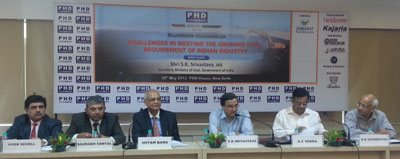 NEW DELHI, May 28: In order to improve the efficiency of coal production and reduce dependence on imports, the Government is going for public-private partnership and restructuring of Coal India Ltd.
 Secretary Srivastava also informed that two Committees for restructuring and technological modernization of coal India Limited (CIL) have been set up for efficient production of coal in the country.
 NEW DELHI, May 11: Indian Farmers Fertiliser Co-operative (IFFCO), on Saturday, said it had inked a long-term agreement with Brazilian mining company Vale SA for supply of rock phosphate, used in manufacturing phosphatic soil nutrients.
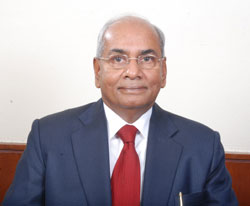 NEW DELHI, May 5: The man with the Midas touch Dr U S Awasthi has once again proved the adage that work speaks for itself when IFFCO posted its highest ever profit before tax at Rs1,107 crores with the lowest ever specific energy consumption of 5.764 Gcal/MT of urea during the financial year 2012-13. In the record breaking 12th consecutive year, IFFCO will be also paying dividend to its member cooperatives at the rate of 20 per cent on share capital.
  NEW DELHI, May 5: Canara Bank Chairman & Managing Director, Mr R.K.Dubey, on Sunday inaugurated the new premises of the South Extension Branch of the Bank in Delhi. The new branch provides good ambience to customers will help in attracting more
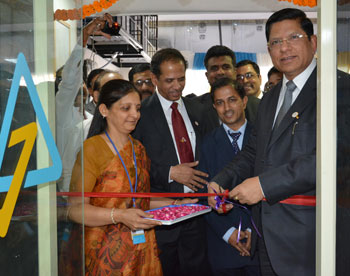 NEW DELHI, May 4: Canara Banak Chairman & Managing Director, Mr R.K.Dubey, inaugurated two SME Sulabh Branches at Naraina Vihar and Mangolpuri here on Saturday to cater to the needs of Micro, Small and Medium Industries.
  BANGALORE, May 2 : Canara Bank's net profit has jumped to Rs 725 crore for the last quarter of 2012-13 fiscal as compared to Rs 711 crore for Quarter 3. Its operating profit at Rs 1698 crore was higher by 12 per cent over Q3 FY 13 (1516 crore) and 13.9 per cent over the corresponding period Q4 FY12 (1491 crore).

Aviation
| Business | Defence
| Foreign Affairs | Communication
| Health | India |
United Nations
India-US | India-France
| Entertainment | Sports
| Photo Gallery | Tourism
| Advertise with Us | Contact
Us
© Noyanika International, 2003-2009. All rights reserved.