


DEFENCE
|
Nuclear-capable Agni-II missile test-fired successfully
The trial was conducted from a rail mobile system in Launch Complex-4 of Integrated Test Range (ITR) at around 9.15 am, defence sources said soon after the versatile surface-to-surface missile blasted off. Data relating to various parameters of the mission's objectives was being analysed, the sources said. Agni-II Intermediate Range Ballistic Missile (IRBM) has already been inducted into the services and Monday's test was carried out by the Strategic Forces Command (SFC) of the Army with logistic support from various laboratories and personnel of Defence Research and Development Organisation (DRDO). A DRDO scientist said it was a training exercise to familiarize the end-users with different operational conditions. The entire trajectory of the trial was tracked by a battery of sophisticated radars, telemetry observation stations, electro-optic instruments and a naval ship located near the impact point in the down range of Bay of Bengal. The 20-metre long Agni-II is a two stage, solid-propelled ballistic missile. It has a launch weight of 17 tonnes and can carry a payload of 1000 kg over a distance of 2000 km. Agni-II was developed by Advanced Systems Laboratory along with other DRDO laboratories and integrated by the Bharat Dynamics Limited, Hyderabad, the sources said. The missile is part of the Agni series which includes Agni-I with a 700 km range and Agni-III with a 3,500 km range, they said, adding that Agni-I has already been inducted and Agni-III is in the process of induction. The first trial of Agni-II was carried out on April 11, 1999. Though some of the subsequent trials were successful, the user trial conducted on May 19, 2009 and the first night trial on November 23, 2009 from Wheelers Island could not meet all the parameters, they added Be extra vigilant in e-world, Antony tells Armed ForcesNEW DELHI, April 16: Days after Canadian researchers reported a major incident of Chinese hacking into Indian military systems, Defence Minister A K Antony asked the armed forces to be extra vigilant in the e-world and prepare a crisis management action plan to counter cyber attacks and cyber terrorism. The minister’s caution comes 10 days after a group of Chinese hackers from Chengdu province is suspected to have penetrated into military computers having information on several Indian missile programmes, computers of Military Engineering Service, 21 Mountain Artillery Brigade in Assam, three bases of Indian Air Force and two military colleges. Though the extent of damage is still unknown, the researchers from Munk School of Global Affairs in University of Toronto and cyber-espionage tracker SecDev in Ottawa are in touch with the National Technology Reconnaissance Organisation — India’s top-most signal intelligence unit — over the last few months sharing the information. Antony asked the top brass of the three services to be in touch with the Computer and Emergency Response Team (CERT-In), NTRO, Union Home Ministry and Communication and Information Technology Ministry to prepare the crisis management plan. A Parliamentary standing committee on Thursday revealed that a panel was set up to look into matters relating to cyber security particularly in reference to strategic data maintained by the defence services. Don't treat Army men like 'beggars', SC tells GovtNEW DELHI, April 1: The Supreme Court has slammed the union government for treating army personnel like "beggars" in respect of emoluments and pension and asked the authorities to adopt a more "humane approach" towards those bravely defending the country's borders. "If a person goes to any part of Delhi and sits for begging, he will earn Rs 1000 every day and you are offering a pittance of Rs 1000 per month for a man who fought for the country in the high altitudes and whose arm was amputated? "Is this the way you treat those brave army officers? It is unfortunate that you are treating them like beggars," a bench of Justices Markandeya Katju and A K Patnaik said in verbal comments while passing the order. The apex court passed the order dismissing the Centre's appeal challenging a Punjab and Haryana High Court direction to pay higher pension to C S Siddu, a Short Commissioned Officer whose right arm had to be amputated due to an accident while on duty at the high altitudes on November 21, 1970. "The army personnel are bravely defending the country even at the cost of their lives and we feel they should be treated in a better and more humane manner by government authorities, particularly, in respect of their emoluments, pension and other benefits," the bench said in an order. There was an element of drama in the court when Additional Solicitor General Parag Tripathi pleaded with the court not to use "strong words" in the order like "beggars," "niggardly" "miserly", following which the bench dropped them from the written order. "We regret to say that the army officers and army men in our country are being treated in a shabby manner by the government. In this case, the respondent,(Sidhu) who was posted at a high altitude field area and met with an accident during discharge of his duties was granted a meagre pension. This is a pittance (about Rs 1000) per month plus D.A. "If this is the manner in which the army personnel are treated, it can only be said that it is extremely unfortunate," the bench however, noted in its written order. Indian Govt quietly inks Rs 3,726cr deal for 12 VVIP helicoptersNEW DELHI, March 12: VVIPs sure like to travel in plush and secure comfort. After getting three desi versions of US President's 'Air Force One', the Indian President and PM will now also get 12 swanky helicopters for VVIP travel on the lines of 'Marine One'. The defence ministry has quietly inked a Rs 3,726-crore deal to acquire 12 three-engined AW-101 helicopters from AgustaWestland, a unit of Italian major Finmeccanica, for IAF's elite Communication Squadron, which ferries around the President, PM and other VVIPs. "All the 12 helicopters will be delivered in three years or so," said a source. The ministry as usual remained silent about the deal, leave alone the exact contours of it, despite repeated claims made by defence minister A K Antony of 'total transparency'. The Cabinet Committee on Security apparently gave the nod for the exorbitant helicopter deal, despite objections from the finance ministry, due to 'security concerns' raised by the Special Protection Group as well as IAF. The government's VVIP helicopter contract comes after the Rs 727-crore deal for five mid-size Embraer 135BJ Legacy jets in September 2003 and the Rs 937-crore contract for three Boeing Business Jets (BBJs) in October 2005, with advanced self-protection suites to guard against missiles and other threats. The new helicopters will replace ageing Russian-origin Mi-8s and Mi-17s in the Communication Squadron, just like the Legacy jets have replaced the old HS-748 Avros and the BBJs the two 737-200 aircraft bought in 1983. While not as hi-tech as Barack Obama's "Marine One", the call sign of the US Marine Corps helicopter which ferries the US President, the Indian AW-101 helicopters will have self-defence systems like missile-approach warners, chaff and flare dispensers and directed infra-red electronic counter-measures to protect the VVIPs on board. The AW-101 helicopters were pitted against the American Sikorsky's S-92 Superhawks during extensive field trials held in 2008, which the US firm later claimed were unfairly biased against it. Orders issued for pensionary benefits to ex-servicemenNEW DELHI: In a move that will bring relief to over 12 lakh ex-servicemen, the Defence Ministry has issued orders to implement pending pensionary benefits to them involving an annual expenditure of about Rs 2,200 crore. The decision followed recommendations by a high-level committee and recent assurance in this regard in the Lok Sabha by Prime Minister Manmohan Singh. With these orders, the ministry has implemented all the seven recommendations of committee headed by Cabinet Secretary K M Chandrasekhar on pensions, which would now be close to the 'One Rank-One Pension' demand of ex-servicemen, senior ministry officials said today. "The Defence Ministry issued the orders on March 8 this year to implement the remaining two of the seven suggestions of the Cabinet Secretary K M Chandrasekhar-headed committee on 'One Rank-One Pension' demand," they said. The two recommendations for which the orders were issued were bringing parity between pension of pre- and post-October 10, 1999, personnel below officer rank, and further improving their pensions based on award of Group of Ministers in 2006. "With this order, the pensionary benefits of officers and jawans comes to near 'One Rank-One Pension' (OROP) benefits sought by the ex-servicemen," they added. To queries on the order, Defence Ministry spokesperson Sitanshu Kar said implementation of the orders would not only significantly reduce the gap between the past and current pensioners, but would also considerably improve the pension of ex-servicemen including disabled pensioners. "It will benefit 12 lakh ex-servicemen at a cost of Rs 2,200 crore approximately annually," Kar added. Singh had told the Lok Sabha on 5th March, in reply to BJP leader L K Advani's contention that OROP was not implemented, that five of the seven recommendations of the Chandrasekhar Committee were implemented and the remaining two would be fulfilled soon. Among the other recommendations already implemented were inclusion of classification allowance for personnel below officer rank from 1st January, 2006 and removal of linkage of full pension with 33 years from 1st January, 2006 (the day Sixth Pay Commission came into retrospective effect). The government had also implemented revision of pension for Lieutenant Generals after carving out a separate pay scale for them; broad banding percentage of disability and war injury pensions for pre-January 1 , 2006, pensioners; and removal of cap on war injury element of pension in the case of disabled pensioners. Ex-servicemen organisations had held protest marches all over the country last year to press for the acceptance of their OROP demand by the government and had also returned their service and gallantry medals to President Pratibha Patil in protest over the delay in its implementation. After the committee submitted its recommendation early last year, Finance Minister Pranab Mukherjee had announced in his budget speech on 6th July, 2009, that the government had accepted the suggestions and would implement it soon. Lockheed to deliver first C-130J Super Hercules to IAF in February 2011By Deepak Arora
John Giese said the first production aircraft are already on the assembly line and the first two aircraft will be delivered in February 2011. The production schedule is going nicely. Two more aircraft will be delivered in August, 2011 and the rest would follow February 2012. In 2008 the Indian Air Force had ordered six C-130J’s for Special Services, with an option for six more. The order includes six aircraft, three years of initial support, training of aircrew and maintenance technicians, spares, ground support and test equipment, servicing carts, forklifts, loading vehicles, cargo pallets, and a team of technical specialists who will be based in India during the three year initial support period. Also included is India-unique operational equipment designed to increase Special Operations capabilities. John said the C-130J Super Hercules will provide the Indian Air Force with modern and effective airlift to support a wide range of national requirements. Due to the aircraft’s mission flexibility, several other departments in India have shown interest in the C-130J. These include the Border Security Force, Coast Guard and Weather Department, hence increasing the potential for additional sales to India. In keeping with IAF requirements, he said the US Government offered a unique C-130J configuration modified for special mission roles. Equipped with an Infrared Detection Set (IDS), the aircraft will be able to perform precision low-level flying, airdrops and landing in blackout conditions. Self-protection systems and other features are included to ensure aircraft survivability in hostile air defense environments. In addition, the aircraft is equipped with air-to-air receiver refueling capability for extended range operations. Lockheed Martin will integrate this equipment and other capabilities into the Indian configuration as agreed between the governments. The Indian Air Force’s new Super Hercules will be the longer fuselage or "stretched" variant of the C-130J, similar to those being delivered to the U.S. Air Force. India joins the growing number of nations with C-130J fleets including Australia, Canada, Demark, Iraq, Italy, Norway, Oman, Qatar, United Kingdom and the United States. The C-130J carries eight 463L pallets, 97 medical litters, 24 CDS bundles, 128 combat troops and 92 paratroops. Lockheed Martin will work with a large number of partners in the private and public sector, including HAL, to meet its offset requirement from this program, which approximately $300 million. Lockheed Martin successfully achieved more than $37 billion in offset program credits in 40 countries. Headquartered in Bethesda, Md., Lockheed Martin is a global security company that employs about 140,000 people worldwide and is principally engaged in the research, design, development, manufacture, integration and sustainment of advanced technology systems, products and services. The Corporation reported 2009 sales of $45.2 billion. F-16 Super Viper completes field trials for Indian tenderBy Deepak Arora
The F-16IN Super Viper, the ultimate fourth generation fighter, is designed to meet or exceed the requirements of the Indian Air Force, as specified in the request for proposal. The ability of Lockheed Martin Aeronautics to incorporate the latest technologies into the F-16IN is the key to expanding mission roles and improving combat capability, therefore creating the most effective multi-role fighter today. “No other operational multi-role strike fighter in the world today compares to this aircraft,” said Orville Prins, Lockheed Martin’s Business Development Vice President and MMRCA Program Campaign Lead. “The F-16IN is a unique configuration of the F-16, designed to address the requirements specified in India’s RFP. The F-16 is already the most reliable, maintainable, affordable and safest multi-role fighter in the world. The F-16IN will be even better. This proposal also represents a long-term partnership between the Air Forces of India and the United States and between Indian industry and the F-16 industry team,” Prins said. The F-16IN is designed to include a multitude of cutting-edge technologies such as a modern, full-color, all-digital, glass cockpit; the APG-80 Active Electronically Scanned Array (AESA) radar; the GE F110-132A engine for increased, thrust; a large weapons inventory; a highly effective electronic warfare suite and Conformal Fuel Tanks to significantly extend range and persistence. The aircraft also includes advanced survivability features such as superior agility, excellent pilot situational awareness and critical systems redundancy. The F-16IN is designed to provide outstanding front-line capability, unprecedented reliability and an extremely low total cost of ownership. The Super Viper is an advanced derivative of the most combat-proven multi-role strike fighter available in the international marketplace today. Twenty-five countries have selected the F-16 as their fighter aircraft of choice, with 14 of those countries selecting the aircraft for follow on buys an unprecedented 52 times. Lockheed Martin established four F-16 production lines outside of the United States. Additionally, the company successfully achieved more than $37B in offset program credits in 40 countries. A proven cornerstone of these programs is the ability to provide technology transfer to program partners. Antony inaugurates Def Expo, advocates indigenisation in defenceNEW DELHI, Feb 15: Defence Minister AK Antony today inaugurated the Def Expo India 2010, sixth International Land and Naval Defence Systems Exhibition, here today. Inaugurating the exhibition, Antony said: "India must achieve a high level of indigenisation in defence. Our quest for self-reliance in defence underlines the importance of private sector participation on the one hand and in revitalising the public sector, on the other." "We want the public sector and the private sector to work in close cooperation, as friendly partners. Our defence industry is open up to 100 per cent for Indian private sector, while Foreign Direct Investment is allowed up to 26 per cent," he said. "This year's edition of DefExpo is the sixth in series of India's Land and Naval Systems Exposition being organised biennially by Ministry of Defence since 1999. The event has grown from strength to strength." "This year, the participation of companies has increased by around 40 percent compared to last year. It is heartening to note that 38 official delegations, including 14 ministerial delegations are attending DefExpo 2010," he said. He said that the biggest challenge facing the world today is the security threats arising out of rapidly advancing technology, which has added a new dimension to the overall security environment. India's defence expenditure is about 2.5 per cent of its GDP. The Indian economy expected to grow at 8-10 per cent for the next two decades. "Expenditure on defence in absolute terms is bound to increase in equal proportion. I am sure that this will present the defence industry new and challenging opportunities to make a more meaningful contribution to the defence sector," Antony said. DefExpo India 2010 is an endeavour to showcase India's capabilities in land and naval systems, as well as its emergence as an attractive destination for investment in defence sector. The DefExpo 2010 provides ample opportunities to all the participants to display their latest technologies and products. It also helps them tap the market and business potential for mutual benefit. India successfully test-fires nuclear-capable Agni-III missileNEW DELHI, Feb 7: India on Sunday successfully test-fired its indigenous Agni-III ballistic missile with a range of 3500 kms from the Wheeler Island off the coast of Orissa, making the nuclear-capable platform ready for induction into the armed forces. "The fourth test-firing of the Agni-III missile was carried out at 1050 hours on Sunday. It was for the full range and it hit the target with pin-point accuracy and met all the mission objectives," Defence Ministry spokesman Sitanshu Kar said. Two Navy ships located near the target tracked and witnessed the missile hitting it accurately, he said. Defence Minister A K Antony congratulated DRDO chief V K Saraswat and the scientists involved in the Agni-III project on the "remarkable success" of the missile test. The defence spokesman said the launch was part of the pre-induction trial and "now the missile system will be fully inducted into the armed forces." A number of radars and electro-optical tracking systems along the coast of Orissa monitored the path of the missile and evaluated all the parameters in real-time, Kar said. Equipped with a state-of-the-art advanced computer, the navigation system used for guiding the missile to its target is the "first of its kind", he said. The 17-metre long marker pen like Agni-III is 2 metres in diameter and has a two-stage solid propellant system with a pay load capability of 1.5 tonnes. "During the course of the flight, the missile reached a peak height of 350 kms and re-entered the atmosphere successfully tolerating the skin temperatures of nearly 3000 degree Celsius," Kar said. The first trial of Agni-III was conducted on 9th July, 2006 and it had ended in a failure. But the subsequent two tests on 12th April, 2007 and 7th May, 2008 were successful. Mission Director Avinash Chander and Project Director V G Sekaran guided and controlled the complete missile integration and launch activities and DRDO Chief Saraswat oversaw the launch operations. Shivshankar Menon is India's new National Security Advisor
The 60-year-old career diplomat will be in the rank of Minister of State, according to the decision of the Appointments Committee of Cabinet. Menon, who brings with him vast experience in the diplomatic field, had played a key role in the negotiations on the historic Indo-US civil nuclear deal and in ending India's isolation in the atomic sector. He served as Foreign Secretary for about three years before retiring on July 31 last year. Prior to it, he had a crucial three-year stint as High Commissioner to Pakistan and his tenure saw an upswing in the bilateral ties marked by the progress in composite dialogue process. The 1972-batch Indian Foreign Service officer had earlier served in China, Israel, Austria, Japan and Sri Lanka and was an advisor in the Department of Atomic Energy during the course of his diplomatic career. His stint as Foreign Secretary was marked by some controversy towards the end over the Indo-Pak Joint Statement issued in Sharm-el Sheikh following talks between Prime Minister Manmohan Singh and his Pakistani counterpart Yusuf Raza Gilani in July last year. The government came under severe attack for allowing inclusion of reference to Balochistan and delinking talks from action against terrorism by Pakistan and Menon was one of the key targets for it. India test-fires air-to-air Astra missileBALASORE (ORISSA), Jan 11: India on Monday successfully test fired the Astra air-to-air missile from its Integrated Test Range (ITR) off the Orissa coast. The beyond visual range air-to-air missile was tested at the Chandipur test range at about 9.45am. "The test was a success," said S.P. Dash, director of the ITR. Another Astra missile is scheduled to be tested from the same test range later in the day, he added. AICC homage to 1971 war MartyrsBy Deepak Arora NEW DELHI, Dec 16: On the occasion of 38th anniversary of Vijay Diwas (1971 Indo-Pak War), the AICC Ex-Servicemen Department organized a large gathering of 1971 war veterans to pay homage to the heroes of martyrs of 1971 war. Nearly 600 Ex-Servicemen belonging to the Army, Navy and Air force including war widows, gathered at Amar Jawan Jyoti, India Gate in the forenoon to pay their homage. While paying tributes to the martyrs and heroes of 1971 war, the war veterans also recalled the outstanding political leadership of late Prime Minister Indira Gandhi who was a great inspiration for the officers and men of the Defence Forces to achieve India’s most decisive military victory. War widows and winners of gallantary awards in various war since independence were also honoured in the meeting. Amongst those who paid homage at the Amar Jawan Jyoti were M S Gill, Union Minister for Sports & Youth, Shashi Tharoor, Minister of State for External Affairs, Pallam Raju, Minister of State for Defence, Sachin Pilot, Minister of State for IT & Telecommunication, Shiv Raj Patil, ex-Home Minister, Satyavrat Chaturvedi, Member Congress Working Committee, Mahabal Mishra MP, J P Agarwal MP, Brig K P Singh Deo, Chairman AICC Ex-Servicemen Department, Capt Praveen Davar, Secretary AICC, Maj Ved Prakash Secretary AICC, Maj T C Rao, Chairman DPCC Ex-Servicemen Department, Col B C Lagwal Chairman Himachal PCC Ex-Servicemen Department and Capt B S Rawat, Working Chairman Uttarakhand PCC Ex-Servicemen Department. Amongst the senior retired officers who paid homage were Air Chief Marshal S K Kaul, ex-Air Chief, Lt Gen Surindernath, ex-Army Vice Chief and Air Vice Marshal S S Malhotra. AICC to observe Vijay Divas on Dec 16NEW DELHI, Dec 14: Indian National Congress will be paying homage to the martyrs and heroes of Indo-Pak war as also recall the outstanding leadership of former Prime Minister Indira Gandhi whose supreme courage, grit and determination made possible the grand victory of the Indian Defence Forces and the creation of Bangladesh, according to Praveen, Capt Praveen Davar, Secretary, Ex-Servicemen Department, All India Congress Committee. The 38th anniversary of Vijay Divas (1971 Indo-Pak War) falls on December 16. A number of Union Ministers, AICC General Secretaries and Delhi’s Chief Minister will be joining the war veterans, war widows and other Ex-Servicemen to pay homage to the gallant soldiers, sailors and airmen who sacrificed their lives in the 1971 war. The function is being held at Amar Jawan Jyoti, India Gate, he added. India concerned at China-Pakistan military links
Speaking at the 44th Foundation Day of the Institute of Defence Studies and Analyses (IDSA) in New Delhi, Defence Minister AK Antony said: "The increasing nexus between China and Pakistan in military sphere remains an area of serious concern. We have to carry out continuous appraisals of Chinese military capabilities and shape our responses accordingly." "We are hopeful that China will reciprocate the initiatives aimed at mutual trust-building and understanding," said Antony. China has recently contracted to supply 36 J-10 fighter jets to Pakistan. China and Pakistan have also joined hands to develop third generation fighter aircraft JF-17. The defence minister said that India was keen to develop "friendlier" relations with its neighbouring countries, including China and Pakistan, but at the same time there are issues which are of concern to it. "We have always striven for peaceful relations with all our neighbours. Even with a vibrant democracy and a prospering economy, we cannot ignore the security calculus. Our prime minister's willingness to resume the dialogue with Pakistan must be seen in this context," asserted Antony. On Pakistan, Antony said that the terror infrastructure on its territory remains intact. "Pakistan must put an end to terror activities emanating from its soil. However, the terror infrastructure on the ground remains intact -- and is actually thriving. Pakistan is yet to demonstrate any will to take speedy action against terrorists and international criminals. We need to closely monitor the developments in Pakistan," Antony said. President Patil makes history by flying in Sukhoi
74-year-old Patil also set a world record by becoming the oldest woman to be airborne in a combat jet for a 30-minute sortie at a speed close to the supersonic level. A confident Patil, who sat in the co-pilot's seat in the cockpit, waved to the people gathered at the airbase before taking off in the Sukhoi belonging to the 30 Squadron of IAF.
The flight has been designed specially for her with the aircraft being flown by Wing Commander S Sajan at sub-sonic speed of 0.9 Mach which is less than 1,000 km per hour whereas the supersonic levels start at Mach one, which is about 1,236 km per hour. The sortie has been planned in a way that the President, who is also the Supreme Commander of Armed Forces, does not feel any discomfort during the sortie. Former President A P J Abdul Kalam had also been flown in a Sukhoi-30 in 2006. Indian Army Chief warns of 26/11-type attacksNEW DELHI, Nov 3: Army Chief Deepak Kapoor on Tuesday warned that 26/11-type Mumbai terror attacks were a possibility and that India has to take all steps to counter such strikes. "We have to take all steps to prevent any Mumbai-type attacks. We cannot rule out apprehensions of such possibilities," Kapoor told reporters in New Delhi on the sidelines of an Army function. To a question if there were any terror alerts in the recent times, he said the South Asian region is infested with terror groups. Be it India, Afghanistan or Pakistan, "we have to collectively battle such threats." Noting that Pakistan too had come under terror attacks in recent times, he said both Defence Minister A K Antony and Home Minister P Chidambaram had asked us to be cautious against such threats. To allegations from Pakistan Army that they have seized some Indian-made weapons from terrorists involved in recent attacks, the Army chief said India had no intention of causing trouble inside Pakistan and that it did not support any terror group in the region. "We want Pakistan to be stable and peaceful," he said. On the naxal menace, Kapoor said the Army would continue to train paramilitary forces to fight against the naxals and it would be an ongoing process. "The battle against naxals will not be over in one day. To eradicate naxalism, it is going to take time. It is going to be a long drawn battle," he said, giving examples of counter- insurgency operations in Jammu and Kashmir and the Northeast which had gone on for decades. He said providing strategy and equipment to paramilitary forces in the fight against naxals would be a futuristic option. India's new defence policy to open $100 bn marketNEW DELHI, Oct 30: Indian defence companies will gain access to a potential $100 billion market over the next 10 years, following a new policy that allows domestic firms to bid for large defence contracts, officials said on Friday. India, one of the world's biggest arms importers, wants to increase the role of its private sector, which holds around 20 percent of the defence industry market but has the potential to grow significantly. Under the new policy, the government will allow domestic companies to bid for key projects on their own. Indian companies until the policy change were not invited by the government to bid for big government defence projects and were left to supplying locally made non-combative equipment for the defence forces. With foreign countries reluctant to share advanced technology with India, the government wants to encourage private defence companies to enter the arms market, officials say. "The field is now open for them to come and bid for any project along with the world's best. The government is giving them an opportunity to expand their capabilities," Sitanshu Kar, the defence ministry spokesman said. Local companies are free to bid for projects involving tanks, artillery and aircrafts, Kar said. "This move can also save costs and help us turn India into a major production hub in the near future," Kar said. The new policy will provide more opportunities to Indian companies such as Tata Motors, Mahindra and Mahindra, Ashok Leyland and Larsen and Toubro, defence experts and officials said. "The current review is primarily focused on two essential areas of promoting and facilitating wide participation of defence industry and enabling transparency and integrity in all acquisitions," defence minister AK Antony said at a conference. "Over the next five to six years, the total budgetary provision for capital acquisition is likely to reach $50 billion," Antony said. Defence and company officials say it will touch the $100 billion mark in 10 years. India wants to upgrade its largely Soviet-era arsenal to counter potential threats from Pakistan and China. The government plans to spend more than $30 billion over the next five years to upgrade its defences. Foreign defence companies have welcomed the government move. "The government is very forward leaning and the steps we view as a sign of the government's confidence in the maturity of the Indian industry," Vivek Lall, India country head for Boeing Integrated Defense Systems said on Friday. Two nuclear capable Prithvi-2 missiles successfully test fired
The two indigenously developed missiles were test fired successfully at 10:28am and 10: 33am, from mobile launchers as part of user trials by the army, defence sources said. The trajectories of the missiles were tracked by a battery of long-range, multi-function radars and electro-optic telemetry stations at different locations for post-launch analysis, the sources said. Scientists of the Defence Research Development Organisation (DRDO) supervised the test-firing with logistic support from the ITR personnel here. Naval ships were anchored near the impact points in the Bay of Bengal. The nuclear-capable Prithvi-II missile has already been inducted by the armed forces and is handled by the army units attached to the strategic force command's special group, they said The sources said the twin-engined Prithvi-II is nine metres in length and is one metre wide. It has features to deceive enemy missiles and is equipped with 'added inertial' navigation systems, they said. The missiles, test-fired this morning, had different ranges. They have been designed to operate with both liquid and solid fuels, and were capable of carrying both conventional and nuclear payloads, they said. The trials were conducted in the presence of Scientific Advisor to the Defence Minister, V K Saraswat, top scientists and army officers. The user trials of Prithvi-II was last carried out on April 15 this year also from Chandipur. Army capable of countering Chinese military threat: Deepak KapoorNEW DELHI, Oct 6: Rubbishing the chances of a repeat of the 1962 Sino-Indian war which China won, Army Chief General Deepak Kapoor on Tuesday said the Army was "capable of defending" Indian territory and ward off any aggression. "The Indian Army is capable of looking after and ensuring the defence of the country. It would take care of any aggression against Indian territory," General Kapoor said. "The charter of the Army is to defend Indian territory at all costs. This talk of repeat of 1962 is totally incorrect and uncalled for," he said. Stating that "offensive action" could not be part of any credible defensive posture, the Army chief added that his force was "sincere to ensure the defence of our country to the last drop of our blood." The Army, Kapoor said, had the requisite capability to defend the Indian territory even if it means deployment of force multipliers. Strengthening and modernisation of the forces was a dynamic process, he added. "It is an ongoing process and modernisation of the Army is going on. The Chinese too are modernising People's Liberation Army. We need to build our capabilities to be able to meet the challenges whenever it appears," he told a TV channel. On the incursions by Chinese military personnel on the Indian side of the Line of Actual Control (LAC) between the two countries, Kapoor said the transgressions by the PLA continued to be at the same level as last year. "In 2009, so far, the number of transgressions have been almost exactly at the same level as during the corresponding period in 2008," he said. Claiming that the Chinese military incursions were not under political orders from Beijing, Kapoor said: "There is no provocation (through incursions) per se. There is nothing to be alarmed about it." Blaming the non-demarcation of the LAC as a reason for differing perceptions on both sides, Kapoor said these kind of complaints would keep cropping up time and again till the time the demarcation took place. Admitting that Indian Army patrols too went into areas perceived to be within their side of the LAC, he said the personnel do leave behind signs of their presence there, such as used food cans and water bottles. "Obviously, our Army patrols do not carry back the used food cans and water bottles. They are left behind," he added. NSA dismisses DRDO scientist's claims on Pokhran II as 'horrific'
He said that the Atomic Energy Commission (AEC), which comprises a peer group of scientists, had last week come out with the "most authoritative" statement on the efficacy of the 1998 nuclear tests and no more clarification was required from the government on the matter. "They (AEC) were satisfied in 1998 and they were satisfied in 2009. Now what are you going to discuss?" he said to a news channel. "I think, we have done what we have done. Beyond that I do not know what we can do," he said. Eminent scientists like C N R Rao, P Rama Rao and M R Srinivasan were members of the AEC and the doyen of the nuclear programme Raja Ramanna was part the apex nuclear body which went into the test results in 1998. Sino-India border peaceful: Nirupama Rao
"Contrary to the popular perception, the situation along the (Sino-Indian Line of Actual Control) has remained peaceful for decades," Ms Rao told a news conference here Saturday. She said that transgressions by military patrols happened because there was no mutually agreed or delineated border. "This is not a new phenomenon. It has been going on for years," she said. Ms Rao, a former ambassador to China, said that the leadership of the two countries were in regular communication over important bilateral issues. "We remain in constant touch over all mutual issues. This is a relationship we have been able to develop. The leadership-level understandings and communication remain open all the time," she said when asked if Prime Minister Manmohan Singh spoke to Chinese President Hu Jintao recently over the issue of incursions. "There is regular communication and a mutual recognition that outstanding issues can be resolved through dialogue and communication between two nations as large as ours with international responsibilities," she added. Ms Rao, however, said that no bilateral meeting was planned between Prime Minister Singh and President Hu on the sidelines of the G-20 summit in Pittsburgh, the United States, next week. She also played down reports of China attempting to block an Asian Development Bank loan for projects in Arunachal Pradesh. “The Country Partnership Strategy has been endorsed by the ADB and that’s where the matter stands,” she said. Media asked not to ‘overplay’ China border incidents
And, in an indication of how seriously the government is taking the scare-mongering, the Home Ministry has decided to file an FIR against the two reporters of The Times of India who filed a story claiming Indian soldiers were injured in firing by the Chinese. The story, ‘Two ITBP jawans injured in China border firing,’ was published as a lead in that newspaper on September 15, leading to official denials by the Foreign Ministries of both countries. “We have taken this story very seriously. We are going ahead with our decision to take criminal action against the two reporters and we will soon file an FIR. They have quoted some highly placed intelligence source in their story. Let them appear before the court and tell who is this source who gave them information,” top sources in the Home Ministry said. Though they refused to say what crime the two reporters would be charged with, MHA officials said Indian law proscribed the promotion of enmity with other countries. In an interview to CNN-IBN, National Security Advisor M.K. Narayanan urged the media to be restrained. “I really am unable to explain why there is so much media hype on this question,” he said, expressing concern that if such coverage continued, “someone somewhere might lose his cool and something might go wrong.” General Kapoor asked the media to exercise restraint and appealed to them not to “overplay” the issue. Army Chief downplays incursionsCHENNAI, Sept. 19: Seeking to downplay reports of Chinese incursions into Indian territory, Army Chief Gen. Deepak Kapoor on Saturday said there was no increase in the number of such incidents as compared to last year. "There is no cause for worry or concern", Gen. Kapoor said. "The Prime Minister has made a statement on Friday that there has not been any more incursions or transgressions as compared to last year. They are almost at the same level," he said. Indian army on 'Operation Alert' along China borderNEW DELHI, Sept 16: The Indian army has mobilised its troops to forwards posts in Jammu and Kashmir and along the northeastern border with China in an exercise named Operation Alert, a defence official said on Wednesday. "About 50% troops on the Line of Actual Control have been mobilised to forward posts. The mobilisation would last for nearly a month," a senior Indian army official said. The mobilisation of Indian troops has come close on the heels of a high-profile war game launched by the Chinese army. China had deployed close to 50,000 troops in its biggest cross-country tactical mobilisation exercise that has sent alarm bells ringing in India as it is seen as Beijing's efforts to improve its ability to deploy troops in Tibet whenever reinforcements are required. However, the Indian army officially refused to term the mobilisation as a counter to the Chinese army's exercise. "Operation Alert is an annual exercise conducted during this time of the year to undertake the maintenance of the forward posts," another Indian Army official said. In the past months, there have been several reports of Chinese troops intruding into Indian territory in the Ladakh region of Jammu and Kashmir creating anxiety about Beijing's aggressive designs. The Indian government has, however, sought to play down the incursions, saying these are routine incidents that occur due to differences in perception about the Line of Actual Control. Chinese incursions under Indian army scannerNEW DELHI, Sept 7: Indian Army's Northern Commander General PC Bhardwaj will be visiting the 14 Corps within the next few days to take up the issue of Chinese incursions, sources said. What began with helicopter violations into the Indian airspace has now escalated into the Chinese Army brazenly violating the International Border in Ladakh. The Chinese Army has brazenly violated the International Border in Ladakh region and painted boulders and rocks in the area red. The matter will also be discussed at the next border meeting between Indian and Chinese officials. The Chinese troops entered nearly 1.5 kilometres into the Indian territory near Mount Gya, recognised as International border by India and China, and painted the boulders and rocks with red spray paint, official sources said. The incursions were reported from the area, generally referred in the Chumar sector in east of Leh, and painted "China" in Cantonese with Red spray paint all over the boulders and rocks, they said. The 22,420 ft Mount Gya, also known as "fair princess of snow" by Army is located at the tri-junction of Ladakh in Jammu and Kashmir, Spiti in Himachal Pradesh, and Tibet. Its boundary was marked during the British era and regarded as International border by the two countries. The border patrol discovered the red paint markings on various rocks and boulders along the Zulung La (pass) on July 31 and the Chinese had entered into the area and written "China" and "China" all over the place, the sources said. Young MPs gun for territorial army gloryNEW DELHI, Aug 4: Twenty-two sitting British MPs and sons of 85 parliamentarians were killed in the First World War. Two British PMs, Herbert Henry Asquith and Andrew Bonar Law, lost their sons in the same war. Former US Presidents Richard Nixon, Lyndon Johnson and Ronald Reagan were all World War II veterans. Now a new breed of MPs intends to transform the stereotypical image of India’s netas, if only symbolically. Ushering in an age of ‘soldier-leaders’, six MPs are itching to shed their starched white pyjama-kurtas for olive green battle fatigues. They want to join the Territorial Army (TA), a voluntary, part-time citizen’s army modelled on the lines of the UK territorial army. “I grew up dreaming of becoming a soldier. You could see me in battle fatigues next year,” said Congress MP Deepender Hooda, 31, after attending a presentation on TA for MPs in the South Block on Tuesday. An initiative to enhance the brand appeal of the reserve force by Minister of State for Defence Pallam Raju, 47, more than 30 MPs across the political spectrum showed up at the Defence Ministry to figure out what it takes to be a soldier. Hooda and fellow Congress MP Naveen Jindal, 39, sought flexibility in the training schedule to encourage young guns to experience the pride of soldiering. TA soldiers have taken part in all post-Independence wars, including Kargil. Jindal said, “I am very keen…if they reduce the training period I will join up.” The Defence Ministry is working on a proposal to grant concessions to MPs and specialists from other fields to bring them within the TA’s fold. Major General KVS Lalhotra, who heads the TA, said, “We are sending a proposal to the Defence Ministry to create a special TA cadre.” Their annual training period is likely to be reduced from two months to 14 days. Pre-commission training will also be condensed. The country’s youngest MP, Hamdullah Sayeed, 26, is looking forward to donning stars on his shoulder epaulets. “I went to an air force school. Joining the TA will be a natural progression.” Only males aged between 18 and 42 can join the TA. That clause put a damper on the career aspirations of Congress MP Ninong Ering, 53. Also present were Minister of State for Water Resources Vincent Pala (41), SP’s Akhilesh Yadav (36), BJD’s Jay Panda (45), Congress’ Nilesh Rane (27), Independent member Rajeev Chandrashekhar (45), BJD’s Kalikesh Singh Deo, 34 and RJD’s Jayant Chaudhary (30). India enters elite nuke submarine league
"The construction of a nuclear submarine is a special achievement. We can take legitimate pride that we have joined the select group of five countries," Prime Minister Manmohan Singh announced, even as his wife Gursharan Kaur pressed the button that signalled the launch of the 110-metre long, 6,000-tonne submarine. At the naming ceremony held at the Ship Building Centre in Visakhapatnam, Ms Kaur named the submarine INS Arihant (in Sanskrit, the name means "destroyer of enemies") as she carried out the auspicious ritual of breaking a coconut on the occasion. India, which is in the process developing two more nuclear-powered submarines, has now joined the exclusive club of the United States, Russia, Britain, France and China. In the presence of Russian ambassador to India Vladimir Trubnikov, Dr Singh also publicly acknowledged Russia's role and thanked it for the "invaluable cooperation" in the Advanced Technology Vessel (ATV) project "that symbolises the close strategic partnership that we enjoy with Russia." He described the launch of the submarine as a "historic milestone". It was announced by officials that the submarine is fitted with a "nuclear power plant, the latest weapons and sensors", and that it has the ability to "launch strategic missiles, anti-ship missiles and firing torpedoes on ships". Defence minister A.K. Antony said the country was for a "credible second-(nuclear) strike capability to safeguard national interests", even as the Prime Minister pledged that "we do not have any aggressive designs, nor do we seek to threaten anyone". It was an obvious reference to India's neighbours Pakistan and China and came on a day when the nation was marking the 10th anniversary of the end of the Kargil conflict. The launch in front of the media also symbolised India's openness about the project, which had earlier seen a veil of secrecy around it. The Chief of Naval Staff, Adm. Sureesh Mehta, referred to the launch as the first in the "giant step of creating a nuclear triad". Pointing to the country's "no-first-use (nuclear) policy", the Navy Chief too thanked the "friends from the Russian Federation who contributed in no small way". The nuclear triad is a reference to the nation's ability to launch missiles with nuclear warheads from land, air and sea. India is already testing an undersea ballistic missile capable of carrying nuclear warheads, the K-15, which will be integrated into the INS Arihant. The Arihant will now undergo various trials before it is formally commissioned into the naval fleet. Following the launch, the submarine began its move towards the jetty. It will undergo "outfitting", which refers to the installation of various equipment, after which its sea trials will begin. The ATV (nuclear-powered submarine) project was started in 1984 to build a "viable strategic submarine", with the defence minister explaining that the effort had been initiated by then Prime Minister Indira Gandhi. Scientists said the Arihant had about 40 per cent of indigenous content, while the other two nuclear-powered submarines would have far greater indigenous content. When asked about the role of Russia, Indian scientists said their Russian counterparts had played the role of consultants in aspects such as the submarine's design and the installation of its nuclear power plant. With Larsen and Toubro being part of the construction project, the Prime Minister said "this submarine is the outcome of a productive public-private partnership". He said the launch represents the determination and patriotism of Indian scientists who had overcome several hurdles and barriers during the project. Making the stand of the UPA government clear, the Prime Minister added: "Our government is fully committed to ensuring the defence of our national interests." Among those present were Andhra Pradesh chief minister Y.S. Rajasekhar Reddy, minister of state for defence M.M. Pallam Raju, minister of state for human resources development D. Purandeswari, national security adviser M.K. Narayanan, besides top scientists, defence and Navy officials. When asked about the significance of the launch of India's first nuclear submarine on the day the nation was celebrating the Kargil Vijay Diwas, Mr Narayanan said that "both these (Kargil and the ATV project) were victories." PM to launch indigenously-built nuclear submarine on July 26HYDERABAD, July 22: The Eastern Naval Command at Visakhapatnam is gearing up for a unique milestone in India's defence history on July 26 wherein Prime Minister Manmohan Singh will launch the indigenously-built nuclear-powered submarine that is tentatively named INS Arihant. July 26 is celebrated as 'Vijay Diwas' which marks India's triumph over Pakistani intruders in Kargil. Launch of the indigenously-built nuclear-powered submarine has been planned for July 26 to coincide with Vijay Diwas. A host of Navy and defence officials are expected to grace the occasion. Though the Navy authorities haven't yet officially confirmed the programme, Andhra Pradesh Chief Minister Y S Rajasekhara Reddy announced the Prime Minister's visit to Visakhapatnam after a meeting with the latter in New Delhi late last week. Said to be built under the Advanced Technology Vessels (ATV) Programme at a cost of 2.9 billion USD at the Naval Dockyard in Visakha patnam, the 6,000-tonne submarine will be put on sea trials for two years before being commissioned into full service. In the two years, the submarine will also undergo harbour trials of its nuclear reactor and other systems. |
|
||||||
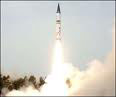 BALASORE (Orissa): Nuclear-capable Agni-II missile, with a range of 2000 km, was on Monday successfully test-fired by the Army as part of user trial from the Wheelers Island off Orissa coast.
 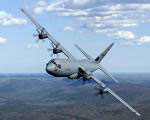 NEW DELHI, Feb 16: The first C-130J Super Hercules that will be delivered to India in February next year has been painted with the Indian Air Force (IAF) colours, according to John Giese, Senior Manager, International Communications, Lockheed Martin.
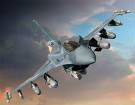 NEW DELHI, Feb 16: Lockheed Martin’s F-16IN Super Viper, which was offered to the Indian Air Force for the Medium Multi-Role Combat Aircraft Competition, completed Phase III of the Field Trials in the United States in early February.
 NEW DELHI, Jan 20: High profile former Foreign Secretary Shivshankar Menon was today named as the new National Security Adviser (NSA) to succeed MK Narayanan.
 NEW DELHI, Nov 27: Expressing concern at the growing "military nexus" between China and Pakistan, India on Friday hoped that Beijing would reciprocate Indian overtures to resolve outstanding issues.
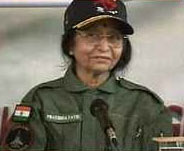 PUNE, Nov 25: President Pratibha Patil today made history by taking off in a frontline Sukhoi-30 MKI fighter jet aircraft from the air force base in Pune, becoming the first woman head of state to fly in a warplane.
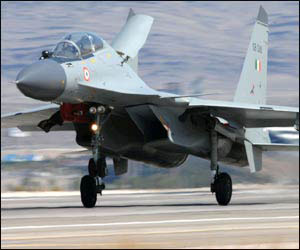 The President donned a special 'G-suit' worn by fighter pilots to counter gravitational effect due to any high speed air manoeuvres.
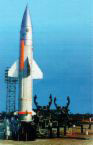 BALASORE (ORISSA): India on Monday successfully test-fired in quick succession two nuclear-capable 'Prithvi-II' surface-to-surface missiles with a range of 350 km from the Integrated Test Range (ITR) at Chandipur, about 15 km from here.
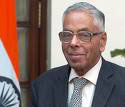 NEW DELHI, Sept 19: National Security Adviser M K Narayanan has termed a former DRDO scientist's claims on Pokhran II nuclear tests as "horrific" and asserted that India has thermo nuclear capabilities which have been verified by a peer group of researchers.
 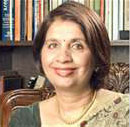 NEW DELHI, Sept 19: Foreign Secretary Nirupama Rao said that there has been "no significant increase" in intrusions across all sections of the Sino-Indian Line of Actual Control.
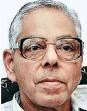 NEW DELHI, Sept 19: A day after Prime Minister Manmohan Singh told journalists that media reports were painting an inaccurate picture of the conditions along the India-China border, the government moved swiftly to scotch swirling rumours about military incursions, shooting incidents and even an imminent conflict along the Line of Actual Control.
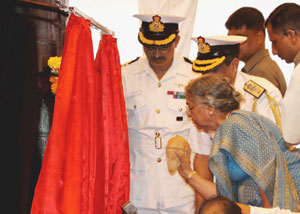 VISHAKHAPATNAM, July 26: Amid chants from the Atharva Veda to invoke the blessings of the "earth and heavens", India proudly announced to the world on Sunday that it had developed its first indigenous nuclear-powered submarine, thereby storming the exclusive preserve of a select group of five countries having this capability so far.

Aviation
| Business | Defence
| Foreign Affairs | Communication
| Health | India |
United Nations
India-US | India-France
| Entertainment | Sports
| Photo Gallery | Tourism
| Advertise with Us | Contact
Us
© Noyanika International, 2003-2009. All rights reserved.