


DEFENCE
Top Navy officer dies in accidental firingKOCHI, July 7: Southern Naval Command chief Rear Admiral SS Jamwal was killed on Wednesday in a firing incident at INS Dronacharya in Kochi, say Naval sources "Chief of Staff of the Southern Naval Command, Rear Admiral SS Jamwal, has died in an accidental firing," Navy spokesman Commander PVS Satish said. The Navy has ordered a high-level inquiry into the death of the 51-year-old. Naval version of LCA rolled out
The aircraft, which has been assembled at the Hindustan Aeronautics Limited (HAL) facility here, is now ready to undergo systems integration tests, leading to ground runs, taxi trials and flights, officials said. “It is a defining and a memorable moment as it will give boost to indigenisation,” Antony said at the event, attended by Chief of Naval Staff Admiral Nirmal Verma, Secretary (Defence Production) and top officials of HAL and Defence Research and Development Organisation (DRDO). The warplane has been developed under the prestigious Naval Programme of Aeronautical Development Agency (ADA). The LCA (Navy) NP1 is the first indigenous effort to build a complete air element for the Navy. The aircraft will fly with U.S.-made GE-F-404-IN20 engine and is specifically designed for ski jump take off and arrested landing, with high landing loads compared to its Air Force counterpart. The development of LCA (Navy) NP1 and its fighter counterpart (NP2) is aimed at providing a formidable platform with a higher thrust engine and an optimised mass for suitable replacement to the ageing Sea Harriers at a later date. The aircraft, with considerable technology and punch for years to come, is being designed to operate from the future indigenously built aircraft carriers the Navy plans to acquire, officials said. The formal sanction by the government for the Naval programme was given in the year 2003. The first stage of development includes design and fabrication of one trainer and one fighter -- NP1 and NP2 respectively -- along with a shore based test facility (SBTF) in Goa, to simulate carrier take off and arrested landing. A complete airframe called structural test specimen required for structural testing is also being done as part of the programme. Prithvi-II successfully test-fired off Orissa coast
The missile mounted on a mobile launcher was blasted off from the launch complex-3 in the ITR at around 6:50am, defence sources said. "The trial of Prithvi-II, conducted by the Army, has gone through nicely," ITR director S P Dash said. With a maximum striking range of 350 km, Prithvi-II is capable of carrying a pay-load of 500 kg. The test firing of the surface-to-surface missile, which has already been inducted into Indian armed forces, was a users trial by the Army's specialised group "strategic force command" (SFC), the sources said. Prithvi, the first ballistic missile developed under the country's prestigious Integrated Guided Missile Development Programme (IGMDP), is propelled by liquid propulsion twin engine. With a length of nine metre and one metre diameter, Prithvi-II uses an advanced inertial guidance system with manoeuvring trajectory. The entire trajectory of Friday's trial was tracked by a battery of sophisticated radars and electro-optic telemetry stations positioned in different locations for the post-launch analysis, the sources said. The trial was conducted in the presence of Army officials and scientists as part of an exercise to well acquaint the personnel with various aspects of the sophisticated missile, they said. The last trial of the Prithvi-II missile was successfully conducted from the same site on March 27, 2010. Canada receives first of 17 Lockheed Martin C-130J Super HerculesBy Deepak Arora
The balance will be delivered by the end of 2012. The CC-130Js (the Canadian designation) are the “stretched” configuration of the C-130J and are of similar specification to those already operated by the U.S. and other worldwide air forces. “I am proud to mark this milestone by welcoming the J-model Hercules into our fleet – on budget and on schedule – ensuring the Canadian Forces have the equipment it needs to be a modern, multi-role force able to take on the challenges of the 21st century.”
The current C-130s have been Canada’s indomitable workhorse for decades and this new aircraft will now meet the demanding tactical airlift needs of the Canadian Forces.” The C-130J generates greater operational efficiency than Canada’s existing E and H models, by flying further, faster, with more payload and higher reliability. The aircraft’s increased performance gives it an enhanced range with a payload capability of over 4,000 nautical miles.
“This team - as well as the expertise and capabilities in Canada to fulfill our industrial benefits obligation - stands as a testament to the quality of Canada’s high-technology industrial base.” Pakistan’s nuclear arsenal to overtake India’s: SIPRISTOCKHOLM, June 3: "Our conservative estimates are that Pakistan has sixty warheads and could produce 100 nuclear weapons at short notice. In comparison India had also 60 to 70 nuclear warheads," the Stockholm International Peace Research Institute said. Pakistan has 60 nuclear warheads and with two new plutonium reactors nearing completion in Khusab, its weapons grade plutonium production will jump seven-fold, according to latest figures released by Swedish institute SIPRI. “Our conservative estimates are that Pakistan has sixty warheads and could produce 100 nuclear weapons at short notice,” the Stockholm International Peace Research Institute (SIPRI) said in its latest annual report. SIPRI also said that Islamabad was developing an air launched cruise missile Ra'ad and had also carried out four tests of its land launched sub-sonic cruise missile Babur. But said it was not clear whether these missiles would be developed to carry nuclear warheads. The Swedish think-tank said that Pakistan's Khusab I reactor was giving the country 10 to 12 kgs of weapons grade plutonium. Islamabad had earmarked 32 U.S. supplied F-16 fighters along with short-range Ghaznavi I and Shaheen I missiles as the delivery systems for its nuclear weapons, it said. SIPRI said while 400-km range Ghaznavi I and 1,200-km Shaheen I missiles were operational, Pakistan's other two potent missiles - medium range ballistic missile Ghauri I and Shaheen II were still in development stage. In comparison India had also 60 to 70 nuclear warheads, the think-tank said. New Delhi had only short-range surface to surface Prithvi I (with the range of up to 500 kms) and medium-range Agni I (upto 700 kms) missiles deployed as nuclear weapon delivery system, it said. The Swedish institute said India's two other missiles Agni II (with the range of 1,200 kms) and Agni III (3,000 kms) were still under development, though Agni II had been handed over to the Army for user trial. SIPRI also said that New Delhi was also developing a 1,000-km range sub-sonic cruise missile Nirbhay and had also test fired land-based version of the undersea missile K-15 which is being called Shourya. It said that the deployment of warship-based Dhanush missile was underway. First three India C-130J-30s inch closer towards deliveryBy Deepak Arora
Lockheed offers latest AESA radars on F-16s to IndiaBy Deepak Arora
Wallace said “the AESA (Active Electronically Steered Array) radar reduced the workload on pilots by detecting twice the area as compared to traditional mechanically steered or passive electronically steered antennas on the fighter aircraft.”
He said the jet’s APG-80 AESA radar was the only one operational in the international market today. “This has been operational since 2005 and no APG-80 AESA has ever failed in the field.” Wallace assured that the company was ready to transfer this latest technology to India, should India chose to buy F-16s.
Michael R Griswold, Director, Advanced Development Programmes, Lockheed Martin, said “AESA radars are more “operator friendly”. He said traditional radars require the pilot to choose a particular mode and dedicate the radar to a particular task (such as an air-to-air or an air-to-surface mode, and a target search task). This is usually tactically undesirable. “Dedicating the radar resources to one mode and task, results in loss of airspace awareness leaving the fighter vulnerable. The AESA radar solves this problem. It has the ability to maintain tracks on targets while continuing to search for new contacts, while also allocating time to perform air-to-surface operations such as an attack on a surface target or even a resource intensive task such as radar guided terrain following,” added Griswold.
The IAF is expected to soon shortlist the players. And after that the price negotiations would begin. This process is likely to take a year before the IAF decides on the winning bidder. Eighteen of the planes will be bought in a fly-away condition and the remaining manufactured in India by Hindustan Aeronautics Limited (HAL) under a transfer of technology (TOT) agreement. The F-16 first flew in 1974 and over 4,500 have been ordered so far by 25 countries. Manmohan asks scientists to speed up defence research, deliver on time
“In many areas, we have moved fast, but our competitors have often moved faster. It is a fact our current level of self-reliance in defence R and D (research and development) is less than our capabilities and it needs to be stepped up significantly,” Dr. Singh said, addressing defence scientists here on the occasion of National Technology Day. Asking scientists to make sure they have the capacity and the will to compete, innovate and deliver on time in the wake of rapidly changing technology, Dr. Singh noted: “It is a fact that some defence projects have been delayed and others have faced difficulties during the stage of operational induction.” He stressed that only the most competitive and resilient companies could expect to survive in the fiercely global market. “If our systems are strong and robust, the world will respect us and be willing to work with us. This was the lesson we learnt in the process of negotiating the civil nuclear deal with the international community”. He said the scientists should learn from mistakes and setbacks and be open to new ideas to stay ahead in the competitive world. “We should be able to acknowledge and learn from our setbacks,” he said and urged the premier Defence Research and Development Organisation (DRDO) to work closely with the armed forces and industry. “It is essential that DRDO work more closely with the armed forces, as well as the industry,” the Prmie Minister said. The Prime Minister also acknowledged the findings of the government-appointed defence review panel headed by former secretary for science and technology P. Rama Rao. Some of the recommendations of the panel were implemented earlier this month following which the size of the DRDO was reduced and a watchdog set up to speed up the execution of defence projects and increase private participation in the sector. “I am very glad to note that the ministry of defence is examining the recommendations of the (Rama Rao) committee on the functioning of the DRDO. I firmly believe that if we put our mind to it, there is no reason why our successes in the software sector cannot be replicated in the defence sector." “We must strive for leadership in research and development in defence technologies. I would urge all of you to think big and to act with a strong sense of self-belief, nationalistic spirit and the desire to excel,” he said. Coming next year, nuclear-capable Agni-V with range of 5000 kmNEW DELHI, May 26: India is likely to have the Inter-Continental Ballistic Missile (ICBM) capability next year with the first flight of 5000-km range Agni-5 missile. If the trial succeeds, India will have a missile capable of striking deep inside China from deep inside India rather than being positioned on the border. Only a handful of nations currently have such a strategic capability. The Agni-5 is specially tailored for road-mobility, according to defence scientists. With the canister having been successfully developed, all India’s future land-based strategic missiles are expected to be canisterised as well. A major research programme on nuclear biological and chemical defence is also on the anvil. The programme was accorded permission recently by the Cabinet Committee on Security. Light Combat Helicopter dedicated to nation
The project to develop the LCH, which builds on many features of the HAL-designed Advanced Light Helicopter (Dhruv), was approved in 2006. A “full-scale mock-u” of the craft was displayed at the aero India show in 2007. R.K. Singh, Secretary, Defence (Production) said LCH would receive Initial Operational Certification by December and Final Operational Certification soon. Air Marshal P.K. Barbora, Vice-Chief of the Air Staff, congratulated the HAL team for having developing the LCH for the Indian Air Force, which was “desperate to have such a machine in its inventory.” He complimented the HAL team that designed the rotary wing design of the LCH, which gives the craft its high degree of maneuverability. “Delivering a craft like this is no mean achievement when seen in the international context,” Air Marshal Barbora said. He suggested that the aircraft could be exported “to friendly countries.” The Chairman of HAL Ashok Naik said the LCH project has been undertaken with an outlay of Rs. 376 crores, of which, 10 per cent has been borne by the public sector company. The company has an order book worth Rs. 80,000 crores, he said. |
|
||||||
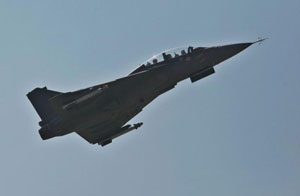 BANGALORE, July 6: India’s first Naval Light Combat Aircraft, the LCA (Navy) NP1, rolled out here today with Defence Minister A K Antony describing the occasion as a “defining and a memorable moment.”
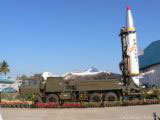 BALASORE, June 18: India on Friday successfully test-fired its indigenously developed, nuclear-capable, ballistic missile Prithvi-II from the Integrated Test Range (ITR) at Chandipur, about 15 km from here off the Orissa coast.
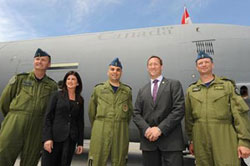
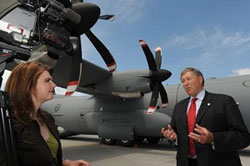
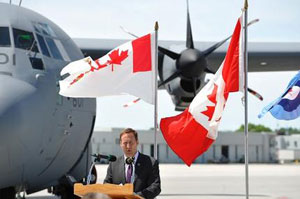
 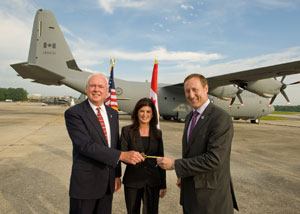 NEW DELHI, June 5: Canada formally accepted the first of 17 Lockheed Martin C-130J Super Hercules aircraft today at ceremonies here and at Canadian Forces Base Trenton.
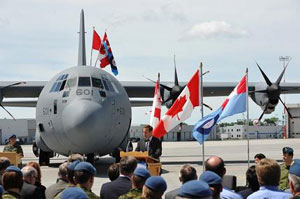 “This year is the 50th anniversary of the first CC-130 Hercules aircraft accepted by Canada,” said Peter MacKay, the Canadian Minister of National Defence.
 “The C-130J Super Hercules is an operationally proven platform and the ideal aircraft to replace Canada’s existing C-130 fleet.
  In addition, its short-field performance allows the aircraft to engage in direct support missions for frontline forces down to the last tactical mile.
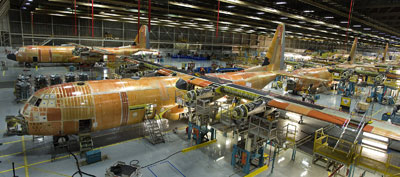
 “Through a rigorous and competitive process, we assembled a team to support Canada’s CC-130J fleet that rivals any such team in the world,” Frese said.
 NEW DELHI, June 1: Lockheed Martin is gearing up for the delivery of the first C-130J Super Hercules to the Indian Air Force later this year. In 2008 the Indian Air Force ordered six C-130J’s for Special Services, with an option for six more.
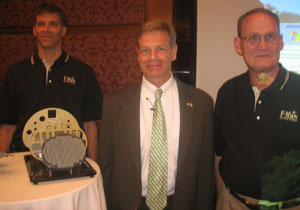 NEW DELHI, May 26: American aerospace giant, Lockheed Martin, has offered the latest and most modern – the AESA radar on its F-16s to India. “We are the only one to demonstrate AESA radar during the flight trials in Indian conditions,” said David G Wallace, Programme Manager (F16 Programme Development), Northrop Grumman.
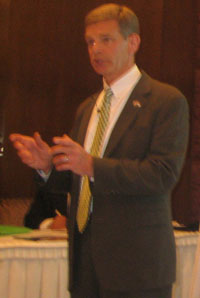 He said “we had demonstrated the capabilities of the APG-80 AESA radar to Indian Air Force (IAF) during the field trials in India in September last year. This radar not only extends the pilot’s three-dimensional awareness of the airspace around him, but also let him know adversary’s position, range, heading, altitude, velocity and strength even before one’s position is revealed.”
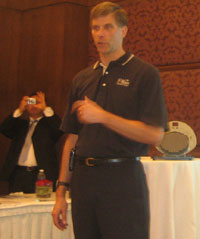 The F-16IN Super Viper combat jet is in the running for an Indian Air Force $10 billion Medium Multi-role Combat Aircraft (MMRCA) tender for 126 planes. The order is like to rise to 200 jets. The other five in the race for the order include the US’ Boeing F/A-18 Super Hornet, the European consortium EADS’ Eurofighter Typhoon, the Swedish Saab Gripen, the French Dasault Rafale and Russia’s MiG-35.
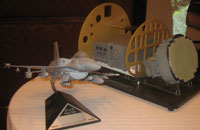 He said “the F-16, if selected, will be the most advanced ever built. The only other such aircraft in service is with the UAE Air Force.”
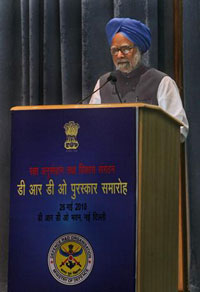 NEW DELHI, May 26: India has not matched pace with competitors in defence technology, Prime Minister Manmohan Singh said Wednesday asking scientists to speed up their research and deliver critical technologies on time for the nation to achieve self-reliance.
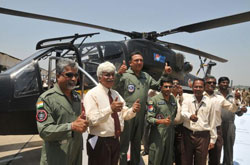 BANGALORE, May 23: The first indigenously built Light Combat Helicopter, designed and developed by Hindustan Aeronautics Ltd (HAL) performed its inaugural flight in Bangalore on Sunday. The Defence Minister A. K. Antony, his deputy, Pallam Raju, and the Chief of Air Staff, P.V. Naik, who were scheduled to participate in the inaugural, did not take part in the function because of the disaster in Mangalore on Saturday.

Aviation
| Business | Defence
| Foreign Affairs | Communication
| Health | India |
United Nations
India-US | India-France
| Entertainment | Sports
| Photo Gallery | Tourism
| Advertise with Us | Contact
Us
© Noyanika International, 2003-2009. All rights reserved.