


Foreign Affairs
| India and Pak have to work together to eliminate terrorism
Emerging from the first day of talks with her Pakistani counterpart Salman Bashir at the Foreign Office here, Rao said, "Terrorism is related to peace and security in the region... We both have to work together to eliminate terrorism. There can be no segmented approach (in dealing with the problem)". The two sides had been discussing measures to tackle terrorism in talks between their Home and Interior Secretaries, she told a small group of reporters. Bashir said terrorism was as important an issue for Pakistan as "it could be to any other country". Describing terrorism as a regional and global issue, he contended that the Lahore Declaration and a memorandum of understanding signed by the two countries in 1999 were very important as it contained a "shared vision for peace and security". The MoU was "an ideal and important for moving forward", he said. "The implementation of the MoU is the solution to issues pertaining to peace and security," Bashir added. Both Foreign Secretaries expressed satisfaction with the first round of their discussions, which focused on peace and security, including confidence-building measures. Rao described the talks as "constructive" and said she and Bashir had exchanged ideas in a "focused and professional manner". Foreign secy Nirupama Rao set to be next US ambassador
Rao, the first woman spokesperson of the ministry of external affairs, was country’s ambassador to Sri Lanka and China before being appointed as the foreign secretary. Nirupama Rao has had extensive experience in handling India-China relations. She had earlier served in the East-Asia Division of the MEA from 1984 to 1992, and had also been the joint secretary of the same division. She later served as India’s envoy in Beijing. Though the race for the coveted post was a closely contested one, former cabinet secretary KM Chandrashekhar appointment as the Kerala state planning board vice-chairman seems to have made Rao’s case easy. India, Canada to complete ratification of n-deal soon
Both the countries had signed the agreement last year which will provide access to Canadian nuclear industry to India's expanding nuclear market besides sale of uranium. "Both the governments are close to finishing the ratification process... The announcement will be made soon," Deputy High Commissioner of Canada Jim Nickel said in New Delhi on Thursday, replying to a question on when both the countries will operationalise the pact. Nickel said Canada was hopeful of starting the process of delivering on what the treaty offers in the form of nuclear technology, services, equipment and sell of uranium.
Besides Canada, India has signed civil nuclear pacts with the US, France, Russia, Mongolia, Kazakhstan, Argentina and Namibia after the Nuclear Suppliers Group lifted a 34-year-old ban on India to join global nuclear trade in September 2008. Nickel said both the countries are also negotiating an Audio Visual co-production treaty under which film makers and media industry will get tax concession and other incentives in each other's country. Large number of Bollywood filmmakers go to Canada for shooting of movies and Nickel said with signing of the treaty the filmmakers will get a lot of benefits. Nickel said Canada would introduce a new visa regime in July under which Indians will be eligible for 10-year multiple entry visas to that country. Seeking deeper cooperation with India, he said 2011 is being celebrated as the 'Year of India in Canada'. As part of the celebration, a Canada-India Education summit and a Canada-India innovation Summit will be held in that country this month. Nickel said vice chancellors of 20 leading Indian universities including Delhi University VC Dinesh Singh and Jamia Millia Islamia VC Najeeb Jung will participate in the two-day education summit beginning Friday in Ottawa. Highlights of the summit include rountables on student and faculty exchanges, joint programmes and recognition of degrees, credit transfers, accreditation issues and public and private ventures between institutions of both countries. The two-day innovation summit, to be held from 20th June will try to explore new ground in science and technology. "India is a priority country for Canada and we would like to enhance our cooperation in diverse fields," said Nickel. Zawahri may launch attack to rally embattled al-Qaeda
In a June 8 eulogy, Zawahri promised to avenge bin Laden, pouring scorn on the US decision to bury his body at sea, a choice he said showed Washington feared bin Laden even in death. "He went to his Lord as a martyr, he who terrorised America while alive and terrorised it while dead, such that they tremble from having a grave for him, due to what they know of the love of tens of millions for him," he said. Bin Laden was shot dead on May 2 in a US raid on a house in the Pakistani town of Abbottabad. Computers, electronic data storage devices and mobile phones seized in the raid are now being examined by US intelligence specialists. But al-Qaeda's ability to stage a big assault like September 11 has been diminished by the killing or capture of experienced commanders over the years, and its message of violence has been hurt by civilian-led Arab revolts against authoritarian rule. And for reasons of personality and background Zawahri could find it hard to emulate the unifying role played by bin Laden, his predecessor and the network's founding figurehead, among the increasingly disparate network. Zawahri's apparently prickly temperament and Egyptian background could make it hard to mediate between the Egyptians who have dominated the upper reaches of the central al-Qaeda group and other militants, including nationals of Arab, Asian, African and European countries as well as of the United States. Al-Qaeda's leadership has struggled with internal disputes at times, and some arguments over strategy and ideology have been marked by strains based on nationality, historians say. Of particular interest will be Zawahri's relationship to al-Qaeda in the Arabian Peninsula , which is based in Yemen , led by a Yemeni and has many Saudis in its ranks. Many are believed to have felt close to bin Laden, who had Yemeni ancestry. Canada announces a new visa regime for Indians
The announcement was made by Canadian Minister of International Trade Edward Fast at a meeting with delegates of the Indian government and business community at the two-day mini Parvasi Bharatiya Divas Canada 2011 convention that began in Toronto on Friday. Fast said the new visa process would be available to Indians who travelled to Canada frequently. "After an initial visa screening, applicants can get a visa that allow them to visit Canada often as long as their passports are valid up to ten years," Fast said. Minister of State for External Affairs Preneet Kaur who is leading the Indian delegation said both countries were committed to strengthen their bilateral trade relations. "The Indo-Canadian community is a microcosm of the people of Indian origin living abroad," she said. "India and Canada will soon sign the Social Security Agreement, conclude a bilateral Investment Protection Agreement, negotiate a revised Double Taxation Avoidance Agreement and complete an ambitious Comprehensive Economic Partnership Agreement," she said, adding both nations aim at a bilateral trade target of USD 15 billion in next five years. Both countries were in talks for a Comprehensive Economic Partnership Agreement that would yield significant economic benefit and lower tariff on a large number of products for both the countries. "A Comprehensive Economic Partnership Agreement is an free trade agreement (FTA) from Indian perspective. It is aimed at promoting market opening policies and stands to become one of the most important building blocks in constructing a broader and deeper bilateral relationship," Kaur said. S M Gavai, the High Commissioner of India, said the new 10-year multiple entry visa would help to meet the longstanding demand of Indians businesses and others who would like to come Canada frequently. "2011 is a special year for India-Canada relations. It was in November 2009 in New Delhi that Prime Minister Manmohan Singh and Prime Minister Stephen Harper announced that 2011 would be celebrated as Year of India in Canada," Gavai said. "Ties between India and Canada have never been so close, so extensive and potentially so exciting as they are today. The Indo-Canadian community has played a major role in enriching this relationship, in building bridges between the two countries," Gavai added. E coli traced to organic farmBERLIN, June 7: German scientists were working on Monday to confirm an organic vegetable farm as the source of an outbreak of E.coli bacteria that has killed 22 people and caused a food scare across Europe. E.coli tests on 23 of the 40 samples of beansprouts from the farm in north Germany have proved negative, and the tests are not expected to be completed in the short term, the ministry said in a statement. The manager of the farm said he could not understand how it could be the source of an infection that is usually transmitted through faeces, or food or water contaminated with faecal bacteria. The Shiga toxin-producing E.coli strain found in this outbreak is known to be able to lurk in cows' intestines. Scientists say the contamination may have been on or in the bean seeds themselves, in the water used to grow them, or have come from a worker handling them. 20 killed as Israeli troops fire on Palestinians in GolanDAMASCUS, June 7: At least 20 people were killed and 325 others wounded, as Israeli forces opened fire at hundreds of demonstrating Palestinians gathered at the Israel-Syria frontier in the occupied Golan Heights on Sunday marking the 44th anniversary of the occupation of the territory. State run Syria TV reported 20 people were killed and 325 wounded as Israel Defense Forces fired along the border in the Golan Heights, in an attempt to prevent border infiltration and break up Naksa Day rallies commemorating 44 years since the Six-Day War. Israel captured Syria's Golan Heights in that conflict, as well as the West Bank and the Gaza Strip. Medical officials told Damascus TV that Israeli soldiers "are shooting live rounds and aiming for the abdomen, chest and head". The Red Cross Ambulances evacuated the injured, they said. IDF Spokesman, Brigadier-General Yoav Mordechai wondered if this was an attempt by the Syrian government to divert attention from the crisis at home. "The Syrian government and military are helpless to stop what is going on... I hope this is not an attempt by the Syrian regime to divert international attention from what in is going on in the country," he said. IDF sources did not confirm the casualties but said forces first called on demonstrators to cease their progress, before firing warning shots in mid-air. They also fired tear gas and used other demonstration dispersal weaponry. Once those were ignored, troops fired at the lower extremities of dissidents inflaming the crowds, they said. At least four anti-tank mines were reported to have exploded near the Syrian town of Quneitra, injuring many protesters. According to reports, protesters hurling Molotov cocktails led to a fire in the area, which resulted in triggering the mines' explosions. The IDF has thus far only given a brief response to the reports regarding the protest, saying that the situation is under control and calling the protests a "clear provocation intended to divert attention from what is happening in Syria." The Israeli army did not confirm the reports of casualties, yet said that a few dozen protesters were wounded by "controlled fire from commanders on the ground." Strauss-Kahn pleads not guiltyNEW YORK, June 6: It took just seven minutes and two words, but Dominique Strauss-Kahn left court on Monday hoping he can save himself from lifelong disgrace and years in prison. Asked by Judge Michael Obus how he pleaded to seven counts of sex crimes in the alleged attempted rape of a New York hotel maid, Mr. Strauss-Kahn stood and in a quiet voice stated: “Not guilty.” The brief arraignment hearing kicked off what promises to be a formidable attempt by the wealthy French politician and fallen head of the IMF to clear his name. Wearing a tie and dark suit and looking rested, the 62-year-old hardly resembled the haggard man hauled into court after his arrest in an open-necked shirt and with stubble on his chin. Alongside him, in a flashy light grey suit, was his lawyer to the stars, Benjamin Brafman. Behind him, in the first row of the crammed, high-ceilinged courtroom, sat his wife, multi-millionaire art heiress Anne Sinclair. But what neither money nor power could prevent were the cries of women coming through the windows of the 13th floor court: a busload of hotel chambermaids chanting: “Shame on you!” The shrill cries punctured the decorum of the courtroom, signalling how bitter this already sensational case will become and underlining that in some parts Mr. Strauss-Kahn is already as good as guilty. Dressed in black and white maids' uniforms, the protesters came to support the still-unidentified, 32-year-old immigrant from west Africa who says she was chased by a naked Mr. Strauss-Kahn and forced to give oral sex. The maid's lawyer said after the arraignment that she would eventually have her day in court too. “It was a terrible sex assault on an innocent woman. She's going to come to the court house. She's going to tell the truth. What she wants is justice,” said attorney Kenneth Thompson. In duelling press conferences, Mr. Brafman addressed the same horde of journalists, telling them that Mr. Strauss-Kahn's not guilty plea amounted, in those two simple words, to “a very eloquent, powerful statement”. Russia bans EU vegetables over E.coli, EU protestsMOSCOW, June 2: Russia banned imports of fresh vegetables from the European Union Thursday, accusing Brussels of sowing chaos by failing to give sufficient information about a deadly E.coli outbreak. The European Commission said Moscow's move was disproportionate. The outbreak has killed 17 people and made more than 1,500 others ill, and food poisoning is spreading from Germany across Europe. Russia extended a ban on German and Spanish fresh vegetables to cover the European Union because it said Moscow had not been given proper information on the situation despite repeated requests. The source of the infection is still unclear. "The kind of things that have been happening in the EU for a whole month do not even happen in African countries," Gennady Onishchenko, head of the Russian consumer protection agency Rospotrebnadzor, told Reuters by telephone. "I would call the action of the EU health regulators and the other European bodies responsible for this disgrace unprofessional and irresponsible," said Onishchenko. The European Commission urged Russia to end its ban immediately. "The European Commission protested to the Russian Federation this afternoon against the Russian ban imposed earlier today on all EU vegetable exports to Russia, and requested the immediate withdrawal of the measure," the EU executive said in a statement. European Commission spokesman Frederic Vincent said earlier that the EU Health Commission John Dalli would write to Moscow to express their objections. The ban comes a week before Russia, whose leaders have often accused Europe and the United States of trying to force their rules on it, hosts EU leaders at a summit in the city of Nizhny Novgorod. Russia is under pressure from Europe and other trade partners to announce how it will end protectionist measures, including meat import restrictions, as part of its push to join the World Trade Organization this year after an 18-year effort. Shops in Moscow prepared to dump EU vegetables and consumers expressed a mixture of scorn and pride at the ban, while the foreign ministry quipped that Russian cucumbers were best. "Every state will protect its market in order not to get these 'gifts', these cucumbers," Foreign Ministry spokesman Alexander Lukashevich told reporters. "As for the quality of cucumbers, I have tried many myself, but I think that those from the Moscow region are the best -- especially the ones from my own garden," he said. High-end Russian grocery store chain Azbuka Vkusa, which sources more than 40 percent of all its fresh vegetables and fruits from Europe, said it could replace EU produce with Turkish, Azeri and Russian goods. Toting a shopping basket filled with grapes and fresh vegetables at a store up the street from the Bolshoi Theater, pensioner Vyacheslav Yegorov called the ban "ridiculous." "I am not afraid of buying vegetables from any country here... This thing will blow over and be forgotten tomorrow." But another shopper, Natalya Kuzmina, said that imported food is more likely to have been treated with chemicals and that the ban would help domestic farmers. Russian Agriculture Minister Yelena Skrynnik played down speculation that Russia could face shortages, saying that imports of vegetables are low in the summer and that most cucumbers and tomatoes do not come from EU nations. European Union countries exported 594 million euros ($853 million) worth of vegetables to Russia last year while EU imports of vegetables from Russia were just 29 million euros, EU data show. It was not clear what proportion of that was raw. India asks UN to take lead in combating international piracyADDIS ABABA, May 26: India made a strong pitch to the UN to take the lead in evolving a comprehensive response to the threat of international piracy in the Red Sea and off the coast of Somalia to ensure unhindered maritime trade. Simultaneously, the international community should continue with efforts to restore stability in Somalia, Prime Minister Manmohan Singh said on Thursday while addressing the joint session of Ethiopian Parliament in Addis Ababa on Thursday. Dr. Singh, who is the first-ever Indian Prime Minister to visit Ethiopia, said as a littoral state of the Indian Ocean, India is ready to work with Ethiopia and other African countries in this regard. The Prime Minister received a standing ovation from a packed Parliament as he entered with his wife Gursharan Kaur. "The Horn of Africa is today faced with threats from piracy and terrorism. International piracy in the Red sea and off the coat of Somalia has become a well-organised industry. It is important that the United Nations take the lead in developing a comprehensive and effective response to this threat," Dr. Singh said. "We would all like the Indian Ocean to remain a secure link between Asia and Africa through which international maritime trade can take place unhindered," he said. India has repeatedly voiced its serious concerns over the threats posed by Somali pirates since about 11 per cent of seafarers engaged by international shipping companies are Indian nationals, some of whom have been taken hostage. There have been over 200 attacks, including about 70 successful hijackings and ransoms believed to exceed USD 50 have been paid to the pirates for securing the release of hostages and ships. Noting that winds of change blowing in West Asia and North Africa, Dr. Singh said, "We believe it is the right of all peoples to determine their own destiny and choose their own path of development." "International actions must be based on the rule of law and be strictly within the framework of UN resolutions. We support the efforts of the African Union in bringing peace and stability to the region," he added. India, Africa call for end to Libya bombingADDIS ABABA, May 26: Amid growing regional and international concerns about the conflict in Libya, where NATO has intensified its bombing campaign in recent days, India joined Africa in calling for an immediate ceasefire and for a negotiated end to the violence there. The Addis Ababa declaration issued here on Wednesday at the end of the Second Africa-India Forum Summit took note of the U.N. resolutions under which the NATO is using military force against Libya and stressed that “efforts to implement them should be within the spirit and letter of those resolutions.” The declaration urges the parties in the conflict to strive for a political solution through peaceful means and dialogue. India and the 15 African governments including Libya, which took part in the summit, also expressed their support for the African Union High-Level Ad Hoc Committee initiative and the AU roadmap for the peaceful and consensual resolution of the conflict. At a separate bilateral meeting with Libya's Foreign Minister, Abdal al Latti al Obedi, on the sidelines of the summit, External Affairs Minister S.M. Krishna regretted the NATO-led airstrikes and urged an immediate ceasefire in Libya, an end to the violence and any attack on civilians. Mr. Krishna said this in response to Mr. al-Obedi's request for India to support an immediate ceasefire. The Indian Minister also urged the intensification of efforts to find a lasting, peaceful solution to the conflict. With its earlier efforts at peacemaking having run aground in the face of the opposition of the Libyan rebels to any dialogue or ceasefire until Colonel Muammar Qadhafi left the country, the AU has now decided to put its political efforts into high gear. An extraordinary summit to discuss the crisis caused by the intensification of NATO's bombing campaign was held here on Wednesday evening, with several African heads of state flying into Addis Ababa to take part in the discussions. The Africa-India summit declaration also dealt with a number of political issues, including piracy off the coast of Somalia, terrorism and U.N. reform. Specifically, the summit emphasised the need for countries to “exert utmost effort on U.N. Security Council reform during the current session of the U.N. General Assembly.” In a separate document on a framework for enhanced cooperation between Africa and India, the two sides have envisaged a widening of the partnership to areas such as civil society and governance, science and technology, social development, health, culture, tourism, sports, infrastructure and media and communications. It was also decided that the next Africa-India summit would be held in New Delhi in 2014. India gets a boost as Africa endorse India's bid for a permanent UNSC seatAfrican nations have come out in support support of India becoming a permanent member of UN Security Council and appreciated India's unstinted assistance towards their all round developmental programmes. India supports Africa's claims for permanent membership of Security Council. On its part Africa backs India's claim to a permanent seat with full rights in an expanded security council. Both sides also unequivocally condemned terrorism and piracy in all its forms and manifestation and called for active prosecution of authors of such crimes. The Addis Ababa Declaration adopted at the end of the second Africa-India Forum Summit also called on all countries to ensure that acts of cross-border terrorism do not occur and that their territories are not made a base for terrorists. "We unequivocally condemn terrorism in all its forms and manifestations. An act of terrorism anywhere is a threat to the entire international community," the Declaration said. "We recognise the need to further strengthen international cooperation to combat global terrorism and for compliance of all member states with all international terrorism conventions and related protocols and United Nations Security Council's resolution on counter-terrorism," the Declaration further said. The summit was co-chaired by Prime Minister Manmohan Singh and and Equatorial Guinea President Obiang Nguema Mdasogo. The declaration called on all states to cooperate with each other in prosecuting, extraditing and rendering legal assistance with regard to actions of international terrorism. The leaders deplored the tragic loss from terror attacks and called for the active prosecution of the authors of such crime and their accomplices and urged that they be brought to justice expeditiously. Taking on board serious concerns over the problem of piracy, the leaders strongly condemned kidnapping and hostage taking as well as demand for ransom and political concessions by terrorists groups. "We express serious concern at the increase in such incidents," the Declaration said. India has voiced its serious concerns over the threats posed by Somali pirates since about 11 per cent of seafarers engaged by international shipping companies are Indian nationals, some of whom have been taken hostage. There have been over 200 attacks, including about 70 successful hijackings and ransoms believed to exceed USD 50 have been paid to the pirates for securing the release of hostages and ships. Taking note of the African position on the condemnation of the payments of ransom to terror groups, they (leaders) called for the urgent need to address the issue. The two sides underscored the imperative need for urgent and comprehensive reforms of the UN systems which must reflect "contemporary realities". India offers USD 5 billion credit line to AfricaPrime Minister Manmohan Singh announced a mammoth five-billion-dollar credit to Africa for various development projects, reflecting India's growing ties with the resource-rich continent. Singh also declared an additional USD 700 million package to establish new institutions and training programmes across the continent, besides USD 300 million for a new Ethio-Djibouti railway line in Ethiopia. "We will offer 5 billion US dollars for the next three years under lines of credit to help Africa achieve its development goals," Dr Singh said addressing the second Africa-India Forum summit here. Offering India's support to Africa to realise its vast potential, Dr Singh said there was a new economic growth story emerging from Africa. "Africa possesses all the prerequisites to become a major growth pole of the world. There is good news in the struggle against HIV and AIDS, as well as in improving literacy, reducing infant mortality and building institutions of representative government," he said. Dr Singh noted the success of the Pan-African E-Network project and announced plans to establish an India-Africa Virtual University which could meet the demand among African students for higher studies in Indian institutions. "We further propose that 10,000 new scholarships under this proposed University will be available for African students after its establishment," he said. Japan won't abandon nuclear power despite crisisTOKYO, May 9: Japan will maintain atomic power as a major part of its energy policy despite the country's ongoing nuclear crisis at tsunami-crippled Fukushima Dai-ichi power plant, a top official said today. Deputy Chief Cabinet Secretary Yoshito Sengoku also said the government has no plans to shut down any more functioning nuclear reactors other than three at the Hamaoka power plant in central Japan. The plant was asked Friday to halt the units until a seawall is built and backup systems are improved at Hamaoka. "Our energy policy is to stick to nuclear power," Sengoku said on a weekly talk show on public broadcaster NHK. He said Hamaoka was an exception and that the government's closure request Friday did not mean a departure from its nuclear-reliant policy. Chubu Electric Power Co., which runs the three Hamaoka reactors, postponed its decision Saturday on the government's shutdown request. The main concern is that shutting down the reactors would likely worsen power shortages expected this summer. Nuclear energy provides more than one-third of Japan's electricity. Since the March 11 disasters, buildings have reduced lighting, stores have trimmed service hours and subway operators have shut air conditioning to join a nationwide conservation effort. The government has been reviewing the safety of the country's 54 atomic reactors since a March 11 earthquake and tsunami crippled the Fukushima Dai-ichi nuclear plant in the north. The disaster left more than 25,000 people dead or missing on the northeast coast and triggered the worst nuclear crisis since Chernobyl in 1986. The Hamaoka plant, which is about 125 miles (200 kilometers) west of Tokyo, in an area where a major quake is expected within decades, has been a major concern for years. However, Sengoku said there is "no need to worry" about other plants in the country. "Scientifically, that's our conclusion at the moment," he said. Chubu Electric executives failed to reach a decision yesterday over the shutdown request and will meet again after the weekend, company official Mikio Inomata said. At issue is how to make up for the power shortages that would result from the shutdown of the three reactors. Inomata said they account for more than 10 per cent of the company's power supply. Singapore's ruling party sweeps electionsSINGAPORE, May 8: Singapore's ruling People's Action Party (PAP) retained power with an absolute majority winning 81 of the 87 seats in a "watershed" general elections, but Prime Minister Lee Hsien Loong acknowledged that opposition gains had marked a "distinct shift" in the city-state's political landscape. Though the PAP, in power for over 40 years, won 81 of the 87 parliament seats as it captured 60 per cent of the 2 million votes cast in yesterday's election, the Workers Party won six seats, the most ever captured by the opposition. "It marks a distinct shift in our political landscape," Lee told an early morning news conference. "Many (Singaporeans) wish for the government to adopt a different style and approach," he said. "Many desire to see more opposition voices in parliament to check the PAP government." "We hear all your voices, whether it's expressed in person or over the Internet. The PAP will analyse the results of the elections, learn from what has emerged in this general election, put right what is wrong, improve on what can be made better, and also improve ourselves to serve Singaporeans better," local media quoted Lee as saying. He said his party would undergo some "soul-searching" and expressed willingness to work with lawmakers from the opposition. Lee said he was disappointed over PAP's defeat in Aljunied GRC, which cost the government two ministers and failed to win back the Hougang from WP. Although the PAP won the great majority of seats, the party's share of the popular vote slipped to around 60 per cent from around 67 cent at the last election in 2006, the results showed. Rival Workers' Party (WP) took the other six seats, winning for the first time a Group Representation Constituency (GRC) of five members, and retaining a single member parliamentary seat of Hougang under the leadership of veteran opposition politician Low Thia Khiang. The PAP had faced issues related to influx of foreign workers, higher cost of housing caused by high net worth expatriates, housing affordability, rising cost of living for the locals, the slower progress on transportation, and the high salaries for the ministers in the prosperous city state. Though the PAP had a strong mandate, Lee noted frustrations, grievances and unfulfilled aspirations of Singaporeans during the nine-day campaigning by political parties for 82 of the 87 seats. PAP took the Tanjong Pagar on nomination day on April 27 when the opposition failed to file their papers in time, winning five seats led by Minister Mentor Lee Kuan Yew, the first Prime Minister of Singapore and also Prime Minister Lee's father. Lee also assured that the government would work hard on its own with "a population of passive but engaging Singaporeans in the more difficult decisions and trade-offs which governing Singapore involves". Foreign Minister George Yeo along with cabinet minister Lim Hwee Hua and senior Minister of State Zailnul Abidin Rasheed, a sitting member of parliament Cynthia Phua and newcomer Ong Ye Kung lost the Aljunied GRC by a margin of 9.4 per cent to WP. WP leader Low led party chairman Sylvia Lim, and first timers Muhamad Faisal Abdul Manap, corporate lawyer Chen Show Mao, and postgraduate law student Pritam Singh in defeating PAP for the first time in the GRC, a unique grouping parliamentarians in electing minority representation from the pre-dominantly Chinese population in Singapore. Overall, PAP received 60.14 per cent of the total votes from the 2.05 million voters and WP took 12.82 per cent. The rest of the votes were taken by the other contesting parties - National Solidarity Party which took 12.04 per cent, Reform Party 4.28 per cent, Singapore Democratic Alliance 2.8 per cent, Singapore Democratic Party 4.83 per cent, Singapore People's Party 3.1 per cent. A total of 2.057 million or 93.06 per cent of the 2.21 million Singaporeans voted yesterday. The PAP, in power since 1959 under the stewardship of Lee Kuan Yew, held 82 of the 84 seats in the last parliament elected in 2006, with vote support of 67 per cent. Singapore, rated among the world's top commerce, trade and financial centres, is projected to post an economic growth of between four per cent and six per cent this year, a follow on to last year's 14.5 per cent, having rebounded strongly from the global economic meltdown of mid-2008 and 2009. Singapore got independence in 1965 from Great Britain. Elimination of safe terror havens in Pak is essential to end terror: IndiaNEW DELHI, May 6: New Delhi has emphasised that the war on terror has not ended with the death of Osama bin laden, asserting the need for more steps to bring more Mumbai 26/11 perpetraters and conspirators to justice. However, the policy of engaging Pakistan through talks was endorsed. Congress said that there is no contradiction in the approach while BJP urged the govt to rethink. A meeting of the party's Core Group discussed the bin Laden's killing and suggestions that he could not have been living there without the possible connivance of ISI and other authorities. The main opposition hailed the elimination of bin Laden as a "high point of the global war on terror". "The fact that Osama was housed in a mansion close to a Pakistani Military academy establishes that Pakistan is the epicenter of global terrorism which was harbouring the most wanted global terrorist," Jaitley said. "India's legitimate concern that those who have perpetrated terror in India are also housed comfortably in Pakistan is no longer in doubt. Pakistan can no longer claim that it is a victim of terror. Those who use terrorism as an instrument of state policy will always suffer due to their duplicity," the party said in its statement. Engagement with Pakistan a very rational decision: Nirupama Rao
Speaking to a group of researchers, academics, journalists and public servants during a speech at the French Institute for International Relations (IFRI) here, sjhe said engagement with Pakistan “is not a signal of helplessness but a very rational decision and that's the best way forward for our people.” She is on a two-day visit to France for consultations with her counterpart, Pierre Sellal. On Friday, she also called on Jean-David Levitte, President Nicolas Sarkozy's diplomatic Sherpa, for “free and frank” discussions, during which she raised India's concerns over cross-border terrorism, Afghanistan, regional issues and bilateral cooperation as well as developments in West Asia, especially Libya and Syria. On Friday, there were three rounds of talks at the Foreign Office, with discussions centring on the G20, international governance, disarmament, the reform of the U.N. system and issues pertaining to the World Trade Organisation (WTO) and the Doha Round. A second session focussed on the regional situation, especially Afghanistan and Pakistan, while a third featured exchanges on the situation in North Africa, Libya and Syria. Rao's visit comes at a time of increasing French distrust and suspicion of Pakistan. Bernard Squarcini, head of France's interior security agency, the DCRI, on Friday expressed concern over the rising number of young Frenchmen heading for Pakistani terrorist training camps: “Yes, there are French citizens in jihadist camps in Pakistan. We are certain of the presence of some 20-odd French fighters there. They are part of the threats faced by France and Europe and their numbers are increasing. We are trying to stop them from stepping back on the nation's soil.” Squarcini made these remarks in the midst of growing calls in France for disengagement from Afghanistan and criticism of Pakistan. Asked whether in the light of the recent events India should disengage with Pakistan, Rao said: “Should we be engaging with Pakistan in the face of all that's happened? I don't think that's relevant in the context of India and Pakistan. With such a long, contentious, complex and conflictual relationship, the way forward is to ensure that dialogue takes place between the two countries in order to resolve outstanding issues despite the concern in India about the threat of terrorism from Pakistan. We have to engage with Pakistan. So the issue of disengagement as being suggested by many in the U.S. Congress or elsewhere does not seem logical at all.” The substantive message Rao conveyed to her French counterpart was that India was determined to pursue a two-pronged strategy with Pakistan — that of dialogue coupled with a demand for justice for the 26/11 Mumbai attacks and a dismantling of Pakistan's terror network. “Geography is destiny. Pakistan is our neighbour and we wish to engage with Pakistan on a whole spectrum of issues which concern the normalisation of relations between the two countries. But the issue of terrorism is very important and sanctuaries and safe havens for terrorism on Pakistani territory have caused suffering not only in India and our region but it has also turned against Pakistan itself today. So I hope the Pakistani leadership will understand that and we see a change in the days to come,” she said during her talk at IFRI. After several years of trying to walk the tightrope between India and Pakistan, France appears to have realised it is time to jettison its policy of maintaining equilibrium between the two warring nations and plump for India. This became amply clear in the somewhat cold and expeditive manner in which Pakistan Prime Minister Yousuf Raza Gilani was received in Paris. President Sarkozy has been particularly vocal in his support of India, and France now sees India as a vital strategic partner, perhaps not part of its first circle of interest, but a strong partner nevertheless. The enlargement of the G8 to the G20 was largely the result of President Sarkozy's efforts and the political relationship between the two countries has rarely been so good. That said, massive contracts are on the table including the sale of six EPR nuclear reactors, several armaments contracts including for 126 multi-role combat aircraft and civilian aircraft and France sees India as a strong source of future revenue. To a question on India's presence in Afghanistan and Pakistani attempts to diminish that role, Rao said: “Yes, Pakistan has a certain view of India's role in Afghanistan, something that we have stoutly sought to refute. We are not going to abandon Afghanistan and this is something our partners — the French, the Americans — understand very well. So I do not see our role in Afghanistan being diminished or being sought to be diminished by what happened in Abbottabad a few days ago.” Osama had support system in Pakistan: envoyBOSTON: Pakistan has acknowledged al-Qaeda chief Osama bin Laden had "support system" in the country, but asserted that the government was unware of his presence on its soil. "Obviously, bin Laden did have a support system (in Pakistan). The issue was that support system within the government and the state of Pakistan or within the society of Pakistan," Pakistan ambassador to US Husain Haqqani said. "We all know that there are people in Pakistan who share the same belief system as bin Laden and other extremists... So that is a fact, that there are people who probably protected him," he told CNN. But, he maintained that Pakistan was unaware of bin Laden's presence on its soil. "We did not know. We had no knowledge. And if we had knowledge, we would have acted upon it long ago," he said. US forces take out Qaeda chief in 40 min operation near Islamabad
The special forces personnel swooped down on the compound where bin Laden was holed up guarded by his ultra loyal Arab bodyguards in a pre-dawn operation killing the dreaded terrorist, US officials said. The news of the slaying of the world's most prominent terror mastermind was broken to the world by US President Barack Obama, who made the announcement live from White House. "Bin Laden, 54, is dead and his body is in US custody," President Obama said at half past 11 midnight US time after initial story had been broken by news channels. Though it was dark, crowds massed outside White House chanted 'USA, USA'. |

| |||||||
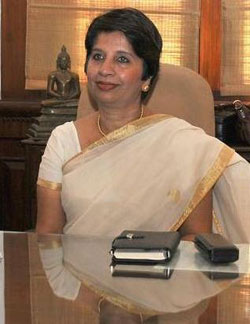 ISLAMABAD, June 23: India and Pakistan have to work together to eliminate terrorism and there cannot be a "segmented approach" in dealing with the scourge, Foreign Secretary Nirupama Rao said here today.
 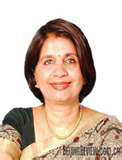 NEW DELHI, June 22: Foreign secretary Nirupama Rao, who retires from her post on July 31 this year, is set to become India’s next ambassador to the US, according to senior government officials. Rao, an Indian Foreign Service (IFS) officer of 1973 batch, will succeed Meera Shankar. A formal announcement is expected soon, officials added.
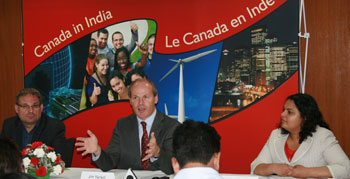 NEW DELHI, June 16: India and Canada are close to completing the ratification process of their civil nuclear agreement, paving the way for transfer of technology, sale of atomic reactors as well as uranium.
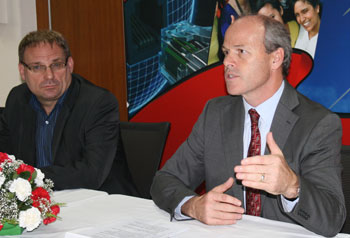 Canada has a large reserve of uranium. Noting that Canada was looking forward to do nuclear business with India, he said there was scope for cooperation in the fields of nuclear medicines and research.
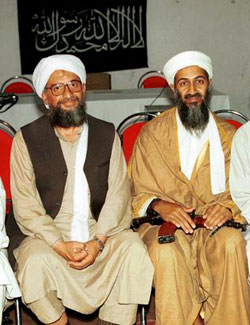 LONDON, June 17: Al-Qaeda's new chief Ayman al-Zawahri may struggle to rally his embattled militants after the killing of Osama bin Laden on May 2 and the simultaneous capture by US forces of some of the group's innermost secrets. The Egyptian-born ideologue and plotter is expected to want to launch a big attack to cement his authority over the far-flung network, which staged the September 11 raids and other bombings on Western targets around the world.
 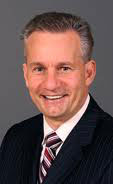 TORONTO, June 10: Giving a fillip to Indo-Canada trade relations, Toronto has announced a new visa regime that will allow Indians 10 years multiple entry visa to the country.
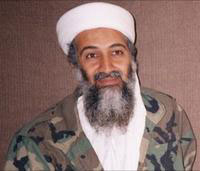 ISLAMABAD: Osama bin Laden, the world's most wanted terrorist, was killed early today by US special forces in a helicopter-borne operation at Abbottabad near the Pakistani capital, climaxing a over 10-year long massive manhunt.
Aviation
| Business | Defence | Foreign
Affairs | Communication | Health
| India | United Nations
India-US
| India-France | Entertainment
| Sports | Photo Gallery |
Tourism | Advertise with Us
| Contact Us
© Noyanika International, 2003-2009. All rights reserved.