


Foreign Affairs
|
Traditional Welcome Awaits Indian PM Modi in FijiBy Deepak Arora India, Oman discuss ways to enhance trade
"The two sides discussed bilateral economic and commercial matters of mutual interest and discussed ways to increase the bilateral trade and investment linkages between the two countries," an official statement said. After the meeting, Sitharaman said that huge scope exists for interaction and greater engagement with Oman. "Today's meeting has only reinforced the possibilities which exist immensely. We hope to follow it up by a delegation which will be going to Oman in December. "There are also negotiations with Gulf Cooperation Council. We hope to work a lot more intensely with Oman," she said. Sunaidy said trade between the two countries is expanding and huge opportunities exist to boost the economic ties. "Our exports and imports with India are expanding. There is an increase of over 55 per cent between 2012 and 2013. We hope that this can be expanded forward," he said. Both the Ministers witnessed the signing of MoU on Standards and Metrology between the Bureau of Indian Standards (BIS) and the Ministry of Commerce and Industry, Oman. The two ministers also welcomed the signing of the Agreement on Legal and Judicial Cooperation in Criminal Matters. Oman is an important trading partner of India in the Gulf region with bilateral trade of over USD 5.70 billion in 2013-14. India pledges to modernise Vietnam’s defences
Modi said India would sell naval patrol boats to Vietnam under a $100 million line of credit to the Southeast Asian nation, which is seeking to improve its defences in the disputed South China Sea. Modi held talks in New Delhi with Prime Minister Nguyen Tan Dung, who is on a two-day visit to India, as Hanoi courts powerful allies following soured relations with China over the disputed territory. Modi, who swept to power in May, said the two leaders had agreed to strengthen bilateral ties, adding “our defence co-operation with Vietnam is among our most important ones”. “India remains committed to the modernisation of Vietnam’s defence and security forces.” The leaders also called for “restraint” and “freedom of navigation” in the South China Sea, where China is embroiled in a bitter dispute with Vietnam and other nations. “They agreed that freedom of navigation and overflight in the East Sea/South China Sea should not be impeded,” a joint statement released after the talks said. “The (leaders called on the) parties concerned to exercise restraint, avoid threat or use of force and resolve disputes through peaceful means in accordance with universally recognised principles of international law.” In May, Beijing moved a deep-water oil rig into waters claimed by Hanoi, prompting a months-long high-seas standoff and triggering deadly anti-China riots in Vietnam. The rig was removed in July. Modi’s comments came after China’s top foreign policy official made his second visit Monday to Vietnam in four months in a bid to repair ties strained to breaking point. India has long had its own tense ties with China following a brief but bloody war in 1962 with its powerful neighbour over their remote land border. Modi’s first meeting with Dung since his election comes after the defence line of credit was announced last month during a visit by India’s president to Vietnam. Dung said late Monday that he hoped India would “actively support” a peaceful resolution to the South China Sea dispute. “Vietnam hopes that India, as a major power in the region and the world, will actively support the parties concerned to peacefully resolve all disputes,” he said. Vietnam staunchly opposes China’s ongoing efforts to develop airstrips and military bases on the island chains it controls in the South China Sea. China says it has sovereignty over essentially all of the South China Sea, which is a crucial maritime route and is also believed to hold huge oil and gas deposits. Vijay Jolly Greets New Vietnam Envoy
Indian diaspora plans big public reception for Modi in Sydney
Indian diaspora in Sydney is planning the event similar to the one hosted at New York’s Madison Square Garden for him. With an expected turn-over of 15,000 people, the Sydney event is being hosted by the Indian Australian Community Foundation (IACF), a coalition of diverse Indian-Australian organisations, to welcome the Indian prime minister. “The Sydney event is the only community address that Prime Minister Modi will be delivering during his Australian tour.” Ramyavaran Ramaswamy, one of spokespersons of the IACF said. Within three days of opening registration, over 250 community organisations have registered to be a ‘Reception Partner’ for the event. Modi would be attending the two-day G20 Summit from Nov 15 to 16 and then visit Sydney on November 17 during which he will address the Indian Diaspora. He will address a joint parliamentary session in Canberra the next day, according to the schedule. IACF will organise the event with the support of hundreds of groups representing the Indian. Last Indian prime minister to visit to Australia was Rajiv Gandhi in 1986. Modi’s visit follows Australian Prime Minister Tony Abbott’s Indian tour in September when the two sides sealed the historic deal to sell uranium to India. OFBJP Dubai Diwali a Grand Success: Vijay JollyBy Deepak Arora
Diwali celebrations program in Dubai, United Arab Emirates recently was a grand success claimed Global Convenor BJP Overseas Affairs Vijay Jolly. The program organised at Indian Consulate auditorium in Dubai was attended by nearly 1200 NRIs and PIOs. As many 144 Clay Diya’s were lighted to mark the good governance of Prime Minister Narendra Modi. In her address, Smriti Irani congratulated Overseas Friends of BJP for its motivational zeal and enthusiasm for spreading the message of BJP Worldwide.
"Flow of FDI and infrastructure development shall result in social change soon in India." ‘Sabka Sath aur Sabka Vikas’ slogan of Narendra Modiji led Indian Government has caught the imagination of the younger generation in India. We urge Overseas Indians to work hard and with dedication in the country of their employment and adoption. And we shall empower you with good governance, said Irani.
The BJP leader visited Anjuman Najmi mosque where he was honoured with Shawl and Sweets. Consulate General of USA in Dubai Jon Matzner, Sister Jyothi Hulmani of Raja Yoga Center, Dubai and Wing Comdr (Retd. IAF) Rajinder Kumar Chaudhry, VSM (OFBJP President Lithuania) also attended the program. France keen to invest in developing smart cities in Himachal
The Ambassador, who led a delegation to meet the state's Chief Minister Virbhadra Singh and other concerned ministers and officers, impressed that France is keen on developing Smart Cities having adequate infrastructure and facilities like proper water treatment, waste management, urban transport and street lighting in the state. The delegation deliberated upon various issues pertaining to advanced technologies for developing energy and power projects for Smart Cities in the state. The delegation interacted on issues related to transport solution and mobility, technical solutions for waste collection, urban transportation and re-cycling, appropriate technology for introducing decentralised seepage management system, etc. The Chief Minister said the state intended to develop major towns like Shimla, Manali and Dharmashala as Smart Cities and the French government had shown its keenness to adopt the towns and the State government would take up this matter with Ministry of Urban Development Government of India. The Chief Minister assured the French delegates to study the proposals and seek their valuable and technical expertise as and when required. Francois Richier said: "We can provide solution to Himachal Pradesh in urban infrastructure, especially urban transport, water and waste management and urban lighting and the state could also collaborate with France in developing smart cities. According to Richier, several French companies are already working in India for development of better urban infrastructure and metro is one of them. "In Himachal, the construction of metro is not feasible and our focus here is on developing ropeway and metro cable. We fully agree with the importance of providing environment- friendly transport system, which helps cutting consumption of fossil fuel and lowers impact on climate change and melting of glaciers," he said. He said there was vast potential to develop renewable energies and tourism in the state. The other members of the delegation were Jean-Rene, Minister Counsellor and Head of Regional Economic Services for South Asia, Ilika Mann, Counsellor for Regional and Legal Relations, Embassy of France, Ms Fanny Herve, Counsellor Sustainable Development, Embassy of France, Ms Camille Severac, Project officer, French Development Agency in India (AFD) and other delegates specialised in the field of Urban Development and Solar Energy. President Pranab Mukherjee crosses Arctic Circle to meet ‘original’ Santa Claus ROVANIEMI (Finland), Oct 16: When President Pranab Mukherjee crossed the famed Arctic Circle on Thursday evening, becoming the first Indian head of state to do so, there was somebody even more famous eagerly awaiting to greet him with an unmistakable "Ho, ho, ho" deep-throated laugh. A chubby and merry white-bearded man, clad in a red coat trimmed with white, surrounded with mischievous-looking elves, reindeers with huge antlers and, of course, "jingle bells" playing softly in the background. Yes, Mukherjee also became the first Indian President to meet and greet the "original" Santa Claus in his "official home" on the Arctic Circle. Accompanied by daughter Sharmistha and his official delegation, Mukherjee crossed the Arctic Circle line on foot to enter Santa's abode around 8km north of Rovaniemi, which is the capital of Finland's northernmost province Lapland and a huge tourist attraction for both wonder-struck children and their parents around the globe. And as one would expect, out came the gifts even if Christmas was still far away, and the snow had barely begun to fall. Mukherjee surprised the gregarious Santa by presenting him with a marble Indian elephant. "Usually, I give presents. You have made my day," said a beaming Santa. Then, it was time for photographs with Santa. A smiling President and his visibly-excited daughter sat on either side of Santa, who asked them if they would mind if he put his arms around them, and then did exactly that. "Namaste, give my love to the people of India," said Santa. Then, it was a free-for-all with the dozens of politicians, diplomats and bureaucrats in Mukherjee's entourage scrambling to get pictures clicked with Santa like awestruck children. "He was humming Christmas carols quite well," said BJP MP Babul Supriyo, himself a popular singer. Mukherjee also took a stroll of Santa's village, including the main post office that receives millions of letters from children around the globe, including from India. Mukherjee told Rovaniemi mayor Esko Lotvonen that it was "a memorable occasion" to be at the Arctic Circle — in the land of Santa Claus, so near to the North Pole. "I had the privilege of meeting Santa Claus himself and confirming that he does exist! The people of Rovaniemi are fortunate to have the opportunity to live and work with him. It must feel like Christmas all the year through," said Mukherjee. "We, in India, also celebrate Christmas in quite a big way. Christianity was brought to India by Saint Thomas, the Apostle himself, in the year 52AD. Thus, the faith was embraced by the people of India well before many European nations. Today, the number of Christians in India is about 24 million," he added. Australia to relax visa restrictions for skilled migrants
A temporary work visa, the 457 visa allows skilled workers to come to Australia and work for an approved business for up to four years. In a statement on Tuesday, Prime Minister Tony Abbott, along with Trade Minister Andrew Robb, and Immigration and Border Protection Minister, Scott Morrison, announced several measures which will make it easier for Australian businesses to employ skilled migrants. “The 457 program must be a means of filling genuine skills gaps in the local labour market while not placing unnecessary administrative burdens on business,” the statement said. In a separate development, the government will introduce a new Premium Investor Visa (PIV), which offers a faster 12-month pathway to permanent Australian residency than the existing Significant Investor Visa. Hardly any Indian Muslim indulge in terrorism: Pranab
"Of course there may be one or two out of hundred fifty million but all of these are imported. These are coming from outside. Indigenous terrorist activity in India is extremely negligible and whenever such signs are visible we take appropriate steps," he said in interviews to the Norwegian media ahead of his two-day state visit to Norway. Mukherjee said terrorism has no respect for religion or borders with no ideology or their only ideology is wanton destruction and total negation of human values. "Nobody should say terrorism indulged by A is good and terrorism indulged by B is bad. Good terrorists, bad terrorists - these types of classification, to my mind, are meaningless," Mukherjee said. The president said the country has been fortunate as hardly any among the 150 million Muslims - second largest population after Indonesia - indulges in terrorism. He said terrorism must be fought and should not be indulged in any form. "That is the only way you can handle the terrorism," he said. On the question of recent violence on the Indo-Pak border and Line of Control, Mukherjee said the foreign minister would be the right person to answer this and added that stated policy on the issue is we can select our friends but cannot select our neighbours. "In my capacity as the foreign minister serving India twice, I used to articulate that I cannot live in perpetual tension with my neighbour. I would like to ease the tensions. "But at the same time, it is to be recognised that there have been a series of developments since independence and partition of these countries," he said. Mukherjee said there are two institutional treaties -Shimla Agreement of 1972 and Lahore Declaration of 1999 - which can provide the mechanism through which outstanding issues could be resolved. Modi calls for strengthening trade ties with CanadaBy Deepak Arora
Receiving John Baird, Canadian Foreign Minister of Canada and Ed Fast, International Trade Minister, Modi called for strengthening bilateral engagement in the areas of trade and investment, energy, healthcare, infrastructure development and people-to-people contacts. John Baird is on a visit to India for the second round of Strategic Dialogue between the two countries which is co-chaired by External Affairs Minister Sushma Swaraj.
Ed Fast also sought earlier conclusion of Comprehensive Economic Partnership Agreement and Bilateral Investment Promotion and Protection Agreement between the two countries. The Prime Minister thanked Baird for Prime Minister Harper's invitation and said that he looked forward to visiting Canada at mutually convenient date. The Prime Minister also said that he looked forward to meeting Prime Minister Harper at the G-20 Summit in Brisbane, Australia, in November next. France is India's important global partner: ModiBy Deepak Arora
Audibert is on a visit to India for the 26th round of India-France Strategic Dialogue which he co-chaired with National Security Advisor Ajit Doval on Thursday. The Prime Minister welcomed closer cooperation between India and France for meeting their many shared security challenges. He called for a comprehensive approach to combating terrorism. The strategy should not only rely on military and intelligence means, but should build a strong international partnership that would generate a social movement to isolate terrorists, including in countries where terrorists finds safe havens, and would also seek to dispel the linkage drawn between religion and terrorism.
The Prime Minister described France as one of India's most important global partners that has stood with India through both good and difficult moments. Modi expressed appreciation for the all-round progress in bilateral ties, including in areas of trade and investment, defence, security, space, civil nuclear energy and science and technology. The Prime Minister called for strengthening bilateral engagement in the areas of economic cooperation, tourism and people-to-people contacts. The Prime Minister thanked Audibert for President Hollande's invitation and said that he looked forward to visiting France at an early date. The Prime Minister also said that he looked forward to meeting President Hollande at the G-20 Summit in Brisbane, Australia, in November. Nadir Patel is Canada's new envoy to IndiaBy Deepak Arora
Lat month, the US Administration had announced appointment of Richard Rahul Verma, an Indian American, as the country's next ambassador to India. "We are pleased to announce the appointment of Nadir Patel as Canada's new high commissioner in the Republic of India," said the two ministers. "Patel brings a wealth of experience and will strengthen even further the Canada-India relationship, including on bilateral trade and international security." Sustained high-level engagement is a key priority for Canada in the country’s partnership with India. In this spirit, both ministers Baird and Fast will be travelling with a Canadian delegation to India on October 13 and 14, for bilateral meetings in New Delhi. Minister Fast will continue by leading a trade mission from October 12 to 17 covering three cities: Mumbai, Delhi and Chandigarh, and will support the Government of Canada’s ambitious pro-trade plan to help Canadian businesses explore new export opportunities. Patel will join the ministers on this visit. Patel was born in Gujarat. He was rather young when his parents decided to emigrate to Canada. Patel went to Wilfrid Laurier University in Waterloo (Ontario) where he finished his under-graduate in 1993 with political science as his major subject. He began his career in 1990 at the Canada Customs and Revenue Agency, serving in progressively more senior positions in the agency’s offices in Kitchener-Waterloo, Ottawa and Montréal. From 1997 to 2003, he served as departmental assistant to the minister, director of ministerial services, agency adviser to the minister and secretary to the Board of Management. In 2003, he transferred to the Privy Council Office, serving as chief of staff to the national security advisor to the prime minister, associate secretary to the Cabinet, and deputy minister to the deputy prime minister. From 2005 to 2006, he served as senior policy adviser to the clerk of the Privy Council and secretary to the Cabinet. In 2006, he was appointed by the minister of international trade and the minister of transport as Canada’s chief air negotiator. Patel served as consul general in Shanghai from 2009 to 2011. Until recently he served as assistant deputy minister for corporate planning, finance and information technology, and as chief financial officer at Foreign Affairs, Trade and Development Canada. In the meantime, Patel also finished his MBA from New York University and London School of Economics and Political Science and HEC Paris in 2009. Patel succeeds Stewart Beck. The current bilateral trade is $6-billion which's a far cry from what the two prime ministers in their summit in New Delhi in November 2009 pledged — $15 billion by 2015. "The key to increased investment and trade is the singing of the foreign investment protection agreement," said Fast. He's optimistic under leadership of pro-business Prime Minister Narendra Modi the file on foreign trade and investment would move quickly up the bureaucratic ladder on to the prime minister's table. Canadian delegation to talk trade, security during visit to IndiaBy Deepak Arora
Baird and Fast will visit various Indian cities to meet with senior government officials to discuss global and regional security, economic prosperity and other bilateral matters. Baird and India’s Minister for Foreign Affairs Sushma Swaraj will engage in the annual discussions around the Canada-India Strategic Dialogue in Delhi. “Canada and India share a special bond and have clearly laid out the importance of our relationship through the Canada-India Strategic Dialogue. The recent transition in India marks an important chapter in our relationship, one that Canada looks forward to deepening and broadening. Issues surrounding global security, terrorism and economic prosperity will be the focus of our discussions with the Modi Government as we look to this next chapter with a wealth of optimism,” said Foreign Affairs Minister John Baird
With more than 1,200 Canadian businesses already active in India, and hundreds more pursuing opportunities here, Minister Fast will provide on-the-ground support to Canadian investors and businesses. Baird and Fast will meet with Indian ministers and business leaders to bring new energy and ambition to the partnership between Canada and India. Parliamentary Secretary Obhrai will lead a delegation comprising representatives of six Canadian organizations to Jaipur, Hyderabad and Mumbai to strengthen the Canada-India bilateral relationship in areas such as regional security, education and trade. This marks their first visit to India under the new government of Prime Minister Narendra Modi. Australian delegation meets Maneka GandhiNEW DELHI: The Australian Delegation led by Australian Ambassador for Women and Girls Natasha Stott Despoja along with Australian High Commissioner Patrick Suckling met Union Minister of Women and Child Development Maneka Sanjay Gandhi here Delhi today. The Delegation discussed with the Minister the ways in which they can contribute towards gender empowerment in India. The delegaton highlighted the CSR work that the Australian companies are doing on pilot basis in areas of training of drivers, in sports field, in fitness and wellness sector and in skill development. They also highlighted the training initiatives taken by them through their Universities. Maneka Gandhi spoke of the valuable contribution that Australia had made in the field of veternity training in the past and spelt out areas of possible collaboration in the gender sector. She highlighted the need to set up Centres of excellence in skill training which go beyond traditional courses like tailoring and embroidery. New Employable trades need to be taught to women and girls, she said. The Minister asked the Australian delegation to identify, through their best practices experience, skills which could give women an edge with respect to employment and income. Since the Members of the delegation have been working with women drivers, she also requested the Australian Delegation to consider a project in Delhi on E-richshaws driven by women. Based on their rich experience, they could also train women vets to work in villages, the Minister said. The Australian Ambassador for Women and Girls, Ms. Natasha Stott Despoja is on an India visit to promote the cause of Australia’s international engagement with gender equality and support to the empowerment of women. Hong Kong officials resume work as protests thin
At the government headquarters, where some protesters agreed to remove barriers blocking roads on Sunday ahead of the government’s deadline to scale back their protests, the scene was orderly as government officials arrived for work as a few dozen remaining protesters looked on. The crowds had thinned markedly after a week that saw tens of thousands of people fill the streets in peaceful protest. In Mong Kok, another protest site across the harbour where protesters had clashed violently with their opponents, a few hundred activists were staying put at the sit-in site. Some activists disagree with the partial withdrawal at government headquarters, and an alliance of students say they will keep up their protests until details of the talks are worked out. “If the government uses force to clear away protesters, there will be no room for dialogue,” Lester Shum, one of the group’s leaders, told reporters. Alex Chow, another student leader, said he was not worried about the crowd dwindling. “Because people need rest, but they will come out again. It doesn’t mean the movement is diminishing. Many people still support it,” Mr. Chow said. Students occupying an area just outside city government headquarters agreed to remove some barricades that were blocking the building’s entrance, after the government said it would do whatever was necessary to ensure 3,000 civil servants would have full access to their offices on Monday. The partial withdrawal appeared to be part of a strategy to regroup in another part of town, as protesters were urged to shift from other areas to Hong Kong’s Admiralty shopping and business district, a central location near the government’s main offices that has served as an informal headquarters for the protests. Protesters had feared that officials may clear the streets by force, but by Monday it’s clear the government was settling for a partial victory in clearing some roads. The government indicated some disruptions were likely to continue. “To restore order, we are determined, and we are confident we have the capability to take any necessary action,” police spokesman Steve Hui said. “There should not be any unreasonable, unnecessary obstruction by any members of the public.” Television footage showed a man shaking hands with a police officer outside government headquarters and the two sides removing some barricades together. About 300 demonstrators stood by outside the government building’s main entrance, but then many sat back down and refused to leave. “I’m against any kind of withdrawal or tendency to surrender,” said Do Chan, a protester in his 30s. “I think withdrawing, I mean shaking hands with the police, is a very ugly gesture of surrender.” The situation remained volatile across the harbour in Hong Kong’s Mong Kok district, a shopping area where ugly confrontations broke out Friday and Saturday after opponents of the protesters tried to force them out. Many demonstrators heeded calls to head home or shift to the Admiralty area. A few hundred, however, remained. “I don’t know what the next step is, but I will not retreat. The people you see here will not retreat,” said Burnett Tung, an 18-year-old student who has served as a volunteer at a food-supply station outside government headquarters all week. Tens of thousands of people, many of them students, have poured into the streets of the semi-autonomous city since Sept. 28 to peacefully protest China’s restrictions on the first-ever direct election for Hong Kong’s leader, promised by Beijing for 2017. The protests are the strongest challenge to authorities in Hong Kong and in Beijing since the former British colony returned to Chinese rule in 1997. China has promised that Hong Kong can have universal suffrage by 2017, but it says a committee of mostly pro-Beijing figures must screen candidates for the top job. The protesters also are demanding the resignation of Hong Kong Chief Executive Leung Chun-ying, the city’s current leader. He has refused to step down. With the standoff stretching into a second week, tempers have flared and patience was waning among residents who oppose the occupation of the streets and the disruption it has brought. Police said they had arrested 30 people since the start of the protests. Protesters, meanwhile, complained the police were failing to protect them from attacks by mobs intent on driving them away. Brazil's Dilma Rousseff to face Neves in rival in runoff
Ms. Rousseff will face Aecio Neves in the Oct. 26 runoff vote, required as no single candidate won an outright majority. With over 99 per cent of the vote counted, the President had won 41.5 per cent against Mr. Neves’ 33.6 per cent. As surprising as Mr. Neves’ rise was the fall from grace of another candidate, former Environment Minister Marina Silva, who took just 21 per cent of the vote. In late August, she held a double-digit lead over Ms. Rousseff in polls after being thrust into the race when her Socialist Party’s first candidate died in a plane crash. But over the past three weeks, the powerful political machine of Ms. Rousseff’s Workers’ Party eviscerated Ms. Silva with what some analysts called the most negative and aggressive campaigning Brazil has seen since returning to democracy nearly 30 years ago. Ms. Silva fell hard in polls and could never regain her footing or get her message out. Mr. Neves, however, had the backing of the well-organized Social Democracy Party, which held the presidency from 1994 until 2002, a period when Brazil tamed its hyperinflation and turned its economy around. “Aecio’s performance has been extraordinary and one of the reasons for this is the very strong party structure behind him a party with a strong nationwide presence and which has been in the presidency,” said Carlos Pereira, a political analyst with the Gertulio Vargas Foundation, Brazil’s leading think tank. “It is now a new election where everything is wide open. Aecio, who until recently no one believed had a chance, has emerged as a very strong candidate.” Mr. Neves is an economist and former two-term governor of Minas Gerais, Brazil’s second-most populous state, where he left office in 2010 with an approval rating above 90 per cent. Mr. Neves emphasized those family roots in a statement late on Sunday. “What I can say, what comes to mind, is what my grandfather Tancredo said 30 years ago when he won the elections for President of the republic- ‘We must not get dispersed. We are just in the middle of our path.’ And I hope to be able to walk alongside every Brazilian who wants a dignified and efficient government to the end. I am going to fight for that,” he said. One year after his grandfather’s death, Mr. Neves was elected to the first of four terms as congressman. The 54-year-old father of three also served one term as senator. Mr. Neves’ reputation took a hit in July, Brazil’s biggest newspaper Folha de S.Paulo alleged Mr. Neves’ government spent around $5.5 million to build an airport on land belonging to an uncle of the then-governor. Mr. Neves later contested the accusations in an editorial in the same newspaper. Carlos Ernanny, a retired 68-year-old in Rio de Janeiro, said he voted for Mr. Neves out of “hope for our Brazil.” “His good sense, his moral compass gives me hope for economic growth and development,” he said, a common refrain among Mr. Neves supporters because of his business-friendly, centrist stance. As for the fall of Ms. Silva, it was Ms. Rousseff’s aggressive campaigning that cut her support. It was thought Ms. Silva could tap into the widespread disdain Brazilians hold for the political class anger that boiled over into roiling, nationwide anti-government protests last year. But she couldn’t withstand a barrage of attacks labelling her as indecisive and without the mettle needed to lead the globe’s fifth-largest nation the message pounded on by Ms. Rousseff. “Marina Silva tried but was not able to convey her message of change. She’s only responding to attacks,” said Paulo Sotero, director of the Brazil Institute at the Woodrow Wilson International Centre for Scholars in Washington. “We’ve seen negative campaigning before, but never at this level of ferocity.” During nearly 12 years in power, the Workers’ Party has ushered in strong social programs that have helped lift millions out of poverty and into the middle class. Ms. Rousseff’s strongest support comes from the poorest, those who are precariously hanging onto gains amid an economy that has sputtered the past four years. “I don’t think a sudden change would be good for the country. That could be dangerous,” said Diego Almeida, a 26-year-old university student and resident of Rio’s biggest slum who said he voted for Ms. Rousseff. Still, he expressed the frustration millions of Brazilians have with their leaders — “They’ve had 500 years to fix this country and for 500 years they’ve failed. I just hope that something happens in the next 500 years.” Ms. Rousseff promises to expand social programs and continue strong state involvement in the economy, even though critics complain it creates a poor business environment and the main stock market tumbled every time a new poll showed her on the rise. Mr. Neves offers more centrist economic approaches, such as central bank independence, more privatizations and the pursuit of trade deals with Europe and the United States. Tamil leader Anandasangaree wants Indian model of devolution in Sri Lanka
“I am one who had been campaigning for an Indian model as an alternative to a federal solution,” V. Anandasangaree wrote to Mr. Modi. Mr. Anandasangaree, 81, is the leader of the Tamil United Liberation Front and a former Member of the Parliament. Referring to the TNA leaders’ meeting with Mr. Modi in New Delhi, Mr. Anandasangaree in his letter catalogues the links between the LTTE and the TNA. “Indian Prime Minister’s advice would be important to find a solution to the Tamil problem but finding a solution was not the monopoly of TNA. Hence action must be taken to consult various political parties of Tamils and Tamil-speaking people,” Mr. Anandasangaree wrote in the letter. He seeks Mr. Modi’s support to convene an all Tamil political party meeting with the possibility of discussing the Indian model of ‘devolution of power’ as a solution to the three decade old ethnic conflict in the island country between the Tamil-speaking minority and the Sinhalese majority. New ISIS video shows beheading of British hostage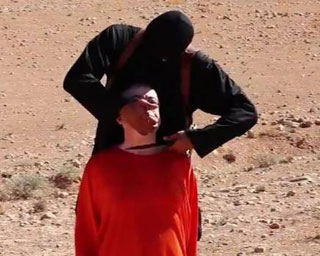
CAIRO, Oct 4: An internet video released on Friday shows an Islamic State group fighter beheading British hostage Alan Henning, the fourth such killing carried out by the extremist group now targeted in US-led airstrikes. The video mirrored other beheading videos shot by the Islamic State group, which now holds territory along the border of Syria and Iraq, and ended with a militant threatening a man they identified as an American named Peter Kassig. "Obama, you have started your aerial bombardment of Shams (Syria), which keeps on striking our people, so it is only right that we continue to strike the neck of your people," the masked militant in the video said. National Security Council spokesperson Caitlin Hayden confirmed that Kassig was being held by Islamic State militants, in a statement issued on Friday evening. "At this point we have no reason to doubt the authenticity of the video released earlier today (Friday). We will continue to use every tool at our disposal - military, diplomatic, law enforcement and intelligence - to try to bring Peter home to his family," Hayden said. Britain has been supporting US military efforts against the Islamic State group by using British forces to help with logistics and intelligence gathering, as well as recently taking part in airstrikes in Iraq. The internet video released Friday begins with a news clip announcing British strikes against the Islamic State group. British Prime Minister David Cameron said Henning's apparent slaying showed "how barbaric and repulsive these terrorists are." "Alan had gone to Syria to help get aid to people of all faiths in their hour of need," Cameron said in a statement. "The fact that he was taken hostage when trying to help others and now murdered demonstrates that there are no limits to the depravity of these... terrorists. "We will do all we can to hunt down these murderers and bring them to justice." President Barack Obama's counterterrorism adviser, Lisa Monaco, said the US had seen the video and was evaluating it. Later, Obama said the United States strongly condemned Henning's "brutal murder." He said the US, along with Britain and other allies, will "work to bring the perpetrators of Alan's murder" to justice and will continue to "taking decisive action to degrade and ultimately destroy" the Islamic State group. French President Francois Hollande said he is "outraged by the heinous crime." "This crime like previous ones will not be unpunished. France will continue to lend support to the people and authorities of Iraq in their fight against terrorism," Hollande said in a statement. On Friday night, the UN Security Council condemned the video, saying it "once again illustrates the brutality" of the Islamic State group, adding that its members believe "such continued acts of barbarism perpetrated by ISIL do not intimidate them but rather stiffen their resolve." This is the fourth such video released by the Islamic State group. The full beheadings are not shown in the videos, but the British-accented, English-speaking militant holds a long knife and appears to begin cutting his victims, who include American reporter James Foley, American-Israeli journalist Steven Sotloff, British aid worker David Haines and now Henning. FBI director James Comey has said American officials believe they know the identity of the masked militant, though he's declined to name the man or reveal his nationality. Kassig, a 26-year-old American now threatened by the Islamic State group, enlisted in the Army in 2004, and became a Ranger, ultimately serving in the 75th Ranger Regiment, an Army special operations unit. According to his military record, Kassig trained at Fort Benning, Georgia in 2006, and deployed to Iraq from April to July 2007. He was medically discharged at the rank of private first class in September 2007. His home of record at the time of his enlistment was Indianapolis, Indiana. His parents, Ed and Paula Kassig, issued a statement through a media relations firm, asking for the world to pray for their son. "The Kassig family extends our concern for the family of Alan Henning. We have read about his work and his generous character with great respect and admiration," the statement said. "We ask everyone around the world to pray for the Henning family, for our son, and for the release of all innocent people being held hostage in the Middle East and around the globe." The family said Kassig had been working for the relief organization SERA when he was captured on October 1, 2013 on his way to Deir Ezzour in eastern Syria. He converted to Islam while in captivity and the family has heard from former hostages that his faith has provided him comfort. Henning, 47, nicknamed "Gadget," had joined an aid convoy and was taken captive on December 26, shortly after crossing the border between Turkey and Syria. Earlier this week, Henning's wife Barbara Henning asked the militants in a televised plea: "Please release him. We need him back home." Dozens of Muslim leaders in Britain have urged the Islamic State group to release Henning. His wife had said she had been given hope by "the outcry across the world" over her husband's imprisonment. Mohammed Shafiq, chief executive of the Ramadhan Foundation, a Muslim charity, called Henning "a British hero." His "barbaric killing is an attack against all decent people around the world," Shafiq said. The Islamic State group has its roots in al Qaeda's Iraqi affiliate but was expelled from the global terror network over its brutal tactics and refusal to obey orders to confine its activities to Iraq. It became even more extreme amid the bloody 3-year civil war in neighbouring Syria, growing stronger to the point of being able to launch a lightning offensive across much of northern Iraq, routing security forces there and shooting down an Iraqi helicopter on Friday. The group has become known for filming and releasing footage of mass shootings it conducts, as well as beheading opponents and targeting religious and ethnic minorities in the areas it attacks. The extremist group has been widely denounced by mainstream Muslim authorities. Other foreigners are believed held by the Islamic State group. On Friday, the father of John Cantlie, a British photojournalist held by the group, appealed for his release in a video, saying he was a friend of Syria. |

| |||||||
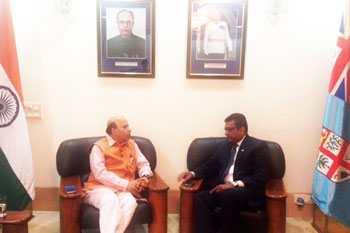 NEW DELHI, Oct 30: Global Convenor BJP Overseas Affairs Vijay Jolly had a goodwill meeting with Fiji High Commissioner in India Yogesh J. Karan. The BJP leader Jolly conveyed the warm greetings of BJP President Amit Shah to Government of Fiji.
 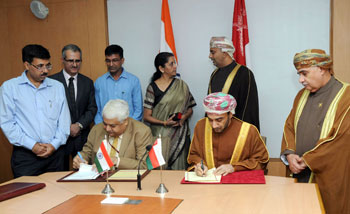 NEW DELHI, Oct 29: India and Oman on Wednesday discussed ways to enhance trade and investments between the two countries. The issues were discussed during the seventh India-Oman Joint Commission meeting, which was held here under the leadership of the Commerce and Industry Minister Nirmala Sitharaman and Ali bin Masoud al Sunaidy, Oman's Minister of Commerce and Industry.
 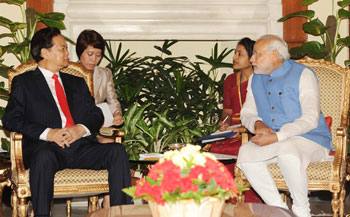 NEW DELHI, Oct 28: Indian Prime Minister Narendra Modi pledged on Tuesday to strengthen Vietnam’s military following talks between leaders of the two allies, in a move likely to rankle neighouring nuclear-armed giant China.
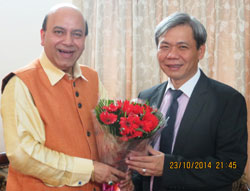 NEW DELHI, Oct 27: Global Convenor BJP Overseas Affairs Vijay Jolly called on the new Vietnam Ambassador Ton Sinh Thanh here. It may be recalled that the new Ambassador of Vietnam in India presented his credentials to President of India Pranab Mukherjee on October 21.
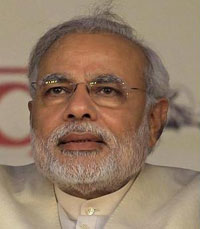 Oct 20: Besides addressing the joint session of Australian parliament, Prime Minister Narendra Modi will also get a rousing public reception from the diaspora when he visits that country for the G-20 summit next month.
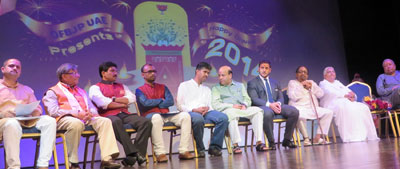 DUBAI, Oct 18:
 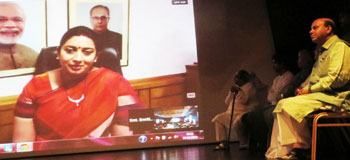 She said the good governance of Prime Minister Narendra Modi, empowering the under privileged resulting in 7 crore bank accounts, ushering in labour and land reforms has endeared the BJP to the masses.
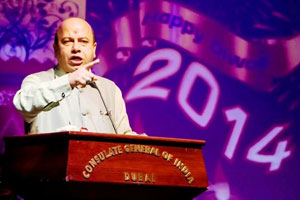 After one hour long meeting with Ambassador of India in UAE T.P. Sitharaman, OFBJP Convenor Jolly presented him a book titled “Narendra Modi The Game Changer”.
 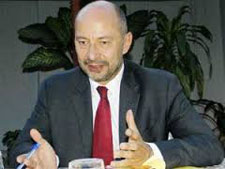 SHIMLA, Oct 16: France is keen to invest in developing 'smart cities' and other urban development projects in Himachal Pradesh and looking forward to invest in the state, French Ambassador to India Francois Richier today said.
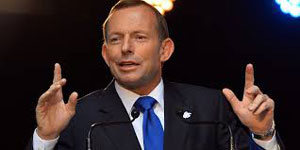 SYDNEY, Oct 14: The Australian government will relax visa restrictions for skilled migrants, in an effort to make the country more competitive.
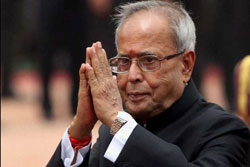 OSLO, Oct 13: Asserting that the problem of terrorismin India was imported, President Pranab Mukherjee has said indigenous terrorist activity was "extremely negligible" with hardly any involvement of the 150 million Muslims of the country.
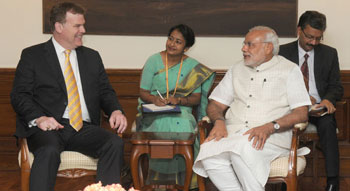 NEW DELHI, Oct 13: Prime Minister Narendra Modi has welcomed close cooperation between India and Canada and expressed satisfaction at comprehensive nature of bilateral ties, including in areas of economic cooperation, agriculture, security, civil nuclear energy, education, and science and technology.
 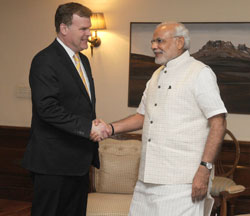 Baird conveyed the commitment of the Government of Canada under Prime Minister Harper to further strengthen the Strategic Partnership with India and extended an invitation to the Prime Minister to visit Canada.
 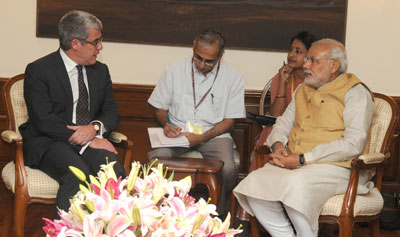 NEW DELHI, Oct 10: Prime Minister Narendra Modi has described France as one of India's most important global partners that has stood with India through both good and difficult moments. Prime Minister Modi said this on Friday while Jacques Audibert, Diplomatic Advisor to the French President.
 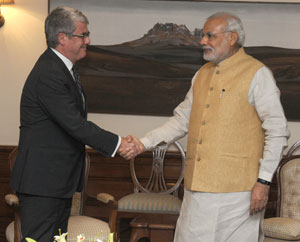 Audibert handed over a letter from French President Hollande to the Prime Minister, in which President Hollande conveyed his strong commitment to further strengthen France’s Strategic Partnership with India and extended an invitation to the Prime Minister to visit France.
 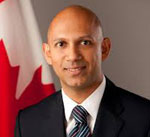 NEW DELHI, Oct 10: Canada's Foreign Affairs Minister John Baird and International Trade Minister Ed Fast on Friday announced in Toronto that Nadir Patel, an Indian-Canadian, will be the new High Commissioner to India. Nadir Patel, 44, was born in Prime Minister Narendra Modi's state of Gujarat and speaks Gujarati at home.
 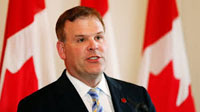 NEW DELHI, Oct 10: Canada’s Foreign Affairs Minister John Baird, International trade Minister Ed Fast, National Revenue Minister Kerry-Lynne Findlay, and parliamentary secretaries Bob Dechert and Deepak Obhrai are lead a Canadian delegation to India from October 12 to 17.
 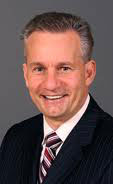 Minister Fast, along with Parliamentary Secretary Dechert, will lead a six-day, three-city trade mission to Mumbai, Delhi and Chandigarh to boost Canada and India’s trade and investment partnerships. They will be joined by representatives of 14 Canadian organizations, including small and medium-sized enterprises, looking for opportunities to export to India.
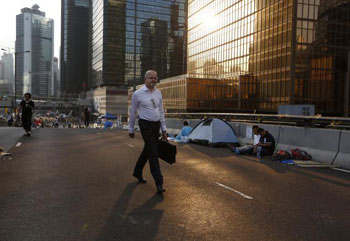 HONG KONG, Oct 6: Student demonstrators say they have taken early steps to begin talks with the government on their demands for wider political reforms, but actual negotiations have not started and many disagreements remain.
 Oct 6: Brazil’s unpredictable election took another twist on Sunday, with left-leaning President Dilma Rousseff being forced into a runoff race as expected, but against a centre-right challenger who only surged in the final week of the campaign.
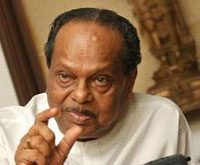 COLOMBO, Oct 4: A veteran Sri Lankan Tamil politician has written a letter to Indian Prime Minister Narendra Modi backing the Indian model of “devolution of power” to solve the ethnic impasse in the island nation.
Aviation
| Business | Defence | Foreign
Affairs | Communication | Health
| India | United Nations
India-US
| India-France | Entertainment
| Sports | Photo Gallery |
Tourism | Advertise with Us
| Contact Us
© Noyanika International, 2003-2009. All rights reserved.