


Foreign Affairs
|
3-Day Delhi Dialogue VIII gets under wayAnil Wadhwa urges ASEAN member nations urged to ratify Agreements on Trade in Services and Investments with IndiaBy Deepak Arora
Ratification of Agreement on Trade in Investment for Lao PDR, ratification of Agreements on Trade in Services and Investment by Cambodia, Philippines and Indonesia is awaited. Furthermore, the ASEAN-India Trade Negotiating Committee has been tasked to undertake a review of the ASEAN-India Trade in Goods Agreement, which came into effect on 1 January 2010, to optimize utilization.” “There are great opportunities for investment as well as trade expansion and diversification. However, we are restrained because of poor connectivity. We need to improve our connectivity via Land, Air and Sea so as to facilitate trade, business travel and tourism. We share a rich heritage of Buddhist pilgrimage sites which can ensure a tremendous boost to tourism, she emphasised. He said they can promote cross border investments by linking investment promotion agencies, foreign investors and local entrepreneurs. Governments, industry bodies and relevant agencies can promote dissemination of information on investment rules, regulations and policies related to investment in ASEAN and India. In addition, Indian companies can seek to connect with ASEAN’s well-developed Regional Value Chains (RVC). Sunil Kanoria said " A specific idea is to encourage the top business schools of India to meet with the top business schools of ASEAN in competitions and case studies. Another area of dialogue is around the shared challenge of climate change. As urbanization picks up in our two regions, we face the issues of air pollution and water pollution and carbon emissions." He said that in order to achieve full potential of the Indian-ASEAN relations, a willful and active participation of the member states, beneficial liberalization policies including tariff and non-tariff exemptions, private public partnership, infrastructural development, digitization, and identifying areas of comparative advantage and working towards capitalizing on the same is necessary. An impediment which has not allowed trade to grow is lack of infrastructure such as rail, road, air and marine connectivity, he said and suggested that with regard to FTAs there is a need to look more closely at them and explore areas such as Digital, Renewable Solar Energy and Manufacturing for cooperation. There is also a lot of scope for SMEs from ASEAN and India to cooperate for collaborations, he said. Vijay Jolly Denounces Washington's Pakistan PolicyBy Deepak Arora
In a letter to US Ambassador Richard R.Verma, Vijay Jolly said "We are unhappy and distressed. We express deep resentment of the Indian public against this US move. We firmly believe that such US incentive shall encourage Pakistan and its terror designs on free & democratic India. We denounce Washington's Pakistan Policy." He said "Your statement in Indian media stating "fighters sale to Pakistan is part of legacy announcement" is unacceptable. Consider this in the backdrop of 26/11/2008 Mumbai Terror Attacks in India where out of total 166 deaths, the US citizens killed were 4 and out of total 293 injured, US citizens grievously injured were 2. The terrorists were Pakistani outfits which sneaked into India by sea route." In light of various terror attacks in India by terrorist organizations operating from Pak soil, including the recent Gurdaspur ( Punjab) and Pathankot (J&K) terror attacks, he wrote we are disappointed to note your corresponding statement "US expects Islamabad to do more on eliminating terror safe havens on its soil". This is acceptance of the true prevailing facts and Indian govts position on the issue. US arms shall in no way help Pakistan to conduct counter insurgency and counter terror operations. Your argument that such an arms transfer shall help Pak to combat terrorism is far away from truth & reality." He said Washigton has to take into account Indian concerns since rejuvenated India- US relations during the past 19 months are the off-shoot of renewed understanding between Prime Minister Narendra Modi and President Barack Obama. Business, political, economic, educational, scientific & military spheres have all strengthened Indo-US Friendship in modern times. "Please do not ignite flames of mistrust and arms race in the Indian sub- continent. The need of the hour is to force Pakistan to denounce terror elements, arrest terrorists waging armed struggle against India and disallow terror modules to mount attacks on India from its soil." Vijay Jolly wrote "US is actively engaged in Global War against Terror since 11th September 2001 attack on World Trade Center killing nearly 3000 innocents US citizens including 400 police officers & fire fighters. And on the other hand Indian Parliament was attacked by Pak terrorists on 13th Dec 2001. And latter attacks on various Indian civilian establishments during the past 15 years. We have continuously bled and demanded justice for the innocent. While you have pledged & acted firmly against global terror." He said India and the US have common goals of democracy and development. So any direct or indirect military hardware support by US without any solid commitment for peace and tranquility and shunning terror by Pakistan is against tenets of Global Fight and War Against Terror. Vijay Jolly requested the US Administration to reconsider its decision in the larger interests of Humanity & Global Peace. China deploys missiles in contested South China Sea islandTAIPEI/WASHINGTON, Feb 17: China has deployed an advanced surface-to-air missile system to one of the disputed islands it controls in the South China Sea, Taiwan and US officials said, ratcheting up tensions even as US President Barack Obama urged restraint in the region. Taiwan defence ministry spokesman Major General David Lo said the missile batteries had been set up on Woody Island. The island is part of the Paracels chain, under Chinese control for more than 40 year but also claimed by Taiwan and Vietnam. "Interested parties should work together to maintain peace and stability in the South China Sea region and refrain from taking any unilateral measures that would increase tensions," Lo said on Wednesday. A US defence official also confirmed the "apparent deployment" of the missiles, first reported by Fox News. Images from civilian satellite company ImageSat International show two batteries of eight surface-to-air missile launchers as well as a radar system, according to Fox News. News of the missile deployment came as Obama and leaders of the Association of Southeast Asian Nations concluded a summit in California, where they discussed the need to ease tensions in the region but did not include specific mention of China's assertive pursuit of its claims in the South China Sea. China claims most of the South China Sea, through which more than $5 trillion in global trade passes every year, and has been building runways and other infrastructure on artificial islands to bolster its claims. "We discussed the need for tangible steps in the South China Sea to lower tensions including a halt to further reclamation, new construction and militarization of disputed areas," Obama told a news conference. The United States has said it will continue conducting "freedom of navigation patrols" by ships and aircraft to assure unimpeded passage through the region, where Vietnam, Malaysia, Brunei, the Philippines and Taiwan have rival claims. Mira Rapp-Hooper, a South China Sea expert from of the Center for a New American Security, said it was not the first time that China has sent such weapons to the Paracels, under Chinese control since 1974. "I do think surface to air missiles are a considerable development," she said. "If they have been deployed they are probably China's effort to signal a response to freedom-of navigation operations, but I don't think it is a totally unprecedented deployment." A US Navy destroyer sailed within 12 nautical miles of Triton Island in the Paracels chain last month in a move the Pentagon said was aimed at countering efforts by China, Vietnam and Taiwan to limit freedom of navigation. China condemned the US action as provocative. China has said it would not seek militarization of its South China Sea islands and reefs, but that did not mean it would not set up defences. "Woody Island belongs to China," said Ni Lexiong, a naval expert at the Shanghai University of Political Science and Law. "Deploying surface-to-air missiles on our territory is completely within the scope of our sovereign rights. We have sovereignty there, so we can choose whether to militarize it." F-16s sale to Pak pour cold water on peace talks
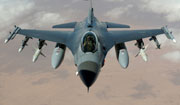
A spate of events has ensured this, not least the announcement by the US that it was going ahead with sale of F-16 fighter aircraft to Pakistan. Islamabad on Sunday said it was surprised and disappointed with India's reaction which saw New Delhi summoning US envoy Richard Verma to register protest against the sale. Pakistan said India's Army and arsenal were much larger and it was also the largest importer of defence equipment. Even after India's protest, the US justified its decision with a state department official saying F-16 aircraft were "critical" to the success of Pakistan's counter-terror operations. Indian officials believe the development will let Islamabad off the hook at a time when the government was using the Pathankot attack to force Pakistan to act against terror groups whose main target is India. In its reaction, Pakistan also pointed to how it closely cooperates with the US in countering terrorism. The announcement of F-16 sale to Pakistan comes close on the heels of a series of developments which have forced India to renege on its earlier announcement that the foreign secretary talks would be held in the "very near future". Both Indian and Pakistani sources said there was no date yet which both sides found convenient for foreign secretary-level dialogue. Former Pakistani president Pervez Musharraf's confession that ISI was involved in training JeM and LeT terrorists and David Headley's testimony about the role of Pakistani agencies in the Mumbai attacks had already queered India's pitch. According to top BJP sources, Musharraf, in fact, had roiled whatever chances remained of normalcy in ties. While Pakistan has refused to buy Headley's deposition, India has officially said that it will go by Headley's version as it was made before an Indian court and was admissible as evidence. Pakistan's reaction to Headley's testimony has upset India as it came soon after New Delhi declared that the Mumbai attacks trial in Pakistan remained a test of Islamabad's commitment to act against India-specific terror groups. Even before Headley's deposition, India was ambivalent about going ahead with foreign secretary talks because it was not sure if Pakistan had acted enough against JeM, the group responsible for the Pathankot attack. India still has no information from Pakistan confirming that JeM chief Maulana Masood Azhar has been detained. On the contrary, an Indian news channel recently reported, quoting top Pakistan officials, that Azhar had escaped to Afghanistan. High Commissioner Navtej Sarna hails Indian diaspora, ‘bhangra’ in UK
Speaking to leading members of the Indian community in the Gandhi Hall of India House over the weekend, Sarna reiterated the conception of Prime Minister Narendra Modi that even if overseas Indians had different passports, they had as much claim on India as Indians. “This India House is as much yours as ours. It reflects Indian-ness in every inch, since it was originally built for India. All community members must feel that this is their home and they are always welcome”, he said. Sarna, who replaced Ranjan Mathai in early January, noted that the 1.5 million-strong Indian community here had flourished in every field, be it business, politics, culture, medicine, or law, and wielded political influence. His remark about the popularity of ‘bhangra’ drew the most response from the gathering, reflecting the strides the genre has made since the 1960s. Birmingham is the centre of this genre of fusion-based music in post-war Britain. The genre has gone mainstream, particularly due to popular contributions over the decades from artistes such as Apache Indian, Bally Sagoo and Panjabi MC. Channi Singh, considered the ‘godfather’ of British ‘bhangra music’, was honoured with an OBE in 2012. Urging the community to assist in infrastructure development, Sarna said the high commission’s consular was reflected in Britain having the highest share of Indian electronic visas issued (24%), and nearly 300,000 Overseas Citizen of India cards being issued. |

| |||||||
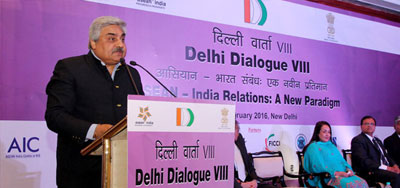 NEW DELHI, Feb 17: The eighth edition of the Delhi Dialogue on the theme ‘ASEAN-India Relations: A New Paradigm’ got under way here on Wednesday with Anil Wadhwa, Secretary (East), Ministry of External Affairs, Government of India, giving a clarion call to those ASEAN member states who had not ratified the ASEAN-India Agreements on Trade in Services and Investments to endorse the pacts entered into last year.
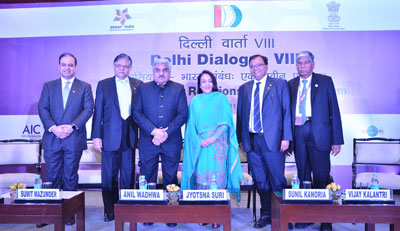 He said that enhancing India-ASEAN trade is a priority area under the new Plan of Action to implement the ASEAN-India partnership for peace progress and shared prosperity (2016-20). The Plan of Action envisages a number of steps in the areas of Trade and Investment, Finance, Transport, Food, Agriculture, Forestry, Information and Communication Technology, Tourism, Science, Technology and Innovation, and Mining and Natural Resources Management.
 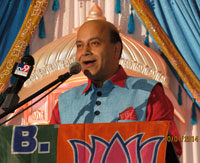 NEW DELHI, Feb 17: Denouncing Washington's Pakistan Policy, a senior BJP leader and President of Delhi Study Group, has said that the people of India have noted with great concern the decision of United States of America to supply our immediate neighbor Pakistan eight nuclear capable F-16 Fighter Jets along with military hardware valuing US$ 700 millions.
 NEW DELHI, Feb 15: Even as India and Pakistan continue to be "in touch", the prospect of an early start to the comprehensive bilateral dialogue (CBD) in the form of a meeting between the foreign secretaries now looks increasingly bleak.
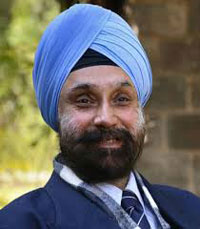 LONDON, Feb 15: Noting that ‘bhangra’ and ‘tandoori’ had gone mainstream, new Indian high commissioner Navtej Sarna paid tribute to the large Indian diaspora that now has a significant presence in every field in contemporary Britain.
Aviation
| Business | Defence | Foreign
Affairs | Communication | Health
| India | United Nations
India-US
| India-France | Entertainment
| Sports | Photo Gallery |
Tourism | Advertise with Us
| Contact Us
© Noyanika International, 2003-2009. All rights reserved.