Breakfast key to good health
LONDON, Feb 21: Good breakfast is the key to a healthy lifestyle determining the quality of your whole day's nutrition, according to research.
And the best way to start the morning is with a simple bowl of a healthy cereal, as it makes people less likely to turn to fatty, sugary food through the rest of the day, reports express .
The study, by nutritionist Sigrid Gibson revealed the healthiest breakfast choice is cereal with milk because it is a good source of calcium and numerous other key nutrients, such as fibre, protein and carbohydrate.
The research team analysed 12,068 food records from the National Diet and Nutrition Survey, which interviewed Britons aged from 19 to 64.
The results showed that one in five adults ate no solid food for breakfast, one third chose cereal and 45 per cent enjoyed a non-cereal breakfast. The most popular item was tea or coffee, taken on 84 per cent of breakfast occasions.
Milk was consumed with 82 per cent of breakfasts, followed by cereal (39 per cent), bread (33 per cent) and fruit (14 per cent).
The healthiest breakfast choice is cereal with milk.
Women were less likely than men to choose bread, sausage, bacon or eggs and more likely to have fruit instead.
The study found that eating breakfast was associated with a lower fat and higher carbohydrate intake over 24 hours compared with skipping breakfast.
But this was mainly attributable to cereal-based breakfasts as non-cereal meals were associated with a higher intake of saturated fatty acid and lower protein intakes.
Feeling good drives away stress, pain
LONDON, Jan 21: Many believe that it is important to 'feel good about yourself' in order to be healthy, especially as you grow older. But how true is it really?
"We all age. It is how we age, however, that determines the quality of our lives," said Anthony Ong of Cornell University.
For example, happier people might be more enthusiastic about regularly exercising and budgeting time for a good night's sleep, an attitude that is especially beneficial in old age.
Studies have found that people with stronger positive emotions have lower levels of chemicals associated with inflammation related to stress. They can even undo some of the physical damage caused by stress.
Ong speculates that if positive emotions are indeed good for our health then, "one direct, measureable consequence of this should be the extended years of quality living."
India to frame smokeless tobacco specific policy: Azad
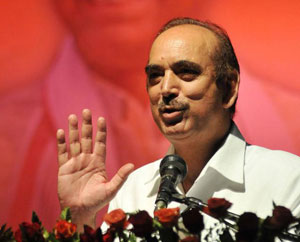 CHANDIGARH, Jan 17: Noting that 26 per cent of thetotal population is chewing cancer-causing tobacco, Union Health Minister Ghulam Nabi Azad has said it was formulating a smokeless tobacco specific policy. CHANDIGARH, Jan 17: Noting that 26 per cent of thetotal population is chewing cancer-causing tobacco, Union Health Minister Ghulam Nabi Azad has said it was formulating a smokeless tobacco specific policy.
"So far the Health Ministry's anti-tobacco programmes revolved around cigarettees...there is another monster as 26 per cent of the population is using smokeless tobacco with potential to create cancer," said Mr Azad while inaugurating a block of HSJ Institute of DentalSciences and Hospital of Panjab University here.
Quoting a survey by a reputed international agency, he said around 35 per cent adults of the total population weresmoking.
"It is shocking that out of this total 35 per cent population, 26 per cent are consuming smokeless tobacco," he said adding 80 per cent of oral cancer was a result of chewing tobacco.
He said only nine per cent of the population was smoking cigarettees and bidi.
"With the smokeless tobacco having the potential to create 80 per cent of oral cancer, the Health Ministry is formulating a policy which is smokeless tobacco specific," he said.
He said according to a survey between 60 to 65 years of age 12 per cent of population lose its teeth and more than 30per cent population lose its teeth over 70 years of age.
"Tobacco is one of the contributory factors in loss ofteeths as well," he said adding the role of dentistry wasfar behind the implantation.
He said the thrust of the Health Ministry was to produce more MBBS doctors and bring sweeping changes in the Medical Council of India.
He said the Ministry had last year decided to set up 10 centers of excellence in para medics.
New study explains ‘yo yo effect’ of slimming diets
WASHINGTON, Jan 14: A new study has found that the hormones related to appetite play an important role in the likelihood of regaining weight after dieting. The study found that people with the highest levels of leptin and lowest levels of ghrelin are more likely to put on pounds again after dieting.
This is called the ‘yo-yo’ effect, and it is noted in some people who follow such weight-loss programmes.
“There are patients who are susceptible to and others who are resistant to the benefits of a diet”, said Ana Belen Crujeiras, a doctor at the University Hospital Complex of Santiago (CHUS).
“It seems that the way each patient responds to treatment is predetermined by their own characteristics,” she added.
After eight weeks of a hypocaloric diet in 104 overweight people, the team found that the group that had regained more than 10 percent of the weight lost was found to have higher levels of leptin and lower levels of ghrelin.
“Some obese or overweight patients who gain more weight following a diet could even be identified before they embark on their weight-loss therapy, just by looking at their plasma levels of these hormones”, Crujeiras said.
The findings will pave way for more exhaustive studies on appetite-related hormones as tools for developing individually-tailored weight-loss programmes that would guarantee success for obese and overweight patients in keeping the weight lost off.
The results are published in the Journal of Clinical Endocrinology and Metabolism.
Out-of-box solutions needed for remote areas: Azad
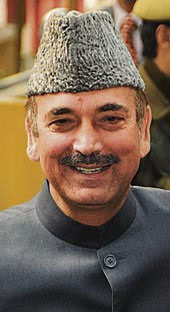 HYDERABAD, Jan 12: Union Minister for Health and Family Welfare Ghulam Nabi Azad has called for “out of the box” solutions to reach out to remote areas so that health services can be provided there at the earliest. HYDERABAD, Jan 12: Union Minister for Health and Family Welfare Ghulam Nabi Azad has called for “out of the box” solutions to reach out to remote areas so that health services can be provided there at the earliest.
Speaking at a two-day national conference of State Health Ministers and Health Secretaries here on Wednesday, Mr. Azad said that in many remote areas of hilly States, tribal pockets and northeastern States, access to health facilities continued to be a problem in view of the difficult terrain, geographical spread, and non-availability of human resources.
“My Ministry has proposed a Bachelor of Rural Healthcare course as one of the solutions to improve availability of health personnel for these areas,” he added.
Mentioning that the Government of India had provided Rs.53,000 crore to the States under the National Rural Health Mission (NRHM) over the last six years, Mr. Azad said that a National Urban Health Mission was being formulated to take care of infrastructure needs.
The pace of decline in various key health indicators like Maternal Mortality Rate (MMR), Infant Mortality rate (IMR), Total fertility Rate, and death and morbidity due to communicable diseases had not improved as compared to the pre-NRHM period. Complimenting the governments of southern and western States for excellent performance, Mr. Azad said that in so far as central, eastern, northeastern and north Indian States were concerned, the time had come to closely look at the implementation of schemes, identify bottle-necks and improve performance.
Mr. Azad urged the States to take advantage of the reforms introduced in medical education and set up more medical colleges and increase the intake of students in post-MBBS and postgraduate courses. He said that depending on the success of the national programme for Prevention and Control of Cancer, Diabetes, Cardiovascular diseases and Stroke — being taken up in 100 most backward and remote districts in States during 2010-12 — it would be extended to all 650 districts in the country under the 12th Plan.
Andhra Pradesh Chief Minister N. Kiran Kumar Reddy, who inaugurated the conference, outlined various programmes being implemented, including the flagship Aarogyasri, under which Rs.3,000 crore was spent during the last three years.
The aim of the government was to bring down the MMR from the current 154 per thousand live births to 100 by 2012, Mr. Reddy said.
The meet will come out with a Hyderabad Action Plan on Thursday to focus on implementation in the remaining part of the 11th plan and provide a roadmap for the 12th plan.
|


