


United States
|
Obama reaches out to MuslimsCAIRO, June 4: Quoting extensively from the Koran and the Bible, United States President Barack Obama on Thursday unveiled his vision of inter-faith reconciliation and outlined an agenda of inclusive partnership on a global scale. In an hour-long speech directed specially at an international Muslim audience, Mr. Obama spoke about ways to address the sources of tension in southwest Asia. Mr. Obama, in his Cairo University address, spoke about the broad principles to defuse the Israel-Palestine conflict and ease tensions surrounding Iraq, Iran, Afghanistan and Pakistan. He said the purpose of his address was to seek a new beginning between the U.S. and Muslims around the world; one based upon mutual interest and mutual respect. Mr. Obama rejected the theory of inevitability of the “clash of civilizations.” He advocated a two-state solution to end the Israel-Palestine conflict, and stressed that the U.S. did not accept the legitimacy of continued Israeli settlements. Mr. Obama said Washington’s “unbreakable” bond with Israel was “based upon cultural and historical ties, and the recognition that the aspiration for a Jewish homeland is rooted in a tragic history that cannot be denied.” Nevertheless, the U.S. fully supported Palestinian rights, including the right to independent statehood. He said Palestinians endured the “daily humiliations” that came with occupation. “So let there be no doubt: the situation for the Palestinian people is intolerable. America will not turn our backs on the legitimate Palestinian aspiration for dignity, opportunity, and a state of their own.” Calling upon both sides to live up to their obligations to the “road map” — the blueprint for ending the conflict — Mr. Obama slammed Israel for not bringing its settlements project in the occupied Palestinian territories to a halt. He said the U.S. was not seeking “military bases” in either Iraq or Afghanistan. On Iran, the U.S. President reiterated his offer for dialogue “without preconditions.” He acknowledged Iran’s right to pursue peaceful uses of nuclear energy, but not atomic weapons. Mr. Obama advocated universal disarmament, acknowledging the argument that there should be no double standards regarding possession of atomic weapons. “No single nation should pick and choose which nations hold nuclear weapons. That is why I strongly reaffirmed America’s commitment to seek a world in which no nations hold nuclear weapons.” He stressed that the Americans respected Iraq’s sovereignty and had no claims on Iraqi territory or resources. Mr. Obama spelt out a nuanced approach to empowering women in the Muslim world, without causing them cultural dislocation. Mr. Obama began his address with the traditional Islamic greeting “Assalaamu Alaykum” and this drew a huge round of applause. “The cycle of suspicion and discord must end,” he said vowing to fight “negative stereotypes of Islam” wherever they appeared. Text of Obama's speech in CairoFollowing is the text of U.S. President Barack Obama's speech at the Cairo University on June 4, 2009: I am honoured to be in the timeless city of Cairo, and to be hosted by two remarkable institutions. For over a thousand years, Al-Azhar has stood as a beacon of Islamic learning, and for over a century, Cairo University has been a source of Egypt's advancement. Together, you represent the harmony between tradition and progress. I am grateful for your hospitality, and the hospitality of the people of Egypt. I am also proud to carry with me the goodwill of the American people, and a greeting of peace from Muslim communities in my country: assalaamu alaykum. We meet at a time of tension between the United States and Muslims around the world - tension rooted in historical forces that go beyond any current policy debate. The relationship between Islam and the West includes centuries of coexistence and cooperation, but also conflict and religious wars. More recently, tension has been fed by colonialism that denied rights and opportunities to many Muslims, and a Cold War in which Muslim-majority countries were too often treated as proxies without regard to their own aspirations. Moreover, the sweeping change brought by modernity and globalization led many Muslims to view the West as hostile to the traditions of Islam. Violent extremists have exploited these tensions in a small but potent minority of Muslims. The attacks of September 11th, 2001 and the continued efforts of these extremists to engage in violence against civilians has led some in my country to view Islam as inevitably hostile not only to America and Western countries, but also to human rights. This has bred more fear and mistrust. So long as our relationship is defined by our differences, we will empower those who sow hatred rather than peace, and who promote conflict rather than the cooperation that can help all of our people achieve justice and prosperity. This cycle of suspicion and discord must end. I have come here to seek a new beginning between the United States and Muslims around the world; one based upon mutual interest and mutual respect; and one based upon the truth that America and Islam are not exclusive, and need not be in competition. Instead, they overlap, and share common principles - principles of justice and progress; tolerance and the dignity of all human beings. I do so recognizing that change cannot happen overnight. No single speech can eradicate years of mistrust, nor can I answer in the time that I have all the complex questions that brought us to this point. But I am convinced that in order to move forward, we must say openly the things we hold in our hearts, and that too often are said only behind closed doors. There must be a sustained effort to listen to each other; to learn from each other; to respect one another; and to seek common ground. As the Holy Quran tells us, Be conscious of God and speak always the truth. That is what I will try to do - to speak the truth as best I can, humbled by the task before us, and firm in my belief that the interests we share as human beings are far more powerful than the forces that drive us apart. 'Islam, part of America' Part of this conviction is rooted in my own experience. I am a Christian, but my father came from a Kenyan family that includes generations of Muslims. As a boy, I spent several years in Indonesia and heard the call of the azaan at the break of dawn and the fall of dusk. As a young man, I worked in Chicago communities where many found dignity and peace in their Muslim faith. As a student of history, I also know civilization's debt to Islam. It was Islam - at places like Al-Azhar University - that carried the light of learning through so many centuries, paving the way for Europe's Renaissance and Enlightenment. It was innovation in Muslim communities that developed the order of algebra; our magnetic compass and tools of navigation; our mastery of pens and printing; our understanding of how disease spreads and how it can be healed. Islamic culture has given us majestic arches and soaring spires; timeless poetry and cherished music; elegant calligraphy and places of peaceful contemplation. And throughout history, Islam has demonstrated through words and deeds the possibilities of religious tolerance and racial equality. I know, too, that Islam has always been a part of America's story. The first nation to recognize my country was Morocco. In signing the Treaty of Tripoli in 1796, our second President John Adams wrote, The United States has in itself no character of enmity against the laws, religion or tranquility of Muslims. And since our founding, American Muslims have enriched the United States. They have fought in our wars, served in government, stood for civil rights, started businesses, taught at our Universities, excelled in our sports arenas, won Nobel Prizes, built our tallest building, and lit the Olympic Torch. And when the first Muslim-American was recently elected to Congress, he took the oath to defend our Constitution using the same Holy Quran that one of our Founding Fathers - Thomas Jefferson - kept in his personal library. So I have known Islam on three continents before coming to the region where it was first revealed. That experience guides my conviction that partnership between America and Islam must be based on what Islam is, not what it isn't. And I consider it part of my responsibility as President of the United States to fight against negative stereotypes of Islam wherever they appear. But that same principle must apply to Muslim perceptions of America. Just as Muslims do not fit a crude stereotype, America is not the crude stereotype of a self-interested empire. The United States has been one of the greatest sources of progress that the world has ever known. We were born out of revolution against an empire. We were founded upon the ideal that all are created equal, and we have shed blood and struggled for centuries to give meaning to those words - within our borders, and around the world. We are shaped by every culture, drawn from every end of the Earth, and dedicated to a simple concept: E pluribus unum: Out of many, one. Much has been made of the fact that an African-American with the name Barack Hussein Obama could be elected President. But my personal story is not so unique. The dream of opportunity for all people has not come true for everyone in America, but its promise exists for all who come to our shores - that includes nearly seven million American Muslims in our country today who enjoy incomes and education that are higher than average. Moreover, freedom in America is indivisible from the freedom to practice one's religion. That is why there is a mosque in every state of our union, and over 1,200 mosques within our borders. That is why the U.S. government has gone to court to protect the right of women and girls to wear the hijab, and to punish those who would deny it. So let there be no doubt: Islam is a part of America. And I believe that America holds within her the truth that regardless of race, religion, or station in life, all of us share common aspirations - to live in peace and security; to get an education and to work with dignity; to love our families, our communities, and our God. These things we share. This is the hope of all humanity. Of course, recognizing our common humanity is only the beginning of our task. Words alone cannot meet the needs of our people. These needs will be met only if we act boldly in the years ahead; and if we understand that the challenges we face are shared, and our failure to meet them will hurt us all. For we have learned from recent experience that when a financial system weakens in one country, prosperity is hurt everywhere. When a new flu infects one human being, all are at risk. When one nation pursues a nuclear weapon, the risk of nuclear attack rises for all nations. When violent extremists operate in one stretch of mountains, people are endangered across an ocean. And when innocents in Bosnia and Darfur are slaughtered, that is a stain on our collective conscience. That is what it means to share this world in the 21st century. That is the responsibility we have to one another as human beings. This is a difficult responsibility to embrace. For human history has often been a record of nations and tribes subjugating one another to serve their own interests. Yet in this new age, such attitudes are self-defeating. Given our interdependence, any world order that elevates one nation or group of people over another will inevitably fail. So whatever we think of the past, we must not be prisoners of it. Our problems must be dealt with through partnership; progress must be shared. That does not mean we should ignore sources of tension. Indeed, it suggests the opposite: we must face these tensions squarely. And so in that spirit, let me speak as clearly and plainly as I can about some specific issues that I believe we must finally confront together. On extremism The first issue that we have to confront is violent extremism in all of its forms. In Ankara, I made clear that America is not - and never will be - at war with Islam. We will, however, relentlessly confront violent extremists who pose a grave threat to our security. Because we reject the same thing that people of all faiths reject: the killing of innocent men, women, and children. And it is my first duty as President to protect the American people. The situation in Afghanistan demonstrates America's goals, and our need to work together. Over seven years ago, the United States pursued al Qaida and the Taliban with broad international support. We did not go by choice, we went because of necessity. I am aware that some question or justify the events of 9/11. But let us be clear: al Qaida killed nearly 3,000 people on that day. The victims were innocent men, women and children from America and many other nations who had done nothing to harm anybody. And yet Al Qaeda chose to ruthlessly murder these people, claimed credit for the attack, and even now states their determination to kill on a massive scale. They have affiliates in many countries and are trying to expand their reach. These are not opinions to be debated; these are facts to be dealt with. Make no mistake: we do not want to keep our troops in Afghanistan. We seek no military bases there. It is agonizing for America to lose our young men and women. It is costly and politically difficult to continue this conflict. We would gladly bring every single one of our troops home if we could be confident that there were not violent extremists in Afghanistan and Pakistan determined to kill as many Americans as they possibly can. But that is not yet the case. That's why we're partnering with a coalition of forty-six countries. And despite the costs involved, America's commitment will not weaken. Indeed, none of us should tolerate these extremists. They have killed in many countries. They have killed people of different faiths - more than any other, they have killed Muslims. Their actions are irreconcilable with the rights of human beings, the progress of nations, and with Islam. The Holy Quran teaches that whoever kills an innocent, it is as if he has killed all mankind; and whoever saves a person, it is as if he has saved all mankind. The enduring faith of over a billion people is so much bigger than the narrow hatred of a few. Islam is not part of the problem in combating violent extremism - it is an important part of promoting peace. We also know that military power alone is not going to solve the problems in Afghanistan and Pakistan. That is why we plan to invest $1.5 billion each year over the next five years to partner with Pakistanis to build schools and hospitals, roads and businesses, and hundreds of millions to help those who have been displaced. And that is why we are providing more than $2.8 billion to help Afghans develop their economy and deliver services that people depend upon. Let me also address the issue of Iraq. Unlike Afghanistan, Iraq was a war of choice that provoked strong differences in my country and around the world. Although I believe that the Iraqi people are ultimately better off without the tyranny of Saddam Hussein, I also believe that events in Iraq have reminded America of the need to use diplomacy and build international consensus to resolve our problems whenever possible. Indeed, we can recall the words of Thomas Jefferson, who said: I hope that our wisdom will grow with our power, and teach us that the less we use our power the greater it will be. Today, America has a dual responsibility: to help Iraq forge a better future - and to leave Iraq to Iraqis. I have made it clear to the Iraqi people that we pursue no bases, and no claim on their territory or resources. Iraq's sovereignty is its own. That is why I ordered the removal of our combat brigades by next August. That is why we will honor our agreement with Iraq's democratically-elected government to remove combat troops from Iraqi cities by July, and to remove all our troops from Iraq by 2012. We will help Iraq train its Security Forces and develop its economy. But we will support a secure and united Iraq as a partner, and never as a patron. And finally, just as America can never tolerate violence by extremists, we must never alter our principles. 9/11 was an enormous trauma to our country. The fear and anger that it provoked was understandable, but in some cases, it led us to act contrary to our ideals. We are taking concrete actions to change course. I have unequivocally prohibited the use of torture by the United States, and I have ordered the prison at Guantanamo Bay closed by early next year. So America will defend itself respectful of the sovereignty of nations and the rule of law. And we will do so in partnership with Muslim communities which are also threatened. The sooner the extremists are isolated and unwelcome in Muslim communities, the sooner we will all be safer. On Israel and Palestine The second major source of tension that we need to discuss is the situation between Israelis, Palestinians and the Arab world. America's strong bonds with Israel are well known. This bond is unbreakable. It is based upon cultural and historical ties, and the recognition that the aspiration for a Jewish homeland is rooted in a tragic history that cannot be denied. Around the world, the Jewish people were persecuted for centuries, and anti-Semitism in Europe culminated in an unprecedented Holocaust. Tomorrow, I will visit Buchenwald, which was part of a network of camps where Jews were enslaved, tortured, shot and gassed to death by the Third Reich. Six million Jews were killed - more than the entire Jewish population of Israel today. Denying that fact is baseless, ignorant, and hateful. Threatening Israel with destruction - or repeating vile stereotypes about Jews - is deeply wrong, and only serves to evoke in the minds of Israelis this most painful of memories while preventing the peace that the people of this region deserve. On the other hand, it is also undeniable that the Palestinian people - Muslims and Christians - have suffered in pursuit of a homeland. For more than sixty years they have endured the pain of dislocation. Many wait in refugee camps in the West Bank, Gaza, and neighboring lands for a life of peace and security that they have never been able to lead. They endure the daily humiliations - large and small - that come with occupation. So let there be no doubt: the situation for the Palestinian people is intolerable. America will not turn our backs on the legitimate Palestinian aspiration for dignity, opportunity, and a state of their own. (APPLAUSE) For decades, there has been a stalemate: two peoples with legitimate aspirations, each with a painful history that makes compromise elusive. It is easy to point fingers - for Palestinians to point to the displacement brought by Israel's founding, and for Israelis to point to the constant hostility and attacks throughout its history from within its borders as well as beyond. But if we see this conflict only from one side or the other, then we will be blind to the truth: the only resolution is for the aspirations of both sides to be met through two states, where Israelis and Palestinians each live in peace and security. (APPLAUSE) That is in Israel's interest, Palestine's interest, America's interest, and the world's interest. That is why I intend to personally pursue this outcome with all the patience that the task requires. The obligations that the parties have agreed to under the Road Map are clear. For peace to come, it is time for them - and all of us - to live up to our responsibilities. Palestinians must abandon violence. Resistance through violence and killing is wrong and does not succeed. For centuries, black people in America suffered the lash of the whip as slaves and the humiliation of segregation. But it was not violence that won full and equal rights. It was a peaceful and determined insistence upon the ideals at the center of America's founding. This same story can be told by people from South Africa to South Asia; from Eastern Europe to Indonesia. It's a story with a simple truth: that violence is a dead end. It is a sign of neither courage nor power to shoot rockets at sleeping children, or to blow up old women on a bus. That is not how moral authority is claimed; that is how it is surrendered. Now is the time for Palestinians to focus on what they can build. The Palestinian Authority must develop its capacity to govern, with institutions that serve the needs of its people. Hamas does have support among some Palestinians, but they also have responsibilities. To play a role in fulfilling Palestinian aspirations, and to unify the Palestinian people, Hamas must put an end to violence, recognize past agreements, and recognize Israel's right to exist. At the same time, Israelis must acknowledge that just as Israel's right to exist cannot be denied, neither can Palestine's. The United States does not accept the legitimacy of continued Israeli settlements. This construction violates previous agreements and undermines efforts to achieve peace. It is time for these settlements to stop. (APPLAUSE) Israel must also live up to its obligations to ensure that Palestinians can live, and work, and develop their society. And just as it devastates Palestinian families, the continuing humanitarian crisis in Gaza does not serve Israel's security; neither does the continuing lack of opportunity in the West Bank. Progress in the daily lives of the Palestinian people must be part of a road to peace, and Israel must take concrete steps to enable such progress. Finally, the Arab States must recognize that the Arab Peace Initiative was an important beginning, but not the end of their responsibilities. The Arab-Israeli conflict should no longer be used to distract the people of Arab nations from other problems. Instead, it must be a cause for action to help the Palestinian people develop the institutions that will sustain their state; to recognize Israel's legitimacy; and to choose progress over a self-defeating focus on the past. America will align our policies with those who pursue peace, and say in public what we say in private to Israelis and Palestinians and Arabs. We cannot impose peace. But privately, many Muslims recognize that Israel will not go away. Likewise, many Israelis recognize the need for a Palestinian state. It is time for us to act on what everyone knows to be true. Too many tears have flowed. Too much blood has been shed. All of us have a responsibility to work for the day when the mothers of Israelis and Palestinians can see their children grow up without fear; when the Holy Land of three great faiths is the place of peace that God intended it to be; when Jerusalem is a secure and lasting home for Jews and Christians and Muslims, and a place for all of the children of Abraham to mingle peacefully together. (APPLAUSE) ... as in the story of Isra. (APPLAUSE) ... as in the story of Isra, when Moses, Jesus, and Mohammed -- peace be upon them -- joined in prayer. (APPLAUSE) The third source of tension is our shared interest in the rights and responsibilities of nations on nuclear weapons. (APPLAUSE) This issue has been a source of tension between the United States and the Islamic Republic of Iran. For many years, Iran has defined itself in part by its opposition to my country, and there is indeed a tumultuous history between us. In the middle of the Cold War, the United States played a role in the overthrow of a democratically-elected Iranian government. Since the Islamic Revolution, Iran has played a role in acts of hostage-taking and violence against U.S. troops and civilians. This history is well known. Rather than remain trapped in the past, I have made it clear to Iran's leaders and people that my country is prepared to move forward. The question, now, is not what Iran is against, but rather what future it wants to build. It will be hard to overcome decades of mistrust, but we will proceed with courage, rectitude and resolve. There will be many issues to discuss between our two countries, and we are willing to move forward without preconditions on the basis of mutual respect. But it is clear to all concerned that when it comes to nuclear weapons, we have reached a decisive point. This is not simply about America's interests. It is about preventing a nuclear arms race in the Middle East that could lead this region and the world down a hugely dangerous path. I understand those who protest that some countries have weapons that others do not. No single nation should pick and choose which nations hold nuclear weapons. That is why I strongly reaffirmed America's commitment to seek a world in which no nations hold nuclear weapons. And any nation - including Iran - should have the right to access peaceful nuclear power if it complies with its responsibilities under the nuclear Non-Proliferation Treaty. That commitment is at the core of the Treaty, and it must be kept for all who fully abide by it. And I am hopeful that all countries in the region can share in this goal. On democracy The fourth issue that I will address is democracy. (APPLAUSE) I know there has been controversy about the promotion of democracy in recent years, and much of this controversy is connected to the war in Iraq. So let me be clear: no system of government can or should be imposed upon one nation by any other. That does not lessen my commitment, however, to governments that reflect the will of the people. Each nation gives life to this principle in its own way, grounded in the traditions of its own people. America does not presume to know what is best for everyone, just as we would not presume to pick the outcome of a peaceful election. But I do have an unyielding belief that all people yearn for certain things: the ability to speak your mind and have a say in how you are governed; confidence in the rule of law and the equal administration of justice; government that is transparent and doesn't steal from the people; the freedom to live as you choose. Those are not just American ideas, they are human rights, and that is why we will support them everywhere. There is no straight line to realize this promise. But this much is clear: governments that protect these rights are ultimately more stable, successful and secure. Suppressing ideas never succeeds in making them go away. America respects the right of all peaceful and law-abiding voices to be heard around the world, even if we disagree with them. And we will welcome all elected, peaceful governments - provided they govern with respect for all their people. This last point is important because there are some who advocate for democracy only when they are out of power; once in power, they are ruthless in suppressing the rights of others. No matter where it takes hold, government of the people and by the people sets a single standard for all who hold power: you must maintain your power through consent, not coercion; you must respect the rights of minorities, and participate with a spirit of tolerance and compromise; you must place the interests of your people and the legitimate workings of the political process above your party. Without these ingredients, elections alone do not make true democracy. On religious freedom The fifth issue that we must address together is religious freedom. Islam has a proud tradition of tolerance. We see it in the history of Andalusia and Cordoba during the Inquisition. I saw it firsthand as a child in Indonesia, where devout Christians worshipped freely in an overwhelmingly Muslim country. That is the spirit we need today. People in every country should be free to choose and live their faith based upon the persuasion of the mind, heart, and soul. This tolerance is essential for religion to thrive, but it is being challenged in many different ways. Among some Muslims, there is a disturbing tendency to measure one's own faith by the rejection of another's. The richness of religious diversity must be upheld - whether it is for Maronites in Lebanon or the Copts in Egypt. (APPLAUSE) And fault lines must be closed among Muslims as well, as the divisions between Sunni and Shia have led to tragic violence, particularly in Iraq. Freedom of religion is central to the ability of peoples to live together. We must always examine the ways in which we protect it. For instance, in the United States, rules on charitable giving have made it harder for Muslims to fulfill their religious obligation. That is why I am committed to working with American Muslims to ensure that they can fulfill zakat. Likewise, it is important for Western countries to avoid impeding Muslim citizens from practicing religion as they see fit - for instance, by dictating what clothes a Muslim woman should wear. We cannot disguise hostility towards any religion behind the pretence of liberalism. Indeed, faith should bring us together. That is why we are forging service projects in America that bring together Christians, Muslims, and Jews. That is why we welcome efforts like Saudi Arabian King Abdullah's Interfaith dialogue and Turkey's leadership in the Alliance of Civilizations. Around the world, we can turn dialogue into Interfaith service, so bridges between peoples lead to action - whether it is combating malaria in Africa, or providing relief after a natural disaster. On women's rights The sixth issue -- the sixth issue that I want to address is women's rights. (APPLAUSE) I know... (APPLAUSE) I know, and you can tell from this audience, that there is a healthy debate about this issue. I reject the view of some in the West that a woman who chooses to cover her hair is somehow less equal. But I do believe that a woman who is denied an education is denied equality. (APPLAUSE) And it is no coincidence that countries where women are well-educated are far more likely to be prosperous. Now let me be clear, issues of women's equality are by no means simply an issue for Islam. In Turkey, Pakistan, Bangladesh, Indonesia, we've seen Muslim-majority countries elect a woman to lead. Meanwhile, the struggle for women's equality continues in many aspects of American life and in countries around the world. I am convinced that our daughters can contribute just as much to society as our sons. (APPLAUSE) Our common prosperity will be advanced by allowing all humanity, men and women, to reach their full potential. I do not believe that women must make the same choices as men in order to be equal. And I respect those women who choose to live their lives in traditional roles. But it should be their choice. That is why the United States will partner with any Muslim-majority country to support expanded literacy for girls and to help young women pursue employment through micro-financing that helps people live their dreams. First step towards new beginning The issues that I have described will not be easy to address, but we have a responsibility to join together to behalf of the world that we seek, a world where extremists no longer threaten our people and American troops have come home; a world where Israelis and Palestinians are each secure in a state of their own and nuclear energy is used for peaceful purposes, a world where governments serve their citizens and the rights of all God's children are respected. Those are mutual interests. That is the world we seek. But we can only achieve it together. I know there are many, Muslim and non-Muslim, who question whether we can forge this new beginning. Some are eager to stoke the flames of division and to stand in the way of progress. Some suggest that it isn't worth the effort, that we are fated to disagree and civilizations are doomed to clash. Many more are simply skeptical that real change can occur. There is so much fear, so much mistrust that has built up over the years. But if we choose to be bound by the past, we will never move forward. And I want to particularly say this to young people of every faith in every country. You more than anyone have the ability to reimagine the world, the remake this world. All of us share this world for but a brief moment in time. The question is whether we spend that time focused on what pushes us apart or whether we commit ourselves to an effort, a sustained effort to find common ground, to focus on the future we seek for our children and to respect the dignity of all human beings. It's easier to start wars than to end them. It's easier to blame others than to look inward. It's easier to see what is different about someone than to find the things we share. But we should choose the right path, not just the easy path. There is one rule that lies at the heart of every religion, that we do unto others as we would have them do unto us. (APPLAUSE) This truth transcends nations and peoples, a belief that isn't new, that isn't black or white or brown, that isn't Christian or Muslim or Jew. It's a belief that pulsed in the cradle of civilization and that still beats in the hearts of billions around the world. It's a faith in other people. And it's what brought me here today. We have the power to make the world we seek, but only if we have the courage to make a new beginning, keeping in mind what has been written. The Holy Quran tells us, Mankind, we have created you male and a female. And we have made you into nations and tribes so that you may know one another. The Talmud tells us, The whole of the Torah is for the purpose of promoting peace. The Holy Bible tells us, Blessed are the peacemakers, for they shall be called sons of God. (APPLAUSE) The people of the world can live together in peace. We know that is God's vision. Now that must be our work here on Earth. Thank you. And may God's peace be upon you. Thank you very much. Thank you. Pak exchanged N-tech for N Korean long range missiles: USWASHINGTON, June 2: North Korea received designs for uranium enrichment centrifuges from Pakistan's disgraced nuclear scientist A Q Khan in return for itslong-range missiles, a Congressional report has told US lawmakers. "Hwang Jang-yop, a Communist Party secretary who defected in 1997, has stated that North Korea and Pakistan agreed in the summer of 1996 to trade North Korean long-range missile technology for Pakistani HEU (highly enriched uranium) technology," the report on North Korean nuclear weapons programme has said. Other information on North Korean-Pakistani cooperation dates back to 1993, said the report by Congressional Research Service (CRS) - the research wing of the US Congress. North Korea has been exporting missiles to countries in the Middle East and South Asia and has had joint collaboration in development of missiles with Iran and Pakistan, it said. In the 1990s, North Korea exported Scud and Nodong missiles to Pakistan, Iran, Yemen, Syria and reportedly Egypt. It entered into joint development programmes with both Pakistan and Iran. Pyongyang received designs for uranium enrichment centrifuges from Pakistan nuclear "czar" A Q Khan and has attempted to purchase overseas key components for uranium enrichment centrifuges, but some of these purchases have been blocked, according to the report. US will not allow nuclear-armed North Korea: GatesSINGAPORE, May 30: The United States warned it would not accept a nuclear-armed North Korea as China appealed for calm amid fears that Pyongyang was readying for a long-range missile test. US Defence Secretary Robert Gates told a high-level security forum in Singapore that North Korea's actions, including its nuclear test earlier this week, could spark a regional arms race. "Our goal is complete and verifiable denuclearisation of the Korean peninsula, and we will not accept North Korea as a nuclear state," Gates said. "North Korea's nuclear programme and actions constitute a threat to regional peace and security. We unequivocally reaffirm our commitment to the defence of our allies in the region," he added. Tensions have been running high since Kim Jong-Il's regime said it staged its second atomic bomb test on Monday and renounced the armistice that ended the Korean War in 1953. The communist North has warned it could launch an attack on the South, which hosts US military forces, and vowed to respond strongly to any fresh sanctions imposed by the United Nations. North Korea fired another short-range missile Friday and US satellite photos have revealed vehicle activity at two sites in North Korea, suggesting the regime may be preparing to launch a long-range missile, two US defence officials said on Friday. The vehicle movements resembled work done before North Korea fired a long-range rocket last month, the officials, speaking on condition of anonymity said. But Gates said Washington "will not stand idly by as North Korea builds the capability to wreak destruction on any target in Asia -- or on us." If North Korea continues "the path they are on, I think the consequences for stability in the region are significant," he added. "I think it poses the potential for some kind of an arms race here in this region," he said, although he said the likelihood of Japan moving to acquire nuclear capability was "at this point remote." Meanwhile, a top Chinese military official appealed for calm in Singapore, which is hosting an annual meeting of defence ministers and military officials known as the Shangri-La Dialogue. "The Korean peninsula should move towards denuclearisation and we hope that all parties concerned will remain cool-headed and take measured measures to address the problem," said Lieutenant-General Ma Xiaotian, deputy chief of the general staff at the People's Liberation Army. Gates had earlier underscored the importance of cooperation, including in the area of defence, with China, seen as the nation with the most leverage on the diplomatically isolated regime in Pyongyang. The United States, China and the two Koreas were part of six-nation talks that agreed in 2007 to provide aid and security guarantees to North Korea in return for denuclearisation. Pyongyang stormed out of the accord last month in protest after the UN Security Council unanimously condemned its long-range missile launch. The United States, China and other UN Security Council members have been mulling possible fresh sanctions against North Korea. The White House said Thursday that China was being "very helpful" in the efforts to censure North Korea over its nuclear and missile tests. Touching on other regional security issues, Gates urged Asian allies to step up support for its military campaign and nation-rebuilding efforts in Afghanistan. "The challenge in Afghanistan is so complex, and so un-traditional, that it can only be met by all of us working in concert," he said. The US Defence Secretary also pressed Myanmar's military rulers to free pro-democracy leader Aung San Suu Kyi and reopen dialogue with the opposition following her latest arrest after an eccentric American man swam to her lakeside home. Obama nominates Roemer as new US Ambassador to IndiaWASHINGTON, May 29: US President Barack Obama on Thursday nominated Timothy R Roemer, a veteran Democratic Congressman and a member of the 9/11 Commission to be his envoy in India and help advance Washington's ties "at this critical time for our nation and the world." Roemer, 52, is currently President of the Center for National Policy (CNP) - a Washington-based think tank. If confirmed by the Senate, Roemer, a Congressman from Indiana, will replace the Bush administration's nominee in New Delhi, David Mulford. An announcement in this regard was made by the White House along with a dozen diplomatic posts, including Patricia A Butenis, who has been nominated as the new Ambassador to Sri Lanka. "I am grateful that these distinguished Americans have agreed to help represent the United States and strengthen our partnerships abroad at this critical time for our nation and the world," Obama said in a statement. "I am confident they will advance American diplomacy as we work to meet the challenges of the 21st century. I look forward to working with them in the years and months ahead," he said. Before joining CNP, Roemer represented the 3rd District of Indiana for six terms as a US Congressman, from 1991 to 2003. He was appointed by the former President, George W Bush, as a member of the 9/11 Commission that probed the terror strikes on the US. He was appointed to the Commission on the Prevention of Weapons of Mass Destruction, Proliferation and Terrorism, a bi-partisan commission created by Congress to examine how the US can best address this threat to the national security. In addition, Roemer serves on the Washington Institute for Near East Policy's Presidential Task Force on Combating the Ideology of Radical Extremism and the National Parks Second Century Commission. As a Distinguished Scholar at the Mercatus Center at George Mason University, Congressman Roemer works with members of Congress and staff to improve public policy outcomes by teaching on the legislative branch and policy analysis. Roemer holds a BA from the University of California, San Diego and an MA and a PhD from the University of Notre Dame. Obama calls on Myanmar to free Aung San Suu Kyi
Obama escalated US pressure on Myanmar's ruling generals after the Nobel laureate took the stand for the first time in her trial at Yangon's notorious Insein jail and argued she had not violated the terms of her house arrest. "I call on the Burmese government to release National League for Democracy Secretary General and Nobel Peace Prize winner Aung San Suu Kyi from detention immediately and unconditionally," Obama said in a written statement. "I strongly condemn her house arrest and detention, which have also been condemned around the world. "Aung San Suu Kyi's continued detention, isolation, and show trial based on spurious charges cast serious doubt on the Burmese regime's willingness to be a responsible member of the international community," Obama said. Obama lauded Aung San Suu Kyi, leader of the National League for Democracy (NLD) for her "profound patriotism, sacrifice, and the vision of a democratic and prosperous Burma" despite being confined to years of house arrest. The Obama administration has been reviewing its policy towards the military-ruled state after neither the stick of international sanctions nor the carrot of engagement have persuaded Myanmar's generals to loosen their grip. Obama's statement contained the merest hint that Myanmar's future prospects of engagement with the western nations could depend on how it deals with the case, amid fears Aung San Suu Kyi could be jailed for up to five years. "It is time for the Burmese government to drop all charges against Aung San Suu Kyi and unconditionally release her and her fellow political prisoners," Obama said. "Such an action would be an affirmative and significant step on Burma's part to begin to restore its standing in the eyes of the United States and the world community and to move toward a better future for its people." Obama's Secretary of State Hillary Clinton last week said the administration was trying to see if pressure from third countries like China and India, could obtain Aung San Suu Kyi's release. Aung San Suu Kyi was testifying for the first time at the maximum security prison, in a case that has drawn widespread international condemnation of the country's iron-fisted military junta. "I didn't," the 63-year-old replied when a judge asked her whether she had breached the restriction order keeping her at her residence, according to reporters and diplomats present at the hearing. The long-standing figurehead of Myanmar's opposition movement, Aung San Suu Kyi faces up to five years in jail if convicted. She has been under house arrest or in jail for 13 of the last 19 years, including the last six. She said the first she knew of the bizarre visit by American army veteran John Yettaw was when her assistant woke her up at around dawn on May 4 to tell her that a man had arrived at the house. "I did not inform them," she said when asked by the judge whether she had told Myanmar's military authorities about the intrusion. Critics accuse Myanmar's junta of trumping up the charges in a bid to keep Aung San Suu Kyi locked up during elections due in 2010. Her party won the country's last elections, in 1990, but was never allowed to take power. Successive US administrations have spoken out vocally on Aung San Suu Kyi's behalf, along with European Union states and other nations, but her plight has barely improved for years. US military chief says Iran closer on nuclear weapons
"I think the unintended consequence of a strike against Iran right now would be incredibly serious, as well as the unintended consequences of their achieving a weapon," Admiral Mike Mullen, the chairman of the Joint Chiefs of Staff said. "That's why this engagement, dialogue is so important," he said in an interview to the news agency, referring to President Barack Obama's aim to engage Iran diplomatically. Mullen said the United States would approach Iran "with all options on the table." "So that would leave a pretty narrow space in which to achieve a successful dialogue and a successful outcome, which from my perspective means they don't end up with nuclear weapons," he said. Mullen said he did not believe Iran's claims that it is developing its nuclear capabilities for peaceful purposes, but he said the aim of diplomacy would be "to really bring out whether that is how the senior leaders feels." "Certainly from what I've seen in recent years, Iran is on a path to develop nuclear weapons," he said. "Most of us believe that it is one to three years (away from acquiring nuclear weapons), depending on assumptions about where they are right now. But they are moving closer clearly and they continue to do that," he said. Pakistan expands nuclear arsenal: ReportWASHINGTON, May 18: Pakistan is rapidly expanding its nuclear arsenal, raising questions in the US Congress whether billions of dollars in proposed militaryaid to strife-torn country could be diverted to its nuclear program, The New York Times reported late Sunday. The newspaper said members of Congress have been told about Pakistan's nuclear drive in confidential and public briefings by Mike Mullen, the chairman of the Joint Chiefs of Staff. Pakistan's effort to build new nuclear weapons has been a source of growing concern in Washington, because the country is producing more nuclear material at a time when the United States is increasingly focused on trying to assure the security of Pakistan's 80 to 100 weapons so that they will never fall into the hands of Islamic insurgents, the report said. The administration's effort is complicated by the fact that Pakistan is producing an unknown amount of new bomb-grade uranium and, once a series of new reactors is completed, bomb-grade plutonium for a new generation of weapons, the paper added. President Barack Obama has called for passage of a treaty that would stop all nations from producing more fissile material. Obama administration officials said they had communicated to Congress that their intent was to assure that military aid to Pakistan was directed toward counter terrorism and not diverted, The Times noted. But Admiral Mullen's confirmation that the arsenal is increasing seems certain to aggravate Congress's discomfort, the report said. The briefings have taken place as Congress has considered proposals to spend three billion dollars over the next five years to train and equip Pakistan's military for counterinsurgency warfare, the paper pointed out. The aid would come in addition to 7.5 billion in civilian assistance. Sri Lanka must seek a secure and lasting peace: ObamaWASHINGTON, May 14: Indicating that the US would not let the innocent civilians reportedly being killed in the ongoing war between Sri Lankan forces and LTTE, U.S. President Barack Obama has asked Colombo to "seek a peace that is secure and lasting". "Sri Lanka must seek a peace that is secure and lasting, and grounded in respect for all of its citizens," Obama said reading out from a prepared statement on the White House lawns minutes before he left for Arizona on Wednesday afternoon. This is for the first time that Obama has directly addressed the media on the issue of Sri Lanka, indicating that the humanitarian crisis in the island nation has suddenly caught the attention of his administration. "Firstly, the government should stop the indiscriminate shelling that has taken hundreds of innocent lives, including (in) several hospitals. The government should live up to its commitment not to use heavy weapons in the conflict zone," Obama said. "More civilian casualties and inadequate care for those caught in resettlement camps will only make it more difficult to achieve the peace that the people of Sri Lanka deserve," he added. "Secondly, the government should give United Nations and International Committee of the Red Cross access to nearly 190,000 displaced people within Sri Lanka so that they can receive the immediate assistance necessary to save their lives," Obama said. However, he did not take any question in his brief read out in which he said with all the big issues going on, Sri Lanka hasn't received much attention, it deserves. "We have a humanitarian crisis that's taking place in Sri Lanka. And I've been increasingly saddened by the desperate news in recent days," Mr. Obama said. Tens of thousands of innocent civilians are trapped, between the warring government forces and the Tamil Tigers in Sri Lanka, with no means of escape, little access to food, water, shelter and medicine, he said. "Now is the time, I believe, to put aside some of the political issues that are involved and to put the lives of the men and women and children, who are innocently caught in the crossfire to put them first," the President said. Mr. Obama also urged the Tamil Tigers to lay down their arms and let civilians go. "Their forced recruitment of civilians and their use of civilians as human shields is deplorable. These tactics will only serve to alienate all those who carry them out," the US President said. The Obama Administration in past few months has been calling for devolution of power in Sri Lanka and urging Colombo to come out with a political settlement. US Secretary of State Hillary Clinton herself made a telephone call to Sri Lankan President Mahinda Rajapaksa last month expressing her concern over the current humanitarian situation in the country. US urges Pak to defeat Taliban; India watches closelyWASHINGTON, May 6: As the call for accountability from Pakistan on the US aid gained ground at the Capitol Hill, the United States has said it would make sure that American tax payers' money sent to Islamabad is spent for the purpose it is being given and that there is no pilferage of it. India is hoping that the trilateral summit in Washington will draft a concrete action plan to crush the Taliban. "We want to make sure, as members of Congress want to make sure, that our money is going to those areas that it's intended," the State Department spokesman, Robert Wood, told reporters at his press briefing, in response to questions in this regard. Wood indicated that soon the Obama Administration would come out with details of such bench mark in this regard. "I don't know if I'd call them benchmarks, but certainly a set of principles that's going to guide our joint cooperation as we go forward in dealing with these tremendous challenges that both Pakistan and Afghanistan face," he said, without giving any details. "We've to work with the Congress, work with the two governments to ensure that this money is allocated and dealt with properly," Wood said, adding this is going to be a high priority for the Administration. "In these tough economic times we have to make sure, and the American people deserve no less than a government that's committed spending their resources the way the resources are intended to be spent," he said. The statement came, as lawmakers at the Capitol Hill voiced their concerns about the money being given to Pakistan not being used in the fight against terrorist. With the sacrifice that the American people are being asked to make, we want to make sure that every dollar that is spent, in terms of support for Afghanistan and Pakistan, is well spent and goes directly to the activities that they're designated for, Wood said. The spokesman said after the tri-lateral meeting between the Presidents of the US, Afghanistan and Pakistan, the Obama administration would want to see movement in various areas. "I don't want to get into the specifics of what we're going to be requiring, but you can rest assured that we take this issue very, very seriously, in terms of making sure that every taxpayer dollar is wisely spent," Wood said. Responding to a question, Wood conceded like Afghanistan there has been a problem of corruption in Pakistan too. Obama to pursue high-value targets in Pak, but no ground troopsWASHINGTON, March 29: Warning that the US expects "much more accountability" from Pakistan in rooting out the "steady creep of extremism" there, President Barack Obama said America will go after "high-value" targets after consulting it but not deploy ground troops in hot pursuit. Without directly referring to the US missile strikes in Pakistan's terrorist-infested tribal belt, Obama said: "If we have a high-value target within our sights, after consulting with Pakistan, we're going after them." "But our main thrust has to be to help Pakistan defeat these extremists," he told a news channel programme, which was aired on Monday but had been recorded on Friday, the same day Obama unveiled a new Afghan-Pak policy. "But you're talking about going after them. Are you talking about with American boots on the ground, pursuing these people into these so-called safe havens?" Bob Schieffer asked, to which Obama responded in negative. "No. Our plan does not change the recognition of Pakistan as a sovereign government. We need to work with them and through them to deal with al-Qaeda. But we have to hold them much more accountable," Obama said. "The focus over the last seven years I think has been lost. What we want to do is to refocus attention on al-Qaeda," he said in an apparent reference to policy of Bush regime which concentrated more on Iraq than Afghanistan. Obama vows to wipe out Al-Qaeda in Afghan review
Obama warned that restive Pakistani border regions were the "most dangerous place in the world" for Americans and described Al-Qaeda as a "cancer" that could devour Pakistan, more than seven years after the September 11 attacks. The strategy places stabilising Pakistan at the center of the reframed US approach for fighting an unfinished and bloody battle against Al-Qaeda, which Obama said suffered neglect during a US diversion to Iraq. The president also called on US allies to join a major new civilian effort to stabilize Afghanistan, and warned he would not turn a "blind eye" towards government corruption which he said undermined faith in its leaders. "The situation is increasingly perilous. It has been more than seven years since the Taliban was removed from power, yet war rages on, and insurgents control parts of Afghanistan and Pakistan," Obama said "Al-Qaeda and its allies, the terrorists who planned and supported the 9/11 attacks are in Pakistan and Afghanistan," Obama warned. "Multiple intelligence estimates have warned that Al-Qaeda is actively planning attacks on the United States homeland from its safe haven in Pakistan." Obama warned that if Pakistan would not act on intelligence on the whereabouts of terrorists, the United States would. "For the American people, this border region has become the most dangerous place in the world." Warning the "safety of people around the world is at stake," Obama called on US allies and partners to join a civilian drive to improve reconstruction and development in Afghanistan. Obama also announced previously leaked plans to send 4,000 extra troops to train the Afghan army, on top of 17,000 deployments already authorized in defiance of critics who have warned of a quagmire. The strategy establishes clear benchmarks to judge the effort by the United States and its allies in Pakistan and Afghanistan. Obama aides meanwhile accused former president George W Bush's administration of leaving US policy "adrift" in the two nations and said they would approach China, India and even US foe Iran to ease the situation. Obama called Afghan President Hamid Karzai and Pakistani President Asif Ali Zardari on Thursday to outline the new US approach. Following reports that more missile strikes on Pakistan militant targets could be part of the US tactics, Pakistan's foreign ministry asked Washington to reconsider. "Pakistan's concerns in this regard have been conveyed to the US government at the highest level," foreign ministry spokesman Abdul Basit said. Obama said he would support a bi-partisan Senate bill to triple US aid to Afghanistan to $1.5 billion a year for five years. Officials also said they expected to secure pledges for additional military help in Afghanistan when Obama presents the strategy at the NATO alliance annual summit on the France-Germany border. France, for instance, had expressed an interest in working with the Afghan police force, one official said. Officials argued that the Bush administration had failed to properly finance the development of the national Afghan army. The review will set a target of expanding the Afghan army to 134,000 men and the police force to 82,000, but the numbers could go higher if needed, the officials said. As a result of the troop increases, the US force in Afghanistan will reach 61,000-65,000 by mid-September, which officials said would have a significant impact on the war zone. Osama bin Laden plotting new attacks: USWASHINGTON, March 27: Osama bin Laden and the core Al-Qaeda leadership are plotting new attacks against the United States and its allies from safe havens in Pakistan, a senior US official warned Thursday. Meanwhile, President Barack Obama will Friday announce a new strategy to "disrupt, dismantle and defeat" Al-Qaeda in safe havens in Afghanistan and Pakistan and deploy an extra 4,000 military trainers. The new strategy, the product of a 60-day review in conjunction with US allies, marks one of the boldest foreign policy bets laid so far in Obama's two months in power and defies those who warn he is walking into a quagmire. The 4,000 US troops will build up the Afghan army and are in addition to 17,000 extra troops already promised by the president. Obama will also send hundreds more civilian and development workers into Afghanistan, three administration officials said on the eve of his announcement. "It is a clear, concise, attainable goal, and that goal is to disrupt, dismantle and defeat Al-Qaeda in its safe havens in Afghanistan and Pakistan," one of the officials said on condition of anonymity. The strategy will also establish clear benchmarks to judge the performance of the United States and its allies in both Pakistan and Afghanistan, to enable mid-course corrections, another official said. The officials accused the Bush administration of leaving US policy "adrift" in the two nations. "Seven-and-a-half years after September 11, the Al-Qaeda core leadership, Osama bin Laden and others, have moved from Kandahar, Afghanistan, to a location unknown, somewhere in Pakistan," one official said. "From that location in Pakistan, we know they are plotting new attacks against the United States, against our allies, against our forces in Afghanistan, against our Pakistani friends as well." The officials discounted the arguments of critics who oppose escalating the US role in the conflict, warning that given a vacuum, the Taliban would return in force to Kabul, and bring Al-Qaeda along. The officials also said the Taliban had made a "very significant comeback in the last two years," that could not be allowed to take root. Obama will formally announce the new strategy to members of the military and development workers who will serve in the two nations in coming months, as well as foreign ambassadors at a White House event on Friday. He will then present it to US NATO allies at the end of next week at the western alliance's annual summit, along the border of France and Germany. A key ingredient will be benchmarks so that later this year Obama will be able to judge if his policy is working, or if it needs to be adjusted. "We will develop benchmarks and metrics to measure our performance, and frankly to measure the performance of our partners and our allies," one official said. "We will periodically revisit those metrics to see how they are doing and to see if we need mid-course corrections." Another key goal of the strategy is to support Pakistan's besieged Democratic government, and to help Islamabad crack down on Al-Qaeda and Taliban havens on its territory. "In many ways, Pakistan is the hardest part of the problem," one of the officials said, adding that terror groups had become a "Frankenstein" within the country that threatened the survival of democracy. Obama will support a bi-partisan Senate bill to triple US aid to Afghanistan to 1.5 billion dollars a year for five years, and would also look at needed military assistance, particularly helicopters to transport troops to war zones. "We are going from a policy of throwing money at Pakistan and ignoring it, to a policy of consistency and constancy towards Pakistan," the official added. The officials also said they expected to secure pledges for additional military help for the Afghan war from NATO allies next week. France, for instance, had expressed an interest in working with the Afghan police force, one of the officials said. The administration officials argued that the Bush administration had failed to properly finance the development of the national Afghan army. The review will set a target of expanding the Afghan army to 134,000 men and the police force to 82,000, but the numbers could go higher if needed, the officials said. As a result of the troop increases, the US force in Afghanistan will reach 61,000-65,000 by mid-September, which officials said would have a significant impact on the war zone. They also said they would attempt to engage Afghan tribes and foot soldiers, who were not as committed to the fight as Taliban leaders and could be prised away from the force. India, US agree to work together on climate changeNEW YORK, March 27: India and the US have decided to work together on the issue of climate change and collaborate jointly in areas of renewable energy and clean technologies, as New Delhi's first high level dialogue on the issue with the Obama administration concluded in Washington. Shyam Saran, Prime Minister's Special Envoy on climate change concluded his four-day trip to the US, during which he objected against attempts to club India along with "major emitters" of green house gases and warned the developed world against sneaking in "protectionism under green label" garb. Under the Obama Administration, this was the first high level dialogue between Washington and New Delhi on climate change and energy security. The trip, that saw Saran meeting top Obama government officials on issues of climate change and energy security, which US President Barack Obama has made a top priority. New Delhi and Washington have decided to work together on issues of climate change and collaborate jointly in areas of renewable energy and clean technologies, officials said in Washington. India also sought partnership with the US in the field of clean and renewable energy and the two sides agreed to work together to ensure a successful outcome at the upcoming climate change conference in Copenhagen, also known as 15th COP (Conference of Parties). On the last day of his visit, Saran met Energy Secretary Steven Chu and Under Secretary of State for Political Affairs William J Burns. He earlier met Todd Stern, the Special US Envoy on Climate Change; Nancy Helen Sutley, Chair, White House Council on Environmental Quality and John Holdren, Director of the Office of Science and Technology. During these meetings, the two sides exchanged views on the ongoing multilateral negotiations on climate change under the UN Framework Convention on Climate Change (UNFCC). Saran also met key Congressional leaders during his trip, including John Kerry, Chairman of the powerful Senate Foreign Relations Committee and Congressman Ed Markey, head of the Select Committee on Energy Independence and Global Warming, besides Congressman Jim McDermott among others. The meetings saw a detailed exchange of views wherein it was agreed that the two countries need to work together in areas of renewable energy, clean coal technologies and collaborative research and development (R&D) in these and other areas, officials said. The US appreciated the actions taken by India under the National Action Plan on Climate Change and conveyed their willingness to cooperate with New Delhi in all these areas. While at the prestigious Brookings Institute, Saran spoke on the Indo-US civilian nuclear deal, at Carnegie Endowment for International Peace he presented India's perspective on climate change. He also met officials of several think tanks working in the field of climate change. Kalam chosen for Hoover MedalFormer Indian President APJ Kalam has been chosen to receive prestigious 2008 Hoover Medal for his outstanding public service, it was announced in New York on Friday. The citation said that he is being recognised for making state-of-the-art healthcare available to the common man at affordable prices, bringing quality medical care to rural areas by establishing a link between doctors and technocrats, using spin-offs of defense technology to create state-of-the-art medical equipment, and launching telemedicine projects connecting remote rural-based hospitals to the super-specialty hospital. A pre eminent scientist, a gifted engineer, and a true visionary, he is also a humble humanitarian in every sense of the word, it added. The award will be presented to Kalam at a special ceremony on April 28. The award is administered by representatives from the American Society of Civil Engineers, American Institute of Mining, Metallurgical and Petroleum Engineers, American Society of Mechanical Engineers, American Institute of Chemical Engineers, and the Institute of Electrical and Electronics Engineers. The inspiration to establish the Hoover Medal was supplied by the devotion and dedication of Herbert Hoover and a group of engineering associates who sought to solve the problems of countries from the beginning of World War I to their reestablishment following the war. The first medal was presented to President Hoover in 1930. Other recipients include President Dwight David Eisenhower, President James Earl Carter, and industrialists David Packard and Stephen Bechtel. The citation said uplift of the rural population of India has always been of prime concern to Kalam. Many of the projects that Kalam launched during his career have been ingeniously designed to bring some of the advantages of the modern world to the remote and economically deprived segments of the Indian population at an affordable price. A prime example is the key role Kalam played in the creation of "telemedicine", a system that helps connect rural hospitals with super-specialty medical centers in India and abroad. The success of this project proved that it is indeed possible to bring cutting edge medical care to even the most isolated rural areas, it added. US announces $5m reward for info about Haqqani, MesudWASHINGTON, March 26: The United States on Wednesday offered $5 million bounty each for Sirajuddin Haqqani, believed to have been involved in the bombing ofthe Indian Embassy in Kabul at the instance of Pakistan's ISI, and Baitullah Mehsud, a suspect in the assassination of Benazir Bhutto. The remuneration, under the state department’s Rewards for Justice scheme, is for ''information leading to the location, arrest, and/or conviction,'' of Haqqani and Mehsud, officials said. A separate $1 million reward was also announced for Abu Yahya al-Libi, described as a prominent member of al-Qaida. The reward for Haqqani particularly will interest New Delhi since Washington believes the Haqqani network executed the bombing of the Indian Embassy in Kabul at the instance of ISI. US electronic intercepts is said to have yielded ''ISI fingerprints'' on the operation in the form of communication about the attack, which some experts believe was conducted by Pakistan to warn India about its growing influence in Afghanistan. The US reward incidentally covers only Siraj Haqqani while leaving out his father Jalaluddin Haqqani, who was once seen as an American ally during the Afghan War when Washington used the mujaheddin to oust the then Soviet Union. Haqqani sr. is also believed to be ailing and close to death. Terrorism analyst Bill Roggio told ToI that the reward for the junior Haqqani alone was probably made at the behest of ISI, which believes it can cause a rift between the father and son. Pakistan has routinely tried the strategy of playing off one faction of extremists against another to achieve its tactical goals. In Swat, Islamabad has signed a peace deal with what it regards as a moderate Talibanist, Sufi Mohammed, in an effort to rein in his more extremist son-in-law Maulana Fazlullah. Subsequent to the Kabul attack, Pakistan’s army chief Pervez Ashraf Kiyani, a former ISI Director General, had described Haqqani as a strategic asset. It was not clear whether he was referring to the father or son or both. In another example of the wages of Pakistan’s divide-and-rule tactics, a suicide bomber sent by Baitullah Mehsud on Thursday blew himself up in a restaurant near the town of Tank in an effort to kill a pro-government militant named Turkistan Bitani, resulting in the death of 11 Bitani men. Bitani himself escaped the attack. The Mehsud and Bitani clans have been at loggerheads in Pakistan’s restive frontier province. Mehsud had killed Bitani’s brother, who was strangely named Hindustan, in an attack last year to avenge the death of 35 of his men. Such internecine fighting is in any case common in the Frontier region. The rewards for justice program has unclaimed booty of $ 25 million each for Osama bin Laden and Ayman Al Zawahiri, both accused in the 9/11 attacks and on the lam in nearly a decade since. However, the program has paid more than $77 million to over 50 people who provided information that ''prevented international terrorist attacks or helped bring to justice those involved in prior acts.'' Those reported under the program include Saddam Hussein’s sons Uday and Qusai, first World Trade Center attack accused Ramzi Yousef, and Mir Aimal Kansi, who was charged with the brazen assassination of CIA analysts right outside the agency headquarters in Langley, Virginia. Obama wants to strengthen Indo-US relationship: White HouseWASHINGTON, March 26: As US President Barack Obama prepares to have his first meeting with Indian Prime Minister Manmohan Singh in London on April 2, the White House said the president wants to "advance and strengthen" bilateral ties with India. The White House spokesman Robert Gibbs announced yesterday that Obama will be meeting Singh on 2nd April in London on the sidelines of the G-20 Summit. Singh is one of the few world leaders with whom Obama would be meeting on the sidelines of the G-20 summit. The current situation in Afghanistan and Pakistan is expected to figure prominently at the meeting of the two leaders. The new Afghan-Pak policy of the US is also expected to be out by that time. Early this week, in the first public speech on India from a top Obama Administration official, the Deputy Secretary of State James Steinberg had said both President and the Secretary of State Hillary Clinton are committed to expanding relationship with India. "President Obama and Secretary Clinton remain committed to expanding these opportunities and our cooperation. As India approaches national elections in the coming months, we look forward to developing a comprehensive agenda - doing more bilaterally, regionally, and globally, across the full spectrum of economic, political and security challenges," he said addressing a meeting. The new administration not only wants to build on the bilateral relationship, but also wants India to play a key role in resolving regional and addressing global issues together. "As India emerges as one of the world's leading economic and political powers, the central question are how the United States and India can work together to address the regional and global challenges that no one country alone can solve," he said. To paraphrase my old boss, President (Bill) Clinton, the central question facing India in the coming years is how India defines its greatness as it takes an increasingly prominent role in global affairs," he said. "In the twenty-first century, the emergence of India as strong, stable, democratic and outwardly looking global player with global interests has the potential to enhance the effectiveness of the international system and the security and well-being of all, in a positive sum game," Steinberg said. "For this reason, the real test of our relationship will be how we work together on the great common challenges of our era - strengthening the global trade and investment system, addressing transnational threats like nuclear weapons proliferation, terrorism and pandemic disease, and meeting the urgent danger posed by climate change," he said. Whether at the UN, the WTO or the Conference on Disarmament, both India and the US have a responsibility to eschew rhetoric in favor of forward looking, practical solutions to the great issues of the time, he observed. "We will begin this work next week in London, where the G-20 leaders will meet to discuss how to address both the near term and systemic challenges posed by the global financial crisis and where President Obama and Prime Minister Singh will have a chance to meet face to face to share views," Steinberg said. US recognises Pak as 'hot bed of terrorism': Sunil MittalWASHINGTON, March 19: Appreciating the "responsible" role played by Indian government in the aftermath of the Mumbai terror attacks, top US officials havetold a group of Indian CEOs that Washington recongnises Pakistan as "hot bed of terrorism which needs to be controlled". "They appreciated that India has been very responsible in its behavior. The good news is that they (officials of the Obama administration) recognize that Pakistan is the hot bed of terrorism, which needs to be controlled and contained," Bharti Enterprises chairman Sunil Mittal, who is heading a CII delegation here, said. "I think they are willing to engage with India to build a partnership to ensure that the whole region becomes safer," Mittal said. Mittal led a group of Indian CEOs to meet top officials of the Obama administration yesterday, wherein they expressed concerns over the prevailing situation in the subcontinent, specially terrorism in Afghanistan and Pakistan. "We expressed concern with the problems we are facing in the Indian subcontinent outside India, in particular the Pakistan and Afghanistan situation on one hand, the continuous Sri Lanka stress, the Bangladesh mutiny, Myanmar issues and Maoist resurgence in Nepal," Mittal said. N-deal on track; US, India determined to go forwardWASHINGTON, March 12: The landmark India-US civil nuclear deal is on track with both sides determined to go forward with an initiative that has raised their relationship to a new level. "I was really reassured by the determination to go through it," Indian Foreign Secretary Shivshankar Menon said at a press conference in Washington on Wednesday after three days of an intense dialogue with the new Obama administration. Refuting suggestions that the nuclear deal was not as high a priority for President Barack Obama as it was for his predecessor George W. Bush, he said: "The civil nuclear initiative was a bipartisan effort passed by a Democratic Congress during a Republican administration. That's the strength of it." The finalisation of the deal had raised the India-US relationship to a new level of cooperation from economy to energy, Menon said. "I think there is determination to go forward on both sides." Menon, who discussed the nuclear deal with both Secretary of State Hillary Clinton and his counterpart Under Secretary for Political Affairs William Burns, said the deal was making 'steady progress'. Noting that deal had already been signed, he said now it's a question of operationalisation and bringing it down to the commercial level. For that India had already signed an additional protocol with the International Atomic Energy Agency and was domestically taking steps to sign the civil nuclear liability convention. To suggestions that non-operatioanlisation of the deal in the absence of the convention was putting American firms at a disadvantage, Menon said India was in the midst of the legal process to sign the international convention that lays down the standard. Noting that the convention would begin to operate when reactors come into place, he said international standards should be enough assurance for companies intending to sell nuclear technology to India. Indo-US relationship to grow stronger: USWASHINGTON, March 9: The United States has said the Indo-US relationship is destined to grow stronger under the Obama Administration. "I don't see the US-India relation doing anything but growing and becoming stronger," Gordon Duguid, the State Department's Acting Deputy spokesman, said on Friday. "No matter who the next (US) Ambassador (to India) is, the United States and India share many interests," Duguid said. "We began with a strategic dialogue. We now see India as a strategic partner, as well as an economic partner," he said. "We have a growing amount of cross-trade. We have a number of issues that we have been able to work together on over the last 10 years or so. And we will continue on that trend, I foresee," he added. "I see US-India relations becoming stronger, and not negative policies being generated because of our growing contacts," he said when asked if the current US policies on H-1B visas and outsourcing would have an impact on bilateral relationships. |
|
|||
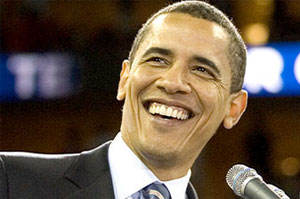 WASHINGTON, May 27: US President Barack Obama called on Myanmar's junta on Tuesday to "immediately and unconditionally" free democracy icon Aung San Suu Kyi, saying she was the victim of a spurious show trial.
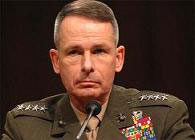 WASHINGTON, May 24: Iran is clearly moving closer to acquiring a nuclear weapons capability but military strikes to counter the program would have serious unintended consequences, a top US military officer said today.
  WASHINGTON, March 27: President Barack Obama on Friday vowed to wipe out terrorists from Pakistani safe havens, warning Al-Qaeda was plotting catastrophic new attacks, as he unveiled a sweeping new Afghan war strategy.

Aviation
| Business | Defence | Foreign
Affairs | Communication | Health
| India | United Nations
India-US
| India-France | Entertainment
| Sports | Photo Gallery |
Tourism | Advertise with Us
| Contact Us
© Noyanika International, 2003-2009. All rights reserved.