


United States
|
US want India, China to take steps against SyriaNEW YORK, Aug 12: Seeking wider global action against Syria for its violent crackdown on anti-regime protesters, the US has said it wants India and China, which have large energy investments in that country, to take steps against it by imposing sanctions. "We've issued more sanctions, tougher sanctions. We're working with our European and other friends. But what we really need to do to put the pressure on (President Bashar al-) Assad is to sanction the oil and gas industry, and we want to see Europe take more steps in that direction," Secretary of State Hillary Clinton said. "We want to see China take steps with us. We want to see India, because India and China have large energy investments inside of Syria. We want to see Russia cease selling arms to the Assad regime," she told the CBS Evening News. This is for the first time that the United States has gone public in asking India to take steps against the Syrian regime by imposing bilateral sanctions on it. Clinton acknowledged that because of limited economic relations, the US has very little stake in it. "We have such a small stake in what they produce and what they market. The real trick is to convince the Europeans and the Arabs and the Chinese and the Indians and others," she said. "We're going to sanction, and we have been upping the sanctions. We're going to continue to do so. But we want others to follow, because Syria was not one of our major economic partners. It wasn't anybody that we had a particularly good relationship with before this all started, although we were open to improving the relationship if they showed that they were going to make changes. And obviously, that's not in the cards right now," she said. Clinton said the Obama administration has been very clear in saying that the Assad regime has lost its legitimacy. "I think we were among the very first to say it. We've sent a very clear message that he should be doing what is necessary to end the violence against his own people," she said. "But it's important that it's not just the American voice, and we want to make sure that those voices are coming from around the world. And the Russians and the Chinese joined our presidential statement, after saying that they would never do anything to condemn the Assad regime," she said. "I come from the school that we want results, not rhetoric. And what we have done for the last several months is behind the scenes and in front of the cameras to build the pressure on Assad and the people around him," she said. "There's no doubt in anyone's mind where the United States stands. We've reached out to the opposition, we have been very proud of our Ambassador, who has carried the message of our country and our values right into Hama, into the heart of the Syrian repression. So I think we have done what is actually going to pay off rather than just rhetorically calling for him to go," Clinton said. Clinton concludes India visit, heads for IndonesiaCHENNAI, July 21: US Secretary of State Hillary Clinton on Thursday left for Indonesia from Chennai after a three-day visit to India during which she discussed with Indian leadership, including Prime Minister Manmohan Singh, the growing and expanding relations between the two countries. Clinton, who was in India for the second India-US Strategic Dialogue, discussed with External Affairs Minister S M Krishna matters relating to terrorism, nuclear cooperation, situation in Afghanistan and a host of other key issues. After her talks, the US Secretary also sent out a tough message to Pakistan and asked it not to give "safe havens and free pass" to terrorists and pledged support to India in protecting its cities in the backdrop of last week's Mumbai terror attacks. On another key issue of Indo-US civil nuclear agreement, Clinton said the US was "fully" committed to the pact with India but asked it to ratify the UN convention on nuclear damages and bring its domestic liability regime in line with international norms. Her programme also covered a visit to Chennai, the first by a serving US Secretary of State, during which she addressed students, opinion makers and other prominent citizens and favoured a "more assertive" role by India across Asia-Pacific by seizing emerging opportunities. Clinton also met Tamil Nadu Chief Minister J Jayalalithaa, addressed a Working Women Forum and witnessed cultural programme organised by the Kalakshetra. India should take leadership role in Asia-Pacific: HillaryCHENNAI, July 20: Betting on India’s vibrant holistic democracy, US Secretary of State Hillary Clinton on Wednesday said the country should take up a leadership role as it would help shape the future of the whole Asia-Pacific region. Clinton said the US encouraged India to not only look east but also to ‘engage and act’ east. “India’s leadership in south and central Asia is critically important,” she said. The Indian democratic setup allowed the participation of people belonging to all backgrounds and faiths, and this served as a model to neighbours like Sri Lanka, which is working towards political reconciliation, she said, adding that citizens of the island nation deserved equal hope and opportunity for a better future. Stating that the role she was asking India to play was ambitious, Clinton said, “Yes, it is an ambitious agenda, but we can afford to be ambitious.” “It’s time (for India) to lead. It has to do more to integrate economically with neighbours Afghanistan and Pakistan and take a more assertive role across the Asia-Pacific,” Clinton said. “This is not a time when any of us can afford to look inward at the expense of looking outward. This is a time to seize the emerging opportunities of the 21st century. This is a time to lead,” she said. “We are betting on India’s future...that opening of India’s markets to the world will produce a more prosperous India and South Asia...that India’s vibrant pluralistic society will inspire others to follow a similar path of tolerance. We are making this bet not out of blind faith but because we have watched your progress with great admiration,” she added. Clinton also advocated more cooperation between India, US and China. She admitted it was “not easy”, but pointed out there were areas of common interest Terror tops Indo-US talks; US will press Pak as hard as possible on terrorismNEW DELHI, July 19: Admitting that counter-terrorism was "first and foremost" on its minds after last week's Mumbai bomb blasts, the US on Tuesday pledged "full" support to India's efforts to protect itself from terror attacks, and said it will press Pakistan as "hard" as it can on terror. After the second round of Indo-US Strategic Dialogue with her counterpart External Affairs Minister S M Krishna, US Secretary of State Hillary Clinton pointed out that the issue of homeland security and counter-terrorism was given a special emphasis, saying both sides were exploring ways to protect the two countries from the scourge of terrorism. Asserting that it has been made clear to Pakistan that confronting violent extremism of all sorts is in its interest, Clinton said, "We do not believe that there are any terrorists who should be given safe haven or a free pass by any government, because left unchecked the consequences of that kind of terrorist activity or intimidation can become very difficult to manage and control." At a joint press conference with Krishna, she said in the aftermath of the attacks of 2008 in Mumbai, the US had made it very clear that there was an absolute international responsibility to cooperate to bring the perpetrators to justice. The US has made that equally forcefully clear to Pakistan that it has a special obligation to do so transparently, fully and urgently, Clinton said. "And it is US policy, we believe the perpetrators need to be brought to justice and have urged Pakistan to do so. Obviously, there is a limit to what both the US and India can do but we intend to continue to press as hard as possible," she said. She was replying to a query about Pakistan failing to bring to justice the perpetrators of the 2008 Mumbai terror attacks, raising questions on US' claim of pressurising Pakistan on India-directed terror issue. Maintaining that the US was encouraged by the discussions between India and Pakistan, Clinton said, "We think this is the most promising approach to encourage both sides to build more confidence between them and work to implement the kinds of steps that will demonstrate the improved atmosphere that is so necessary for us to deal with the underlying problem of terrorism." Both Krishna and Clinton also underscored the importance of elimination of terrorist sanctuaries in Pakistan for regional stability and security and for Pakistan's future, according to a joint statement after the meeting. The US Secretary of State said Pakistan was a "key ally" in the fight against terrorism and that the US has made the point repeatedly to its Pakistani colleagues that terrorists threaten both of them. "We recognise that Pakistan must act on its own behalf first and foremost to protect its own territory and sovereignty and to protect the lives of the people of Pakistan," she said. She said the US has made it clear that it wants a long term relationship with Pakistan based on common interests including a mutual recognition that they cannot tolerate a safe haven for terrorists anywhere and when we know the location of terrorists whose intentions are clear and need to work together in order to prevent those terrorists from taking innocent lives and threatening institutions of state. Pointing out that there was a great deal of cooperation between the US and India with respect to counter-terrorism not only sharing of information but also very clear operational discussions, planning and investigation, she said "...lot of the terrorist networks that threaten you also threaten us." So this is a mutually cooperative and essential operational relationship and in the meantime, the two countries are going to increase our cooperation in this area, she said. U.S. wants IAEA to vet Indian liability lawAdding a new element to the ongoing Indo-U.S. nuclear saga, Secretary of State Hillary Clinton on Tuesday “encouraged” New Delhi to “engage” with the International Atomic Energy Agency to ensure that the Indian nuclear liability law “fully conforms” with the international Convention on Supplementary Compensation (CSC) for Nuclear Damage. Indian officials told The Hindu that any suggestion that Indian law would have to be adjusted on the basis of the IAEA's opinions was not acceptable. The Agency was only the depository of the CSC — essentially a clearing house for countries filing their ratification of the treaty — and can have no role in vetting a sovereign law. New Delhi considers the liability law to be in conformity with the CSC and is committed to ratifying the Convention before the year is out. The U.S., on the other hand, thinks Section 17(b) of the Indian law, which expands the scope of the operator's right to compensation from nuclear suppliers in case of an accident due to faulty equipment, violates the CSC. U.S. companies have also opposed Section 46 of the Indian law, which implicitly allows accident victims to file tort claims. Indian officials maintain the CSC cannot proscribe the operation of ordinary tort law in India and that the only forum which can pronounce the Indian law incompatible with the CSC is the Indian Supreme Court and not the IAEA. Despite this tough public message, Ms. Clinton acknowledged the fact that the Fukushima nuclear disaster in Japan had reduced India's room for manoeuvre on the liability front, senior Indian officials who were familiar with the delegation-level talks told The Hindu. However, with U.S. firms wary of entering India because of the tough liability law, Ms. Clinton said she expected the nuclear deal to be “enforceable and actionable in all regards.” Speaking to newspersons at the end of the second strategic dialogue, External Affairs Minister S.M. Krishna and Ms. Clinton also expressed divergent views on the manner in which India should join the four export control regimes — the Nuclear Suppliers Group (NSG), the Missile Technology Control Regime (MTCR), the Australia Group and the Wassenaar Arrangement. Mr. Krishna twice made the point of India gaining membership to these bodies in “tandem,” while Ms. Clinton felt the process should be “phased.” Curiously, the Joint Statement, which usually reflects a consensus on phraseology, uses the word “phased.” This wordplay is significant as India's priority is membership of the NSG and the MTCR, while the U.S. would prefer India acceding first to the Australia Group and the Wassenaar Arrangement. Asked about the tightening of NSG guidelines, Ms. Clinton stuck to an earlier State Department formulation that these did not “detract” from the clean waiver India had secured from the cartel in 2008. US judge orders to unseal Tahwwur Rana trial documentsCHICAGO: A US judge has ordered to unseal more than two dozens of court documents related to the trial of Tahawwur Hussain Rana in the 26/11 Mumbai terror attacks case so that they could be made public. District Court judge Harry Leinenweber's order came a month after Rana was cleared of the charges of his involvement in the 26/11 attacks that killed 166 people, including six Americans, but was convicted on two counts of providing material support to Lashkar-e-Taiba and a terror plot in the Denmark with co-accused David Coleman Headley. The Chicago Tribune newspaper had pleaded the court to unseal the documents so that they could be made public. US Attorney Patrick Fitzgerald had requested Leinenweber to unseal the records or to release unsealed documents in the 26/11 case. "In accordance with this Court's order of May 25, 2011, the government submitted a motion to unseal certain records. The government's motion is granted," District Court of Northern Illinois stated on website. Leinenweber also further ordered that the parties continue to work together to determine whether additional records may be unsealed. Twenty six documents and four more redacted or edited versions were asked to be unsealed, while 39 others still will be remained under seal. Rana was accused of helping his childhood friend Headley in carrying out the attacks and faces a maximum sentence of 30 years. Rana's sentencing date has not been set yet. Clinton pushes security, trade ties with IndiaNEW DELHI, July 19 -- US Secretary of State Hillary Clinton discussed ways to ramp up regional security cooperation and trade ties in talks with Indian leaders on Tuesday, held in the shadow of triple bomb blasts in Mumbai. India's concerns over the US troop drawdown in Afghanistan and its renewed peace talks with arch-rival Pakistan also figured when Clinton addressed a US-India "strategic dialogue" in New Delhi. At the second strategic dialogue, India and the US discussed an entire gamut of issues including strategic cooperation, counter-terrorism, energy and climate change, education, science and technology, health and defence, officials said. India and the US signed key pacts in the areas of cyber security and civil aviation after the talks. She will hold one-on-one talks with India's National Security Advisor Shivshankar Menon and Prime Minister Manmohan Singh, before flying Wednesday to the southern city of Chennai -- a focus for growing US trade and investment. Her visit follows the blasts in Mumbai last week that killed 19 people and injured more than 130. No-one has claimed responsibility, but relations between India and Pakistan have been undermined in the past by militant strikes that New Delhi blames on Pakistan-based groups. "We believe there's been some good progress between India and Pakistan in the last few months", a senior US administration official said, adding Clinton was keen to help sustain that momentum. "It's also about reinforcing the steps they have already taken," the official told reporters prior to Clinton's arrival in the Indian capital late Monday. Hillary Clinton was warmly received at the airport by Foreign Secretary Nirupama Rao, India's ambassador to the US Meera Shankar and senior officials. India suspended its peace dialogue with Pakistan after the 2008 Mumbai attacks, and talks between the nuclear-armed neighbours only resumed earlier this year. Washington's own relations with Pakistan -- a crucial counter-terrorism ally -- have deteriorated since US commandos shot and killed Al-Qaeda leader Osama bin Laden on May 2 in a Pakistani garrison town, sowing distrust on both sides. Earlier this month Washington suspended almost a third of the $2.7 billion in security assistance it provides each year to Islamabad. Clinton will have "extensive conversations" in New Delhi on security cooperation, the US official said, and push Washington's vision for a political and economic solution to the conflict in Afghanistan and "a future in the region that is free of Al-Qaeda". India is wary of the US troop withdrawal from Afghanistan, fearing that Islamist elements within Pakistan could take advantage of a power vacuum in the war-torn country. Clinton's two-day trip follows President Barack Obama's visit in November -- a courtship of India that reflects the rapid growth in the country's economy and a shift in power to emerging nations as a result of the global financial crisis. While economic ties have improved significantly in recent years, they are still seen as falling short of their potential. A landmark deal between the two countries in 2008 that allowed India to buy nuclear reactors and fuel was meant to lead to major contracts for US firms, but those hopes have been undermined by legal obstacles and uncertainty. And the United States was deeply disappointed in April when its bidders were dropped from the $12 billion competition to provide India with 126 combat aircraft, one of the largest military contracts of recent years. Clinton's India visit will partly be aimed at "closing out the remaining obstacles and getting to full implementation" of the nuclear agreement, the US official said. "The main goal is to push the pace of the strategic dialogue and to focus the agenda on a set of concrete items that are important to take this relationship to the next level," the official added. Bilateral trade increased by 30 percent to nearly $50 billion in 2010. Clinton, who was in Athens on Sunday to offer support for the Greek government as it tries to tackle its perilous and worsening debt crisis, is scheduled to head on to China, Hong Kong and Indonesia. US drone strikes kill 48 militants in PakistanMIRANSHAH, July 13: At least 48 suspected militants were killed by missiles launched by US drone aircraft in Pakistan’s northwest, local intelligence officials said on Tuesday, one of the largest death tolls to date in the controversial air bombing campaign. Coming a day after Washington announced an $800 million delay in military assistance amid worsening US-Pakistan ties, the attacks could exacerbate tension between the two allies in the war against militants. The attacks started on Monday night, when remotely piloted drones fired nine missiles into a militant compound and at a vehicle in North Waziristan, killing 25 suspected insurgents. Another strike hours later in South Waziristan killed five suspected militants. Then on Tuesday, a drone fired two missiles at another compound in North Waziristan. It was the second-largest death toll in a day in the unacknowledged US drone campaign in Pakistan’s northwest. In June 2009, about 70 suspected militants were killed in a drone attack in South Waziristan. Washington has been pushing Pakistan to mount an offensive against militant sanctuaries for years, but Pakistan has resisted, saying it must consolidate its gains against Taliban militants elsewhere first. The US has stepped up drone attacks in response to Pakistan’s perceived recalcitrance. Peter Burleigh assumes charge as interim US ambassadorNEW DELHI, July 2: Seasoned diplomat Peter Burleigh on Friday assumed charge as interim US ambassador to India, two years after holding the same position here for a brief while. Burleigh, who is fluent in Hindi and Bengali, has been sent as interim ambassador as the White House is yet to nominate a successor to Timothy J Roemer who returned home on Thursday after a two-year assignment. 69-year-old Burleigh, who held important postings across the world, was the interim ambassador to India for nearly four months before Roemer took up the assignment in August 2009. "Ambassador Burleigh's interim appointment by Secretary of State Hillary Rodham Clinton reflects US Government's emphasis on assuring highest-level representation and continuity in US-India relations," a statement issued by the US Embassy said on Friday. Finding a successor to Roemer would take some time as Obama's nominee has to be confirmed by the US Senate, which is unlikely happen before the next months India visit of Clinton for the India-US Strategic Dialogue. Burleigh was Ambassador and Deputy Representative of the US to the United Nations from August 1997 to December 1999 and Charge d Affairs of the Mission from September 1998 to August 1999. He represented the US in the Security Council, the General Assembly and at other major United Nations bodies. Besides serving as the US Ambassador to Sri Lanka and Maldives (1995-1997), Burleigh has held senior positions at the State Department. From 1985-1987 he headed the State Department office responsible for Iran and Iraq and, earlier in his career, he was deputy director for Saudi Arabia and the Gulf Emirates. Besides India, he has served in the US embassies in Nepal, Bahrain and Sri Lanka. US Senate deplores China's use of force at seaWASHINGTON, June 28: The U.S. Senate unanimously approved a resolution on Monday that deplored China's use of force against Vietnamese and Philippine ships in the South China Sea. China has shown increasing assertiveness in its claim to the entire South China Sea, believed to be rich in oil and gas. In its nonbinding resolution, the U.S. Senate said it deplored the use of force by Chinese vessels and urged all parties to refrain from using force to assert territorial claims. Senator Jim Webb, chair of an east Asian and Pacific affairs subcommittee of the Senate Foreign Relations Committee, said the resolution was "a significant development toward fostering a multilateral approach to resolve these territorial disputes." "A growing number of nations around the South China Sea are now voicing serious concerns about China's pattern of intimidation," said Webb, who introduced the resolution. Chinese vessels have harassed Vietnamese oil exploration ships and the Philippines has also complained that one of its ships has been rammed, according to the Senate resolution. On Sunday, China and Vietnam pledged to resolve their maritime dispute through peaceful negotiations, a sign of possibly easing tension. The dispute was one of several subjects discussed in the first set of talks in Hawaii between the United States and China over the weekend Rana acquitted in Mumbai attacks case, guilty of helping LeTCHICAGO, June 10: Pakistani-Canadian Tahawwur Rana was on Friday acquitted by a US court on charges of plotting the Mumbai attacks but was found guilty of supporting Pakistan- based terror group LeT and planning a strike in Denmark. A 12-member jury in Chicago ruled that 50-year-old Rana was not guilty of conspiracy to provide material support to the Mumbai terror attacks in which 166 people were killed, and which carried a maximum sentence of life imprisonment. Announcing the verdict at the end of two days of deliberations, US District Judge Harry D Leinenweber said Rana was guilty of providing material support to Lashkar-e-Taiba and plotting to bomb a Danish newspaper which had published cartoons of the Prophet Mohammed. Rana faces a maximum sentence of 30 years in prison on the two counts combined and remains in federal custody without bond, a US Justice Department statement said. No sentencing date was set. "A Federal Court jury has convicted defendant Rana on one count of conspiracy to provide material support to the Denmark terrorism plot and one count of providing material support to LeT, and not guilty of conspiracy to provide material support to the Mumbai terrorist attacks," said Justice Department spokesman Randall Samborn. Rana, who was a co-accused in the Mumbai attacks with David Headley, was stunned to hear the verdict. His lawyers said they would appeal against the verdict as there was an "error" in the trial. Rana's attorney Patrick Blegan said he would file post-trial motions that there was not enough evidence to convict him and that there was an error in the trial. India 'disappointed' over Rana's acquittal in 26/11 caseNEW DELHI, June 10: Government on Friday expressed "disappointment" over Tahawwur Hussain Rana's acquittal by a US court on charges of plotting the Mumbai attacks and said it will soon take a decision on filing a charge sheet against him and LeT operative David Headley in an Indian court. "We are disappointed that Rana was acquitted on the count of conspiracy to provide material support to the Mumbai terrorist attacks," Secretary, Internal Security in the Ministry of Home Affairs, U K Bansal, said in a statement. Bansal said the government has taken note of the verdict pronounced by a US District Court in the Rana case following the finding by the jury that the Pakistani-Canadian was guilty on two of the three counts. Rana has been found guilty on one count of 'conspiracy to provide material support to the terrorism plot in Denmark' and the other of 'providing material support to Lashkar-e-Taiba'. The jury acquitted Rana of conspiracy to provide material support to the Mumbai terror attacks. Bansal said the National Investigation Agency (NIA), which is probing the case against Headley, Rana and others, had decided to wait for proceedings to conclude in the US court before filing a charge sheet in an Indian court against the accused. The NIA has also sought certain documents and evidence that were produced in the Chicago court and expects to receive them. "After examining the verdict in the US court and after reviewing the documents and evidence that it expects to receive, NIA will take a decision on filing a charge sheet against Headley, Rana and others in an Indian court," he said. Prosecution in the US had produced in the court evidence to show that "Headley had advised Rana of his assignment to scout potential targets in India," Bansal said. Headley obtained Rana's consent to open an office of First World Immigration Services as a cover for his activities and Rana advised Headley on how to obtain a visa for travel to India. "Headley and Rana had reviewed how Headley had done surveillance of the targets that were attacked in Mumbai. Evidence was also produced that Rana told Headley that the terrorists involved in Mumbai attacks should receive Pakistan's highest military honours posthumously," he said. Bansal said one must remember that Rana was tried in a US court in accordance with the US law. Criminal trials in the US are jury trials and there are special rules governing such jury trials. "While Rana's lawyers have stated that they will file an appeal against the verdict, it is not yet clear whether the US authorities would also file an appeal against the acquittal on one count of conspiracy," he said. Bansal's statement came hours after he said that Rana's acquittal was not a setback as India does not rely overtly on prosecution of terror suspects in other countries. "I do not see it as a setback as our case (in India) is still under investigation," he told reporters. Bansal also said prosecution in India against Rana and Headley depends on India's own investigations which was being done by Indian investigating agencies. "In our handling of terrorism in India, we do not rely overtly on prosecution in other countries. We have to rely on our own strength," he said. US deadline for Pakistan to nab Mullah Omar, KashmiriISLAMABAD, June 1: The United States has given Pakistan a deadline till July to launch a military offensive in the restive North Waziristan tribal region for capturing five most wanted al-Qaeda and Taliban terrorists, including Ayman al-Zawahiri, Mullah Omar and Ilyas Kashmiri. The Pakistani security forces have been asked to capture al-Zawahiri, Omar, Kashmiri, Sirajuddin Haqqani and Atia Abdur Rehman, either in a unilateral or joint military action before July — the month when NATO and allied forces will begin withdrawing from Afghanistan. The U.S. demand has set alarm bells ringing in Pakistani civil and military circles, The News daily reported on Wednesday, quoting unnamed sources. Pakistan's security forces have been reluctant to launch an offensive in North Waziristan, despite sustained pressure from the U.S. The Haqqani militant network, based in North Waziristan, “had not been any threat to Pakistan” and has served as “a vital contact between the Pakistani intelligence agencies and the Afghan Taliban,” the report said. US supports nuclear energyWASHINGTON, June 2: The Obama Administration remains committed to nuclear power as a source of energy, the White House has said, notwithstanding the decision by Germany to gradually get rid of all its nuclear power plants. “I would say that we have a system here that we have a lot of faith in, that our independent regu latory body ensures that we have the safest and most responsibly run nuclear energy industry in the world,” White House Press Secretary Jay Carney told reporters. Referendum in ItalyA top Italian court has ruled that Italians can vote in a referendum this month on whether the country should return to nuclear power, despite the government’s efforts to scrap the vote. Premier Silvio Berlusconi initially pledged to revive nuclear power to reduce dependence on foreign oil and natural gas, leading opposition forces to call for the referendum. But Berlusconi decided to shelve his plans following Japan’s nuclear disaster, mostly in a bid to avert a referendum expected to show overwhelming opposition that would doom any future attempt to return to nuclear energy. 16 N-reactors by OPECOrganization of the Petroleum Exporting Countries (OPEC) kingpin Saudi Arabia plans to build 16 civilian nuclear reactors in the next two decades at a cost of $80 billion. Newspapers cited Abdul Ghani Malibari, coordinator at the Saudi civilian nuclear agency, as saying the kingdom would launch an international tender for the reactors to be used in generating electricity and desalinating sea water. Terrorism is a common threat: Napolitano
The two countries reaffirmed their resolve to defeat the forces of terrorism and called for effective steps by all countries to eliminate safe havens and infrastructure. Union Home Minister P. Chidambaram and the visiting Secretary of the Department of Homeland Security, Janet Napolitano, committed their governments to comprehensive sharing of information on the Mumbai terror attacks. A joint statement, issued after the first round of the dialogue, affirmed the deepening technological and economic partnership. The two leaders committed themselves to expanding cooperation to further strengthen the capacity to secure their countries and people. “The two leaders agreed to share ideas on and experiences of the ongoing transformation of their countries' security-related organisational structures and systems as well as regulatory framework, in a democratic and federal environment,” it said. India and the U.S. also decided to strengthen agency-to-agency engagement, including in exchange of intelligence, information-sharing, forensics and investigation, access to and sharing of data relating to terrorism, security of infrastructure, transport and trade and combating counterfeit currency, illicit financing and transnational crime. Ms. Napolitano agreed that both countries faced a “common threat and we must develop common approaches to protecting critical infrastructure and ensuring free flow of people and commerce across our borders.” Asked about the Lashkar-e-Taiba being on the list of banned terrorist outfits, Ms. Napolitano said: “LeT is right up there; it ranks in the terror list along with al-Qaeda.” However, she did not offer any comment when it was pointed out that LeT founder Hafiz Saeed was still moving about freely in Pakistan. “I think, in my judgment, the LeT ranks right up there in the al-Qaeda and related groups as terrorist organisations, one that seeks to harm people and takes innocent lives. Our perspective, the U.S. perspective, is LeT is very, very, I do not want to say, important as that gives it too much credibility, but an organisation that is of the same ranking as al-Qaeda-related groups,” she said, addressing a press conference with Mr. Chidambaram. U.S. cannot solve Pakistan's problems, says Hillary
Stating that the U.S. would stand with Pakistan at this “pivotal moment” for the country, Ms. Clinton admitted that public perceptions in both countries were a drag on the relationship. While the American people were not appreciative of the sacrifices made by the Pakistanis in the war on terror, the people in Pakistan were yet to realise that the U.S. had been providing this country more aid than Saudi Arabia, China and many other countries put together, she lamented. In her half-day visit to Islamabad, Ms. Clinton made a rare departure from previous visits by giving the drive to the General Headquarters in Rawalpindi a miss. Instead, Chief of Army Staff Ashfaq Parvez Kayani came to the Presidency to meet her along with the civilian leadership. Visiting Pakistan at a time of doomsday predictions about the future of this country, Ms. Clinton reiterated Washington's confidence in the nation's resilience. “We look toward a strong Pakistan — one that is democratic, prosperous and stable — being a cornerstone for regional stability and global security. That is why the U.S. will continue to support Pakistan's sovereignty, its civilian elected government and above all its people.... We are prepared to stand by the Pakistani people for the long haul.” According to a statement put out by President Asif Ali Zardari's office, the two sides agreed to work together in any future actions against high value targets in Pakistan. A similar understanding had been reached on May 16 during U.S. Senate Foreign Relations Committee chairman John Kerry's visit to Islamabad. The statement also indicated the resurrection of the strategic dialogue process that got stalled because of the souring of bilateral relations. Both sides agreed to recommence the preparatory work for the strategic partnership dialogue process. Though Ms. Clinton was initially slated to visit Pakistan this month-end for another round of the strategic dialogue, there was no mention of it this time. Meanwhile, as part of the measures promised by Pakistan during Mr. Kerry's visit to demonstrate its commitment to the war on terror, Islamabad has allowed the U.S. access to al-Qaeda leader Osama bin Laden's compound in Abbottabad, returned the tail of the damaged helicopter used in the operation, and granted access to his widows. Green card holders told to become US citizensLOS ANGELES, May 27: US Citizenship and Immigration Services (USCIS) has launched a campaign emphasising the benefits of being a US citizen with the goal of convincing more than seven million Green Card holders to become naturalised. "It's very important for people who are already permanent residents to consider citizen ship for all the benefits that that will bring them," Mariana Gitomer, the USCIS spokesperson in Los Angeles, told EFE. Gitomer said that, according to the government's database, there are about 12.5 million permanent residents in the US, of whom 7.9 million are already eligible to get US citizenship, the majority of them being Hispanics. In California alone, there are approximately three million people who obtained Green Cards more than five years ago. "There are many reasons why people don't become citizens, some people don't know the benefits and feel that if they already have a residence card they can work, they can travel, then they feel they don't need citizenship," said Gitomer. "But citizenship gives them the benefit of voting, obtaining a US passport to travel without restrictions, obtain better jobs," she said, citing studies that show that people who become citizens began to earn more money. US begins pulling out troops out of PakistanWashington, May 26: US has said it has begun pulling out American troops out of Pakistan, after Islamabad officially asked to reduce troops from its soil amid tensions over American raid that killed al-Qaeda chief Osama bin Laden. The Pakistan Government had asked for scale down of US troop contingent of more than 200 men from the country, earlier this month, Pentagon spokesman Col Dave Lapan said. “We were recently (within past two weeks) notified in writing that the Government of Pakistan wished for the US to reduce its footprint in Pakistan. Accordingly, we have begun those reductions,” he said. The Pentagon spokesmen did not mention the number of troops to be pulled out. Most of the US forces present on the Pakistani soil are special forces that train and advice Pakistan’s Paramilitary Frontier Corp, engaged in fighting Pakistani Taliban, al-Qaeda and other foreign militants in the restive tribal region, bordering Afghanistan. The withdrawal of American forces comes in the background of a mounting crisis in relations between the two countries, in the aftermath of the May 2 raid. Days after the raid, Pakistan’s powerful Army Chief warned that another similar incursion on the Pakistani soil would prompt a review of military cooperation with US and told him Corp Commanders of a decision to reduce the strength of US military presence in Pakistan to what he called “bare minimal’’. Even before the raid that killed bin Laden, Islamabad had told Washington to call back up to 50 military trainers out of 150 special forces personnel after a tiff over a CIA employee who shot and killed two Pakistan military intelligence men in Lahore, The New York Times reported. Pakistan released the embassy official Raymond Davis after months of haggling. But now a fresh crisis has hit the relationship, with furious US lawmakers demanding re-evaluation of relationship in the wake of bin Laden raid, charging that Islamabad is playing a double-game of supporting militant groups while enjoying huge American aid. David Headley ‘confirms’ suspicions about ISICHICAGO, May 25: The Headley trial and confessions in Chicago court have only confirmed India’s fears about the close association of the ISI with terrorist organisations,said a senior government functionary, who is accompanying the prime minister, on Wednesday. “The ISI was working very closely with terrorist organisations and the evidence presented in the Chicago court only confirms our suspicion. It has been sustaining a hate campaign against India. We have taken note of it,” he said. About building pressure on Pakistan to locate those in the wanted list, he said there Pakistan needs to be serious about locating them. “The investigations to find those responsible for Mumbai attacks are still not complete. The cases have been filed in the Pakistni courts where it will take years before they can come to any conclusion.” He said there are no state or non-state actors when it comes to the ISI as it has been involved in the hate-India campaign. Spelling out India’s concerns Pakistan’s disintegration, he said, “We hope Pakistan becomes stable and doesn’t end up militarising the whole nation.” Queried about India’s engagement with Pakistan, he said, “Their economy is neck deep into trouble. Their stability is rather fragile. We would like Pakistan to realise at least now that this hate-India campaign will not help them in any manner.” President Obama: 'No let up' on Col Gaddafi pressureLONDON, May 25: US President Barack Obama has said there will be "no let up" in the pressure against Libyan leader Col Muammar Gaddafi. Speaking at a news conference with UK Prime Minister David Cameron, the US leader said that Col Gaddafi would ultimately be forced from power. At least five explosions hit Tripoli overnight on Tuesday as Nato continued its campaign against the Libyan leader. Russia has condemned the raids as a "gross violation" of a UN resolution. Moscow, which did not vote for military action, said the strategy was not helping to bring about the "overall goal of quickly ending the armed conflict". Mr Obama, who is on a state visit to the UK, said he could not predict when Col Gaddafi would go, but that the US and its allies would "sustain the course" against him. "I absolutely agree that given the progress that has been made over the last several weeks that Gaddafi and his regime need to understand that there will not be a let-up in the pressure that we are applying," he said. But he warned against setting any timetable for action and cautioned against the prospect of any decisive change in the military situation on the ground. "I believe that we have built enough momentum that, as long as we sustain the course we are on, he (Gaddafi) will step down. Ultimately this is going to be a slow, steady process in which we are able to wear down the regime forces." Mr Cameron added that there was no future for the country - which has seen two months of intense fighting between pro and anti-government forces - with Col Gaddafi in power, and he should step down. "The president and I agree we should be turning up the heat in Libya," he said, adding that "all options" for intensifying the pressure on the regime were being considered. Obama steps up pressure on Syria's AssadWASHINGTON, May 19: President Barack Obama called on Syrian President Bashar al-Assad on Thursday to lead a transition to democracy or step aside, but stopped short of demanding his departure over a brutal crackdown on pro-democracy protesters. "The Syrian people have shown their courage in demanding a transition to democracy. President Assad now has a choice: He can lead that transition, or get out of the way," Obama said in a speech spelling out U.S. policy toward the rapidly changing Middle East and North Africa. After joining a NATO military intervention to stop Libyan leader Muammar Gaddafi's forces from attacking civilians seeking his overthrow, Obama has been under pressure to do more about Syria. But his administration does not want to risk getting the United States, already fighting wars in Afghanistan and Iraq, into another war in a Muslim country. The United States, and Syria's neighbors, which include Israel, Iraq and Turkey, are also extremely wary of the chaos that could ensue if there is not a peaceful transition of power in the country of 23 million. Obama says bin Laden had 'support network' in Pakistan
Top U.S. officials insist Pakistan remains a critical U.S. ally in the fight against terrorism, but are demanding answers to troubling about questions bin Laden's presence in that country over the course of the last six years. "We think that there had to be some sort of support network for bin Laden inside of Pakistan," Obama said in a "60 Minutes" interview airing Sunday on CBS. "But we don't know who or what that support network was." The president said U.S. officials "don't know whether there might have been some people inside of government (or) people outside of government, and that's something that we have to investigate." "More importantly," he added, "the Pakistani government has to investigate." Pakistani authorities have "indicated they have a profound interest in finding out what kinds of support networks bin Laden might have had," Obama noted. "But these are questions that we're not going to be able to answer" immediately after the raid on bin Laden's compound. "It's going to take some time for us to be able to exploit the intelligence that we were able to gather on site," he said. Pakistani leaders insist they didn't take part in either the establishment or the maintenance of bin Laden's safe haven, and have promised a full examination of the circumstances that allowed him spend years in Abbottabad, a city with a heavy military presence located a mere 30 miles north of the country's capital. Asked by CNN's Fareed Zakaria whether bin Laden's presence in Pakistan could be chalked up to "duplicity or incompetence," Pakistan's U.S. ambassador, Husain Haqqani, said Sunday he couldn't provide an explanation. "I think the best way to move forward is to wait for the findings of an internal (investigation) -- a look at the issue," Haqqani said. "I do not think that speculation is going to solve any problem." Pakistan's government "did not have a policy of protecting these people," he asserted during an interview on ABC's "This Week." Obama's national security adviser, Tom Donilon, told CNN's Candy Crowley he has not seen any information to indicate Pakistani officials knew bin Laden was living in Abbottabad. But if evidence is discovered that is "highly disturbing, we'll certainly press that," he said. Donilon's comments came amid calls in Congress and elsewhere to cut U.S. financial assistance in Pakistan, which currently receives roughly $1.5 billion in annual aid. Last week, CIA Director Leon Panetta -- nominated by Obama to succeed Robert Gates as defense secretary -- told House members during a closed-door briefing that Pakistan was "either involved or incompetent," according to two sources in attendance. "We'll clearly be working with (Pakistani authorities) to understand how we got to this point," Donilon said. He stressed, however, that "more terrorists and extremists have been captured or killed (in Pakistan) than any other place in the world." "We need to look at this in a calm and cool way," he said. There is a lot "at stake in that region." "Questions are being raised quite aggressively in Pakistan," Donilon later added on ABC's "This Week." Authorities there "need to do an investigation." In post-Osama Afghan visit, Manmohan looks to untangle wiresNEW DELHI: With Prime Minister Manmohan Singh expected to go to Kabul soon, India hopes the removal of al-Qaeda leader Osama bin Laden will accelerate the international community's efforts to untangle some of the “crossed wires” that are hampering a solution in Afghanistan. Government sources did not expect an immediate scaling down of the West-dominated security deployment in Afghanistan and hoped for increasing involvement of neighbours, including Iran, Russia, Central Asia, China and India. “The problem is there are multiple backchannels in Afghanistan, from the UAE to the U.S. As a result, there are crossed wires. We are trying to set them right in a formal manner,'' said official sources. With the death of Osama, al-Qaeda remnants in Afghanistan, diehard adherents to a solution through militancy, are expected to be further marginalised leaving the international community with fewer ideologically disparate forces to negotiate with. This would help the international community translate intentions expressed at the first meet of the International Contact Group in Jeddah of focussing on a political solution while maintaining military pressure on militants. This gathering of 50 states will now meet in Kabul; it will be followed by a conference later this year. From a purely national perspective, India will continue plugging away at developmental work in Afghanistan and develop economic opportunities in trade and mining. Trucks have already started rolling down an India-built highway. Its linkage with an Iranian port could give Indian access to Central Asian markets. Several Indian companies have been shortlisted for the Hajigak copper mine project along with companies from Turkey, China and the U.S. India has also pinned its hopes on meeting its energy demand on a gas pipeline running through Afghanistan. But for this to happen, peace and stability must return to Afghanistan. The government sources did not expect a “precipitate withdrawal” of the foreign security detail in order to consolidate the work done and finish vital ones, including that of reconciliation. Suggesting an approach at reconciliation that was inclusive, transparent and within the red lines drawn at the London Conference on Afghanistan, the sources said India, Iran, Russia, the five Central Asian nations and China “obviously” had a stake in creating a climate of security. “None can disagree to this. Pakistan has been talking [recent trilateral meet with the U.S. and Afghanistan, besides talks with Central Asian countries]… can't exclude any of the neighbours.” The sources drew a distinction between reintegration and reconciliation. The former concerned the foot soldiers in the resistance, while the second was more complicated and related to bringing the hardcore elements into the political mainstream. And even as this process was on, military pressure on the Taliban must be maintained. “In discussions with the U.S., they understand that many of the groups are ideologically fused… This leads us to conclude that the fight is far from over,'' cautioned the sources. Pakistan needs to come out of its India centric mindset: John KerryWASHINGTON, May 7: Top US lawmakers and experts have asked Pakistan to come out of its India-centric mindset which they argued is nothing but destructive for it, a day after Islamabad resorted to rhetoric against New Delhi. "Pakistan's strategic view and posture vis-a-vis India is, at least in this senator's judgment, and I think for many people who so talk about it is absurd in this modern context," Senator John Kerry, Chairman of the Senate Foreign Relations Committee, said at a Congressional hearing. "Both nuclear nations, both with much bigger interests that would take them, under good reasoning, to, you know, a very different conclusion, but there just seems to be a kind of, you know, automatic historical, cultural desire to keep focusing on India." "And it is depleting their ability to focus on their own economy, on their own needs, to learn that they have increased their nuclear arsenal, when, by most people's judgment, they already had a bigger one than India and an absolutely adequate capacity to deter as well as to destroy within the region simply doesn't make sense," Kerry said at the first of the series of hearings on Pakistan convened by him. Resorting to rhetoric, Pakistan army and the government on Thursday warned India against any Abbottabad-like "misadventure", saying it would be responded to "very strongly" that could lead to a "terrible catastrophe". Senator Richard Lugar, the Ranking member, argued that the US should not cut off its relationship with Pakistan. "Distancing ourselves from Pakistan would be unwise and extremely dangerous. It would weaken our intelligence gathering; limit our ability to prevent conflict between India and Pakistan; further complicate military operations in Afghanistan; end cooperation on finding terrorists; and eliminate engagement with Islamabad on the security of its nuclear weapons," he said. "When I visit Pakistan, I get the sense that the Pakistani business community, the political classes, get it that they have not future if they're at constant war mentally with India. I think a lot of people get it now. But the national security establishment, which is a rather important part of Pakistan, still doesn't get it," said Michael Krepon, Co-Founder and Senior Associate South Asia, Henry Stimson Center. The US ties with India are going to continue to get better, as they should. "And Pakistan's national security establishment is going to feel more insecure as a result," he said. "We can't convince Pakistan's military to befriend India. We can work with them to have a more normal relationship with India, especially in the areas of trade and regional development. The biggest challenge facing Pakistan's national security establishment is to recognize how growing links to extremist groups mortgage that country's future," he said. "The ISI still doesn't get this. Outfits like Lashkar- e-Taiba are the leading edge of Pakistan's national demise. If Pakistan's military leaders can't rethink the fundamentals of their anti-India policy and their increased reliance on nuclear weapons, they will never know true security," Krepon said. Moeed Yusuf, South Asia Adviser Center for Conflict Management, US Institute of Peace, argued that no amount of money is going to change Pakistans India mindset. "Both sides were fairly close to an understanding on a Kashmir solution themselves. I think we dropped the ball by not pushing them hard enough to keep sitting on the table when they pulled back in 2007," he said. "Terrorism is a serious issue. And I think Pakistan needs to be pushed as much as it can. There's a joint terrorism mechanism which we need to continue; both sides have agreed. But we want to make sure they don't pull out. And third, I think equally important and overlooked is the economic relationship," he said. Observing that Indo-Pak normalization is critical for Pakistan, but it is not US aid that is going to do the trick, he said. "It would therefore be best to use America's economic leverage to ensure better development outcomes, and returns on the counterterrorism front should be linked only to security assistance," Yusuf said. Senator Ben Cardin said the death of Osama bin Laden presents the US with an opportunity to "reset" its ties with the Pakistani people. "The death of bin Laden provides us with an opportunity to reach out to the Pakistani people so that they understand that the gravest threat they face is not from the US military, but from terrorists who are using their country as a safe heaven," said Cardin, a member of Senate Foreign Relations Committee and chairman of the Subcommittee on International Development and Foreign Assistance, Economic Affairs, and International Environmental Protection. "We need to do a better job of helping Pakistanis understand that it is in their economic and security interests to partner with the United States," he said in a statement. "In Pakistan, we have an obligation and responsibility to American taxpayers to make sure that US foreign aid is used to ensure our national security. Focusing on the perception of the US by the Pakistani people is very important," he said. "We need to ensure that our economic and development efforts show that the United States is a partner with the Pakistani people," Cardin said. However, Congressman Vern Buchanan called for a freeze in foreign aid to Pakistan until its leaders can show they had no knowledge of bin Laden's whereabouts. "While the death of bin Laden represents a historic victory in our fight against terrorism, it also raises serious concerns about Pakistan's commitment and reliability as an ally in our fight against terrorism," Cardin said. "We should freeze all aid to Pakistan until we have assurances that the Pakistani government is not in the business of harboring terrorists," he said. Bin Laden killing boosts Obama's approval ratingNEW YORK, May 5: United States president Barack Obama has seen a huge bounce in his approval ratings amid widespread praise for the killing of the Al Qaeda leader Osama bin Laden. Praise for the Obama administration has come from both sides of politics, with no denying it has delivered an important victory in the fight against terrorism. The demise of bin Laden has revived debate about harsh interrogation techniques like waterboarding, with one detainee who was subjected to the treatment reportedly providing a crucial lead. A new poll, commissioned by the New York Times and CBS News, shows support for Mr Obama has risen sharply, jumping 11 percentage points in one month. Fifty-seven per cent of Americans now say they approve of the president's overall job performance and his handling of foreign policy. It is a bigger popularity boost than the capture of Saddam Hussein gave to former US president George W Bush. Mr Obama's bounce in the polls comes as US attorney-general Eric Holder says more names could be added to America's terrorism watch lists using information seized from the Pakistani compound where bin Laden was killed. The commando team found what some intelligence sources are calling a treasure trove of technology: 10 computers, 10 mobile phones and around 100 flash drives. Intelligence agencies are trawling through it all, hoping to uncover new information that will further damage Al Qaeda. CIA chief Leon Panetta says the top priority is to see if any attacks were being planned. There is less high-tech information too; bin Laden had 500 euros and two telephone numbers stitched into his clothes - evidence he was ready to make a quick getaway. Mr Obama has refused to release photos of bin Laden's corpse, saying releasing the grisly photos could potentially be used as a propaganda tool by Islamic extremists. "You know we discussed this internally," Mr Obama told CBS. "Keep in mind that we are absolutely certain this was him, we've done DNA sampling and testing, and so there is no doubt that we killed Osama bin Laden. "It is important for us to make sure that very graphic photos of somebody who was shot in the head are not floating around as an incitement to additional violence, as a propaganda tool. You know that's not who we are." On occasion the Bush administration was willing to release grisly photos of enemy combatants killed by US forces. Perhaps most notably the Pentagon released photos of Saddam Hussein's two sons Uday and Qusay who were killed in a raid in Iraq in 2003. Three years later, a photo of Al Qaeda's Abu Musab Al Zarqawi was released after his safe-house in Iraq was bombed by US forces. In both cases the Bush administration thought it was important to head off any doubts about whether or not they were really dead. But there was concern about whether showing the photos might inflame tensions and lead to more violence. Already there are dozens of Facebook pages questioning whether bin Laden was really killed. And there is no shortage of conspiracy theorists who have labelled the whole thing a hoax. Mr Obama himself has been the subject of conspiracy theorists who have long suggested that he was not born in the US and is therefore ineligible to hold the top job. And even though he has released his birth certificate, many of the so-called birthers remain unconvinced. US ambassador to Australia Jeffrey Bleich has told ABC News 24 that trying to persuade people who refuse to be convinced of anything is no basis for foreign policy. "It only has the potential to inflame and incite passions and potentially create more violence. It doesn't advance the debate," he said. "And to the extent that there are conspiracy theorists who doubt the truth which is that this was bin Laden, we have absolute certainty it was bin Laden, you're never going to convince them anyway. "There are still those people out there who think that people never landed on the moon and it doesn't matter if you show them videos and bring back pieces of the moon; they're still going to doubt it. "So we're not going to make foreign policy about that. We're going to make foreign policy based on what's in the best interest of our security." The LA Times is reporting that the White House ordered an analysis to gauge whether public disclosure might rally opponents of the US and produce a backlash. The study found that in previous cases the release of similar photos caused more harm than good. Bin Laden had to be brought to justice: Dalai LamaBOSTON, May 5, 2011 Tibetan spiritual leader the Dalai Lama has said that Osama bin Laden's actions had to be "brought to justice" and forgiveness for the slain al Qaeda chief does not mean one should "forget what happened." Speaking to students at the University of Southern California, the Dalai Lama said bin Laden may have deserved compassion and even forgiveness as a human being. But "forgiveness doesn't mean forget what happened. If something is serious and it is necessary to take counter-measures, you have to take counter-measures," a report in the Los Angeles Times quoted the Tibetan leader as saying in response to a question about the death of bin Laden. A separate statement on the Dalai Lama's website explained further what the Tibetan leader had said at USC on Tuesday when asked whether in some situation ensuring justice is more important than being compassionate to the perpetrator of a crime. In his response, the Dalai Lama "emphasized the need to find a distinction between the action and the actor." He said in the case of bin Laden, "his action was of course destructive and the September 11 events killed thousands of people. So his action must be brought to justice." The Tibetan leader added that with the actor one must have compassion and a sense of concern. "Therefore the counter measure, no matter what form it takes, has to be compassionate action." Referring to the basis of the practice of forgiveness, the Dalai Lama said that it, however, did not mean that one should forget what has been done. His speech at USC was titled 'Secular Ethics, Human Values and Society'. Obama reserves right to act againWASHINGTON, May 5: The White House said on Wednesday that U.S. President Barack Obama reserves the right to act again against top terror suspects inside Pakistan, following the raid which killed Osama bin Laden. Mr. Obama's spokesman Jay Carney was asked whether the President would be prepared to target fugitives again if they were on Pakistani soil, despite Islamabad's complaints the bin Laden raid was unauthorised and unilateral. “Yes,” he replied. “[Obama] feels it was the right approach and he continues to feel that.” |
|
|||||||
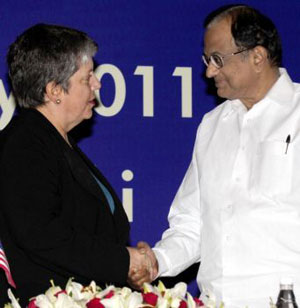 NEW DELHI, May 27: India and the U.S. began a crucial homeland security dialogue on Friday, affirming the strategic importance of cooperation for the security of the two countries and their people and pledging to combat terrorism and other challenges, including cyber security, transnational crimes and counterfeit currency.
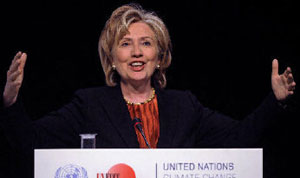 ISLAMABAD, May 27: Without mincing words, U.S. Secretary of State Hillary Clinton on Friday said Pakistan would have to make some difficult choices regarding its future course. Maintaining that the U.S. could not solve Pakistan's problems for it, she added that they could not be wished away by whipping up anti-Americanism or conspiracy theories either.
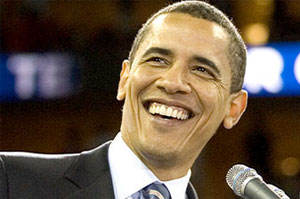 WASHINGTON, May 9: US President Barack Obama says Osama bin Laden had a group of supporters within Pakistan helping to keep the al Qaeda leader secure for years, despite an American-led international manhunt that extended for nearly a decade with Islamabad's ostensible support.

Aviation
| Business | Defence | Foreign
Affairs | Communication | Health
| India | United Nations
India-US
| India-France | Entertainment
| Sports | Photo Gallery |
Tourism | Advertise with Us
| Contact Us
© Noyanika International, 2003-2009. All rights reserved.